

Affordable interior design services should solve a real problem within a budget you can manage. A low advertised fee is only one part of that decision. You also need to understand the products, implementation work, and additional charges required to complete the room.
The most economical approach may be a focused consultation, a design-only plan, or a phased project. Start with the decision you find hardest rather than assuming you need a complete makeover.
Our guide to hiring an interior designer explains the wider hiring process. This article focuses on choosing a manageable scope and avoiding spending that adds little practical value.
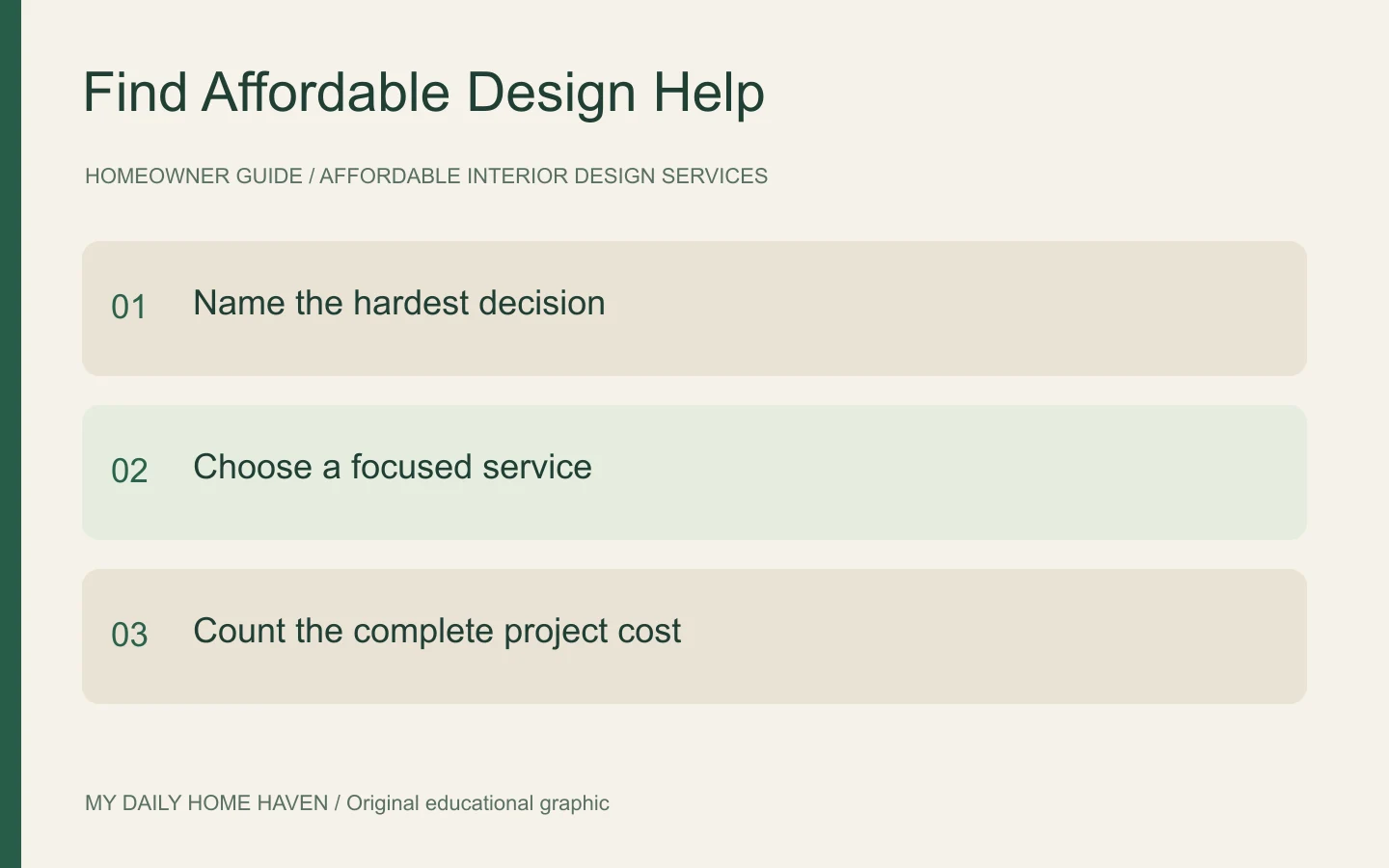
Choose affordable interior design services for a real problem
First, describe what prevents the room from working. You may struggle to arrange existing furniture, choose a paint direction, or find storage that fits a difficult wall. A precise question helps you buy targeted advice.
For example, a layout consultation might resolve a circulation problem before you purchase another sofa. That is a different need from having someone manage every order and installation. Match the professional work to the problem you actually face.
Rank your priorities before contacting a provider. Separate essential improvements from changes that would merely be pleasant. This makes it easier to reduce scope without losing the main purpose of the project.
Compare smaller service options
Consultation-only help can suit a homeowner who is comfortable implementing recommendations. Design-only work may provide a more developed plan while leaving ordering and installation with you. Remote services can offer another way to collaborate, depending on the project.
However, compare actual deliverables rather than assuming one format is always cheaper. A small in-person appointment may be more useful for an awkward room than a remote package requiring extensive preparation and independent measurements.
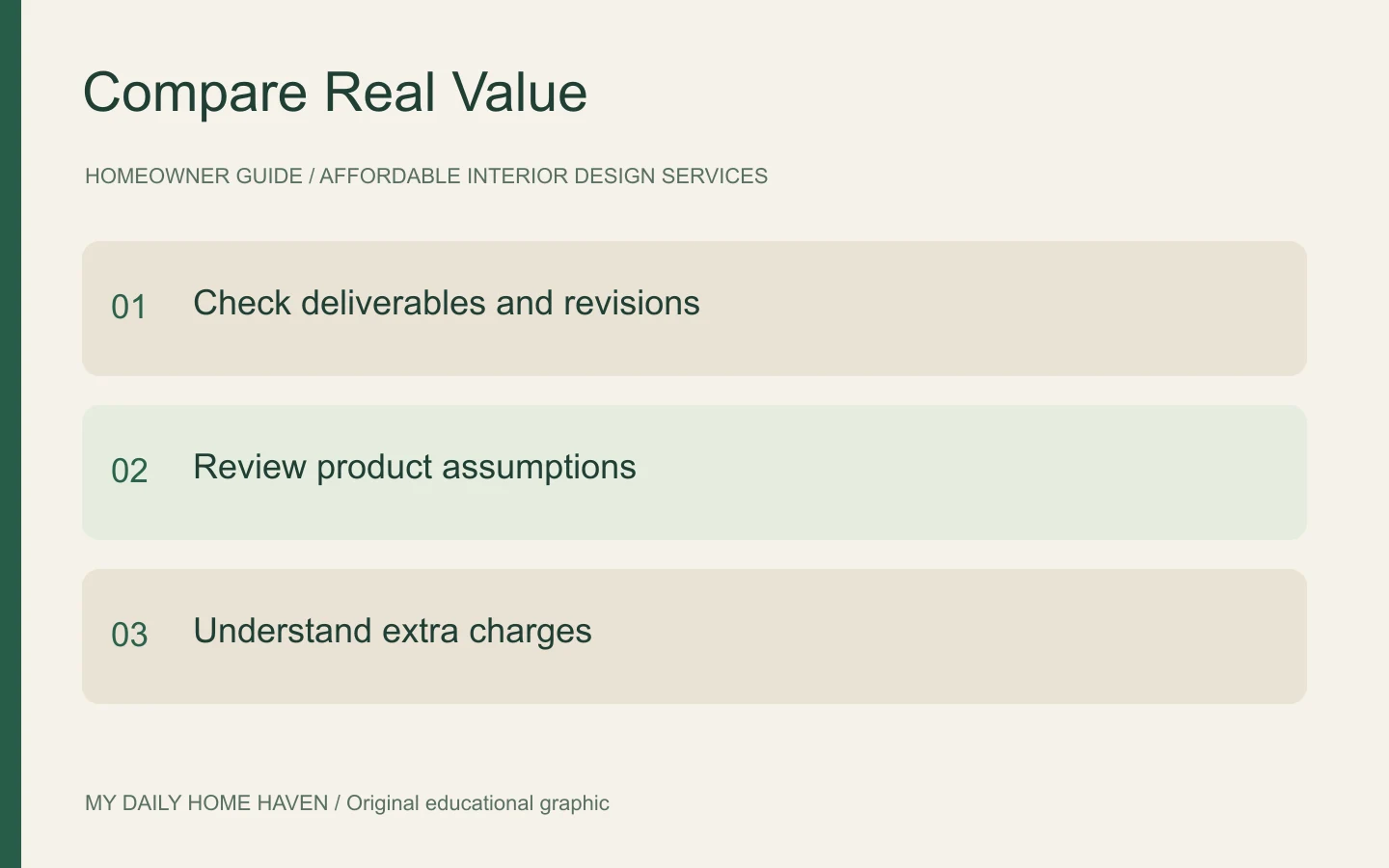
Ask whether written advice, follow-up questions, product alternatives, and revisions are included. A low fee becomes less attractive if the output leaves your main decision unresolved or requires a second service to make it usable.
Set the total budget before the design fee
Separate design help, products, shipping, taxes, assembly, installation, and any necessary repair work. Then decide how much is available for each category. Tell the designer which figures are firm limits.
ASID’s fee guidance explains that compensation methods vary. Request a clear quote for your specific scope rather than assuming a national average will describe the offer available to you.
For example, suppose a household has a hypothetical $4,000 total allowance. If it commits $800 to design help, it has $3,200 left before accounting for delivery and implementation. These are budgeting examples, not service-price estimates. The important step is keeping all categories within the same total.
Keep suitable furniture and finishes
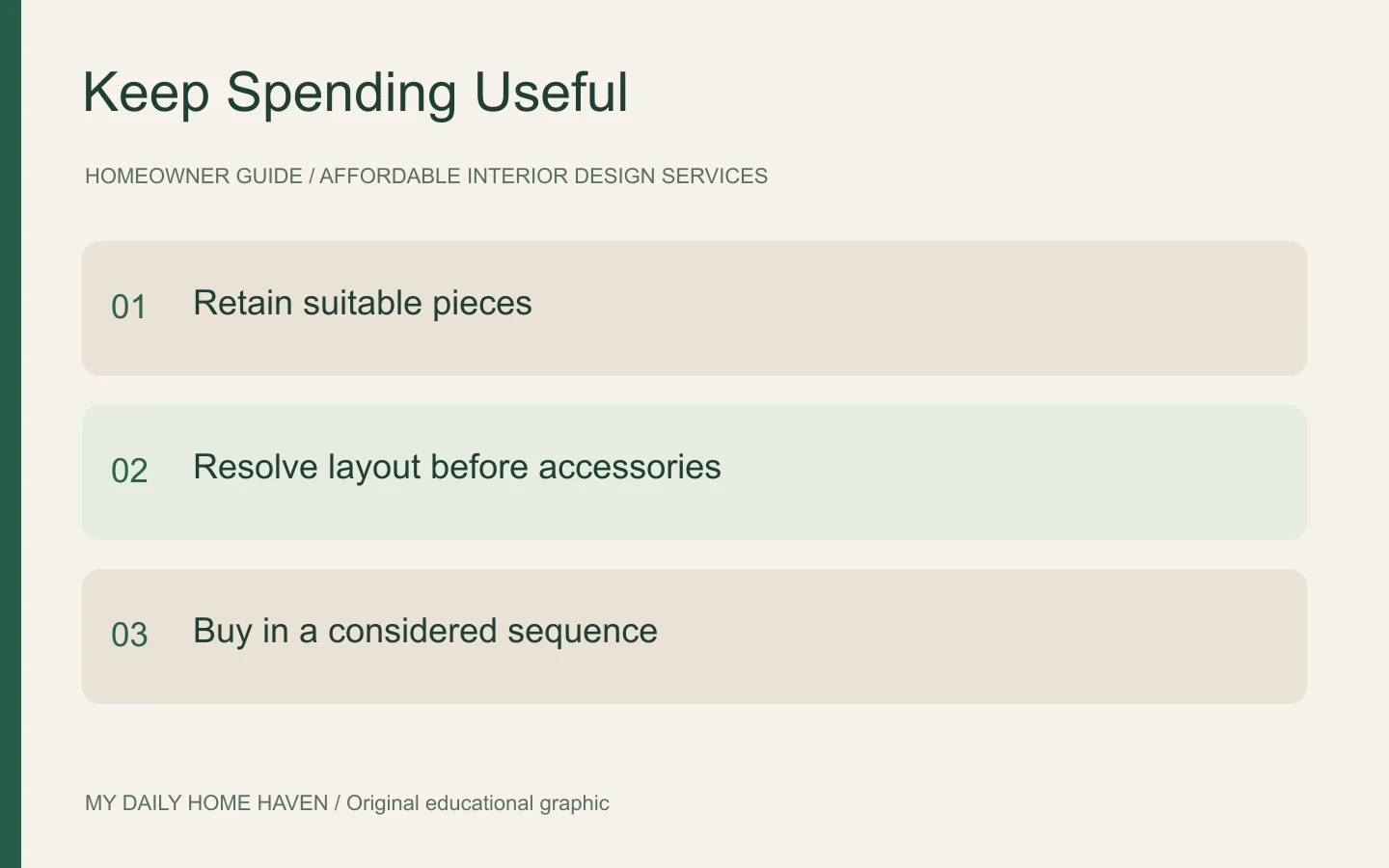
List what you want to retain and provide accurate dimensions. A designer can make more useful recommendations when they know a sofa must remain or a rug has sentimental value. Identify whether an item can move to another room.
Consider repair, reupholstery, or a different arrangement when appropriate. However, compare the full cost and condition before assuming reuse is always the cheapest choice. Some repairs require specialist work or materials that deserve their own quote.
Our sustainable interior design guide explores considered purchasing and reuse. A good budget plan can preserve suitable items while directing spending toward the room’s most important weakness.
Compare affordable interior design services fairly
| Question | Why it affects value |
|---|---|
| What do I receive? | Advice and implementation-ready information are different |
| How much preparation is required? | Your time and measurement tasks still matter |
| What purchases are assumed? | A small fee can lead to an expensive product plan |
| Are changes included? | Extra revisions may increase the final charge |
| Can I buy independently? | Ordering responsibilities affect time and support |
| When does support end? | Slow implementation may outlast the service window |
Use the same project brief for every quote. Otherwise, one provider may appear cheaper because it has assumed fewer rooms or fewer responsibilities.
Prepare for a productive consultation
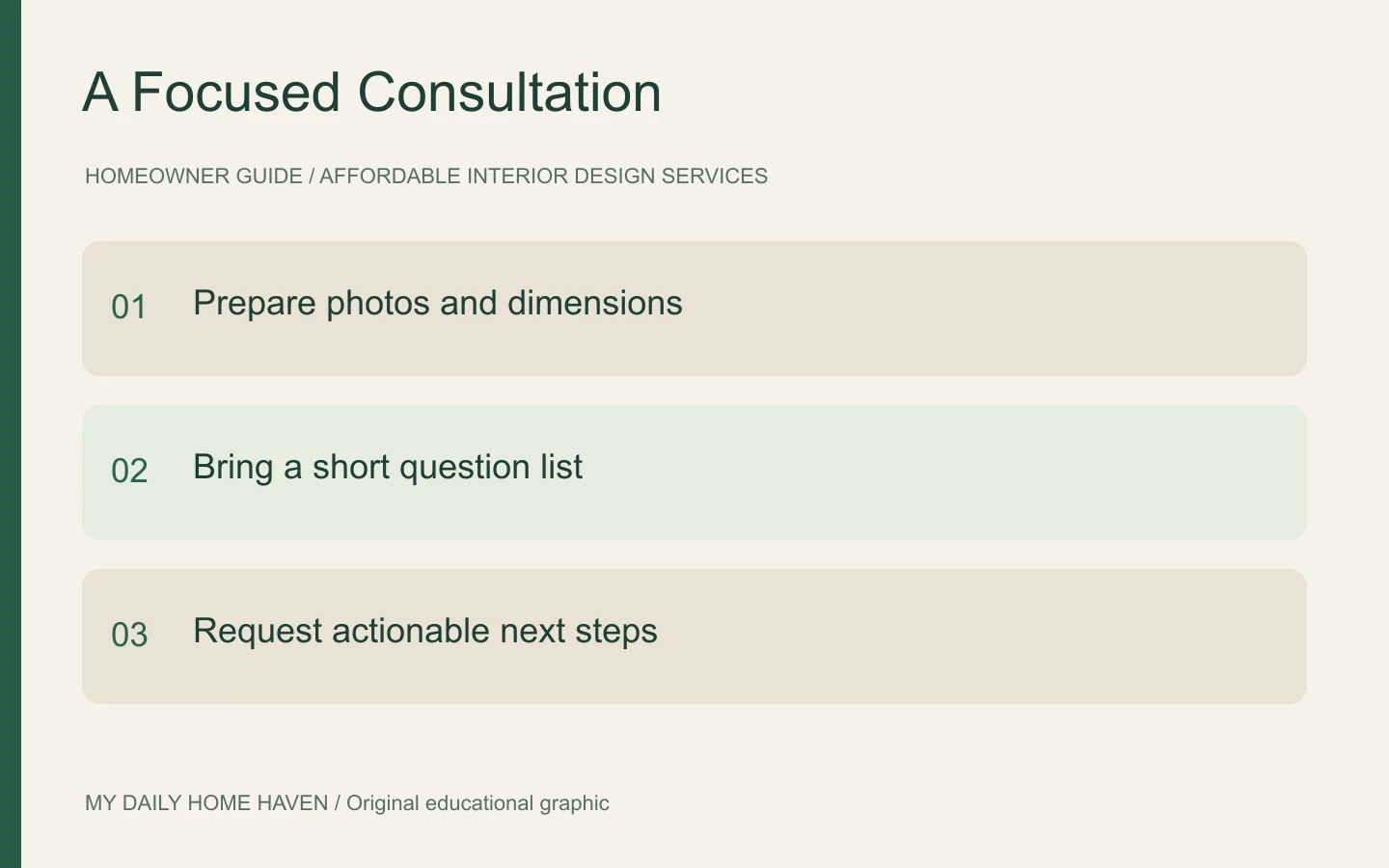
Gather room photographs, dimensions, existing-furniture measurements, and a short list of questions. Ask the professional which information is useful before spending time producing unnecessary documents.
Choose a few references and explain what you like about them. For example, identify the warm lighting or compact storage rather than asking to copy an entire expensive room. Clear references can reduce time spent exploring directions you do not want.
During the meeting, record recommendations and ask which decisions should come first. Before buying a large item, confirm that the guidance is specific enough to assess fit. A verbal suggestion about a sofa style is not a verified product specification.
Implement the plan in a useful order
Resolve layout and essential dimensions before shopping for decorative accessories. Next, confirm the large or permanent selections that affect other choices. Keep optional styling purchases until you know what remains in the budget.
If you plan to buy gradually, ask for a flexible specification. A product can become unavailable before you are ready to order. Knowing the required dimensions and function helps you evaluate an alternative without restarting the whole plan.
Avoid purchasing simply to use a promotion. A discounted item that does not fit the plan can consume money you need for a more important decision. Compare the delivered cost, return conditions, and practical usefulness together.
Recognize costs hidden by a low headline fee
Check minimum purchases, additional meetings, travel, product handling, delivery, and cancellation terms. Also ask whether the provider earns compensation through purchases and how that arrangement affects recommendations.
You do not need to reject every service with separate charges. You do need enough information to estimate the commitment. A transparent smaller scope can offer better value than an unclear offer that appears inexpensive at first.
Budget design questions
Can I hire a designer for just a layout?
Some providers offer focused planning services. Ask what measurements and drawings are included and whether the result will be detailed enough for your intended purchases.
Is free retail design advice a substitute?
It may help with products the retailer sells. Confirm the scope, product limitations, and any purchasing expectations before treating it as independent whole-room advice.
Should I split the work into phases?
Phasing can make spending manageable. However, keep an overall direction so early choices do not prevent later improvements. Confirm how future support will be priced.
Make affordable interior design services work for your budget
Choose a service that addresses your hardest decisions and leaves you with a workable next step. Clear priorities, reliable measurements, and a complete budget make professional help more useful at any spending level.