

A full service interior design firm may help develop a design and coordinate parts of its implementation. However, the phrase does not have one universal meaning. Your agreement should define the work, outputs, purchasing responsibilities, and limits of the service.
This guide follows a project from its initial brief through installation and handoff. Use it to identify the tasks you want the firm to manage and the decisions you must still make yourself.
Our interior designer hiring guide covers finding and evaluating professionals. Here, the focus is understanding a full-service workflow before committing to it.
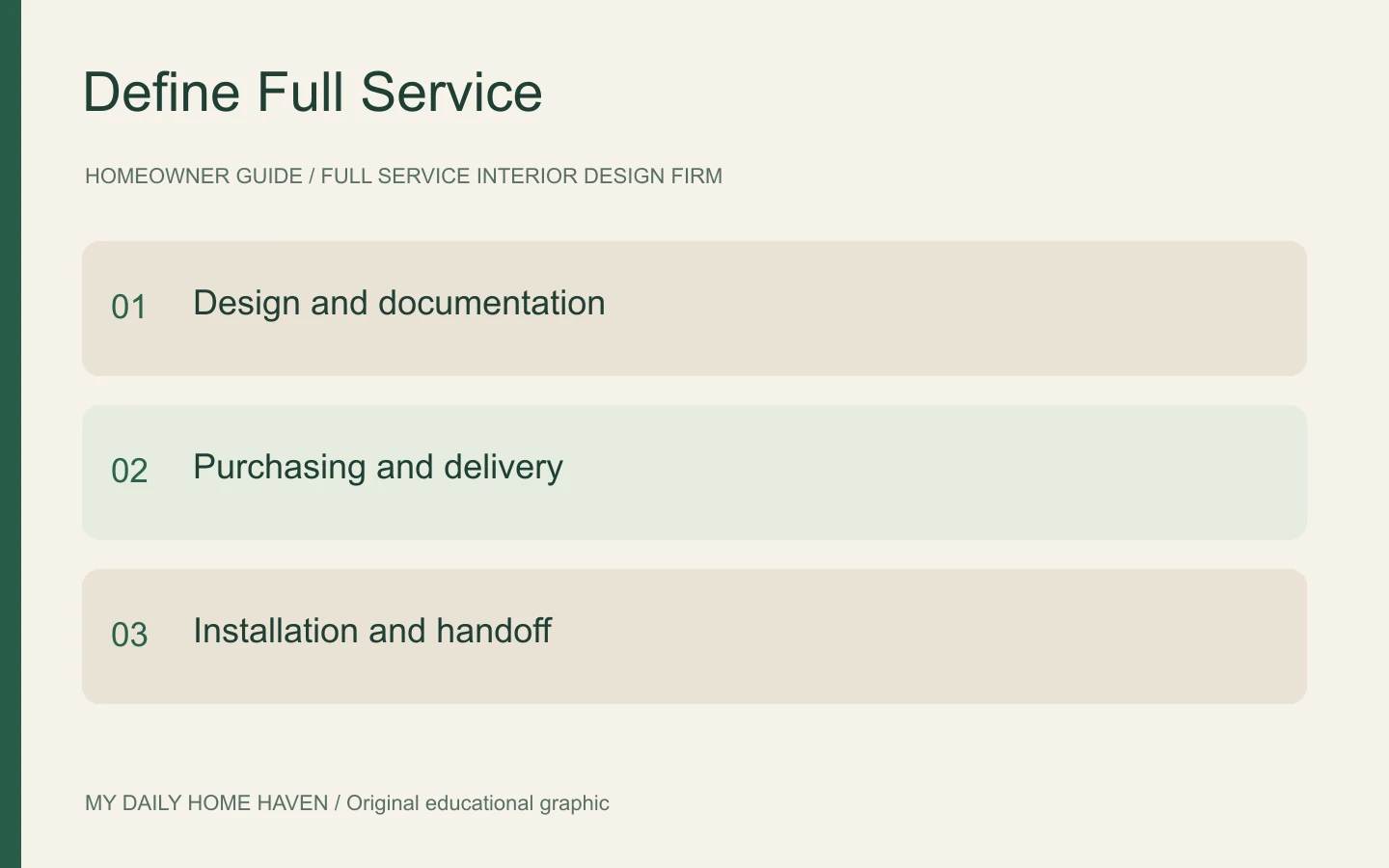
Map a full service interior design firm’s responsibilities
First, list the work the project requires. Separate design development, construction, product purchasing, delivery, and installation. Then assign a proposed responsible party to each task.
This simple exercise reveals gaps. For example, a firm may specify lighting but leave installation to an electrician hired by you. Another may coordinate purchases but exclude receiving and storage. Neither arrangement is necessarily unsuitable, provided the boundaries are clear.
Discovery and project planning
The first stage should establish rooms, priorities, existing conditions, budget assumptions, and decision-makers. Ask how measurements are collected and which site information the firm needs before developing a proposal.
Explain the practical result you want. If a room must support work and family use, the brief should identify both activities. A full-service process still depends on a useful starting brief; additional support does not remove the need for clear priorities.
Also discuss what remains outside the project. You may want to keep particular furniture or avoid changes to permanent finishes. Recording those boundaries early prevents unnecessary design work and purchasing suggestions.
Design development and approvals
Ask which review stages the firm uses. A concept presentation establishes direction, while later layouts and specifications should explain the approved selections in greater detail. Know what you are approving at each stage.
For example, approving a color direction should not silently authorize an expensive custom order. Product approval should identify the item, dimensions, finish, quantity, price, and relevant purchasing conditions.
Discuss how revisions are managed. A useful agreement distinguishes corrections, included design changes, and a change to the original brief. Request approval of any additional work before it begins.
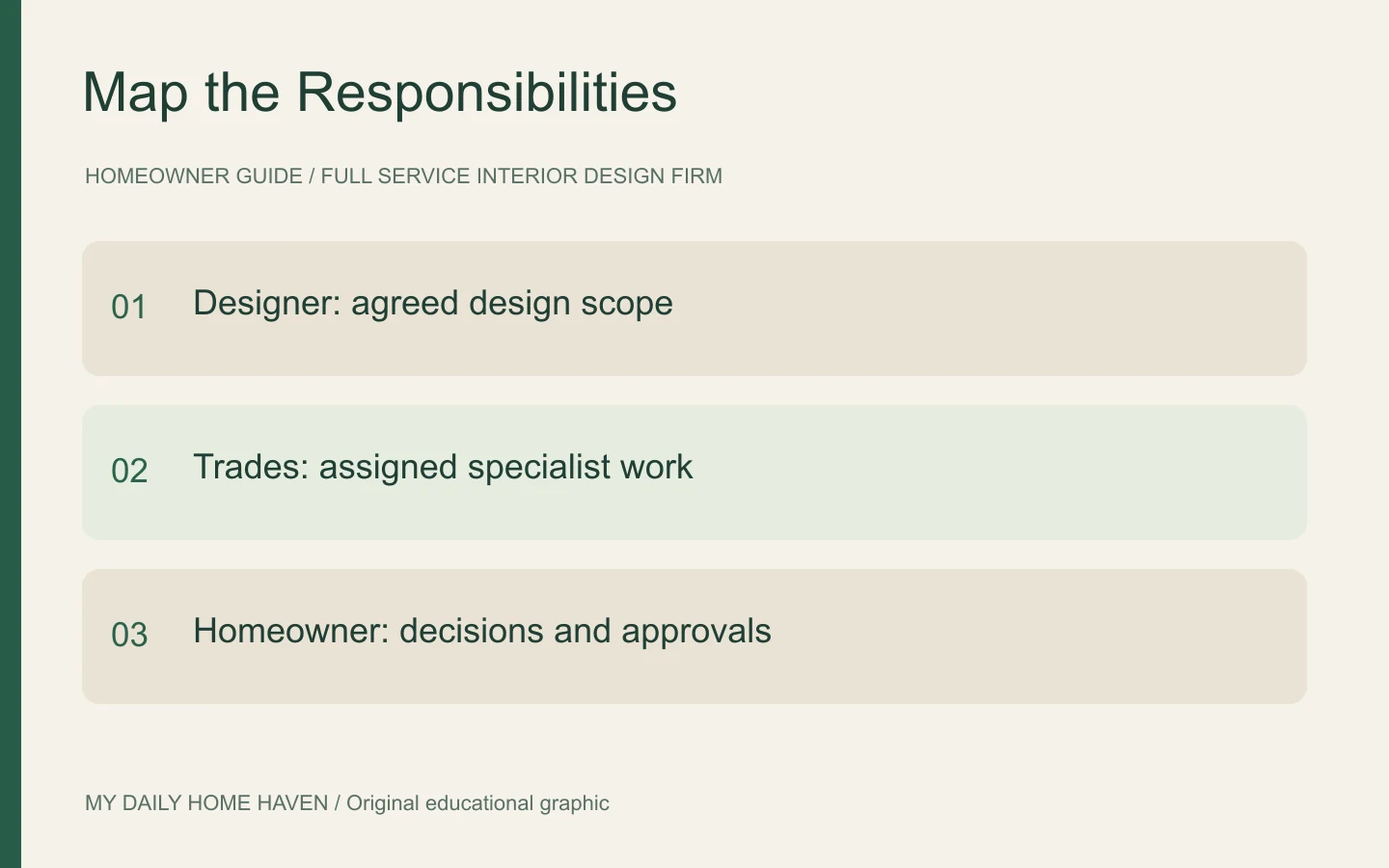
What a full service interior design firm may coordinate
| Project stage | Responsibility to clarify |
|---|---|
| Brief | Measurements, priorities, and budget assumptions |
| Design | Concepts, layouts, details, and selections |
| Documentation | Deliverables and intended use |
| Purchasing | Quotes, approvals, orders, and payment handling |
| Delivery | Receiving, inspection, storage, and claims |
| Installation | Scheduling, placement, and specialist trades |
| Handoff | Product information, unresolved issues, and follow-up |
The table is a discussion framework, not a standard list that every firm must offer. Compare it with the actual written proposal and identify any work assigned to you or another professional.
Separate design coordination from construction authority
Site visits and communication with a contractor do not automatically mean the designer is responsible for construction methods, safety, engineering, or permits. Ask the project team to explain each professional’s role.
Local requirements also matter. CIDQ’s overview of professional regulation distinguishes different regulatory approaches. Verify relevant requirements and claimed qualifications for the property location and proposed work.
For a renovation, establish how questions reach the right person. A contractor may need clarification about a design detail while an engineer must address a structural question. A named contact and written issue record can make those handoffs clearer.
Understand purchasing and financial reporting
Ask how design fees and product charges are calculated. Then request a sample project report showing the information you will receive. The report should help you understand what is proposed, approved, ordered, paid, and still outstanding.
Confirm who is selling each product to you and who handles returns or damage. These details can differ between designer purchases and items you buy directly. Keep the approval process consistent even when orders come through different channels.
Also ask how product substitutions are handled. An unavailable chair should not be replaced solely because another chair looks similar. The new choice may affect dimensions, materials, delivery timing, and the surrounding design.
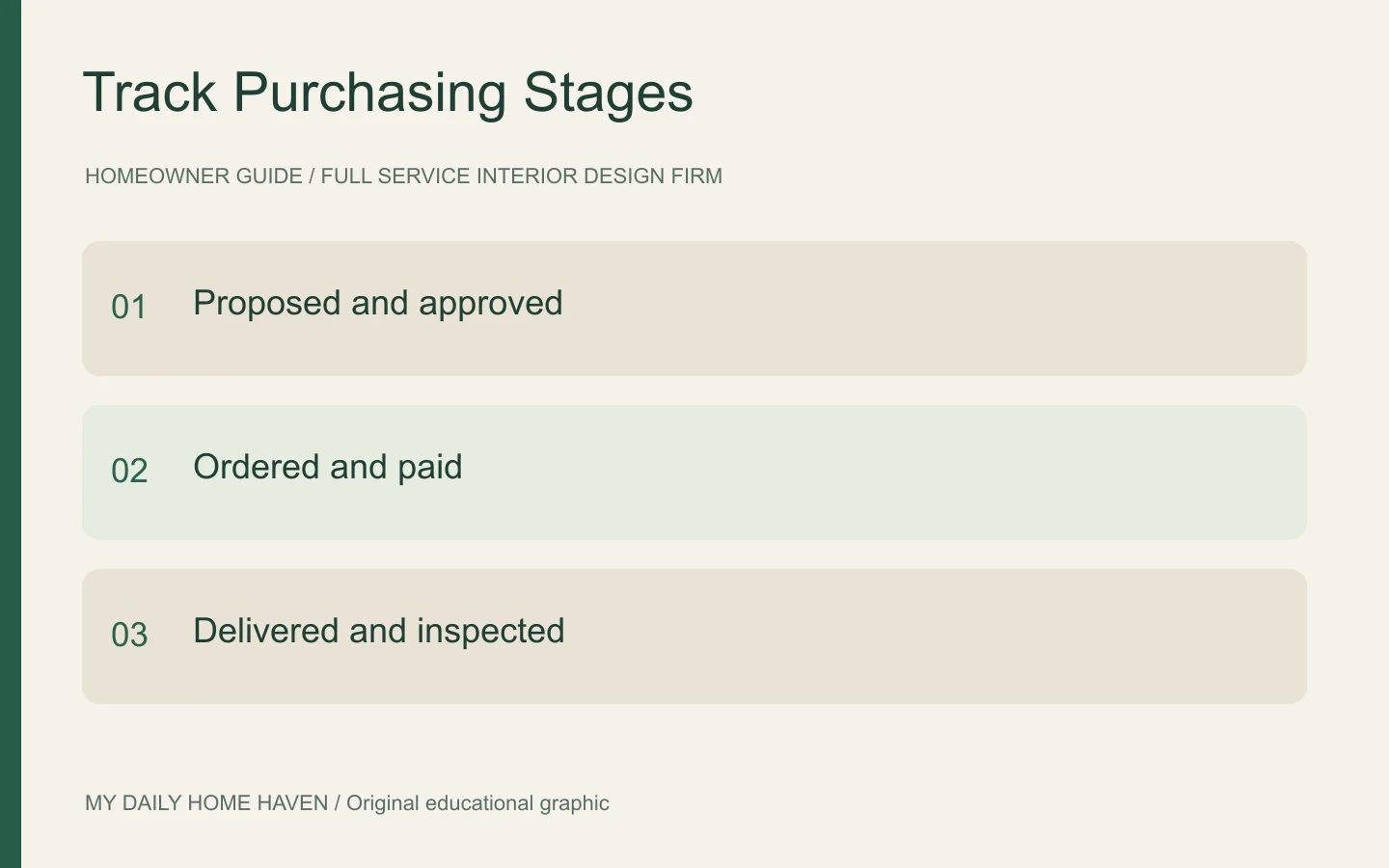
Plan receiving and installation
Furniture delivery and installation need a practical sequence. Ask where goods will be received, who inspects them, and whether storage is included or billed separately. Document visible damage and follow the applicable claim process promptly.
Before installation, verify access routes and identify specialist work. Window treatments, lighting, heavy artwork, and built-in pieces may require appropriate installers. Confirm who books them and whether their charges are part of the quote.
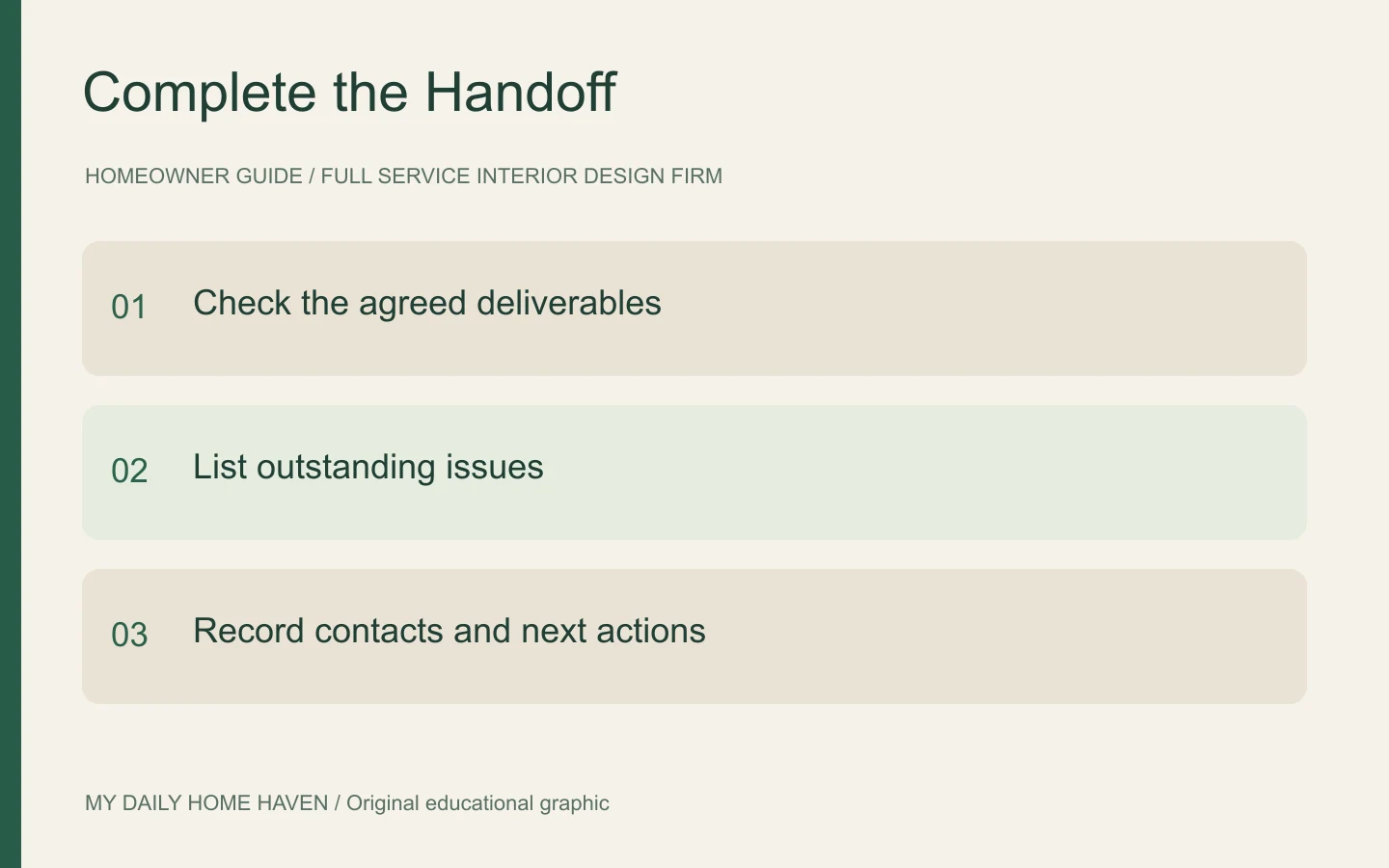
A completed room should receive a final review. Record unresolved items clearly, with a responsible party and next action. Avoid relying on memory after an installation involving many products and people.
Decide whether this level of service is worthwhile
Full-service support may suit a complex project or a homeowner with limited time for coordination. However, you still need to make timely decisions, approve spending, and provide reliable information.
If you enjoy managing purchases and only need a design plan, a smaller service may be more suitable. Compare our interior design packages guide to understand how a defined design-only scope differs from ongoing implementation support.
A useful project scenario
Imagine furnishing several connected rooms while replacing window treatments. Ask the firm to explain the order of measurements, design approvals, purchases, and installation. Identify where a delay in one product affects the rest of the work.
Next, confirm how the team will update you and which decisions need your approval. A credible plan acknowledges dependencies and gives you a way to respond, rather than promising a flawless process without explaining the work.
Frequently asked questions
Does full service mean I make no decisions?
No. You normally still approve the brief, design direction, spending, and significant changes. The agreement should identify your responsibilities and response times.
Is every trade included in the design fee?
Do not assume so. Request a list of third-party services and clarify who contracts with and pays each provider.
What should I receive at handoff?
Ask for the agreed final records, product information, care instructions where available, and an outstanding-issues list. The exact deliverables should be stated in advance.
Define a full service interior design firm’s scope before hiring
Choose a full-service firm only when the scope explains who handles each stage. Clear responsibilities make the service easier to compare, easier to manage, and more useful when the project encounters a change.