

The most useful interior design coffee table books give you something to return to: room layouts, material combinations, historical context, or a designer’s way of making decisions. A beautiful cover is a bonus. Choose the book around what you want to learn and the kinds of rooms you actually live in.
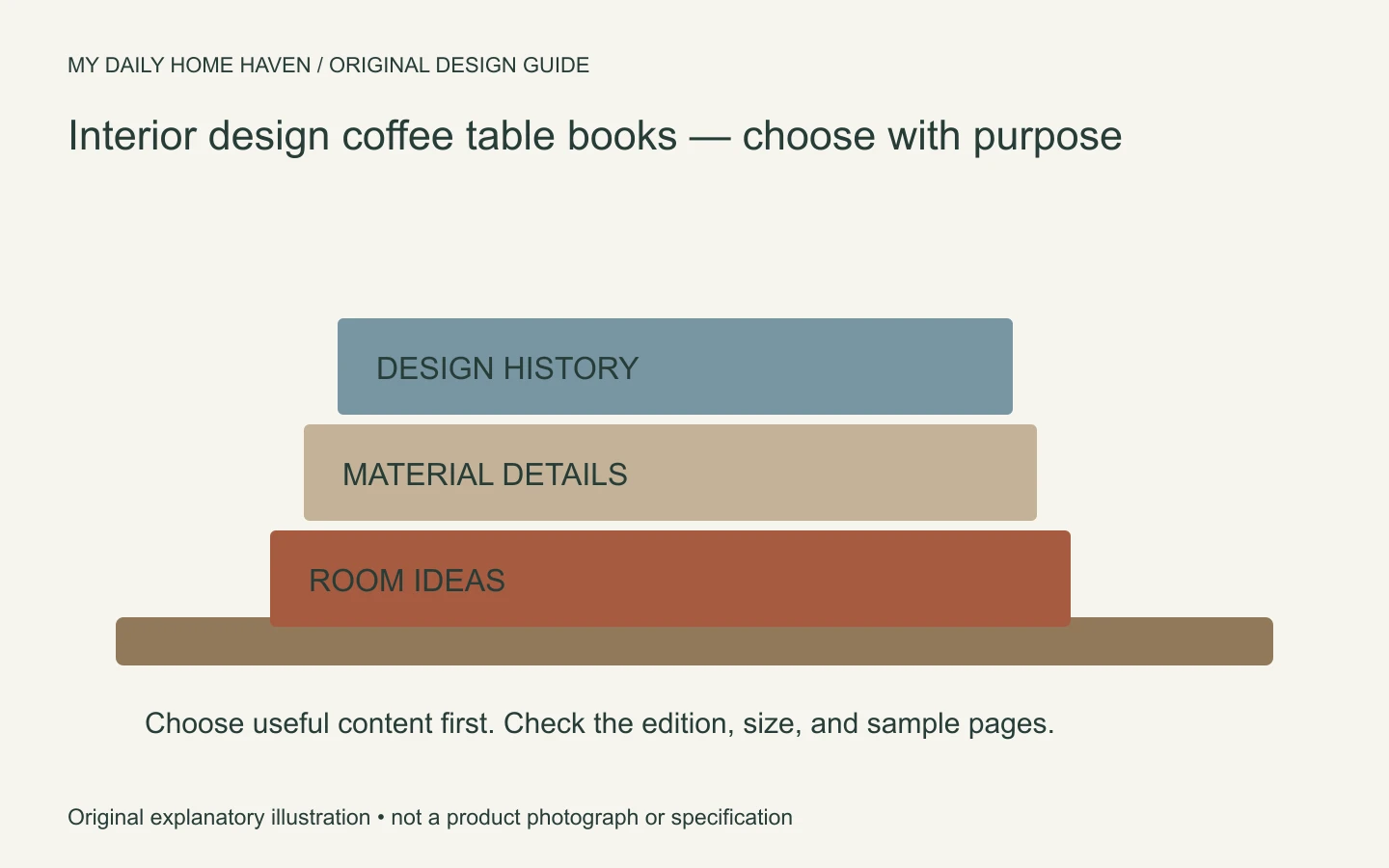
This guide offers a small, verified starting selection and a method for evaluating other titles. It is an editorial buying guide, not a claim that we have tested every book or ranked the whole market. For help identifying the visual direction you want to study, use our interior design aesthetics guide.
Interior Design Coffee Table Books: Choose for Use
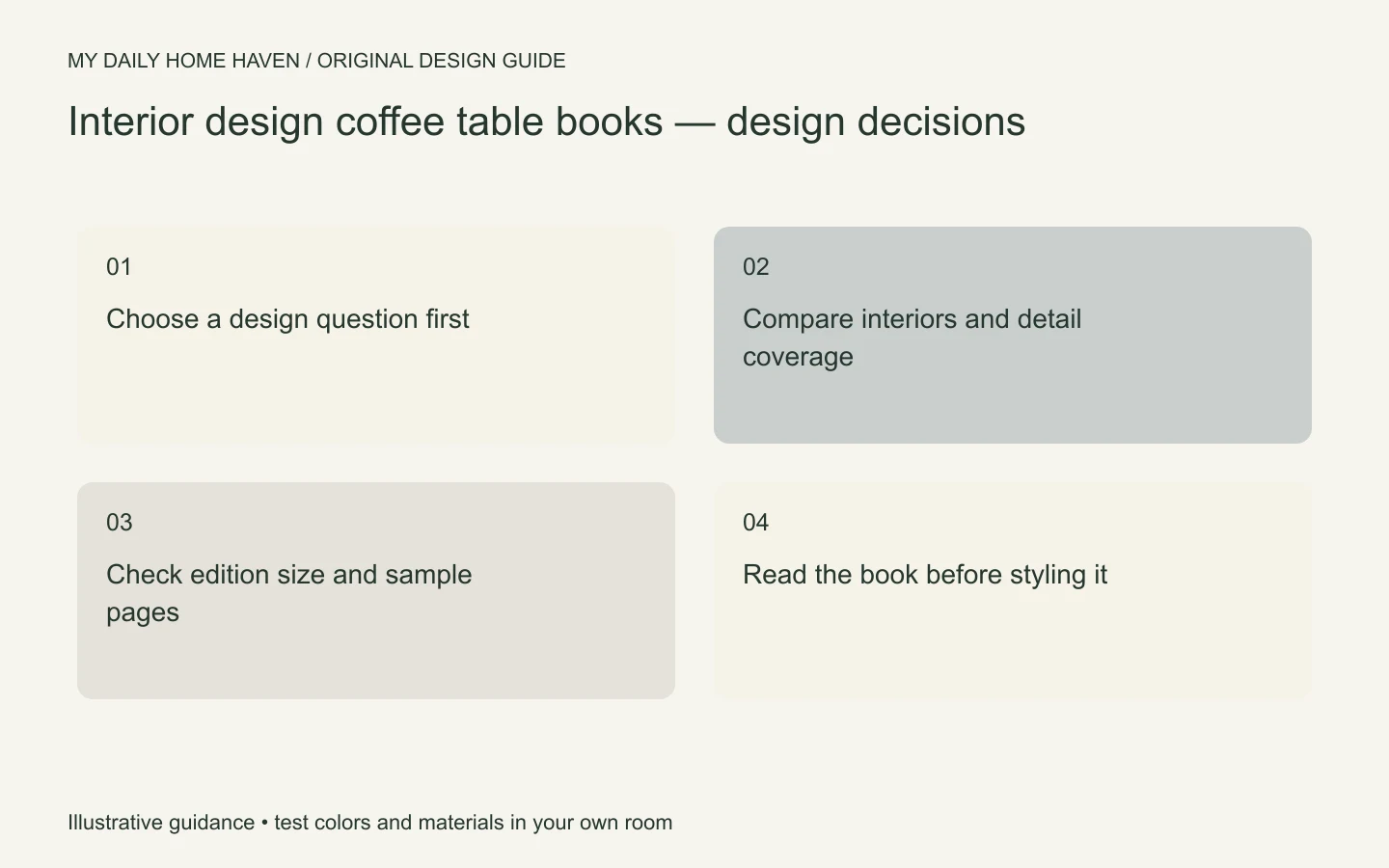
For interior design coffee table books, compare image quality, writing, subject focus, and whether the book answers a question you actually have. Check publication details and dimensions before buying, and select one or two titles that suit the room or your design interests. Treat the books as references first; display them only if the stack fits your table.
Decide what you want the book to do
Different books solve different problems. A broad collection of room photographs can help you recognize preferences. A materials-focused book may be better when you are comparing finishes. An architectural interiors study can explain why a room feels coherent even when the furniture is unfamiliar.
Before buying, finish this sentence: I want this book to help me understand ____. If the answer is only that the cover matches your shelves, consider borrowing it first. Decorative value can matter, but it should not disguise a poor fit with your interests.
Look for sample spreads and a table of contents. Notice whether captions explain the choices or simply identify the room. Wide photographs show overall composition; close details can reveal texture, joinery, and transitions between materials.
Three verified titles with different purposes
Made for Living by Amber Lewis with Cat Chen
The publisher’s page for Made for Living identifies the authors and presents the book’s focus on layered interiors. Consider it if you are interested in relaxed rooms and the combination of furnishings, colors, and textures.
When reviewing the sample material, ask how much can transfer to your own home. You might borrow a relationship between light upholstery and dark timber even if your room has a different ceiling height or window arrangement. The useful lesson is the decision, not an exact replica.
Call It Home: The Details That Matter by Amber Lewis
Amber Lewis’s own shop lists Call It Home alongside Made for Living. The titles are related, so compare their coverage before purchasing both. A detail-focused book can be useful when you already know the atmosphere you want but struggle to coordinate finishes.
Do not assume that owning two books by one designer gives you two contrasting styles. If your aim is a broader design library, pair a contemporary designer monograph with a historical or architectural title instead.
Frank Lloyd Wright: The Rooms: Interiors and Decorative Arts
The Rizzoli listing for Frank Lloyd Wright: The Rooms focuses on interiors and decorative arts. It offers a different route into design: studying how architecture, furnishings, and smaller objects relate within a larger vision.
Choose a book like this when you want context and close observation rather than a quick shopping recipe. The rooms may not resemble your home, but you can still study repetition, scale, and the placement of furniture in relation to windows and circulation.
Compare books before committing
| Your goal | Look for | Check before buying |
|---|---|---|
| Find your preferred style | Varied complete rooms | Whether the examples repeat one house |
| Select finishes | Detail photographs and explanations | Whether materials are identified |
| Learn design history | Dates, context, and clear attribution | Whether the text supports the images |
| Solve a small-room problem | Relevant room sizes and layouts | Whether floor plans are included |
No single book needs to satisfy every category. A book that excels at atmosphere can still be worthwhile if you understand its limits. Supplement it with practical measurements and product information before making expensive choices.
Check the physical edition
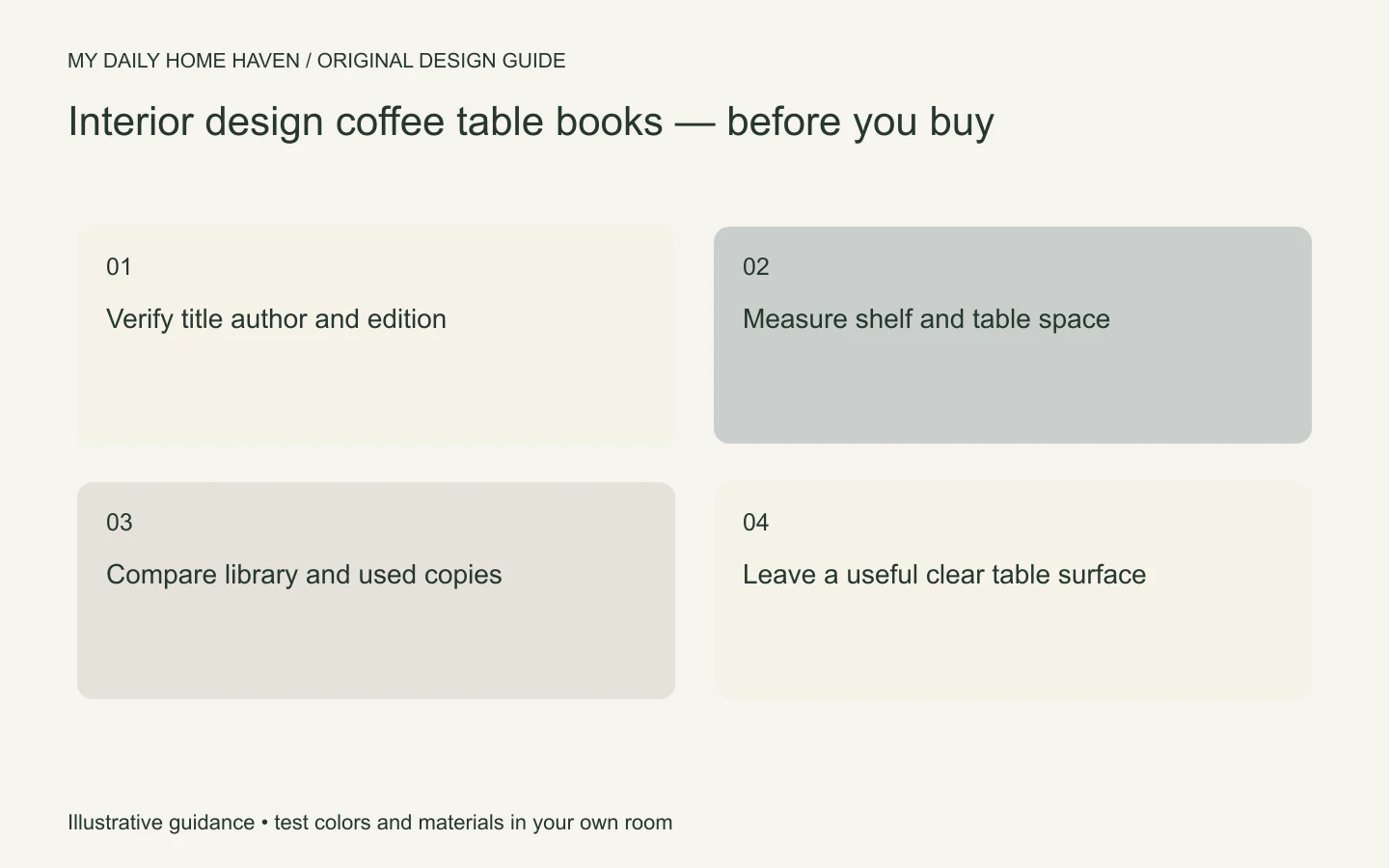
Confirm the author, publisher, format, and edition with a reliable listing. The same title may appear as a hardcover, digital edition, or a differently sized printing. Dimensions matter if you want to read it comfortably or store it on a particular shelf.
For used copies, review photographs and the condition description. Look for loose pages, water damage, missing jackets, and annotations if those matter to you. A worn jacket may be acceptable for a reading copy, while damage affecting the binding may make a heavy book awkward to use.
Prices and stock change, so compare current listings rather than relying on a fixed price in a style article. A library copy can help you decide whether a book deserves permanent space. Borrowing also makes it easier to explore an unfamiliar design tradition before buying.
Turn inspiration into a room decision
Choose three spreads you like and write a short note about each. Is it the low contrast, the arrangement of chairs, the use of wood, or the balance of patterned and plain fabric? Specific notes are more useful than saving a photograph labeled beautiful.
Then compare those ideas with your own constraints. A room with wide circulation paths can accommodate a furniture arrangement that a narrow apartment cannot. Our space planning guide helps translate inspiration into a workable layout.
Do not copy or republish book photographs in a public lookbook without appropriate rights. For personal planning, keep clear source notes and follow the publisher’s terms for any shared material.
Create a small reading library
When choosing interior design coffee table books, think about the collection as a whole. One book can explore atmosphere, another construction and craft, and another a historical period. You do not need to buy all three immediately. Borrow unfamiliar titles, compare the way their captions explain rooms, and note which books you return to after the first browse. Keep a simple list of useful pages or themes so the information remains accessible. A small library you actually read can support better decisions than a large decorative stack selected only by spine color or a coordinated jacket design.
Frequently asked questions
How many books should I display on a coffee table?
There is no required number. Start with one or a small stable stack, leaving enough usable surface for daily life. Move heavy books elsewhere if the table becomes awkward to use.
Are older design books still useful?
Yes, especially for composition, craft, and history. Treat old product sources, prices, and technical guidance as dated, and verify anything you plan to specify or purchase.
Should I buy several books with the same aesthetic?
Only if they offer different value. Compare contents and sample pages first. One broad style reference plus one book on details or history may teach you more than several similar collections.