
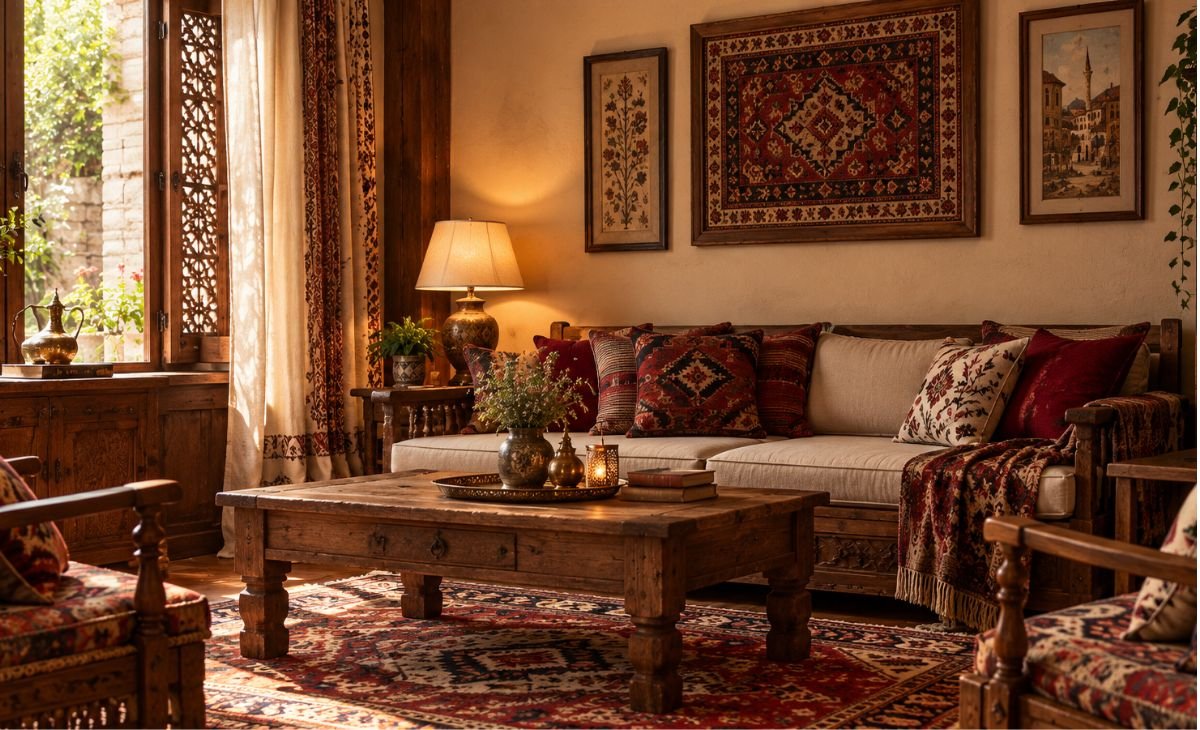

Interior design aesthetics describe the visual character of a room: its colors, shapes, materials, furniture, and overall mood. A good aesthetic also fits the way you live. You can enjoy calm Japandi rooms, richly layered maximalist spaces, or a mix of traditional and modern details without copying an entire showroom.
This guide helps you recognize different design styles, choose a direction, and translate inspiration into a home that feels personal. Start with what you already own. Then build a clear visual plan before buying anything new.
On this page: What makes an interior aesthetic work? · Start with your room before choosing a style · Interior design styles: a practical comparison · How to choose your interior aesthetic · Apply a style room by room · A worked example: mixing styles without replacing everything · Common mistakes when choosing an aesthetic · Frequently asked questions · Choose one useful change first
What makes an interior aesthetic work?
An aesthetic is the relationship between choices, rather than a shopping list. A wood table, linen curtain, and clay vase might look coordinated because they share warm tones and soft textures. The same table can also work beside colorful art if another detail connects the pieces.
Style labels help you describe preferences. They do not guarantee comfort, quality, authenticity, or a suitable layout. A beautifully photographed chair can still feel uncomfortable, while an ordinary chair may suit your room perfectly.
Separate three questions when planning. What should the room look like? What must it do? What will you realistically maintain? The strongest direction answers all three, rather than treating daily life as a problem to hide.
For the visual relationships behind every style, read our principles of interior design. That guide explains balance, proportion, and contrast; this one focuses on choosing a visual language.
Start with your room before choosing a style
Read the permanent features
Look at the floor, windows, ceiling height, doors, and architectural details. These features create a starting point. An apartment with simple walls gives you different opportunities from an older house with dark trim and patterned tile.
You do not need to match the building’s period exactly. However, acknowledging its existing colors and proportions can reduce unnecessary changes. Photograph the room in daylight and at night so you can see what actually stays constant.
Define a feeling in ordinary words
Choose three useful words, such as relaxed, bright, and textured. Another household might choose dramatic, collected, and cozy. These descriptions help you make decisions when attractive products pull your attention in several directions.
Avoid words that tell you little about the room. “Beautiful” does not help you choose between a patterned rug and a plain one. “Quiet background with one colorful feature” gives you a much clearer test.
List the things that must stay
Include furniture, artwork, family objects, and rental restrictions. A beloved patterned sofa deserves a place in the plan even if your inspiration board contains only neutral rooms. Build around its strongest color or shape instead of treating it as a mistake.
Interior design styles: a practical comparison
These are broad decorating descriptions, not fixed cultural or historical definitions. Real interiors often combine several influences.
| Direction | Useful visual cues | Try it first with | Watch out for |
|---|---|---|---|
| Japandi-inspired | Simple forms, wood, restrained detail | A quieter furniture arrangement | Removing useful storage for a sparse photograph |
| Maximalist | Layered patterns, collections, rich color | One grouped display | Giving every object equal attention |
| Traditional | Familiar furniture shapes, patterned textiles | A classic lamp and framed art | Buying an entire matching suite |
| Transitional | Traditional and contemporary elements together | A clean sofa beside an older table | Mixing without a shared color or scale |
| Mediterranean-inspired | Earthy finishes, textured surfaces | Clay, linen, and a warm palette | Using imitation architectural details everywhere |
| Industrial-inspired | Visible structure, metal, robust finishes | One metal accent with soft upholstery | Making an already echoing room harder and louder |
| Biophilic | Connections to nature, light, natural patterns | A useful view or suitable plant | Assuming greenery makes every product sustainable |
Japandi: simple, warm, and intentional
Japandi is a contemporary label used for interiors combining Japanese and Scandinavian influences. For a practical interpretation, look for uncluttered arrangements, useful objects, natural-looking textures, and furniture with clear shapes. Leave enough visual space for individual pieces to stand out.
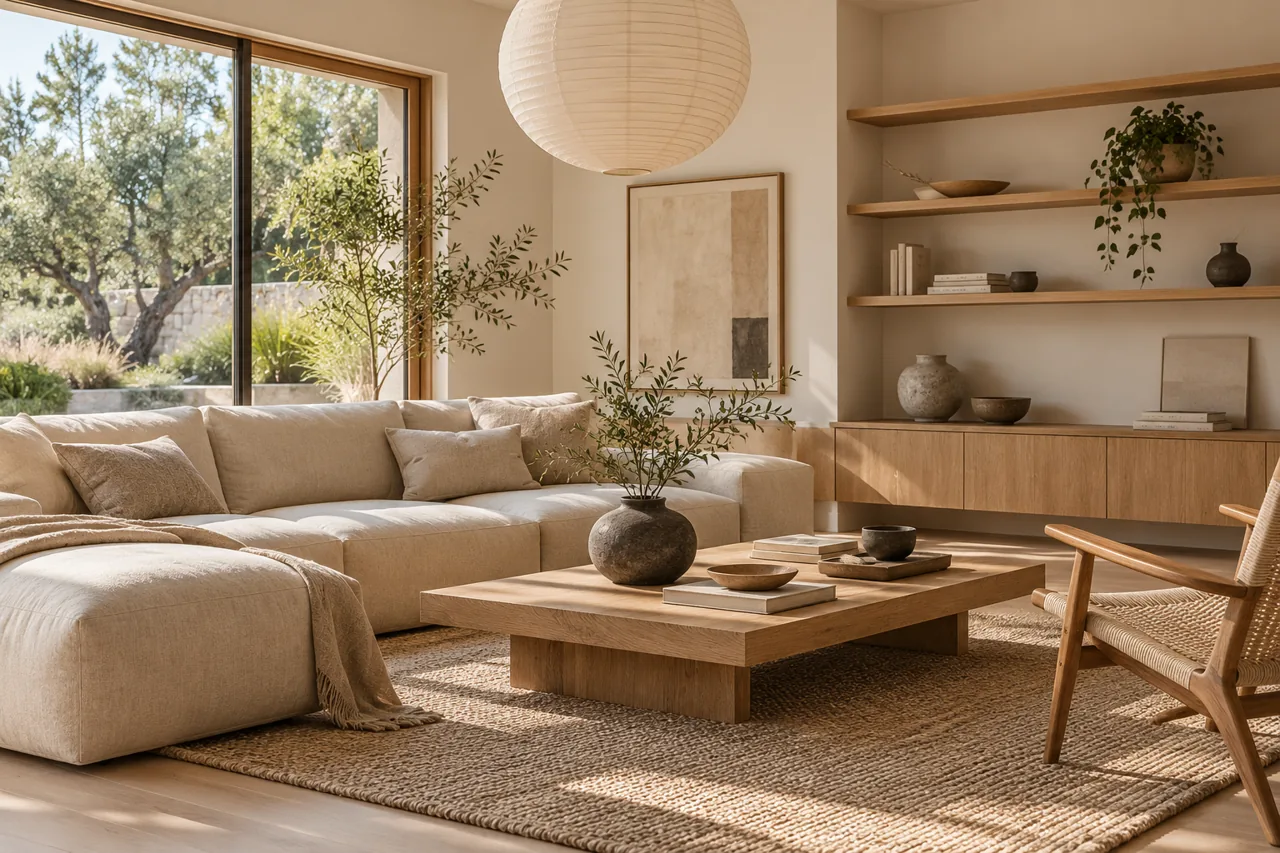
You do not need an all-beige room or expensive imported furniture. A comfortable existing sofa, a wood table, and thoughtful storage can establish a calm direction. Treat cultural influences with care rather than reducing whole traditions to a few accessories.
Maximalist: layered without losing structure
Maximalist interior design gives color, pattern, and collections more space. The challenge is organization, rather than simply adding more things. Repeat a small number of colors across artwork, fabrics, and objects so the room has recognizable connections.
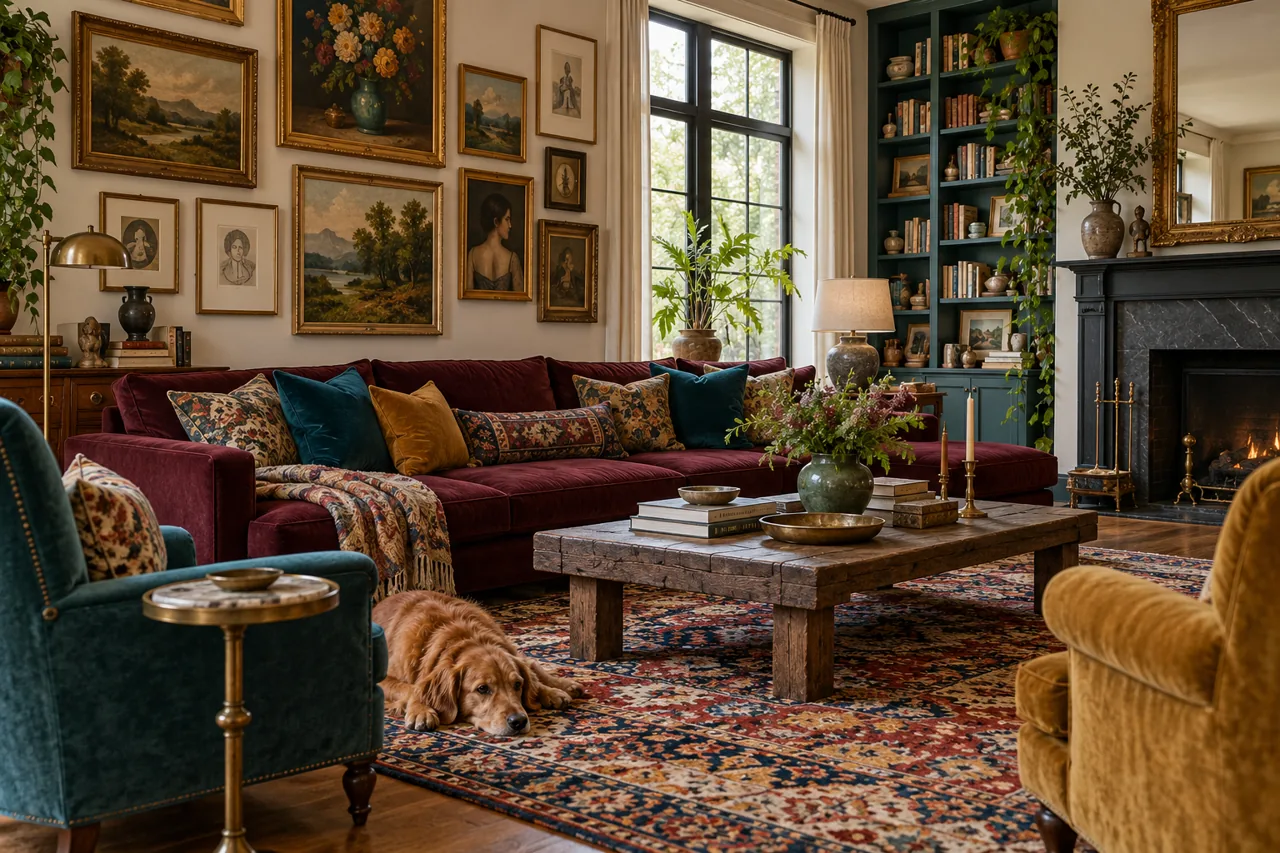
Start with one strong anchor, such as a rug or painting. Let nearby pieces support it. Closed storage can hold everyday clutter while open shelves display a smaller, intentional collection.
Traditional and transitional: familiar shapes, flexible combinations
Traditional interior design often uses recognizable furniture silhouettes, framed artwork, layered textiles, and balanced arrangements. You can keep the look comfortable by varying finishes and choosing pieces for real use, rather than building a formal room nobody enters.
Transitional design combines traditional and contemporary elements. For example, place a simple upholstered sofa beside a detailed wood chest. A shared color family and compatible proportions connect them without requiring identical finishes.
Mediterranean, French, and other regional references
Regional style names cover considerable variation. Mediterranean interior design does not represent one universal palette, and French interior design includes many periods and local traditions. Use these labels to guide further exploration rather than to claim a room represents an entire place.
Choose specific qualities you admire: warm plaster-like texture, a relaxed dining arrangement, a patterned textile, or an elegant furniture curve. This approach usually produces a more personal result than collecting every recognizable motif.
Bauhaus, Art Deco, and historical influences
Historical references deserve more care than a trend label. Bauhaus-inspired decorating often emphasizes function, clear geometry, and an edited selection of objects. Art Deco references can bring stronger geometry, contrast, and decorative richness. They are distinct starting points, even when shops group both under “vintage.”
For context beyond shopping descriptions, explore the V&A’s account of Arts and Crafts interiors. It shows how materials, usefulness, and individual expression shaped a historical domestic movement. Museum collections can help you recognize original ideas before adapting them.
Rococo, eclectic, and expressive interiors
If ornate curves and decorative detail appeal to you, introduce them in a manageable way. A single embellished mirror can bring a Rococo reference into a simple room. You do not need to recreate a historic interior to enjoy one of its visual qualities.
Eclectic design combines influences deliberately. Choose what connects your selections: a repeated color, similar wood tones, a recurring shape, or a clear story. Without that link, eclectic can become a label for decisions that never meet.
How to choose your interior aesthetic
Step 1: collect rooms, not isolated products
Save a small selection of room images you consistently like. Then describe what repeats. You may discover that the real attraction is generous daylight or comfortable seating, rather than the advertised style name.
Keep a separate list of products. Otherwise, a board full of attractive lamps and cushions can feel coherent while telling you nothing about layout or proportion.
Step 2: choose a base and one contrasting influence
Begin with one dominant direction. Then add a second influence through a few details. A calm contemporary room might gain character from traditional art; a collected traditional room might benefit from a simpler table.
There is no compulsory percentage for mixing styles. Use the room itself as the test. If every corner demands attention, reduce the number of competing finishes before buying more accessories.
Step 3: build a small material palette
Gather actual samples where possible: wall color, upholstery, wood, metal, and a major textile. Place them together in the room. A photograph of a finish on your phone cannot reliably show how it will look beside your flooring.
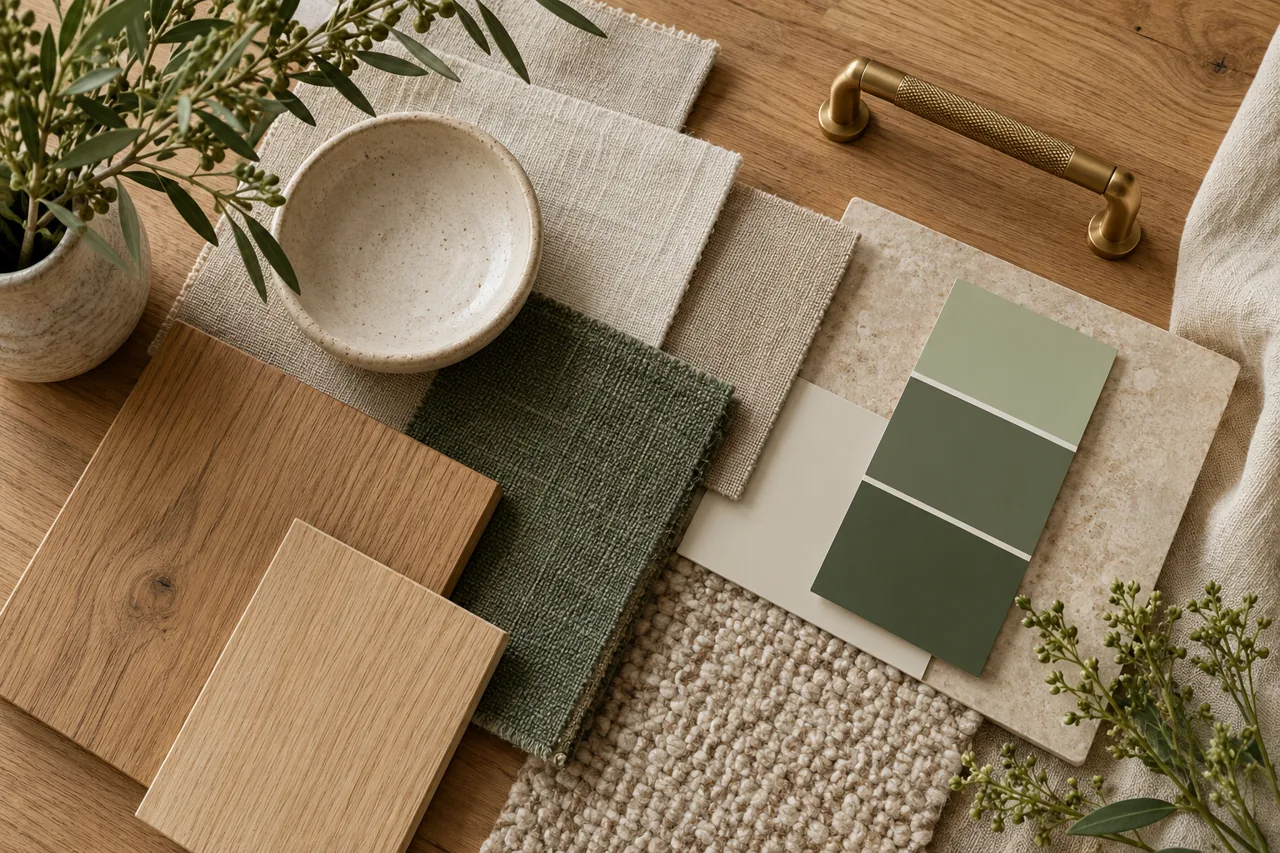
Select one leading material and a few supporting ones. For example, a warm wood floor might work with off-white walls, textured upholstery, and a restrained dark accent. The specific combination matters more than following a universal formula.
Step 4: make a keep, move, and buy list
Divide decisions into three groups. Keep pieces that work. Move pieces that might solve a problem elsewhere. Buy only the missing elements that serve the layout or complete the palette.
This step protects you from replacing furniture simply because it does not match an inspiration photograph. Our sustainable interior design guide explains how reuse and repair can fit an attractive room plan.
Apply a style room by room
Living room
Let the seating arrangement lead. A maximalist living room still needs somewhere to set a drink and a clear route through the space. A minimalist room still needs comfortable seating and enough storage for everyday objects.
Use the largest existing item as an anchor. Then choose a rug, curtains, and lighting that connect with it. Smaller decorative choices become easier once the main relationships make sense.
Bedroom
Begin with how the room supports rest and dressing. Consider the view from the doorway, access around the bed, bedside storage, and lighting for different tasks. Your preferred aesthetic should support these needs rather than compete with them.
A richly colored bedroom can feel calm if its patterns and lighting work together. A pale room can feel restless if storage overflows and every surface holds unrelated objects.
Kitchen and dining area
Work with cabinet finish, flooring, counters, and the way people move between tasks. These larger surfaces set the visual direction. Introduce a contrasting aesthetic through seating, textiles, tableware, or a light fixture before changing permanent finishes.
Match material choices to cleaning and wear. A photograph cannot show how easily a particular finish marks or how much attention it needs. Request product care information before committing.
A worked example: mixing styles without replacing everything
Imagine a rented living room with beige walls, a dark wood table, and a gray sofa. The household likes Japandi rooms but also owns colorful family artwork. This is an illustrative scenario, not a documented client project.
First, keep the table and sofa if they fit. Next, group the artwork in one area rather than scattering it across every wall. Choose one color from the art for a cushion or throw, and repeat a warm texture through curtains or a basket.
Then reduce small objects around the main seating group. The room gains a calmer background while keeping its personal pieces. Nothing requires painting the rental, discarding usable furniture, or pretending the result follows a style perfectly.
Before moving large pieces, use our space planning interior design guide. A style change should not make the daily route through the room more difficult.
Common mistakes when choosing an aesthetic
- Copying a photograph without checking your room’s dimensions or light.
- Buying accessories before deciding which furniture stays.
- Replacing useful objects only to make everything match.
- Assuming a natural-looking finish proves a product’s environmental claims.
- Treating every current trend as a requirement.
- Choosing a fabric or surface that conflicts with your cleaning routine.
- Forgetting that household members may have different comfort needs.
If a new idea appeals to you, test it on something reversible first. Our interior design trends news guide explains how to separate evidence of a trend from promotional claims. For digital experiments, compare options in our interior design software guide.
Frequently asked questions
Can I mix more than two interior design styles?
Yes. A clear palette and repeated details can connect several influences. Start with fewer decisions, then add complexity slowly. If the room feels confused, simplify the background rather than removing every distinctive object.
Which aesthetic works best in a small home?
No single style automatically makes a small home work. Furniture dimensions, storage, light, and movement matter first. Both restrained and richly decorated rooms can succeed when their contents fit the available space.
Do all rooms need the same aesthetic?
No. Related colors, wood tones, or hardware can connect rooms while allowing different moods. A bedroom can feel quieter than a living room without making the home feel inconsistent.
Choose one useful change first
Write down your three mood words, photograph the room, and identify the largest item you want to keep. Build a small palette around it. Once the direction feels clear, improve the layout and add only what the room still needs.
5 thoughts on “Interior Design Aesthetics: Find Your Home Style”