

Turnkey interior design usually suggests a space prepared for use at the end of the engagement. However, the label alone does not define what will be designed, purchased, installed, or tested. A homeowner should ask what ready to use means for the particular project.
This guide explains how to evaluate a turnkey proposal through its final outcome and acceptance process. It is an informational hiring guide, not an offer of design or construction services.
Read our guide to hiring an interior designer for the wider selection process. Then use the questions below to examine a proposal that promises a coordinated handoff.
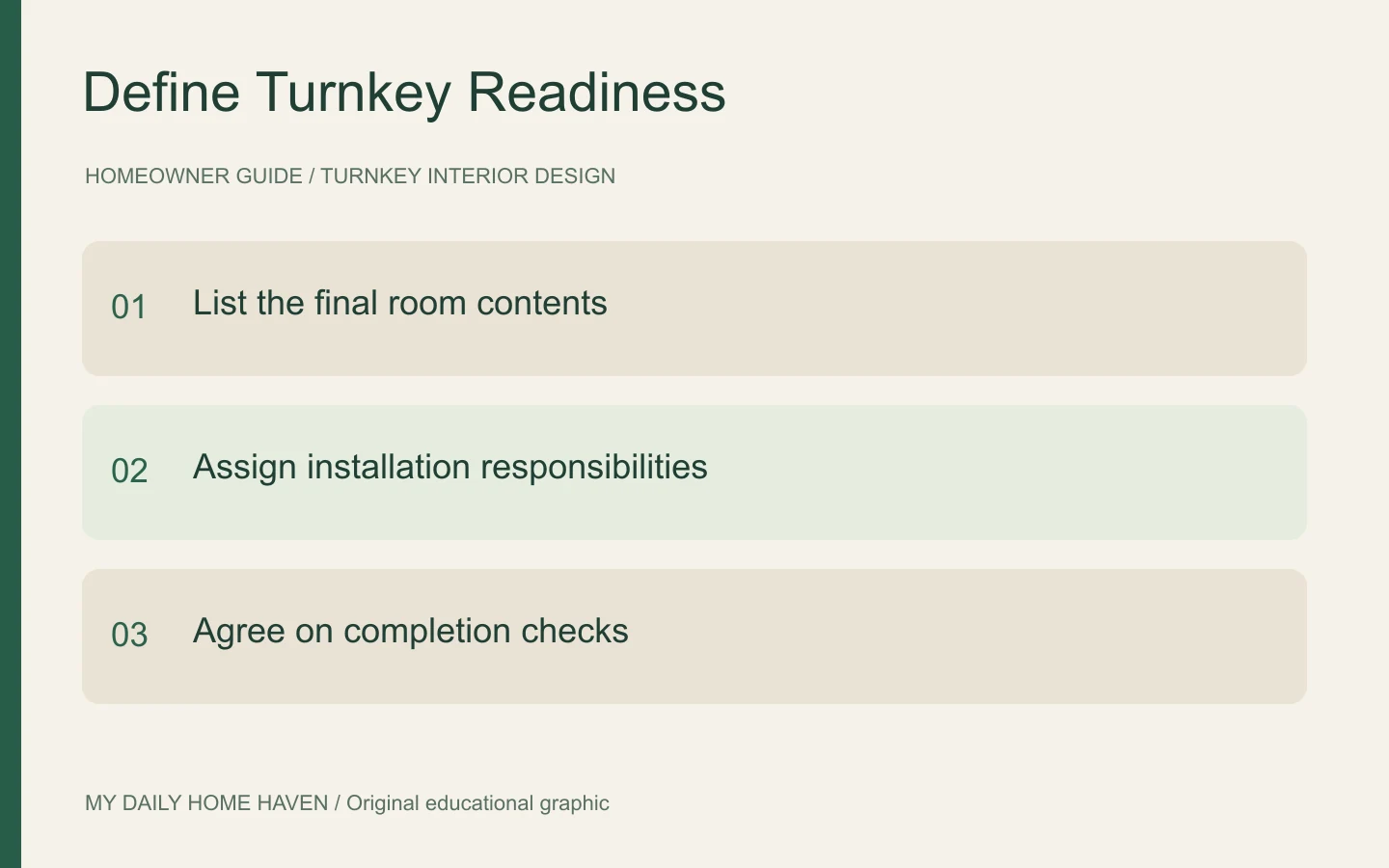
Define turnkey interior design room by room
First, describe what each room must contain and do at completion. A furnished bedroom might require a bed, mattress, window treatments, lighting, and storage. Accessories, linens, and technology setup may or may not belong to the scope.
List the practical conditions as well as the objects. For example, a desk is not fully useful if the necessary electrical work remains unresolved. Identify which related tasks another qualified professional must complete and who coordinates the sequence.
Avoid relying on presentation images as a complete inventory. A rendering can include objects that are illustrative rather than specified for purchase. Request a written schedule identifying the actual deliverables and exclusions.
Turnkey interior design versus full service
The terms can overlap, and firms may use them differently. Full service often describes involvement across design and implementation stages. Turnkey emphasizes a proposed ready-to-use outcome. Neither phrase replaces an explicit agreement.
Compare the stages, items, and responsibilities included rather than trying to choose by label. Our full-service interior design guide explains the workflow questions that also apply to many turnkey projects.
Ask what happens if an excluded task prevents normal use. For example, if internet installation or appliance commissioning is outside the engagement, identify the responsible party and the timing before treating the room as complete.
Create a clear responsibility schedule
| Work area | Clarification to request |
|---|---|
| Design | Plans, selections, revisions, and approval stages |
| Construction | Who contracts for and manages the building work |
| Purchasing | Seller, payment handling, and order authorization |
| Receiving | Delivery inspection, storage, and claims |
| Installation | Assembly, specialist trades, and final placement |
| Readiness | Checks required before ordinary use |
| Handoff | Documents, unresolved items, and follow-up contacts |
Assign each task to a named party. A single point of communication can help, but it does not establish that one firm is legally or technically responsible for every aspect of the work.
Understand the pricing boundaries
A turnkey quote may combine several categories or show them separately. Ask for a breakdown that distinguishes professional fees, products, construction, delivery, installation, taxes, and allowances. Identify what remains an estimate.
Also ask how changes are priced. An agreed substitution, an owner-requested upgrade, and an unforeseen site condition may follow different processes. Require enough information to approve the cost and timing consequences before work proceeds.
Avoid interpreting one total as proof that every possible expense is covered. A defined total can still exclude particular services or depend on assumptions. Request an exclusions list and check it against the final outcome you expect.
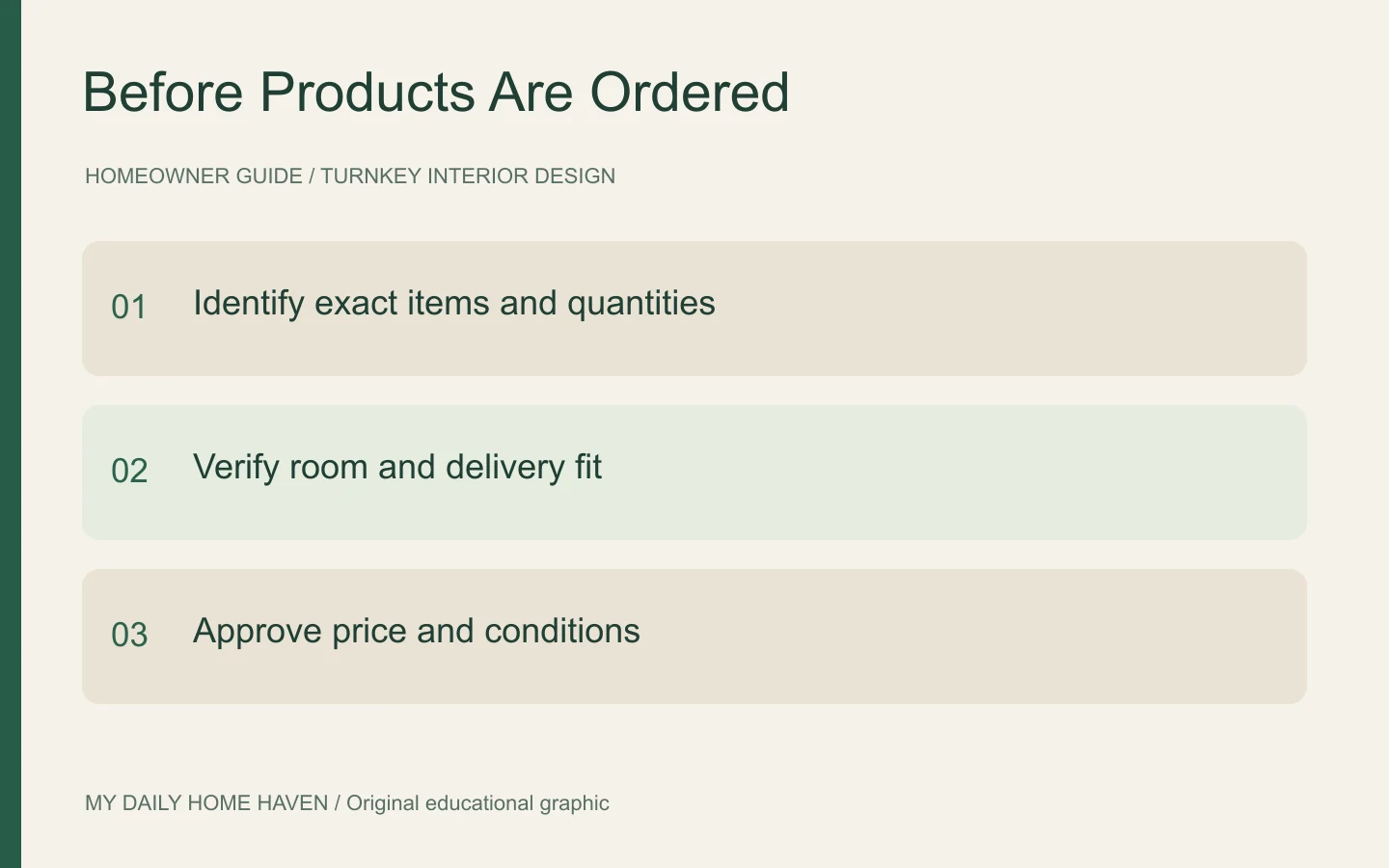
Approve products before ordering
Confirm the exact item, dimensions, finish, quantity, and relevant terms. Custom selections may need samples or drawings before production. Ask who verifies that products fit the room and delivery route.
For example, a dining suite may meet the style brief but leave insufficient movement around the table. The approval should connect the selected items to the actual layout. Our space planning guide explains why those relationships deserve attention.
Keep a record of approved alternatives. If a product becomes unavailable, the team should explain how the replacement affects function, appearance, price, and delivery. A coordinated handoff depends on more than obtaining something similar at the last moment.
Build a realistic readiness checklist
Decide in advance how the team will review completion. The checklist should reflect the scope and identify who verifies specialist work. A homeowner walk-through is useful but does not replace any required professional inspection.
Record missing items, visible defects, incomplete installation, and documents still required. Give each issue an owner and next action. Also clarify which items prevent the agreed handoff and which can be resolved afterward under the applicable terms.
For projects involving building work, verify local requirements and relevant credentials. CIDQ’s regulatory overview explains why professional titles and permitted activities differ between jurisdictions.
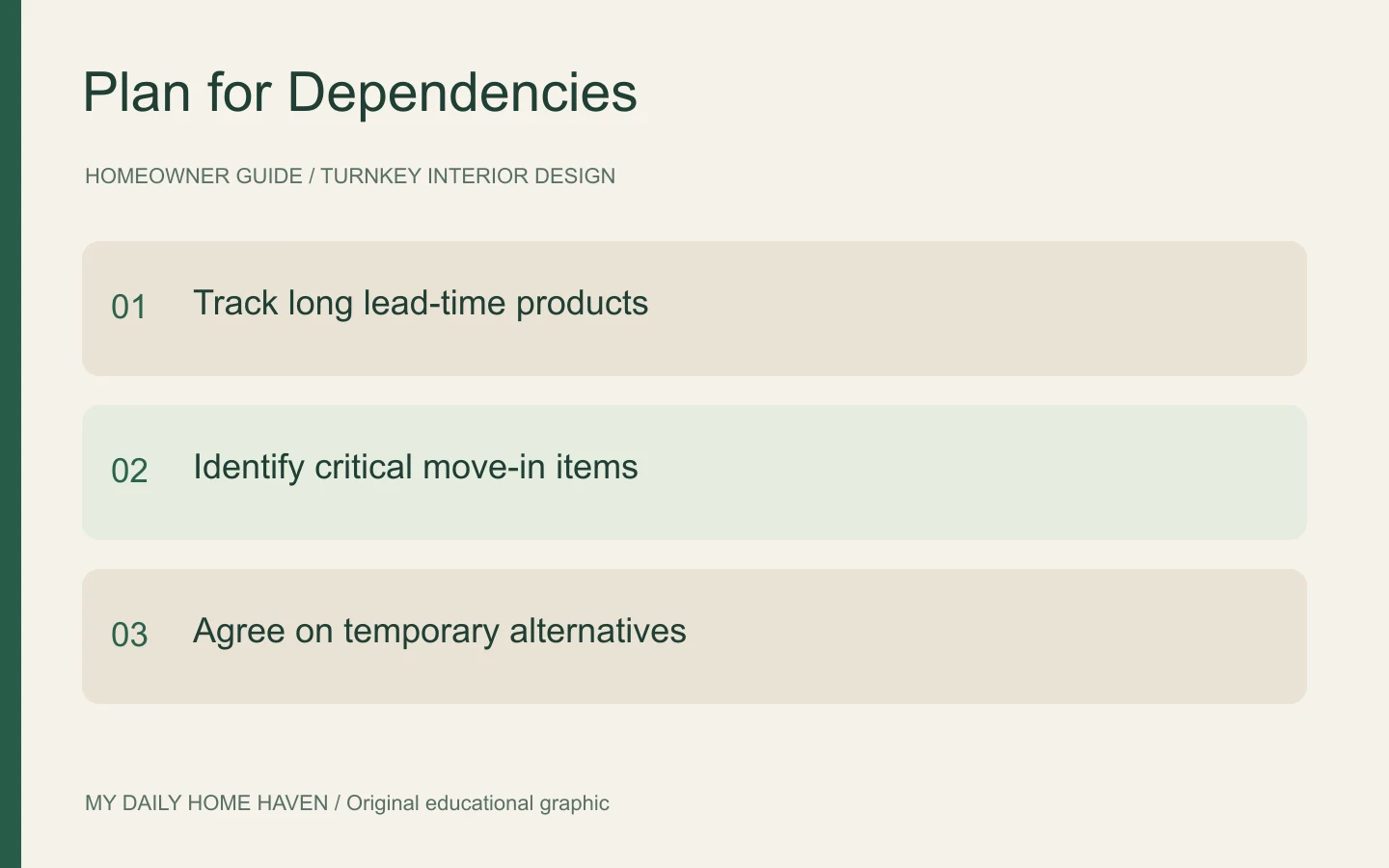
Plan around delivery dependencies
A single delayed item can affect readiness. Ask which selections have long lead times, when orders will be placed, and what alternatives exist. Temporary arrangements should be discussed rather than assumed.
For example, a bedroom might be usable while an optional decorative object is delayed, but not while the agreed bed remains unavailable. Define priorities so the team can explain the practical effect of a delay without treating every item as equally critical.
If your move-in date is fixed, share it before signing. Ask what the provider can commit to and what depends on outside parties. Keep the timeline aligned with documented assumptions and prompt decision-making.
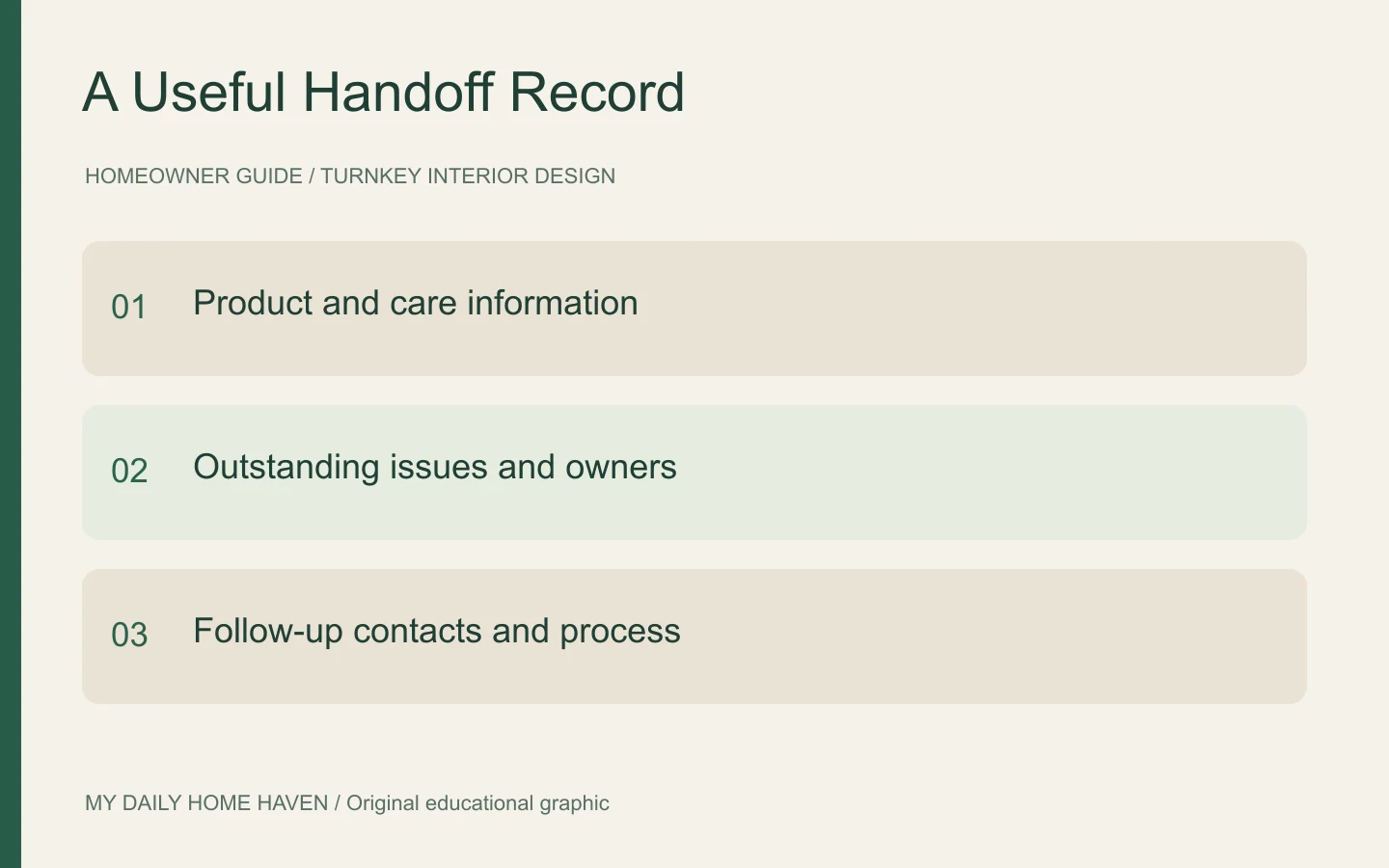
Request a useful handoff record
Ask for the agreed product list, care information where available, relevant warranties, and contacts for unresolved issues. Clarify whether you receive final plans and which drawings show completed conditions.
Also identify the process for follow-up questions. A room may reveal an issue after daily use begins. Know which provider to contact and what the agreement says about additional support, manufacturer claims, or installation concerns.
Store approvals and handoff documents together. This record can help when you replace a finish, order another matching item, or ask a future professional to work on the room.
Turnkey project questions
Does turnkey always include construction?
No. Some offers concern furnishing and installation only. Ask the provider to identify the building work included and the party responsible for carrying it out.
Are accessories and household supplies included?
Only when the scope includes them. A styled presentation does not establish a purchasing commitment for every object shown.
Does turnkey guarantee an exact move-in date?
Do not assume so. Review the actual schedule, dependencies, and terms. Ask how delays and temporary alternatives will be handled.
Define turnkey interior design readiness before work starts
A useful turnkey proposal connects the promised outcome to specific items, tasks, approvals, and handoff checks. Choose the service only after those details explain what you will receive and what remains your responsibility.