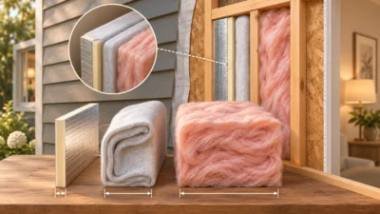
If you have little room to spare, what is the thinnest wall insulation that still makes a meaningful difference? The short answer depends on whether you mean the highest R-value per inch or the thinnest practical option for a real home. Vacuum-insulated panels can deliver exceptional thermal resistance in very little space, while foil-faced polyisocyanurate (polyiso) is a more familiar thin board used in some wall upgrades. Yet the best choice also depends on cost, moisture, fire protection, and whether the product can be installed without gaps. This guide compares the options and explains what to check before choosing.
For the broader picture, see our wall insulation guide, which covers materials, installation methods, and wall types.
What “thinnest insulation” really means
Insulation thickness alone does not tell you how well a wall resists heat flow. The useful comparison is R-value per inch, a measure of thermal resistance. A material with a higher R-value per inch can provide more resistance in the same depth. However, a product label usually describes the insulation itself, not the full wall. Wood or metal studs, fasteners, air leakage, and gaps can reduce whole-wall performance.
Product numbers are typical rather than guarantees. Values change with product formulation, density, temperature, facing, and test method. Always use the current manufacturer data sheet for the exact product and thickness. Also compare the complete assembly, because thin insulation placed over continuous framing may reduce thermal bridging more effectively than a higher-rated product fitted only between studs.
Thinnest wall insulation options compared
Vacuum-insulated panels: highest performance, tightest limits
Vacuum-insulated panels (VIPs) use a porous core inside a sealed, low-pressure envelope. DOE material notes describe some commercial VIPs as exceeding R-50 per inch. That makes them among the thinnest insulation options by nominal R-value. But the number should not be treated as a regular wall rating: edge effects, panel size, and installation details affect the assembly.
VIPs are fragile and cannot usually be cut on site. A puncture or failed seal can sharply reduce performance, and replacement may require opening the finish. The panels also cost substantially more than common foam board. They may suit a carefully designed space-constrained project with a specialist, but are rarely a casual do-it-yourself wall solution. See the DOE discussion of aerogel-based VIP development for context on performance and development challenges.
Aerogel blanket or board: thin, specialized, and costly
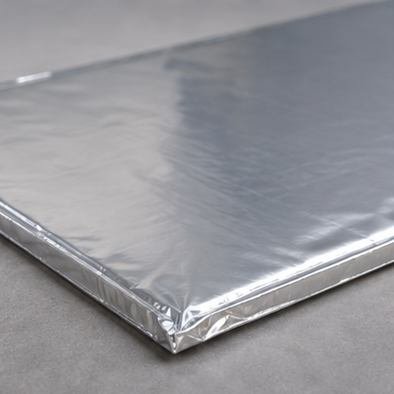
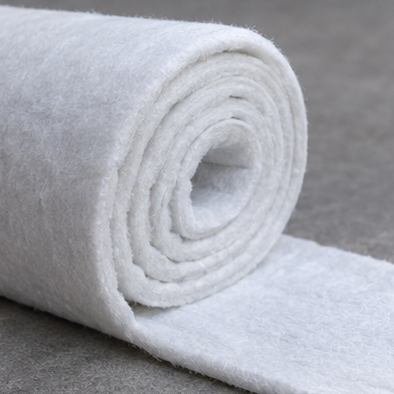
Silica aerogel products combine a porous structure with low heat transfer. NIST has published experimental and emerging material comparisons showing high R-values for some aerogel composites. Those figures do not mean every retail blanket has the same rating. Check the exact product data, installation instructions, vapor behavior, and approval for the intended wall use.
Aerogel can be useful where a conventional cavity will not fit, such as selected retrofit details or awkward junctions. Its premium price and product-specific availability make it a specialty option. It can also require compatible tapes, finishes, or protective layers. Ask whether the stated value applies to the material alone or the tested assembly.
Polyiso board: a practical thin layer for many projects
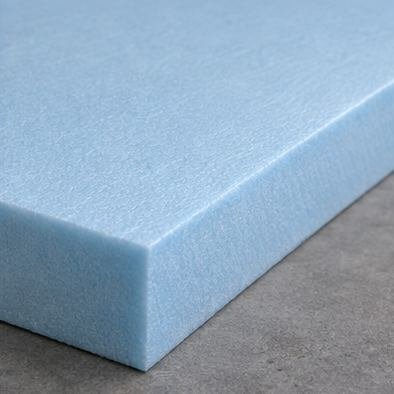
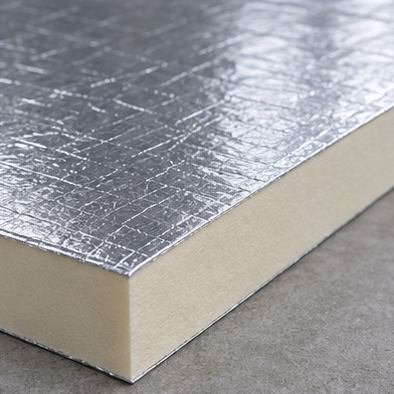
Foil-faced polyiso rigid board commonly offers around R-5.5 to R-6 per inch in typical building data, though published values depend on product and temperature. It is easier to source than VIPs and can be installed as a continuous layer over framing or as part of an interior wall assembly. At one or two inches, it may add useful resistance while taking less room than a thick fibrous layer.
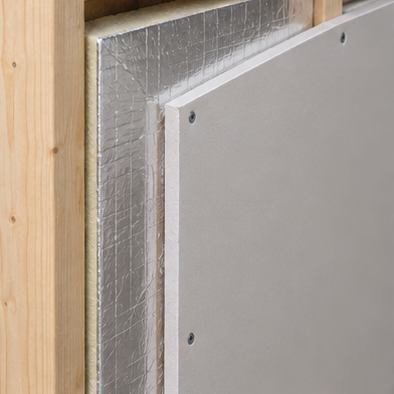
The trade-off is moisture control. Foil facings can strongly restrict vapor flow, so the board’s location, climate, existing wall, and drying paths matter. A thin layer installed on the wrong side of a cold or damp wall can create condensation risk. Polyiso also needs code-compliant fire protection when used indoors, often a thermal barrier such as drywall. Use manufacturer instructions and local code, not a generic thickness rule.
XPS, EPS, spray foam, and thin conventional materials
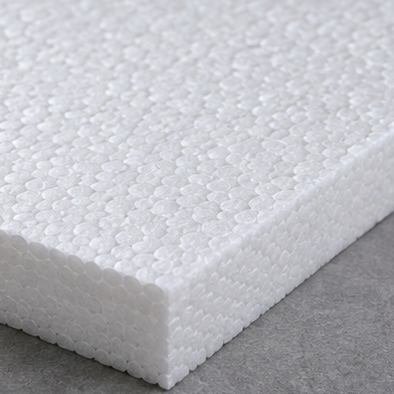
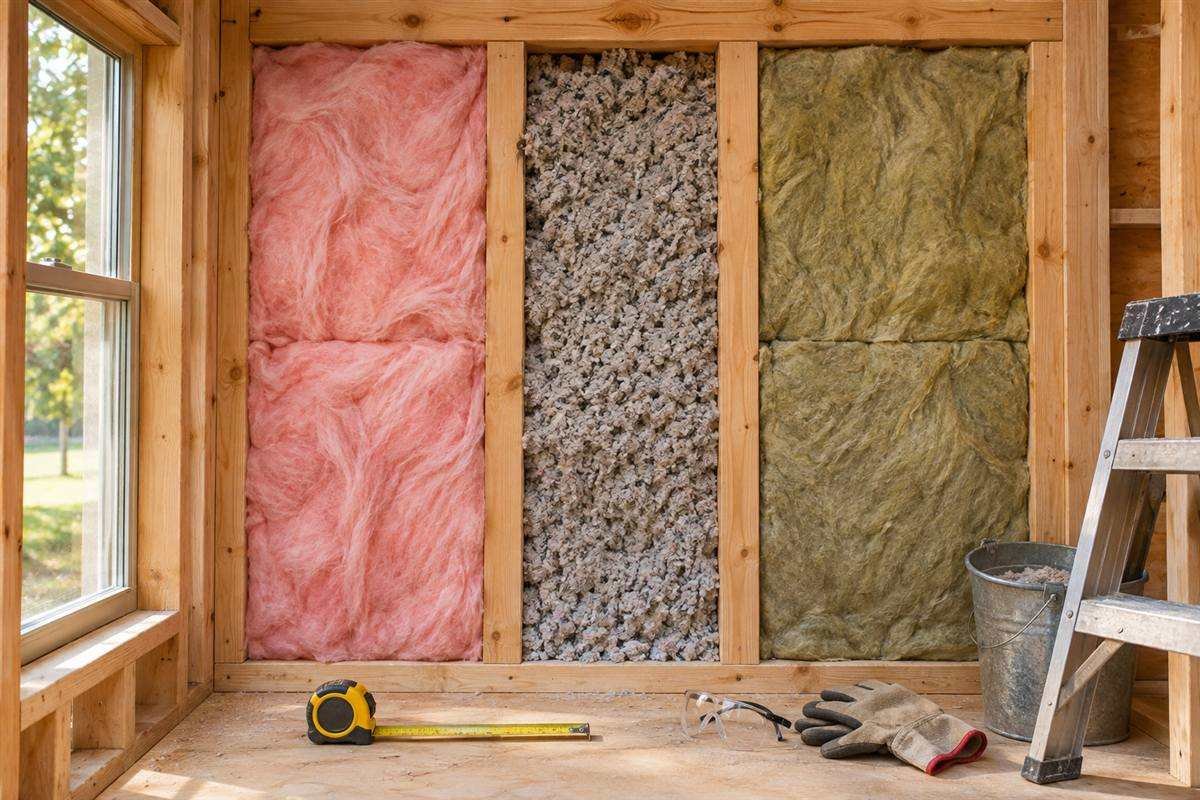
Extruded polystyrene (XPS) is commonly rated near R-5 per inch; expanded polystyrene (EPS) is often around R-4 per inch, with product variation. Closed-cell spray polyurethane foam can approach R-6 per inch in some formulations, but it is not a thin removable panel and requires trained installation and careful moisture design. Open-cell foam, fiberglass, mineral wool, and cellulose generally provide less R-value per inch, but can be better suited to standard stud cavities, sound control, fire performance, cost, or vapor openness.
Typical comparative values from the Building America Solution Center’s insulation table are useful for screening materials, not for replacing product submittals or a wall analysis.
What is the thinnest wall insulation for a retrofit?
So, what is the thinnest wall insulation that makes sense for an existing home? Choose the thinnest product that meets the assembly’s thermal target and moisture strategy, rather than chasing the highest R-value per inch alone.
- Very limited depth and a specialist project: ask about VIP or aerogel systems, installed as a tested assembly.
- Thin continuous retrofit layer: consider rigid board such as polyiso, EPS, or XPS only after checking climate, vapor control, and fire protection.
- Standard framed cavity: compare cavity batts or dense-pack with a continuous exterior layer, rather than focusing only on the thinnest product.
- Historic masonry or a damp-prone wall: get a building-science assessment before adding interior insulation.
The right answer can change with the wall. For a framed wall, adding insulation across the studs may reduce thermal bridging. For a solid masonry wall, interior insulation cools the masonry and changes its drying behavior. In either case, the wall needs a coherent rain-control, air-control, thermal-control, and vapor-control strategy. Our interior wall insulation materials guide explains how common materials fit different interior assemblies.
How to choose without creating moisture or fire problems
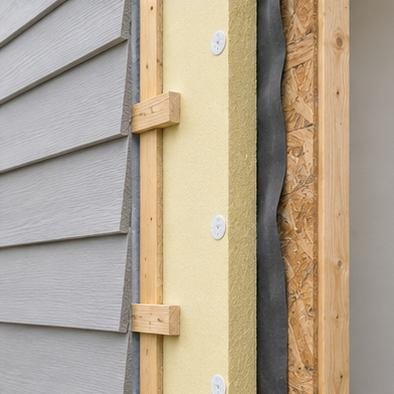
First, identify the wall: framed cavity, solid masonry, basement, or a previous retrofit. Look for leaks, damp staining, damaged siding, or musty odors before covering anything. Fix bulk water entry and air leaks first. Insulation does not repair a roof leak, failed flashing, or plumbing problem.
Next, set a target based on local energy code, climate zone, and available thickness. Ask a qualified contractor or designer how the proposed layers control condensation. Check product fire classification, required thermal barrier, permitted use, and compatibility with wiring, outlets, and cladding. If a product requires a vapor retarder, follow the assembly design rather than layering extra plastic by habit.
Finally, compare installed performance and durability, not just R-value per inch. A nominally high-performing panel with many unsealed joints can perform poorly. Plan for careful cutting, air sealing, window returns, electrical boxes, and transitions to floors and ceilings. When the wall design is uncertain, professional review costs less than opening a damp wall later. See the complete wall insulation guide for more planning detail.
A simple way to estimate thickness
When a manufacturer lists an R-value per inch, multiplying that figure by the installed thickness gives a rough material-level estimate. For example, a product rated R-6 per inch at two inches would be roughly R-12 before accounting for framing, joints, fasteners, and temperature effects. This is only a screening calculation, not a whole-wall rating or a substitute for local code.
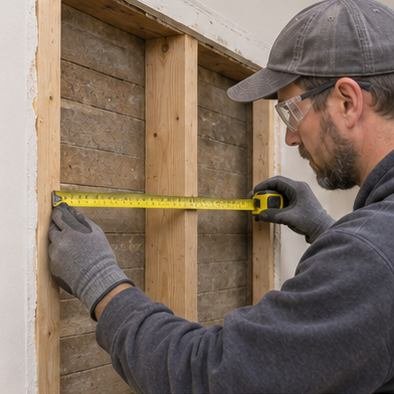
Also check the actual space available around windows, doors, pipes, outlets, and trim. A nominally thin product may need furring strips or a new finish surface that takes up more room than its board thickness. Measure the finished projection at key details before you decide.
Frequently asked questions
What is the thinnest insulation with the highest R-value?
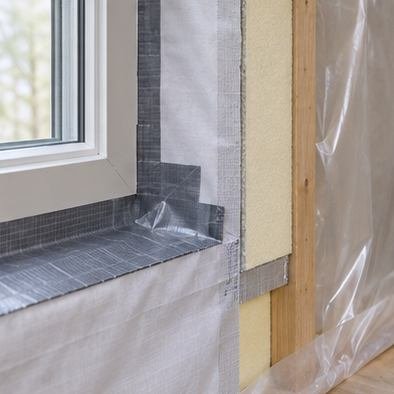
Vacuum-insulated panels can exceed R-50 per inch in some commercial products, but they are fragile, expensive, and generally cannot be cut on site. Verify the tested assembly value and suitability for the wall before considering them.
Is one-inch polyiso enough for an exterior wall?
It may add useful continuous insulation, but “enough” depends on the climate, existing wall R-value, local code, condensation control, and product details. One inch is not a universal code-compliant answer.
Is the thinnest insulation always best?
No. A slightly thicker, well-installed material can outperform a thin premium product with gaps or poor moisture detailing. Choose for the complete wall assembly, durability, fire safety, cost, and available space.
Conclusion
The thinnest wall insulation by R-value per inch may be a VIP, while aerogel and polyiso offer other space-saving choices. For most homeowners, the decision is less about an impressive number and more about fitting the material safely into the wall. Compare verified product data, control air and moisture, and meet fire and code requirements. For help comparing broader options, return to our complete wall insulation guide.