

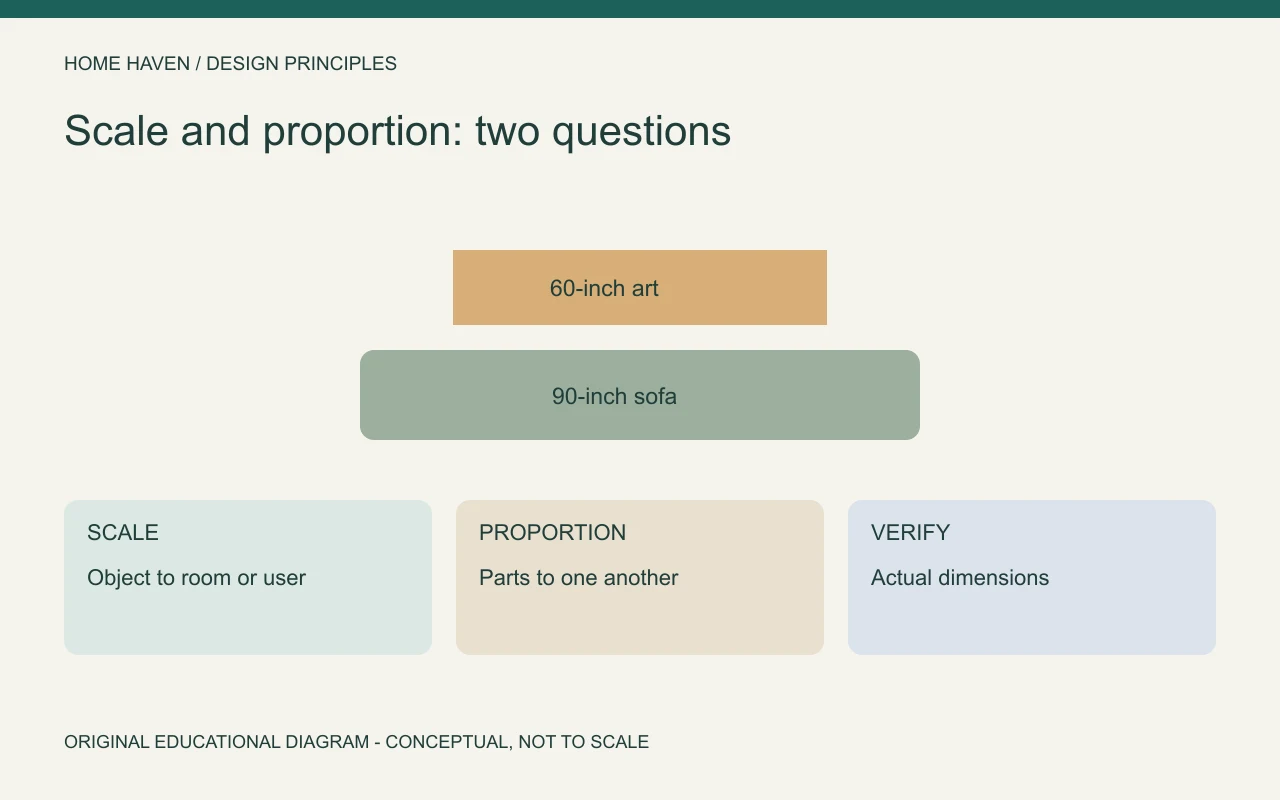
Scale and proportion in interior design help you judge size relationships at two levels. Scale considers an object in relation to the room or its users; proportion considers how parts relate to one another. Use both alongside actual measurements. A piece can fit physically while still overwhelming the arrangement, or look convincing while being awkward to use.
Our principles of interior design guide introduces the wider framework. This guide focuses on furniture, artwork, rugs, and a repeatable way to test their relationships before committing to changes.
Understand the difference through one lamp
Imagine a table lamp beside a sofa. Its scale concerns how the complete lamp relates to the table, seating, and room. Its proportion concerns relationships inside the lamp, such as the shade compared with the base.
The two questions overlap, but separating them helps diagnose a problem. A lamp may have an attractive shade-to-base relationship while being too tall for its position. Conversely, the overall height may suit the room while a bulky shade interferes with use.
Scale and proportion in interior design begin with a reference
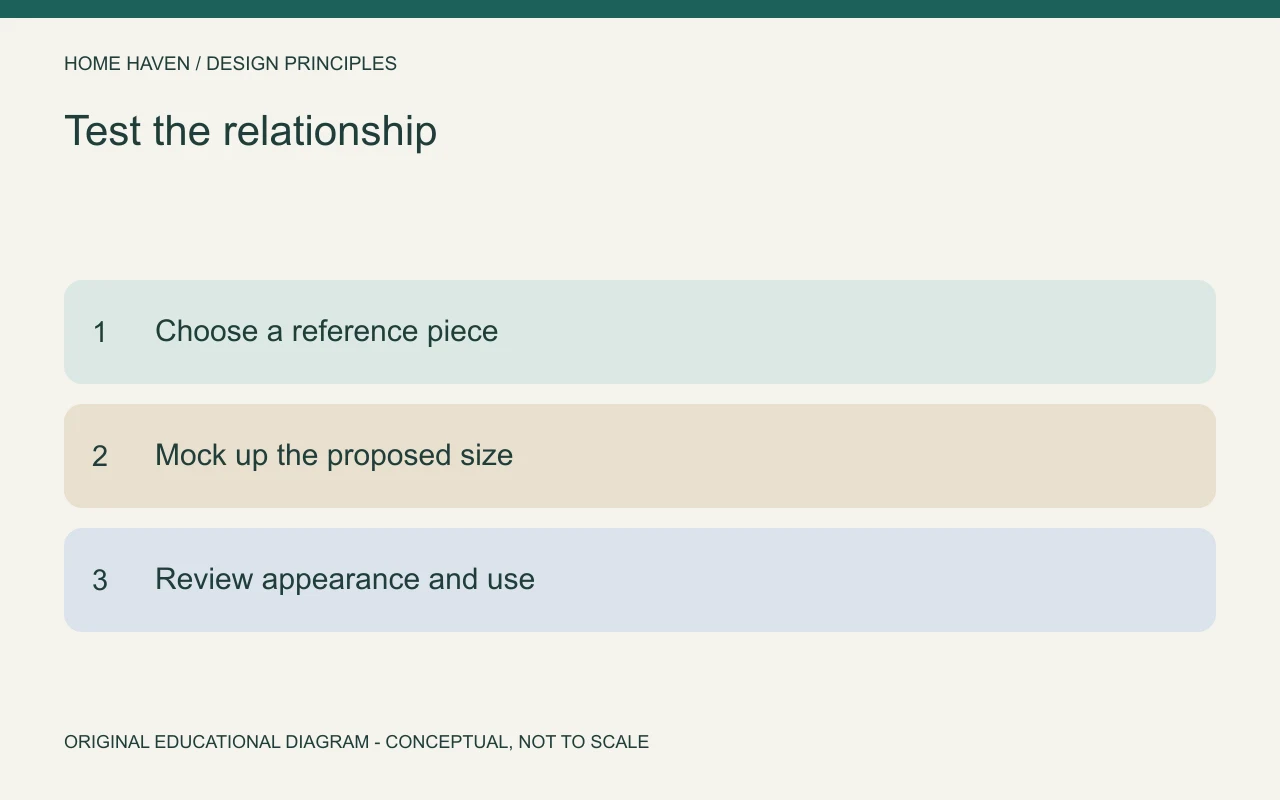
Choose the major piece or room feature that the smaller items relate to. A sofa can anchor the review of a coffee table and artwork. A dining table can anchor the relationship with chairs and the fixture above it.
Purdue University Libraries’ design basics guide includes proportion among general composition concepts. The examples here translate size relationships into everyday room exercises. They do not establish compulsory furniture ratios.
Measure the whole object
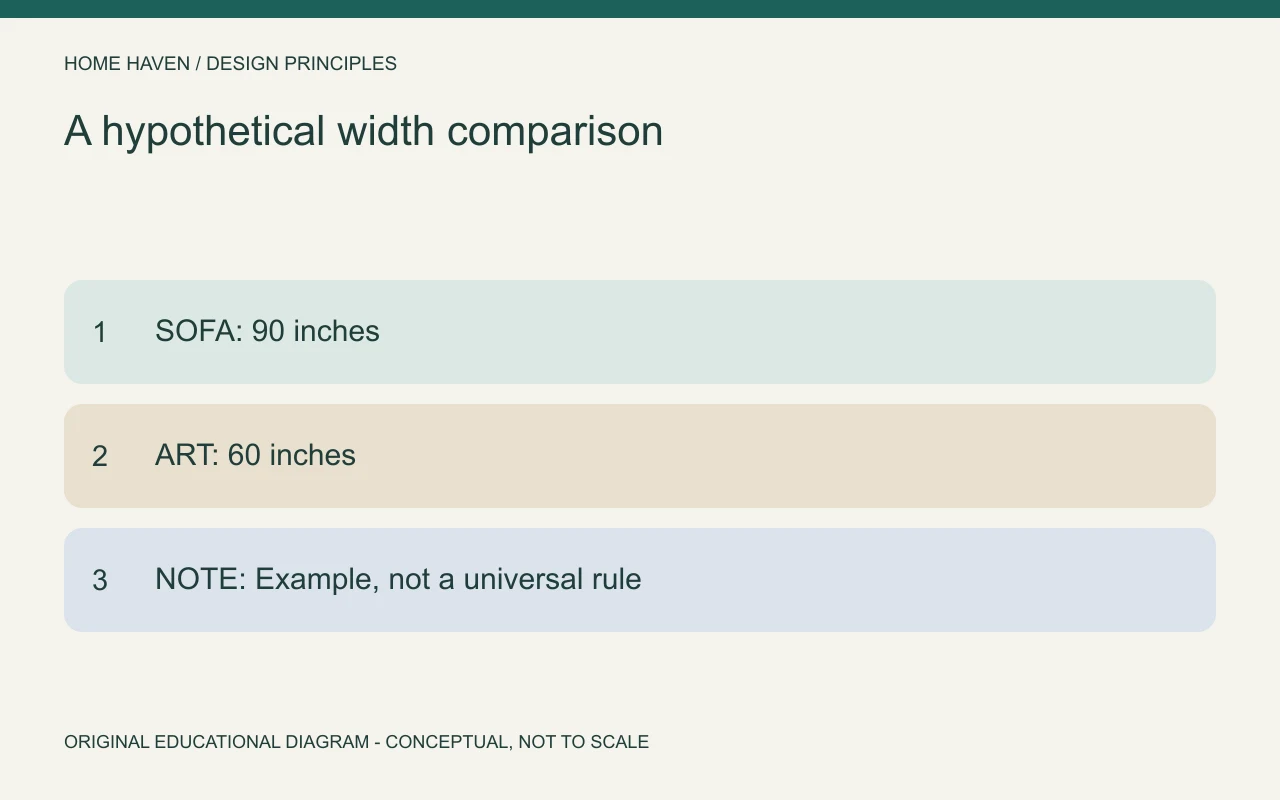
Use the actual overall width, depth, and height from the manufacturer or your own verified measurements. Include projecting arms, handles, and other parts that affect fit. Product names such as compact or apartment-size do not provide a dependable footprint.
Then consider visual bulk. Two chairs with similar footprints can look different if one has a high solid back and the other has an open frame. Compare both the dimensions and the visible form instead of assuming identical floor area creates an identical effect.
Test artwork relative to the furniture
Use paper shapes to compare an artwork or grouping above a cabinet or sofa. Check the arrangement from the entrance and seated positions. Leave the mockup in place long enough to see it under the room’s usual lighting.
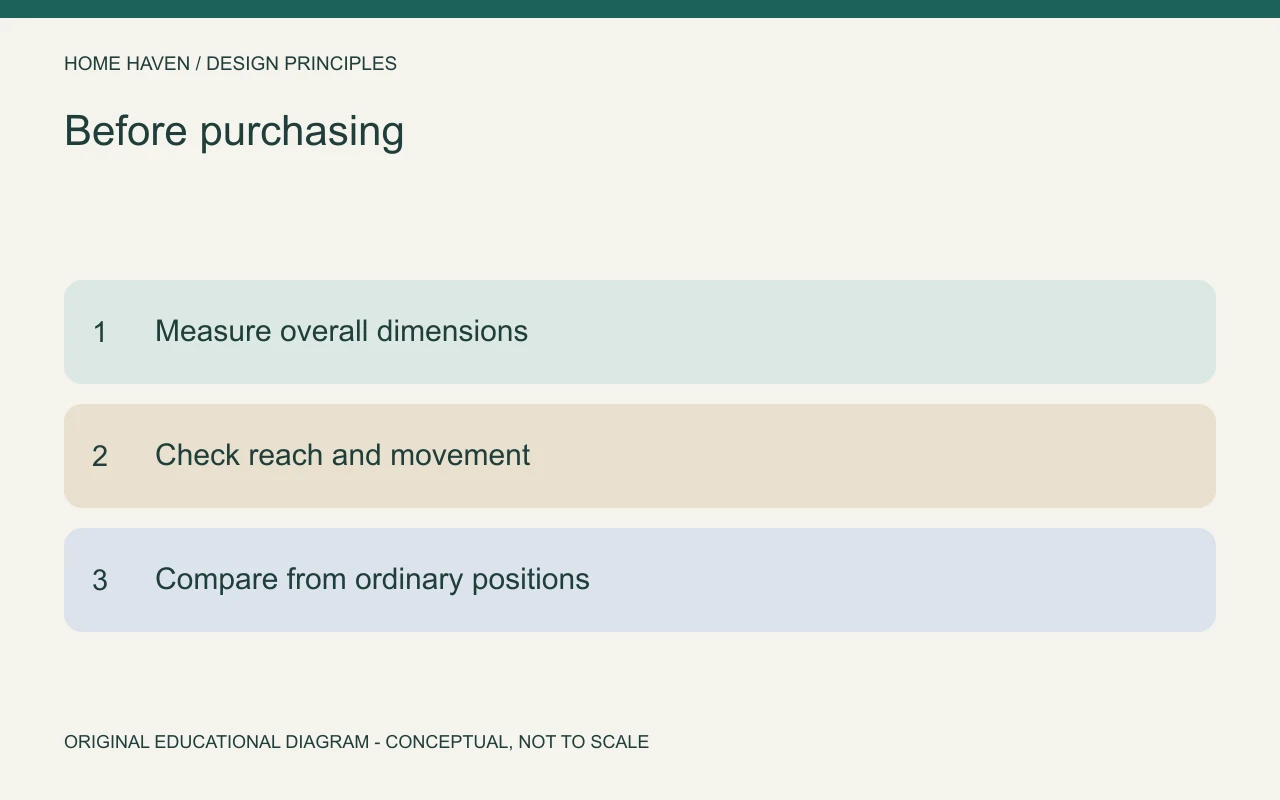
For a hypothetical example, a 60-inch-wide artwork above a 90-inch sofa has a width relationship of two-thirds. That arithmetic describes the example; it does not make two-thirds a rule. A grouping, heavy frame, or unusual wall can change the visual result.
Review rugs with the complete arrangement
Mark the proposed rug outline with removable tape where suitable for the floor. Place the real furniture or represent its footprint accurately. Judge how the rug connects the group and how its edge relates to doors and routes.
Do not choose only from a cropped product photo. A rug that appears generous in an empty room may look disconnected once the furniture arrives. Compare the whole seating arrangement rather than applying one universal rule about which legs must touch the rug.
Check tables and seating in use
Review table height and reach with the actual seating. A low table can look elegant while making everyday use difficult for a particular household. A deep chair can suit one person and feel uncomfortable to another.
Include the occupied position of chairs and the movement of doors or drawers. The space planning guide explains why a measured layout matters. A pleasing proportion does not compensate for blocked access or unsuitable furniture.
Consider ceiling height and tall objects
A tall cabinet, large pendant, or high-backed chair changes the room’s vertical relationships. Compare it with the ceiling, windows, and nearby furniture. A piece that suits a tall room can dominate a lower space even when its footprint fits.
Avoid using the word oversized as an automatic criticism. A deliberately large artwork can simplify a room that otherwise contains many small objects. The question is whether the relationship serves the room and remains practical.
Use consistent views for comparisons
Photograph alternatives from the same position with similar framing. A wide-angle image can make a room appear more spacious, while a tight crop can make an object seem larger. Changing the viewpoint can distort the comparison.
When using a digital planner, enter real dimensions and keep the camera comparable. Do not shrink a generic sofa until the model looks comfortable. The image should communicate the proposed arrangement, not hide a sizing problem.
A hypothetical bedroom review
Suppose a bedroom contains a tall headboard, small bedside tables, and short lamps. The bed dominates the wall, while the lamps appear disconnected from it. Before replacing everything, test whether different lamp heights or a simpler wall arrangement improve the relationship.
Also check the actual bedside tasks. A visually stronger lamp is not automatically a better reading light. Review switch access, light direction, table space, and product suitability before buying. This keeps the visual correction tied to use.
Avoid treating decorating ratios as requirements
A suggested ratio can help you make an initial comparison, but it cannot account for every shape, material, room, or person. Record why an arrangement works instead of defending it only because it matches a number.
If the room feels wrong, identify the specific relationship: artwork to cabinet, chair to table, or furniture group to available space. Testing one relationship is more productive than replacing several items in search of a perfect formula.
Scale and proportion questions
Does a small room need only small furniture?
No. Several undersized pieces can create clutter without meeting the room’s needs. Compare the complete arrangement and actual dimensions before deciding which pieces suit it.
Can you judge proportion from a photograph?
A photograph can support a visual comparison, but perspective and cropping affect it. Use measured information and review the real room before making a substantial purchase.
Test before replacing
Measure, identify the reference piece, and mock up the relationship. Check the room from ordinary positions and evaluate real use. A careful comparison gives scale and proportion a practical purpose beyond following decorating rules.