

Repetition in interior design connects different parts of a room through recurring color, shape, material, line, or pattern. It can create visual rhythm without requiring a matching furniture set. Choose a detail worth repeating, then vary how it appears. The aim is a recognizable connection rather than identical objects on every surface.
Our interior design principles guide explains how repetition works with emphasis and unity. This article focuses on selecting a motif, introducing variation, and recognizing when repetition starts to feel excessive.
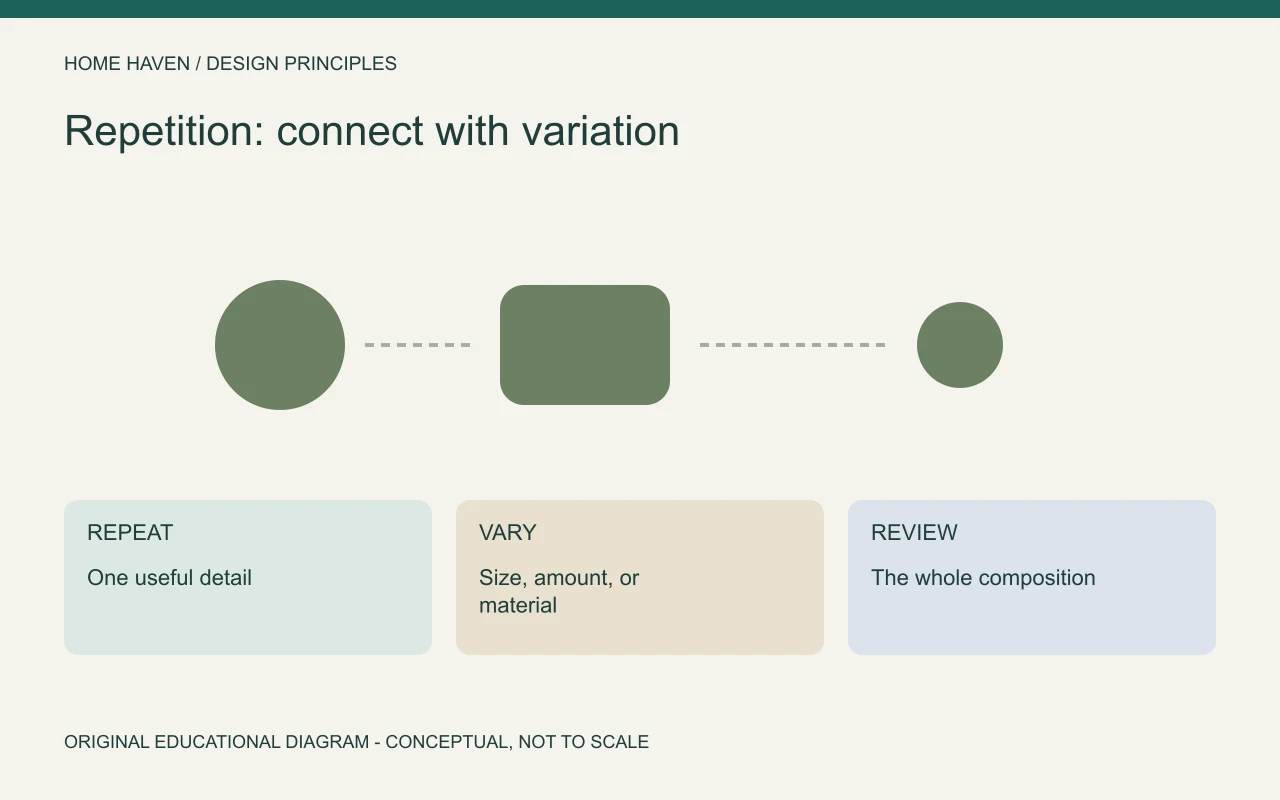
Find an existing detail to repeat
Begin with a major item you intend to keep, such as a rug, artwork, sofa, or cabinet. Identify one useful characteristic: a warm wood tone, curved line, muted blue, or woven texture. This gives the room a starting connection without making a new shopping list.
Do not repeat every characteristic in the reference piece. A patterned rug may contain several colors, but the room does not need accessories in all of them. Select the detail that supports the direction you actually want.
How repetition creates a connection
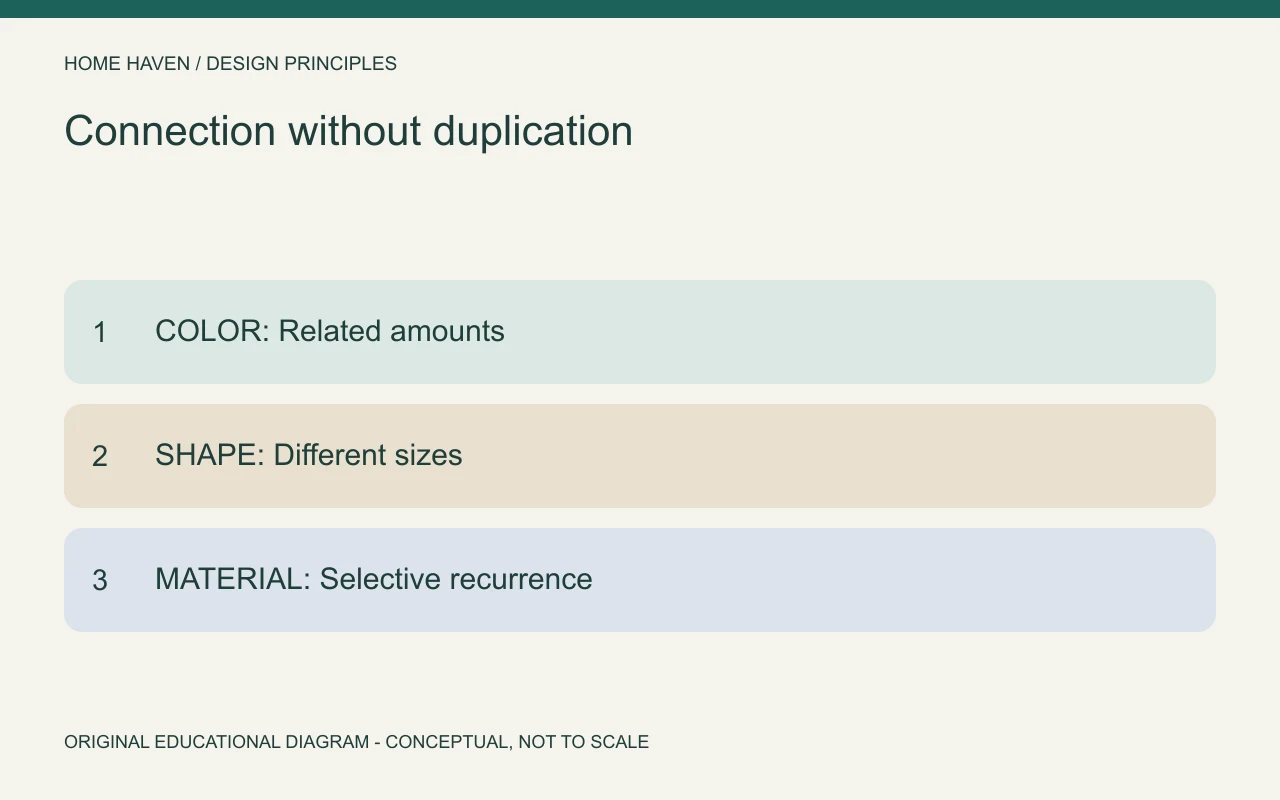
Recurring details help the eye recognize a relationship between separate elements. A curved mirror and a rounded table can relate even when their materials differ. A color can appear in different amounts across a textile, an artwork, and a smaller accessory.
The University of Delaware’s design principles resource covers repetition as a general visual-design concept. The room examples here are practical applications rather than a fixed method for arranging every interior.
Repetition in interior design works with variation
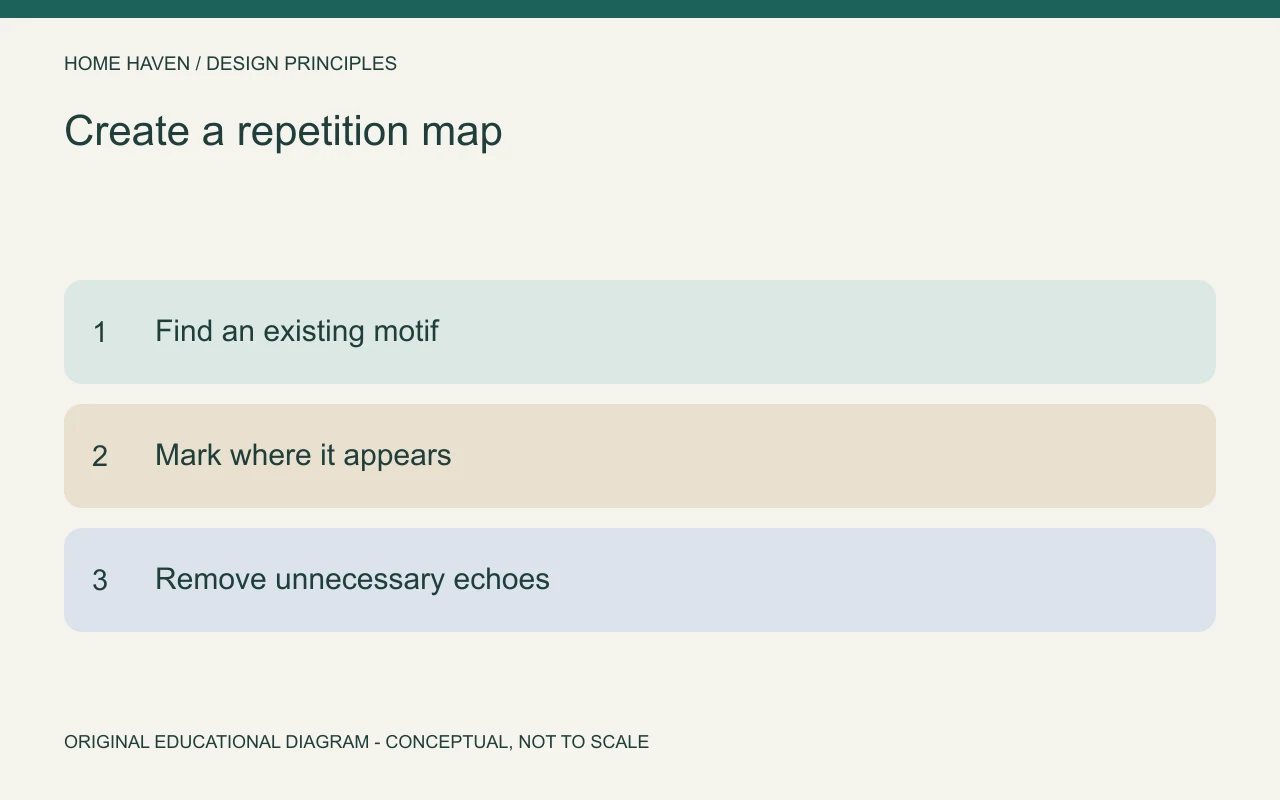
Keep the connection recognizable while allowing the objects to differ. You might repeat a rounded shape at different sizes or use a related color in both a solid fabric and a subtle pattern. Variation helps the room avoid a showroom-set effect.
An exact match can still be useful where it serves a purpose, such as paired lamps. The issue is not whether objects match; it is whether the repetition helps the whole room. Review the combination rather than judging matching as always good or always bad.
Repeat color in different amounts
Use the room’s existing palette as a reference. A color may occupy a substantial area in an artwork and a smaller area in a cushion. The amounts do not have to follow a universal percentage to feel connected.
Check colors in the actual room light and alongside neighboring materials. A similar name on two product pages does not guarantee a visual match. Use appropriate samples for significant finishes and keep room lighting reasonably consistent when comparing them.
Repeat materials without making everything identical
A wood tone can connect a table with a frame or shelf. Metal finishes can relate through tone or character without appearing on every object. Choose the connections that make sense for the pieces and the room’s use.
Avoid assuming every wood must match exactly. Differences can work when the overall relationship is deliberate. Compare undertones, visible grain, and the amount of each material rather than relying only on labels such as oak or walnut.
Use shape and line when color is restrained
A neutral room can still have rhythm through forms. Repeated verticals in a cabinet, lamp, and artwork can establish a connection. Rounded forms can soften that sequence without requiring another strong color.
Be selective. Repeating a prominent arch in every mirror, opening, shelf, and accessory can make the motif compete with the room itself. Test the strongest repetitions first and let smaller details remain quieter.
Connect adjacent rooms through the shared view
Stand where you can see both spaces and identify a detail that can bridge them. A related finish, color, or shape can connect an entry to a living room while allowing each area to serve a different purpose.
Do not force every room to become a copy. A dining area may use a color in upholstery while the adjacent living room uses a smaller amount in art. The shared view matters more than whether separate shopping lists contain identical items.
A hypothetical room example
Imagine a living room with an existing olive rug and a warm wood coffee table. The owner wants to connect a new reading chair without replacing the sofa. One option is to use a restrained olive detail near the chair and a related wood tone in its side table.
The room does not need olive curtains, olive lamps, and olive storage boxes as well. Review the view after adding one connection. If the chair already relates through shape or material, another repeated color may be unnecessary.
Make a repetition map
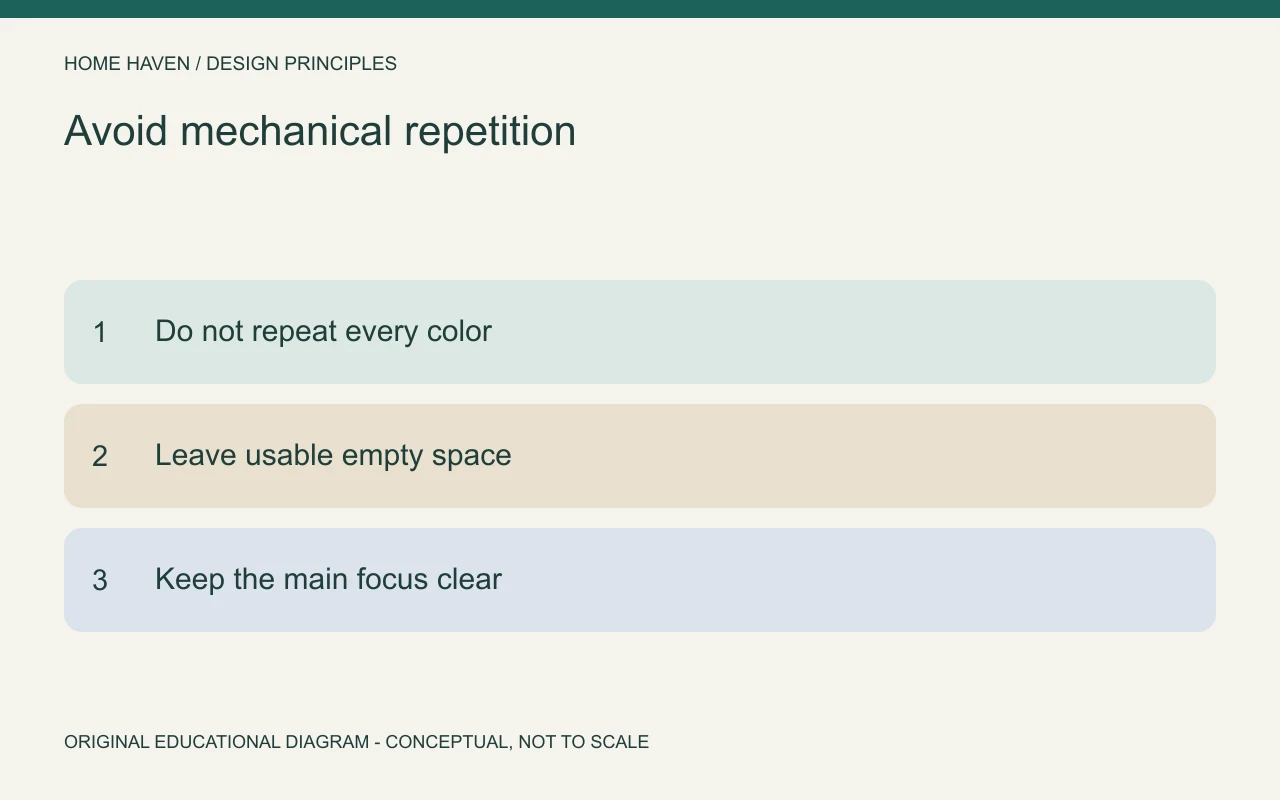
List the detail you want to repeat and mark where it appears. Include the major existing pieces before proposing additions. The map can be a simple sketch rather than a polished board.
Then ask which repetitions are strong, which are subtle, and which serve no clear purpose. Remove one unnecessary echo and compare the room. A rhythm often becomes clearer when the number of competing motifs decreases.
- Reference: the existing detail that starts the connection.
- Locations: where the detail already appears.
- Variation: how size, amount, or material changes.
- Review: whether the connection supports the room’s main focus.
Avoid confusing rhythm with clutter
More repeated accessories do not automatically create a stronger room. A cluster can become visually dense, while too many motifs can make the eye jump between unrelated details. Keep the intended emphasis clear.
Review surfaces as groups and leave useful empty space. Storage and cleaning also matter: a decorative rhythm that covers every tabletop can make ordinary activities inconvenient. The room should remain usable after the styling exercise.
Repetition questions
Must a detail appear exactly three times?
No. Three is sometimes used as a decorating starting point, but it is not a compulsory rule. Judge the strength and placement of the connection in the actual room.
Can repetition work with mixed styles?
Yes. A shared color, line, or material can connect pieces from different styles. Keep the relationship intentional without erasing the individual character of every item.
Repeat one idea deliberately
Choose a detail, echo it selectively, and review the whole room. Keep variation and useful empty space. Repetition succeeds when it makes separate pieces feel related without requiring every object to say the same thing.