

An interior design proposal template should explain the proposed work, what the client will receive, how fees work, and what happens next. It should help both sides recognize the same project. Begin with the brief and scope rather than a decorative cover page. Then customize every assumption before sending it.
The outline below is an editorial planning template, not a substitute for a project-specific legal agreement. Our interior design software guide can help you choose tools for preparing plans and visuals that support the proposal.
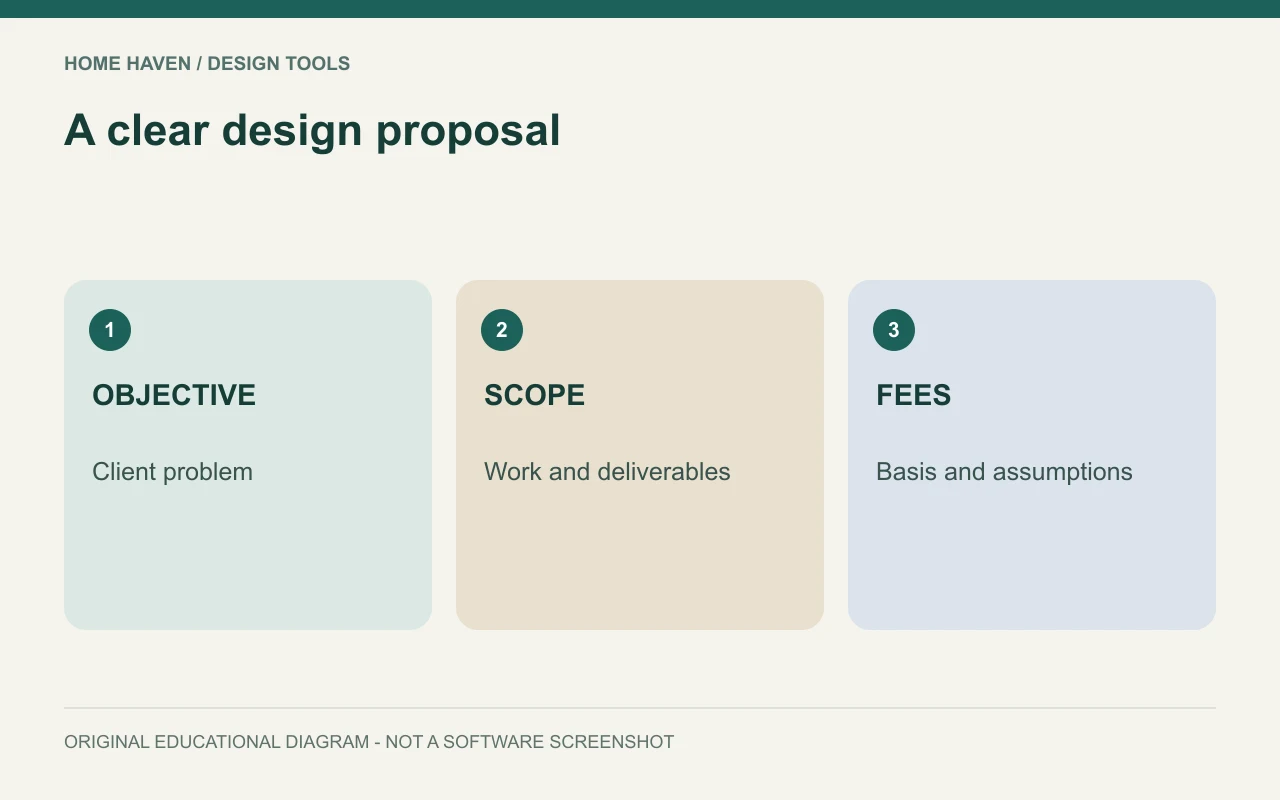
Start with the client’s problem
Summarize the room, the intended use, and the change the client wants. Mention the important constraints already discussed. A useful opening demonstrates that the proposal responds to this project rather than recycling general promises.
For a hypothetical living room, the problem might be an awkward seating arrangement and insufficient storage. The brief could prioritize family use, an existing sofa, and a restrained purchasing budget. Avoid implying that the design solution is final before the agreed design work begins.
Interior design proposal template: a reusable outline
Copy the outline into your preferred document tool and replace each field. Keep the project identifier and revision date visible. If a section does not apply, remove it or explain the boundary instead of leaving ambiguous blanks.
- Project: client, room or property, proposal date, and revision.
- Objective: the problem, priorities, and desired outcome.
- Scope: the services and areas included.
- Deliverables: the specific documents, meetings, and review outputs.
- Exclusions: services and responsibilities outside the fee.
- Schedule: stages, dependencies, and review windows.
- Fees: basis, payment stages, and separately billed expenses.
- Assumptions: information and decisions the client will supply.
- Changes: how additional work will be identified and agreed.
- Next step: the process for review and a suitable project agreement.
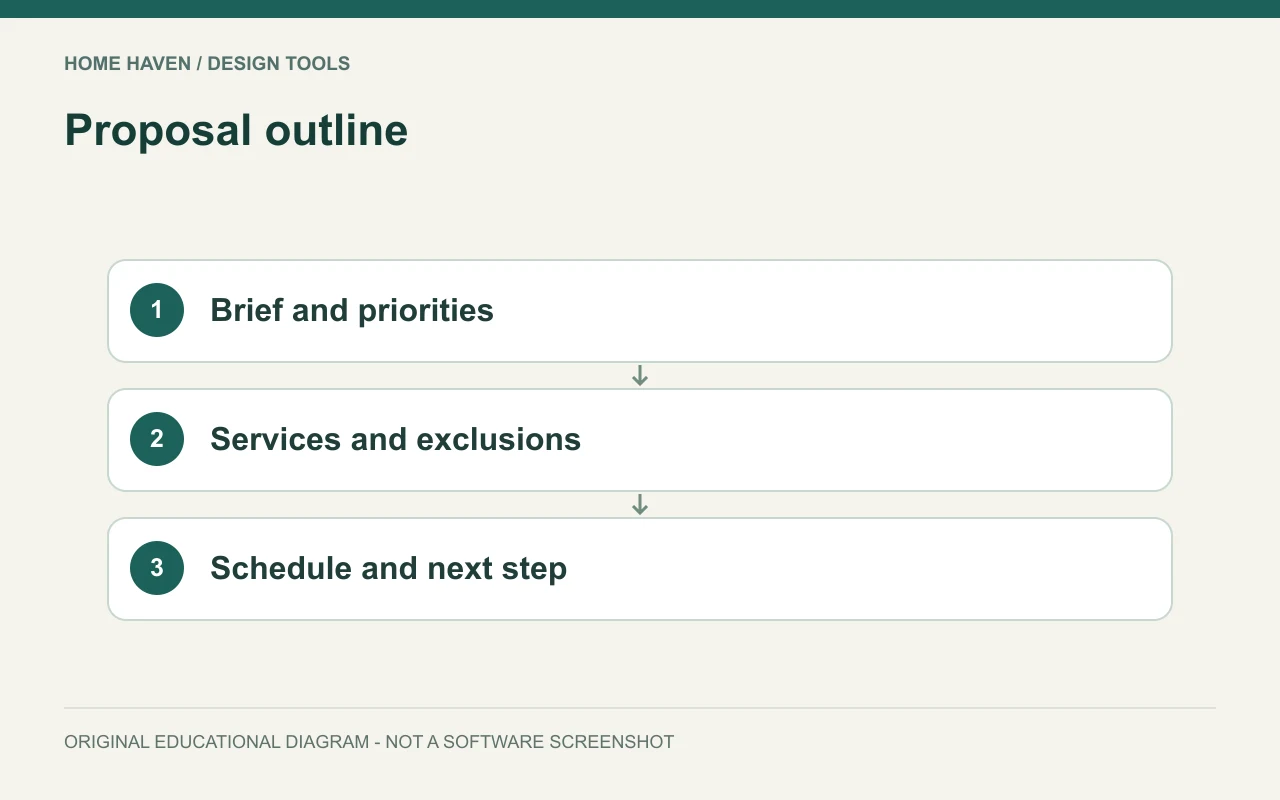
Describe services as observable work
Use concrete descriptions such as review supplied room measurements, prepare two furniture layouts, or develop one finish palette. Avoid broad wording such as complete design service unless the proposal defines what that includes. Concrete scope makes comparison and review easier.
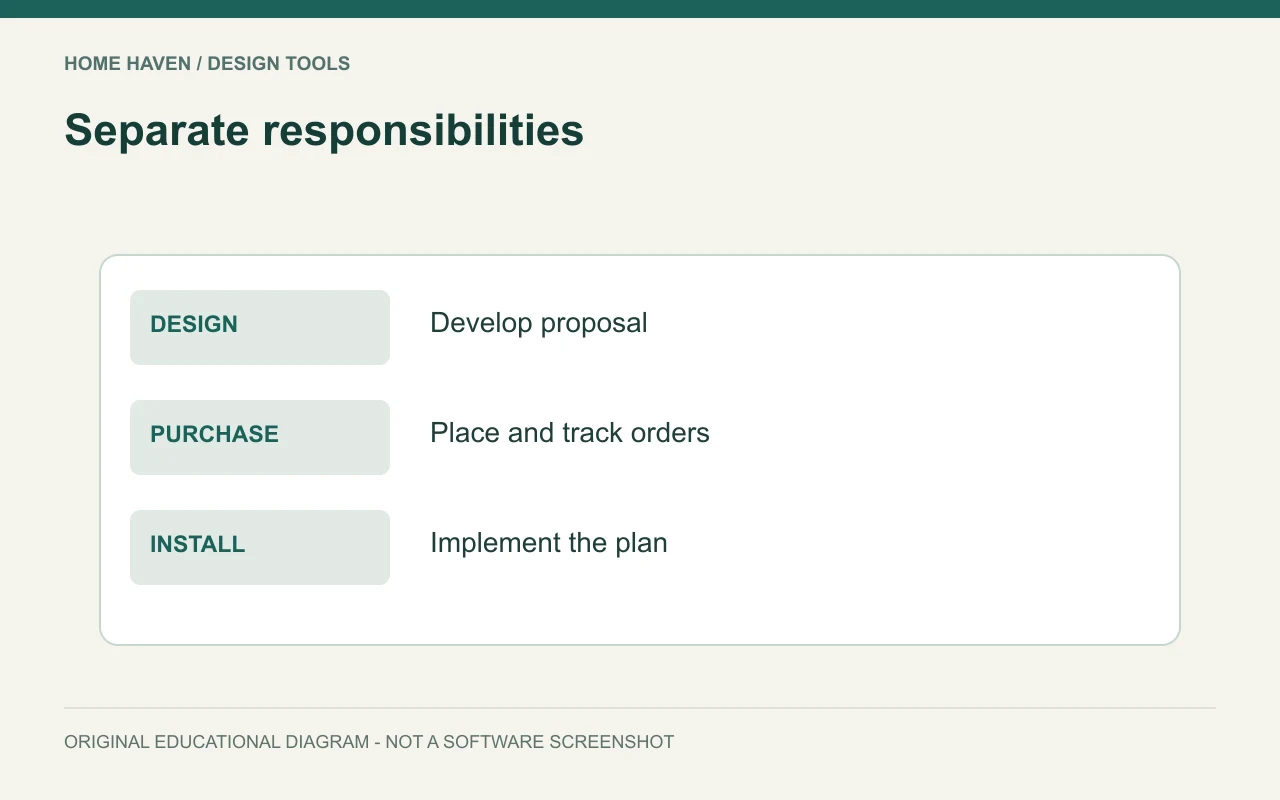
Distinguish design from purchasing and installation. If you will provide a product list but the client will order everything, state that responsibility. If you will manage procurement, describe the additional process and the information needed before orders proceed.
Name every deliverable
List the number and type of outputs without promising unnecessary volume. A furniture plan, mood board, finish schedule, and rendering each serve a different purpose. Explain the purpose and level of detail rather than relying only on the document name.
For example, concept-level drawings can communicate a furnishing idea without providing construction instructions. Make that distinction explicit. Do not imply permit, engineering, or construction documentation if the service does not include the appropriate work.
Show fees without hiding assumptions
Explain whether the design fee is fixed, hourly, stage-based, or calculated another way. State what the fee covers and how additional work will be addressed. Keep product purchasing costs separate from design fees unless the arrangement explicitly combines them.
For a hypothetical example, use labeled placeholders rather than presenting an invented amount as a market rate: Design fee: [USD amount]. Included review rounds: [number]. Additional services: [agreed basis]. Complete the real figures and terms before issuing the proposal.
Connect the schedule to client decisions
Show stages in a realistic order: brief confirmation, concept development, review, revisions, and final handoff. Identify the information required to begin each stage. A schedule based on missing measurements or unconfirmed scope needs a clear dependency.
Ask the client to consolidate feedback through one decision-maker where practical. Explain how delayed responses or changes to the brief may affect timing. Do not promise delivery dates that depend on supplier or third-party actions you have not confirmed.
Include a clear revision process
Define what a review round means and how feedback should arrive. A single consolidated response is easier to act on than many disconnected messages. State whether a new layout direction after approval falls inside or outside the original scope.
Distinguish correction from additional work. Correcting an error in an agreed deliverable is different from adding another room. A practical process identifies the change, explains its effect, and records agreement before the extra work begins.
Sample proposal language for a room refresh
Hypothetical objective: Develop a practical living room furnishing plan that retains the existing sofa and improves storage and conversation seating. The client will supply current room measurements and identify pieces to keep.
Hypothetical scope: Review the supplied brief, develop two concept furniture arrangements, present one preferred palette and product direction, and complete the agreed review round. Final deliverables will include the selected furniture layout and a product selection record.
Hypothetical exclusions: Structural changes, building-system design, site verification, purchasing, installation, and technical construction documents are outside this example scope. Replace these boundaries with the responsibilities appropriate to the actual project.
Choose a tool that keeps versions clear
A straightforward document editor can be enough for a small proposal. A business platform may help connect it to client information and later project stages. DesignFiles, for example, documents quotes, client communication, and related business tools; confirm the exact workflow and current plan before adopting it.
Keep the editable master separate from the issued PDF or shared review copy. Name the issued version clearly and archive superseded proposals. If scope or fees change, issue an identifiable revision instead of silently replacing the earlier document.
Proposal questions
Is a proposal the same as an agreement?
They can interact, and legal effects depend on the wording and circumstances. Do not assume a label alone determines enforceability. Use suitable professional legal review for the agreement and acceptance process.
Should you include finished design ideas for free?
Include enough information to explain the proposed service. Decide deliberately how much unpaid concept work fits your business process, and avoid presenting unverified ideas as final recommendations.
Send a proposal the client can understand
Read the document from the client’s perspective: what happens, what arrives, what costs extra, and what must they do next? Resolve those questions before sending. A clear scope is more valuable than an elaborate document with uncertain responsibilities.