

An interior design client questionnaire turns an initial conversation into a usable project brief. It should reveal how people use a space, what they want to change, and which constraints affect the work. Ask clear questions that lead to decisions. Then review the answers with the client instead of treating a completed form as a finished brief.
The sample questions below suit a residential starting point and need adjustment for the actual service. Our interior design software guide explains tools that can help turn the resulting brief into plans and visual comparisons.
Explain why you are asking
Tell the client what the questionnaire covers and how the information will support the project. Separate required fields from optional details. A focused form usually produces more useful answers than a long collection of questions with no apparent purpose.
Ask only for information relevant to the work. For example, you may need to understand storage needs without collecting a detailed inventory of private belongings. Give the client a chance to discuss sensitive practical needs through an appropriate channel.
Interior design client questionnaire: project basics
Begin with the project location at the level necessary for the service, the rooms involved, and the contact who coordinates decisions. Clarify whether the property is owned or rented and identify approvals that may affect the scope. Do not assume every household member agrees on priorities.
- Which rooms or areas are included?
- What prompted the project now?
- Who will review and approve decisions?
- Which changes require landlord, association, or other permission?
- Are there deadlines or events that affect the timing?
- What information about the existing space is already available?
Ask about daily routines
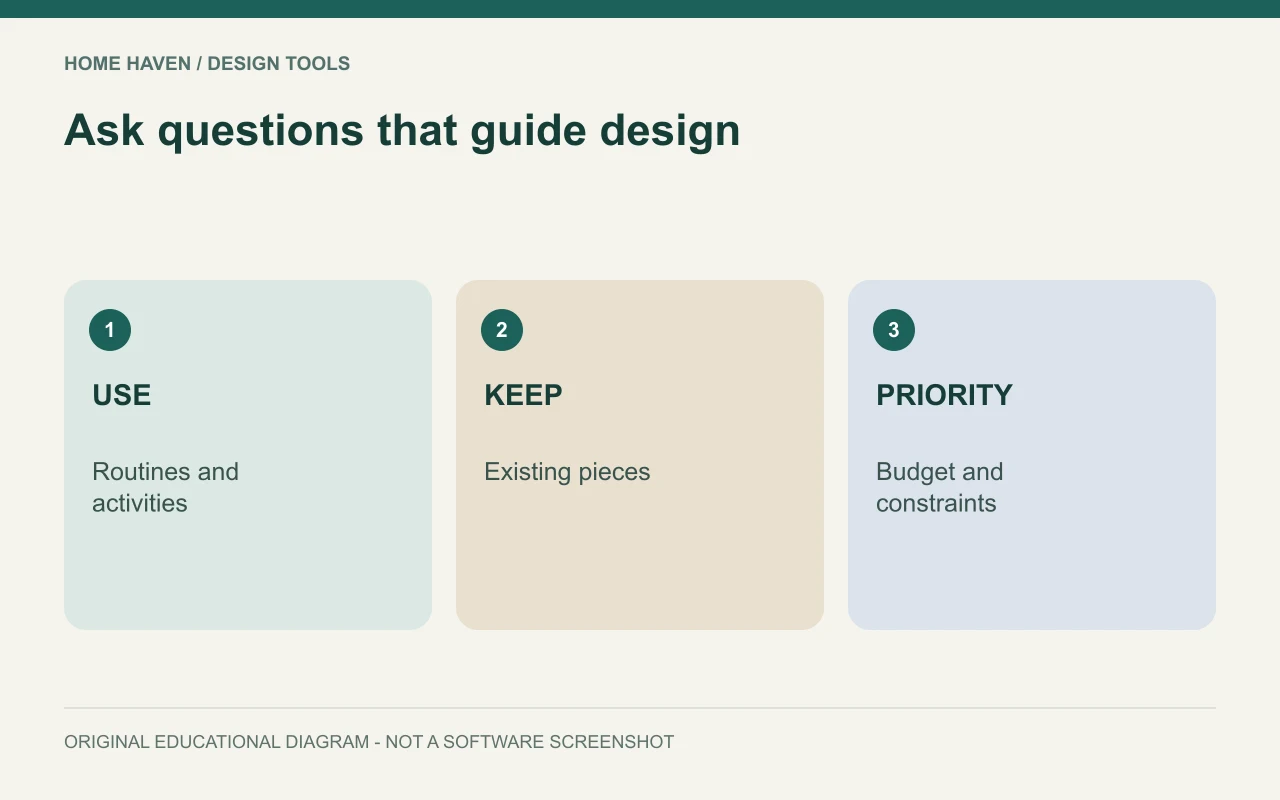
A room’s name does not explain everything that happens there. A living room might support television, homework, exercise, guests, and occasional remote work. Ask about frequency and conflicts so the design can prioritize the actual activities.
Useful questions include: Who uses the room regularly? What works well today? What feels awkward? Which activities need more space or storage? Ask for an example of a normal weekday and a different example of hosting or weekend use.
Identify what stays
List furniture, art, equipment, and finishes the client wants to retain. Record dimensions and condition where they affect the plan. An emotional attachment can matter as much as a functional requirement, so leave room for the client to explain it.
Ask whether an existing piece must stay in the same room or simply remain in the home. That distinction can create useful layout options. Avoid treating every retained item as interchangeable with a generic catalog model.
Make budget questions specific
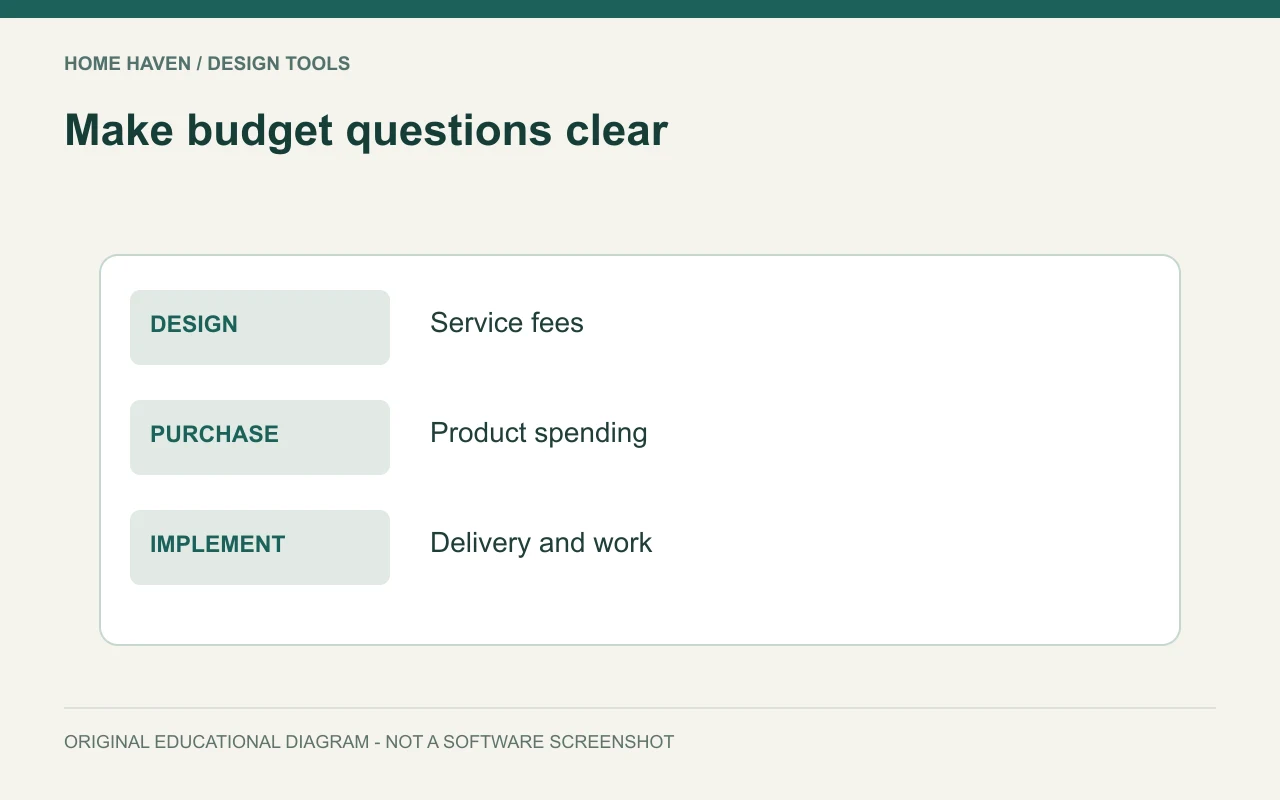
Separate design-service fees from purchasing and implementation costs. Ask whether the client has a total USD target, a firm ceiling, or a staged budget. Explain which expenses the questionnaire should include so both sides answer the same question.
Ask about priorities if the full wish list exceeds the budget. For example, the client might prefer durable seating now and postpone decorative accessories. A priority order provides a better foundation than a single number with no context.
Explore style without relying on labels
Ask for a few reference images and a sentence about each. What do they like: color, furniture shape, material, openness, or mood? What would they avoid? A style label such as modern can mean different things to different people.
Include dislikes and maintenance preferences. A client may enjoy a pale upholstered room visually but prefer easy-clean surfaces for daily life. These answers help distinguish inspiration from a suitable material or product decision.
Ask about practical access and use
Invite the client to identify movement, reach, comfort, sensory, or other use needs relevant to the design. Let them describe the task or difficulty in their own words. Do not require medical details that the project does not need.
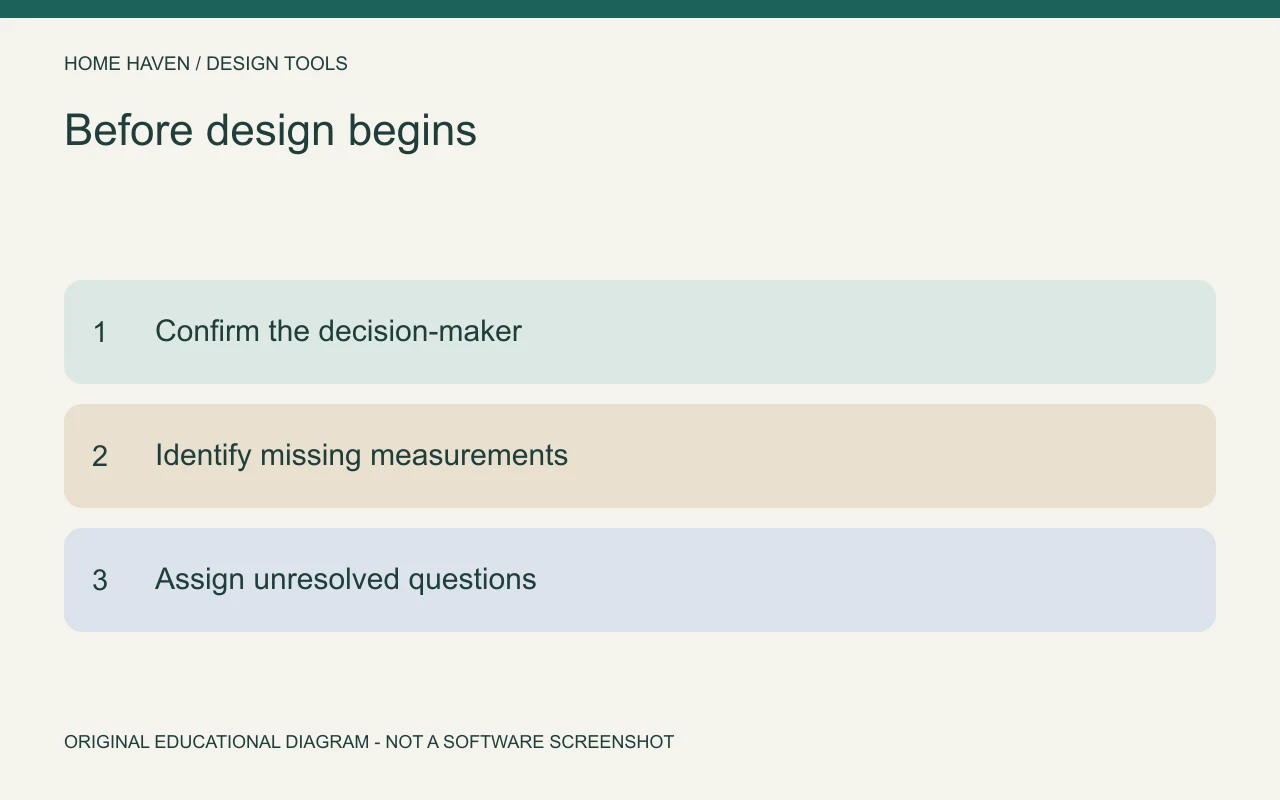
For regulated or technically complex work, identify the appropriate professional assessment separately. A questionnaire can reveal a concern, but it does not establish compliance or replace a site review. Record the unresolved question and who will address it.
Clarify shopping and involvement
Ask how much the client wants to participate in sourcing and ordering. Do they want a product list, help comparing alternatives, or a managed procurement service? Confirm who handles deliveries, returns, assembly, and installation.
Also ask how they prefer to review options and provide feedback. A decision-maker who travels frequently may need a different review schedule from someone available for regular meetings. Agree on one communication route for approvals.
Use a tool that supports review
A simple editable form can work well when the questions are focused and the answers are easy to retrieve. DesignFiles lists design questionnaires among its collaboration tools, illustrating how intake can connect to later project work. Check the current features and permissions before choosing a platform.
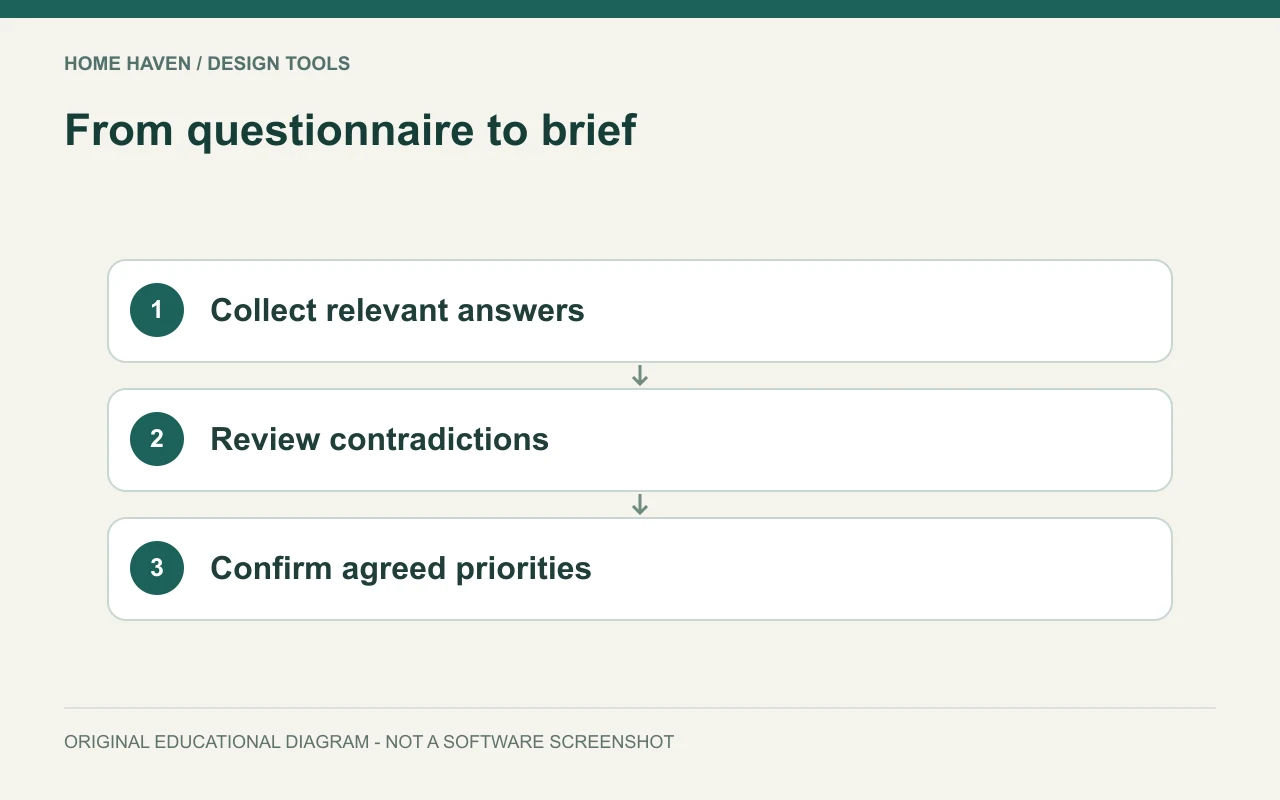
Keep the original responses, then create a brief that summarizes agreed priorities and open issues. Do not silently rewrite the client’s answers. The review meeting should resolve contradictions and confirm what the project will actually address.
Sample closing questions
Finish with questions that give the client room to correct assumptions: What have we not asked that matters to your project? Which decision feels hardest? What would make this project feel successful six months after completion?
Then identify the next step. You might schedule a brief review, request measurements, or prepare a proposal. Avoid implying that submitting the form automatically confirms the service, price, or start date.
Questionnaire questions
How long should the form be?
Long enough to prepare a useful discussion, but short enough that each question has a clear purpose. Use follow-up questions for project-specific detail instead of placing every possible scenario in the first form.
Can the questionnaire replace a consultation?
It can prepare one, but important contradictions and assumptions still need review. Treat the answers as input to the agreed brief rather than automatic final instructions.
Turn answers into agreed priorities
Summarize the activities, retained items, budget, responsibilities, and unresolved questions. Ask the client to confirm that summary. A useful questionnaire succeeds when it leads to a clearer project, not simply a completed form.