

Useful interior design influencers help you understand why a room works, not simply where to buy what appears in a photograph. This guide compares five creators by the design questions their work can help you explore. Start with the learning goal that matches your home, then test the idea against your layout, budget, and daily routine.
For the wider context, our interior design trends news guide explains how to evaluate trend reporting before making changes. Here, the focus is choosing inspiration sources and turning what you notice into practical decisions.
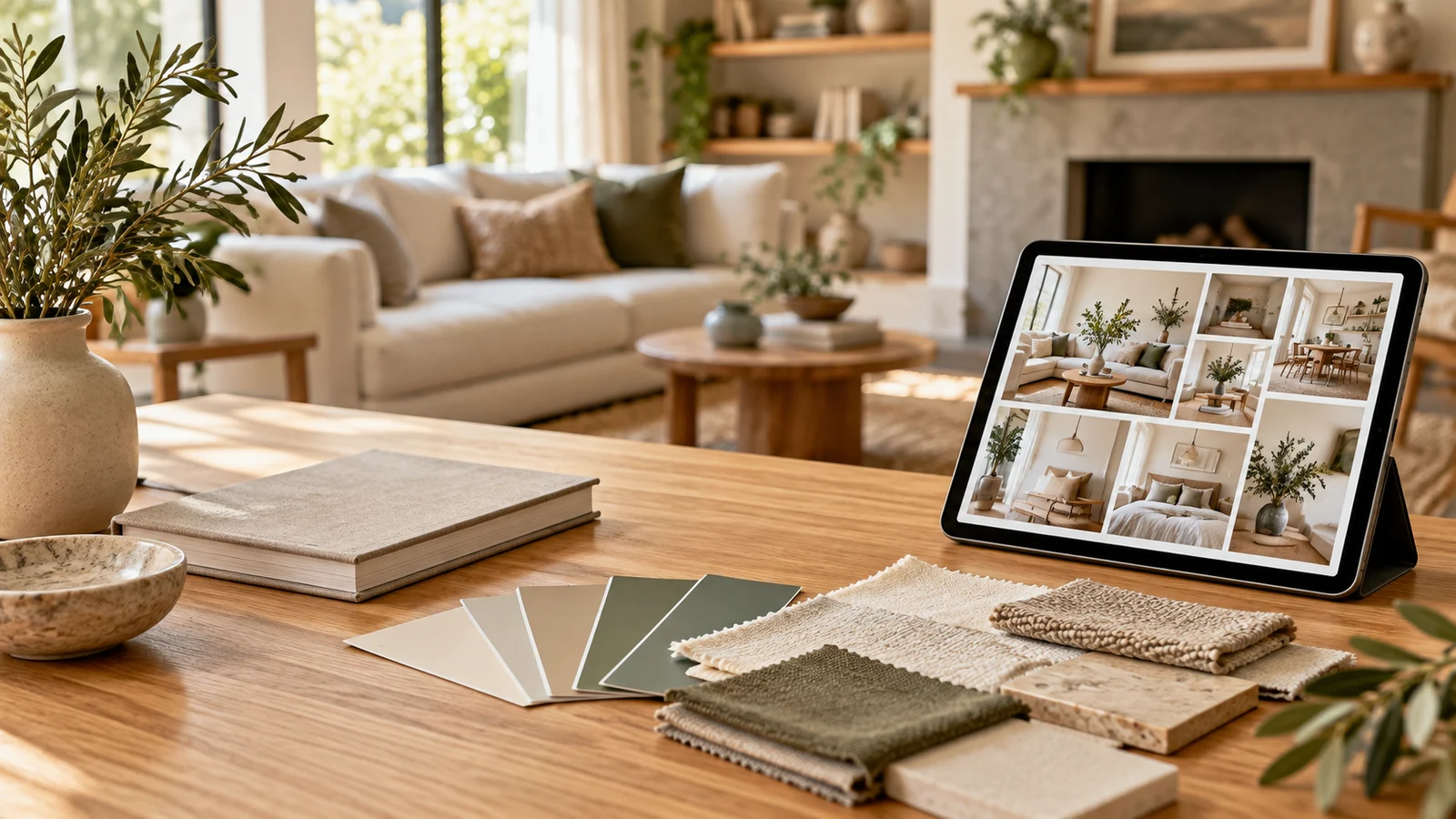
Which interior design influencers fit your learning goals?
These are editorial starting points for US homeowners, rather than a ranking by popularity. A creator’s public projects can offer useful ideas even when the property size or purchasing budget differs from yours.
| Creator | Suggested learning focus | What to examine |
|---|---|---|
| Emily Henderson | Room styling and explained design decisions | Project descriptions, layout choices, and practical tradeoffs |
| Shea McGee / Studio McGee | Classic details and layered neutral rooms | Materials, texture, and relationships between rooms |
| Amber Lewis / Amber Interiors | Collected interiors and material combinations | Vintage pieces, textiles, natural elements, and finishes |
| Justina Blakeney | Personal expression through color and pattern | How a palette connects art, furnishings, and decorative layers |
| Drew Michael Scott / Lone Fox | Hands-on customization and makeovers | The work sequence, tools, and actual installation conditions |
The suggested learning focus is our editorial interpretation of each creator’s official presentation. It is not a claim that any creator specializes exclusively in that category or guarantees a particular result for followers.
How these interior design influencers were selected
The selection favors identifiable creators with official websites explaining their work and a mix of approaches that homeowners can study. We checked the linked official pages on October 30, 2026. This is a focused selection, not a complete review of every interior account or a test of paid design services.
Follower counts, estimated earnings, and engagement scores are deliberately excluded. Those figures change and would not tell you whether a particular account helps solve your room problem. Use each official website as a starting point and follow the social links provided there to reduce the risk of confusing a creator with an imitation account.
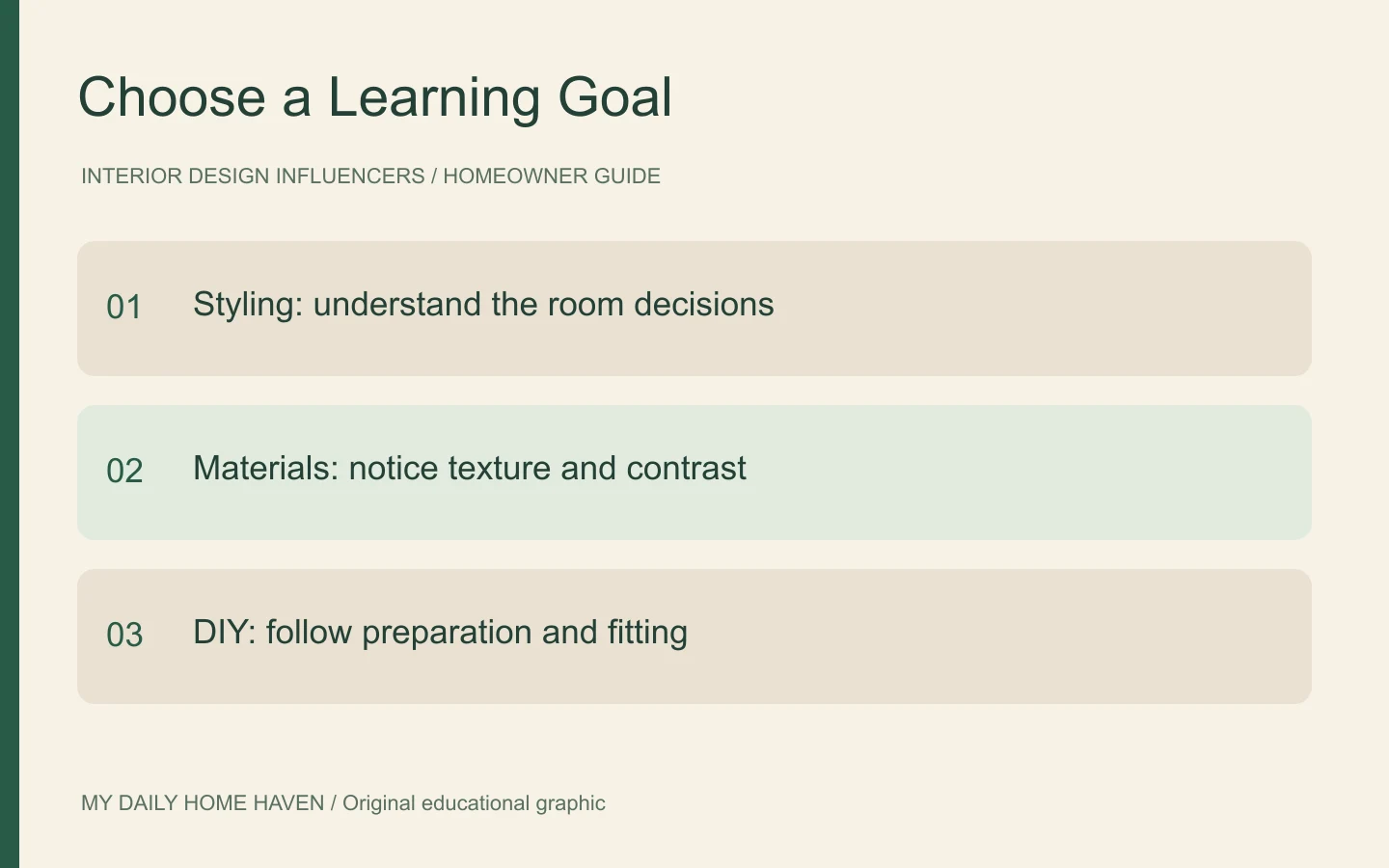
Five creators and what to look for
Emily Henderson: look for the explanation behind a room
Emily Henderson’s official site describes a team publishing design ideas and documenting projects. Its design categories include budget ideas, mistakes, makeovers, styling, and renovation. That variety makes it a useful starting point when you want more context than a single finished-room image provides.
Read a project explanation alongside the photographs. Identify the original problem, the furniture retained, and the reason for a change. Then write down one decision you could test in your own space. Prefer a useful principle, such as furniture scale or lighting balance, over trying to purchase every item shown.
Shea McGee: study how quiet rooms gain depth
Studio McGee’s official profile of Shea McGee describes an approach combining classic architectural details, warm materials, neutral palettes, and layers of texture. Use those themes as a lens when you explore the studio’s work.
For example, notice how a neutral room distinguishes upholstery, wood, woven surfaces, and lighting. A restrained palette can still contain contrast and variety. Before adapting the idea, compare your daylight, floor color, and existing furniture. Similar-looking paint or upholstery may behave differently in your room, so assess samples in the actual setting.
Amber Lewis: examine the relationships between materials
Amber Interiors’ official information identifies Amber Lewis as its founder and describes a practice involving furnishings, finishes, and renovation work. The studio also discusses its use of vintage pieces, textiles, and natural elements.
Look at how materials relate instead of treating each object as an isolated shopping recommendation. You might notice a connection between a worn wood finish, a patterned textile, and a quieter upholstered piece. Apply that observation to something you already own. A collected effect should reflect meaningful choices over time, rather than a requirement to replace the room with a matching set.
Justina Blakeney: explore color as personal expression
Justina Blakeney’s official biography identifies her as a designer, artist, author, and founder of Jungalow. It presents creativity, color, culture, and personal expression as important themes in her work.
Use that perspective to explore how a room can reflect your interests. Choose a painting, textile, or object you genuinely enjoy, then study the colors and forms it contains. You can test a small related change before committing to a large purchase. This approach lets an inspiration source broaden your choices while keeping the final room personal to you.
Drew Michael Scott: follow the process as well as the reveal
Lone Fox’s official project page identifies Drew Michael Scott as its founder and describes its development from DIY tutorials and apartment makeovers into broader design work. It provides a starting point for exploring hands-on customization and room transformations.
Watch the sequence of a project, including preparation and fitting, rather than judging its difficulty from the reveal. Separate a decorative experiment from work involving building systems, heavy installation, or specialist materials. A video cannot establish that the same method suits your property. Use product instructions and qualified local help when the actual work requires them.
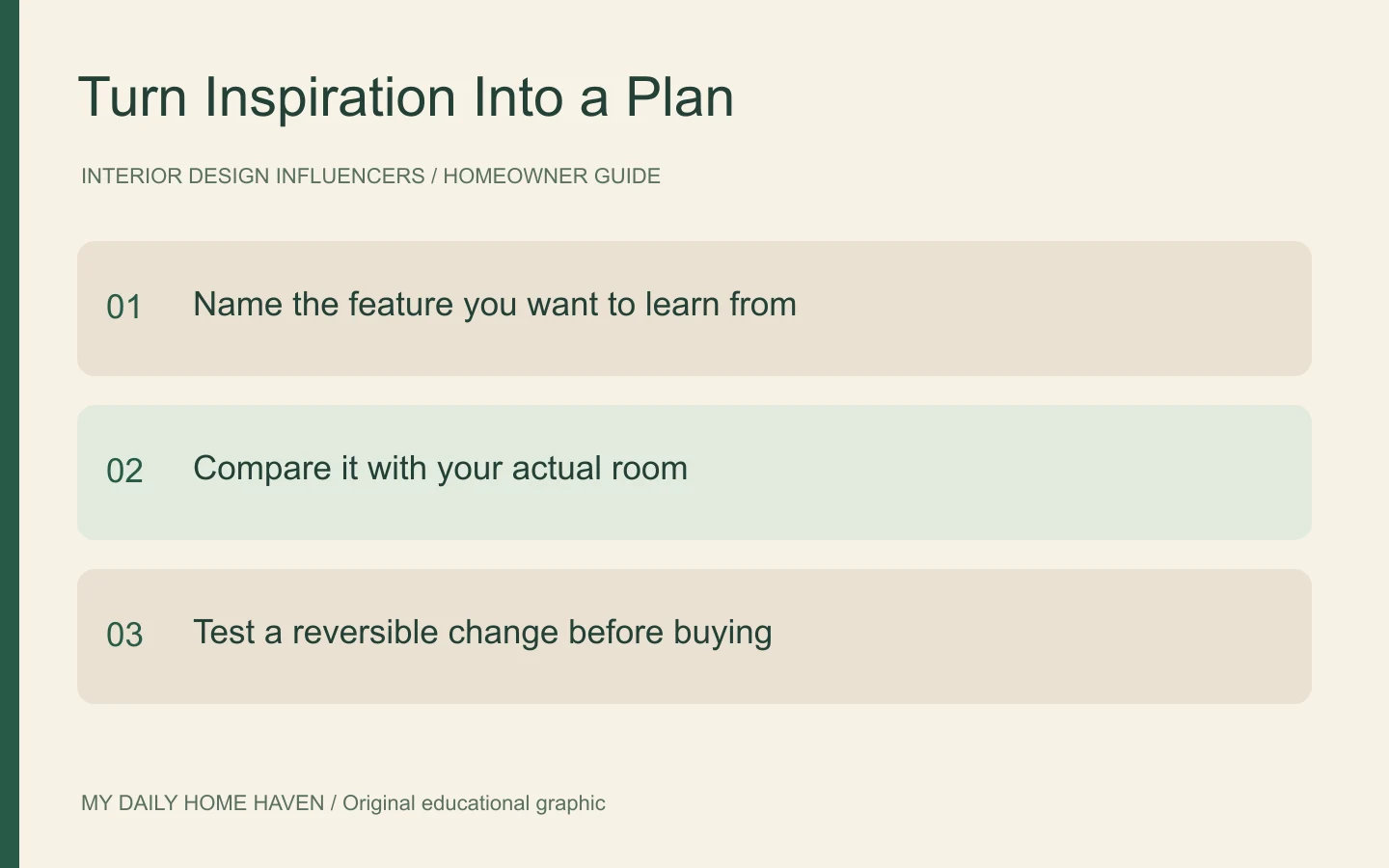
Turn saved inspiration into a room plan
Following interior design influencers becomes more useful when each saved idea answers a specific question. Instead of collecting dozens of unrelated rooms, create a small reference board for the project you are actually considering.
For every image or video, record:
- The feature you like: palette, furniture arrangement, lighting, texture, or storage.
- The practical problem it might solve in your home.
- What differs from your room, including dimensions, daylight, architecture, and budget.
- A reversible way to test the idea before making a permanent change.
For example, suppose you admire a reading corner with an upholstered chair and floor lamp. First, test the furniture footprint with what you have. Check the walkway, the chair’s approach, and how you would use the light. You may discover that the useful lesson is a comfortable place to read, while a different chair shape suits your room better.
Our space planning interior design guide explains measurements and circulation. If the main challenge is choosing a visual direction, use our interior design aesthetics guide to describe the styles and materials you prefer.
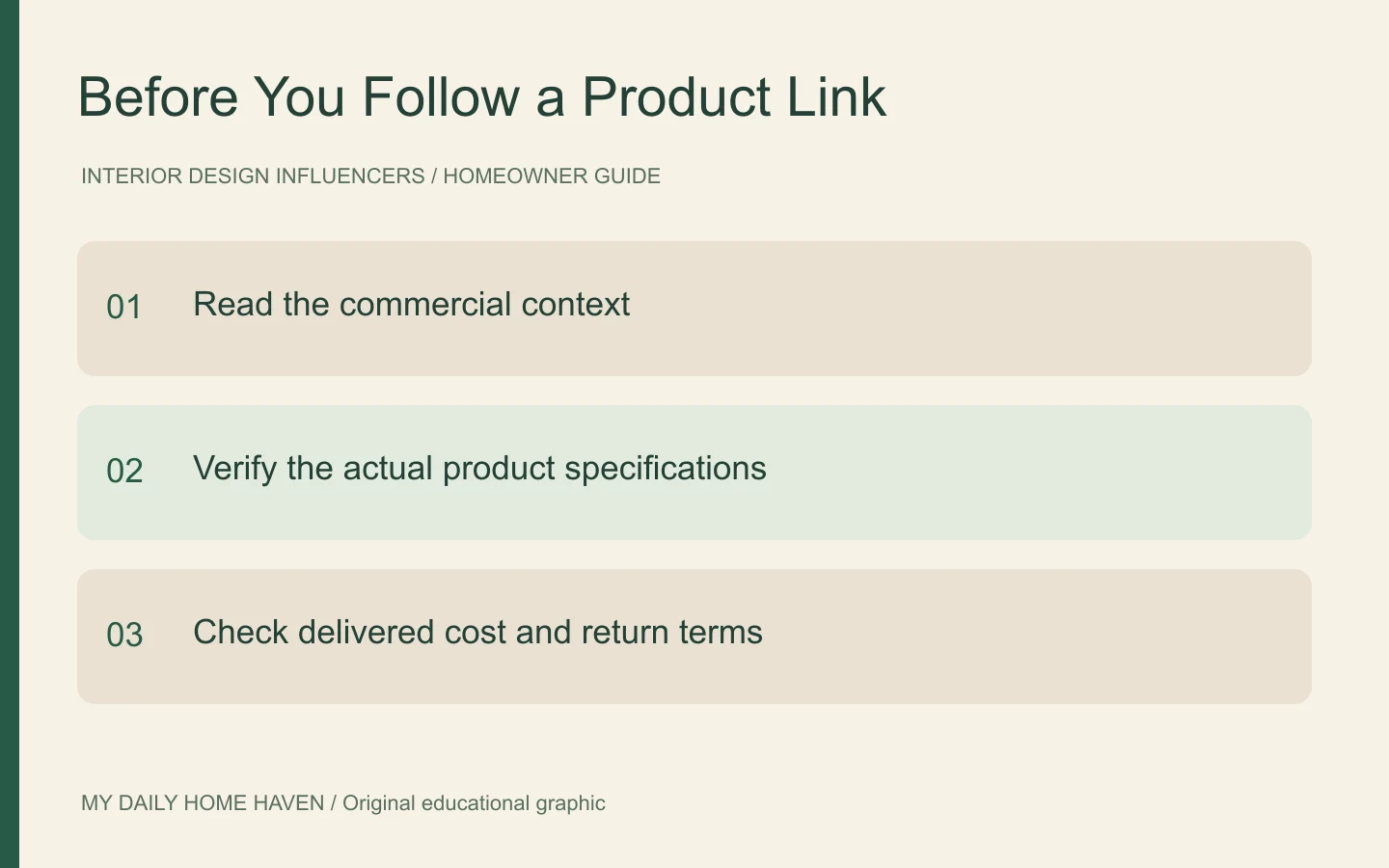
Read product recommendations in their commercial context
Design content can sit alongside shops, product collaborations, affiliate links, or sponsored work. That context does not make an idea useless, but it helps you understand the purpose of a recommendation. Compare the product’s suitability and delivered cost separately from the appeal of the room.
The Federal Trade Commission’s influencer disclosure guidance explains why material connections between endorsers and brands should be made clear. As a reader, look for relevant disclosures and ask what information you still need before buying. This is a general evaluation step, not a claim that any creator listed here has failed to disclose a relationship.
Also check whether a photograph shows the product currently linked. A later substitute may differ in dimensions, material, or color. Verify the actual manufacturer’s specifications, return terms, and delivery conditions rather than relying on a styled image alone.
Build a balanced feed instead of chasing every update
Combine sources that offer different kinds of help. A creator whose palette you enjoy can provide visual direction, while another may explain layout decisions or show the steps behind a makeover. You do not need every account to share the same aesthetic.
Revisit saved ideas after a pause. If several examples keep pointing to the same need, such as better task lighting or concealed storage, address that need first. A new trend does not automatically justify replacing a useful item. The aim is to become more confident about your decisions, rather than more dependent on the next recommendation.
Questions about following design creators
Do I need Instagram or TikTok to learn from these creators?
Not necessarily. The official websites linked here provide biographies, project information, or other routes into their work. Check the creator’s own navigation for the channels and formats currently available instead of assuming one platform contains everything.
Can I repost an influencer’s room photograph on my own website?
Do not assume that a visible image is free to reuse. Check the image owner’s permission and licensing terms, or use an authorized sharing method where appropriate. A credit line alone does not establish permission. The US Copyright Office permission guide explains how to identify the rights holder and request permission. For a particular reuse question, consult the relevant rights holder or obtain appropriate advice.
Is following a creator the same as hiring a designer?
No. Public content is not a project-specific plan or an agreement to advise you. If you need measurements, specifications, or professional coordination for your property, our guide to hiring an interior designer explains how to compare that support.
Choose one idea to test
Start with a creator whose work helps answer your current design question. Save a small set of references, identify the underlying principle, and test it against your actual room. Keep the choices that improve daily use and feel right for your home.