

Symmetrical balance in interior design organizes similar visual elements on opposite sides of an axis. A bed, fireplace, doorway, or furniture group can provide that reference. The arrangement can create a clear sense of order, but it should still suit the room’s use. Begin with the axis and the available space rather than buying pairs first.
Our principles of interior design guide introduces balance in context. This guide concentrates on paired compositions, unequal room conditions, and ways to keep symmetry from interfering with daily life.
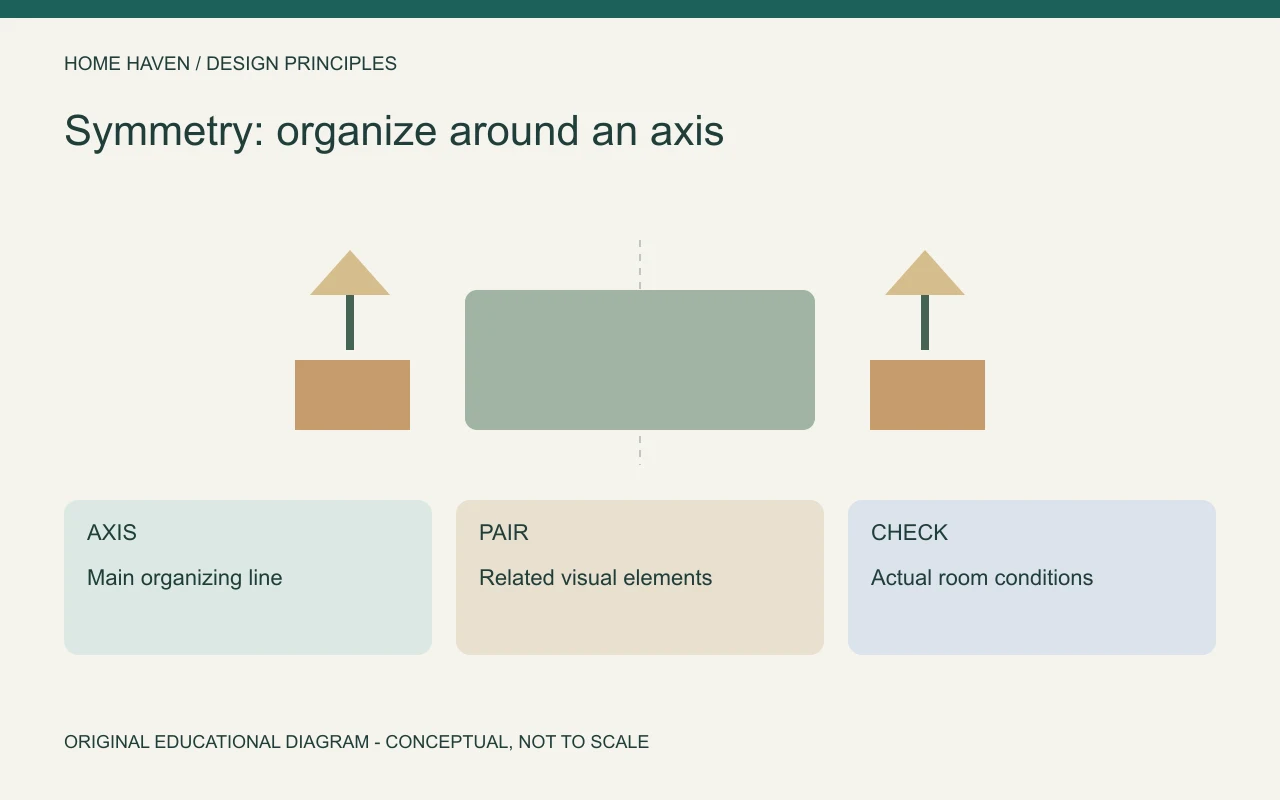
Choose the axis that actually matters
An axis is the organizing line around which the composition relates. It might run through the center of a headboard or fireplace. It does not have to coincide with the geometric center of the entire room.
Look at the main view and identify the feature you want the pair to support. A centered bed wall can form a coherent composition even when the room has a window on only one side. Avoid trying to make every architectural condition symmetrical when it is not.
Understand symmetrical balance in interior design
Similar positions, heights, shapes, and visual presence can establish the relationship. Identical objects offer an obvious route, but the overall composition matters as much as the product match. Consider the paired objects together with their background.
Getty’s explanation of balance uses symmetry as a general visual-composition concept. The room applications below adapt that idea rather than prescribe a universal furniture arrangement.
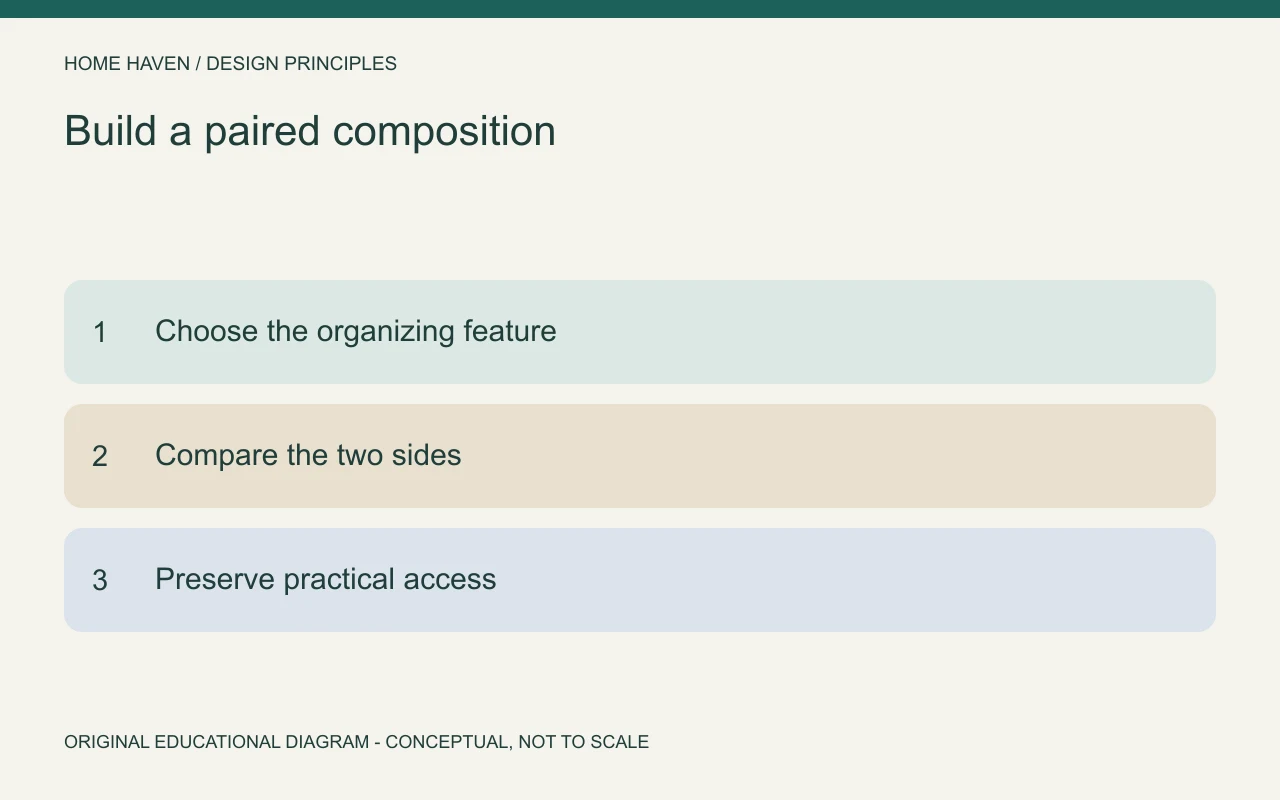
Use a bed wall as a simple starting point
Place the bed according to the measured room and practical access needs. Then compare tables, lamps, and artwork around the headboard. Check both the entry view and the view from the bed.
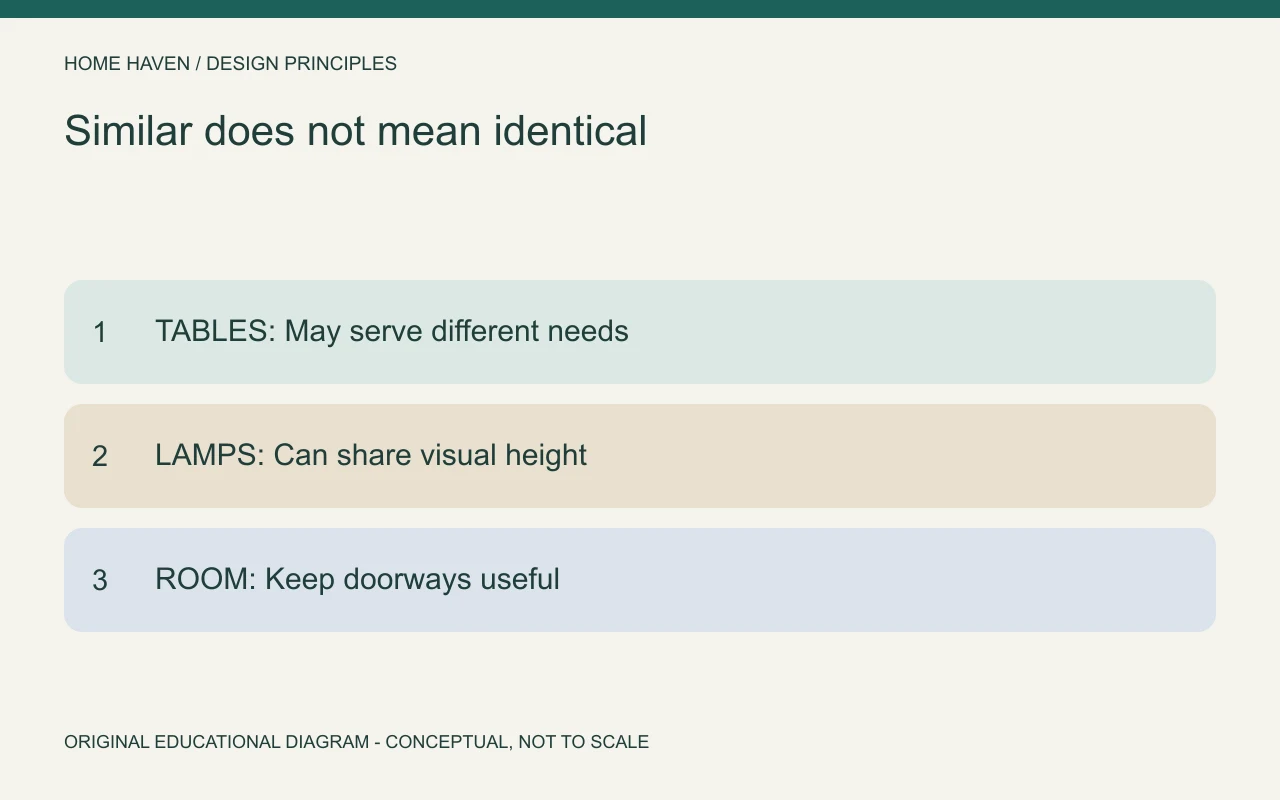
Similar lamp heights can provide a relationship even if the bedside storage differs. One person may need drawers while another needs an open table. Start with what each side must do, then decide how much visual similarity is useful.
Do not force matching tables into unequal spaces
A doorway, radiator, window, or wall return can reduce the available space on one side. Two identical large tables may create an awkward route. A smaller table can be more appropriate while a related finish or lamp connects the sides.
Measure before purchasing and include the operation of doors and drawers. The space planning guide explains how to review furniture in use. Symmetry should not depend on hiding a blocked route in the photograph.
Frame a fireplace without overwhelming it
A fireplace may support related chairs, cabinets, artwork, or lighting on either side. Keep the paired composition proportional to the feature and the room. Several competing pairs can make the wall busier than intended.
Respect actual fireplace and product requirements. Decorative placement does not establish safe distances for heat-sensitive objects or electrical equipment. Check the relevant manufacturer guidance and qualified advice where the arrangement depends on installation conditions.
Create a paired composition above a cabinet
Start with a centered artwork or mirror, then compare the objects at each side. Similar height and visual presence can make the relationship clear. If one object is darker or denser, its apparent weight may differ even at the same height.
Use temporary placement and photographs before making permanent holes or purchases. Review the composition from normal room positions. A pair aligned perfectly in a close-up may relate poorly to the cabinet and wall around it.
Allow variation within a symmetrical framework
A room can use a strong paired arrangement while the wider space remains relaxed. Matching lamps can sit beside different books or practical objects. Paired chairs can use related textiles without making every accessory identical.
Choose which relationships need precision and which can vary. Keeping everything mirrored can make ordinary living inconvenient, especially when the two sides serve different users. The framework should support the room rather than demand constant staging.
A hypothetical bedroom comparison
Imagine a bedroom where one side of the bed sits near the entry door. The owner likes paired lamps but needs more passage space on that side. The first option uses two wide matching tables; the second uses a narrower table near the door and a larger storage unit on the other side.
Compare the lamp positions, overall visual presence, and practical use. The second option may preserve a clear relationship without perfect duplication. The example is a planning exercise, not a rule that every unequal room needs the same solution.

Check lighting and background conditions
A window, dark curtain, or tall plant can change how the two sides appear. Review the arrangement under daylight and evening conditions. A symmetrical furniture pair can still sit against visually different backgrounds.
Do not chase an exact mirror image by adding unnecessary furniture. You may need to simplify the stronger background or adjust a smaller supporting element. Compare the total composition before changing the paired pieces themselves.
Know when to use another balance strategy
An irregular room or a varied furniture collection may suit asymmetrical balance better. That is not a failure to achieve order. Different objects can form a coherent arrangement when their combined presence and function work together.
Use symmetry for the area where it helps and allow another strategy elsewhere. A centered bed wall can coexist with an asymmetrical reading corner. The whole home does not need one balance method in every view.
Symmetry questions
Must paired objects be identical?
No. Identical pieces make the relationship obvious, but similar scale, height, position, or material can also support a paired composition. Review the complete view.
Does symmetry make a room formal?
It can contribute to a more ordered appearance, but materials, color, and everyday use also shape the mood. A symmetrical framework can still feel comfortable and relaxed.
Keep the axis clear and the room useful
Choose the organizing feature, compare the paired elements, and check their surroundings. Preserve access and personal needs. Use symmetry where it brings clarity, and allow variation where the real room requires it.