

A residential interior design firm works on homes, but firms differ in project size, specialization, and service model. The right choice for a furnishing refresh may be different from the team you need for a whole-house renovation. Start by matching experience and responsibilities to your actual project.
This guide explains how homeowners can evaluate residential firms without relying only on portfolio style. Consider daily routines, household decision-making, the condition of the property, and the way the firm coordinates its work.
For the wider hiring process, read our guide to hiring an interior designer. The steps below focus specifically on choosing a team for a lived-in home.
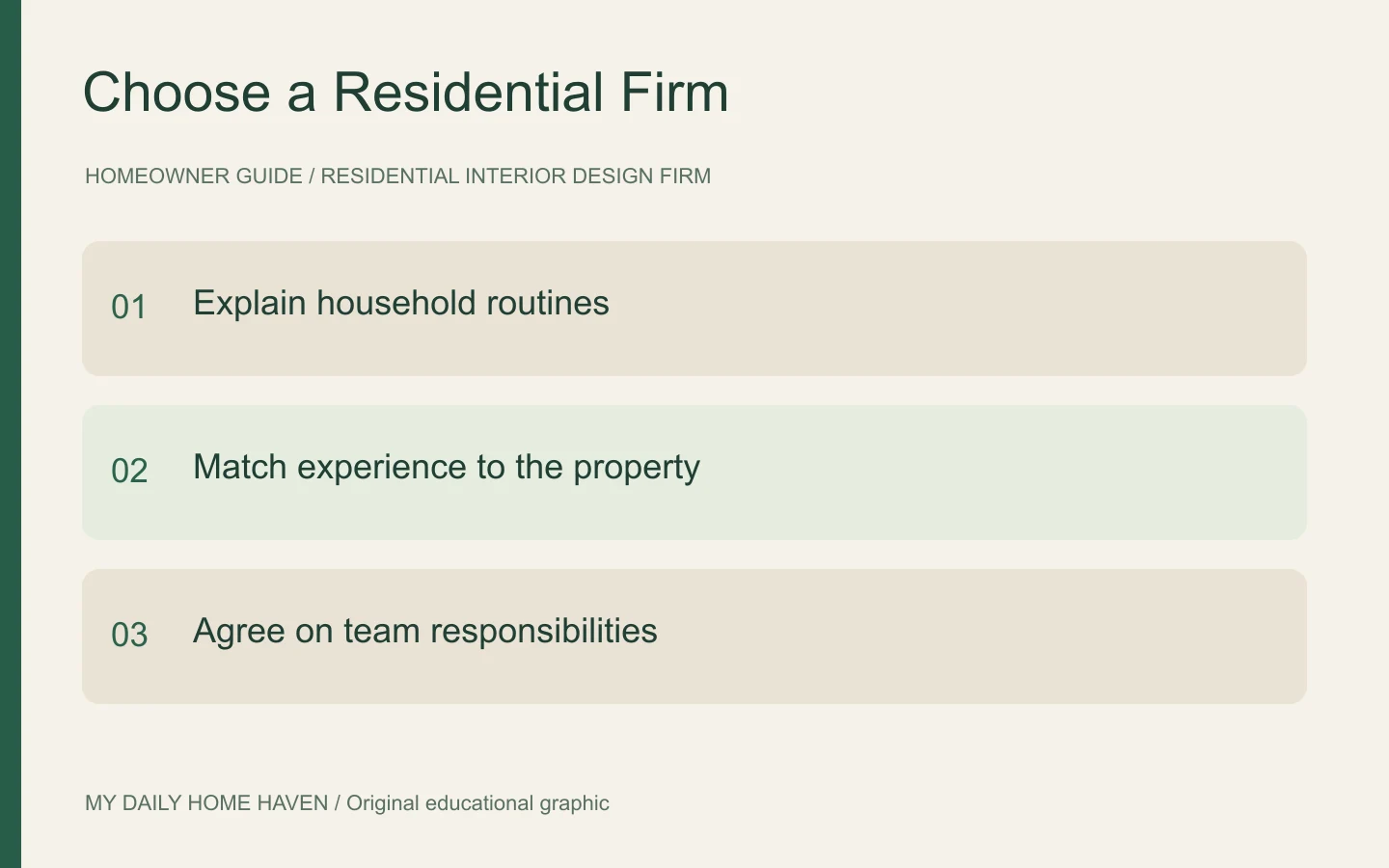
Brief a residential interior design firm on household needs
First, explain who uses the home and which routines create problems. A beautiful dining area may be unsuccessful if it blocks the route to a frequently used door. Likewise, an open display system may not suit a family that needs concealed storage.
Include practical details such as home working, shared rooms, pets, visiting relatives, and future changes you already anticipate. These facts help the firm choose layouts and materials that serve the household rather than a photograph.
You can still share visual references. However, explain whether you like the colors, furniture proportions, lighting, or overall mood. Our interior design aesthetics guide can help you describe those preferences more clearly.
Match experience to the property
Look for homes with similar spatial constraints, not simply a similar color palette. A narrow townhouse, a condominium, and a detached house can involve different access, approval, and coordination issues.
Ask what the firm handled in the projects you admire. Was it responsible for layouts, cabinetry details, furniture, purchasing, or only styling? A clear description of its role helps you understand whether the portfolio demonstrates the service you need.
Also discuss experience with occupied homes. Working around an existing household may require phased decisions and temporary arrangements. Ask how the team protects daily routines and communicates when a room will be unavailable.
Choose a residential interior design firm by scope
Create a room-by-room brief and distinguish essential work from optional improvements. Then ask the firm to identify the services it recommends. This is more useful than requesting an undefined whole-home makeover.
| Project need | Scope to discuss |
|---|---|
| Furniture refresh | Layouts, selections, and delivery support |
| Better storage | Measurements, cabinetry design, and fabrication coordination |
| Renovation | Interior documentation and coordination with qualified project professionals |
| Whole-home furnishing | Consistent planning, purchasing sequence, and installation |
| Phased improvements | A shared overall direction and separate implementation stages |
Clarify who handles required permissions and specialist work. Professional regulation varies by jurisdiction; CIDQ’s regulatory overview explains why titles and permitted activities should be checked locally.
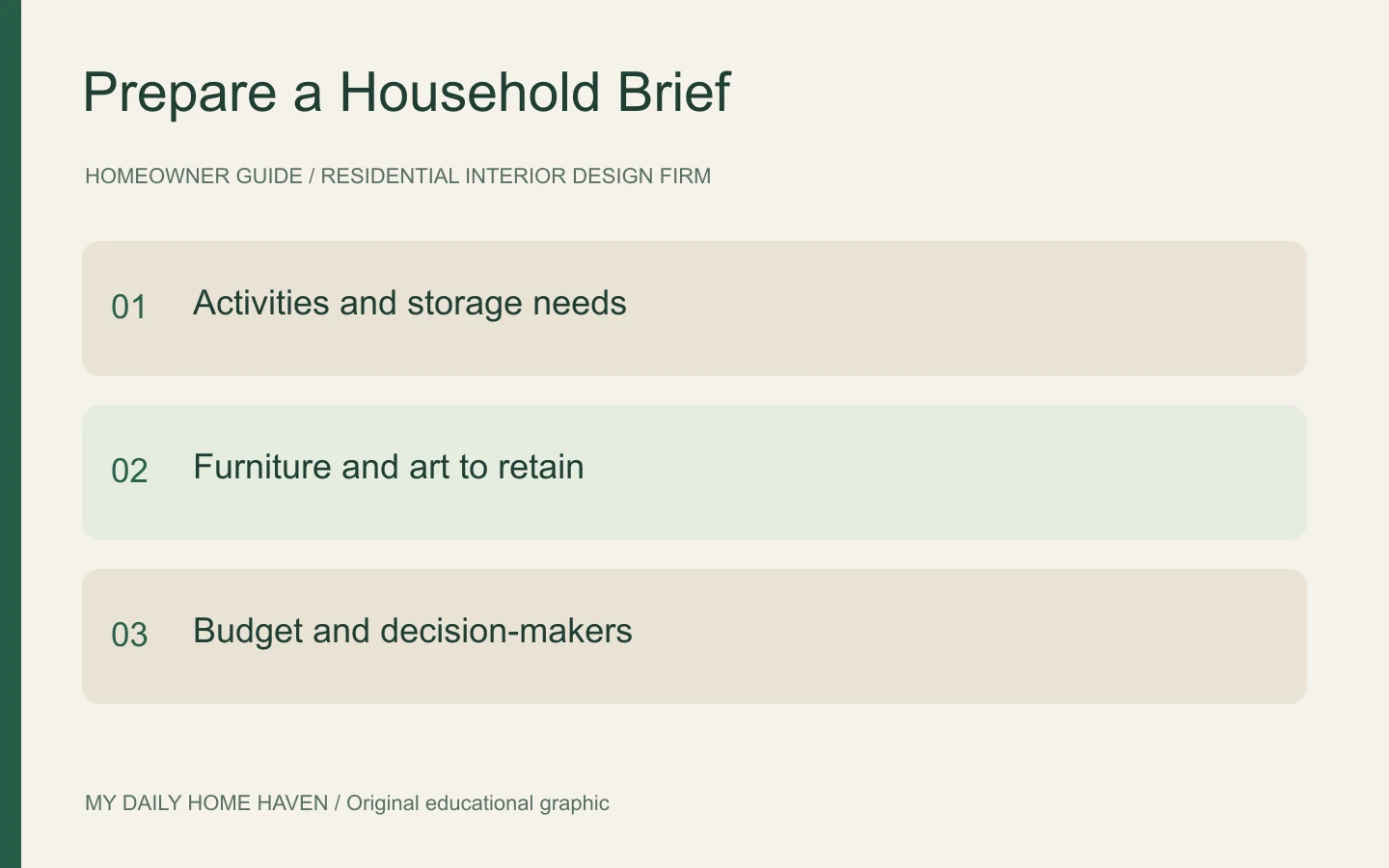
Meet the Residential Interior Design Firm Team
A residential firm may include a principal, project designer, purchasing coordinator, and outside specialists. Ask who will be your contact and how decisions move through the team. You should understand both the creative and administrative roles.
Find out how often meetings occur and what information you receive between them. For example, a weekly decision list can identify selections awaiting approval, upcoming deadlines, and questions for the contractor.
Also establish who can approve spending for the household. A firm needs a reliable process when several owners or family members are involved. Consolidated feedback can prevent conflicting instructions and unnecessary revisions.
Review budget compatibility early
Tell the firm what your total budget includes. A design fee, furnishing allowance, and construction budget are separate figures. Delivery, installation, taxes, storage, and temporary arrangements may also matter.
Ask whether your spending range matches the firm’s normal projects and purchasing approach. If it does not, consider a smaller scope or another service model. Finding this out early is more useful than paying for a concept you cannot implement.
Request reporting that distinguishes estimates from approved commitments. When the budget changes, record which parts of the scope change with it. Avoid treating a conversation about possibilities as permission to order products.
Plan for existing furniture and meaningful pieces
Identify furniture, art, and finishes you intend to retain. Provide dimensions and explain whether each item must remain in the same room. Some pieces may work better elsewhere without losing their importance to the household.
Ask how the firm evaluates repair, reupholstery, or modification. Reusing a suitable item can preserve character and free budget for a more important problem. It also avoids assuming that a coordinated home requires an entirely new collection of furniture.
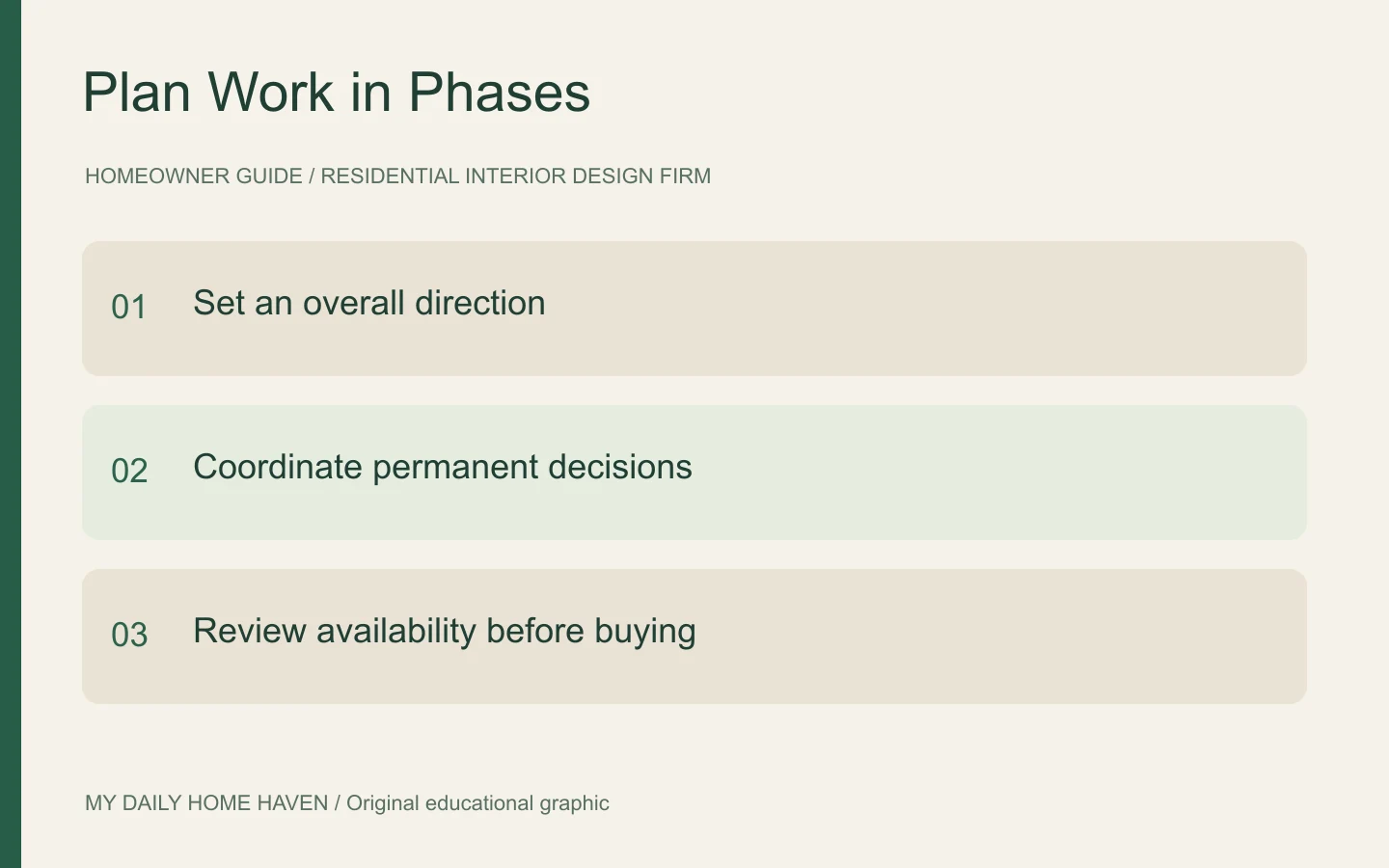
Discuss a phased project realistically
A whole-home plan can help connect decisions even when you complete rooms at different times. However, clarify what is fixed now and what remains provisional. Product availability and household priorities can change between phases.
For example, a family might complete the living area first while preserving a future plan for the dining room. The firm should explain which dimensions and permanent finishes need coordination now, and which product choices can wait.
Use our space planning guide to understand the relationships between rooms, routes, and furniture before committing to isolated purchases.
Questions for references
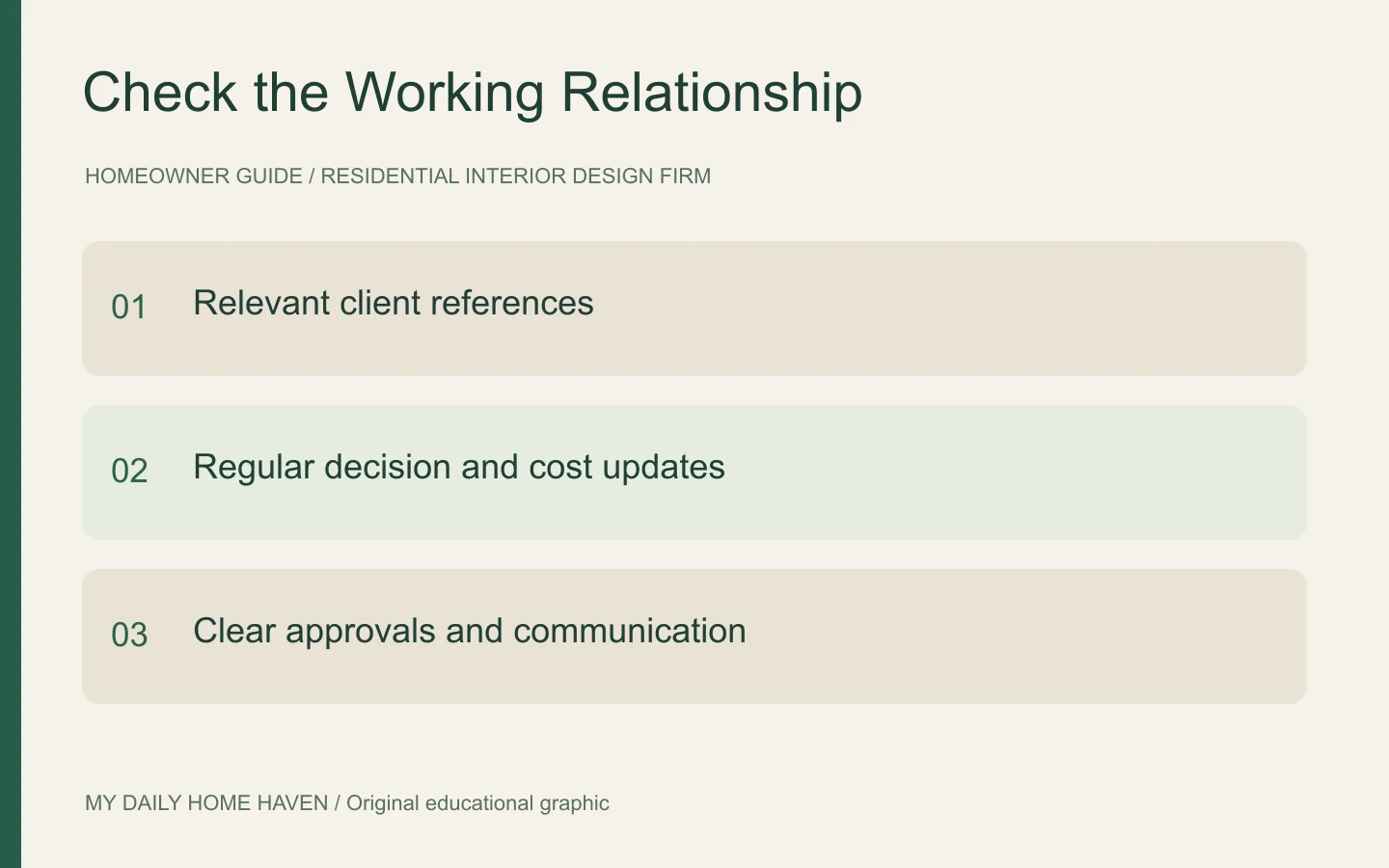
Ask previous residential clients whether the firm understood their routines, explained costs clearly, and respected approvals. Also ask how the team responded when a selection or delivery caused a problem.
Try to speak with someone whose project resembles yours. A new-build client’s experience may reveal different strengths from a client who remained at home during a small renovation. Relevant references make your comparison more concrete.
Questions to Ask a Residential Interior Design Firm
Is a firm better than an independent designer?
Neither structure is automatically better. Compare relevant experience, availability, responsibilities, and communication. A larger team can offer continuity, while a smaller practice may provide direct access.
Can I hire a residential firm for one room?
Some firms accept single-room work, while others set minimum scopes or budgets. Confirm this before booking a consultation.
Should I finish construction before contacting a designer?
Contact prospective professionals early enough to understand which decisions affect construction. However, agree on responsibilities before assuming the designer will direct another professional’s work.
Choose a residential interior design firm that understands your home
The strongest fit connects relevant experience with a clear process and realistic budget. Select a residential firm that can explain how the proposed work improves daily living and how the team will carry it through.