

A high end interior design firm should be evaluated through the quality of its decisions, documentation, and delivery process. Expensive furniture and striking photographs do not explain how a firm will manage your budget, specify custom work, or respond when a product arrives incorrectly.
Start by identifying why your project needs this level of help. You may want carefully coordinated custom furnishings, detailed interior finishes, or a consistent approach across a large home. The scope should justify the service, rather than the service label determining how much you spend.
Our interior designer hiring guide explains the general selection process. This article focuses on the questions that become especially important when custom work and substantial purchasing are involved.
Define your brief for a high end interior design firm
First, translate the label into practical expectations. You might value a sofa made to suit a specific room, carefully matched cabinetry finishes, or durable materials that age well. Another household may prioritize artwork placement and a quiet, coordinated interior.
Write those priorities into your brief. For example, describe the need for comfortable daily seating before asking for a sculptural statement piece. A convincing proposal should connect materials and details to the way you live, rather than explaining every decision through exclusivity.
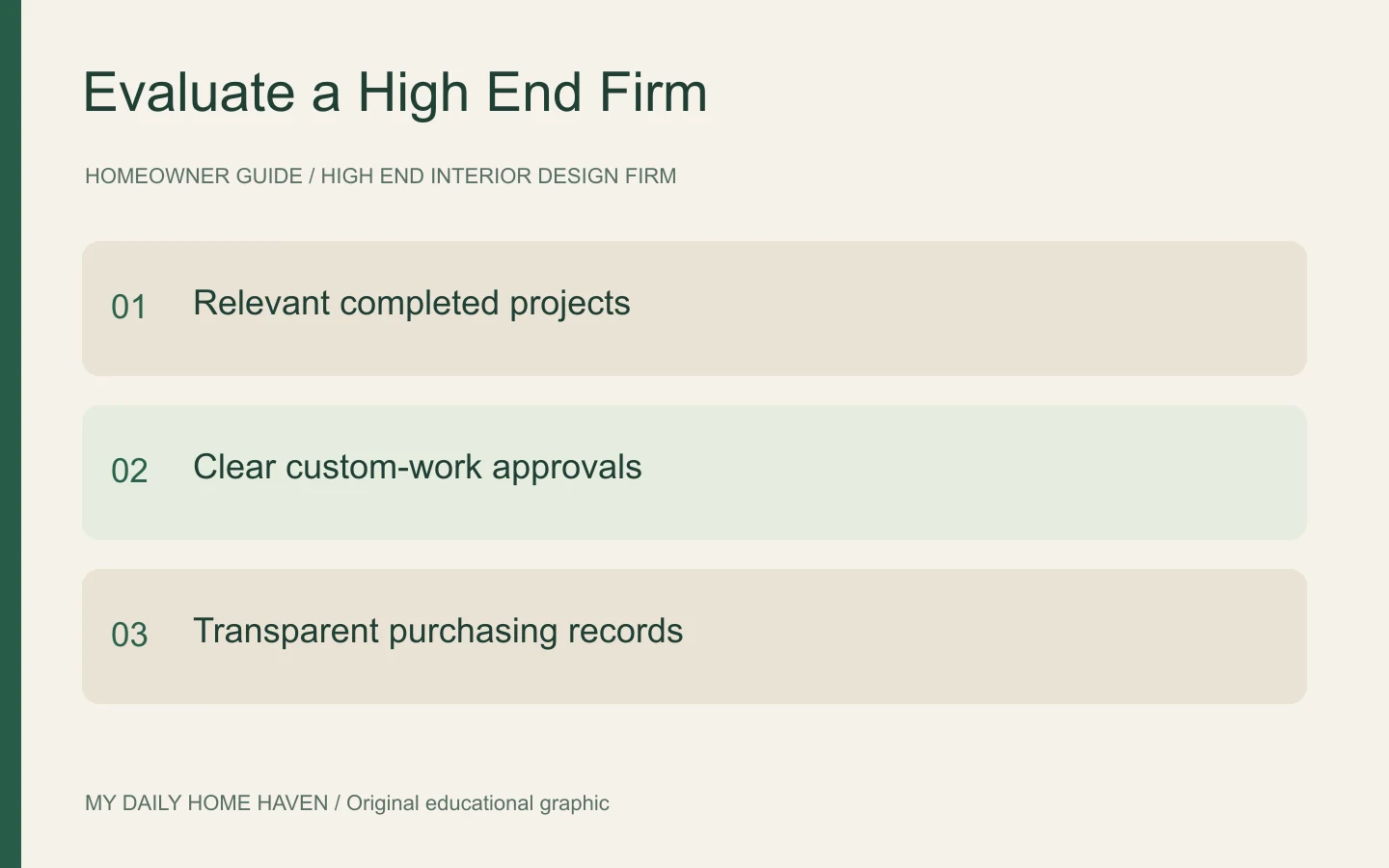
Look for relevant completed projects
Review homes with a similar level of complexity. A polished apartment does not demonstrate the same coordination as a whole-house renovation with custom joinery. Ask which parts the firm designed and which were supplied by other professionals.
Also request examples of process documents where appropriate. A sample finish schedule or anonymized purchasing report can reveal how clearly the team communicates. These materials should show organized decisions without requiring the firm to disclose another client’s private information.
Discuss how completed rooms perform after regular use. Upholstery maintenance, stone care, glare, and storage remain important even when a room has a generous budget. An expensive selection can still be unsuitable for pets, children, or your maintenance preferences.
Understand custom work before approving it
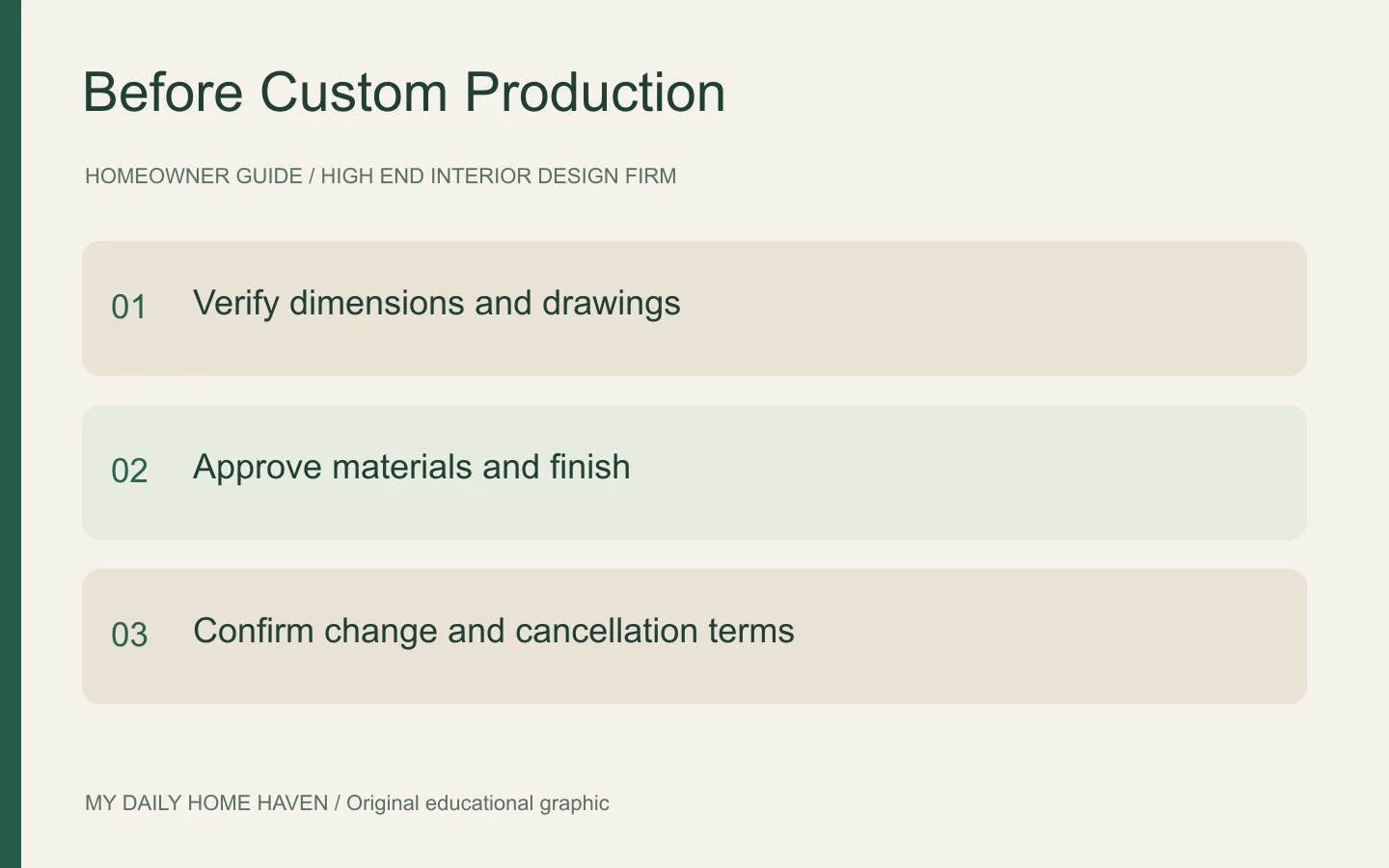
Custom dimensions and finishes need specific approval steps. Ask whether the team provides drawings, samples, mockups, or photographs before production. Clarify who checks site dimensions and how the approved version is identified.
For example, a built-in cabinet may involve the designer, fabricator, installer, and other trades. Establish who coordinates each interface and who resolves discrepancies. A rendering can explain appearance, but the parties still need verified information before fabrication.
Ask about the consequences of changing an approved item. Materials may have been ordered or production started. Request the relevant purchasing and cancellation terms before committing, especially for made-to-order pieces that cannot be returned like standard retail products.
Compare team structure and access
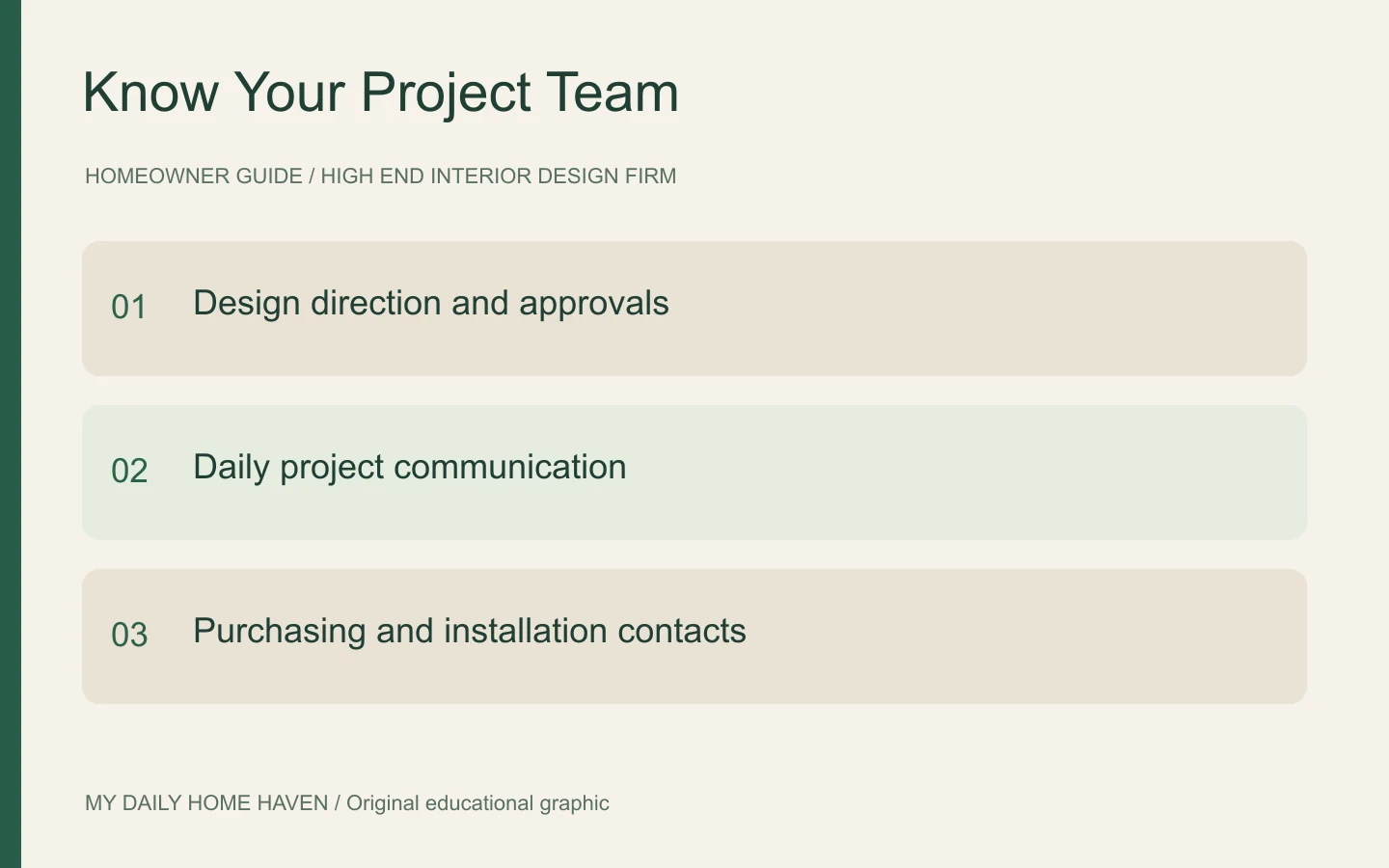
A prominent principal may lead the design direction while other team members handle drawings and daily communication. That arrangement can work well when the responsibilities are clear. Confirm who attends meetings and who can approve decisions.
Ask how the firm manages staff changes or absences. You should know where project information is stored and how another team member would understand the current status. Consistent records can matter as much as access to one recognizable designer.
Request a complete budget structure
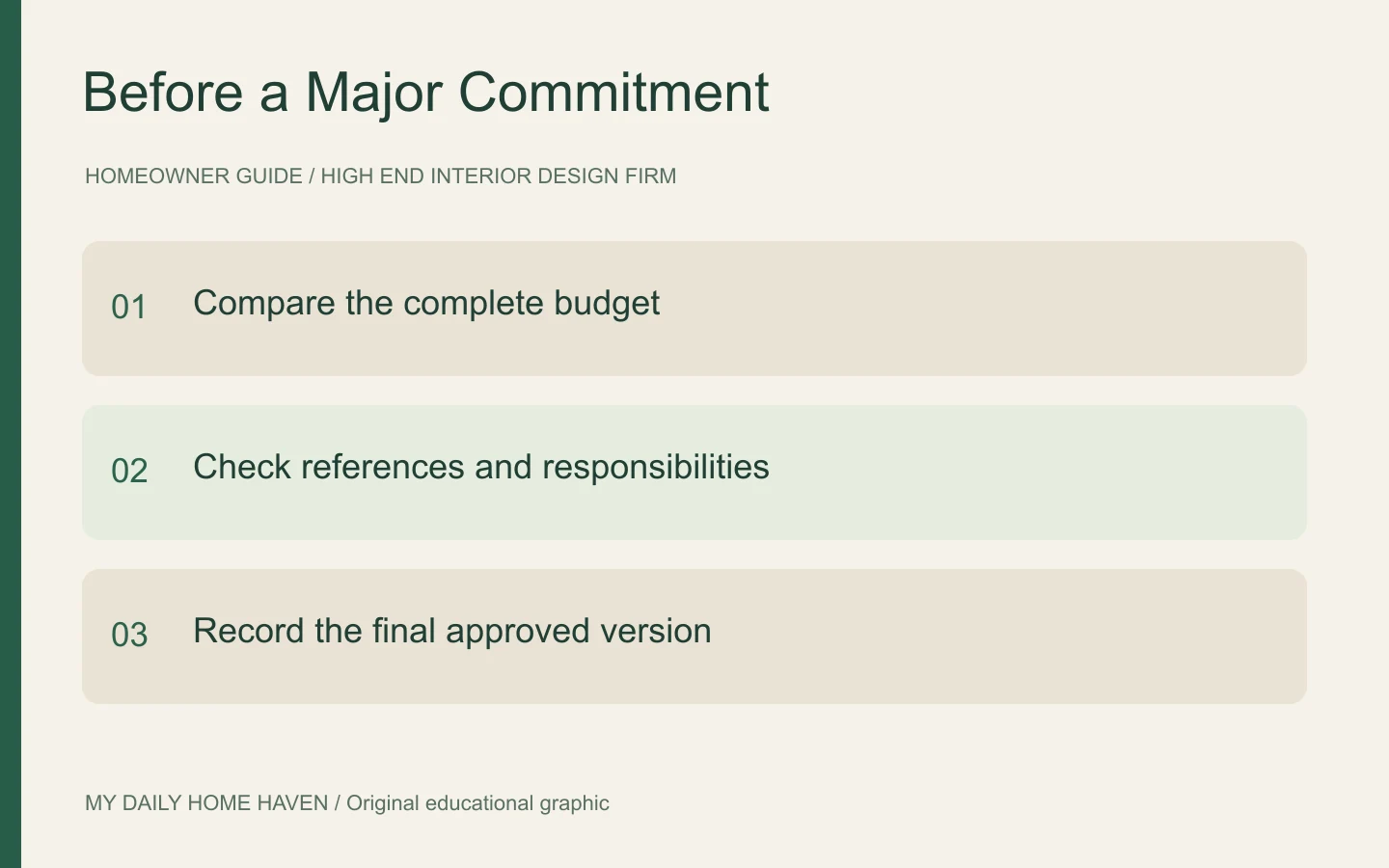
Separate professional fees, products, fabrication, construction, delivery, storage, installation, and applicable taxes. Identify which figures are allowances and which are approved commitments. A large overall budget still needs meaningful limits.
ASID’s fee guidance describes several compensation approaches. Ask the firm to explain its own method and illustrate the calculation using your proposed scope. A prestigious name does not make a vague fee structure easier to manage.
Request regular reporting that distinguishes items proposed, approved, ordered, paid, and delivered. Those stages answer different questions. A product might have an approved price without a confirmed delivery date or installation slot.
Questions for a high end interior design firm
| Area | Evidence to request |
|---|---|
| Custom selections | Approval drawings, samples, and measurement responsibility |
| Project team | Named contact and decision-making roles |
| Purchasing | Clear pricing basis and order-approval process |
| Coordination | Written description of site and trade responsibilities |
| Installation | Receiving, inspection, placement, and issue tracking |
| Aftercare | Product information and a defined follow-up process |
Use the answers to compare firms on the same scope. Avoid giving extra weight to elaborate presentations if the underlying responsibilities remain unclear.
Protect the character of existing pieces
Explain which furniture, art, or architectural features should remain. A high-budget project does not require replacing everything. Ask how the design will incorporate meaningful pieces and whether repair or reupholstery is appropriate.
Our sustainable interior design guide discusses reuse and thoughtful purchasing. These considerations can strengthen a project at any budget. They also help distinguish a considered specification from a shopping list built around novelty.
A practical custom-furniture example
Suppose a firm proposes a dining table for a room with a narrow entry route. Before approval, request the actual dimensions, finish sample, delivery assessment, and assembly plan. Also discuss seating comfort and the way nearby doors operate.
Next, record the approved version and the responsibility for checking site conditions. If the table design changes, confirm the revised price and timing before fabrication. This sequence connects a visual decision to the practical work required to deliver it.
Common questions
Does high end always mean full service?
No. The label does not define scope. A firm may offer consultations, design-only work, or more extensive implementation support. Compare the agreement, not the description alone.
Should every item be custom?
No. Custom work should solve a specific problem or fulfill a clear priority. Suitable standard pieces may provide better flexibility, availability, or value.
Is a large following evidence of project management skill?
It can help you discover a firm, but it does not replace references and process checks. Ask previous clients about communication, spending approvals, and issue resolution.
Select a high end interior design firm with evidence
Select a team that can explain its design decisions and the process behind them. Clear approvals, relevant experience, and dependable records provide a stronger basis for a substantial commitment than a luxury label on its own.