

Hygge interior design makes room for comfortable, unhurried everyday moments. It might support a quiet book, a meal with friends, or time together without a complicated agenda. The furniture, lighting, and textiles help those experiences happen; buying a collection of candles and blankets is not the goal.
The Danish government’s introduction to hygge describes the idea through atmosphere, companionship, and life’s quieter pleasures. It is a useful cultural starting point, rather than a rulebook for a single interior style. For the wider design context, see our interior design aesthetics guide.
Hygge Interior Design: Make Comfort Personal
Hygge interior design should respond to how you actually relax, gather, and use light through the day. Combine comfortable seating with warm, layered illumination and textures that are easy to care for. Choose a few meaningful objects rather than filling every shelf; a restful room can be simple without imitating a single national tradition.
Begin with the moments you want to support
Think about when your home feels least comfortable. Perhaps you read under a harsh ceiling light, serve dinner with nowhere to put extra dishes, or sit too far apart for easy conversation. Those are specific problems that decorating can address.
Choose one routine to improve first. A reading corner needs a supportive seat, useful light, a place for a book, and perhaps a throw. A relaxed meal needs comfortable chairs, enough table space, and lighting that lets people see each other without glare.
You do not need to reproduce a Danish home. Adapt the idea to your household, climate, and preferences. A light cotton throw in a warm region may be more useful than thick wool, while a shared breakfast table may matter more than a fireplace.
Arrange seating for actual company
Place chairs so people can talk without twisting or raising their voices across the room. If the television dominates the layout, consider a movable chair that can turn toward the sofa when friends visit. A compact table can make drinks and snacks easier to share.
Check comfort for different users. Very low seating and deep cushions do not suit everyone. Try the furniture with the person who will use it, and keep an upright option if that helps. A room cannot feel welcoming if someone struggles to get in and out of the only chair.
Avoid crowding the plan with extra seats you rarely use. Flexible stools or a chair from another room may work for occasional guests. Keep the main route through the room clear so everyday movement remains easy.
Use gentle light where you need it
Several useful light sources often serve a room better than one glaring fixture. Put a reading lamp near the seat, a small light beside the sofa, and enough general light for safe movement. Adjust the arrangement to the activities rather than aiming for darkness everywhere.
Check the lamp from seated eye level. A beautiful shade may expose a bright bulb when you sit below it. If you use dimmers, confirm compatibility with the lamp and bulb. The right amount of light depends on the person and task, not an aesthetic rule about how dim a room should look.
Candles are optional. Flameless alternatives can provide a soft visual effect when open flames are unsuitable. Keep any real flame away from curtains and textiles, and never make a candle the only useful light in a room.
Add tactile comfort without clutter
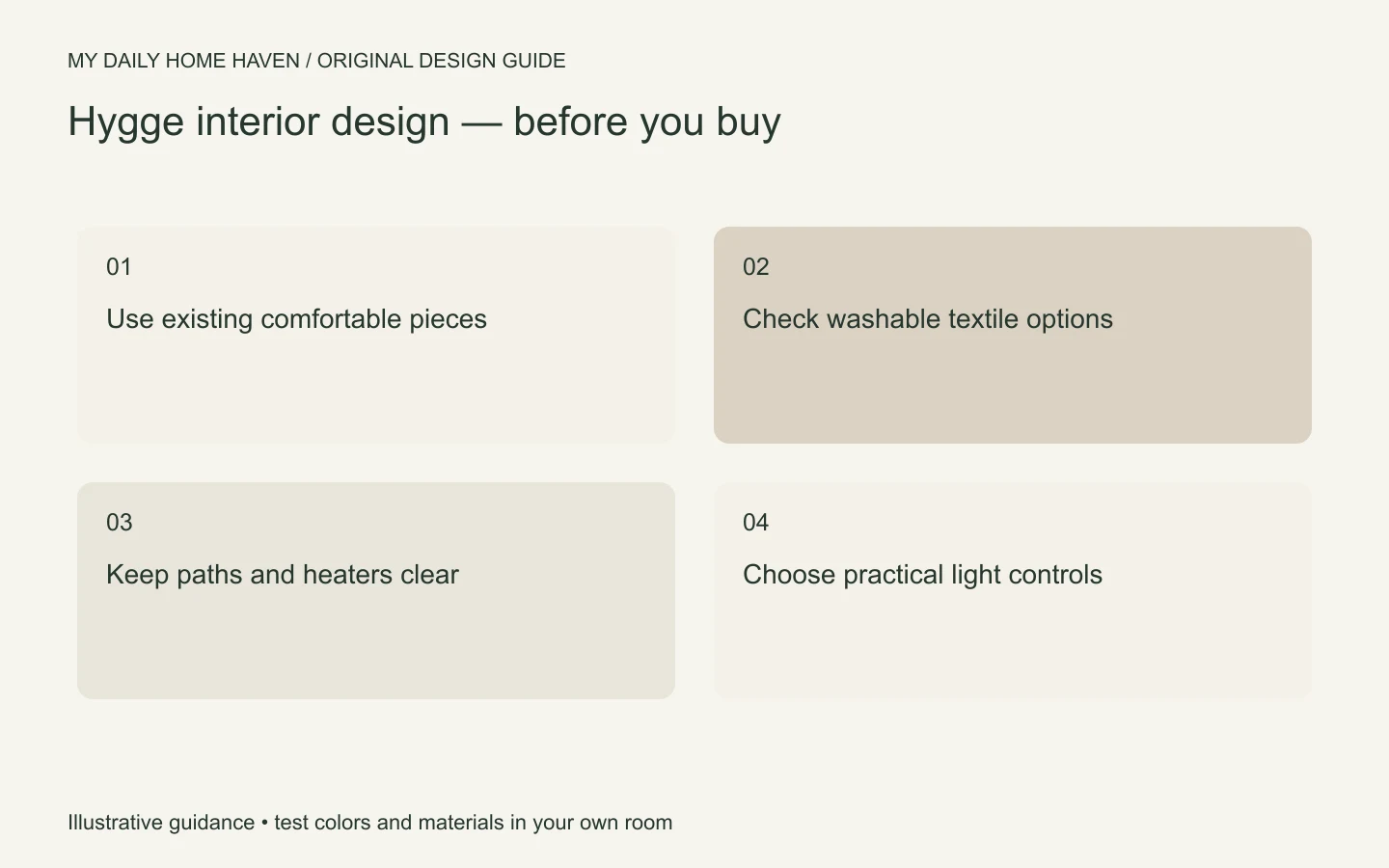
Choose textiles that feel pleasant and suit the season. A washable cover, a soft cushion, or a rug that works with the floor can make a room easier to enjoy. More layers do not always create more comfort; a crowded sofa may leave little usable seating.
Consider care as part of the choice. If a throw sheds or a cushion cannot tolerate normal household use, it may add work rather than ease. Keep the pieces you actually reach for and store seasonal extras where they are easy to find.
Muted colors can support the atmosphere, but a pale neutral palette is not compulsory. A colorful kitchen where people like to gather may express the idea better than a perfectly coordinated beige room nobody uses.
Make hospitality simple
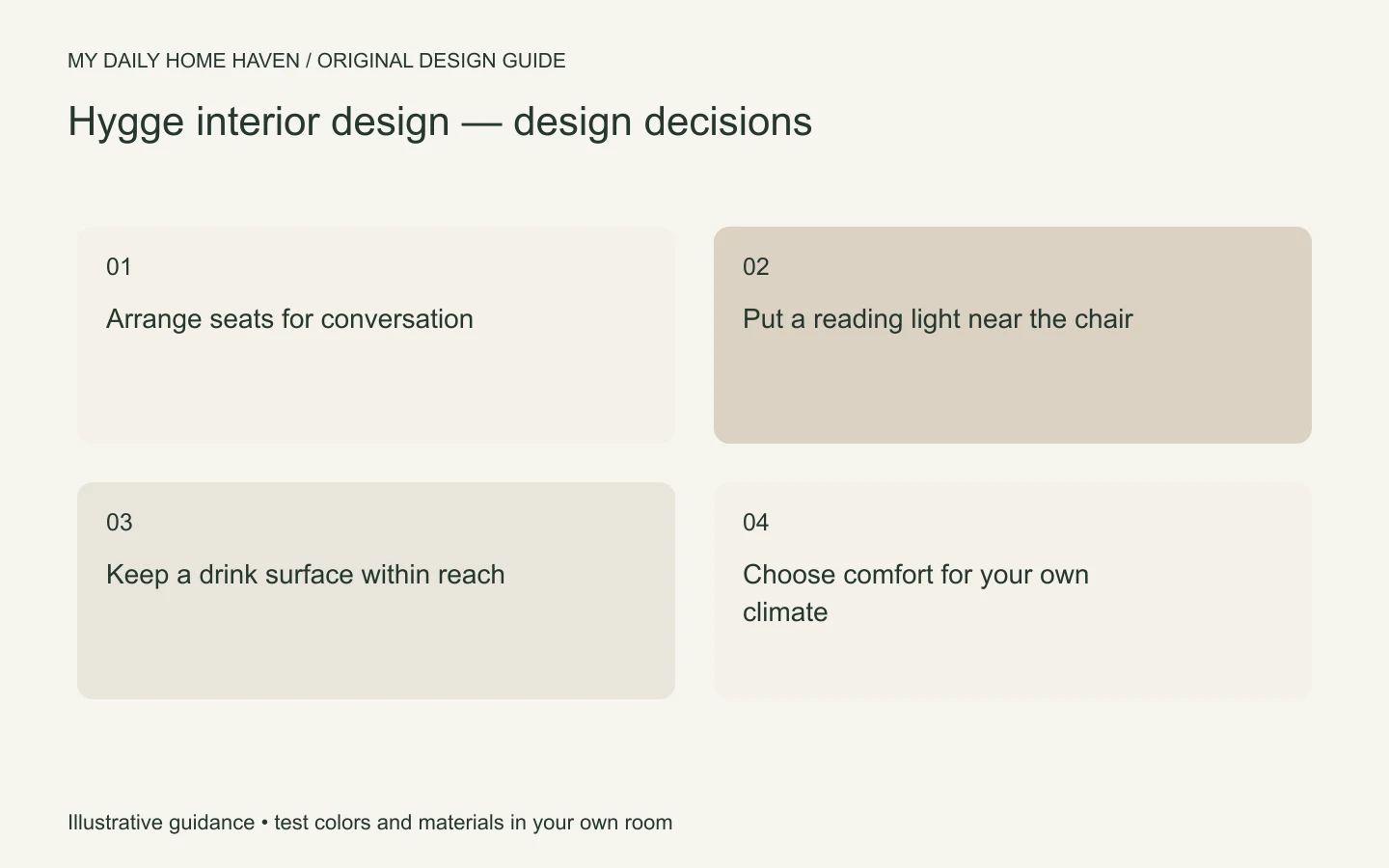
Keep a small area ready for everyday company: a clear portion of the table, a few comfortable seats, and accessible mugs or glasses. You do not need a formal dining room or a fully styled table. Removing friction often matters more than adding decoration.
If storage is the problem, place it close to the activity. Games belong near the shared seating; frequently used cups need reachable shelves; throws need a practical basket or cupboard. This is where good space planning supports the atmosphere you want.
Let the room show ordinary life. Books, family objects, and useful items can stay visible if they have a sensible place. A home does not need to be photo-ready to feel considered and comfortable.
A low-cost weekend plan
First, use the room for an evening and note three annoyances. Move a lamp if the reading light is poor, clear a table if drinks end up on the floor, and rearrange a chair if conversation feels awkward. Test those changes before ordering anything.
Next, shop your own home. A lamp from a spare bedroom or a side table from the hallway may solve the problem. If you still need a purchase, choose the item with the clearest role and check its size, cleaning needs, and return policy.
Finally, repeat the routine you wanted to improve. If the room now supports it comfortably, stop. Hygge does not become more authentic with a larger shopping budget or a particular brand of accessory.
Make space for different preferences
A hygge interior design plan can support more than one way to relax. One person may enjoy conversation at the table while another wants a quiet reading chair. Create small choices where the floor plan allows, rather than assuming everyone likes the same light level or seat depth. Use a movable lamp or a nearby surface to make the quieter corner useful. For gatherings, keep a simple way to bring seats closer together. The aim is to lower the effort of spending time comfortably at home, not to make every member of the household follow one decorative routine.
Frequently asked questions
Can hygge work in summer?
Yes. Use shade, comfortable lightweight fabrics, simple meals, and a place to sit together. The idea is not limited to cold weather, fireplaces, or heavy textiles.
Does the room need to be Scandinavian in style?
No. Your existing furniture can support the same relaxed activities. Focus on comfort and use rather than replacing everything with a particular furniture category.
Is hygge a wellness treatment?
This is a cultural and decorating guide, not a health claim. A comfortable setting can support activities you enjoy, but no palette or product guarantees improved mental or physical health.