

Asian interior design is an umbrella search term, not one unified style. Japanese, Chinese, Korean, Indian, and other design traditions contain their own regional histories, materials, and contemporary practices. A useful room plan begins by identifying the particular reference you admire, then understanding how it works.
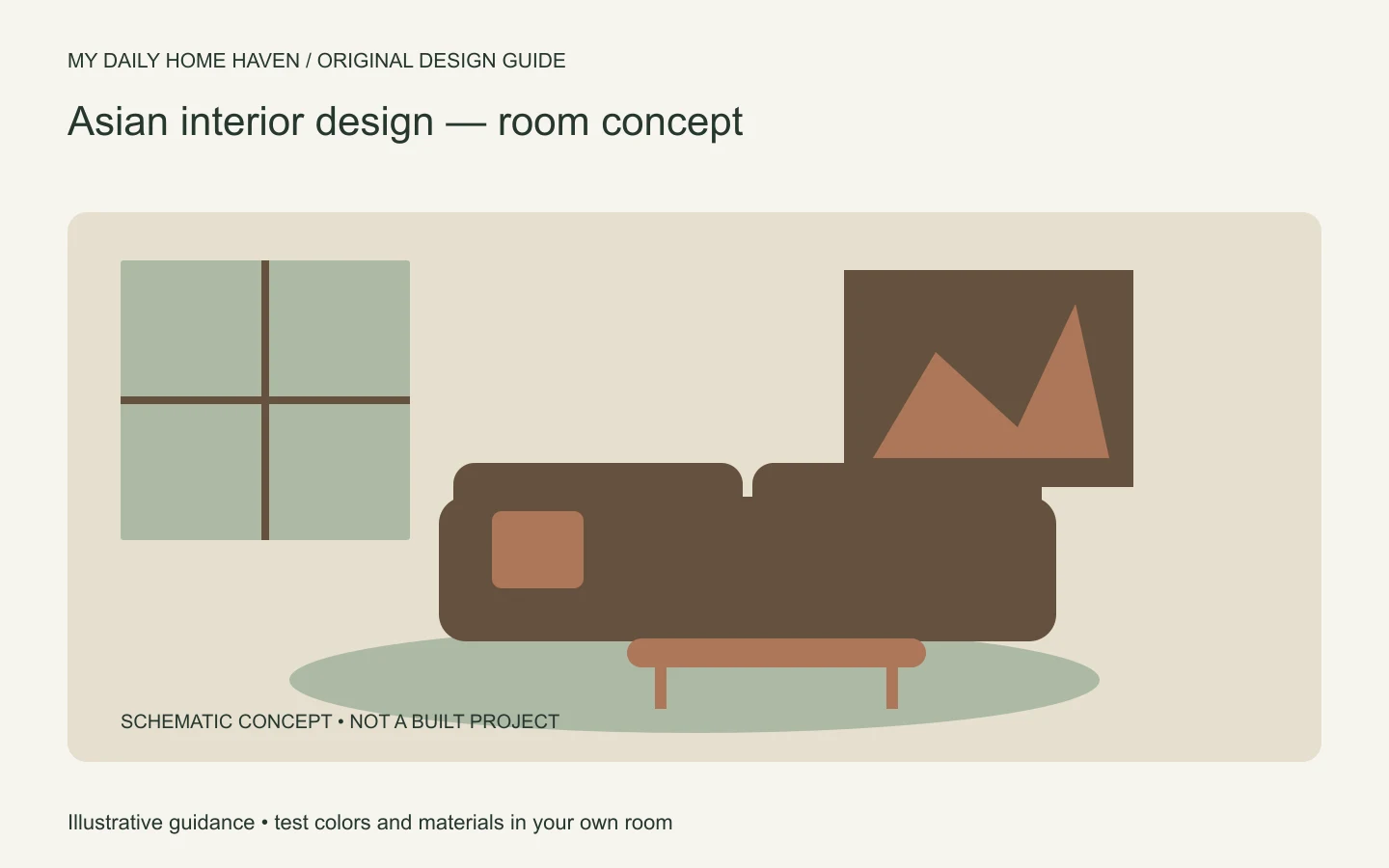
This guide helps you move from a broad search toward informed decisions. It does not offer one formula that represents all of Asia. Our interior design aesthetics guide can help you compare the resulting direction with other approaches for your home.
Asian Interior Design: Begin with a Specific Tradition
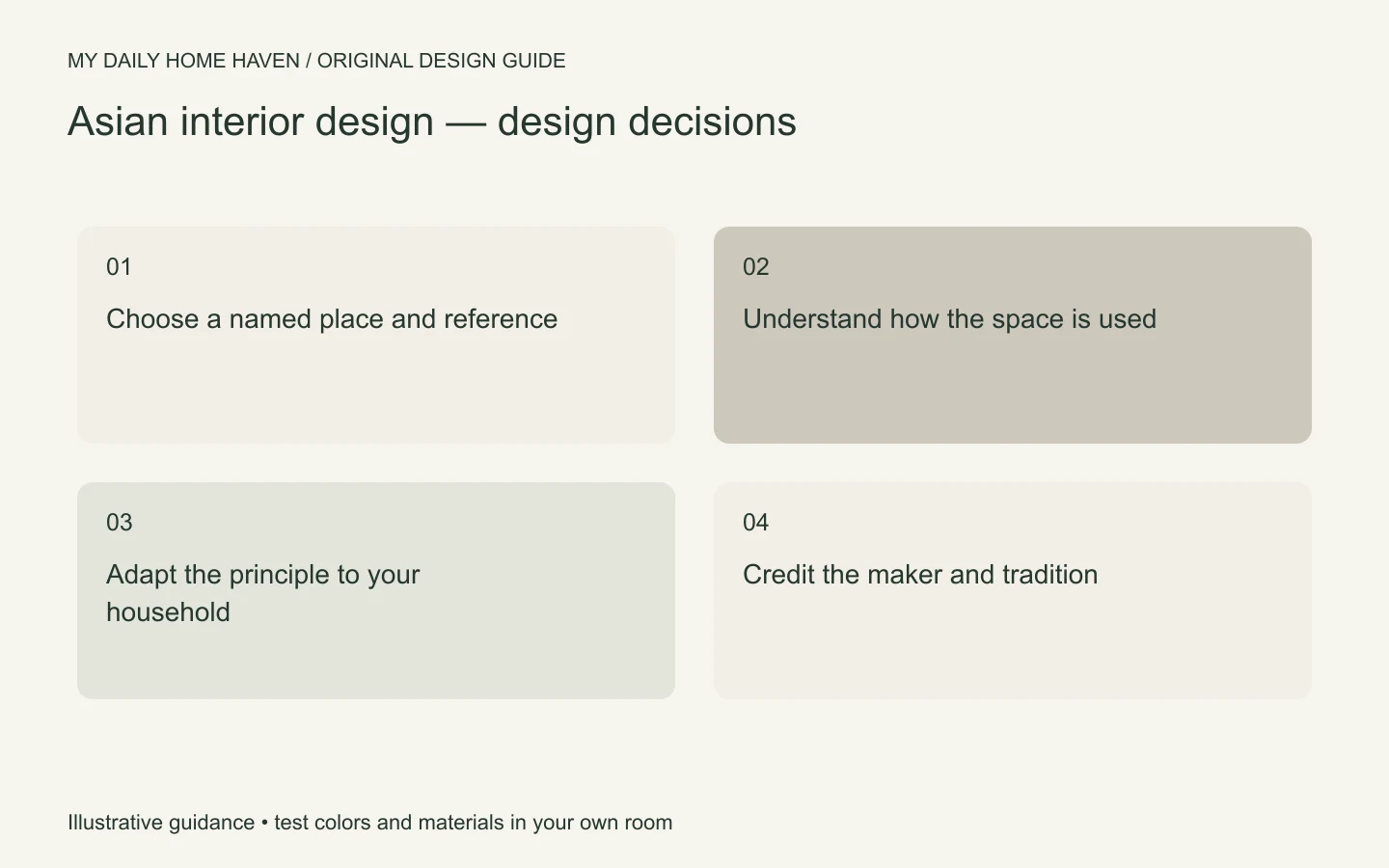
Asian interior design covers many places, histories, and design traditions, so start with a specific reference rather than a generalized theme. Learn where a material or object comes from, credit its maker, and consider its original use. Then build a room around its real qualities—scale, joinery, color, or texture—without treating unrelated cultures as interchangeable.
Narrow the reference before you shop
Choose a particular building, designer, region, or craft practice. A contemporary apartment in Tokyo, a historic courtyard house in China, and a textile-rich Indian interior answer different needs. They should not be collapsed into a room assembled from unrelated screens, lanterns, and religious objects.
Write down what you actually admire. Is it a flexible room layout, filtered light, a furniture form, or a particular technique? That feature can guide a thoughtful adaptation without claiming your home is an authentic version of a tradition you have only recently encountered.
Use sources that name places, dates, and makers. Museum collections, architects’ project descriptions, and documented craft organizations can provide useful context. A generic product category rarely supplies enough information on its own.
Learn from a documented room
The Met’s Shōin Room is a 1989 construction modeled on a specific Japanese historical room. Its description identifies tatami flooring, fusuma sliding doors, and a tokonoma alcove. These are features of that context, not a checklist for all Japanese homes or all Asian interiors.
The transferable lesson is the relationship between elements: floor, wall divisions, openings, and display are considered together. For a modern US home, that might inspire a clearer furniture layout or a carefully composed display niche. It does not require attaching decorative sliding panels to an unsuitable wall.
Distinguish reconstruction from original fabric when looking at historical examples. Also separate a room’s ceremonial or formal role from ordinary domestic use. A reference becomes more useful when you understand what it was designed to do.
Translate principles, not just motifs
If you admire flexible use, look for furniture that can move safely and storage that supports more than one activity. If you admire filtered light, compare window treatments for privacy, glare, and daylight. These choices can benefit the room even without recognizable decorative symbols.
Avoid making low furniture a universal rule. Floor-level seating may be uncomfortable or inaccessible for some users. An upright chair with a supportive seat can be the better choice for your household, even when your reference uses a different posture.
Plan storage for actual belongings. A visually quiet room still needs somewhere to put paperwork, chargers, clothing, or toys. The goal is an arrangement you can maintain, not an empty photograph that only works after everything is moved out.
Select materials with enough information
Timber, paper, stone, metal, ceramics, and textiles appear across many traditions, each with different techniques and uses. Ask what a piece is made from, where it was produced, and how to care for it. Do not infer a cultural origin simply because the finish looks handmade.
Screens and delicate shades need care around children, pets, and busy paths. Rugs and floor coverings need to suit the room’s wear and cleaning requirements. Products intended for dry living areas may be inappropriate in humid kitchens or bathrooms.
For significant architectural changes, consult a qualified professional. Sliding partitions, heavy screens, electrical work, and built-in storage have installation requirements that a mood board cannot resolve.
Build a coherent contemporary room
Start with your existing architecture and one specific reference. A plain sofa, well-scaled wood table, and documented ceramic work can form a coherent room without turning every object into a cultural signal. Keep the strongest piece visible by simplifying its surroundings.
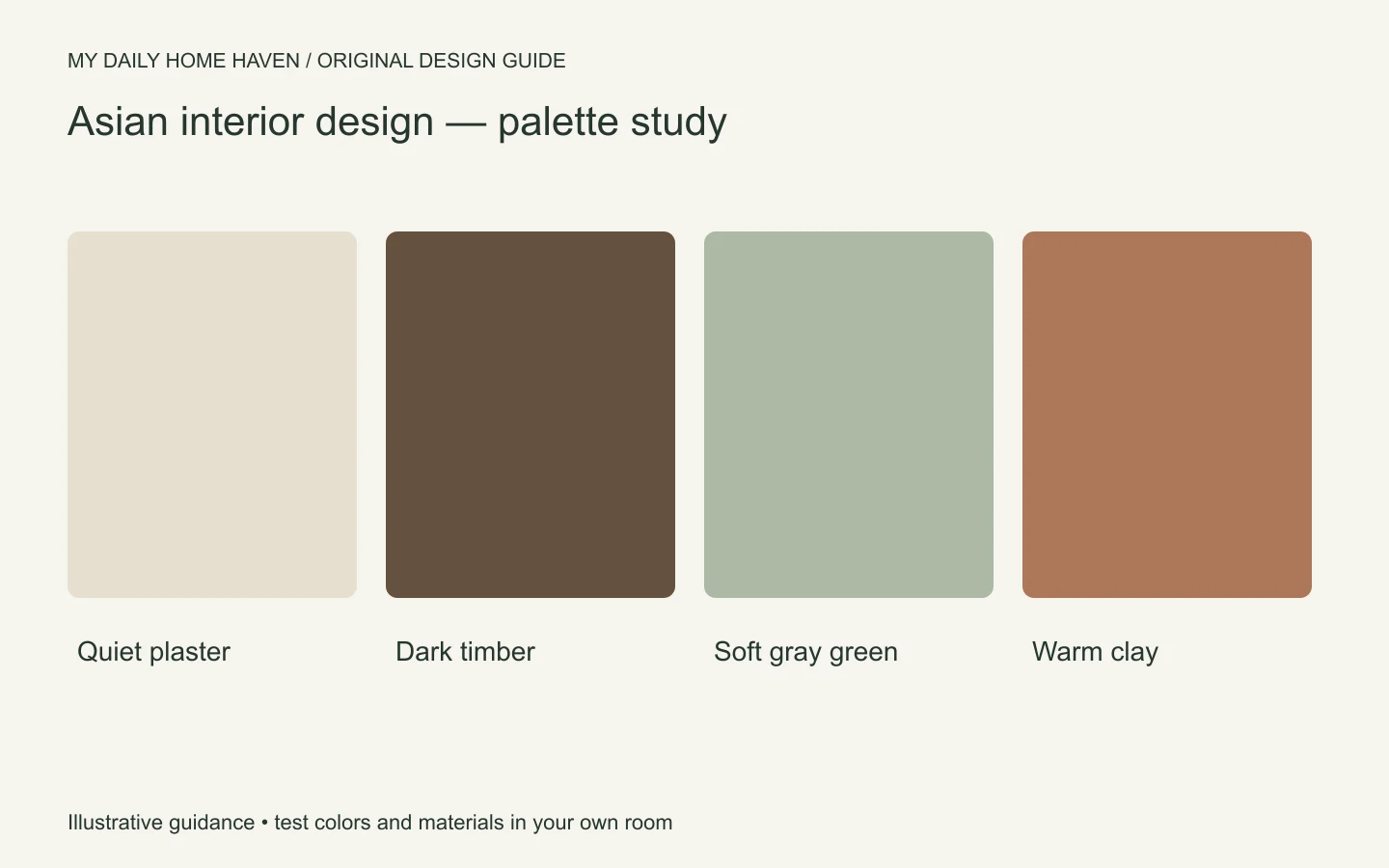
Use color as a relationship rather than a stereotype. There is no universal rule that an Asian-inspired room must be red and gold, entirely beige, or strictly black and white. Follow the particular design work you have studied and the conditions in your home.
The principles of interior design provide a practical way to check balance, scale, rhythm, and emphasis as you combine existing and new pieces.
Source respectfully and keep records
- Prefer clearly named makers, workshops, and materials.
- Ask whether an object was made for domestic decoration or another purpose.
- Avoid uncertain claims of age, rarity, or ceremonial significance.
- Keep the attribution with the piece when you share or describe it.
You can enjoy influences from more than one place, but describe the mix honestly. An eclectic home can include work from several traditions without presenting them as interchangeable or claiming to reproduce a historical interior.
Start with one purchase or layout change and live with it. The room should support your routines and retain the meaning of the references you chose, rather than becoming a collection of labels.
Keep a reference sheet
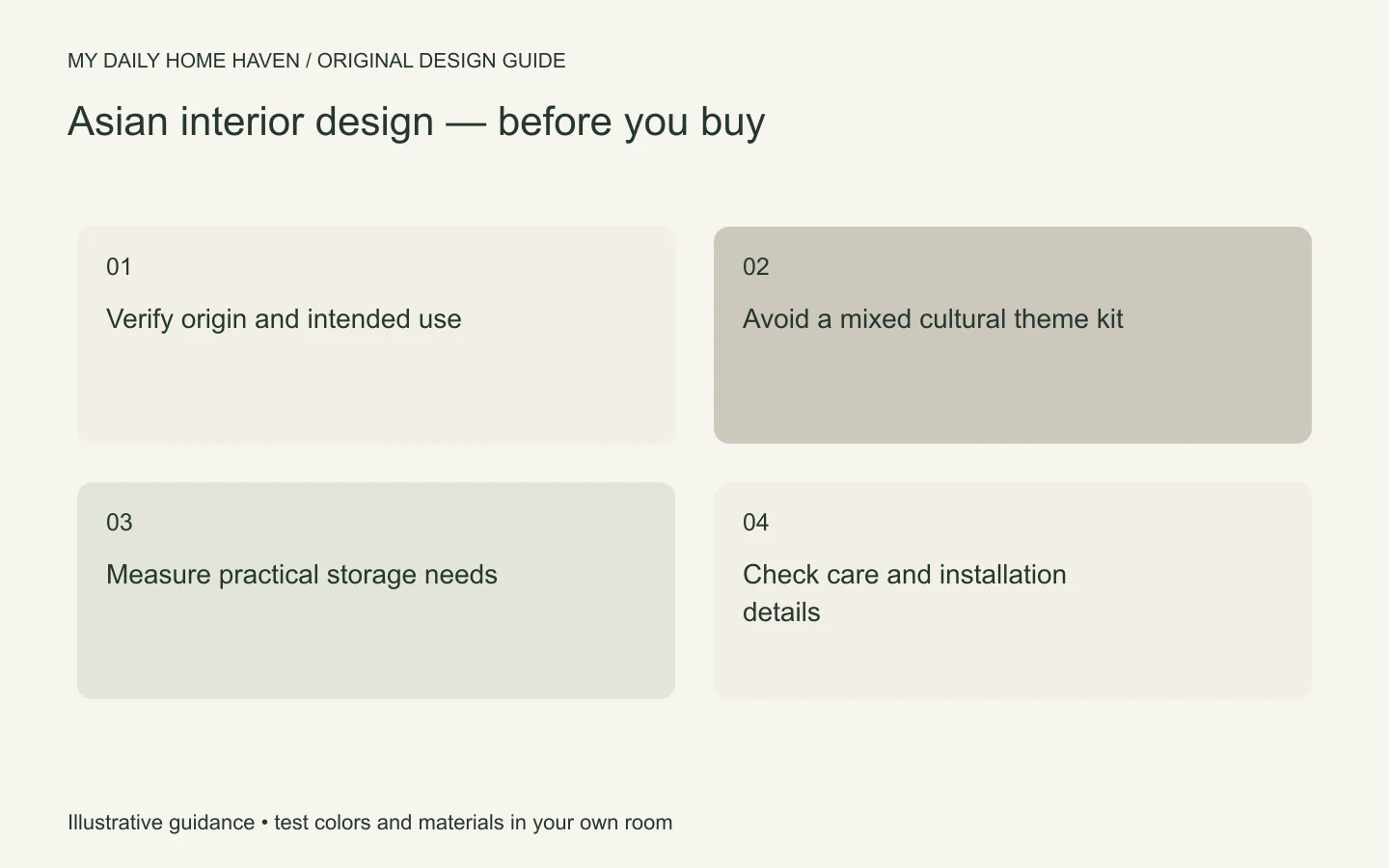
For Asian interior design research, make a short reference sheet with the name of the place, the source, and the feature you want to study. Add a note distinguishing historical examples from contemporary projects. This helps prevent a useful idea from turning into an unsupported cultural claim as the room develops. If you share the plan with a retailer or designer, the sheet also makes your meaning clearer than the broad word Asian. You can say you admire a particular approach to filtered light or flexible storage without asking someone to reproduce an entire culture in one room.
Frequently asked questions
Is this the same as Japandi?
No. Japandi is a contemporary label for a particular blend of Japanese and Scandinavian influences. The broad term Asian design covers many different traditions and cannot be reduced to that blend.
Can I use existing Western-style furniture?
Yes. Relate pieces through scale, material, and function. A thoughtful contemporary room does not need every object to come from the same place or period.
Should I use religious objects as accessories?
Do not choose them simply to signal an aesthetic. Understand their meaning, intended use, and provenance first. A clearly documented domestic craft piece or contemporary artwork may be a more appropriate choice.