

English interior design covers many periods and approaches, from formal architectural rooms to relaxed contemporary homes. For a layered domestic interpretation, start with comfortable furniture, practical antiques, patterned textiles, and objects that have a clear place in daily life. The effect should feel lived in rather than staged as a period set.
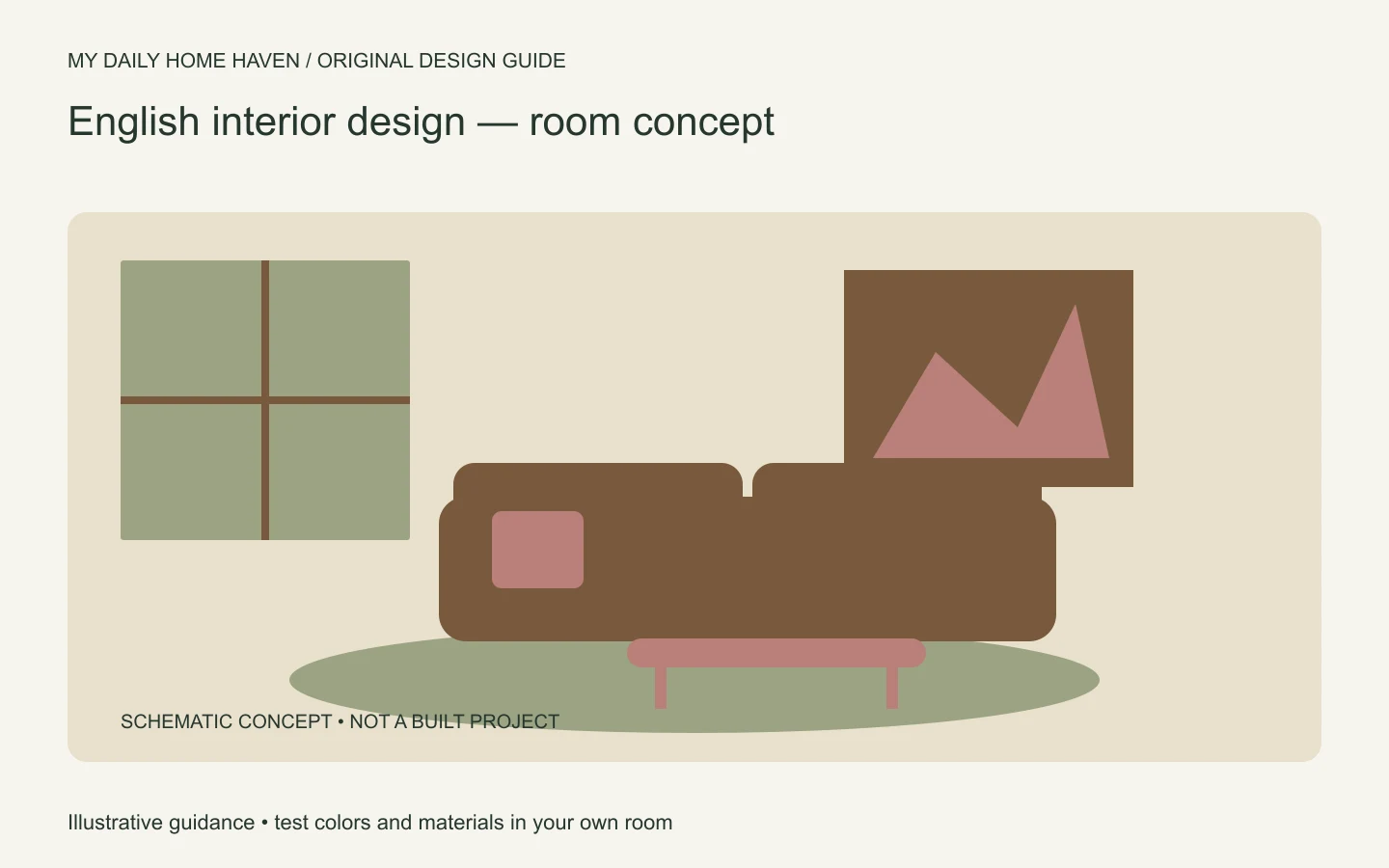
This guide focuses on that adaptable, collected approach rather than claiming to represent every English home. Our interior design aesthetics guide explains how it relates to other traditional and eclectic directions.
English Interior Design: Layer for Daily Use
English interior design draws on varied periods and regional homes, so choose the references that suit your space. Layer a useful pattern, comfortable seating, and collected objects while repeating a few colors to connect them. Preserve functional paths and allow quieter surfaces between prints; a lived-in room does not need to appear old or formally arranged.
Choose the reference you mean
An English country-house drawing room, a modest cottage, and a modern city apartment have different proportions and histories. Decide which features you admire before buying anything. You may want layered textiles and comfortable seating without adopting a particular architectural period.
The National Trust’s interior design through the ages shows how varied historic interiors can be. Use such examples to identify context rather than treating every old English room as the same style.
Read the history attached to a house as well as looking at its photographs. Historic collections reflect particular owners, trade, labor, and changing tastes. A modern adaptation can appreciate craftsmanship without presenting the original setting as a universal domestic ideal.
Put comfort before the decorative layers
Arrange the main seating around how people use the room. A sofa and two chairs might suit conversation, while one supportive chair with a reading lamp could be more valuable in a smaller home. Add a convenient surface for a cup or book near each frequently used seat.
Avoid pushing every piece against a wall automatically. Test a more compact furniture group if the room is large, but leave circulation clear. If the room is narrow, a smaller table or an extra side table may work better than a large central piece.
Our space planning guide helps with these decisions. A layered room can contain plenty of character while still allowing drawers, doors, and curtains to operate easily.
Mix patterns through shared colors
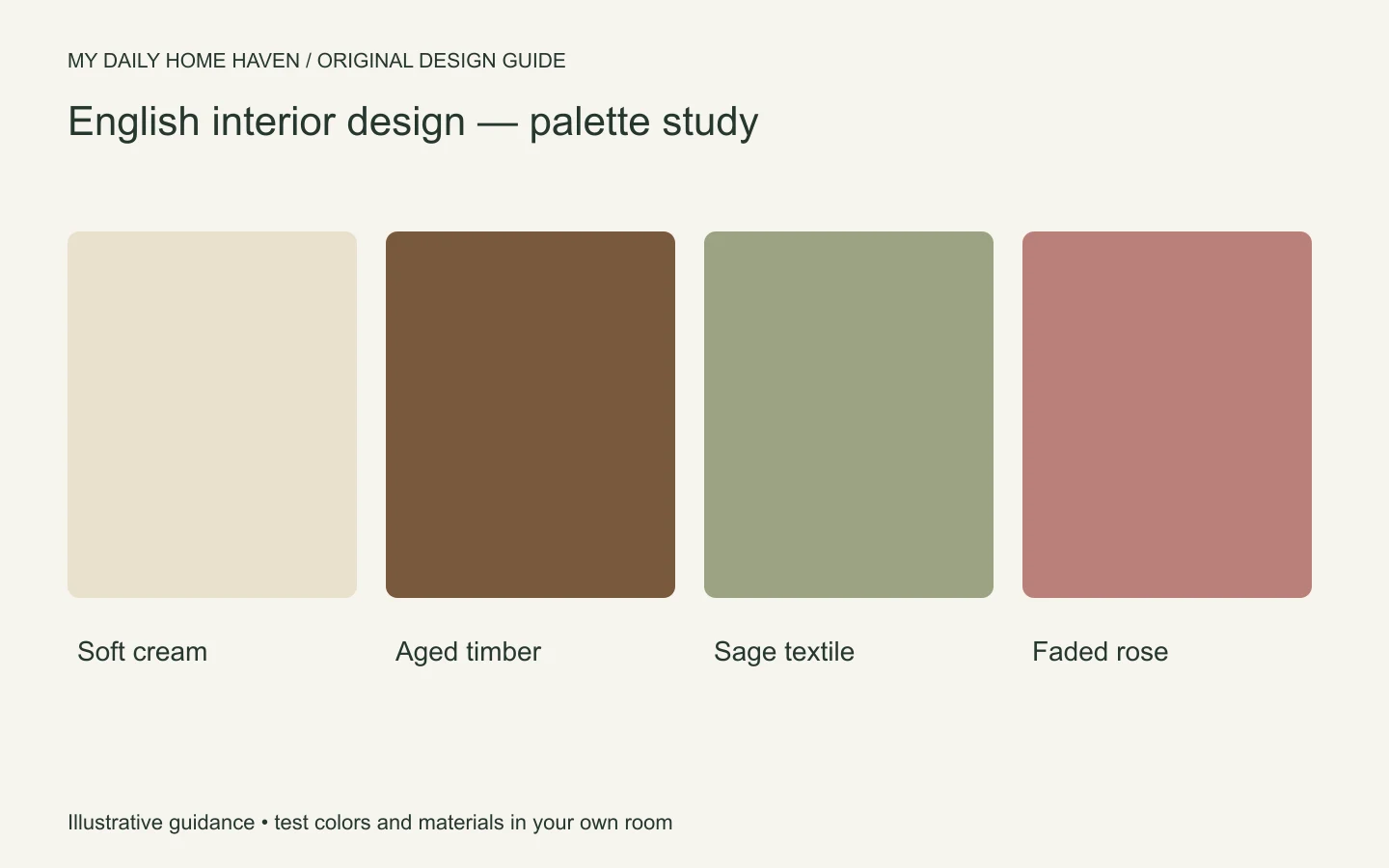
Choose a lead fabric first, such as a floral curtain or a patterned chair. Then use a smaller-scale pattern and a plain fabric that share one or two colors with it. This gives the room variety without making every textile compete.
A faded rose floral, muted green stripe, and cream upholstery could form one scheme. A blue check with a warmer patterned rug could form another. There is no requirement to use pastel colors or floral fabric in every room.
Compare samples at their intended scale. A small cutting may hide the repeat of a large pattern, while a curtain fabric can look different when backlit. Ask to see enough of the design to understand how it will read across the finished piece.
Use antiques because they are useful
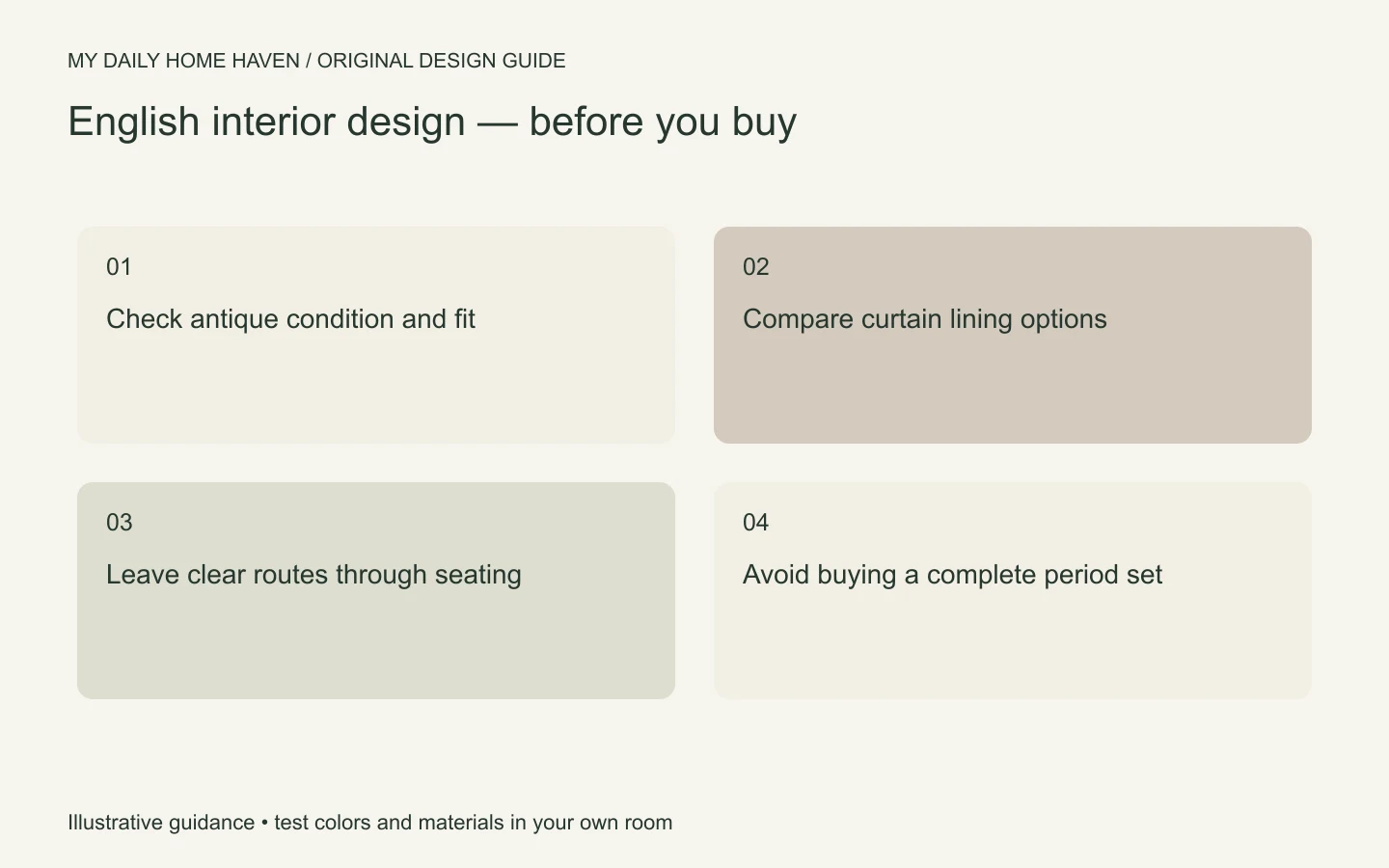
A chest, desk, or small table can add age and craftsmanship while providing storage or a practical surface. Choose it for its dimensions and condition as well as its appearance. A beautiful piece that cannot fit through the doorway is not a useful bargain.
Check joints, drawers, previous repairs, and any signs of damage. Ask a specialist about significant restoration, especially where the history or value is uncertain. Do not assume that every older object should be stripped, painted, or altered to match the room.
Mix older wood furniture with comfortable new upholstery if that suits your household. The connection can come from proportion, color, or a repeated material. A room assembled over time does not need to match as closely as a retail furniture collection.
Let collections have a clear home
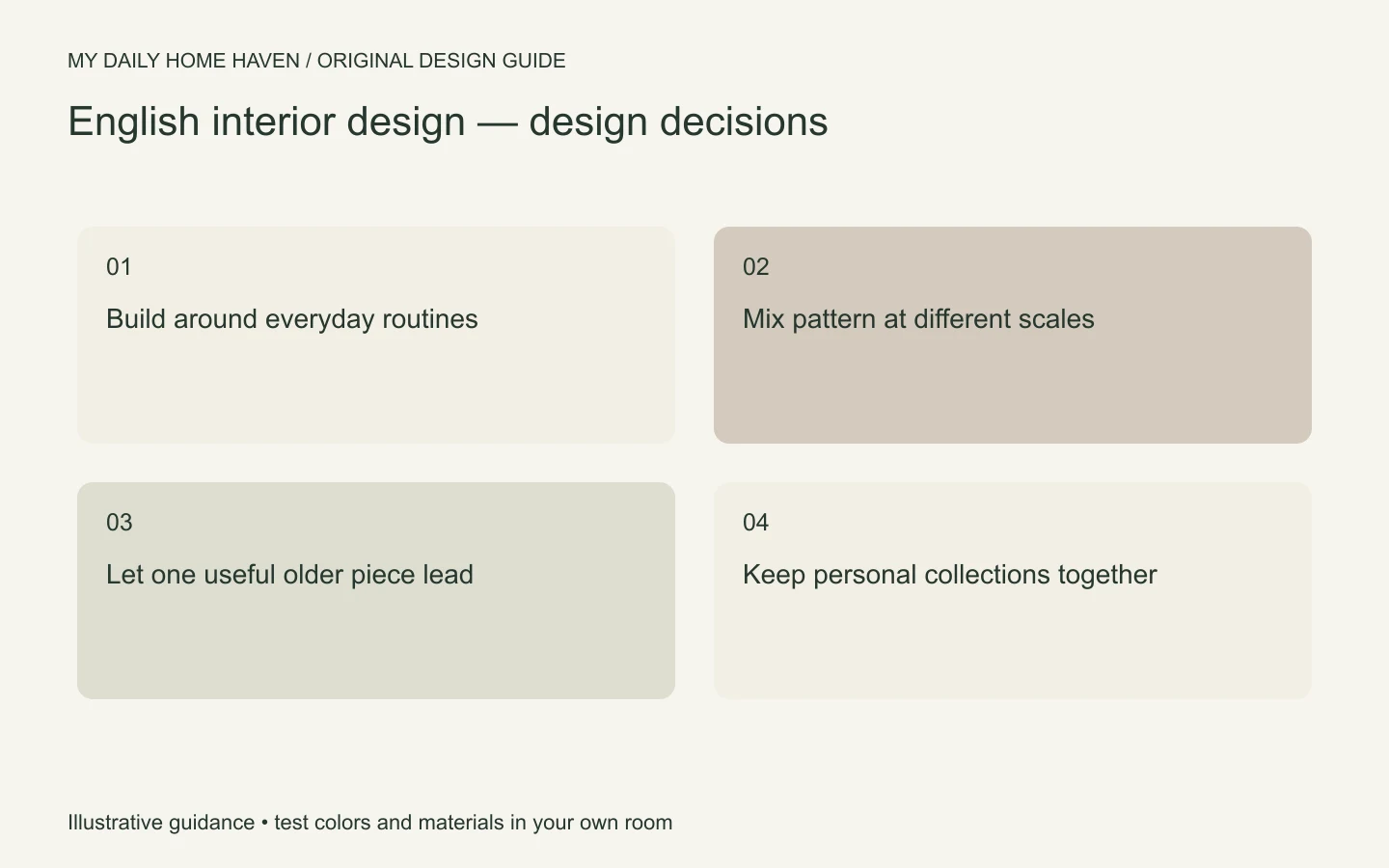
Books, ceramics, family photographs, and artwork can make a room personal. Group related items where they can be seen and maintained. A collection scattered across every table may create more visual noise and leave little space for ordinary use.
Keep some shelves or wall areas quieter. This gives denser displays breathing room and helps individual objects remain visible. Vary the arrangement according to the objects rather than filling every shelf with an identical decorative formula.
Plan for cleaning and access. Delicate objects should not sit where a frequently opened curtain or cupboard will knock them. Heavy pieces need stable shelves and appropriate fixings, especially in homes with children or pets.
A practical way to begin
Start with a room you already use often. Keep the best seating, improve the reading light, and identify one storage gap. Then add a fabric or older furniture piece that addresses a real need while contributing the character you want.
For example, a compact wood chest can replace an open pile of papers, while a patterned curtain can connect an otherwise unrelated sofa and rug. Those changes do more than adding a collection of decorative objects labeled country or heritage.
Live with the arrangement before adding further layers. If the room feels busy, edit a pattern or group a collection more clearly. If it feels flat, consider texture or a stronger contrast before introducing another major color.
Choose where the pattern stops
English interior design can feel more relaxed when patterned areas have clear boundaries. If the curtains carry the largest print, let the adjacent upholstery be quieter. If the chair is the lead pattern, a simple curtain can give it space. Stand back and compare the whole view rather than judging samples only on a table. Include the books, artwork, and visible possessions in that view because they add visual activity too. When a room feels busy, you may only need to remove one repeated motif or simplify a smaller textile, rather than replacing the main fabric you enjoy.
Frequently asked questions
Is English style always formal?
No. It includes many approaches, including relaxed contemporary rooms. Choose the degree of formality that suits the activities and architecture of your home.
Can I mix modern art with older furniture?
Yes. Relate the scale, framing, or colors to the room. A contemporary work can provide a useful contrast when its surroundings give it enough space.
Do I need a large house?
No. Compact seating, one useful antique, and a restrained pattern mix can work in an apartment. Reduce the size and number of pieces rather than sacrificing circulation.