

Eccentric interior design gives personal taste room to be surprising. An unexpected chair, an unusual artwork, or a collection arranged with humor can make a home memorable. The strongest rooms still have a clear furniture plan, useful storage, and a few visual connections that hold the contrasts together.
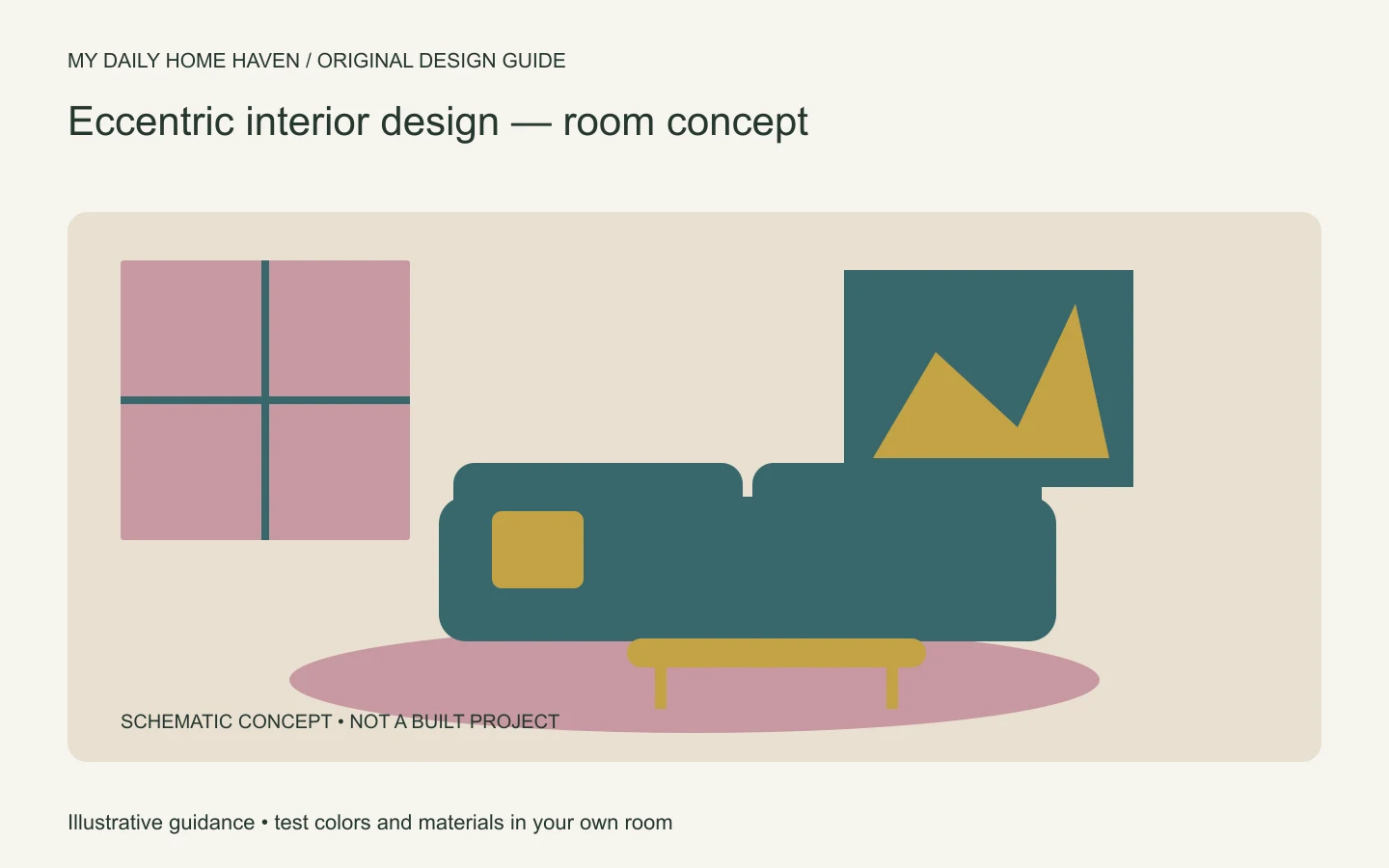
Treat eccentric as a description of individuality rather than a fixed historical style. You do not need a house full of odd objects. This guide explains how to make expressive choices work, while our interior design aesthetics guide compares the broader styles they might sit within.
Eccentric Interior Design: Make Personal Choices Cohere
Eccentric interior design gives personal objects, color, and unusual combinations room to work together. Pick a repeated hue, material, or shape to connect the strongest pieces, and leave enough open space for each one to be noticed. Before buying more, rearrange what you own and check whether the room still supports conversation, storage, and movement.
Start with something you care about
Choose an object, color, or artwork you would enjoy even if it were not fashionable. That gives the room a more durable starting point than buying something solely because it looks unusual. The object might be modest, inherited, handmade, or contemporary.
Ask what role it should play. Is it the first thing people notice, a smaller surprise discovered later, or a useful piece with an uncommon shape? Giving it a role helps you decide how much visual space it needs.
Do not confuse personal meaning with a requirement to display everything. You can keep a collection while rotating what is visible. A smaller, better-spaced group often reveals more of each piece’s character than a crowded display.
Use one connection to support the contrast
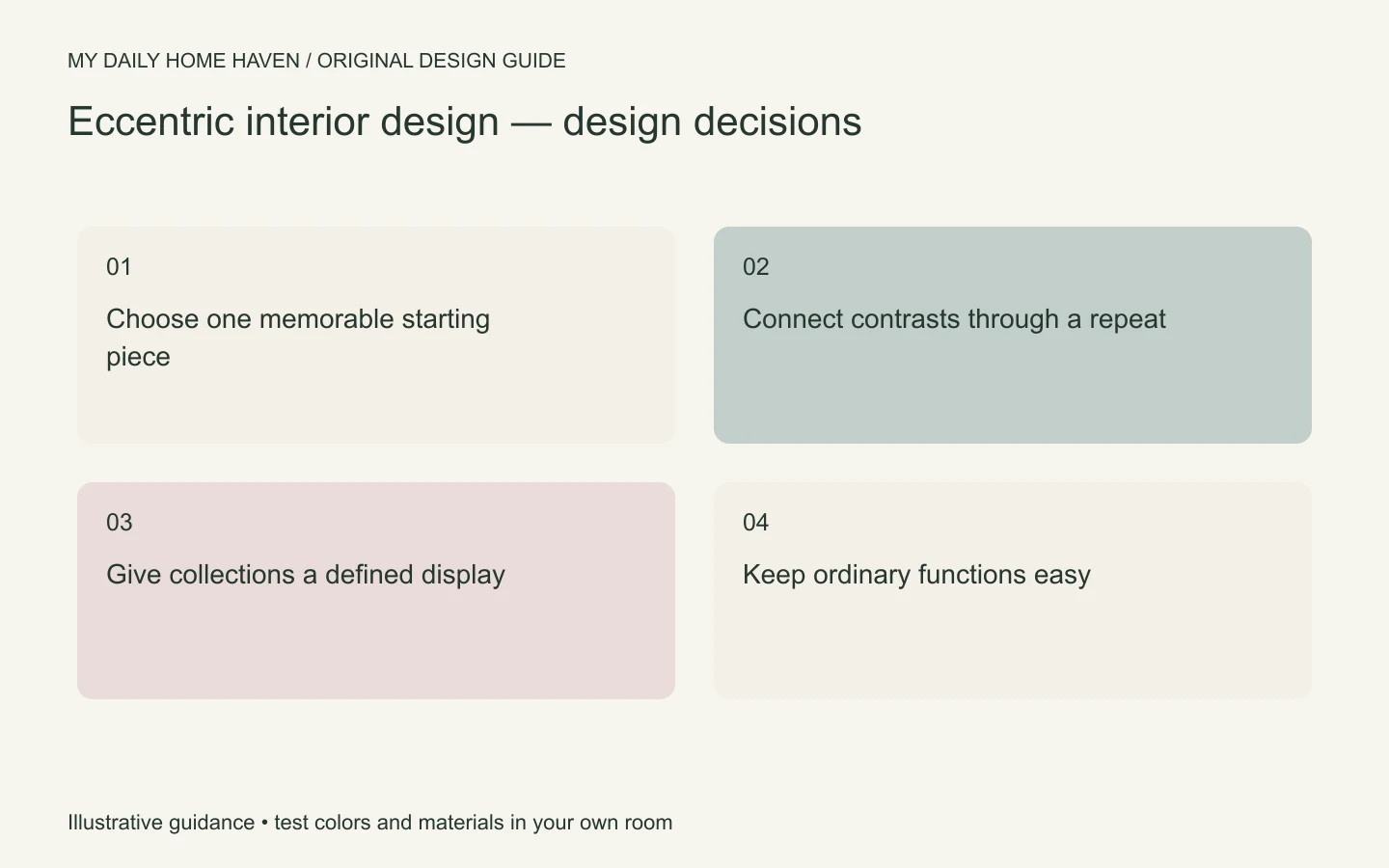
Unexpected pieces become easier to combine when they share something: a color, curve, scale, material, or visual rhythm. A bright chair might relate to a small mark in a painting. A curved lamp might echo an older table without sharing its period.
Choose the connection that matters most and repeat it selectively. If every item repeats every feature, the room stops feeling surprising. If nothing relates, the room may feel accidental rather than personal.
The principles of interior design explain balance, emphasis, and repetition. These tools are useful even when your goal is playful or deliberately unconventional.
Give strong pieces enough space
Pick a main focal point for each area. A dramatic artwork and a sculptural chair can coexist, but they should not always fight for attention from the same viewpoint. Try moving one to a quieter wall or separating them through a calmer surface.
Photograph the room from its entrance and from the seat you use most. If the view feels tiring, remove one competing object before changing the whole scheme. Editing is often more effective than adding another item to make the existing items match.
Quiet space can be a plain wall, a simple textile, or an uncluttered tabletop. It does not have to mean a white minimalist room. A saturated wall can act as a calm background when its surface is visually simple.
Check unusual furniture as carefully as ordinary furniture
A sculptural chair still needs to support the person using it. A novelty table still needs stability and enough practical surface. Measure the widest point, seating height, and the way someone approaches the piece, especially when its shape is irregular.
Inspect vintage and handmade furniture for condition and repairs. Ask about intended use and suitable loads rather than assuming an object can become a seat, shelf, or light fitting. Decorative objects are not automatically functional substitutes.
Wall-mounted and suspended pieces need appropriate support. Use qualified help when weight, electrical work, or the wall construction is uncertain. The surprising part should be the design, not an avoidable installation problem.
Use color with a clear hierarchy
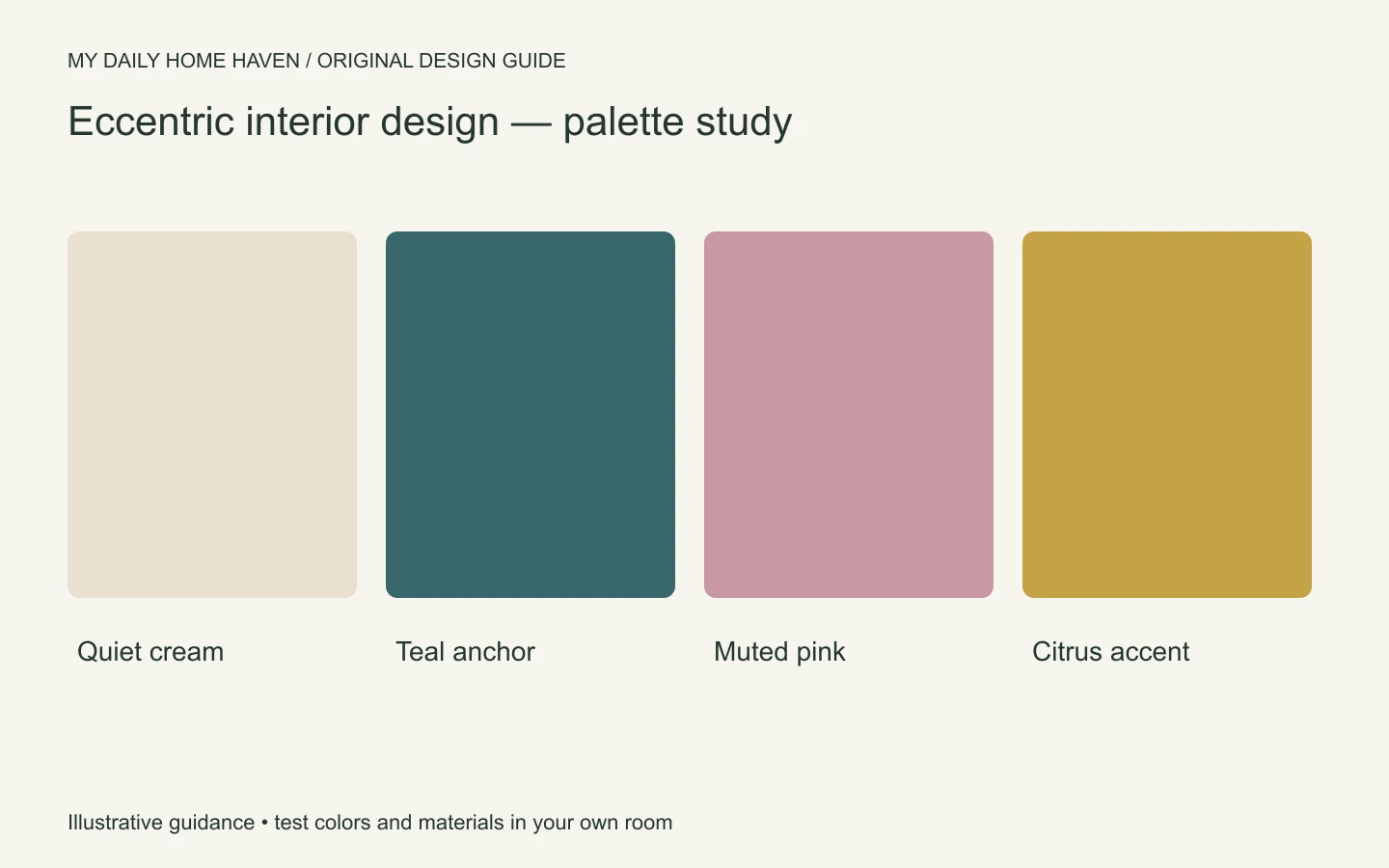
Choose a dominant color area, a supporting color, and smaller accents. This is a flexible planning tool, not a percentage rule. A vivid sofa may need quieter walls; a colorful wall may work better with simpler large furniture.
Test actual samples. Sherwin-Williams’ guide to undertones explains why the apparent character of a paint color can differ from its main hue. Compare samples with your existing furniture rather than choosing from a digital palette alone.
If you love many colors, connect them through a rug, artwork, or repeated neutral. You can also concentrate the strongest colors in one room while allowing adjoining spaces to be quieter. The home does not need the same level of intensity everywhere.
Make collecting easier to live with
Set a display boundary: one cabinet, one wall, or a defined shelf group. This helps you appreciate a collection without allowing it to occupy every useful surface. Closed storage can hold pieces that are not currently on display.
Keep source notes when objects have a specific maker or cultural context. Avoid assigning a story based only on appearance. If an item has religious, ceremonial, or historical meaning, learn about it rather than treating that meaning as a decorative joke.
Before buying another piece, identify where it will go and what it will replace or add. This question protects both the room and the budget. Personal style develops through choices, including the choice to leave a good object in the shop.
Test an unexpected purchase
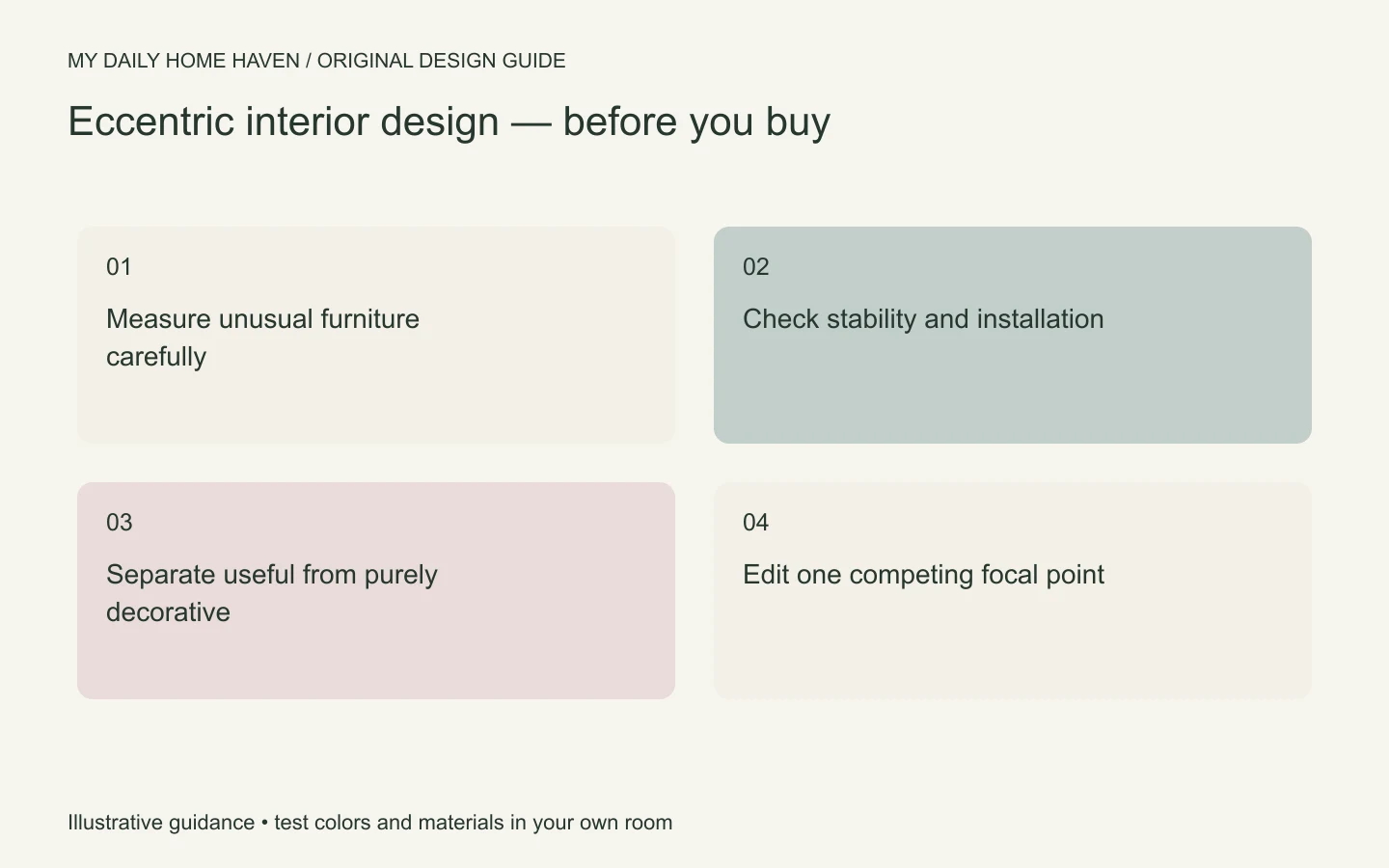
Before buying an unusual piece for eccentric interior design, sketch its footprint and identify its exact role. Ask where it will stand, who will use it, and what changes around it. If you cannot answer those questions, keep it on an ideas list rather than forcing it into the room. A temporary paper template or a similar-sized box can reveal whether the proposed location obstructs movement. This does not make the design less spontaneous; it helps the surprise remain enjoyable after delivery. The best statement piece contributes to the room instead of creating a problem everyone must work around.
Frequently asked questions
Is eccentric design the same as maximalism?
No. A room with few objects can still be eccentric if the choices are unusual. Maximalism usually describes greater visual layering, while eccentricity concerns individuality and unexpected combinations.
How do I avoid a room that feels random?
Give the strongest pieces clear roles and repeat one or two connections. Then edit anything that competes without adding a useful function or meaning.
Can this work in a shared home?
Yes. Agree on practical needs and the areas where each person can express a stronger preference. A personal display corner or one shared statement piece may work better than redesigning every room around one taste.