

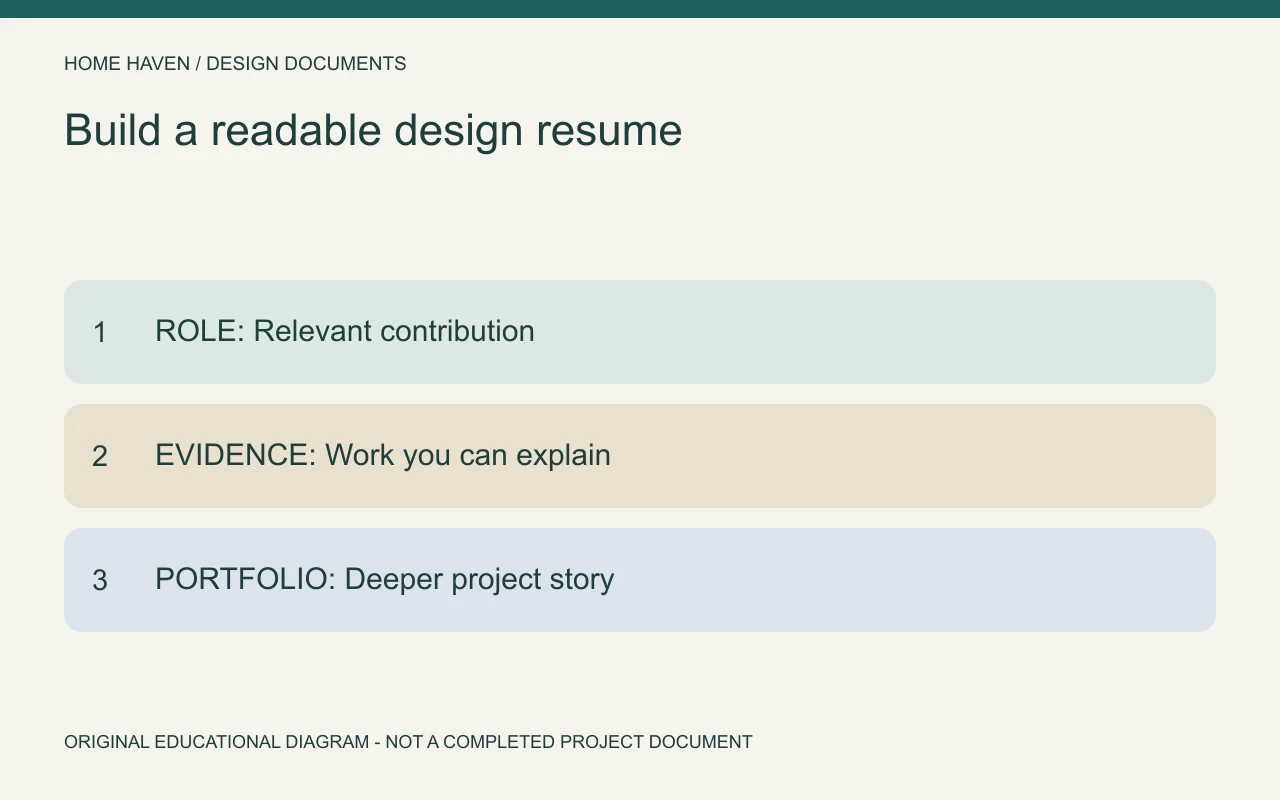
An interior design resume template should help an employer find your relevant experience, skills, and project contribution quickly. Use a clear structure and support claims with actual work. Tailor the content to the position instead of filling every available space. Keep the resume readable and let the portfolio provide the deeper visual story.
Our interior design software guide explains common tool categories. When listing software on a resume, describe the tasks you can genuinely perform rather than copying a list of popular product names.
Begin with the job requirements
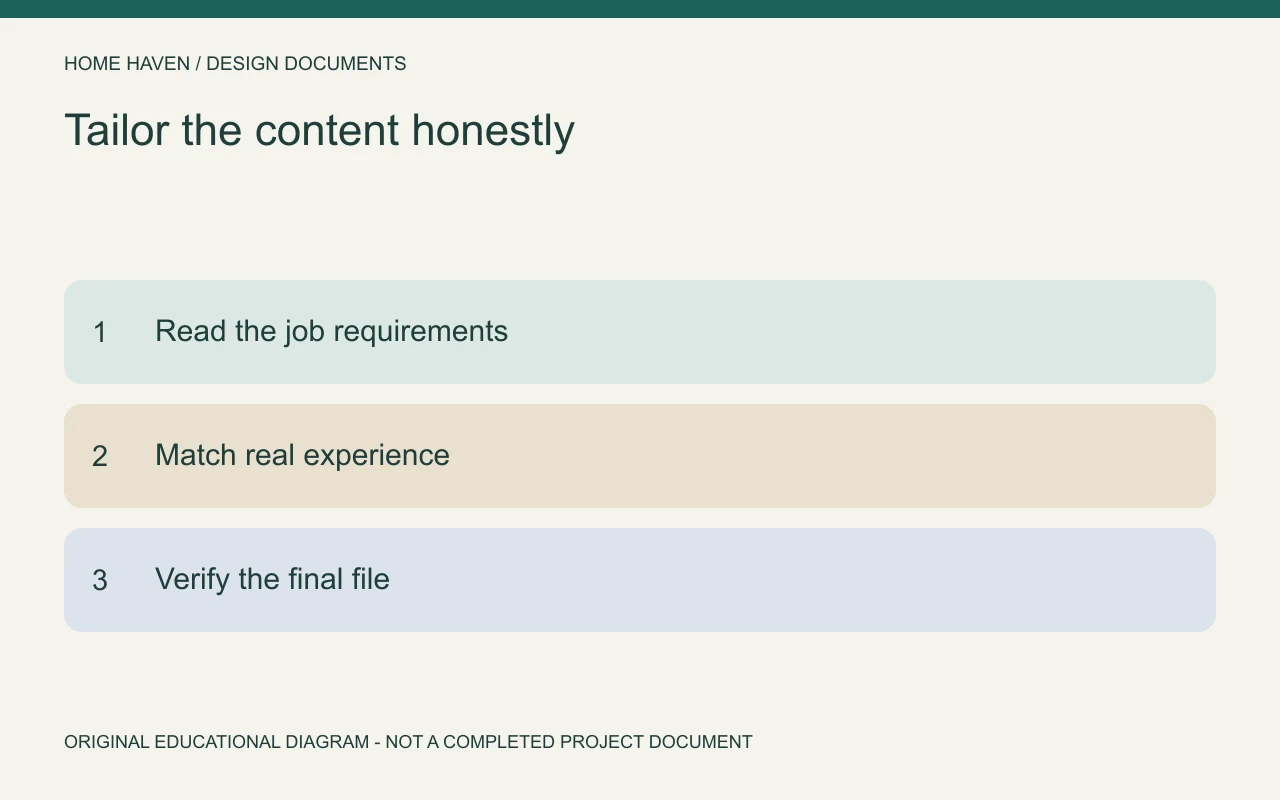
Read the posting and identify the responsibilities, project types, and skills the employer requests. Compare those needs with your actual experience. Use the employer’s terminology when it accurately describes your work, without adding abilities you cannot demonstrate.
For example, a rendering-focused role may need evidence of modeling and visualization. A project support role may emphasize documentation, sourcing, and coordination. The same person can tailor the emphasis while keeping employment history and achievements consistent.
Interior design resume template: a simple structure
Use the outline below as an editable starting point. The order can change to emphasize relevant experience or education. Replace every placeholder with accurate information and follow the employer’s submission instructions.
- Name and contact: [name], [professional email], [phone], [city/state], [portfolio URL].
- Summary: [relevant role or background], [supported strengths], [type of contribution].
- Skills: [specific design, documentation, software, or coordination capabilities].
- Experience: [employer], [role], [location if relevant], [employment dates].
- Project evidence: [task], [your contribution], [supported outcome or deliverable].
- Education: [actual qualification], [institution], [relevant completion information].
- Credentials: [verified credential and current status, when applicable].
- Selected projects: [clearly labeled academic, personal, or professional examples].
Choose a readable format
CareerOneStop’s resume formatting guidance discusses formats that include a clear work history and warns that some layouts can create problems for applicant tracking systems. Use recognizable section headings and keep essential information as readable text.
A restrained, single-column layout is a sensible starting point when uploading through an application system. Avoid relying on icons, graphics, or skill bars to communicate essential qualifications. No template guarantees that every employer’s system will parse every field perfectly.
Write a summary with evidence behind it
Use the summary to identify the kind of contribution you can make. Avoid broad claims such as award-winning expert unless you can verify the award and the relevant expertise. A concise description of your work is more useful than a string of flattering adjectives.
A placeholder example might read: Interior design graduate with experience developing furniture layouts, material boards, and project presentations through academic and internship work. Replace that sentence with your real background; do not adopt it if it misrepresents your qualifications.
Turn responsibilities into useful bullets
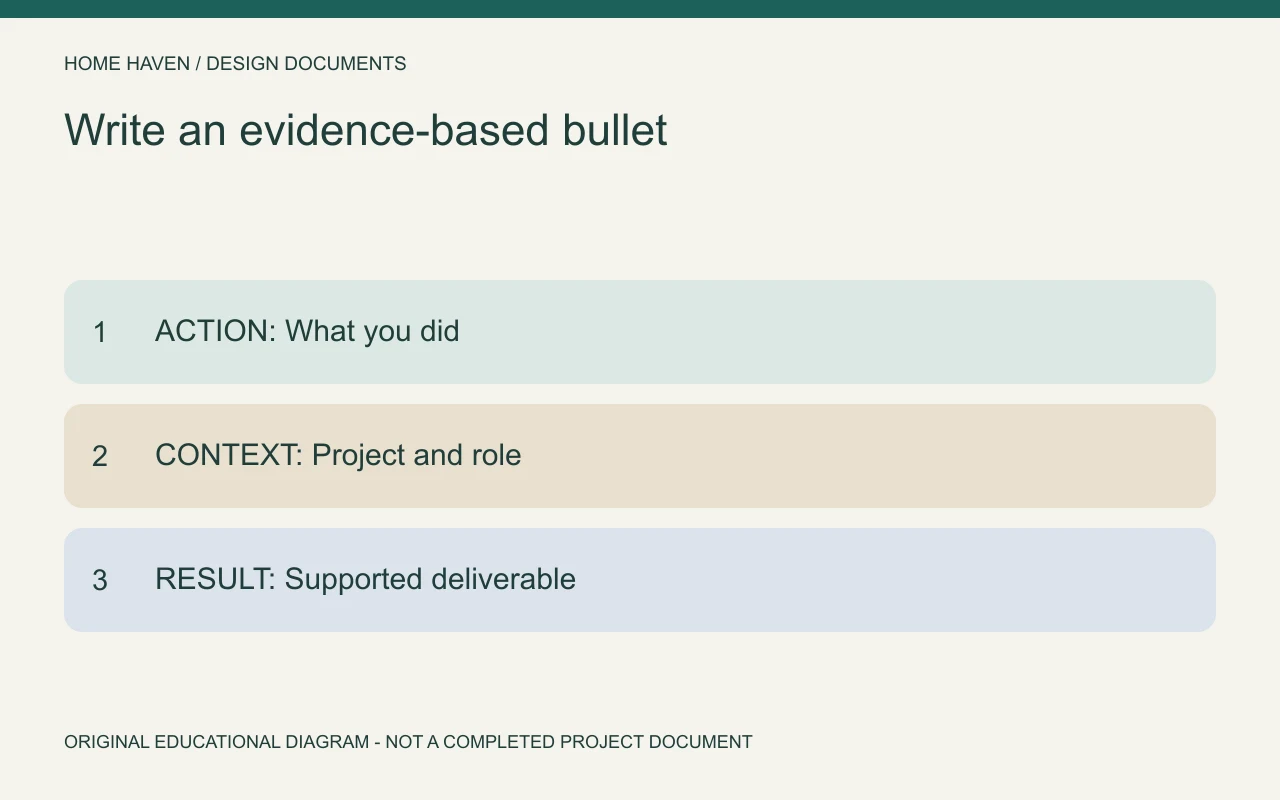
Describe what you did, the context, and the deliverable or supported result. For example, a hypothetical bullet could say: Prepared furniture layout alternatives and a selection schedule for a studio project, documenting dimensions and revisions. Label the project accurately.
Add numbers only when you have reliable records and permission to use them. Do not invent a percentage improvement or project value to make a bullet sound stronger. A concrete description of the work can be persuasive without unsupported metrics.
- Action: what you developed, checked, coordinated, or produced.
- Context: the project stage, team, or type of space.
- Evidence: a document, approved deliverable, or verifiable outcome.
- Boundary: your contribution and any shared responsibility.
Describe software skills honestly
Name the application and the work you can perform with it. For instance, distinguish creating a measured plan from viewing an existing model. If your knowledge comes from coursework, a personal project, or introductory training, present that context clearly.
Avoid rating yourself with an unexplained percentage. Software proficiency depends on tasks and workflow, not a decorative progress bar. Prepare to discuss a real example, including the information you received, the output you created, and the checks you performed.
Connect the resume to the portfolio
Use a clear portfolio link and test it in the exported resume. Choose projects relevant to the role and make your contribution visible. Our portfolio template guide explains a project sequence built around the brief, process, and outcome.
Keep names, dates, and roles consistent across the resume and portfolio. A resume that describes a team role should not link to a project page implying sole authorship. Credit collaborators and distinguish visualizations from completed-room photographs.
Handle limited experience without inventing it
Use relevant academic work, internships, volunteer contributions, or self-initiated projects when they demonstrate the requested skills. Label each category accurately. A well-explained student project is stronger than a fictional client commission.
Transferable experience can also matter. Organizing records, communicating with customers, or coordinating deadlines may support a design role when you explain the actual work. Avoid relabeling an unrelated job as an interior design position.
Verify education and credentials
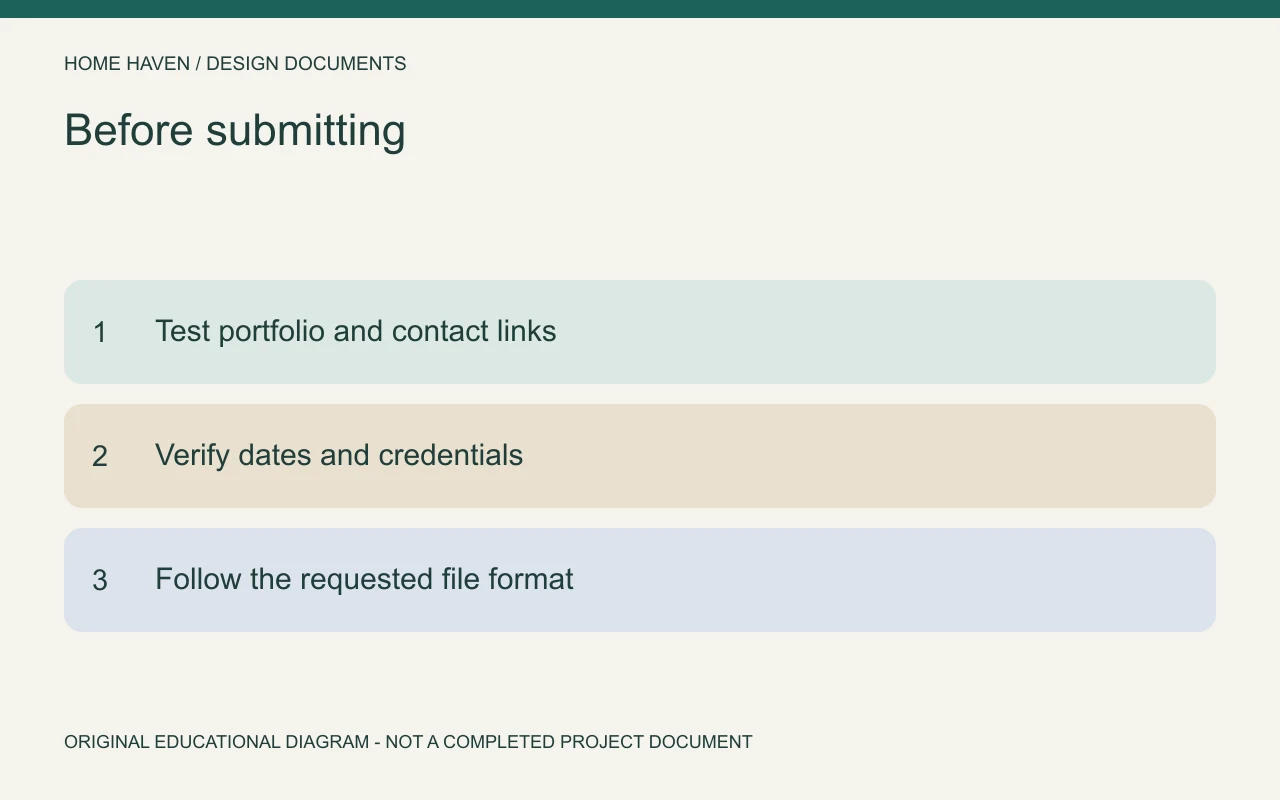
List the exact qualification you earned or the current study status. Do not imply that an incomplete program is a completed degree. Check the accuracy of dates and institution names before submitting.
Use professional titles and credentials only when you hold them and their use is appropriate. If a position requires a specific credential or authorization, verify the requirement and your status with the relevant official body. A template does not determine eligibility.
Export and review the final file
Follow the file format requested in the job posting. Check the exported document for selectable text, correct reading order, working links, and unexpected page breaks. Keep the editable master separate from the file you submit.
Ask a reader to find your most relevant experience and portfolio link quickly. Remove decorative elements that make that task harder. Then proofread contact details, spelling, job dates, and the employer’s requested application fields.
Resume questions
Does a creative role require a decorative resume?
No. Clear communication matters. A readable resume can introduce the evidence while the portfolio demonstrates visual judgment and design work.
Can you list a tool you are still learning?
Yes, if you describe the level and tasks accurately. Avoid presenting introductory exposure as advanced professional proficiency.
Make every claim supportable
Use a template that makes your actual contribution easy to understand. Tailor the emphasis, verify the details, and test the final file. Your resume should invite a useful conversation about work you can explain and demonstrate.