

Virtual interior design services let you work with a designer remotely, often through photographs, measurements, questionnaires, and online reviews. The service can help with a furnishing plan, palette, or product selections, depending on the package. Confirm the scope before booking. Remote collaboration works best when both sides understand who measures, approves, orders, and installs.
Our interior design software guide explains tools that can help you prepare and review a plan. Hiring a designer adds professional judgment and service responsibilities beyond simply choosing an app.
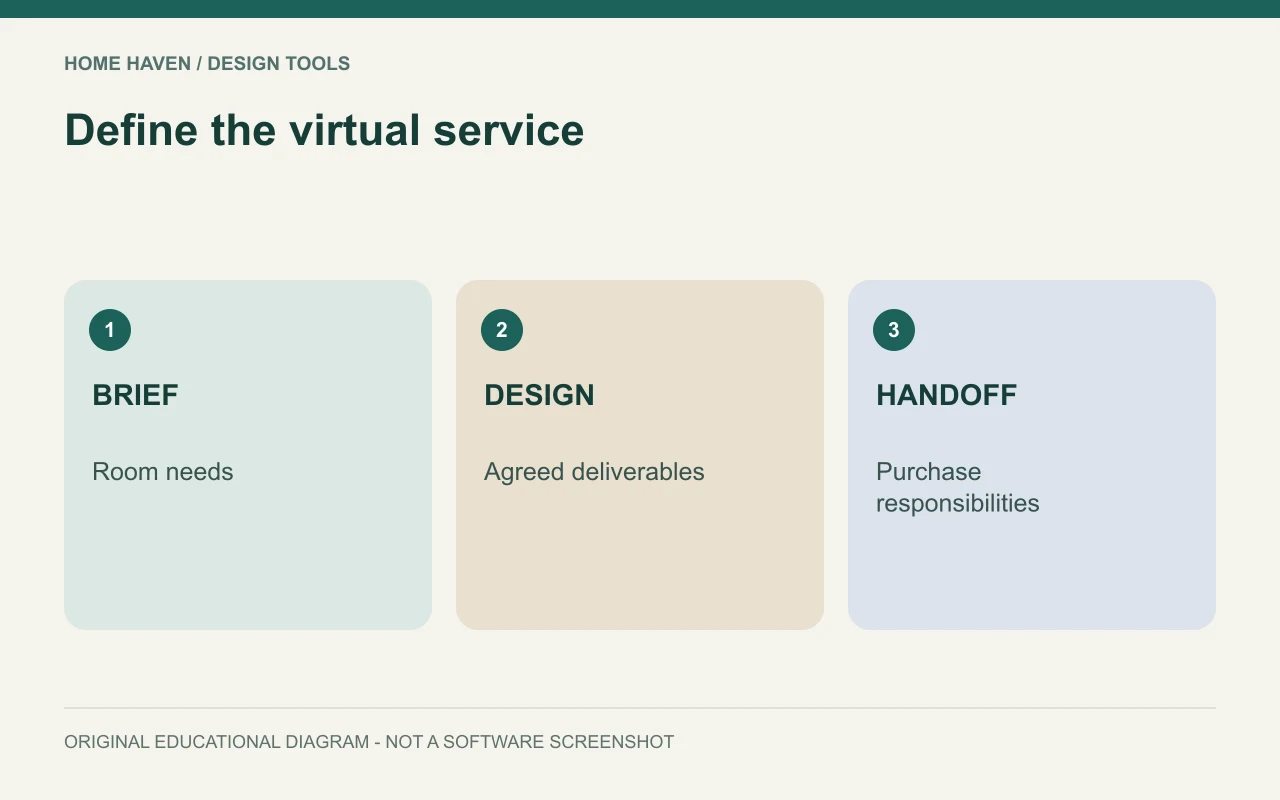
Decide whether the project suits remote collaboration
A furnishing refresh may suit a remote process when you can supply reliable room information. More complex work can require site assessment and coordination beyond a virtual package. Describe the actual project before assuming a remote service covers it.
Separate decorating decisions from construction decisions. A new sofa arrangement differs from moving a wall or changing building systems. Ask the provider to explain the limits of the proposed service and any work that requires other qualified professionals.
Compare virtual interior design services by deliverables
Look for a written description of the concept, layout, product list, revisions, and support included. A mood board, a dimensioned furniture plan, and a rendered image are different deliverables. Ask what each one will tell you and what it will leave unresolved.
For example, Havenly’s official site describes online collaboration with a designer and distinguishes it from in-person service. Use the current package details to understand that provider’s offer. Do not assume another virtual interior design service includes the same process or output.
Create a useful room brief
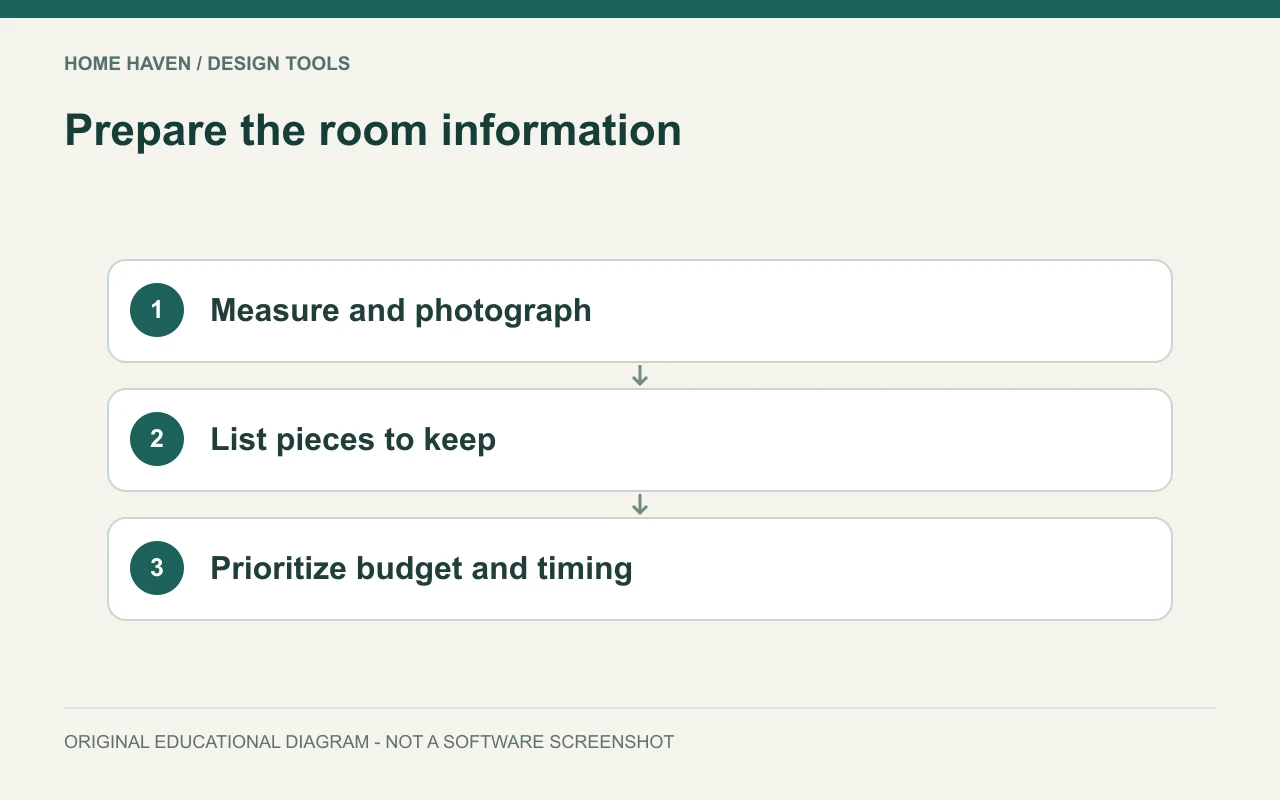
Explain who uses the room, what happens there, and what currently fails. Include existing pieces you want to keep and practical constraints such as storage, pets, children, or rental restrictions. Style references become more useful when they relate to these needs.
Choose a few inspiration images and explain what you like in each. You might prefer the palette in one image but dislike its furniture proportions. Without that distinction, the designer may interpret a reference more broadly than you intended.
- Primary activities and the people who use the room.
- Existing furniture to keep, with dimensions.
- Budget and timing for design and purchases.
- Preferences, dislikes, and maintenance expectations.
- Constraints and questions that need on-site assessment.
Agree on how measurements will be verified
Ask for the provider’s measurement instructions before collecting information. Record units and identify doors, windows, fixed features, and ceiling changes. Photograph the room from several positions and label the views so the designer can relate them to the plan.
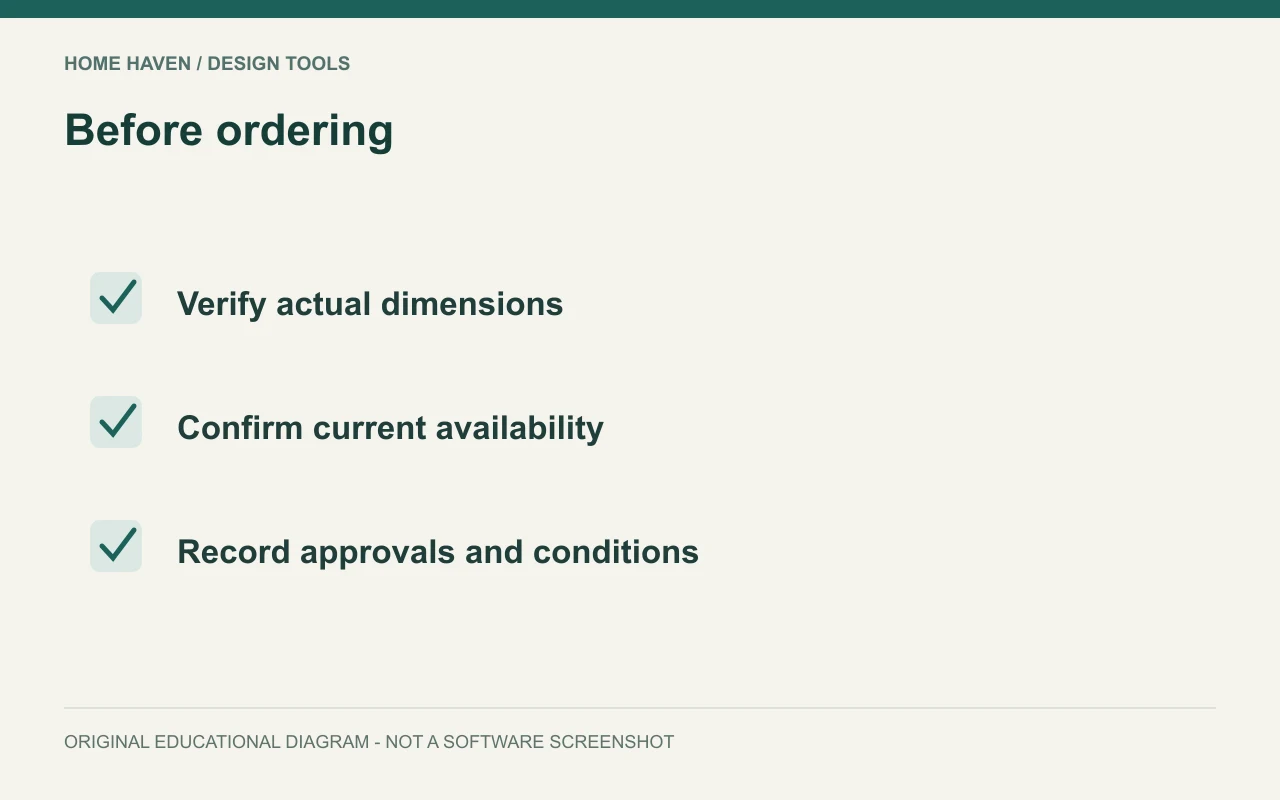
Clarify who checks measurements and what happens if the supplied information is incorrect. A scan can help gather information, but important dimensions still deserve verification. Before purchasing a large item, check the real room, delivery route, and manufacturer’s dimensions.
Set a complete furnishing budget
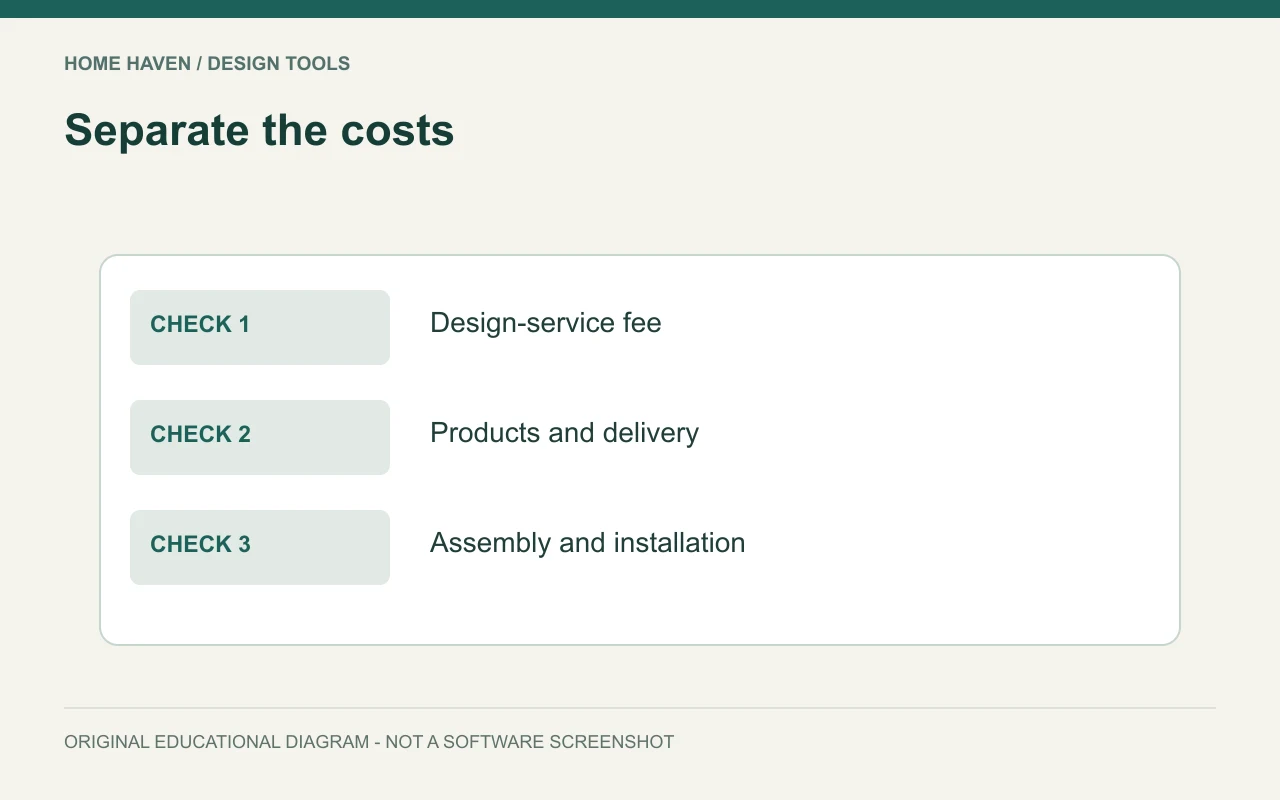
Separate the design fee from furniture, shipping, assembly, installation, taxes, and optional services. Tell the designer whether the purchasing budget is a firm limit or a target. A room plan can exceed expectations if only the product ticket prices receive attention.
Ask how substitutions work when items become unavailable or costs change. A useful product list identifies the specific item and the reason it suits the plan. That makes it easier to evaluate alternatives without losing the design’s purpose.
Understand shopping and compensation
Ask who places orders, handles returns, and resolves delivery problems. Confirm whether the provider receives product commissions or uses particular retail relationships. Those arrangements can affect your choices and should be clear before you rely on a shopping list.
Keep purchase decisions separate from design approval where necessary. Approving a concept does not automatically confirm availability, delivery suitability, or a final total cost. Verify those details at the time of ordering.
Make online reviews productive
Choose one person to collect household feedback and submit a consolidated response. Refer to the actual issue: storage capacity, furniture size, finish preference, or budget. A clear question helps the designer respond with a meaningful change.
Keep a record of each approved stage. If you change the brief midway, ask whether the work fits the original package. Early clarity about revisions prevents a series of small requests from becoming an undefined redesign.
Protect information and access
Share only the room information the project needs. Remove unnecessary personal paperwork from photographs and use the provider’s agreed communication channel. Ask how the service stores project images and whether the designer may display them publicly.
For a household project, agree on who can approve decisions. Avoid sharing account passwords simply to let another person view a concept. Use the platform’s appropriate sharing or review options when available.
Plan the handoff to the actual room
Review the final layout, product list, and implementation sequence together. Identify anything approximate or dependent on a site check. A good handoff explains the next action rather than simply delivering an attractive presentation.
Before rearranging or purchasing, compare the plan with everyday use. Open doors and drawers, test furniture footprints where practical, and confirm routes. If the proposal depends on construction or specialist installation, involve the appropriate professionals before proceeding.
A practical remote-review example
Suppose the client wants to retain a 90-inch sofa. The brief should include its actual overall dimensions and photographs, not just the size label. The designer can then show how the proposed layout accommodates it. Before buying adjacent furniture, the client should verify the room and the selected products. This division of tasks makes the remote process more dependable.
Remote design questions
Is a virtual package always cheaper?
Compare the full scope and total project cost. A smaller remote package may cost less because it includes fewer responsibilities. Headline fees alone do not establish equivalent value.
Can you use a virtual designer for a rental?
Yes, when the service fits the project. Explain lease restrictions and identify changes that require permission. Favor a plan based on the actual room and permitted work.
Book the service that matches the responsibility
Choose a package with clear deliverables, a workable measurement process, and transparent purchasing support. Prepare the brief before the first meeting. Remote design becomes more useful when the path from concept to installation is explicit.