

What is transitional interior design? It is a balanced blend of classic comfort and modern simplicity. This practical guide explains the look, how it differs from traditional style, and how to use it in real homes.
What Is Transitional Interior Design?
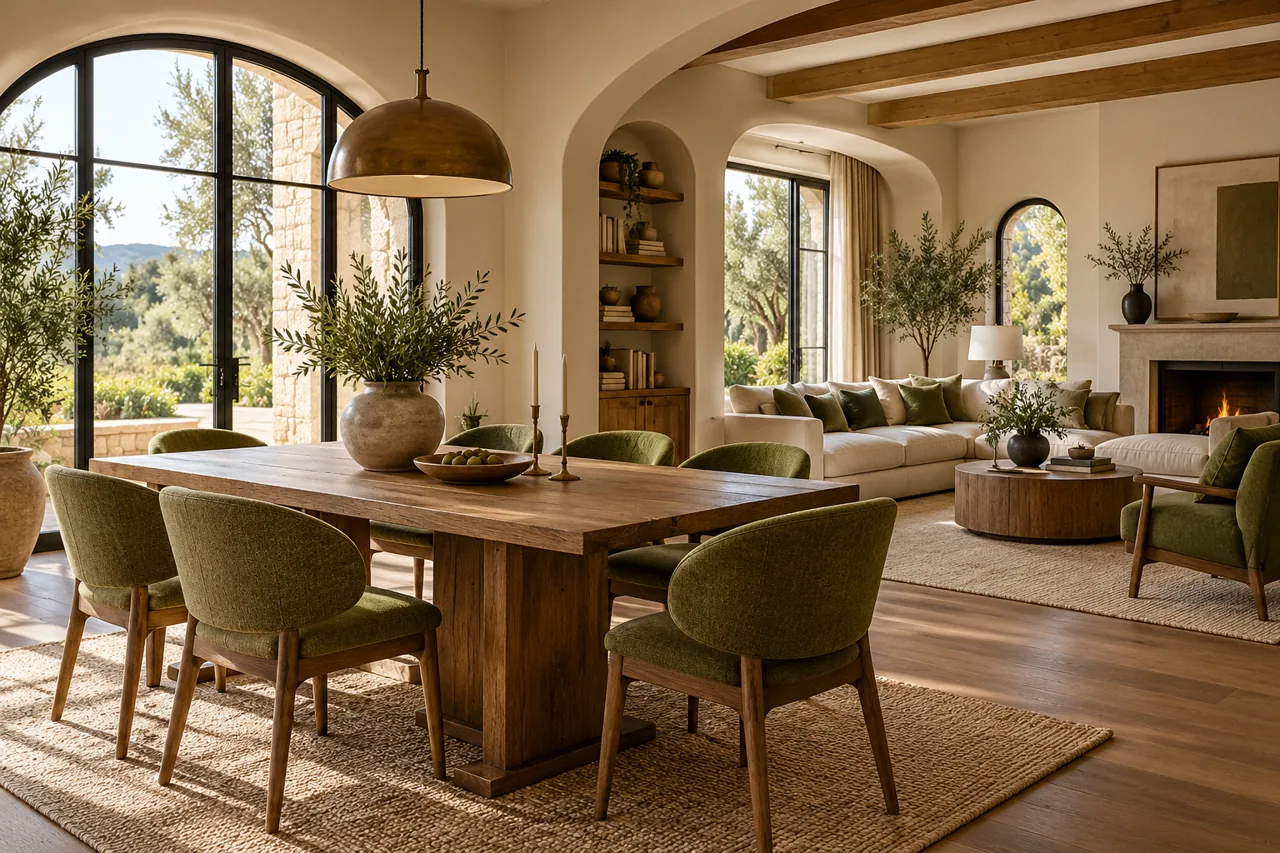
Transitional interior design blends traditional comfort and familiar furniture shapes with the clean lines and lighter visual feel of contemporary rooms. It is not a rigid historical movement. Instead, it is a practical approach to mixing classic and modern elements in a way that feels balanced. A transitional living room might pair a rolled-arm sofa with a streamlined coffee table, simple curtains, and understated artwork. The result should feel welcoming without excessive ornament. Because transitional style adapts to different homes and budgets, it can be a useful choice when you like timeless furniture but prefer a less formal atmosphere.
Key Characteristics of Transitional Style
The most recognizable features are balanced proportions, a restrained color palette, comfortable seating, and a deliberate mix of old and new. Furniture often has familiar shapes with fewer decorative details than strictly traditional pieces. Rooms feel layered but not crowded. Fabrics add warmth, while wood, metal, and stone introduce structure. Symmetry may be present, but it does not need to be exact. A pair of matching lamps can provide order beside a sofa, while a modern accent chair keeps the arrangement from feeling too formal. Function matters as much as appearance.
Choose a Neutral Palette With Depth
Transitional spaces often start with warm white, cream, taupe, greige, or soft gray. These colors provide a flexible backdrop for classic and contemporary furnishings. However, neutral does not have to mean colorless. Navy, olive, muted blue, charcoal, or earthy rust can work as accent colors. Try repeating one accent in three places, such as cushions, artwork, and a vase, to connect the room. Contrast is important: a light sofa can look striking beside a dark wooden table. Test paint samples under morning and evening lighting, especially when combining cool and warm finishes.
Combine Traditional and Modern Furniture
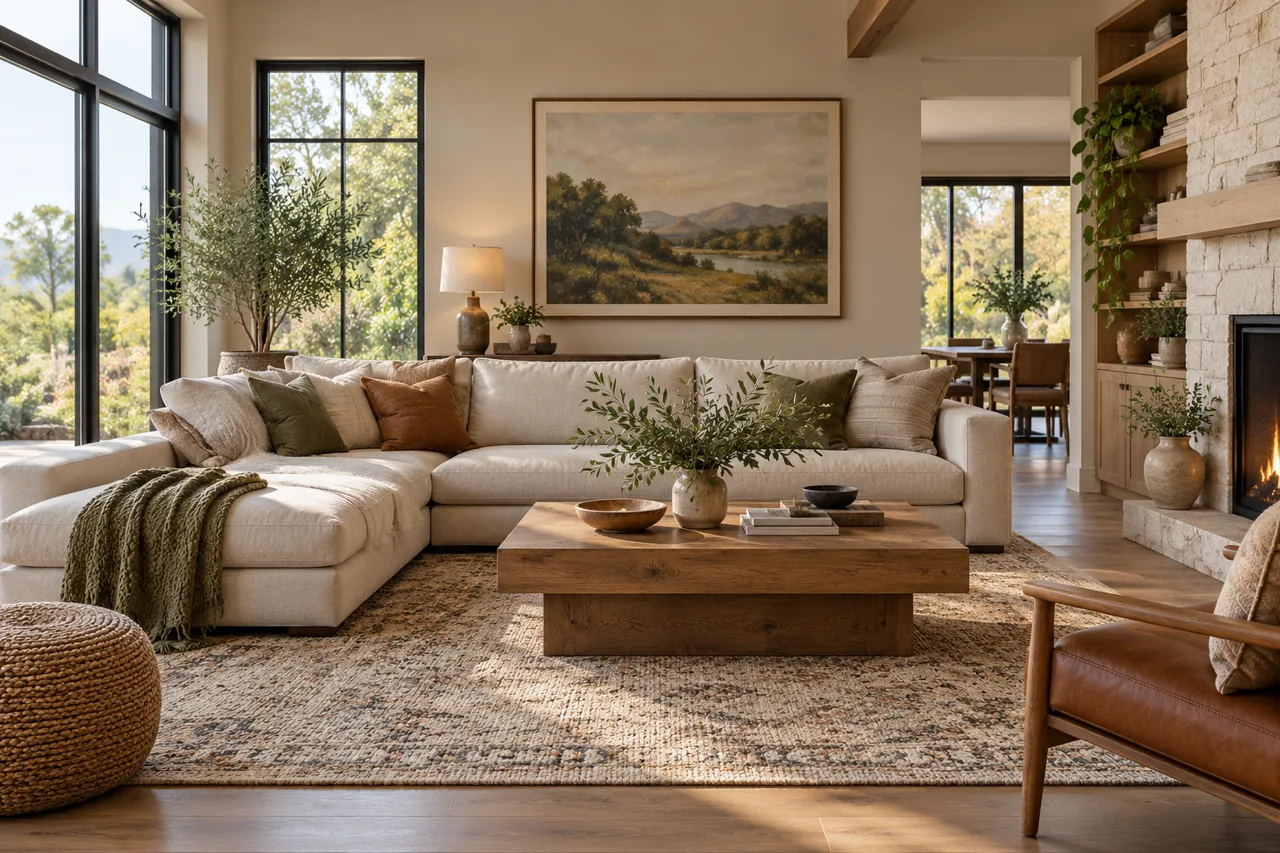
Mixing furniture styles is the heart of transitional decorating. Start with the largest piece in the room, usually a sofa, bed, or dining table, and decide whether it leans classic or contemporary. Then choose supporting pieces from the opposite direction. For example, a classic upholstered sofa can pair with a simple metal-framed table. A modern platform bed can work with traditional wooden bedside chests. Keep proportions compatible so no item dominates unintentionally. You do not need an equal number of traditional and modern pieces. The balance should be visual rather than mathematical.
Use Texture Instead of Excessive Decoration
Because transitional rooms often use muted colors, texture provides interest. Linen curtains, wool rugs, velvet cushions, natural wood, ceramics, and woven baskets can make a neutral room feel warm. Combine smooth and rough finishes, such as a polished table beside an upholstered chair and a textured rug. Choose materials according to daily use. Performance upholstery may be more practical than delicate fabrics in a home with pets or young children. Limit purely decorative accessories and focus on objects that add personality or serve a purpose. Texture should create comfort rather than clutter.
Transitional Living Room Ideas
Begin with a comfortable sofa and a rug large enough to visually anchor the seating area. Add a contemporary coffee table or a classic pair of armchairs to create a contrast in styles. Use side tables and lamps to support reading and conversation. If the room includes a fireplace, let it remain a natural focal point. Artwork with simple frames can bridge traditional architecture and modern furniture. Keep the traffic path clear, especially between doors and seating. Closed storage can conceal electronics, paperwork, and other everyday items. A transitional living room should be attractive and genuinely easy to live in.
Transitional Bedroom Ideas
A transitional bedroom often combines a soft upholstered headboard with clean-lined bedside furniture. Choose bedding in layered neutrals, then add subtle pattern through pillows or a throw. Matching lamps can bring balance, while contemporary artwork prevents the space from looking overly formal. If you have traditional wooden furniture, consider pairing it with plain curtains and a modern rug. Avoid adding too many decorative objects to the bedside tables. Good storage, adequate reading light, and comfortable circulation around the bed are more important than following a strict formula.
Transitional Kitchen and Dining Room Ideas
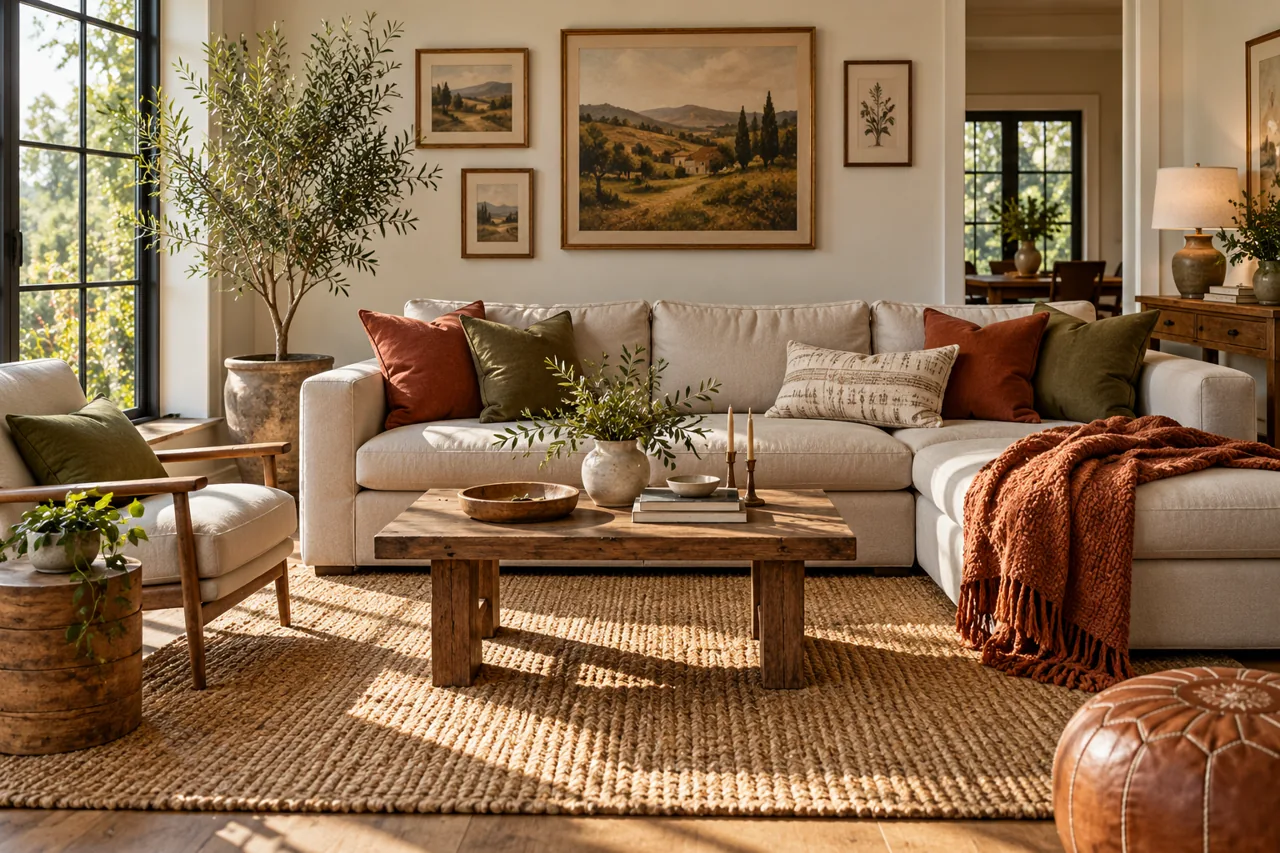
In kitchens, transitional style often appears through shaker-style cabinets, restrained hardware, simple lighting, and a mix of warm and cool materials. Wood accents can soften stone or quartz-look surfaces. You may not need to renovate: new cabinet pulls, pendant lights, or bar stools can update the room’s character. For dining rooms, pair a traditional wooden table with upholstered chairs that have cleaner silhouettes, or use a modern table with classic chairs. Ensure surfaces are durable and easy to clean. Leave enough clearance around the table for people to sit and move comfortably.
Lighting and Accessories
Layered lighting makes transitional rooms feel relaxed. Combine ceiling fixtures with table lamps, floor lamps, or task lighting where needed. Choose fixtures that bridge styles, such as a simple brass pendant or a classic lamp with an understated shade. Accessories work best when they are edited thoughtfully. A few framed photographs, books, ceramics, or botanical arrangements can make a room personal. Keep display shelves from becoming overloaded. If you enjoy antiques, let one or two distinctive pieces stand out against simpler surroundings. The aim is an intentional mix, not a collection of competing statements.
Transitional vs. Traditional Interior Design
Traditional interiors generally feature more decorative detailing, recognizable historical furniture forms, and sometimes richer patterns. Transitional rooms retain the comfort and familiar proportions of traditional design but simplify the ornament and introduce modern elements. For example, a traditional living room may include carved wood tables, patterned curtains, and matching seating, while a transitional version could use a classic sofa, plain curtains, and a sleek coffee table. Neither is automatically more stylish. The right choice depends on your taste, architecture, and daily routines.
Transitional vs. Contemporary Design
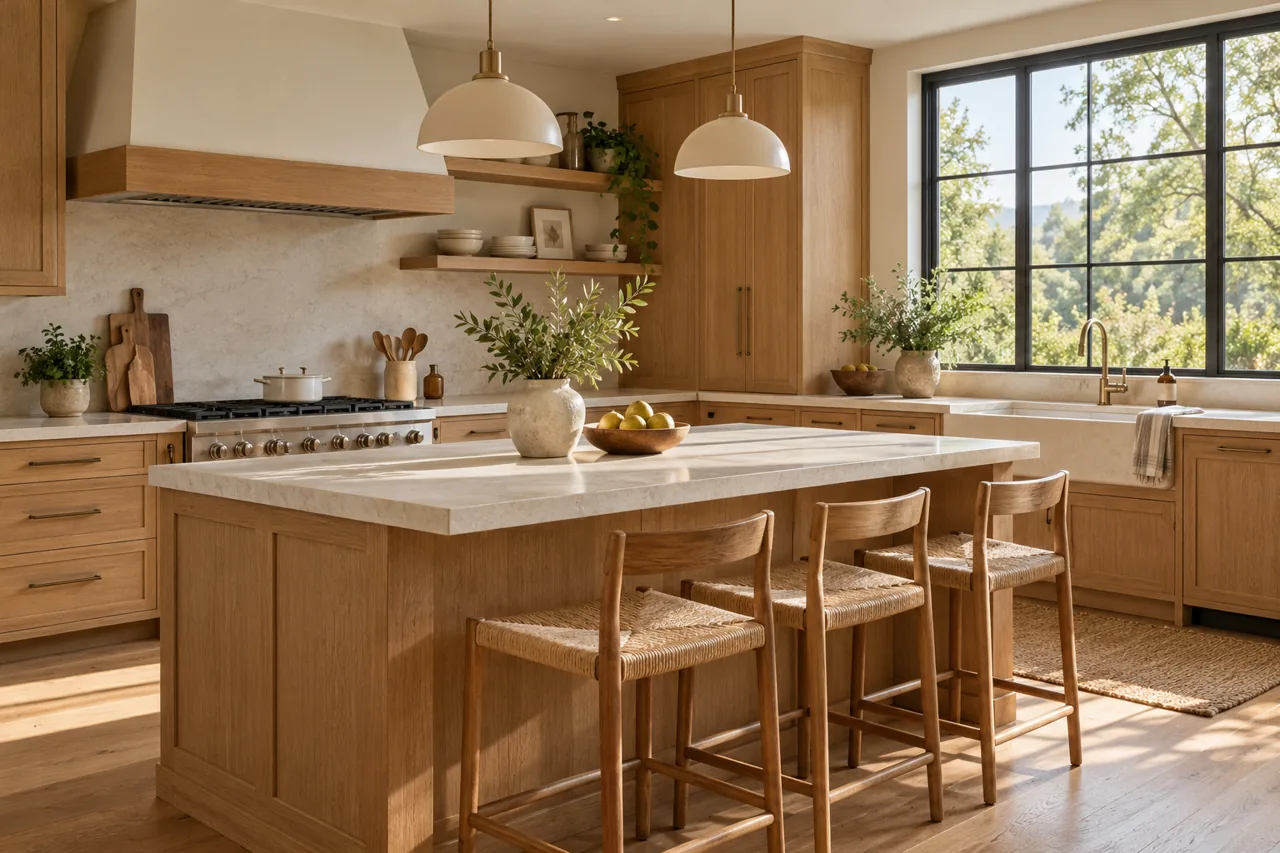
Contemporary design reflects current approaches to materials, shapes, and living spaces, and it changes over time. Transitional design specifically creates a bridge between traditional and modern influences. A contemporary room may use sculptural furniture and bold architectural contrasts, while a transitional room is more likely to rely on familiar silhouettes and soft, balanced combinations. There is overlap, and many rooms borrow from both. Rather than worrying about labels, identify the details you like and check whether they work together in scale, color, and function.
How to Create Transitional Style on a Budget
Start by identifying which furniture you can keep. A traditional dresser, dining table, or sofa may work perfectly when paired with simpler accessories. Rearrange the layout before shopping and remove pieces that block movement. Update a room with a neutral paint color, new cushion covers, or more effective lighting. Secondhand furniture can be useful, but inspect condition and measurements carefully. Replace accessories gradually instead of buying a complete matching set. Spend first on pieces that improve daily comfort, such as a supportive chair or a durable rug. A carefully edited room often looks more cohesive than one filled with new purchases.
Common Decorating Mistakes
One common mistake is creating a room that feels bland because every item is the same shade of beige. Introduce contrast through wood finishes, darker accents, and texture. Another mistake is mixing furniture with dramatically different scales; a delicate chair can look lost beside an oversized sofa. Do not assume that all modern items automatically pair well with antiques. Look for shared colors, shapes, or materials. Avoid cluttering surfaces with accessories that have no clear role. Finally, remember that transitional design should accommodate real routines, including storage, lighting, and easy-to-clean surfaces.
Frequently Asked Questions
Is transitional interior design still popular? Its flexible mix of classic and contemporary elements can remain useful regardless of short-term trends. What colors work best? Warm neutrals are common, with muted blue, green, navy, or charcoal accents. Can I keep antique furniture? Yes. Pair antiques with cleaner-lined pieces to create balance. Does transitional style work in small homes? Yes. Appropriately scaled furniture and a restrained palette can help compact spaces feel open. Is transitional the same as modern farmhouse? No. Modern farmhouse uses more rustic and farmhouse-specific materials and details.
Final Thoughts
Transitional interior design offers a practical middle ground for people who appreciate both timeless comfort and modern simplicity. Build around furniture you love, choose a flexible palette, add texture, and create a deliberate contrast between classic and contemporary shapes. Keep the layout functional and edit accessories so the room feels calm but personal. For more ways to compare home styles, explore our interior design aesthetics guide. For further professional inspiration, visit Architectural Digest.