

Parisian chic interior design usually describes an edited mix of older character, contemporary furniture, personal art, and restrained detailing. In an apartment, the most useful lessons are proportion, flexibility, and the relationship between old and new. You do not need ornate ceilings, a marble fireplace, or a Paris address to borrow that approach.
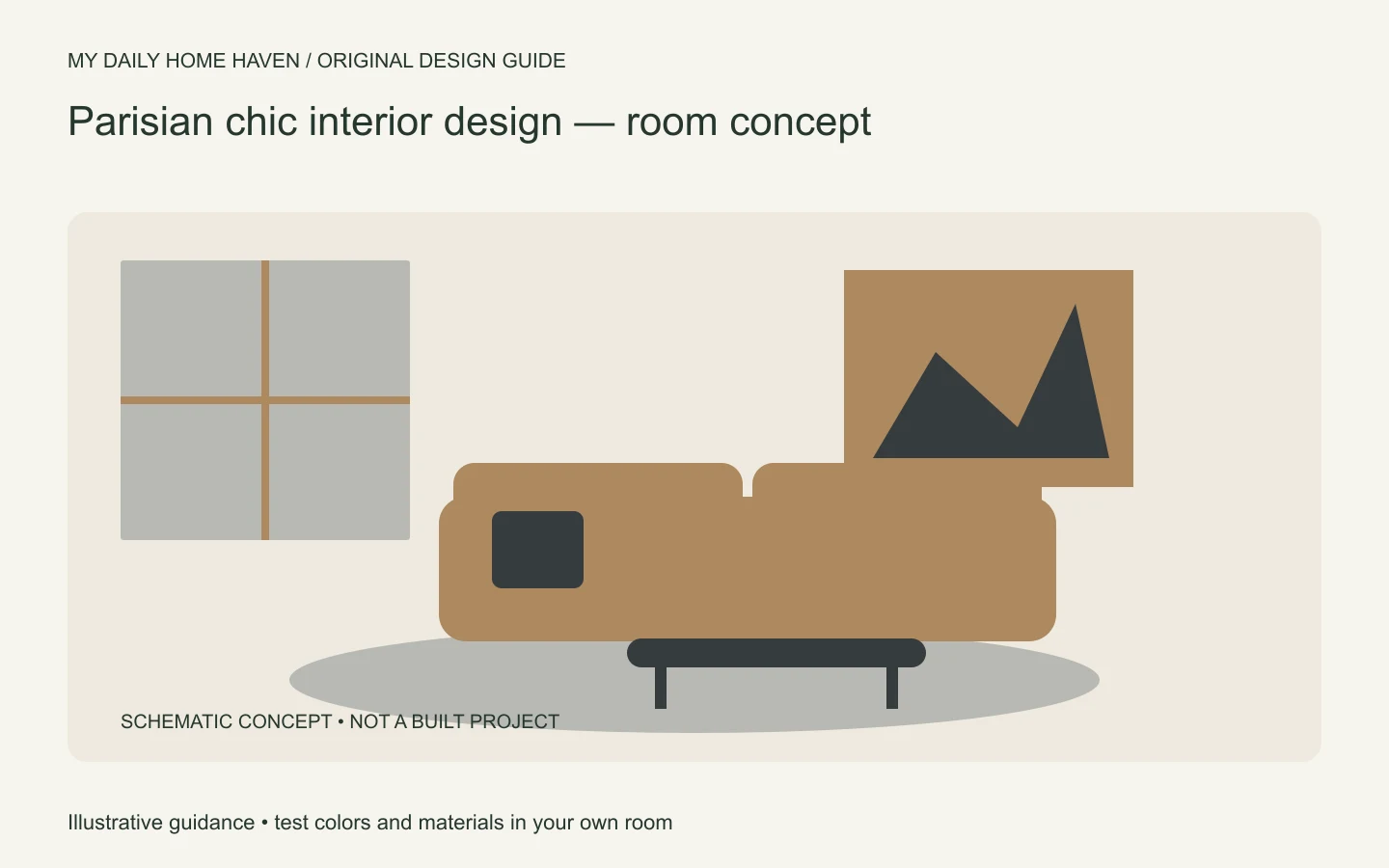
This guide focuses on the apartment interpretation rather than presenting one universal French style. For the broader range of interior directions, see our interior design aesthetics guide.
Parisian Chic Interior Design: Edit for Your Apartment
Parisian chic interior design is easier to adapt when you study proportion, light, and a mix of old and new rather than copying a stereotype. Start with the architecture and pieces you already own; add one vintage or sculptural accent, then keep the palette coherent. Avoid assuming every Parisian home has identical moldings, floors, or furnishings.
Separate real architecture from the image of it
Some familiar reference images show tall windows, parquet floors, and decorative moldings. Those features belong to particular buildings and periods, not every Paris home. If your apartment has plain walls and lower ceilings, use its actual proportions instead of trying to imitate a different structure.
The Musée Carnavalet’s collection route provides historical context for varied Parisian interiors and objects. Museum rooms are specific references, not evidence that everyone in a city lives with the same furniture or decoration.
Keep genuine architectural character where possible. If you have existing trim, a good floor, or an unusual window arrangement, let it guide the furniture. If you are renting or considering alterations, check permissions before changing walls, fittings, or historic features.
Give the furniture room to breathe
An edited room does not mean an empty room. It means choosing pieces with a clear role and enough space to use them. A compact sofa, useful chair, and well-placed table may work better than a large matching suite.
Measure the route from the entrance through the living area. Check door swings and access to cupboards before selecting a dramatic coffee table. A visually light piece can help, but it still needs a usable surface and stable construction.
Consider furniture that serves more than one purpose without becoming awkward. A small desk can double as a console; a dining table can support occasional work. Our space planning guide helps you evaluate these arrangements before buying.
Mix old and new through a shared relationship
Choose one older piece with character, such as a chest, chair, or mirror, and pair it with simpler contemporary forms. The connection might come from scale, a repeated wood tone, or a related curve. You do not need every object to belong to the same period.
Inspect vintage furniture for condition and function. A charming chest with stuck drawers may be a poor storage solution. A large mirror needs suitable wall support, and an old light fitting should be assessed appropriately before use.
Avoid buying decorative antiques only to create the appearance of a life story. Personal artwork, inherited pieces, and a few well-chosen secondhand finds can contribute more naturally. Let the collection develop rather than filling every corner in one shopping trip.
Keep the palette flexible
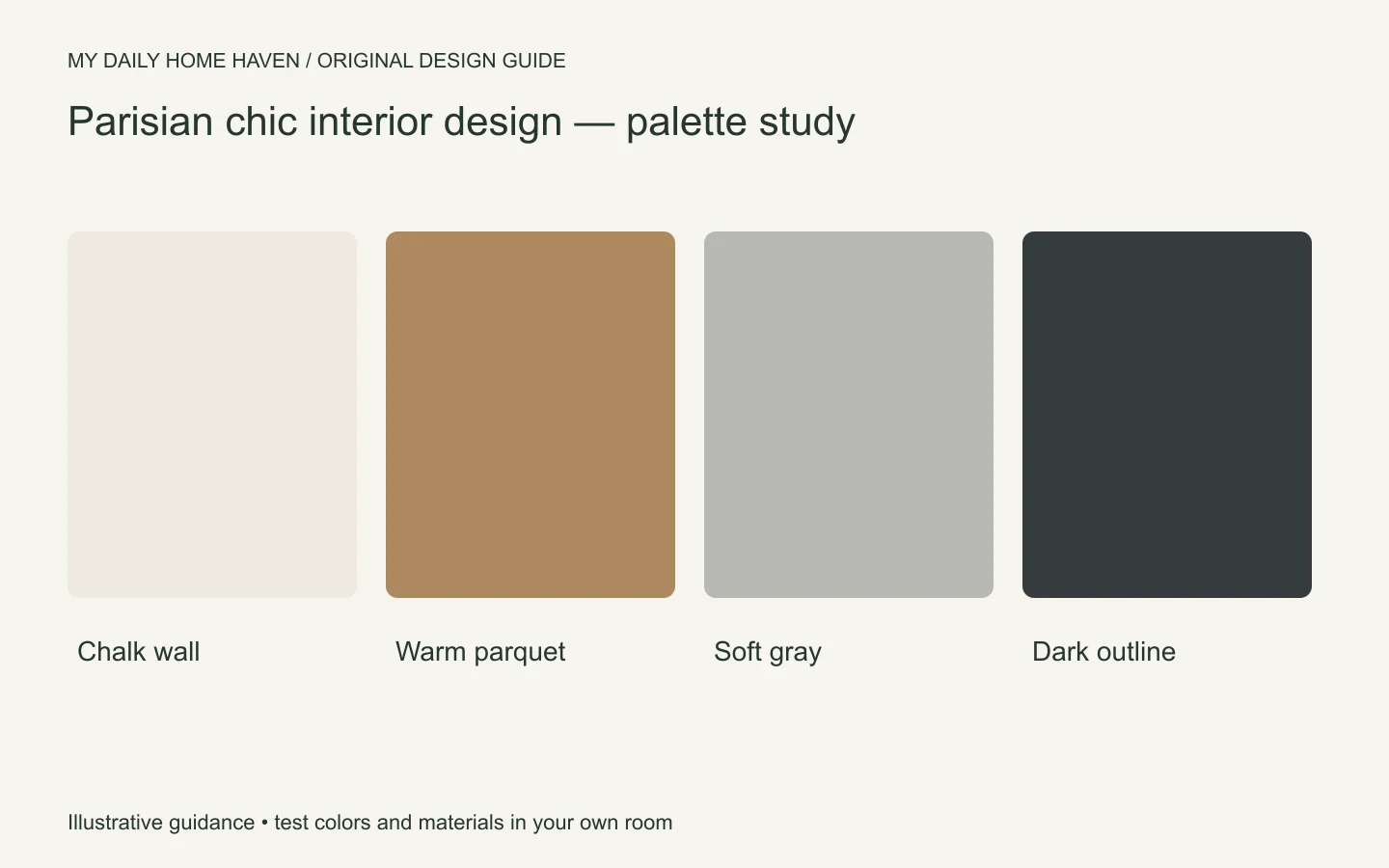
Off-white, soft gray, warm timber, and darker outlines can provide a useful base, but the look does not require monochrome. A red chair, blue artwork, or patterned textile can work when it has a clear relationship to the rest of the room.
Choose paint in response to the light and fixed finishes. Pale walls can look different beside golden flooring or cool stone. Compare real samples with the curtain and upholstery fabric, and view them under your normal evening lamps.
If the room already has decorative moldings, quieter fabrics may allow them to remain visible. In a plainer room, stronger art or a patterned rug can provide character without adding imitation architectural detail.
Let art and lighting carry some personality
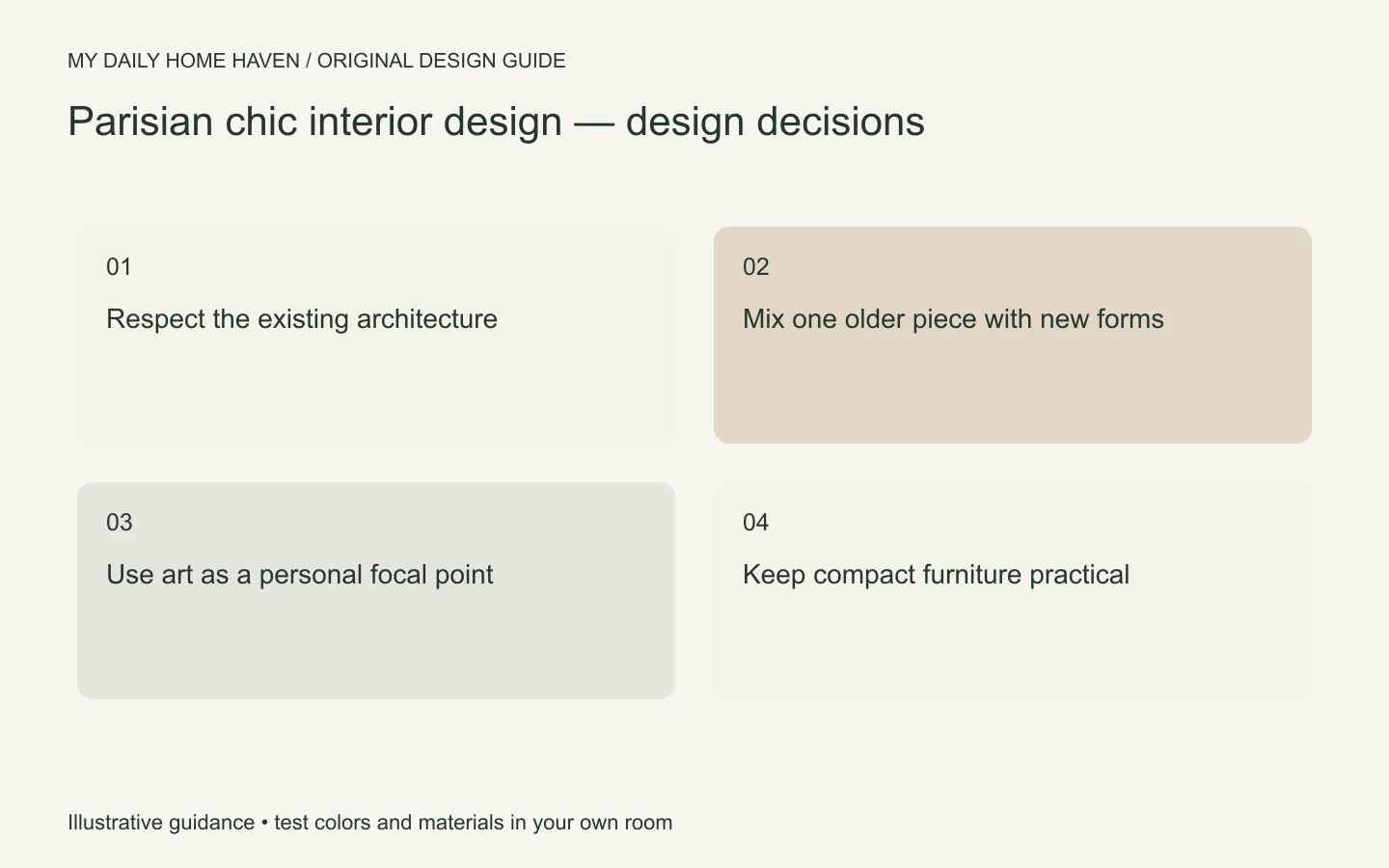
Hang artwork in relation to the furniture group rather than filling every available wall. Paper templates can help compare scale and placement before drilling. A modest work with space around it may have more presence than a crowded collection of unrelated prints.
Use lighting for different activities: a reading lamp near the chair, a table lamp for a softer evening setting, and adequate general light. A decorative ceiling fixture alone may not serve the whole room. Check glare from seated positions.
There is no need to buy a chandelier to qualify for the style. Choose a fitting that suits the ceiling height, installation conditions, and visual weight of the room. The same principle applies to ornate mirrors and oversized decorative objects.
An apartment refresh without renovation
Begin by removing furniture that duplicates a function or blocks a path. Reposition the remaining pieces into a comfortable conversation group. Use one larger artwork or mirror to establish a focal point, then simplify the nearby surfaces.
Introduce a single piece with a different age or silhouette if the room feels too matched. Add storage where everyday items accumulate. A hidden cable route, a useful entry tray, or better task lighting may make the apartment feel more considered than another accessory.
Test the room through a normal week. If you can entertain, work, and relax without constantly moving furniture, the arrangement is doing its job. Keep the details that support those activities and edit the ones that only work in photographs.
Handle a small entry with care
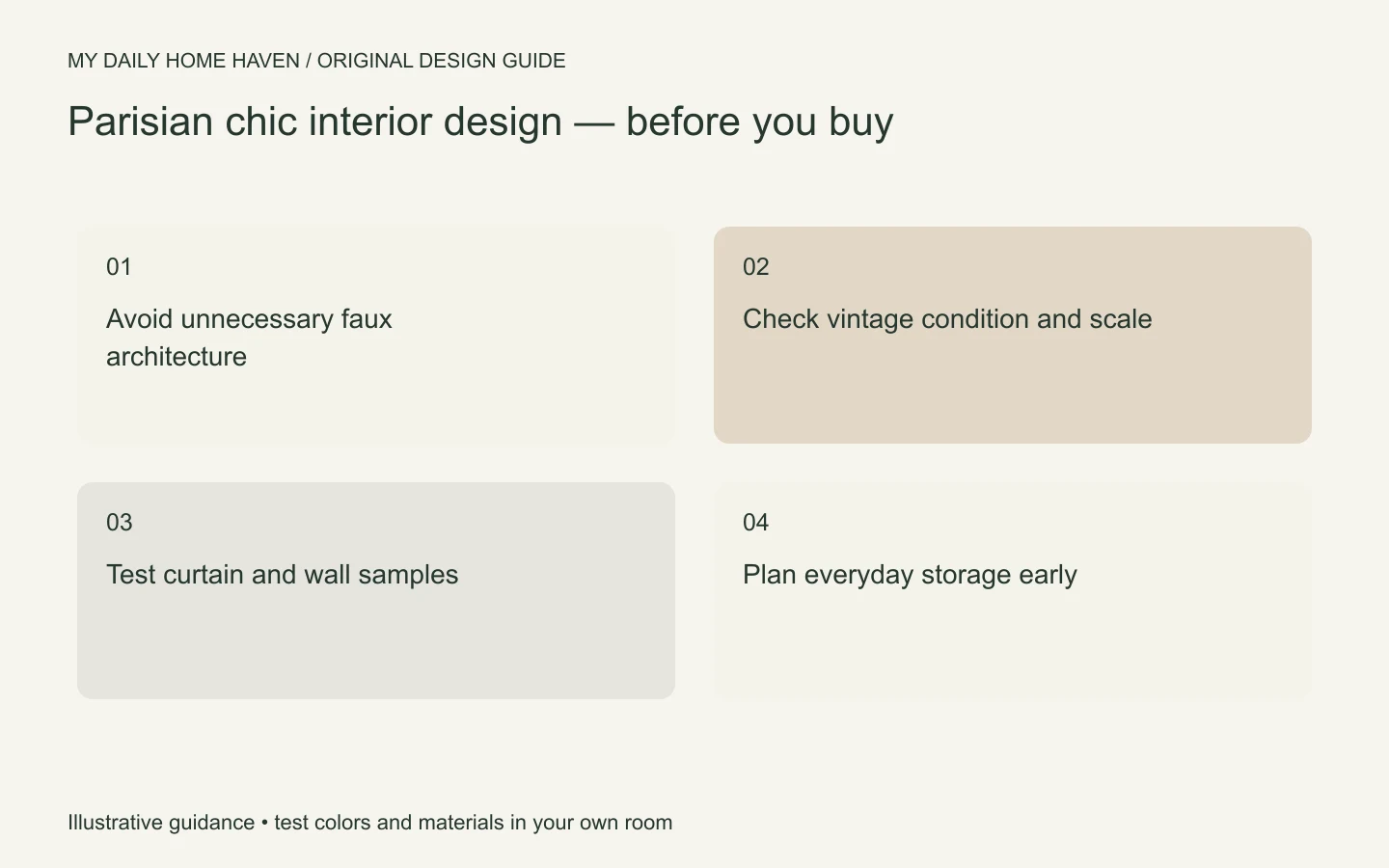
For Parisian chic interior design in a compact apartment, the entry often deserves attention before another decorative purchase. Provide a place for keys, shoes, bags, and the items you carry daily. A narrow console or wall-mounted solution may work better than a deep cabinet, but check the actual route and wall support. Use a mirror only where it improves the space and can be installed securely. The entry should make arriving home easier. A practical, edited threshold contributes more to the overall impression than a dramatic object that forces everyone to squeeze past it.
Frequently asked questions
Is this the same as French country design?
No. The Parisian apartment interpretation often emphasizes urban proportions and an old-and-new mix. French country references can involve different rural materials, furniture, and settings.
Can I use this look without moldings?
Yes. Focus on furniture scale, art, lighting, and a deliberate mix of pieces. Added trim is optional and should fit the building rather than imitate a different apartment.
Does the room have to look expensive?
No. A clear layout and a small number of useful, well-scaled pieces can create the desired effect. Condition, comfort, and composition matter more than a designer label.