

Interior design rendering services help turn a room proposal into images that clients or households can review. The quality of the brief matters as much as the visual style of the portfolio. Define the room information, required views, review stages, and final files before comparing quotes. Then choose a provider whose process fits that scope.
If you are deciding between hiring a service and producing the images yourself, our interior design software guide explains the tool categories. This guide focuses on commissioning the work and reviewing the deliverable.
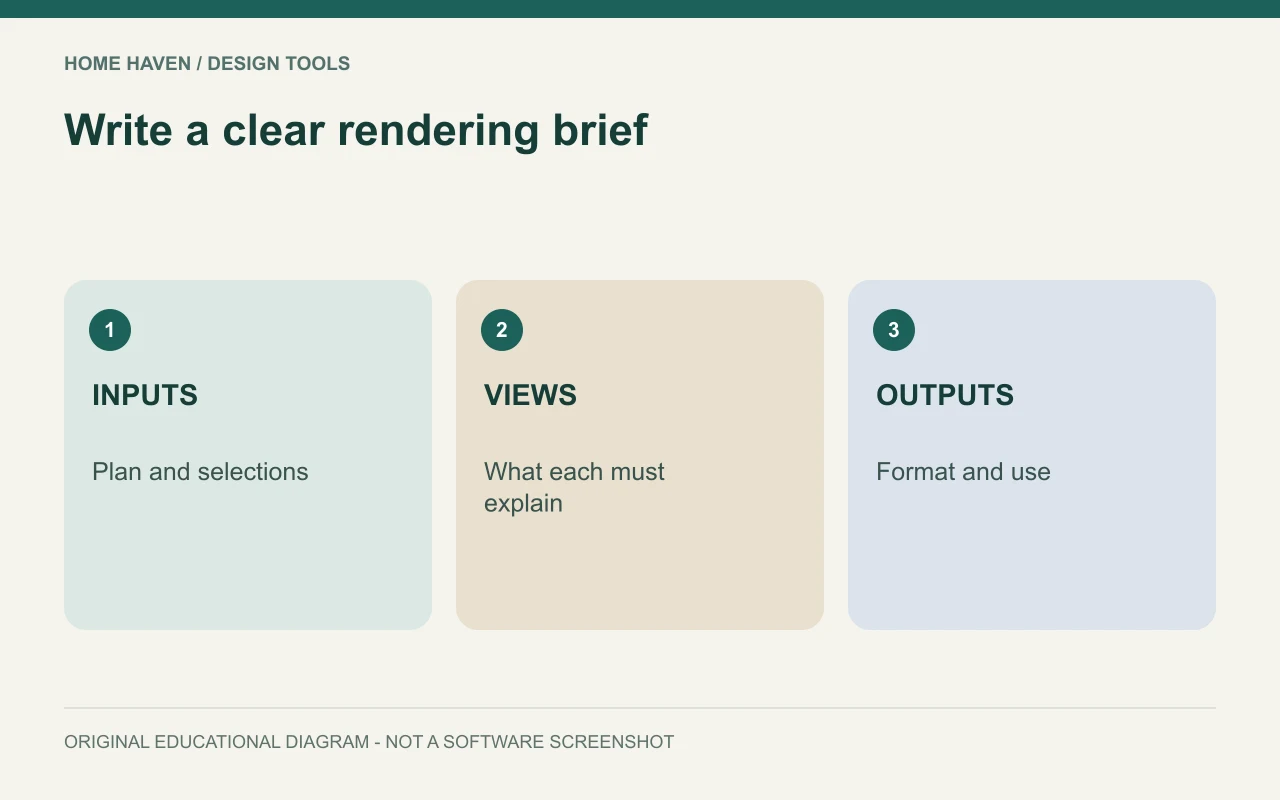
State the purpose of the images
Explain whether you need early concept exploration, a presentation of approved selections, or marketing visuals. These tasks require different levels of certainty and detail. A provider cannot price the scope reliably if the design itself remains undefined.
For a hypothetical living room, the brief might request two views showing an approved furniture arrangement and material palette. It might exclude product sourcing, layout redesign, and construction documentation. These boundaries keep a visualization assignment from quietly becoming a broader design commission.
Prepare the input package
Provide a measured plan, relevant elevations or heights, photographs, furniture dimensions, and finish references. Identify the latest revision of every drawing. Where information is missing, agree on who will resolve it before the provider begins.
Use a simple item schedule linking each important object to its product or concept reference. Include manufacturer dimensions when available. A folder of unlabeled inspiration images leaves too much room for interpretation.
- Room geometry and units.
- Existing-condition photos with orientation notes.
- Approved furniture and finish references.
- Required viewpoints and their purpose.
- Known assumptions and information still pending.
Compare interior design rendering services fairly
Request quotes against the same input package and view list. Ask what the provider will build, what they expect you to supply, and what level of detail the price includes. A cheaper quote may assume a ready-to-render model while another includes modeling from drawings.
Review portfolio images for projects similar to your assignment. Ask about the provider’s role and process rather than assuming every image reflects the same scope. A strong exterior portfolio does not automatically demonstrate the interior material and furniture work you need.
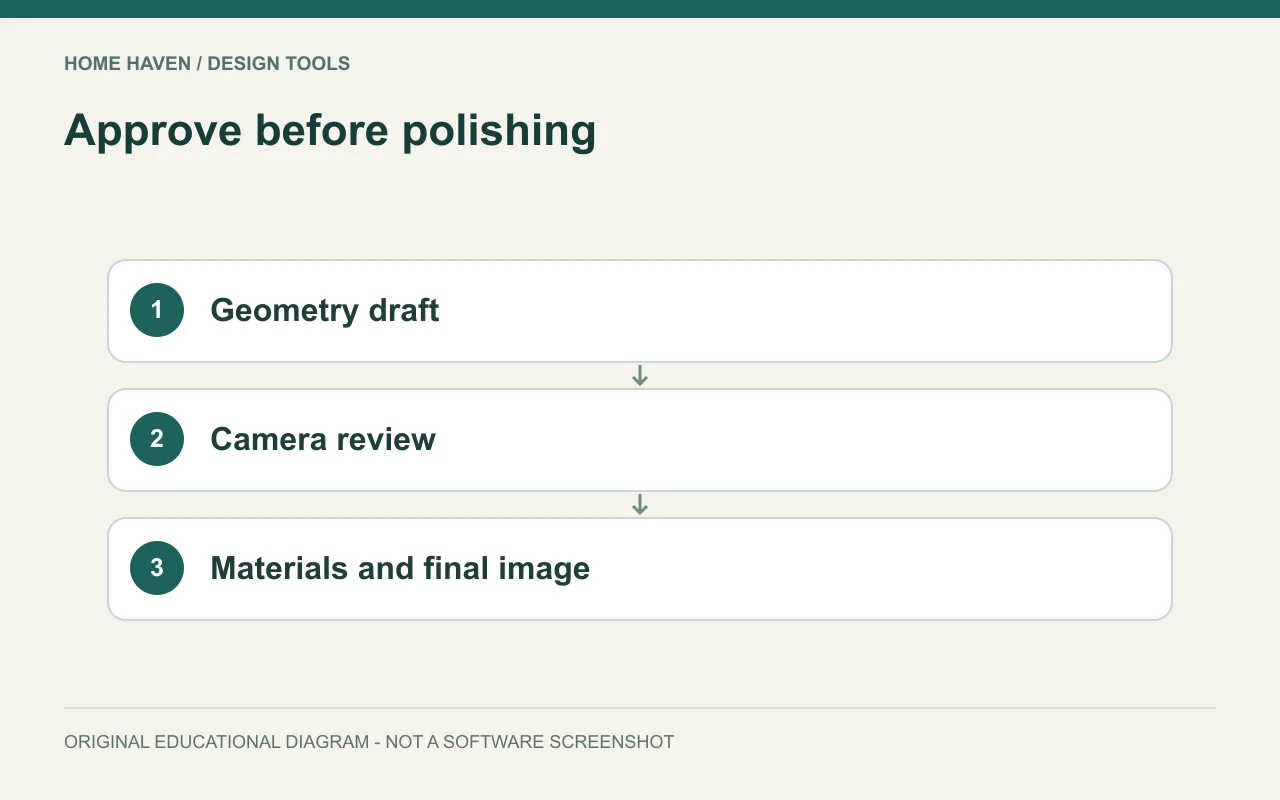
Agree on cameras before detailed finishes
Ask for a simple geometry or clay-view review before full material production. Confirm the room proportions, camera positions, and important objects. Moving a camera late can reveal areas that require additional modeling and material work.
Write down what each view must explain. One may show the seating relationship; another may explain a storage wall. This is more useful than requesting several attractive angles without a communication purpose.
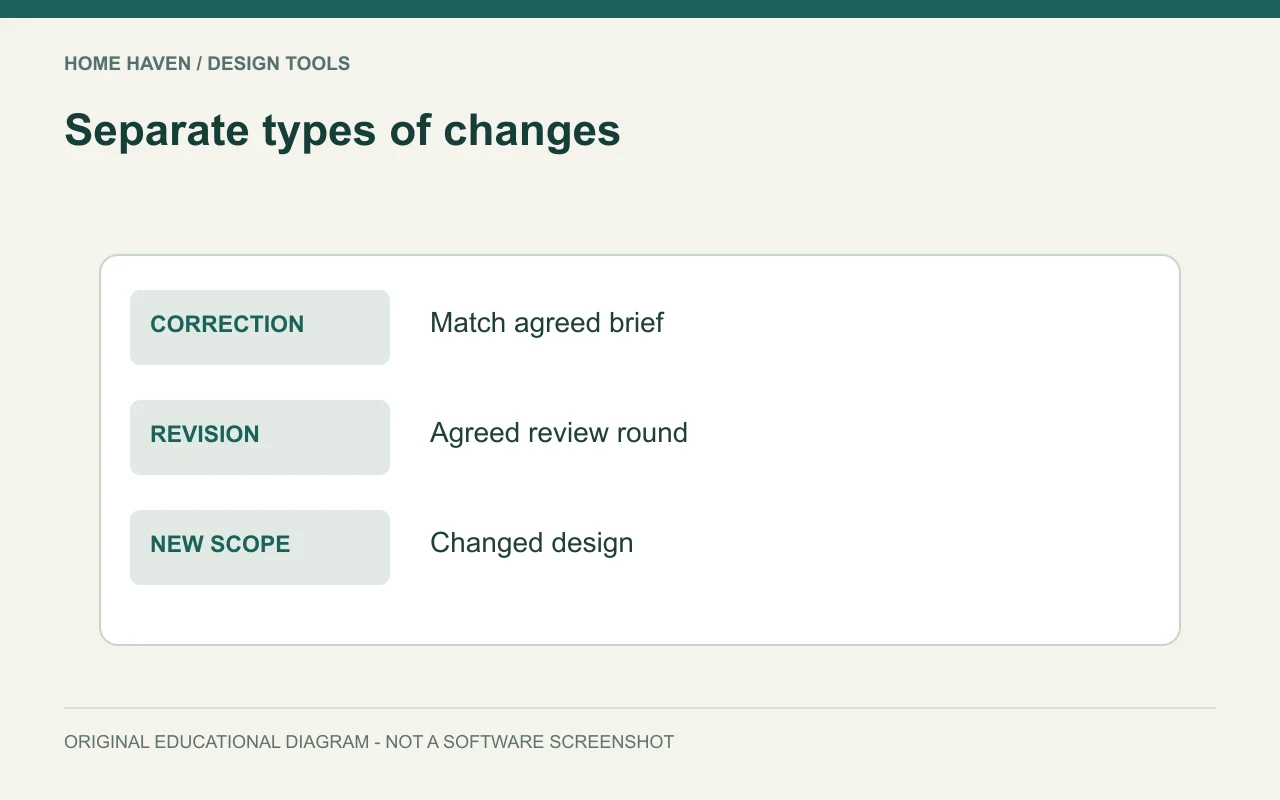
Define revisions in plain language
Clarify the number of review rounds, what counts as a revision, and how the provider handles changes to the original brief. Correcting an incorrectly modeled approved item differs from introducing a new design direction after approval.
Consolidate comments through one contact and one marked-up file. Label the draft and date. Conflicting feedback from different people can create extra work even when each individual request seems small.
Ask about the production method
Determine whether the provider uses an editable 3D scene, generated imagery, photographic editing, or a combination. These methods can produce different levels of repeatability and geometric control. Ask how they preserve the room and approved products across revisions.
A tool such as V-Ray for SketchUp represents a model-based rendering workflow. Naming a renderer does not guarantee the provider’s accuracy or quality, however. The important evidence is the proposed process and the reviewed drafts.
Specify final files and usage
List the image dimensions, file types, delivery method, and intended use. Clarify whether the fee includes only flattened images or any editable scene files. Do not assume you will receive source assets simply because you commissioned the output.
Agree on credits, portfolio display, and permission to share project material. Confirm how the provider handles licensed models and textures. For client work, use a suitable written agreement and obtain appropriate advice where contractual terms need review.
Keep the quote complete
Ask about modeling, additional views, rush work, extra revisions, special assets, and output changes. Compare the full scope in USD rather than a headline price per image. Avoid treating a price from an unrelated project as a reliable estimate for yours.
Link payment stages to clear deliverables and review points. A timeline should identify when the client must provide information as well as when the provider delivers drafts. Missing approvals can affect the schedule even if production time stays unchanged.
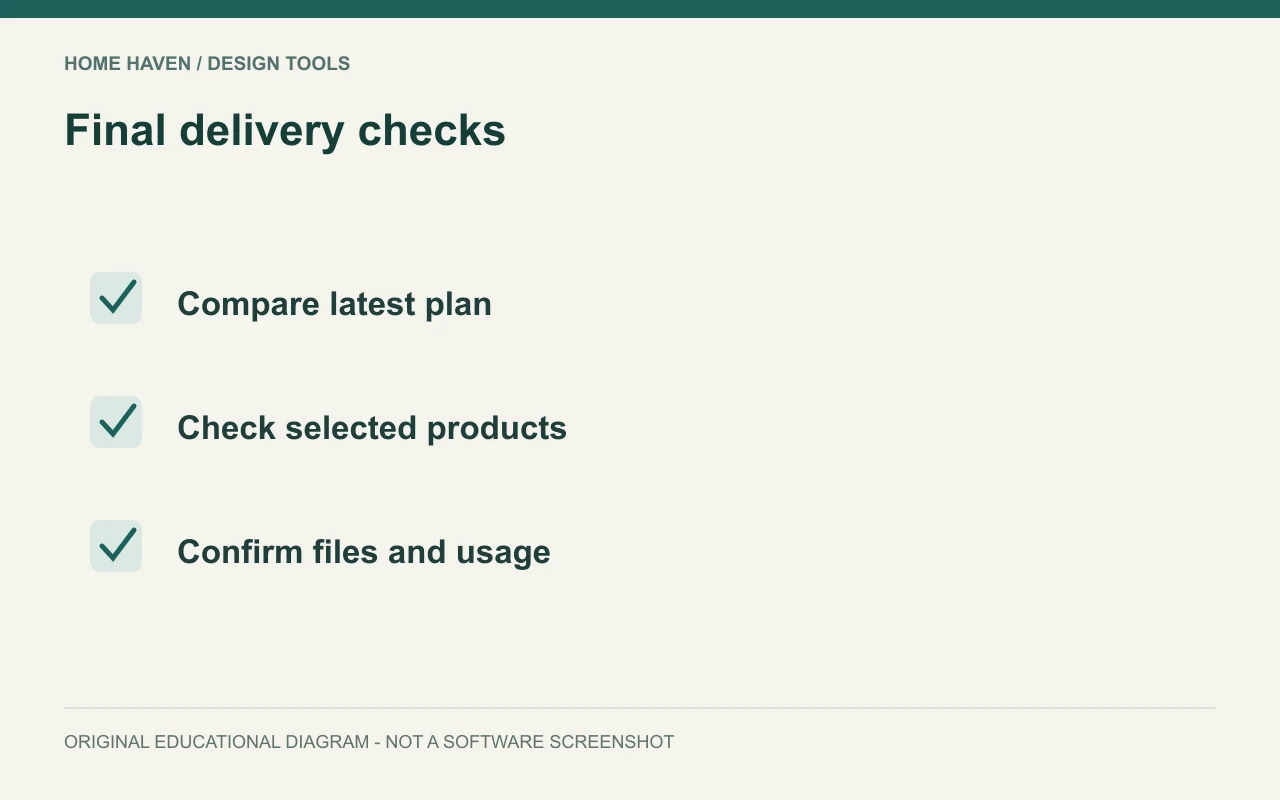
Review the final render against the brief
Check geometry, furniture count, finish references, and visible details before approving the final image. Compare it with the latest plan, not only with the previous draft. A late layout change can leave a polished image showing the wrong arrangement.
Keep unresolved assumptions outside the approved product record. A rendering may include illustrative décor or approximate textures. Record those distinctions so a shopper or project team does not mistake every visible detail for an order instruction.
Sample view brief
A hypothetical brief could request one entry view showing the seating group and one opposite view showing the storage wall. Both should use the approved plan revision and the same identified products. Ask for camera approval before material development. This gives each image a purpose and provides a clear reference when reviewing whether the delivered work matches the request.
Hiring questions
Are 3D rendering services for interior design also design services?
Not automatically. Some providers offer both, while others visualize an existing proposal. Confirm responsibility for layouts, specifications, and product selection before booking.
Can you request changes after final delivery?
That depends on the agreed scope and the provider’s retained files. Establish the process and any additional fees before the project begins rather than assuming unlimited future edits.
Commission a decision-ready image
A clear brief, early camera approval, and organized feedback give the service a useful foundation. Choose the provider who explains the work and its limits. Judge the final output by how accurately it communicates your approved proposal.