

An interior design agreement template is a starting framework for defining a designer-client relationship, not a ready-to-sign solution for every project. The document should match the services, responsibilities, compensation, and project circumstances. Use a project-information checklist before adapting a form. Have a qualified attorney review the agreement for the relevant jurisdiction and business arrangement.
This article provides a review framework and a copyable information worksheet, rather than legal clauses or a universal contract. Our interior design software guide explains tools used for project outputs; the agreement should identify which outputs and related services the actual engagement includes.
If you are reviewing an interior design contract or looking for an interior design contract sample as a homeowner, use this checklist to identify questions rather than treating it as ready-to-sign legal wording. Our guide to hiring an interior designer explains how the agreement fits into choosing services, comparing fees, and approving a project.
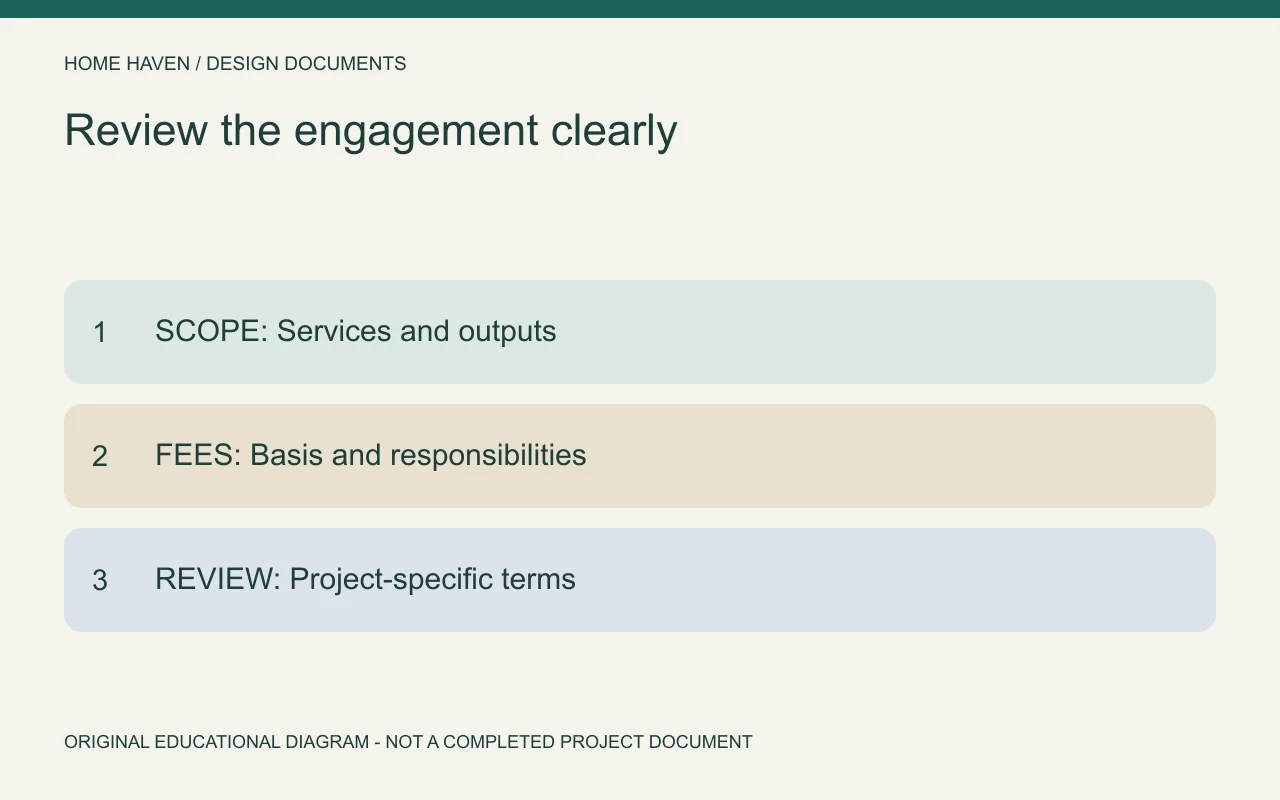
Start with an appropriate source
The American Society of Interior Designers offers residential and commercial contract resources. ASID also explains that its forms are starting points rather than legal advice for a particular situation. Review the current package, instructions, and permitted use before deciding whether it suits the engagement.
Do not copy another practice’s agreement and assume it fits your work. Different services, purchasing arrangements, locations, and business structures can require different terms. A form’s professional appearance does not establish its suitability or legal effect.
Interior design agreement template: project worksheet
Prepare the following facts for the person reviewing or adapting the agreement. These fields organize the discussion; they are not operative contract language. Replace placeholders with verified project information and identify questions that remain unresolved.
- Parties: [correct client and designer or business names].
- Project: [property or areas included and relevant location].
- Services: [specific work the designer will perform].
- Deliverables: [documents, meetings, and review outputs].
- Boundaries: [excluded work and third-party responsibilities].
- Compensation: [fee basis, payment stages, and expenses to discuss].
- Purchasing: [who selects, approves, orders, receives, and installs].
- Schedule: [stages, required information, and dependencies].
- Changes: [how scope changes will be identified and documented].
- Records: [versions, approvals, communication, and file handoff].
- Legal review: [jurisdiction, special circumstances, and questions for counsel].
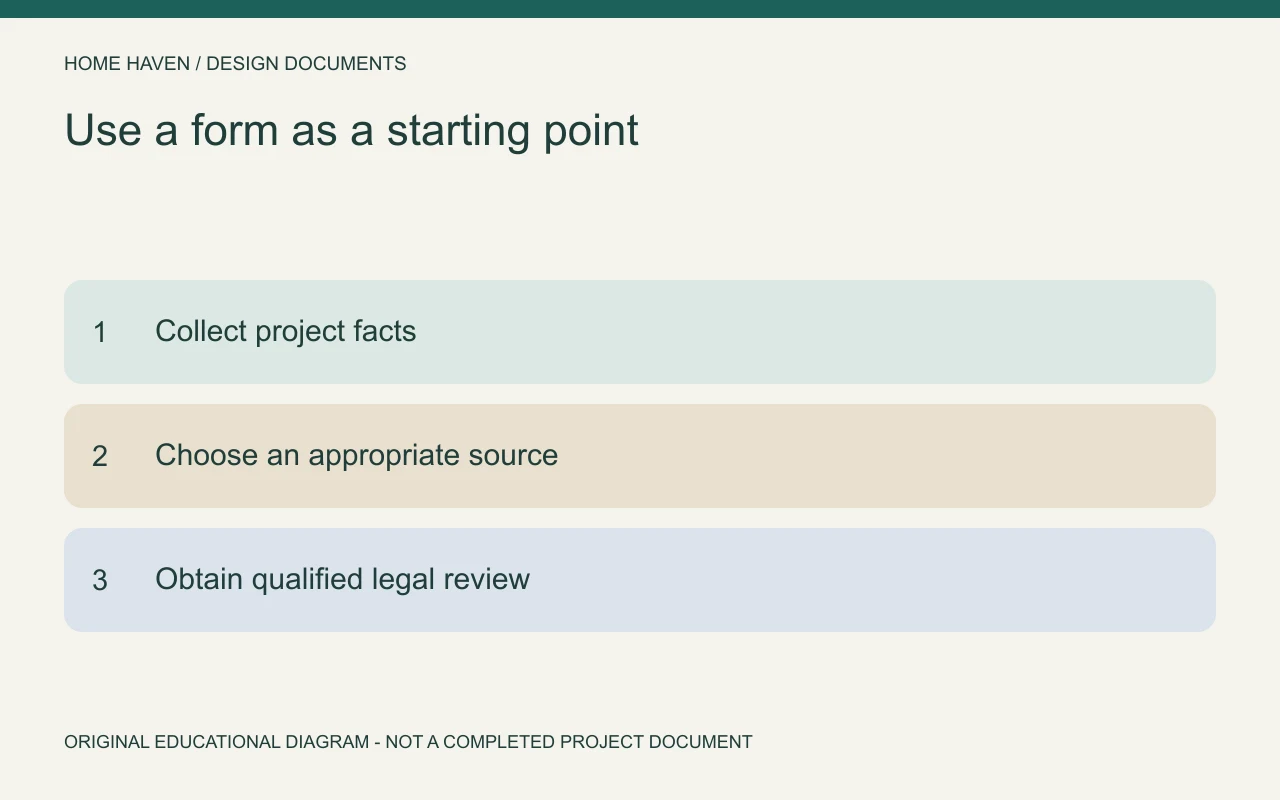
Describe scope in concrete terms
Identify the rooms and the work included. Furniture layout, finish selection, procurement, site observation, and construction documentation are different responsibilities. Avoid relying on a broad phrase such as full service without explaining what it means in the engagement.
ASID’s code of ethics calls for members’ client contracts to identify project scope, services, and compensation. Use that professional context as a reminder to make the business arrangement understandable. It does not replace jurisdiction-specific legal review.
Connect deliverables to review stages
List the actual outputs and their intended level of detail. A concept board communicates a direction; a product schedule identifies selections; a technical drawing set serves another purpose. Describe what the client receives rather than assuming a document name explains everything.
Identify which information the client or another professional must provide before the work proceeds. Existing measurements, approved budgets, and timely decisions can affect the sequence. Record dependencies without presenting unverified completion dates as guarantees.
Separate design fees from product spending
Prepare a clear description of the proposed compensation method and the costs outside it. A design-service fee and a furniture purchasing budget answer different questions. The agreement review should address the actual arrangement, including relevant expenses and payment procedures.
Ask counsel how the chosen fee and purchasing terms should appear in the final document. Do not insert generic language about deposits, refunds, taxes, or late charges without checking its suitability. This worksheet identifies issues to resolve rather than prescribing legal terms.
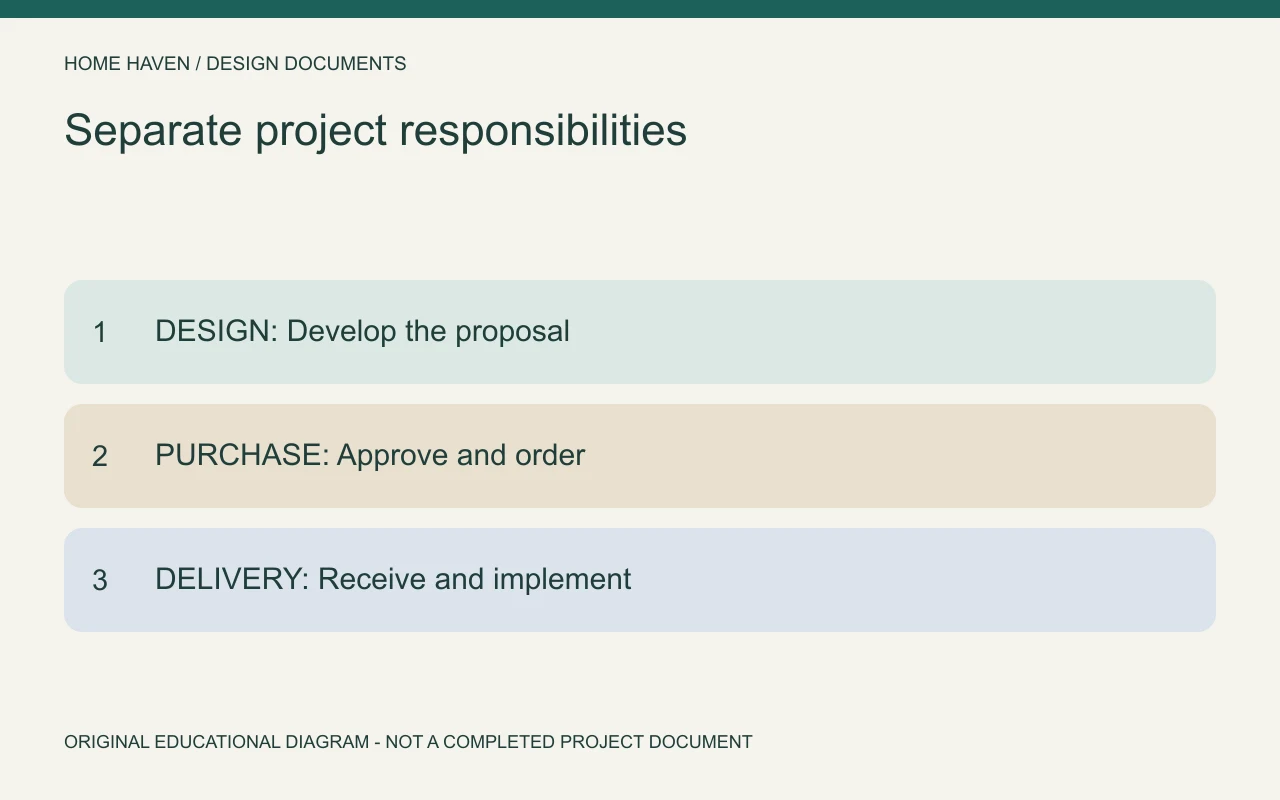
Clarify purchasing and delivery responsibilities
Map the tasks from product selection to installation. Who confirms the variant, approves the cost, places the order, handles payment, checks deliveries, and addresses damage or returns? The answer may differ between a design-only service and managed procurement.
Keep product approval distinct from a general positive response to a concept. The relevant record should identify the item, version, quantity, cost information, and any conditions. Agree on how that record connects to the purchasing process.
Discuss revisions and changes
Explain the planned design review process and identify the point at which a new request changes the scope. Adding another room differs from correcting a mistaken product reference. The business process should make that distinction visible.
A hypothetical change record might identify the request, the affected deliverables, the proposed fee or timing effect, and the required approval. It is a discussion aid, not a substitute for the final agreement’s change provisions. Have the actual process reviewed and documented appropriately.
Identify information and image rights
Discuss who may use drawings, renderings, photographs, and other project materials, and for what purpose. The parties may need different arrangements for client use, portfolio display, and third-party assets. Do not assume payment automatically resolves every permission.
Record the source and licensing status of assets used in presentations. If AI tools or external services handle project images, include that workflow in the review. Use a clear privacy and permission process suited to the actual information involved.
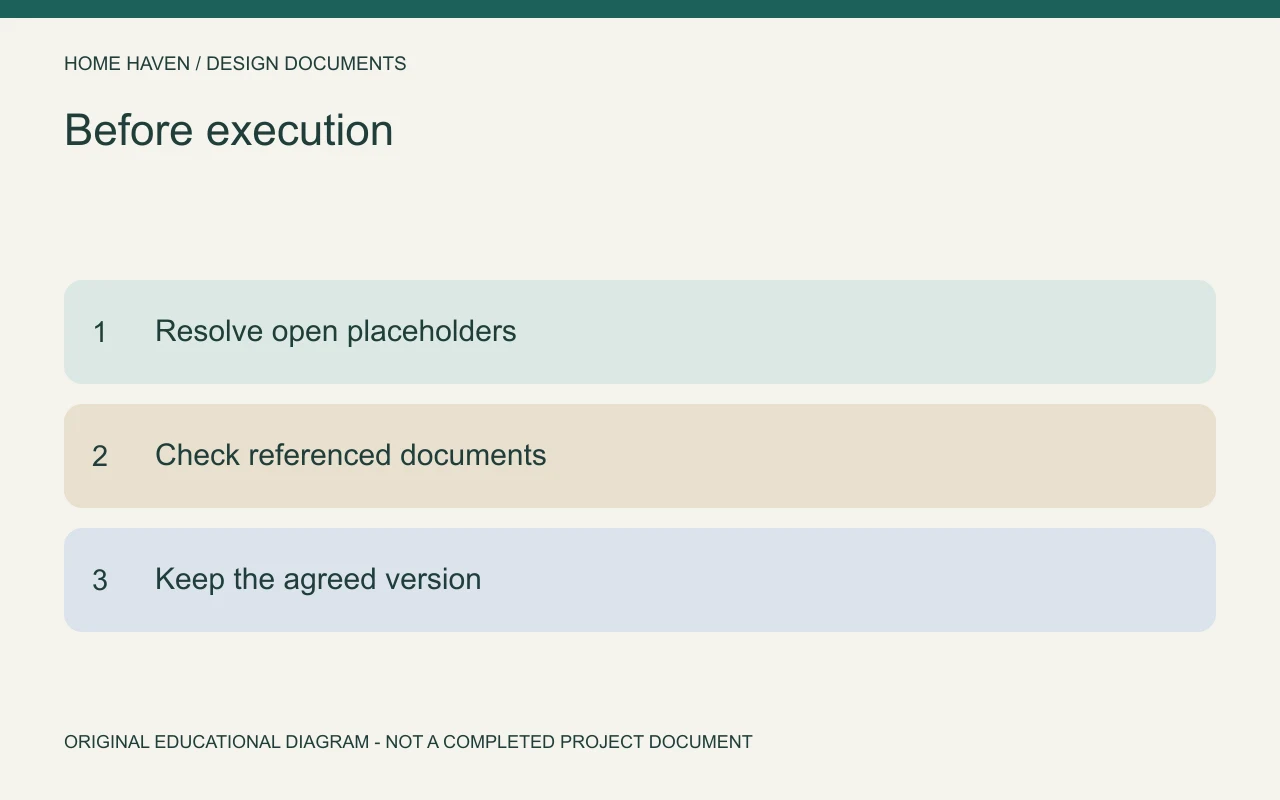
Bring important legal questions to counsel
Prepare questions about cancellation, suspension, disputes, insurance, liability, intellectual property, and any requirements connected to the project or professional role. Their treatment depends on the actual circumstances and relevant law. Do not add a copied clause simply because it appears in another agreement.
Ask which documents form part of the engagement and how conflicts or later changes should be handled. A proposal, email, schedule, and signed form can contain inconsistent information. The review should address the complete document set rather than one isolated page.
Keep the issued version identifiable
Use the correct party names, project identifier, date, and revision. Check that schedules and referenced documents match the final arrangement. Remove unused options and unresolved placeholders through the appropriate review process before execution.
Retain the agreed version and subsequent approved changes in an accessible project record. A software platform may help store documents, but a status label alone does not establish the legal effect of a document or the authority of a person clicking it.
Agreement template questions
Is an agreement template the same as a proposal?
No single label determines a document’s legal effect. A proposal often explains proposed work, while an agreement addresses the engagement terms. Have the complete wording and acceptance process reviewed.
Can one form serve every US state?
Do not assume so. The relevant jurisdiction, services, and business circumstances can affect what is appropriate. Use qualified review for the actual project rather than a universal validity claim.
Use the template to surface questions
Gather the project facts, define the work, and identify unresolved responsibilities. Choose an appropriate starting form and obtain project-specific legal review. A useful template makes the engagement clearer before work begins.