
Hacienda interior design usually refers to a contemporary interpretation of regional estate and courtyard-house traditions associated with Mexico and parts of the American Southwest. Warm plaster-like surfaces, timber, clay tile, and substantial furniture can contribute. The term covers variation, so begin with a specific place and building rather than treating all Spanish-influenced interiors as one style.
You can adapt the material relationships to an ordinary home without adding fake beams, arches, or a courtyard. This guide focuses on informed, practical choices. Our interior design aesthetics guide provides a wider comparison with other regional and traditional approaches.
Hacienda Interior Design: Consider Place and Climate
Hacienda interior design is best understood through specific regional architecture and materials, not a generic rustic theme. Look at the building’s climate, courtyard, openings, and local construction traditions before choosing finishes. In an existing home, adapt light, texture, and layout thoughtfully rather than copying structural features that do not fit the site.
Learn the context behind the reference
A historic hacienda was more than a decorative house type. Its architecture belonged to particular land, work, climate, and social conditions. When studying a property, read the interpretation of the people who lived and worked there rather than looking only at its attractive surfaces.
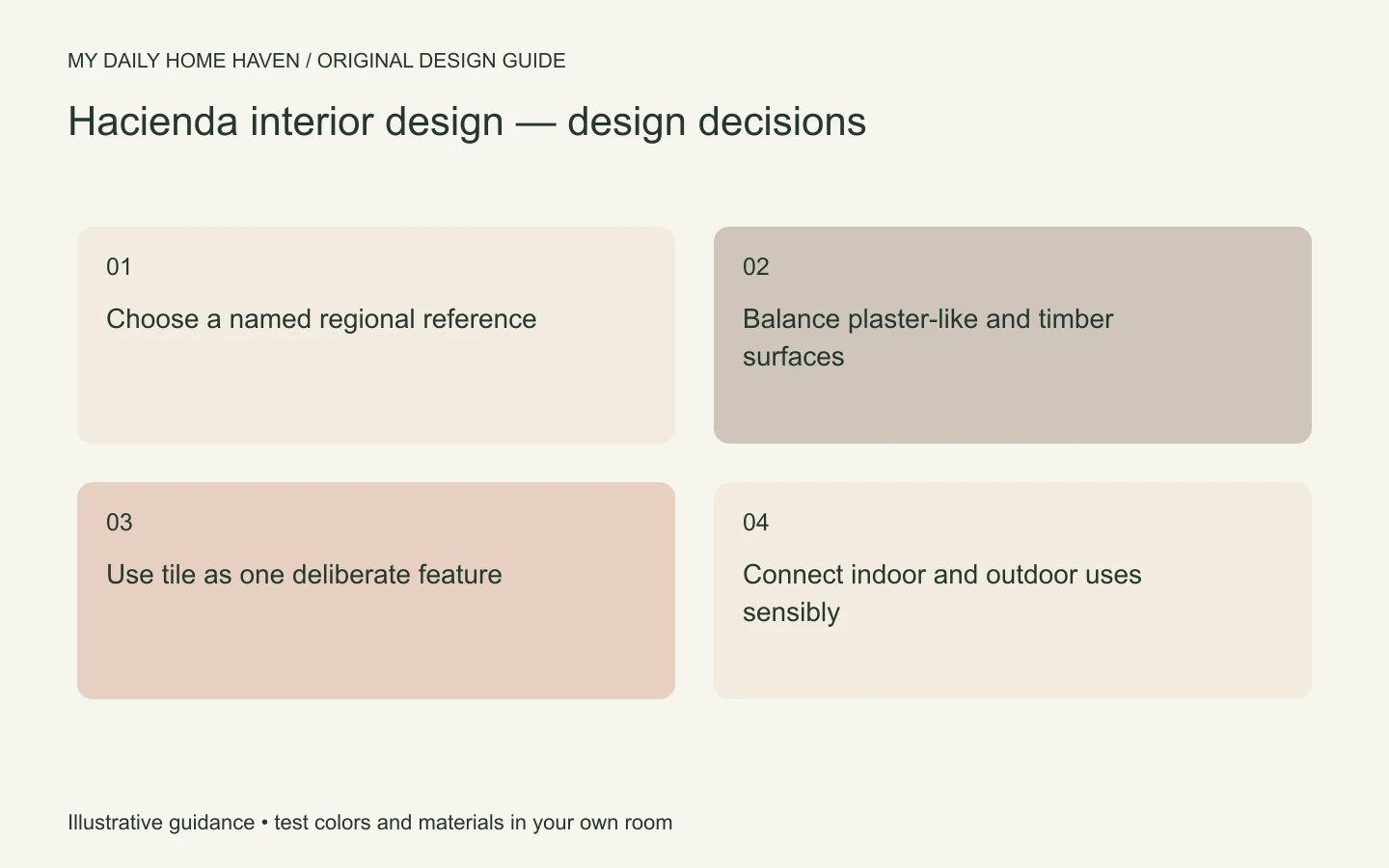
For one regional example, Taos Historic Museums’ account of Hacienda de los Martinez identifies a specific New Mexico property. A single example should not be used as a universal plan for Mexican or Southwestern homes.
Choose the feature you want to adapt: a restrained material palette, a shaded transition to outdoor space, or the balance of simple walls and substantial furniture. Naming the feature helps avoid buying an unrelated collection of objects labeled Spanish, rustic, or hacienda.
Work with existing surfaces first
Look at the floor, walls, windows, and ceiling. If the home already has warm tile or dark timber, you may have enough material character to begin. Use supporting textiles and furniture rather than replacing sound finishes solely to strengthen the theme.
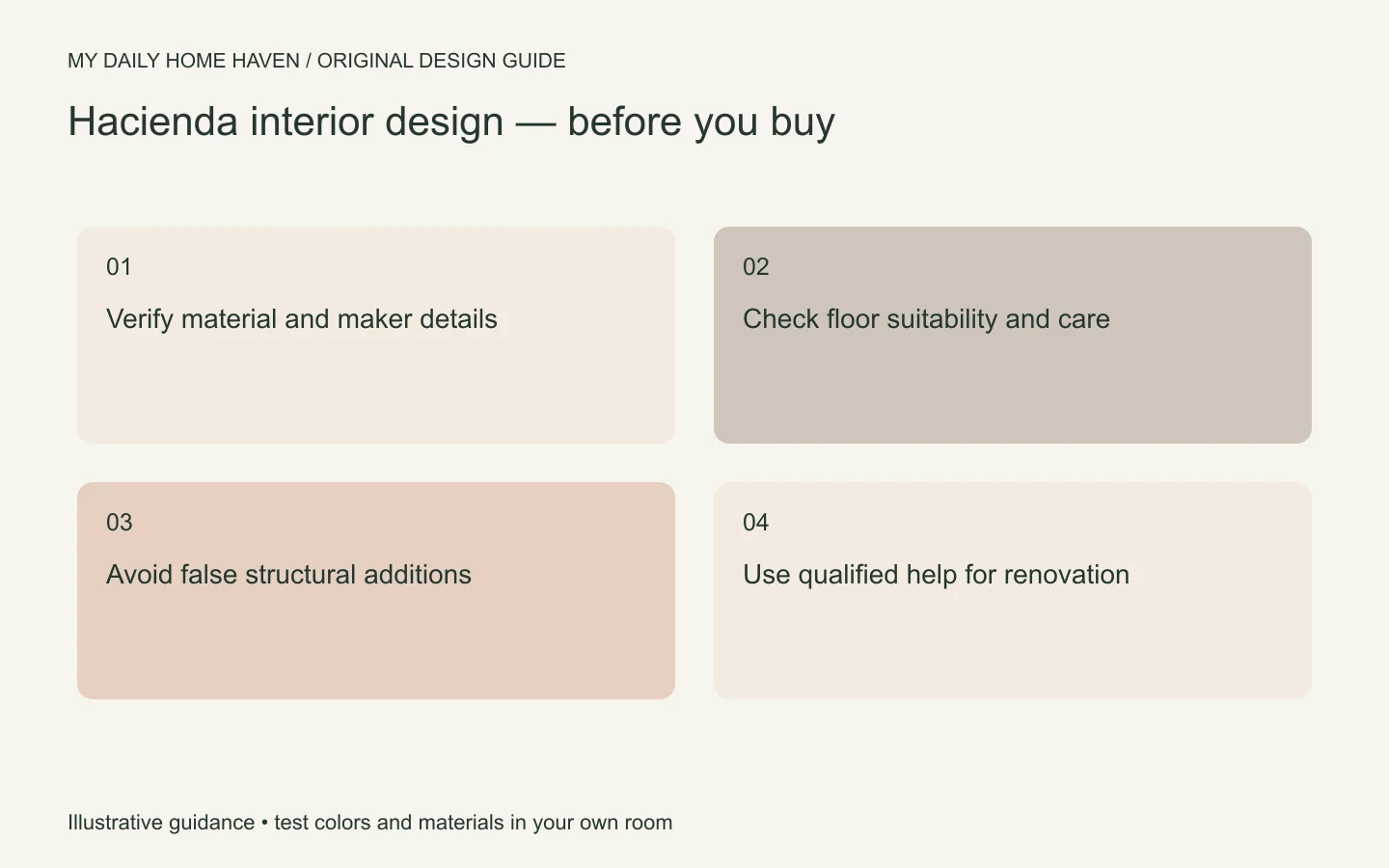
Plaster-like colors can create a softer background, but a textured paint finish is not the same material as traditional plaster or adobe. Describe products accurately and check whether the finish suits the existing substrate and the room’s moisture conditions.
Do not add heavy beams, stone, or tile without proper assessment. Structural support, installation systems, and local requirements matter. A photograph cannot establish that a similar-looking feature is safe or feasible in another building.
Balance warm materials with visual relief
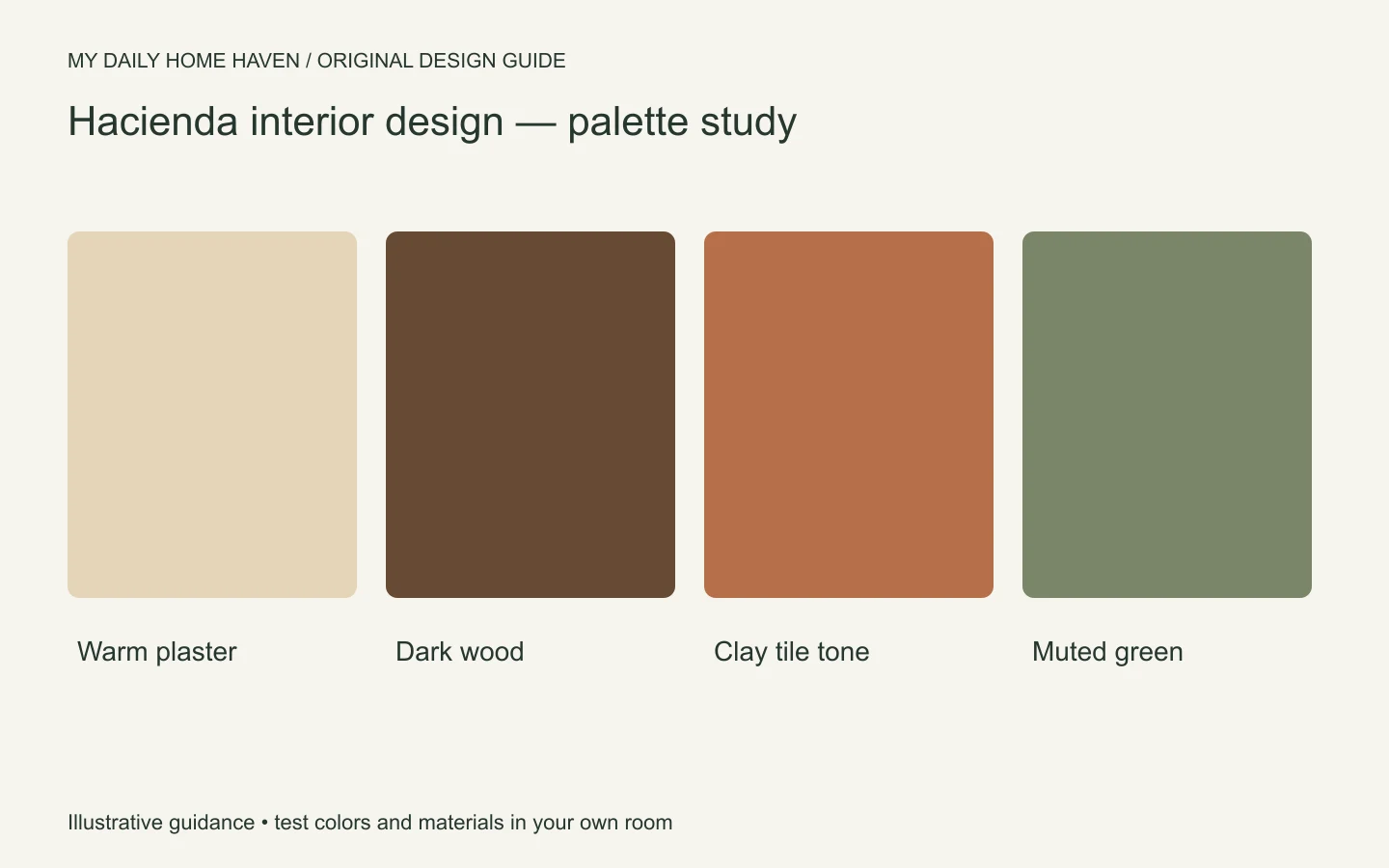
Clay-colored tile, dark wood, and warm walls can become heavy when all are strong at once. Introduce lighter fabric, a quieter rug, or a simpler furniture silhouette to create separation. You do not need every surface to look rough or aged.
Choose a limited group of finishes and compare actual samples. A reddish floor may react differently with golden wood than with a cooler brown. Keep the main relationships clear before introducing patterned tile or a vivid textile.
Muted greens, blues, and other accents can work when they relate to the chosen reference and materials. They are options, not compulsory regional colors. Follow the room’s light and fixed finishes rather than a generic palette card.
Use tile with a clear purpose
Patterned tile can be a focal point on a backsplash, a smaller surface, or another suitable location. Choose the exact product for the intended use. A wall tile is not automatically suitable for a floor, and a decorative surface is not automatically appropriate in a wet area.
Ask about cleaning, sealing if relevant, grout, installation, and performance information. Some products vary in size or color, which may be part of their character but needs planning. Review representative samples and the supplier’s guidance before ordering.
If you admire a particular craft tradition, seek a named maker or documented workshop. Do not use a broad cultural label as proof of handmade production or origin. Keep attribution details with the product records.
Choose comfortable, useful furniture
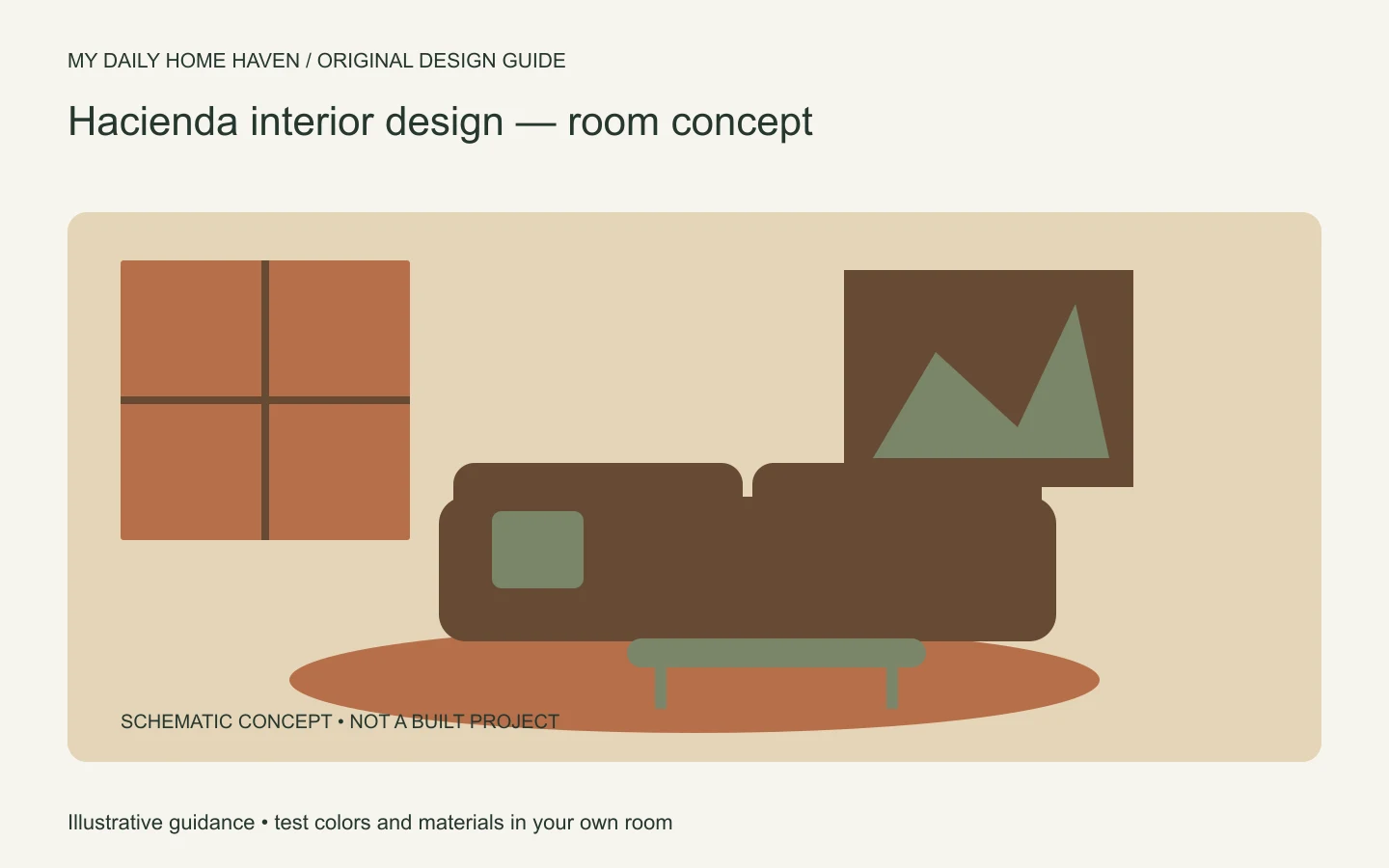
Substantial timber pieces can anchor the room, but scale them to the available space. A heavy-looking dining table may fit a large room and overwhelm a small one. Measure the footprint and allow people to sit and move comfortably.
Mix simpler seating with one distinctive older piece if that suits the home. Inspect secondhand furniture for condition and stability, and factor repair and delivery into the cost. Artificial distressing is optional, not a requirement of authenticity.
Use textiles to soften the larger surfaces. Check their care needs, especially around dining areas, pets, and frequently used doors. A practical washable layer may serve the room better than a delicate material chosen only for appearance.
Connect indoors and outdoors realistically
If the home has a patio or garden, consider the view, shade, privacy, and ease of movement. Keep doors and paths clear. Outdoor furniture and fabrics need to be rated for their exposure; indoor appearance does not establish outdoor suitability.
In a colder or wetter climate, a view and a coordinated color relationship may be a better adaptation than an open-air arrangement. Work with the building and weather rather than imitating a climate response that does not fit.
Our space planning guide can help position furniture around doors and gathering areas. A regional reference becomes more useful when it improves the way the room works.
Use one focal material
A hacienda interior design adaptation can become clearer when one material leads. If patterned tile is the feature, keep nearby wall and textile surfaces quieter. If the furniture has strong timber grain, a simpler floor treatment may give it room. Compare the whole view before adding more rustic texture. Too many strong materials can compete even when they share warm colors. You can introduce another layer later if the room needs it, but it is harder to undo several permanent finishes chosen at once. Begin with the existing house and make the smallest change that provides the relationship you want.
Frequently asked questions
Is hacienda design the same as Mediterranean style?
No. The labels can overlap in retail descriptions, but they refer to different regional references. Identify the particular building, craft, or material tradition you mean.
Do I need arches and exposed beams?
No. Furniture, color, and material relationships can provide the reference. Architectural additions should fit the house and be assessed appropriately rather than added as props.
Can I use the approach in a modern house?
Yes. Keep the modern layout and introduce a few well-chosen materials or craft pieces. A restrained adaptation can be more coherent than trying to reproduce an entire historical setting.
\n\n