

African interior design is best approached through particular places, makers, materials, and living traditions. Africa is a continent with many distinct design cultures, so a single palette of animal prints, masks, and brown furniture cannot represent it. A stronger room begins with a specific textile, a contemporary artist, or a regional craft tradition you want to understand.
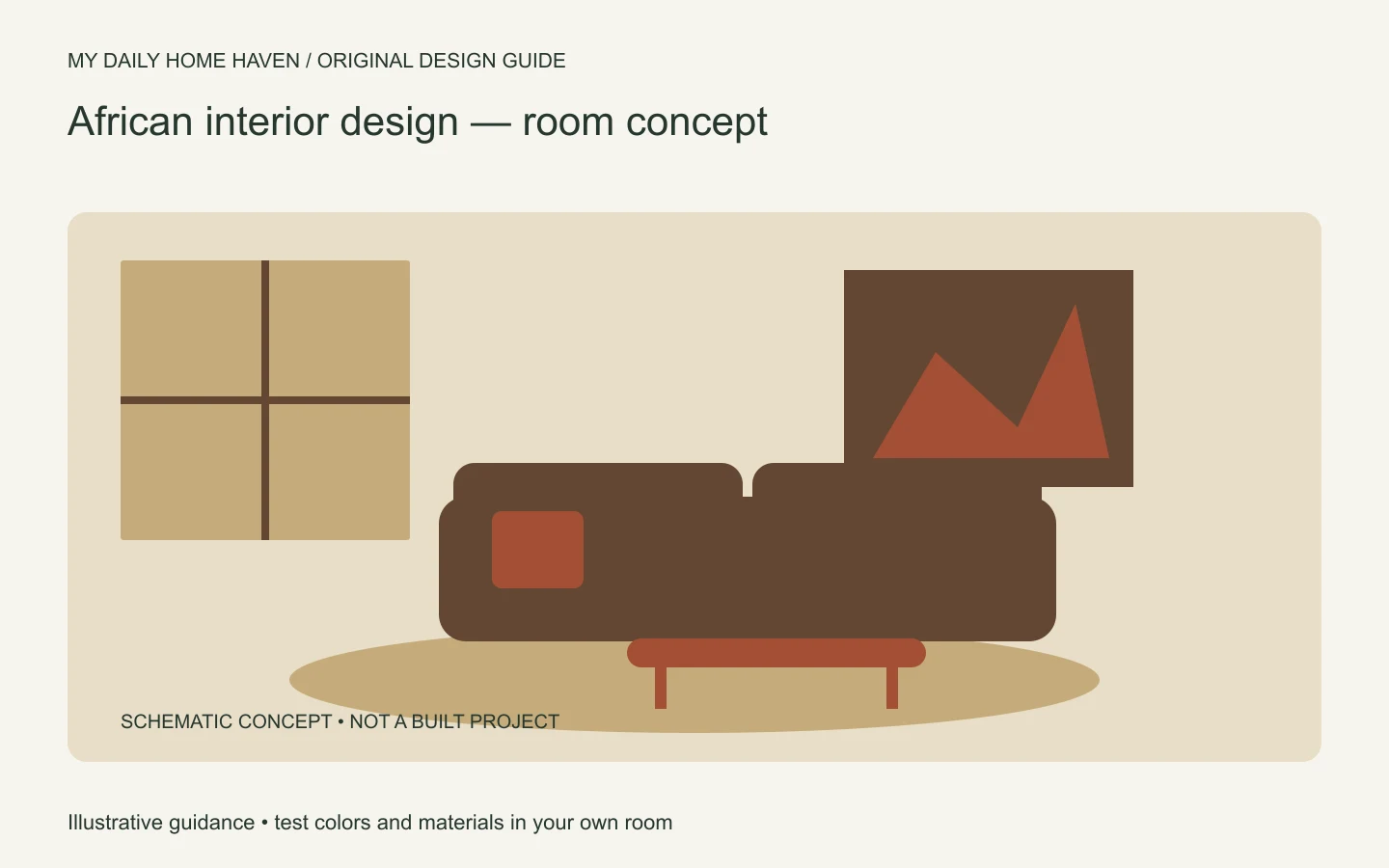
For a US home, that can mean pairing an existing sofa with a documented woven textile and furniture from a named designer. The aim is a room that works for daily life and credits its sources. Our interior design aesthetics guide explains how to connect different influences without turning a home into a theme set.
African Interior Design: Build Around One Specific Influence
For African interior design, let one documented source lead the choices: a specific textile tradition, contemporary maker, or regional material. Research its origin and credit the maker; then connect its colors or texture to furniture already in the room. This keeps the result personal and avoids treating many distinct cultures as one decorative style.
Start with a specific reference
Instead of searching only for an African-inspired room, narrow the question. Are you interested in a particular weaving practice, contemporary furniture from a specific city, or architectural responses to a local climate? Those are different starting points, and each deserves its own research.
The Metropolitan Museum of Art’s Essential Art of African Textiles exhibition documents varied textile traditions and histories of exchange. It is a useful reminder that materials have origins and meanings beyond their decorative appearance. Use museum context to learn about a piece; do not assume every object in a collection is suitable for everyday home use.
Write down the maker, country or community when known, material, and intended function of your reference. A seller who identifies a textile only as tribal has not given you enough information to understand it. Ask for details before building a room around the purchase.
Build the palette around one meaningful piece
Choose one lead element rather than combining many unrelated motifs. It might be a contemporary artwork, a handwoven cushion cover, or a documented basket made for domestic use. Pull two supporting colors from that item and keep the largest surfaces quieter.
A warm plaster-colored wall, dark timber table, and sand upholstery can provide a flexible backdrop. These colors are an illustrative scheme, not an official African palette. Bright colors, restrained monochrome, and modern industrial materials can also belong in work by African designers.
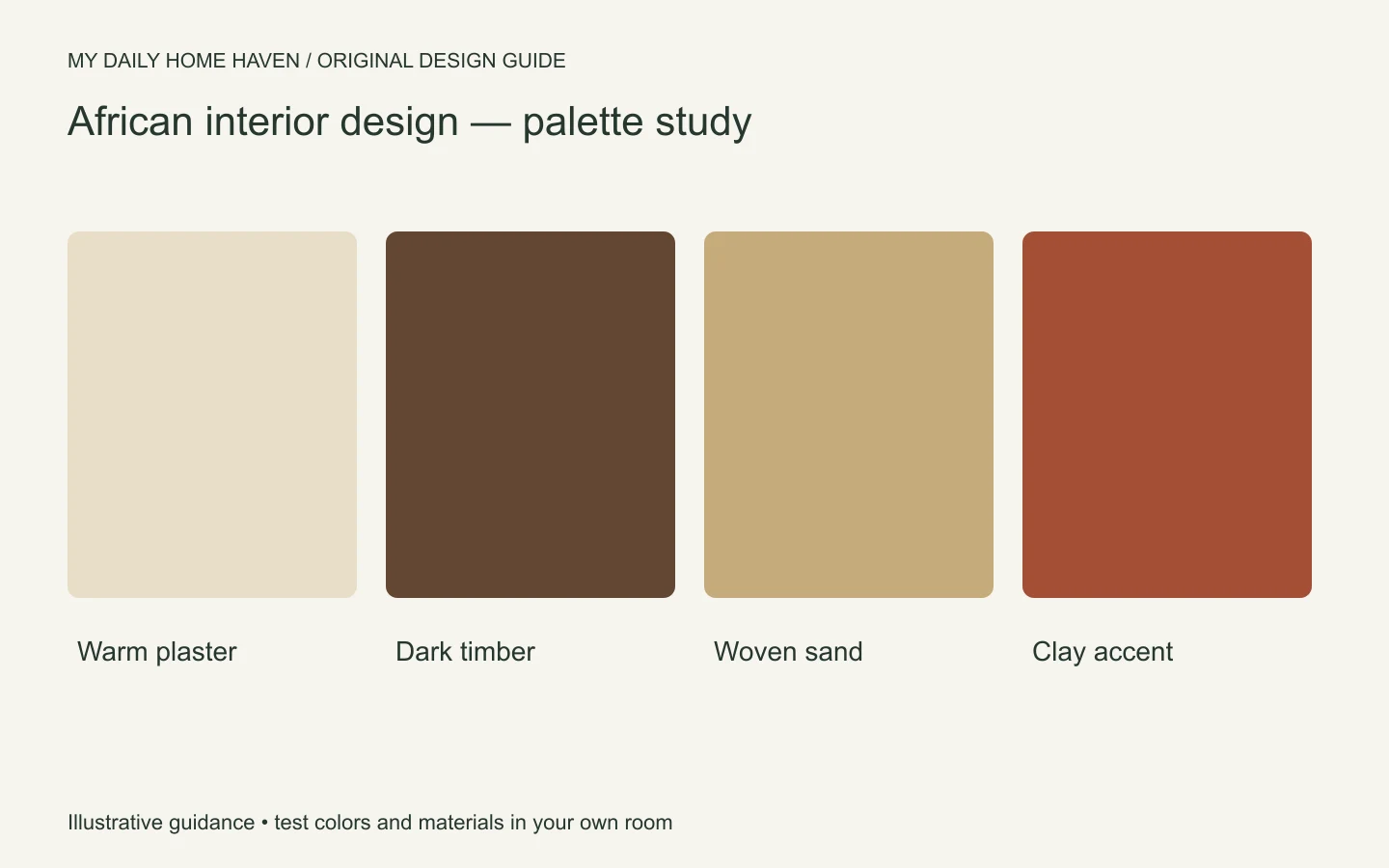
Compare your chosen textile with the floor and sofa in daylight. If the floor already has strong orange tones, adding several reddish woods may make the room look visually heavy. A lighter textile or cooler neutral could balance the existing materials without replacing them.
Choose materials for their actual use
Woven surfaces, timber, clay, leather, and metal can introduce contrast, but none belongs exclusively to this approach. Consider how each piece will function. A tightly woven basket may suit storage; a delicate collectible may need protected display instead.
Check whether an upholstered textile can tolerate sunlight, pets, and frequent handling. Some pieces make better framed displays than seat covers. Follow the maker’s care guidance and avoid cutting an important or fragile textile simply to fit a cushion insert.
For timber furniture, inspect joinery, stability, finish, and delivery access. A carved stool is not automatically a safe side table or seat for every user. Confirm dimensions and intended load with its maker or seller rather than judging only from a photograph.
A living room plan you can adapt
Imagine an existing cream sofa, medium-toned wood floor, and a blank wall. Begin with one large artwork by a named contemporary artist. Select a rug that supports its colors without repeating every detail. Add a single patterned cushion and one plain cushion in a related shade.
Use a table with enough clear surface for everyday drinks and books. A lidded basket can hold throws if the weave will not snag them. Leave space around the artwork so it can be appreciated without competing with a dense collection of small objects.
Then review the room from its entrance. If your attention jumps between several patterns, simplify one area. This follows the same hierarchy explained in our principles of interior design guide: choose a focal point, repeat selectively, and leave visual breathing room.
Source with care and keep the information
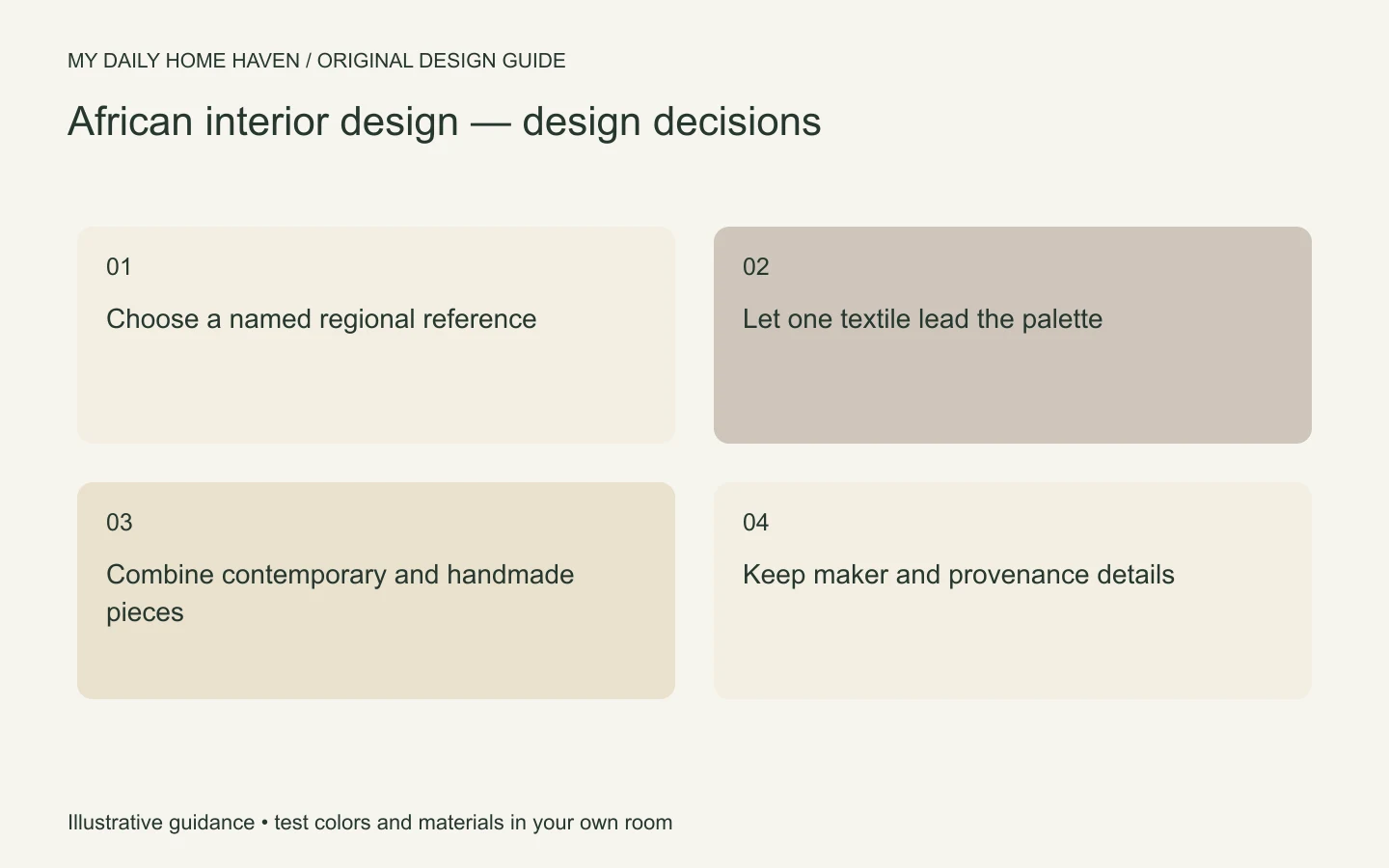
Direct maker shops, established galleries, and specialist retailers can provide useful context, but assess the information rather than relying on the shop category. Ask who made the piece, where it was produced, and what the seller can document. Keep receipts and descriptions with your home records.
- Prefer a named maker or a clearly described production workshop.
- Distinguish handmade work from machine-produced copies.
- Ask about repairs, replacement parts, and appropriate cleaning.
- Avoid buying sacred or ceremonial objects as generic decoration when their use and provenance are unclear.
Price alone does not establish authenticity, quality, or fair compensation. Similarly, an old appearance does not prove age. If a seller cannot support an important claim, treat the claim as unverified and choose a better-documented alternative.
What to avoid
The most common design mistake is buying a bundle of unrelated objects to make a room look African. It removes context and often creates clutter. You can enjoy work from several regions, but let each piece retain its identity instead of presenting them as one interchangeable tradition.
Another mistake is ignoring contemporary design. A room can include a modern lamp, a clean-lined sofa, and new artwork alongside traditional craft. Contemporary life does not make the cultural reference less valid. What matters is the accuracy of the description and the usefulness of the room.
Start with what you own, then add slowly. A meaningful piece you can explain is more valuable to the scheme than a cart full of vaguely labeled accessories.
A smaller sourcing decision
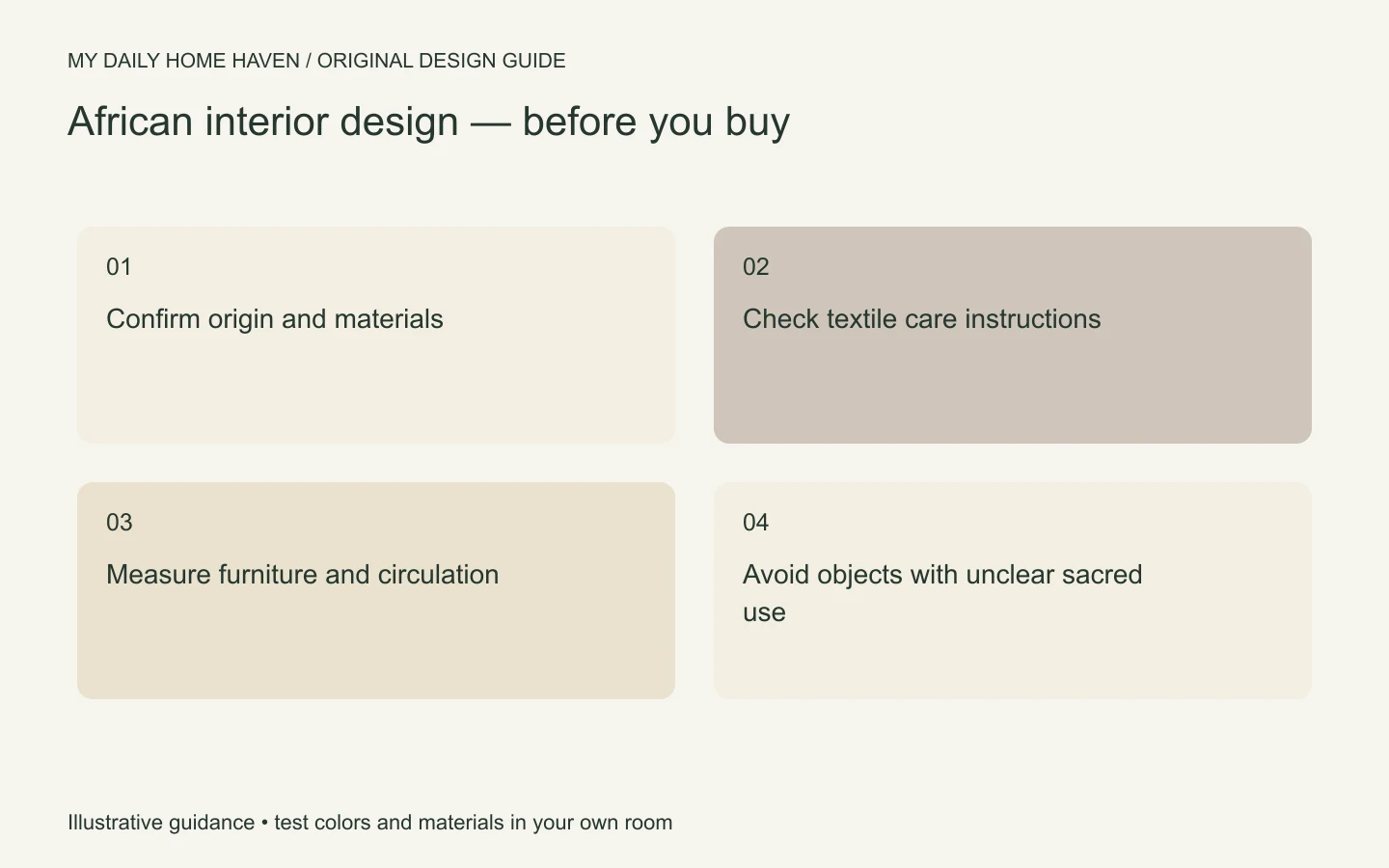
African interior design can begin with a single documented purchase. Compare two similar textiles by asking the same questions: who made each one, how the technique is described, whether the dimensions suit your use, and what care information is supplied. A lower price may reflect a different material or production method, but a higher price does not settle the question either. Keep the best-supported option on your shortlist and leave room in the budget for suitable framing, an insert, or another appropriate method of display. The complete use of the piece matters as much as the initial purchase.
Frequently asked questions
Can this approach work in a small apartment?
Yes. Use one well-scaled artwork or textile as the lead element, then keep storage and furniture compact. Cultural specificity does not require many objects or a large floor plan.
Do I need to use neutral colors?
No. Choose colors from the particular work or design reference you admire. Neutrals are one way to support a focal piece, not a rule covering an entire continent.
How should I describe an item when I do not know its origin?
Describe what you can verify: its material, color, construction, and seller. Do not assign a community, age, or ceremonial meaning based on appearance alone. Ask for documentation or leave the uncertain attribution out.