

Insulating Walls with Foam: Which Type Fits Your Home?
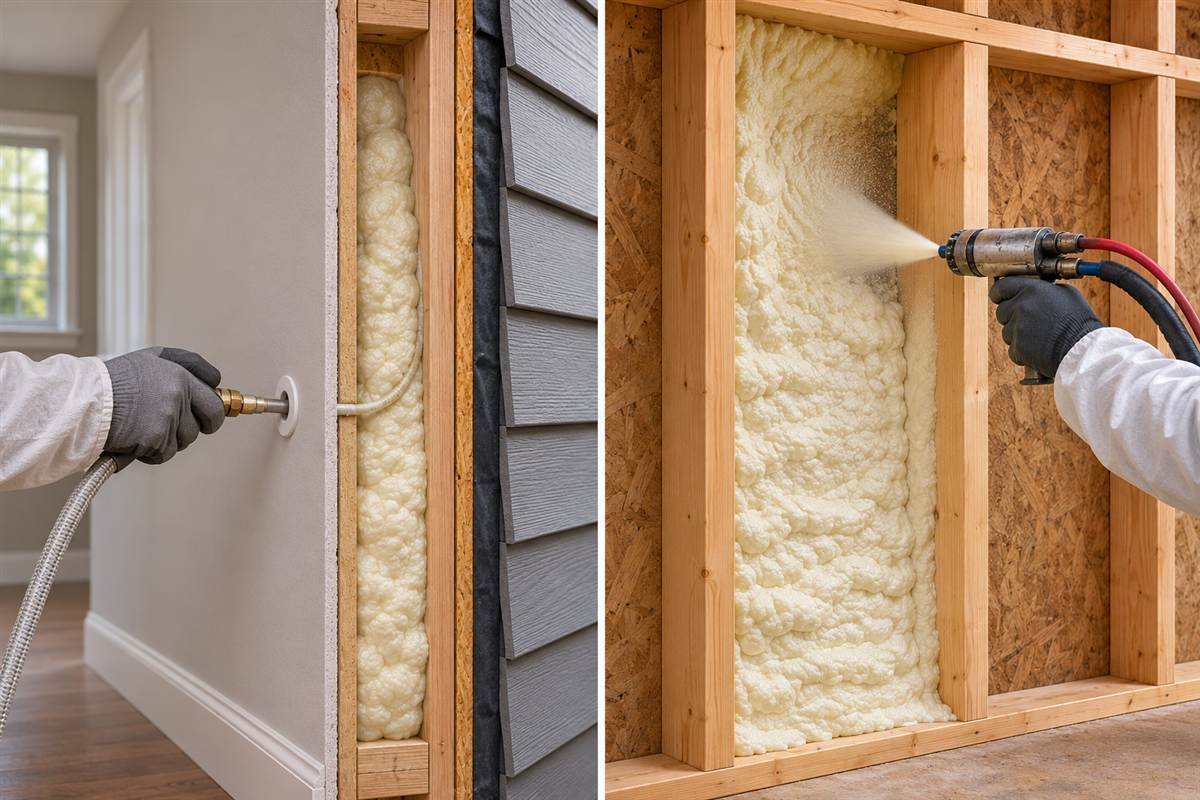
Insulating walls with foam starts with choosing a product that suits the wall. Spray foam usually needs open access to the surface. Injection foam can suit selected enclosed cavities, while rigid foam boards can create a continuous insulation layer. Acoustic panels and decorative foam coverings serve different purposes.
If your room feels cold, first identify why. Missing insulation, air leaks, wet materials and heat loss through framing can all affect comfort. This guide explains the main foam options and the questions to ask before hiring an installer. For the wider overview, visit our wall insulation pillar guide.
Three Main Approaches to Insulating Walls with Foam
A useful starting point is to separate spray-applied foam, injection systems and rigid boards. However, these are application groups rather than a complete list of foam chemistries. The exact product and its approved installation determine where it belongs.
| Wall condition | Foam option to assess | Main planning question |
|---|---|---|
| Open stud cavities | Open-cell or closed-cell spray foam | Which product, thickness and drying strategy suit the assembly? |
| Finished framed walls | Approved closed-cavity injection foam | Can the installer survey and fill every suitable cavity without damage? |
| Exterior renovation | Continuous rigid insulation boards | How will insulation, flashing, cladding and fasteners work together? |
| Basement masonry | Suitable rigid boards or a specified spray foam system | Have water entry, drying and protective finishes been addressed? |
| Echo or decorative surface problems | Tested acoustic panels or decorative coverings | Is thermal insulation actually the goal? |
For example, a room with finished drywall may need a different retrofit from a stripped renovation. Likewise, a basement wall needs a different moisture assessment from an above-grade timber wall. Therefore, avoid choosing a product before checking the construction.
Spray Foam Wall Insulation for Open Cavities
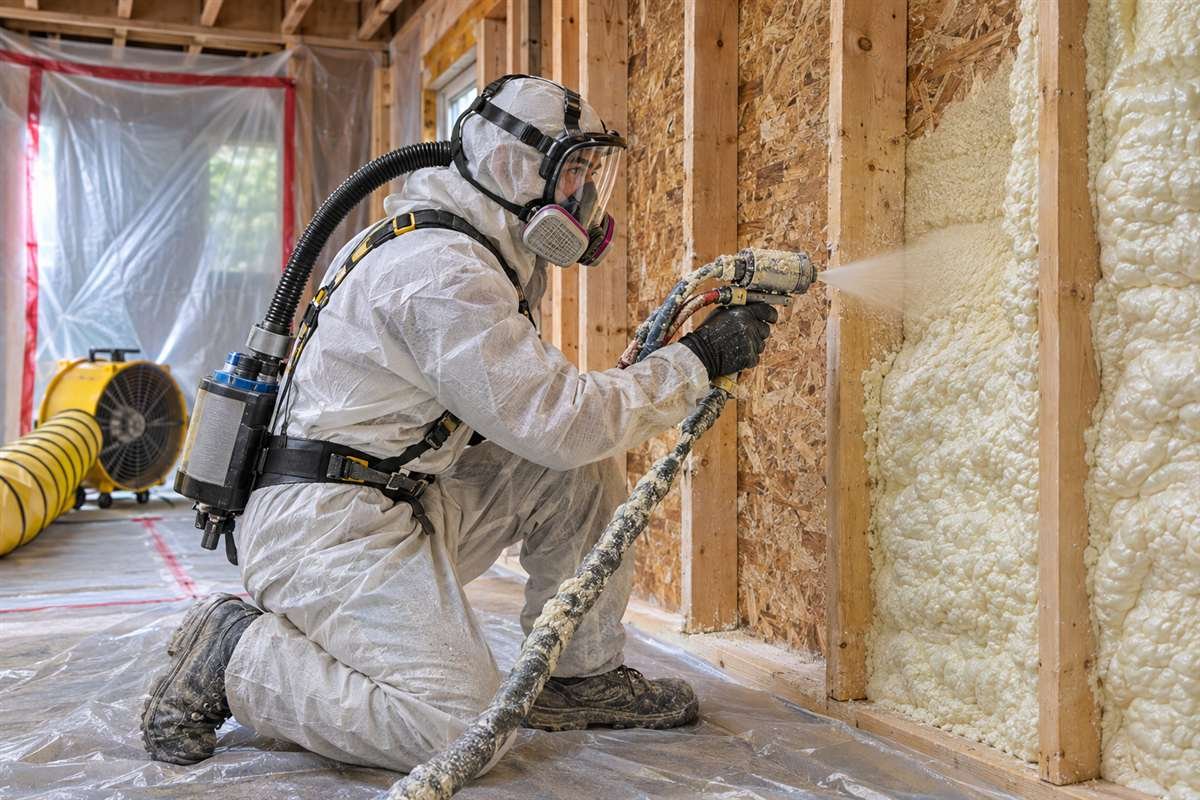
Spray foam wall insulation forms in place as the installer applies the selected system. It can follow irregular surfaces and seal some gaps within its coverage. However, the whole building still needs connected air-control details at floors, ceilings, openings and adjoining walls.
Before installation, the contractor should inspect the substrate and confirm that it meets the product’s temperature and moisture limits. Wiring, plumbing and damaged materials also need review. Covering a problem with foam makes later inspection harder.
Spray foam is not a substitute for repairing leaks or rebuilding failed flashing. Nor does filling stud bays remove heat flow through the studs themselves. A complete wall design must address those paths separately.
Open-cell spray foam insulation
Open-cell spray foam insulation is generally lighter and more vapor permeable than closed-cell foam. Many products provide roughly R-3.5 to R-4 per inch, but the declared value depends on the product. Air-barrier performance also requires the manufacturer’s specified thickness.
This option needs enough space to achieve the required thermal resistance. In addition, climate and the exterior wall layers affect whether extra vapor control is appropriate. Do not assume a vapor-permeable foam makes every assembly moisture safe.
Closed-cell foam insulation
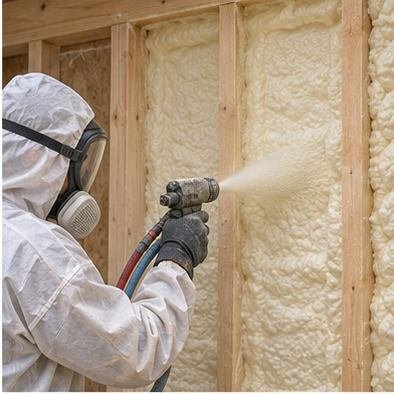
Closed-cell foam insulation is denser and commonly provides roughly R-6 to R-7 per inch. At suitable thicknesses, some products also act as vapor retarders. However, this can restrict drying toward the insulated side.
For this reason, a space-saving benefit must be weighed against the wall’s moisture behavior. Ask for the exact product data and the proposed thickness. Compare whole-wall performance rather than treating the cavity R-value as the finished wall rating.
Injection Foam for Finished Existing Walls
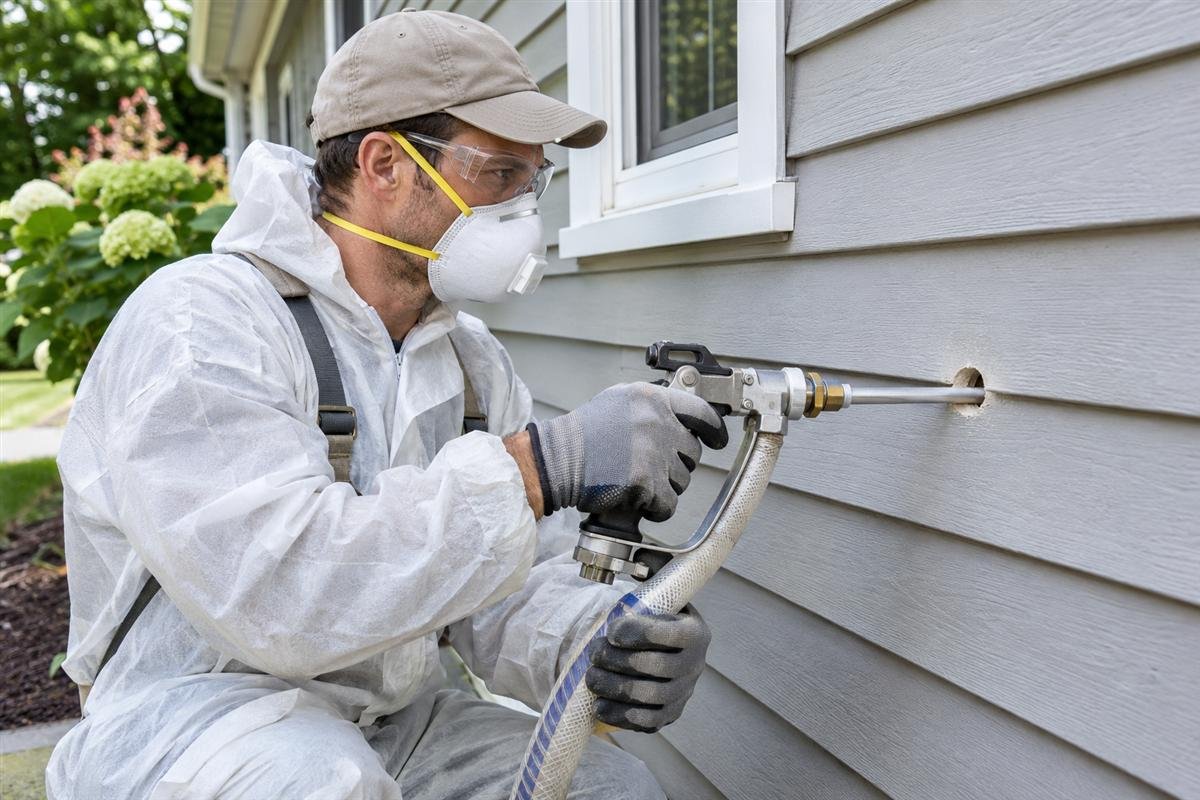
Injection foam can reduce the need to remove large areas of drywall in suitable existing walls. The installer reaches cavities through planned openings, introduces a specified foam and then repairs the access points. However, a finished wall can hide blocking, existing insulation, water damage and services.
Injection foam is not one universal material. Some systems use resin-based foams that differ from spray polyurethane foam; other products have their own approved chemistry and process. Therefore, ask for the name, technical data and safety documentation of the exact system.
Do not assume every injection foam is amino-based or every cured product is easy to remove. Future access to pipes and cables depends on the material and installation. Likewise, ordinary aerosol gap filler is not a substitute for an approved whole-cavity system.
For a closer comparison, read our injection foam versus spray foam guide. It covers the distinction in more detail, while this article focuses on matching the main foam categories to the job.
What the homeowner video helps illustrate
A homeowner walkthrough of injection foam in existing walls can help you prepare questions about access, noise, patching and inspection. Treat a single renovation as an example, however. Its price, drilling pattern and timetable do not establish what every home needs.
For your property, request a written survey and scope. Ask how the installer will find separated cavities and confirm coverage. Also, agree on how they will handle unexpected conditions rather than assuming every bay is empty and accessible.
Rigid Foam Boards for Continuous Insulation
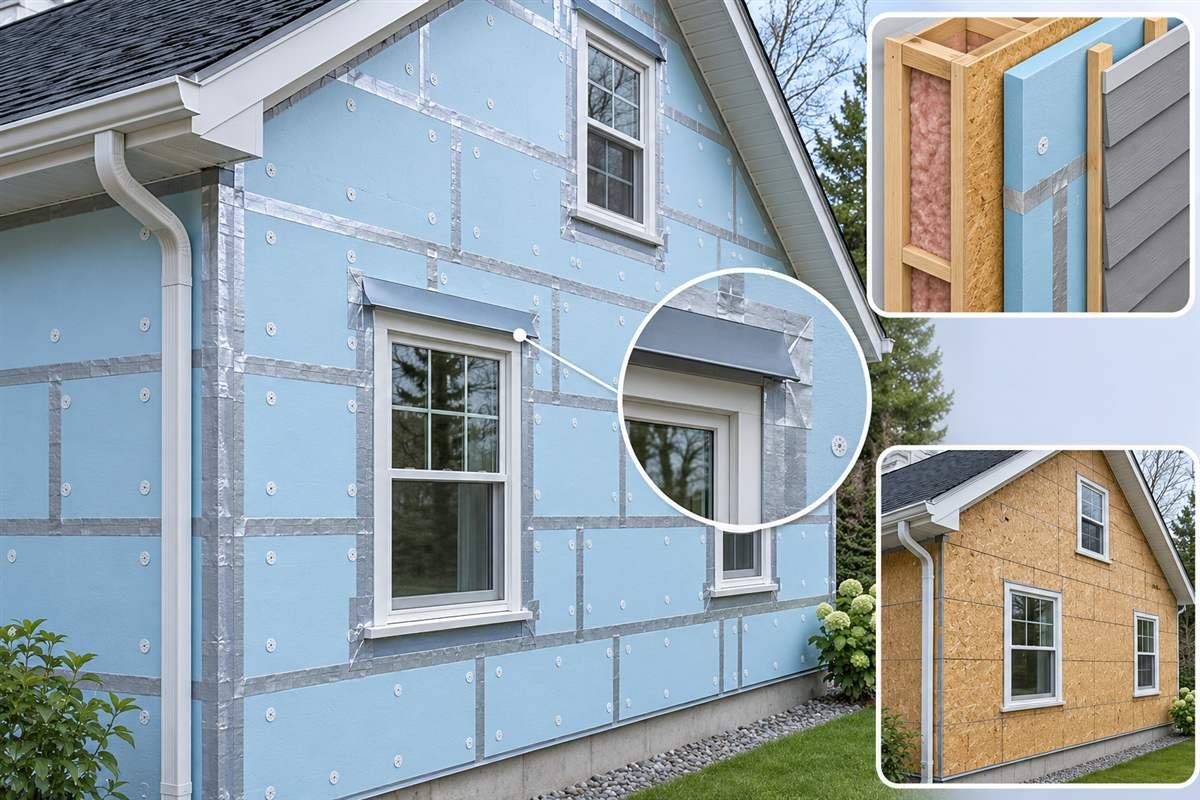
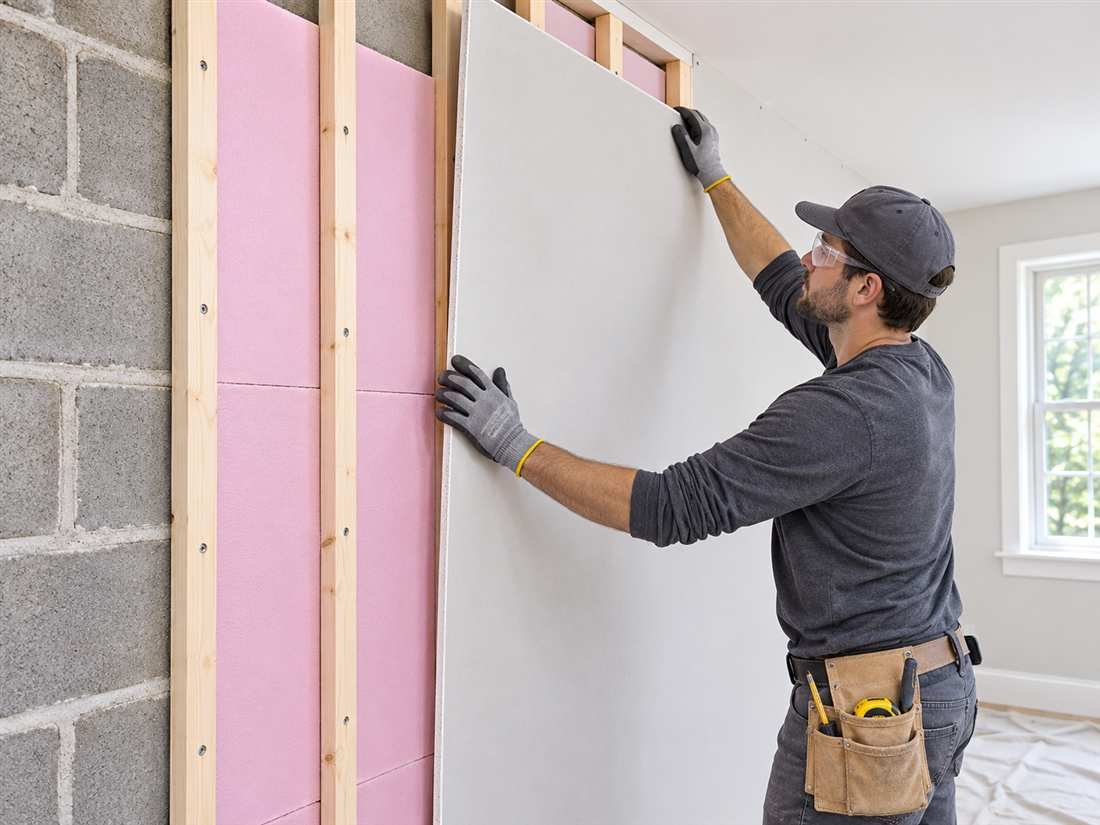
Rigid boards can work outside wall framing or as part of an interior masonry retrofit. EPS, XPS, polyurethane and polyisocyanurate are different product families. Their facings, thermal values and moisture properties vary, so the words “foam board” alone are not enough.
Continuous insulation can reduce thermal bridging through framing. However, board joints and perimeter connections still need suitable detailing. On the exterior, flashing and the drainage layer must work with the new insulation thickness.
Polyurethane foam wall boards
Polyurethane foam wall boards are factory-made products rather than site-sprayed foam. Some wall systems use bonded facings or composite panels. Polyisocyanurate, often called polyiso, is a related but distinct rigid foam category.
Compare declared performance at the actual thickness and intended conditions. Also, check compatibility with adhesives, tapes and finishes. A product designed for one location should not move to another solely because it has a high R-value.
Basement wall foam board
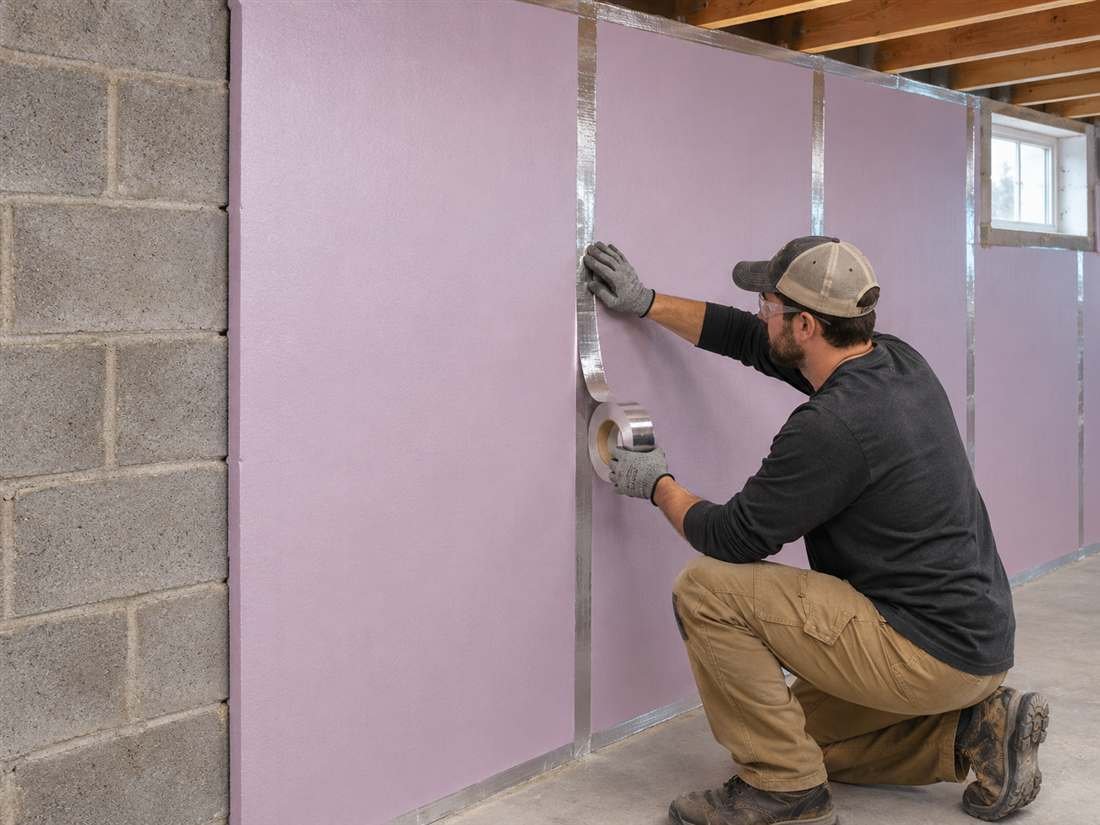
Basement wall foam board can separate the room from cold masonry within a suitable assembly. First, address rainwater entry, foundation drainage and other sources of damp. Foam does not repair a leaking foundation.
Next, check the board’s approval for the location and the wall’s drying strategy. Plan the floor junction, rim area and protective finish together. Avoid assuming that open-cell spray foam and a moisture-resistant rigid board behave the same way below grade.
Acoustic Foam Wall Panels and Decorative Foam on Walls
Not all foam on walls is thermal insulation. Acoustic foam wall panels usually aim to absorb reflected sound within a room. This can help with echo when the selected product and placement suit the space.
However, reducing echo differs from blocking sound between rooms. A wall’s layers, gaps, doors and surrounding sound paths affect isolation. For more detail, see our guide to interior wall insulation and sound control.
Sound dampening foam tiles is a broad marketing phrase. Ask whether the evidence measures absorption or the performance of a complete partition. A thermal R-value says nothing about either acoustic result.
Self-adhesive foam wall padding and wallpaper
Self-adhesive foam wall padding may provide a soft decorative surface. Peel and stick foam wallpaper usually changes appearance and texture. Neither should count as a meaningful thermal upgrade without a declared rating at the installed thickness.
Check adhesive compatibility, fire classification and room restrictions before applying these products. Also, confirm removal requirements if the wall is rented or freshly painted. A washable face does not automatically make a covering suitable for shower waterproofing or use beside a heat source.
What to Check Before Insulating Walls with Foam
Find the source of discomfort
Cold rooms can have several causes, including missing insulation, air leaks and uneven heating. Start with an assessment of the wall and the wider home. Otherwise, an expensive cavity-fill job may leave the main problem untouched.
Inspect moisture and the existing layers
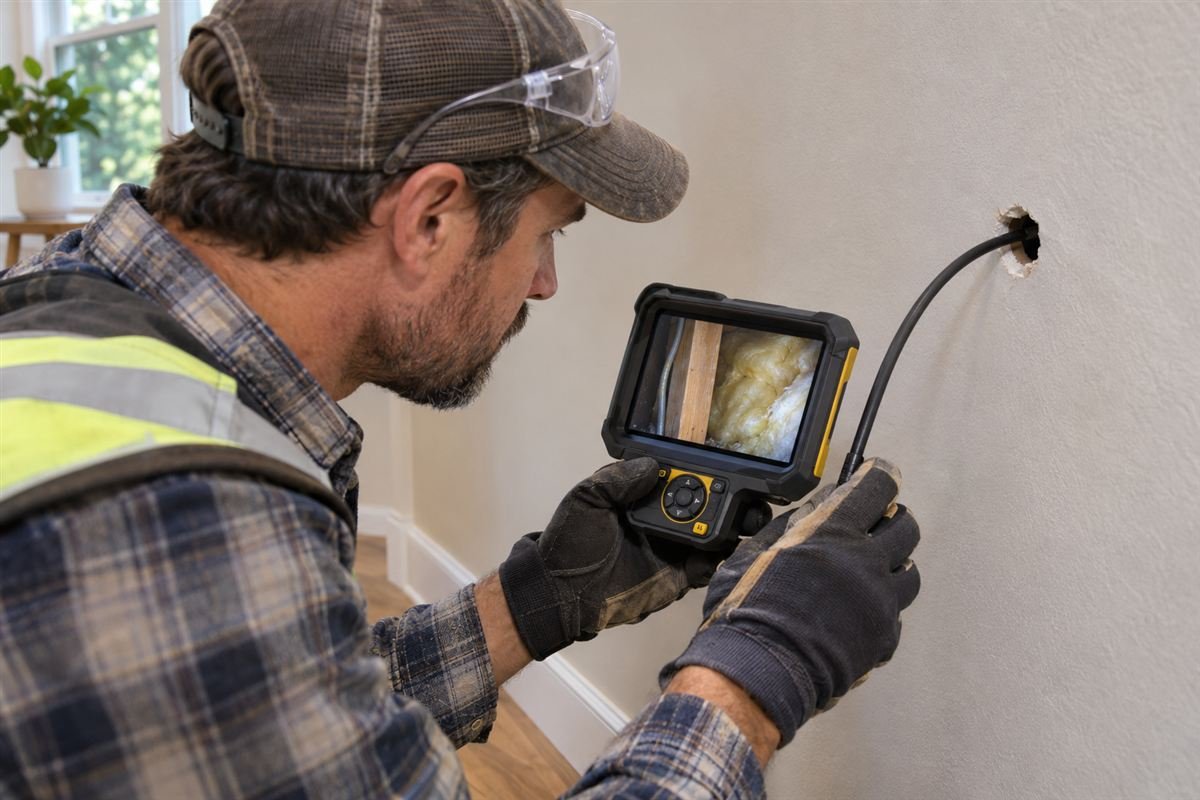
Record the wall layers, existing insulation and signs of water damage. Then investigate leaks before adding materials that change drying. Wet sheathing, damaged finishes or recurring damp deserve a repair plan first.
In older homes, access work may also disturb hazardous materials. Ask the contractor how the survey and any required testing will happen before drilling or removing finishes. The property’s age alone does not reveal what is inside the wall.
Locate electrical services and plumbing

Identify service routes, electrical equipment and areas that must remain accessible. A sticker on a wall can help communication, but it does not replace locating hidden services or following installation requirements.
If a circuit trips or foam appears around electrical fittings, have the installer and a qualified electrician investigate. Do not treat it as proof of successful air sealing or assume waiting a fixed number of hours makes it safe. Follow the electrical professional’s instructions before using the affected circuit.
Installation and Quality Checks
Agree on the product and work plan
The quotation should identify the foam, target thickness or fill specification, access method and repair scope. Also, request the installer’s qualifications and a written plan for ventilation, protection and any required time away.
Inspect coverage and connections
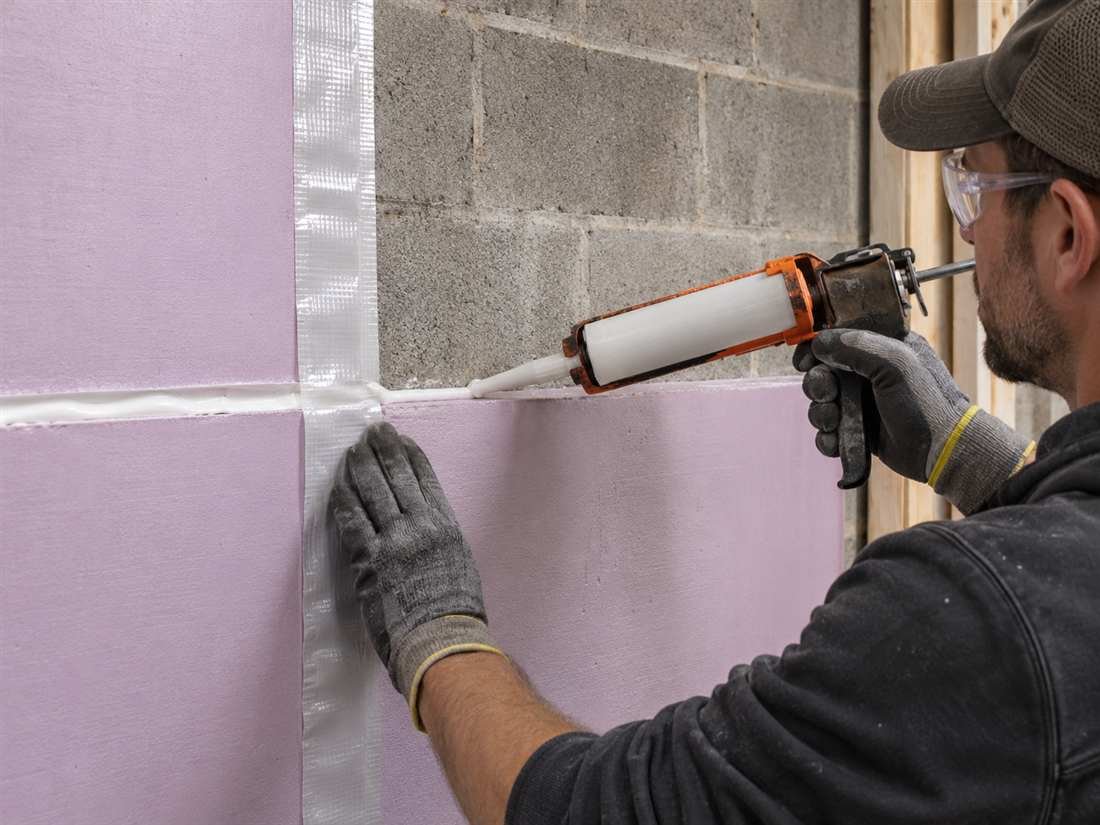
For spray-applied work, check the specified thickness and look for defects before closing the wall. For board systems, inspect joints, edges and fasteners. Injection work needs a documented approach to confirming fill in separated cavities.
Do not specify a universal hole diameter, mixing ratio or set time from an online example. These depend on the product, equipment and wall construction. The installer should follow the approved method for that system.
Use thermal imaging as a diagnostic aid
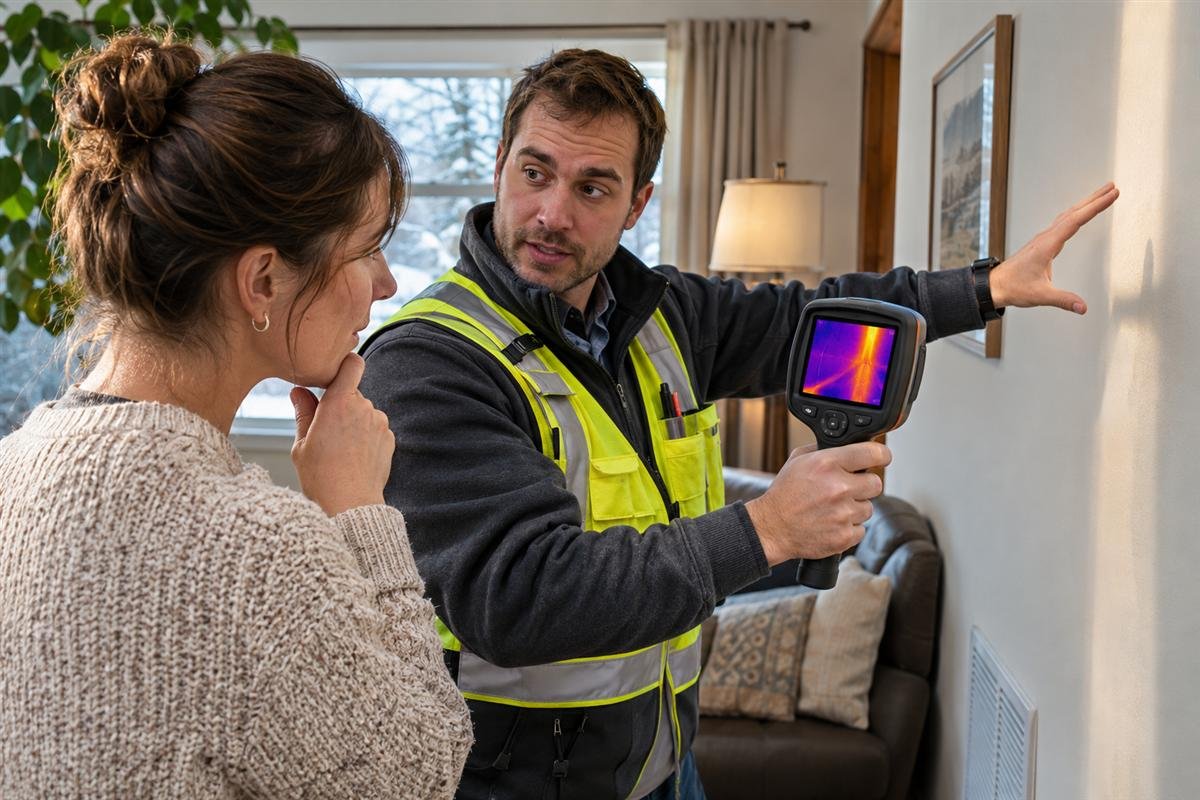
A thermal camera shows surface temperature patterns under the conditions of the survey. It can help identify suspicious areas, but it does not directly show every hidden cavity or measure foam thickness.
Sunlight, wind, indoor-outdoor temperature differences and air leakage can affect the image. Therefore, ask the assessor to explain the conditions and any limits. Use the findings alongside the installation record and other checks.
Fire Protection and Reoccupancy
Foam-plastic insulation commonly needs an approved protective covering inside occupied buildings. The required thermal or ignition protection depends on the product, assembly and adopted code. Paint or a decorative layer is not automatically an acceptable substitute.
Professional spray foam installation also requires exposure controls. Arrange product-specific reentry and reoccupancy instructions before work starts. A universal promise that every formulation is ready after the same waiting period is not reliable.
Keep the product name, installation records and written instructions. If persistent odors or installation defects raise concerns, contact the contractor and manufacturer for an assessment. An independent building or indoor-air specialist may also help identify the cause.
Costs and Expected Results

Cost depends on wall area, access, material, thickness, existing conditions and repairs. A finished-wall retrofit may include siding removal, drilling, patching and paint. An open-wall project may need drywall replacement and other finishing work.
Compare quotations that cover the same result. Include moisture repairs, service protection, inspection, occupant arrangements and waste removal where applicable. Also, ask who will correct missed cavities or damaged finishes.
Comfort may improve when the work addresses a real insulation or air-leakage problem. However, energy savings depend on climate, the starting condition and household use. Avoid accepting a guaranteed bill reduction based only on a different homeowner’s renovation.
Questions to Ask a Foam Insulation Contractor
- Which exact product suits this wall, and why?
- What inspection will establish the cavity condition and moisture risks?
- How will you protect electrical services and plumbing?
- What thickness, R-value or fill specification does the quote include?
- How will you confirm coverage and document defects?
- Which protective covering does the assembly require?
- What ventilation and reoccupancy instructions will you provide?
- Does the price include access repairs, cleanup and final finishes?
Frequently Asked Questions
Can you insulate finished walls with foam?
Sometimes. A suitable injection system may work after a survey confirms the wall and existing materials are appropriate. Ordinary spray foam normally needs open access, so the product and installation method matter.
Is closed-cell foam always better than open-cell?
No. Closed-cell foam often provides higher R-value per inch, but drying behavior, available depth and cost affect the choice. Select a product for the complete assembly rather than its density alone.
Can I use canned foam to fill an entire wall?
Do not use ordinary gap-filling cans as a whole-wall injection system. They have different intended uses and application limits. Ask an installer to specify an approved cavity-fill method.
Does foam insulation waterproof a wall?
No insulation choice removes the need for rainwater control and appropriate drainage. Some foams resist moisture movement, but flashing, joints and adjacent materials still determine how the wall manages water.
Will acoustic foam make walls warmer?
Do not rely on it for a thermal upgrade without suitable insulation data. Acoustic foam mainly addresses room sound absorption. Thermal insulation requires a product with declared performance for the intended wall use.
Can injection foam damage drywall?
Installation problems can damage finishes, and access holes need repair. Discuss the product’s application controls and the contractor’s repair responsibilities before the job. Preserving most drywall does not mean zero disruption.
Choosing Foam for the Right Wall Application
Insulating walls with foam works best when the system matches the construction. Assess spray foam for open cavities, approved injection products for suitable finished walls, and rigid boards where a continuous layer fits the design.
Finally, keep acoustic panels and decorative coverings tied to their actual purpose. Start with a wall assessment, compare complete proposals and verify the work before covering it. That approach gives comfort improvements a stronger basis than choosing foam by name alone.
Safety reference: Review the CPSC staff recommendations for consumers considering spray polyurethane foam when planning contractor communication and occupant protection.