

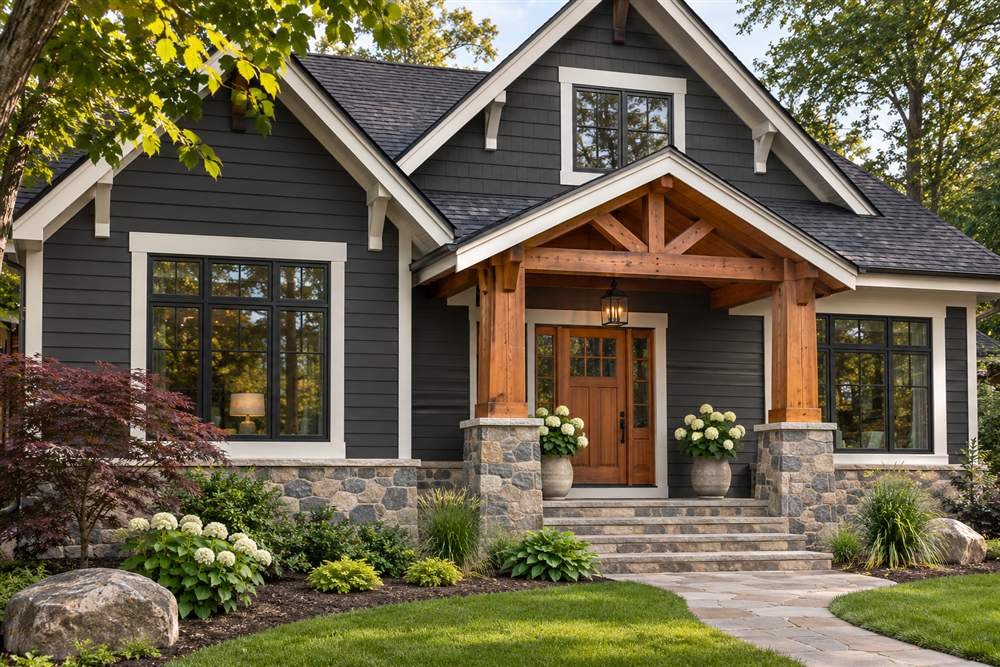
This article covers color behavior and practical sampling, not a guaranteed exact match: the images are AI-generated concepts and are not Sherwin-Williams color samples. Check the manufacturer’s current color page and product label for the exact formula and finish. For broad cladding decisions, see the exterior materials guide.
What is Peppercorn exterior paint color?
Peppercorn exterior paint color is a deep gray considered for siding, trim, garage doors, and accents. Outdoors, the color can shift with daylight, shade, nearby materials, and finish. Because a small chip cannot predict the whole-house result, compare a large sample with the roof, brick, stone, and windows. Then view it from the street before choosing paint for the entire project.
Why Peppercorn can look different outdoors
A north-facing wall may appear cooler or darker than a sunlit wall. Trees, neighboring homes, and reflected light from paving can shift the surrounding color. Texture also matters: rough siding creates small shadows, while smooth trim may look more uniform. A dark color can reveal surface waviness, patched areas, chalking, and uneven preparation more clearly than a lighter paint.
Where Peppercorn can work on a house
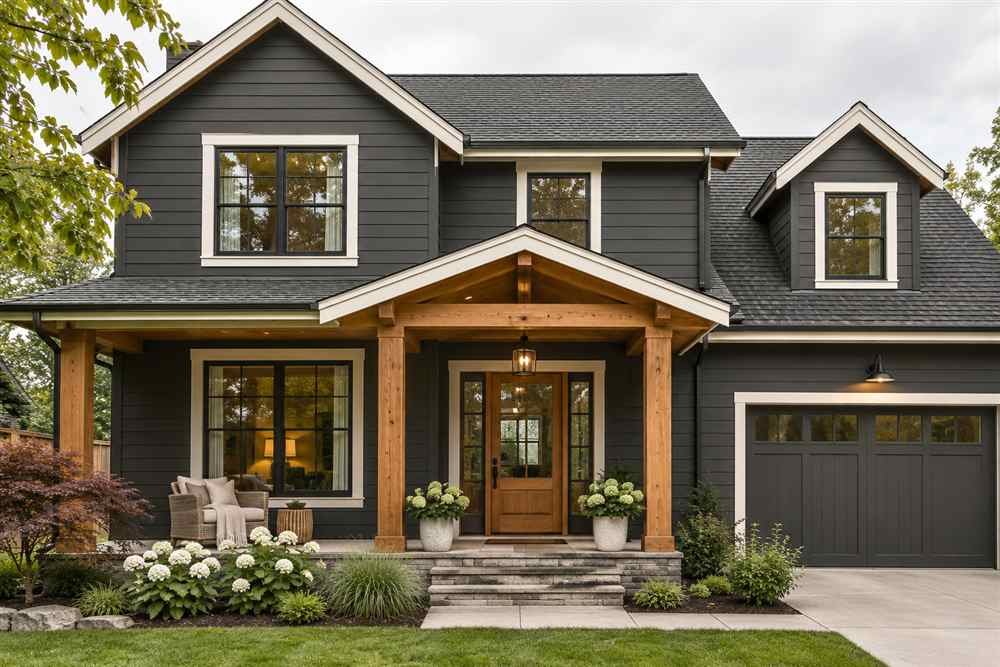
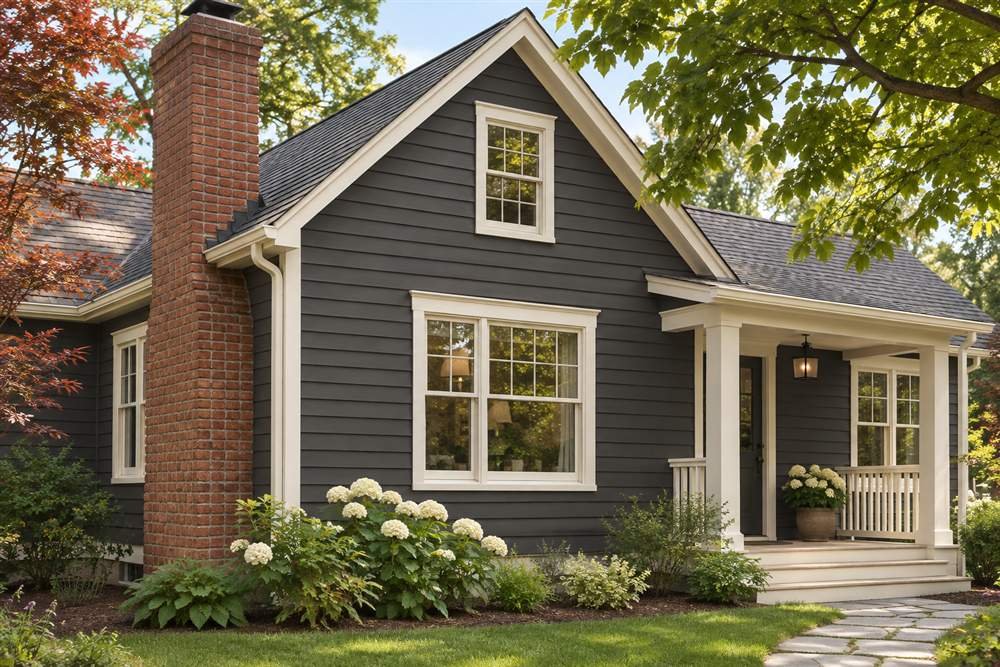
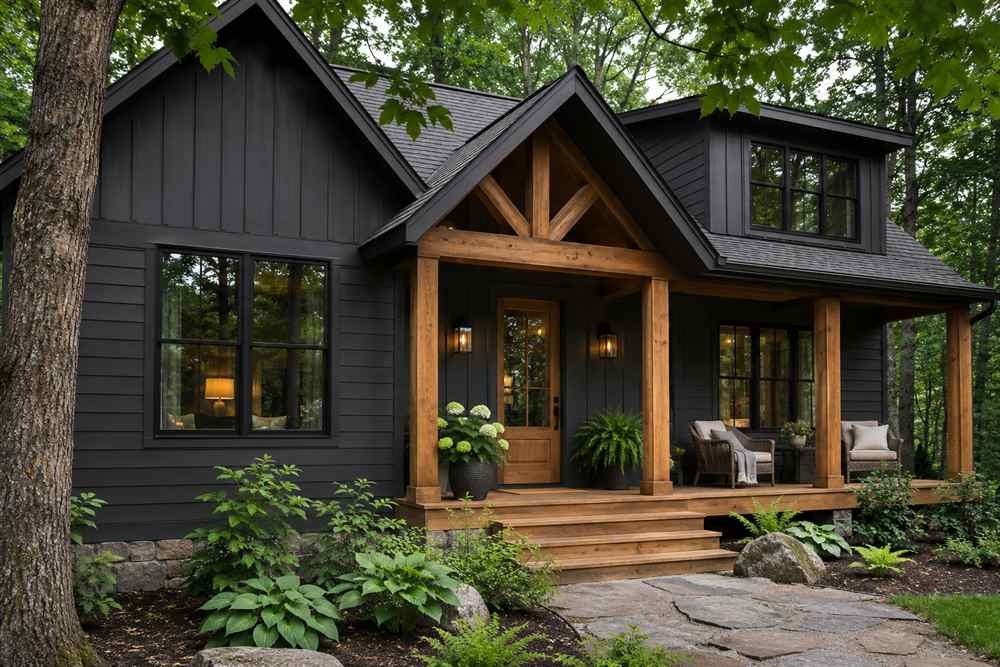
As a full siding color, Peppercorn creates a dramatic facade and often pairs with light trim, stone, or natural wood. As an accent, it can outline a porch, define a garage door, or add contrast to a light body color. If the house already has dark windows or a dark roof, repeat the shade selectively so the house does not become a continuous dark mass. For another dark exterior combination, see Tricorn Black exterior paint ideas.
Pairing ideas for Peppercorn siding
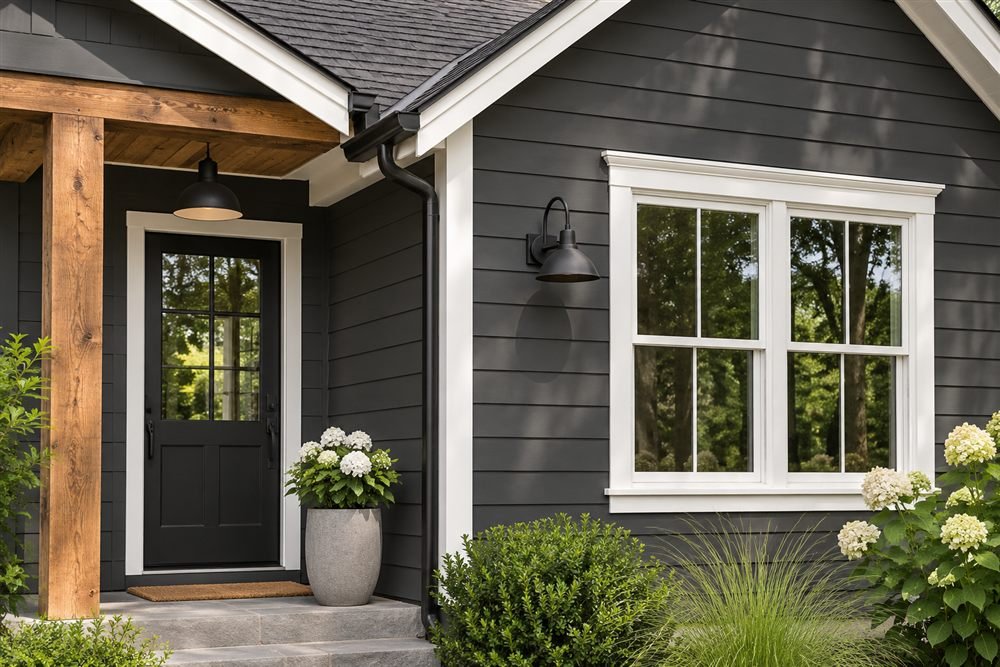
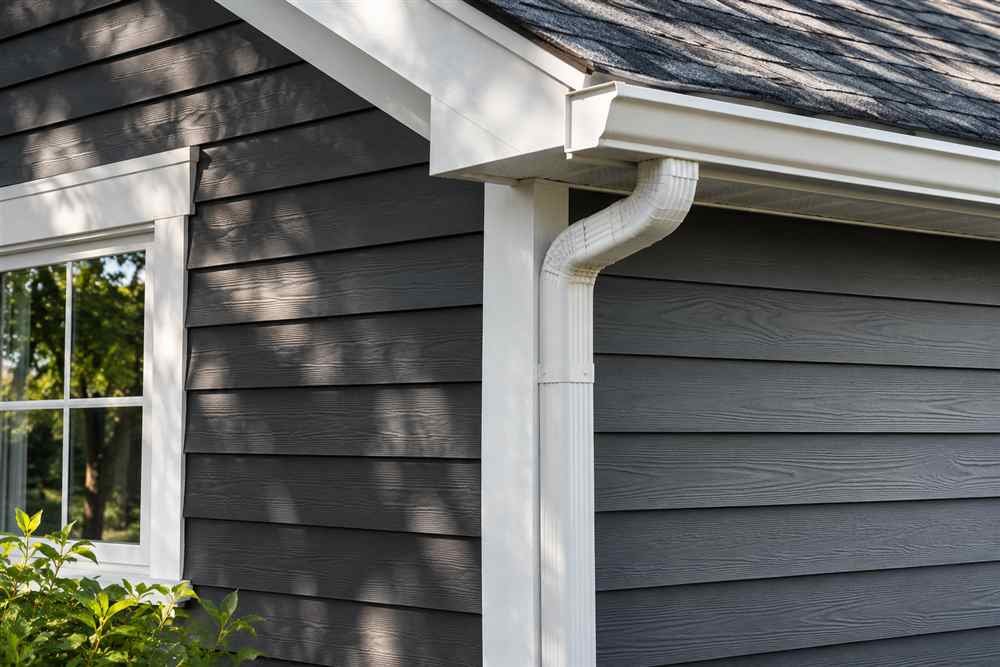
Warm white trim: Soft white can create a clear contrast without the stark effect of bright white. Compare it beside your roof and any cream-colored stone.
Natural wood: A wood door, porch ceiling, or small accent can bring warmth to a charcoal palette. Test stain outdoors and check its maintenance needs.
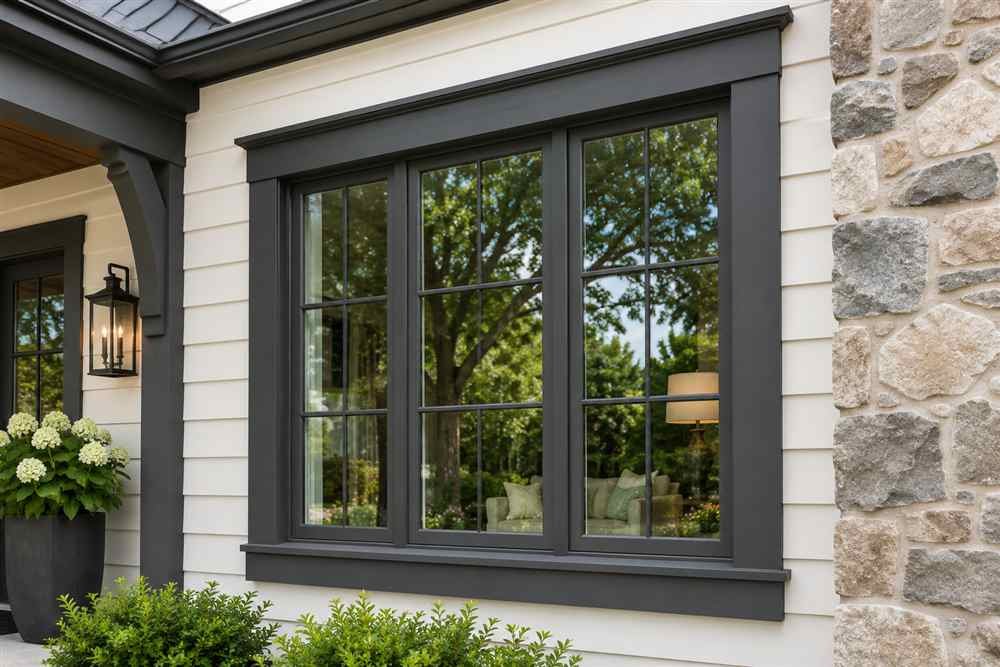
Light gray or greige: A mid-tone body with Peppercorn accents may be more balanced than using the dark color everywhere. Keep undertones compatible.
Brick and masonry: Existing brick cannot be swapped out as easily as paint. Hold samples beside the masonry to see whether the combination looks harmonious in both shade and sun.
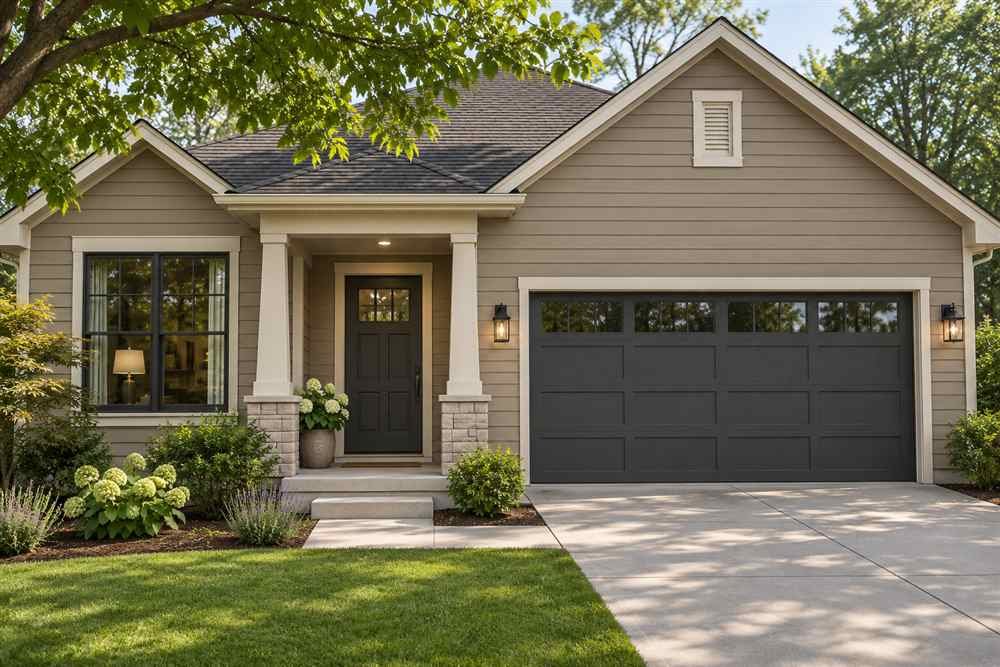
Peppercorn trim, shutters, and garage doors
A dark accent looks intentional when it repeats in a few places, such as window trim and a garage door, instead of appearing as a single isolated patch. Check that the door material and paint product are compatible; some garage-door finishes require specific preparation. If Peppercorn is used on trim around dark windows, the edges may disappear, which can be a desired modern look or a loss of definition. Compare full-size samples before choosing.
How to sample Peppercorn before painting
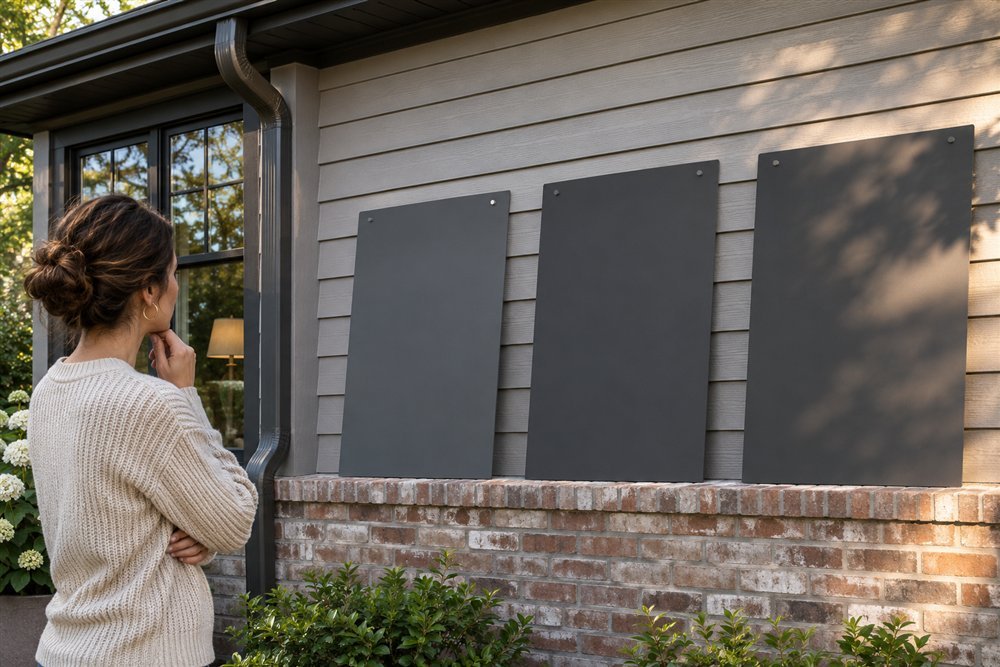
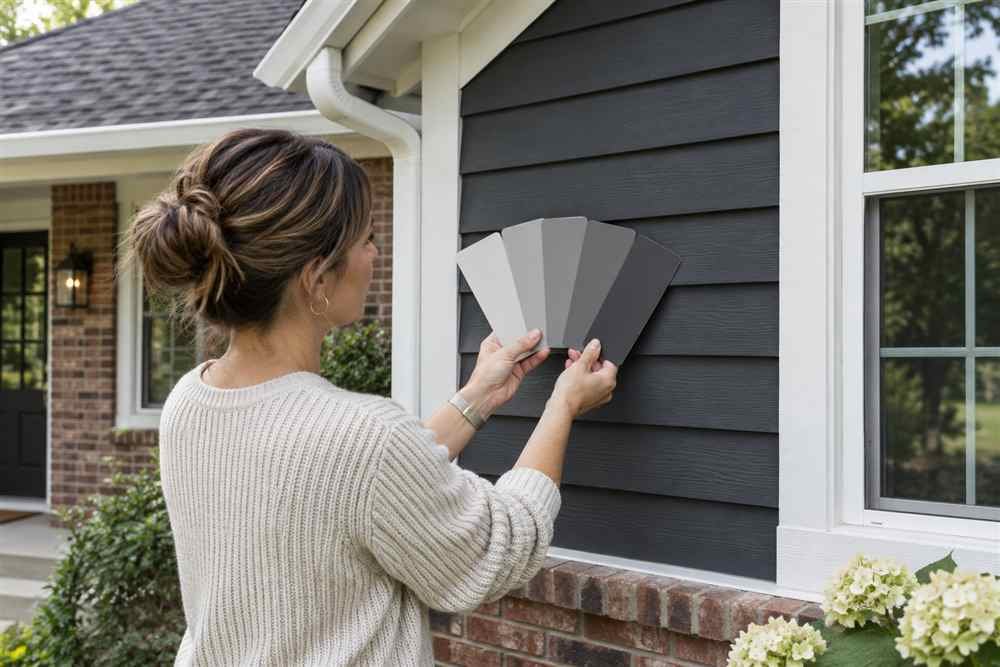
1) Buy a sample or painted drawdown from the current product line. 2) Put it on a large movable board or prepare a representative test area according to the paint maker’s instructions. 3) Move or view it on north-, south-, east-, and west-facing elevations. 4) Compare it against the roof, brick, trim, and any stone. 5) Revisit it in morning, midday, and evening light. Keep the test board clean and label the product and sheen.
Check substrate, finish, and weather exposure
A color recommendation cannot substitute for a coating specification. Confirm whether the surface is wood, fiber cement, masonry, metal, or another substrate and follow the selected product’s preparation and application instructions. Check the required temperature range, dry time, primer, and moisture limits. Dark finishes may behave differently under heat and strong sun; review the product information and warranty before using the color across a broad facade.
Potential drawbacks to consider
Peppercorn can make a small or heavily shaded house read darker than expected. It may show dust, pollen, or fading more than a medium tone, depending on the surface and exposure. Touch-up areas can also look different if the original paint has weathered. If the house has a complex mix of brick, roof colors, and stone, create a full palette board before committing.
Peppercorn vs. other dark grays
Compare alternatives by undertone, light reflectance information where published, and actual samples, rather than online swatches alone. Some charcoals lean blue; others look brown, green, or nearly black. A retailer or manufacturer can confirm the current color data. Avoid presenting comparisons as exact equivalents unless you have verified the product formulas and finish.
Project checklist
Before ordering, record the siding substrate and square footage, inspect for repairs, decide which elements stay, select a compatible primer and finish, and get a written estimate for preparation as well as coats. Ask the contractor how they will protect landscaping and windows, test the color, handle weather delays, and document the final product codes. If the home is in a regulated historic area, confirm paint changes with the responsible local authority.
Sources and related guides
Check the official Sherwin-Williams Peppercorn SW 7674 page for the current color information and sample options; on-screen color is not a substitute for testing a physical sample. For complementary palettes, see our guides to warm white exterior paint colors, Tricorn Black exterior paint, and sage green house exteriors.
FAQs
Is Peppercorn a good exterior color? It may suit a home where a deep gray palette is desired and where light, roof, masonry, and surrounding finishes support it. Testing is essential.
Does Peppercorn look black outside? It can appear nearly black in deep shade and more visibly gray under stronger light. Check it on the actual elevation.
What trim color goes with Peppercorn? Warm whites, neutral whites, light gray, and some wood finishes may work. The right pairing depends on the fixed materials and undertones on your home.
Peppercorn can be a strong exterior choice when the sample, substrate, and surrounding finishes all agree. Test large, review in changing light, and rely on current manufacturer instructions before painting the full exterior.