

The best sage green house exterior ideas start with the materials you already own. Match the green to your roof, brick, stone, and window frames, then choose trim and one clear entry accent. A gray-green can feel quiet and modern, while a warmer olive-sage suits brick, wood, and traditional details.
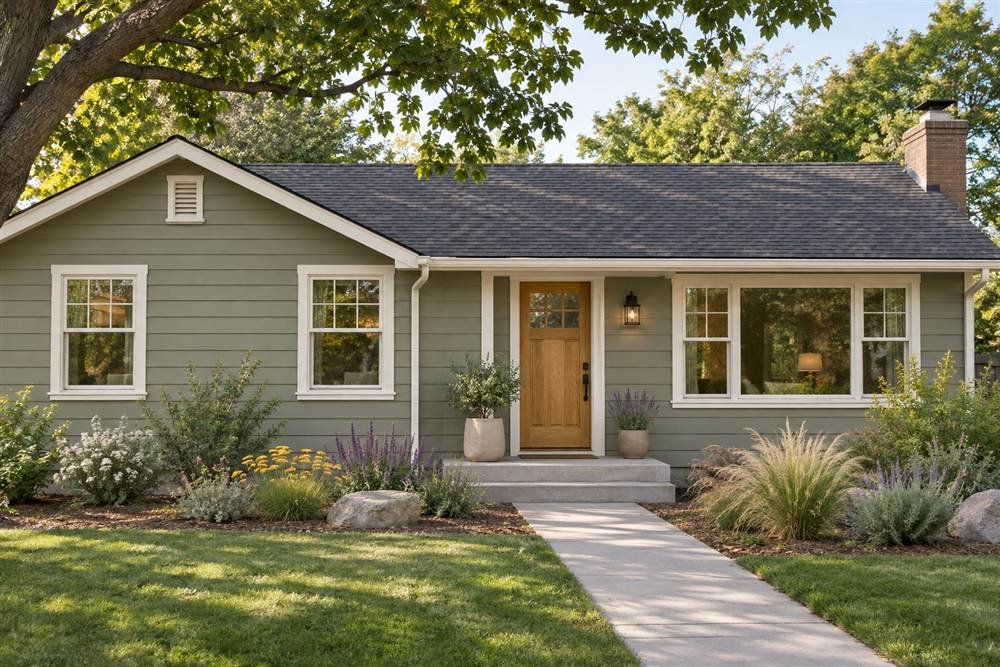
These sage green house exterior ideas explain what to keep, change, and test before buying paint. Images illustrate design concepts, not documented renovations or exact paint-color matches.
Jump to: Paint shades · 19 design ideas · Sample testing · Project costs · FAQs
Choose your sage before choosing the accessories
Start from the street with a photograph of the entire house. Identify its largest permanent color: usually the roof, masonry, or windows. Put candidate paint samples next to that element. A green that looks pleasant alone can become unexpectedly yellow, blue, or dull against an existing finish.
Light reflectance value, or LRV, describes how much visible light a color reflects on a scale from 0 to 100. It helps compare relative lightness, but it does not predict appearance or coating performance by itself. Texture, shade, surrounding vegetation, and paint sheen also influence the result.
Use the following shades as a sampling shortlist for your sage green house exterior ideas, rather than a promise that an online photograph will match your wall. Confirm the color name, code, exterior product availability, and sample finish with the manufacturer or local paint store.
Shortlist sage green exterior paint shades
| Paint shade | Brand and code | Starting point for sampling |
|---|---|---|
| Evergreen Fog | Sherwin-Williams SW 9130 | A muted green-gray for a balanced, understated body color |
| Saybrook Sage | Benjamin Moore HC-114 | A sage option to compare beside warm masonry and traditional trim |
| Winchester Sage | Benjamin Moore 628 | A medium sage to compare with lighter trim and a darker roof |
| October Mist | Benjamin Moore 1495 | Lighter sage to sample |
| Acacia Haze | Sherwin-Williams SW 9132 | Muted green-gray for siding |
| Cushing Green | Benjamin Moore HC-125 | Deeper green contrast option |
| Rosemary | Sherwin-Williams SW 6187 | Earthy green accent alternative |
| Pewter Green | Sherwin-Williams SW 6208 | Dark green accent alternative |
| Guacamole | Benjamin Moore 2144-10 | Olive alternative; sample carefully |
The official Evergreen Fog page and Benjamin Moore’s Saybrook Sage information provide reliable identification. Benjamin Moore lists Winchester Sage 628 at LRV 32.55. Always judge physical samples outdoors before ordering gallons.
Check approvals for your sage green house palette
Before ordering paint, check any homeowners association rules, historic-district requirements, and existing material warranties. Some communities require advance color approval, and a screen image may not satisfy the submission process. Ask whether approval covers the body, trim, doors, and accessory structures separately.
Decide which surface should attract attention first, usually the front door. Keep large areas quieter and repeat accents sparingly. A written palette keeps contractors, suppliers, and household decision-makers working toward the same result.
19 sage green house exterior ideas to adapt
1. Pair a sage green house with warm-white trim
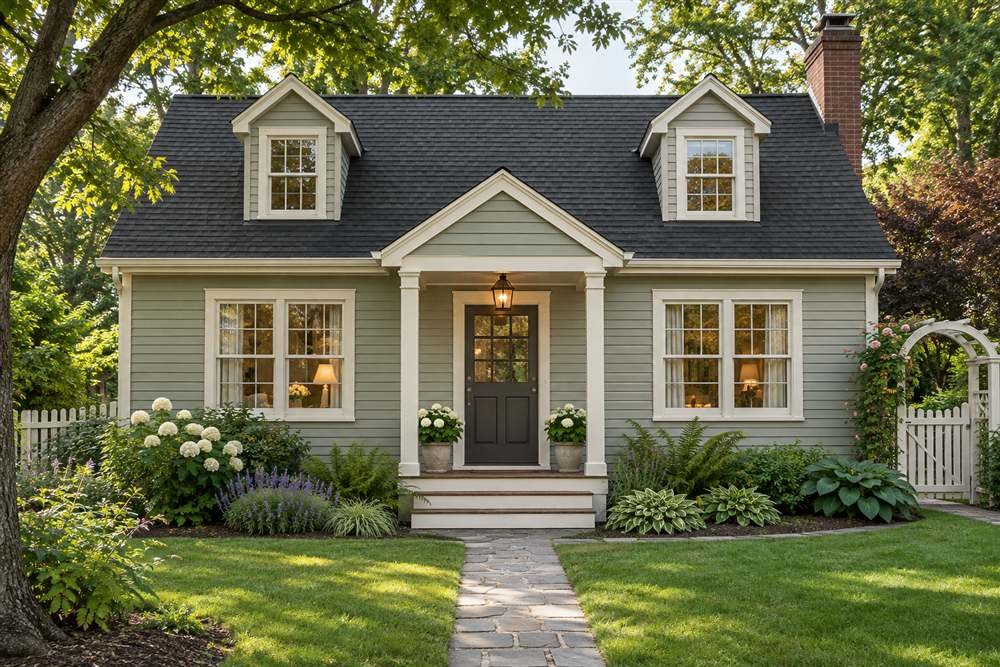
Light sage and warm white create a gentle contrast that suits cottages, Colonials, and simple suburban homes. Use the white on window casings, porch columns, and fascia so the facade feels connected. A cream that looks subtle indoors may turn yellow beside a cool gray-green, so sample both colors together.
Keep the gutters coordinated with the surface behind them where practical. This reduces visual clutter. If you need help narrowing the white, compare our warm white exterior paint colors guide before buying trim paint.
2. Frame a sage green exterior with black accents
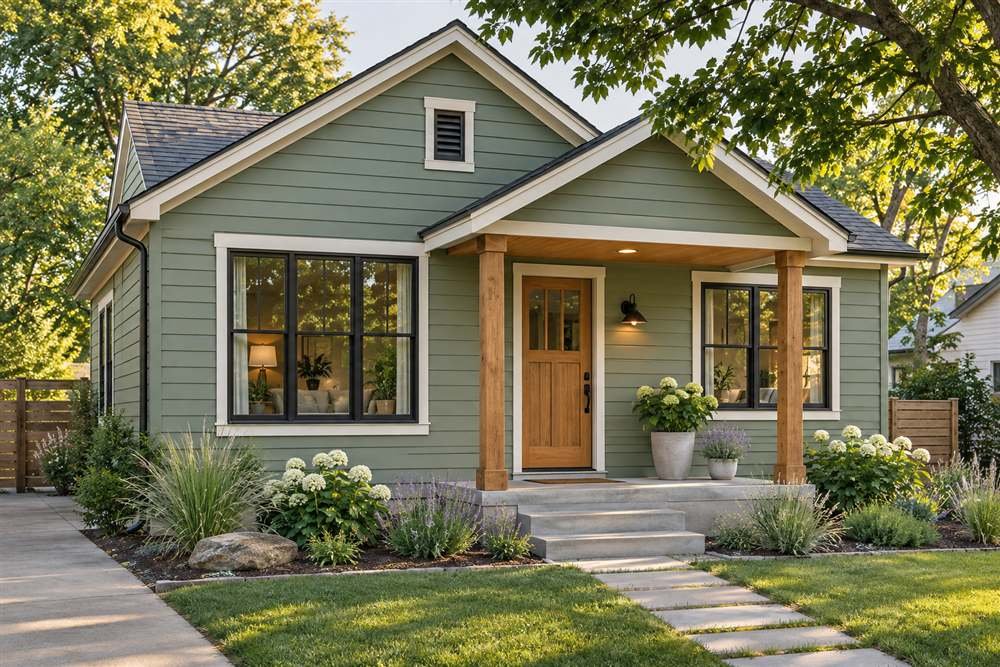
Black window frames can sharpen a pale or medium sage exterior. However, every downspout, vent, railing, and corner board does not need to become a dark accent. Choose two or three repeated features so the contrast looks deliberate.
If your existing windows are white and in good condition, work with them. A black front door and matching lanterns can give you the same visual punctuation without replacement costs. Confirm that any proposed coating is approved for the window material; painting factory-finished frames can affect their performance or warranty.
3. Give a sage green house a natural-wood door
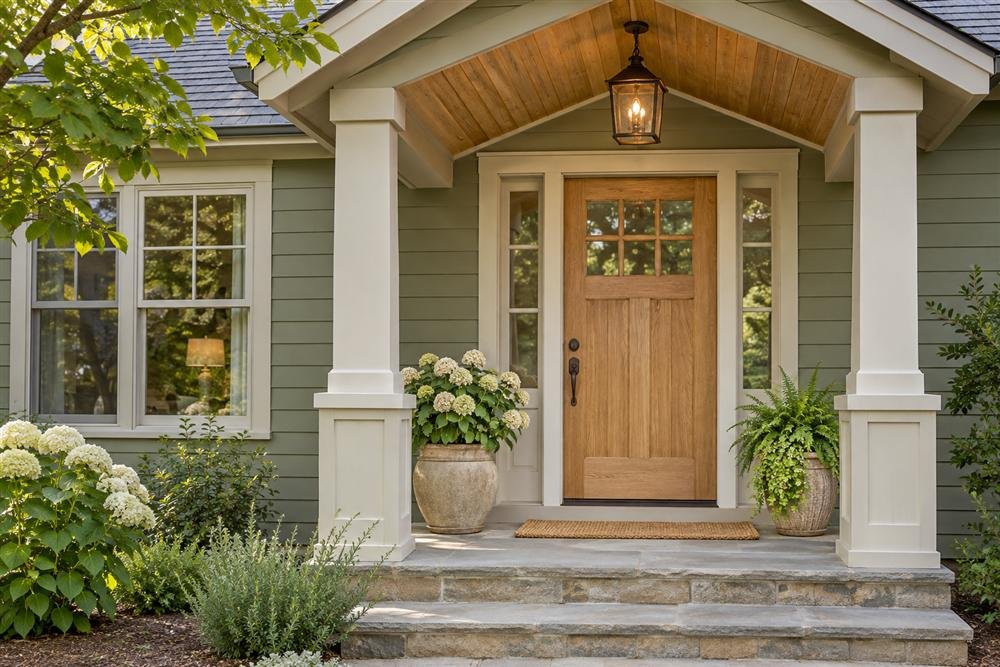
A warm wood door adds texture without introducing another painted color. It works especially well when the siding is muted and the surrounding trim stays simple. Compare the wood’s actual undertone with the green: some stains appear orange, while others lean yellow, red, or brown.
Check exposure before choosing a finish. Follow the door and coating manufacturers’ sealing and recoating directions. Repeat wood in one small detail, such as a porch ceiling. Copper or bronze fixtures can add warmth; choose a finish suited to exposure and expect natural metals to change appearance.
4. Anchor a sage green exterior with a charcoal roof
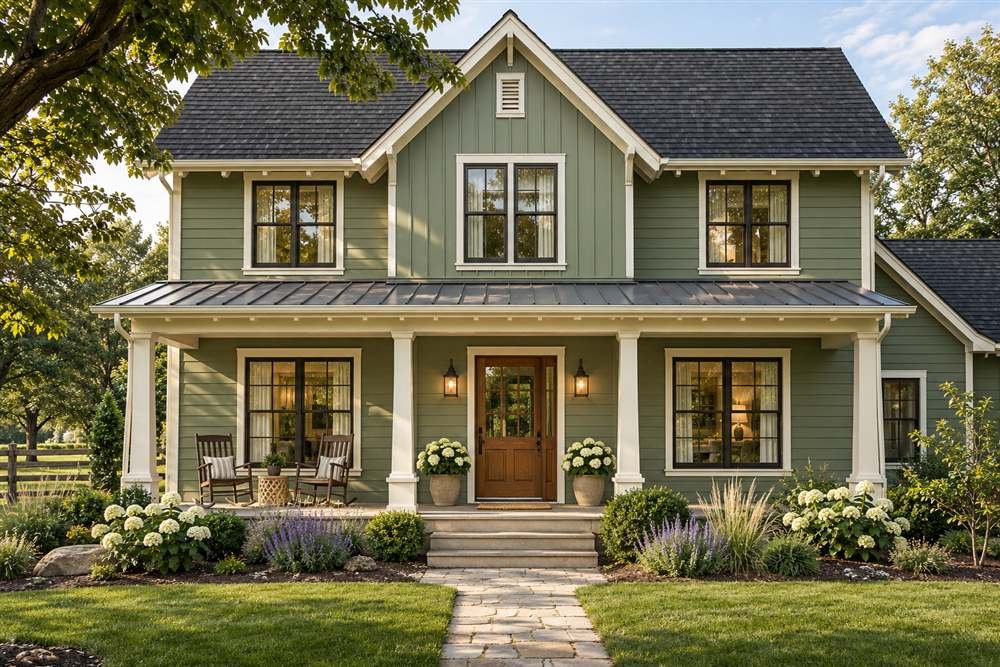
A charcoal roof gives sage siding a darker upper boundary and works with many architectural styles. Choose the siding sample beside an actual shingle or roof panel, not a screenshot. Some charcoal products contain brown, blue, or green notes that become obvious outdoors.
If the roof is sound, keep it and adapt the paint around it. Replacing a functional roof solely for a fashionable palette can overwhelm a cosmetic budget. When replacement is already necessary, consider roofing performance, local requirements, ventilation, and warranty alongside color. The roof should protect the house first.
5. Match sage green house paint to a brown roof
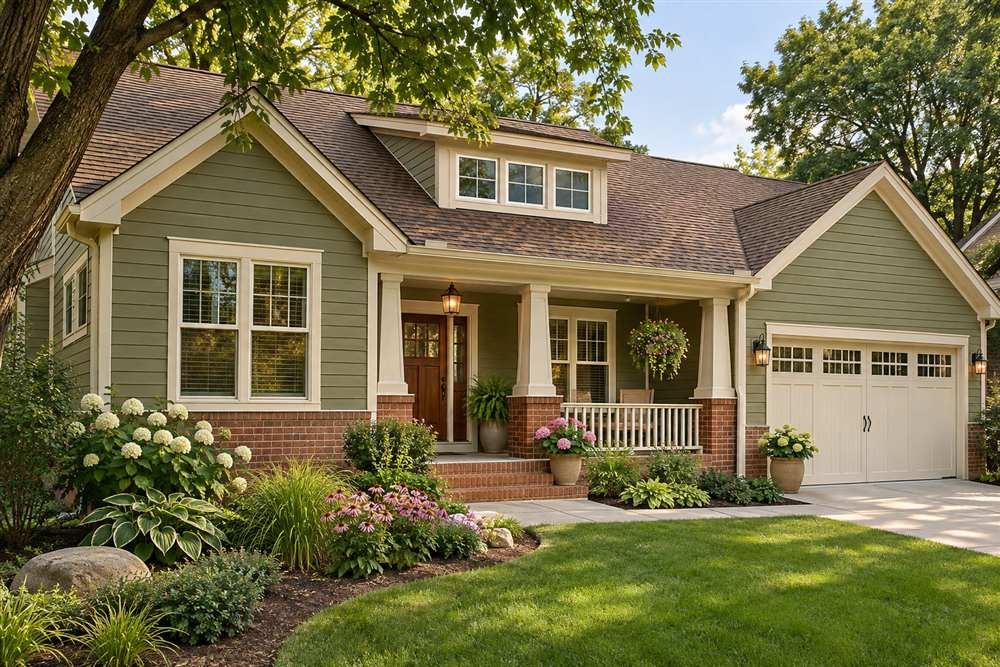
A brown roof can suit sage, particularly when the green has a restrained warm or olive character. Bring cream, buff stone, or brown-toned wood into the sampling process. You are looking for compatible undertones, rather than an exact match.
Avoid assuming that every cool sage clashes with every brown roof. Real shingles contain several colors, and lighting changes the relationship. Lay your sample boards vertically against the wall and view the whole elevation from across the street. Choose the combination that makes the permanent materials feel intentional.
6. Keep red brick and paint the siding
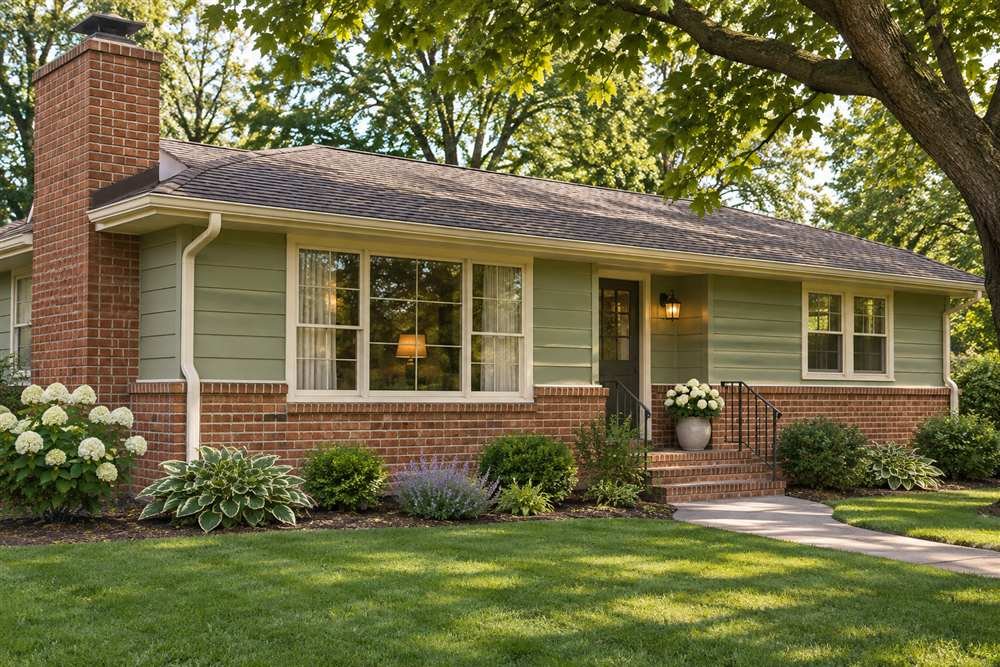
Retained red brick can provide warmth and a durable visual base beneath softer sage siding. Start by comparing several greens against both the brick and mortar. The mortar often occupies enough surface area to change the overall effect.
Try a lighter gray-sage if the facade already feels dark, or a warmer mid-tone if the brick has earthy brown notes. You can improve the relationship through trim and door colors before considering masonry paint. For a larger project, our exterior materials for homes guide explains the broader material choices.
7. Connect sage siding to a stone foundation
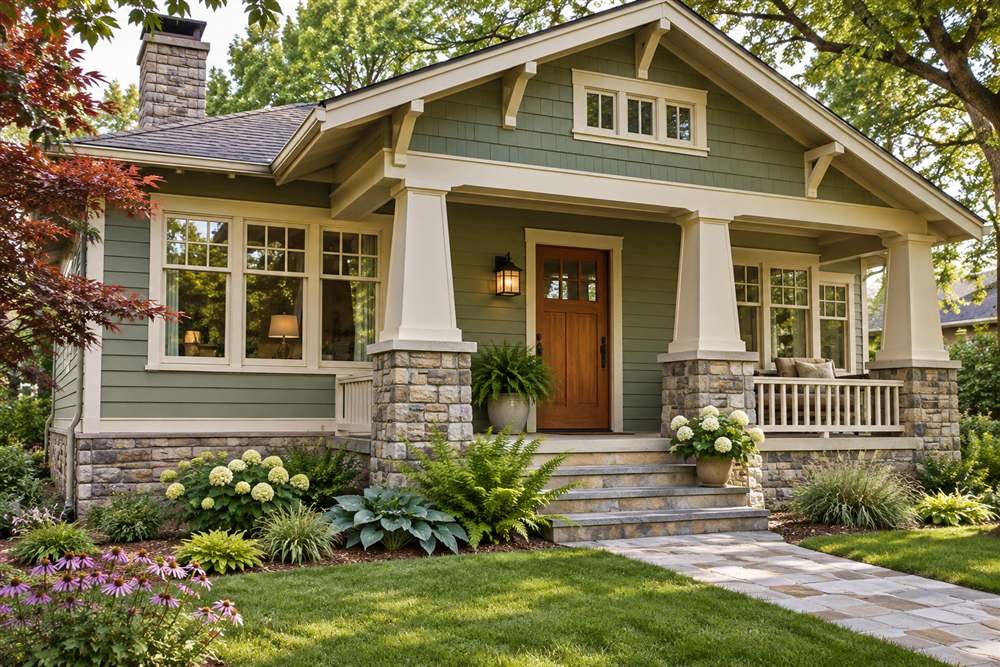
Natural stone rarely contains just one color. Identify whether its background is cream, gray, buff, pink, or brown, then compare sage samples with that dominant tone. A green that works with one decorative stone may not work with another.
Keep the stone visually grounded and let the siding remain quieter. If adding veneer, include proper support, flashing, drainage, and installation details in the scope. A color refresh cannot correct moisture problems behind a wall. Repair those issues before covering them with another material or coating.
8. Choose sage green house exterior ideas for a ranch
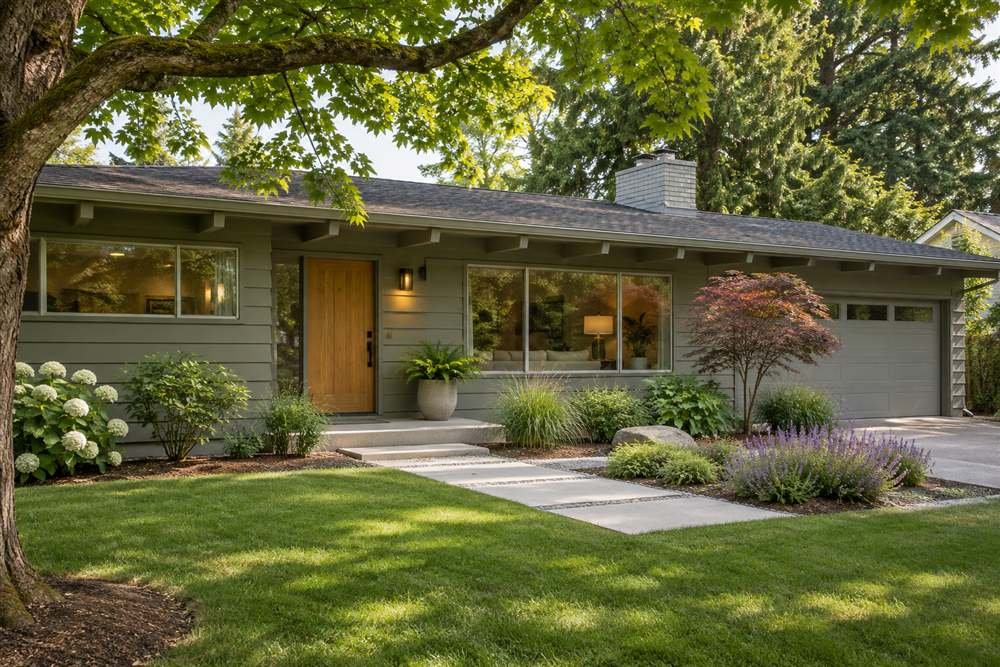
On a ranch, sage can reinforce the low roof and horizontal siding. Keep the main body color consistent across the long elevation, then use the door as a clear destination. Too many contrasting bays can make an already broad house look fragmented.
Choose modestly scaled planting so windows and the entry remain visible. If the garage dominates, allow it to blend with the siding rather than giving it the strongest contrast. Our modern ranch house exterior ideas cover rooflines, entries, and landscaping in more detail.
9. Use sage on one farmhouse gable
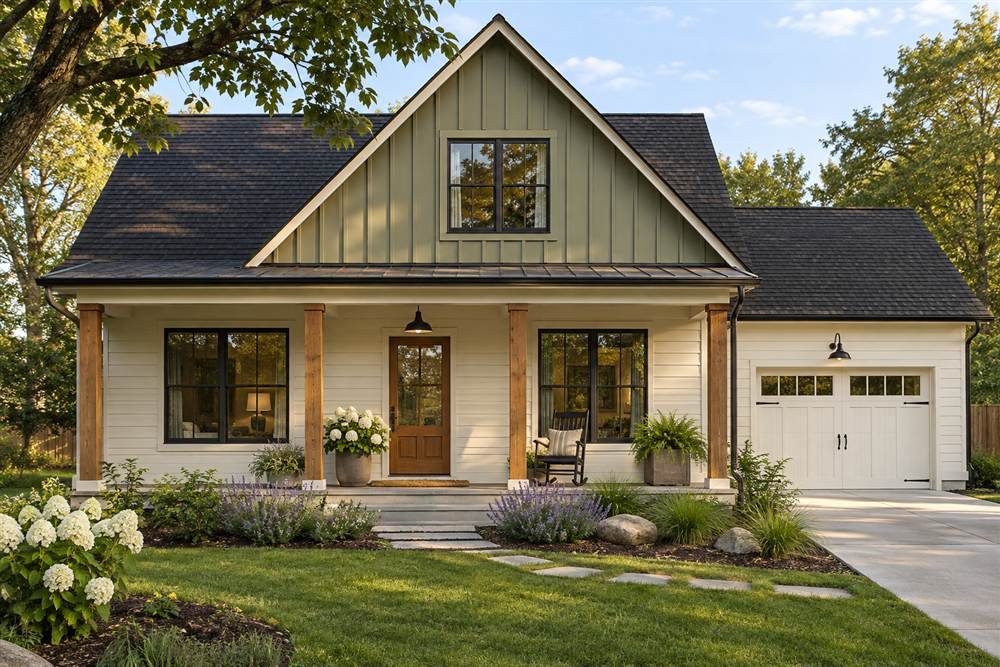
A sage gable over a warm-white lower facade introduces color without committing every wall. The change works best at a real architectural boundary, such as where a gable meets the main roof or where siding materials naturally change.
Do not add random horizontal paint divisions simply to imitate an inspiration image. Study the house’s existing proportions first. Repeat the sage in a small door or planter detail if needed, while keeping the trim consistent. Ask the painter to mark the exact stopping points in the proposal so the finished scheme follows your plan.
10. Choose earthy sage green house colors for a Craftsman
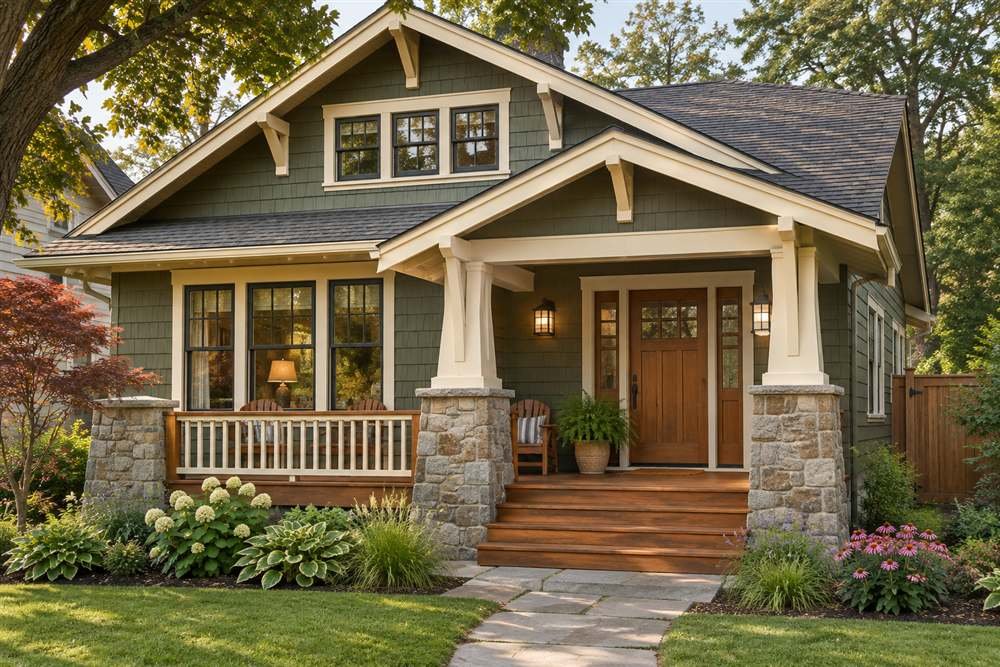
Muted sage, cream trim, stone piers, and wood can suit a Craftsman’s layered details. Let the color reveal brackets, porch posts, and shingle patterns rather than flattening them into one busy collection of accents.
A deeper body color may work under a large porch, but check how dark it becomes in shade. Sample on both the exposed siding and a sheltered area. If the home has historic protections, review local rules before altering original details. Repairing characteristic woodwork can contribute more to the result than introducing a dramatic new color.
11. Soften stucco with a pale sage green exterior
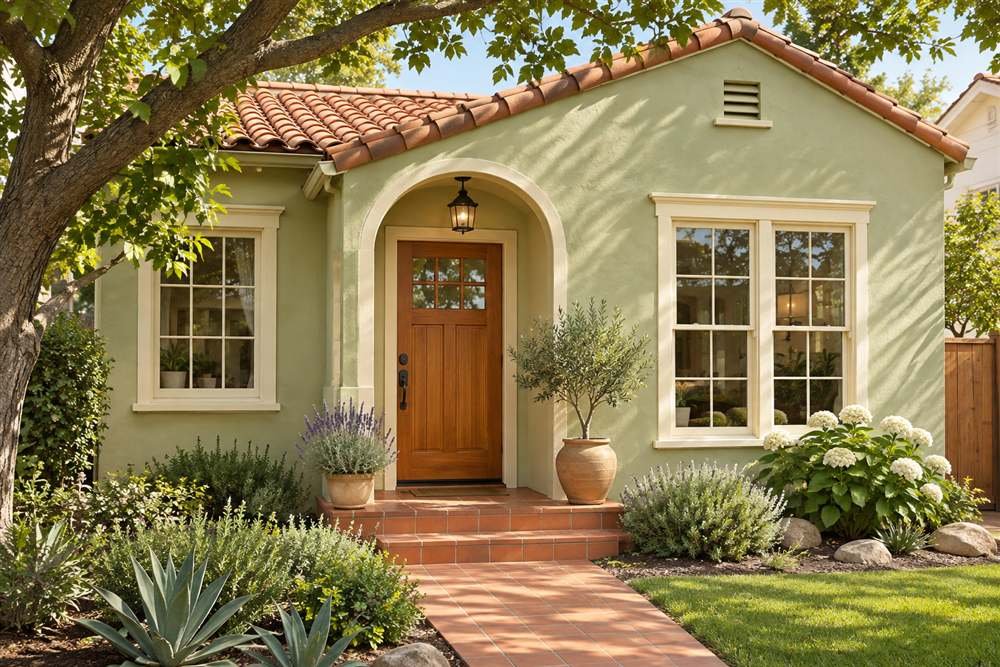
Textured stucco creates shadows that change how a color reads. A pale sage can look softer than it does on smooth siding, particularly beside cream trim and warm paving. Test on a surface that resembles your existing texture.
Inspect cracks, staining, and failed sealant before repainting. The correct preparation and coating depend on the wall system and its condition. Avoid choosing an elastomeric coating simply because it sounds more durable; obtain advice for the specific assembly. Our exterior stucco wall construction guide explains the underlying system.
12. Plan a two-tone sage green house
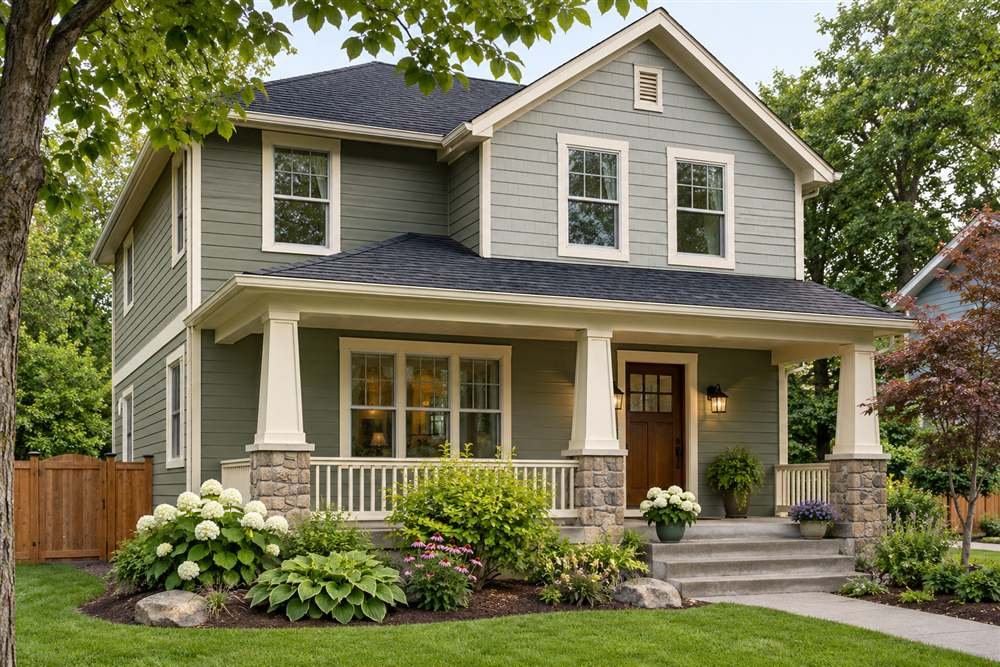
Two related greens can separate a gable, porch, or upper story while keeping a calm palette. Give the colors a clear difference in lightness. Two nearly identical shades may look like an accidental mismatch once sun and shade change across the facade.
Keep one trim color throughout to connect the surfaces. Paint large samples across the proposed boundary and photograph them in daylight. Check the result from the sidewalk as well as close up. The goal is readable architecture, not an additional color that only becomes visible when someone stands beside the wall.
13. Choose a deeper green front door
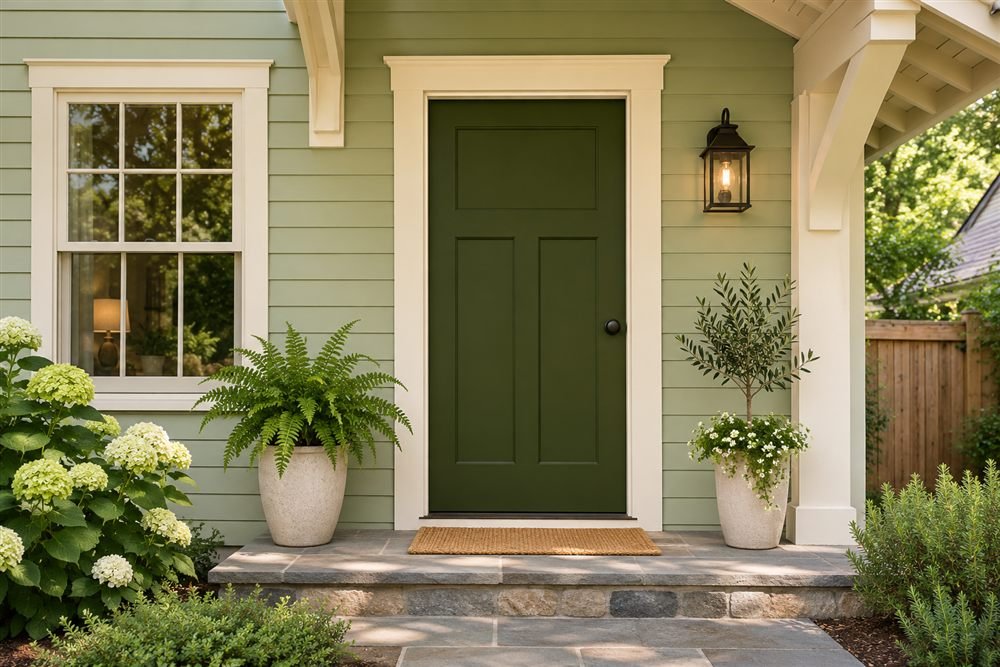
A deep olive or forest-green door can work against pale sage when the contrast is obvious. This creates a quieter entrance than black while keeping the palette connected. Use the actual door sample beside the body and trim colors to check the relationship.
Add readable house numbers and simple hardware so the entry remains easy to find. Do not depend on color alone for visibility at night. A sheltered, well-lit approach and a clear path make the entrance more welcoming than a perfectly matched door in a dark corner.
14. Try navy for a classic entry accent
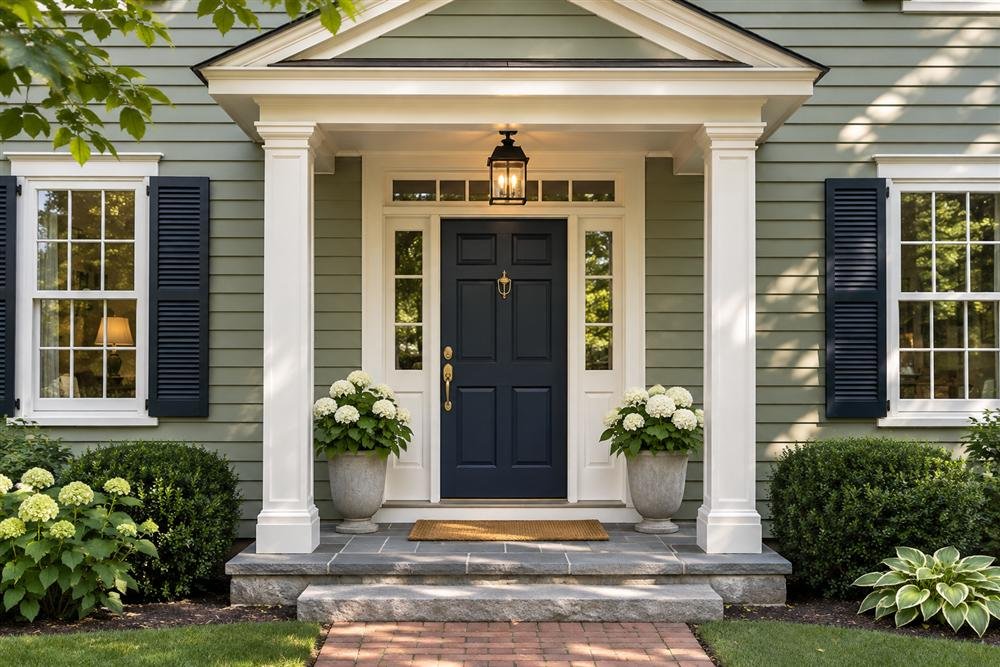
Navy introduces a cool, grounded accent beside sage without requiring black windows. It can suit traditional elevations, especially when warm-white trim separates the door from the siding. Compare several navies, because some appear almost purple or black outdoors.
Keep nearby accessories restrained: one metal finish and a simple doormat are enough. If the entrance is recessed, check the paint sample in that actual shadow. A navy that looks rich in full sun may lose its character under a deep porch, so lighting and finish should be part of the decision.
15. Warm the entry with a terracotta door
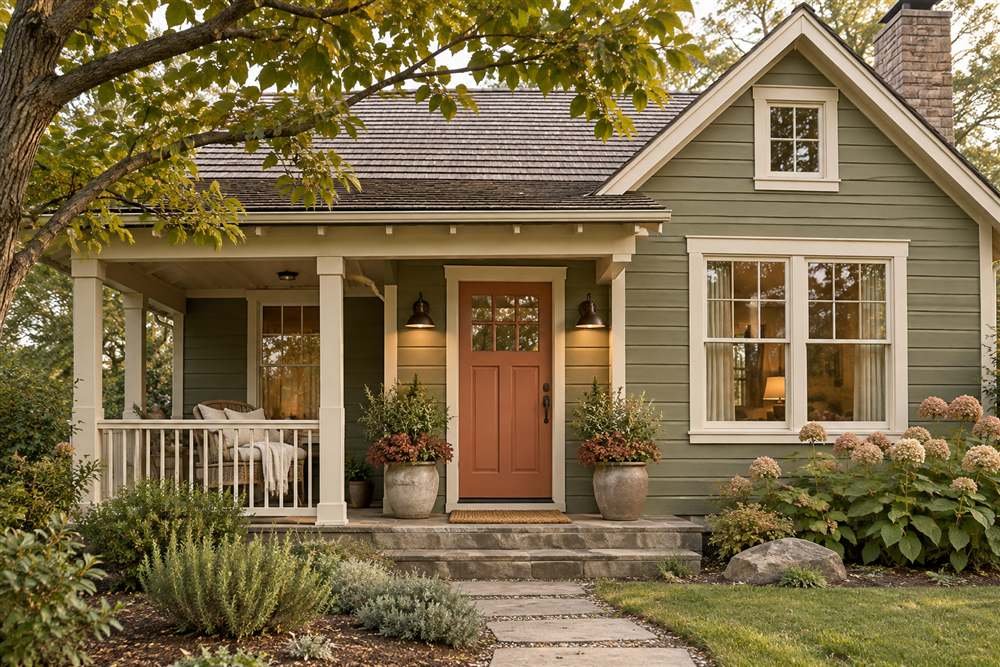
Muted terracotta, clay, or earthy red can provide a warm contrast to sage. Choose a restrained tone rather than a highly saturated red if you want a quieter facade. It is particularly useful when the house already includes warm brick or terra-cotta pots.
Keep the trim neutral so the door remains the main accent. Test the color from the street, where it occupies much less visual space than on a sample card. If the combination feels busy, simplify the nearby planting containers and decorative objects before abandoning the palette.
16. Let the garage recede
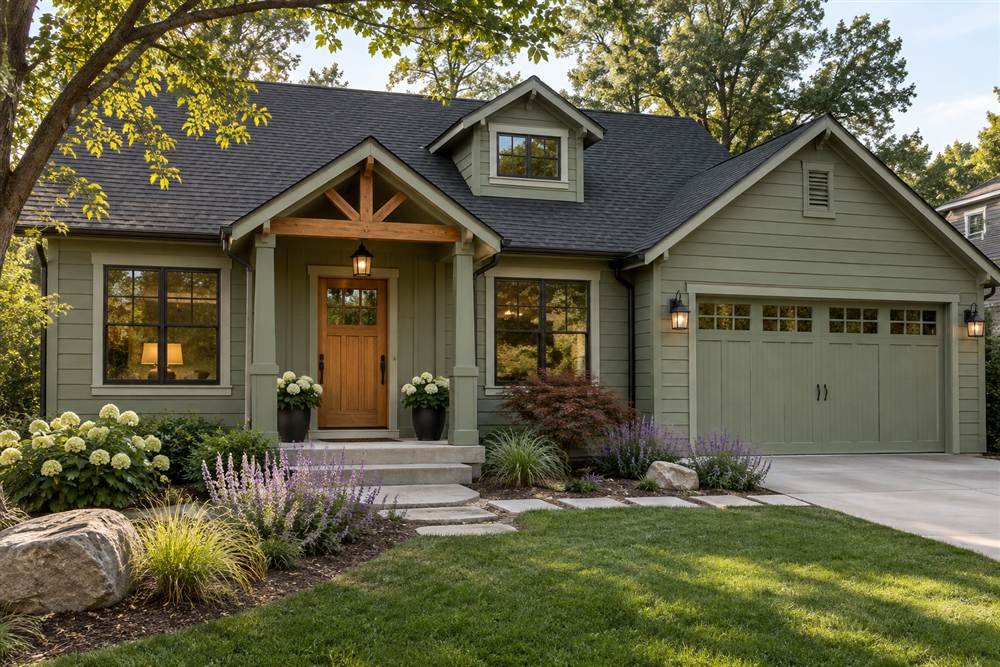
A large garage can compete with the front door. Painting it close to the sage siding may reduce that competition, while a wood or contrasting pedestrian door draws attention to the entrance. This is especially helpful on houses where the garage faces the street.
Check the garage-door manufacturer’s paint instructions, including color restrictions and suitable products. Some factory finishes and insulated doors require particular care. Avoid painting seals, moving parts, or safety components. If replacement is necessary, compare insulation, operation, and local wind requirements before choosing a decorative style.
17. Add warmth under a covered porch
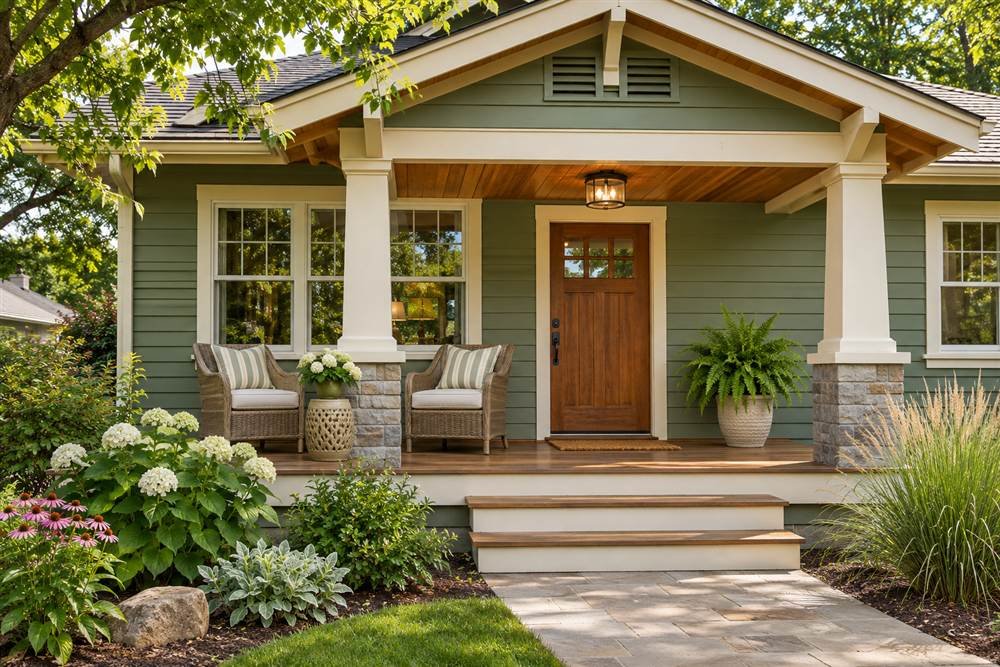
A wood-toned porch ceiling can warm a sage facade without changing the main siding. Cream posts and simple seating help the entrance feel finished. Choose a ceiling material suited to exterior exposure and the ventilation needs of the assembly.
Leave a direct route to the door. A narrow porch may work better with one chair and a wall-mounted light than a matching pair of bulky seats. See our small front porch ideas for layouts that prioritize the usable space around doors, steps, and furniture.
18. Coordinate planting without hiding the house
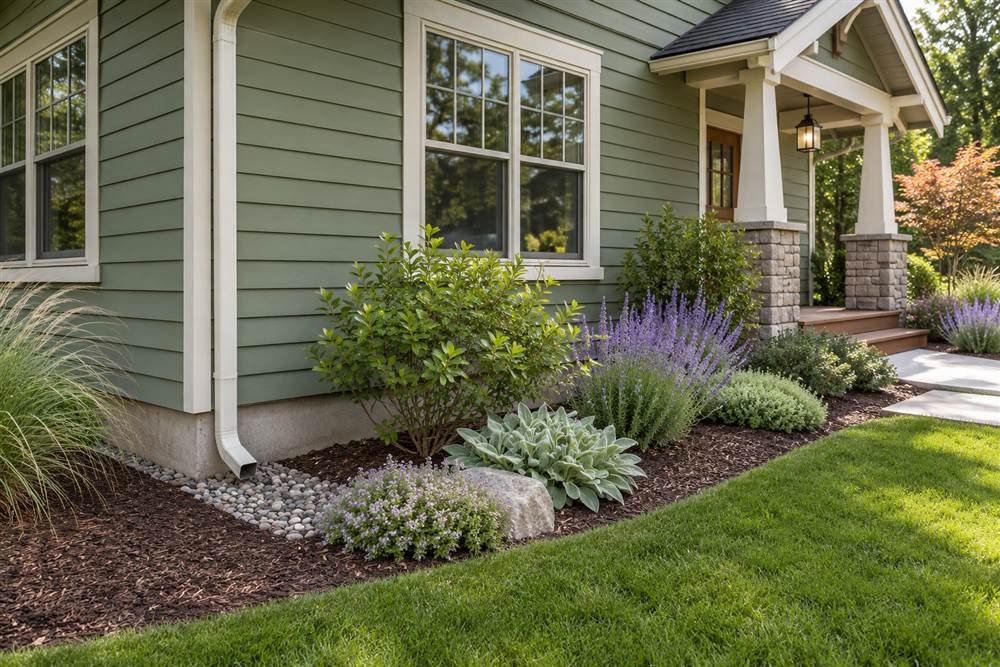
Sage siding already connects visually with foliage, so landscaping can focus on texture, seasonal interest, and a visible entrance. Mix plant forms rather than repeating one green shrub along the entire foundation. Small amounts of purple, cream, or muted pink can complement the palette.
Choose species for your local climate and mature size. Keep plants from crowding siding, vents, and drainage areas, and respect local wildfire guidance where relevant. A newly planted bed should have room to grow; filling every gap immediately often creates maintenance problems later.
19. Check the palette after sunset
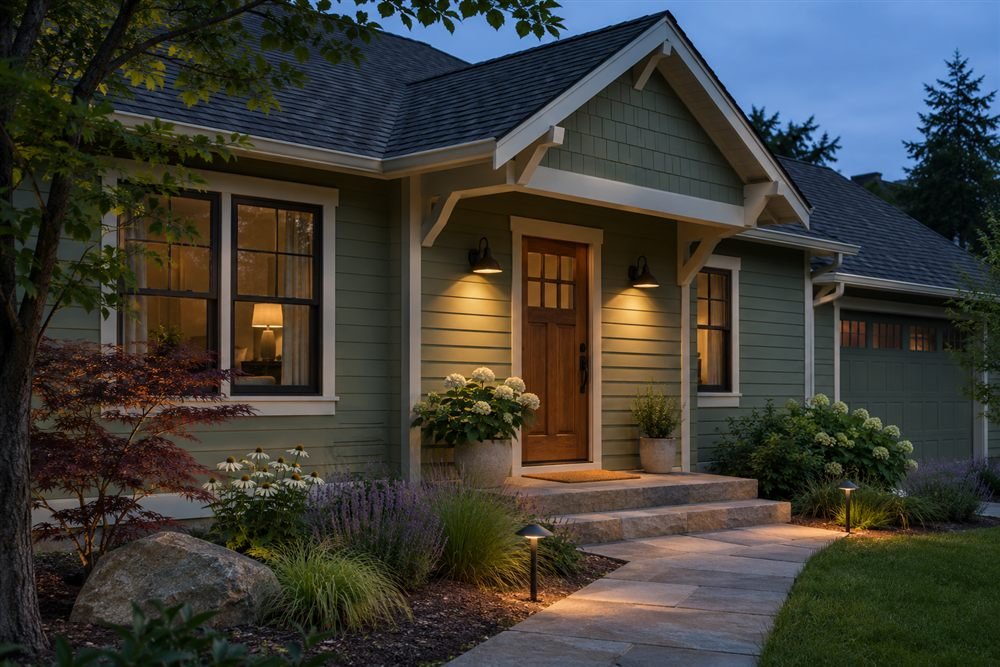
Exterior color does not stop mattering when daylight ends. Sage can look gray, dark, or warmer under different lamps. Test a proposed porch bulb near your samples before selecting fixtures, especially if the entry has a deep recess.
Use shielded lighting aimed at the door and walking surface. Avoid making the entire facade bright enough to compete with nearby homes. Match the light’s placement to steps, changes in level, and house numbers. A clear, comfortable approach gives your color scheme a practical purpose beyond an attractive daytime photograph.
Test your sage green house exterior ideas before committing
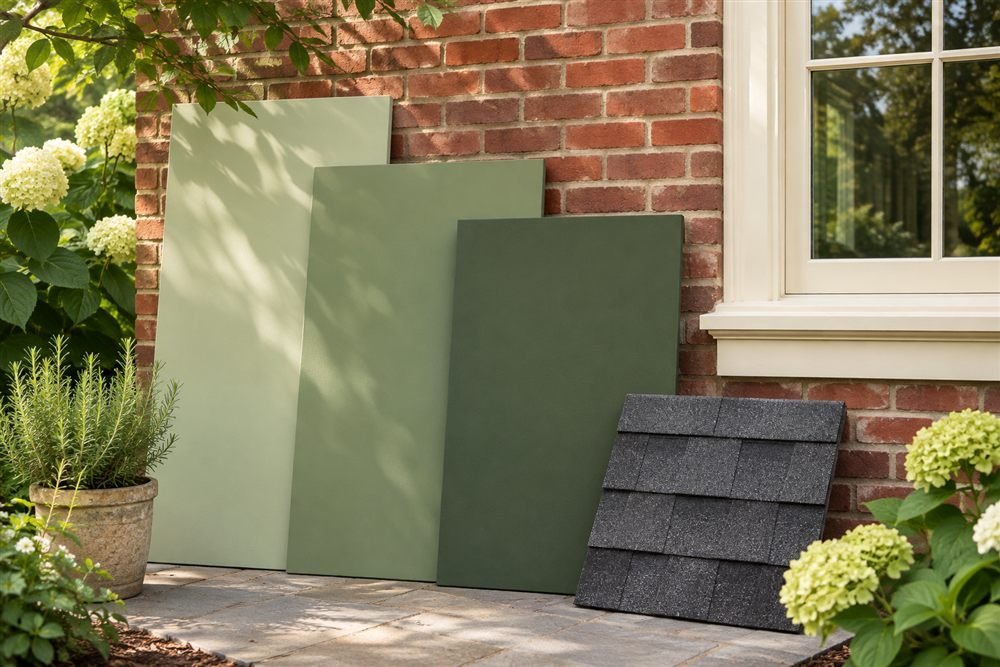
Paint large movable sample boards using the intended products and number of coats. Set them beside roof samples, brick, stone, and windows. Look in morning, midday, late afternoon, and shade over more than one day. Move the samples to different elevations rather than assuming one wall represents the whole house.
Next, add trim and door samples. View the combination from the street and from the porch. Phone photographs help record your impressions, but automatic exposure and screen settings can change colors. Make the final decision with your eyes on the physical samples.
Write down the chosen brand, code, product line, sheen, surface, and location. Have the painter approve a small test area before completing the job. Keep a labeled record for future touch-ups, including the paint base and formula shown on the can. This turns sage green house exterior ideas into a repeatable plan for the actual property.
Match the paint system to your siding
On vinyl, color compatibility matters. A darker replacement color can increase heat absorption and cause problems with some siding. Sherwin-Williams explains that its VinylSafe color system uses selected formulations for sound vinyl. Do not assume an ordinary dark-sage mix has the same approval; check both siding and coating instructions.
For wood, fiber cement, stucco, and masonry, ask about cleaning, repairs, moisture, primer, application conditions, and required drying time. Sheen recommendations vary by product and substrate. Read the product data sheet instead of applying one satin-or-flat rule to every surface.
If disturbing paint on a pre-1978 U.S. home, review EPA guidance on lead-safe renovation before sanding or scraping. EPA recommends a lead-safe certified contractor for this work. Include preparation and cleanup in the written scope.
Plan costs around the actual work
A door repaint, a whole-house coating, and new siding require different exterior makeover plans. Obtain itemized local quotes rather than treating one national price as your budget. Ask contractors to list repairs, preparation, primer, finish coats, access equipment, material disposal, and the exact surfaces included.
Compare equivalent scopes and separate necessary repairs from optional styling. Narrow your sage green house exterior ideas to the changes that fit those priorities. A low quote that excludes damaged trim or difficult access may not be the least expensive finished job. Keep funds available for concealed damage discovered during preparation, and obtain written approval before additional work begins.
Questions homeowners ask
Can sage green improve resale appeal?
A maintained, coordinated exterior can make a good impression, but no sage shade guarantees a resale return. Consider neighborhood context, the home’s architecture, and local buyer preferences. Choose a palette that complements permanent materials and remains practical to maintain.
Should the shutters match the front door?
They can, but they do not have to. Repeating one accent creates a simpler scheme. Check that shutters fit the window proportions and suit the architecture; removing poorly sized decorative shutters may be better than highlighting them with a new color.
Will sage look the same on every side of the house?
No. Direct sun, shade, surrounding plants, texture, and lighting change its appearance. Test several elevations and accept some variation. A successful choice looks coherent throughout the day, even when it does not look identical on every wall.
One thought on “Sage Green House Exterior Ideas: 19 Smart Color Combinations”