

Painted brick homes can look warm, modern, or quietly traditional, but a beautiful color is only half the decision. Before you paint exterior brick, check the masonry condition, identify the existing finish, and understand the maintenance commitment. A palette that suits your roof and windows matters more than copying a photograph.
Jump to: 22 ideas · Costs · Quote checklist · FAQs
This guide combines 22 painted brick house ideas with a practical way to compare finishes, plan preparation, and evaluate a contractor’s scope. Images illustrate AI-generated design concepts, not documented renovations or projects we completed. They cannot show exact paint colors or predict coating performance.
Quick answer: should you paint your brick house?
Painting may be worth considering when the masonry is sound, you want consistent coverage, and you accept future coating maintenance. Pause when brick is deteriorating, water problems remain unresolved, or original historic masonry would be permanently altered. You can often improve curb appeal through trim, lighting, landscaping, and an entry refresh while retaining natural brick.
Start with our guide to exterior materials for homes if you are still deciding which surfaces to preserve, repair, or change.
Painted brick homes: benefits and trade-offs
For painted brick homes, a new finish can visually unite mismatched additions, soften a strong brick color, and support a coordinated exterior palette. It also lets the same house read very differently: cream with bronze details feels softer than charcoal with pale wood.
However, painting creates a surface that needs inspection and eventual maintenance. Removal can be difficult and can damage masonry. The Columbus Landmarks preservation guide recommends caution with historically unpainted brick and emphasizes compatible, vapor-permeable coatings and repairs before appearance changes.
Think of this as a long-term finish decision, not a reversible decorating experiment. Attractive brickwork, decorative bonds, and well-matched mortar may be features worth keeping.
22 painted brick house ideas to adapt to your home
Use these combinations as design starting points. They are not specifications for named paint products, and an online image cannot reproduce your brick’s absorption, mortar texture, or daylight.
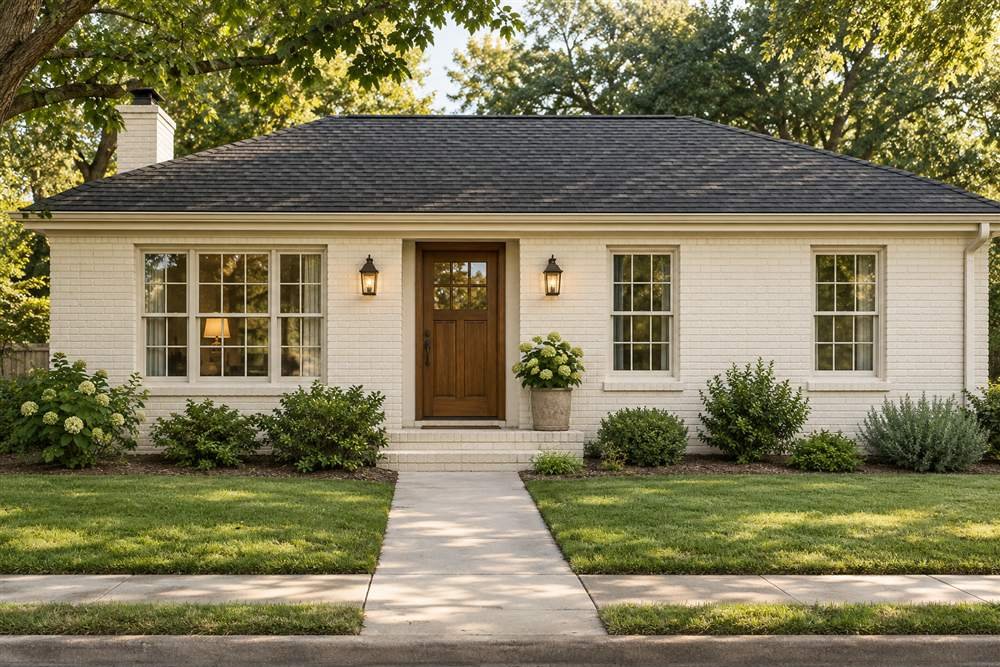
1. Warm-white painted brick homes with wood doors
Keep the largest surface quiet and make the entrance the warmest element. A medium-toned wood door can provide a focal point without needing several competing accent colors. Test the white against the roof first; a creamy sample may look surprisingly yellow beside cool gray shingles.
2. Ivory painted brick homes with bronze details
For a gentler alternative to high-contrast black and white, pair ivory brick with bronze-toned frames or hardware. Repeat that metal at the entry light and door handle. Avoid replacing functioning windows just to complete a color scheme; existing frame colors should guide the palette.
3. Greige painted brick homes with charcoal roofs
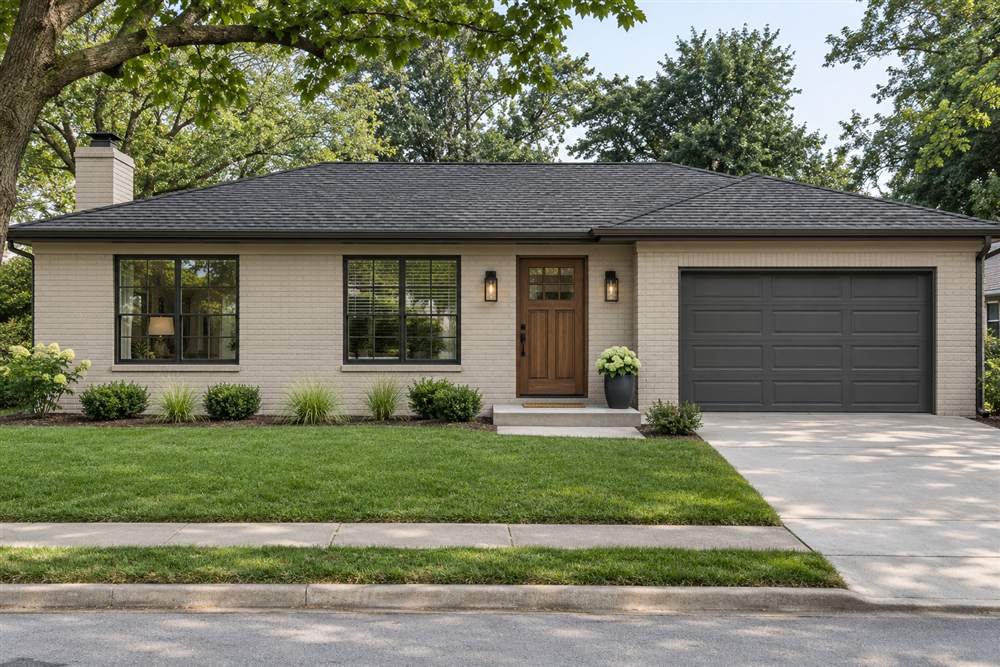
A gray-beige wall color can bridge warm paving and a cooler roof. Compare several undertones rather than selecting a shade from its name. Put samples near mortar, stone steps, and the garage. A greige that works at the sunny front may feel cooler on a shaded side wall.
4. Taupe painted brick homes with cream trim
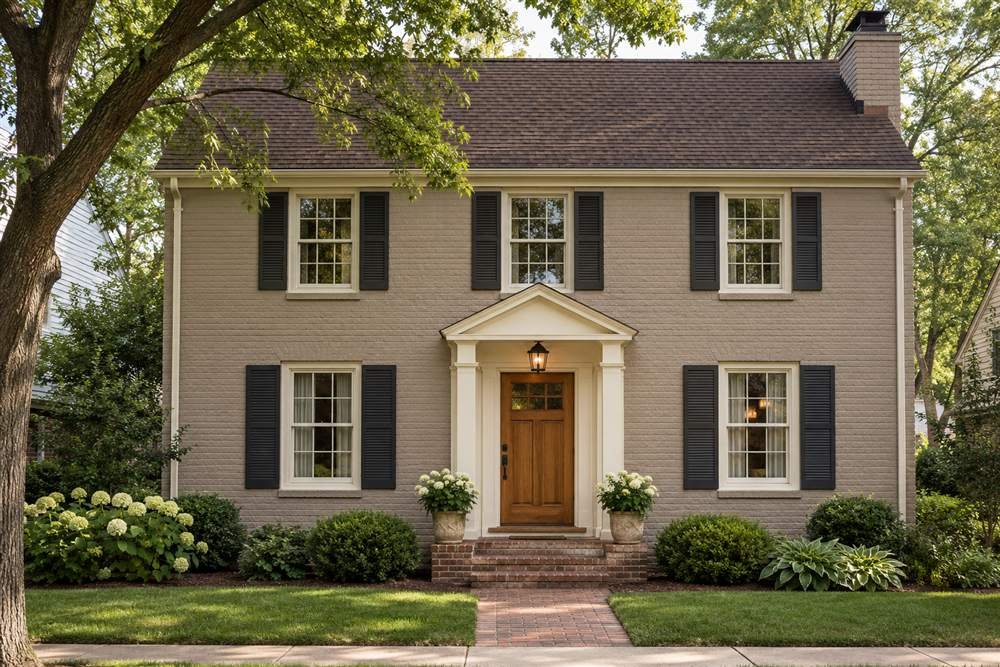
Taupe can create a quieter traditional exterior when a bright white feels too sharp. Use cream trim sparingly around windows and the entrance. Keep shutters and the door within a controlled range so the façade reads as one composition rather than a collection of individually highlighted parts.
5. Charcoal painted brick homes with wood accents
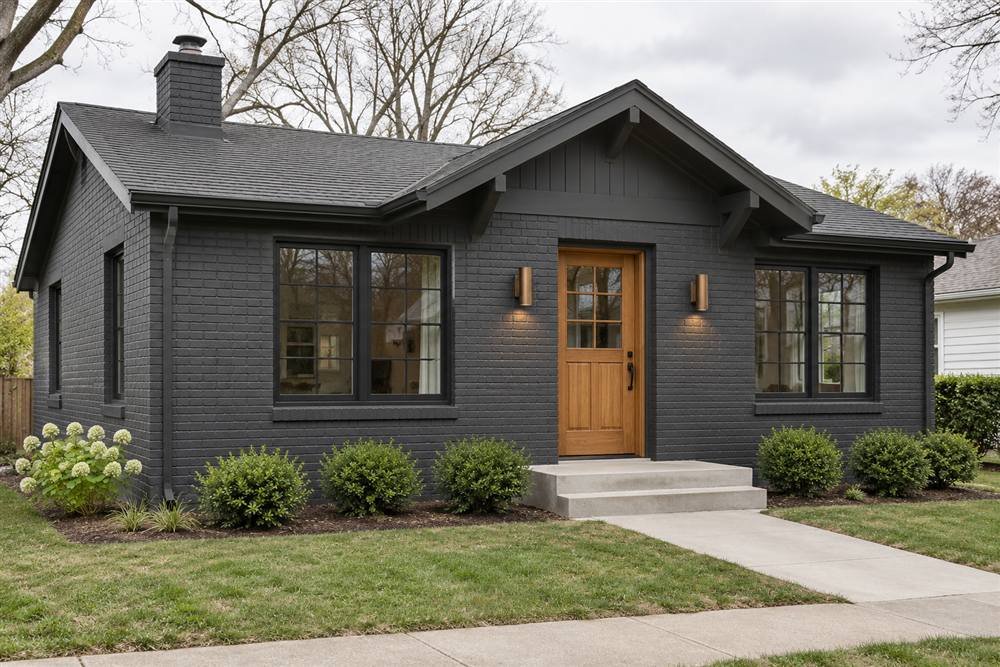
Dark brick can make simple architecture feel more defined. Balance it with a welcoming wood entry, readable house numbers, and planting that does not hide the front door. Before choosing a very dark coating, discuss the exposure and product suitability with the manufacturer or applicator.
6. Navy painted brick homes with off-white details
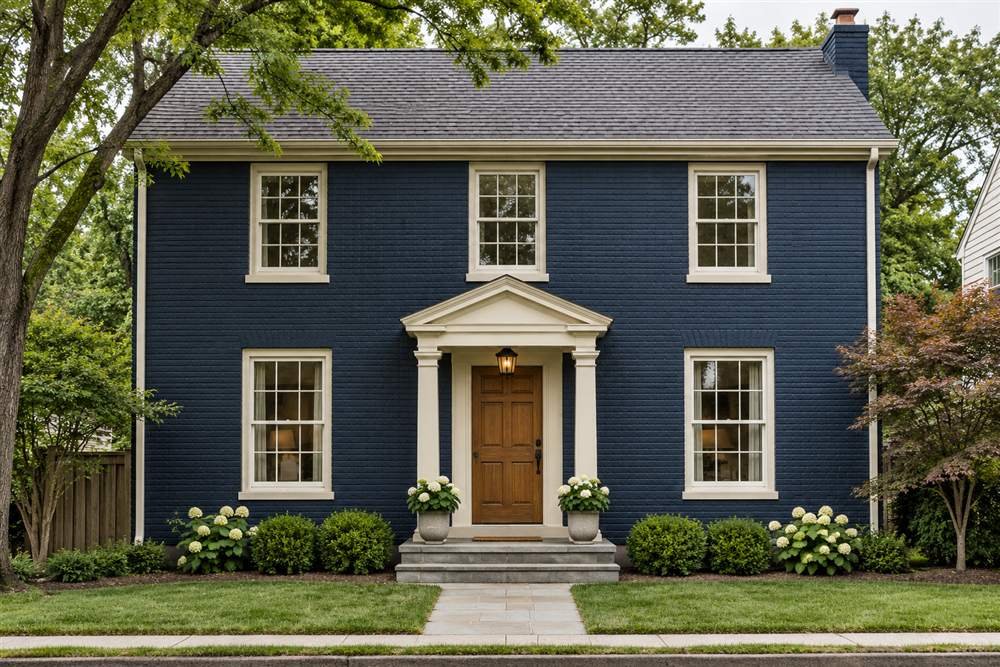
Navy is an option when you want depth without a fully black exterior. Limit off-white to selected frames, fascia, or porch elements. Carry the navy sample around the house: a color that looks balanced in daylight may appear nearly black beneath deep eaves.
7. Green painted brick homes with brown roofs
A muted green can help connect warm roof tones and planting. Sample gray-green and olive-leaning options side by side, keeping the existing mortar visible nearby. Our sage green exterior guide explains how roof, trim, and door combinations affect the result.
8. Mushroom brick with stone left natural
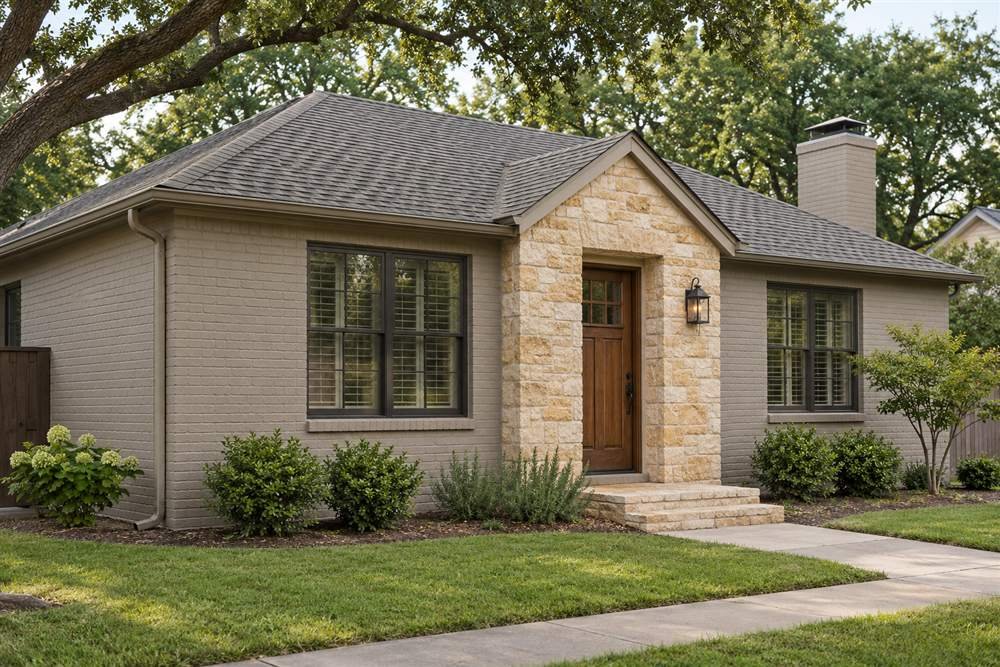
When stone and brick already share earthy tones, a mushroom-colored finish can reduce visual competition. Pull the sample toward an existing stone undertone, not an unrelated trend. Leave stone uncoated if it is sound and attractive; neighboring materials do not need identical treatments to feel coordinated.
9. White painted brick homes with quiet garage colors
On a garage-forward house, a very contrasting garage can dominate the view. Try a quieter garage color related to the roof or body palette, then give the front door a clearer identity. This is a useful composition exercise before spending money on a replacement door.
10. Painted brick ranch homes with horizontal emphasis
Keep the main brick and adjoining siding close enough in value to preserve a ranch home’s long, low proportions. Place the strongest contrast at the entrance rather than outlining every change in material. See our modern ranch exterior ideas for broader layout and renovation guidance.
11. Painted brick bungalows with warmer porch ceilings
A pale brick body, simple columns, and a restrained porch-ceiling accent can make a compact entry feel intentional. Evaluate the palette from the sidewalk, where a visitor actually approaches. A tiny paint chip viewed at arm’s length does not show how several large surfaces will interact.
12. Traditional painted brick homes with simple shutters
Painting brick does not require adding shutters to every window. Keep existing shutters only when their proportions and placement make visual sense. Coordinate them with the door or roof instead of introducing another unrelated accent. A calmer window rhythm may be more useful than a dramatic new color.
13. Painted brick Tudor homes that keep their character
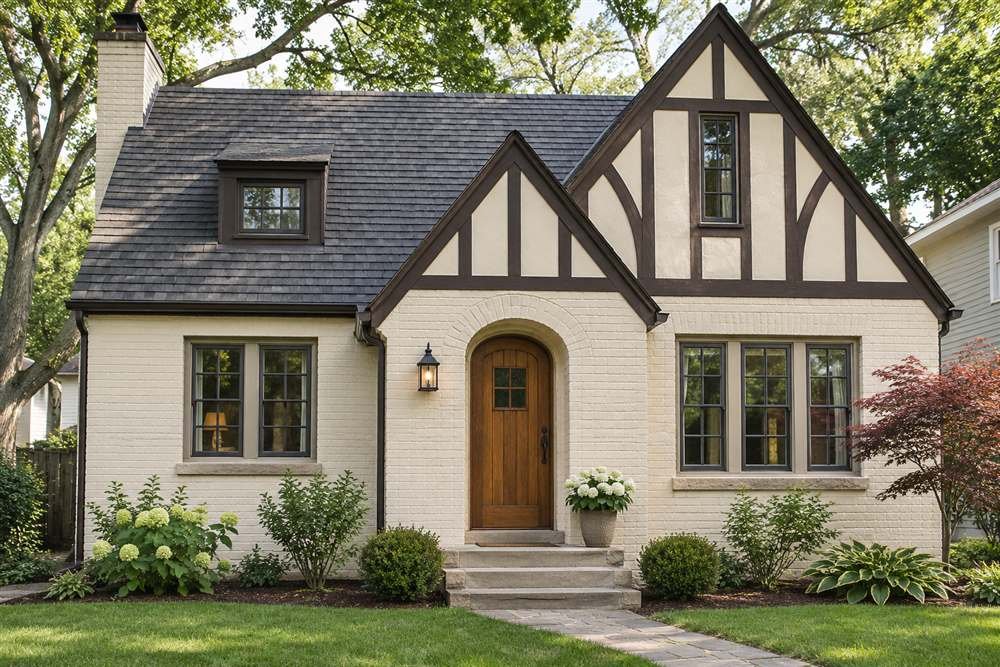
Reduce excessive contrast without erasing all the architectural details. Let timber, trim, and masonry remain distinguishable, and avoid treating every surface as if it were the same material. For an older property, research historic restrictions and appropriate finishes before choosing a modernized palette.
14. Contemporary painted brick homes with fewer finishes
A house with brick, siding, metal, and stone can feel busy even when each material is attractive. Sketch two simpler palettes that repeat a small number of tones. Decide which material should be the feature. A coherent composition does not require coating every original surface.
15. Coastal-inspired painted brick homes in neutral colors
Use a soft wall color, a clear entrance, and uncomplicated hardware for a relaxed coastal appearance. Consider this a visual direction rather than a performance specification. Exposure, wind-driven rain, and local maintenance conditions still need to inform coating selection and the contractor’s preparation plan.
16. Farmhouse-inspired painted brick homes with simple details
Off-white brick can work with wood and a limited dark accent. Keep decorative additions subordinate to the house itself. Extra brackets, signs, shutters, and lighting can overwhelm a modest façade. Choose a few functional upgrades that improve the entry and leave breathing room between them.
17. Small painted brick homes with monochromatic palettes
Use closely related body, trim, and garage colors to reduce fragmentation on a compact house. Maintain enough contrast for the entrance and address to be easy to locate. Photograph the sample scheme from across the street before committing; the goal is clarity, not making every detail disappear.
18. Mixed brick and siding with a shared undertone
Different materials can remain different colors while still belonging together. Choose a warm or cool direction first, then compare body colors with the roof and windows. Read our exterior trim materials guide before assuming the trim can use the same coating as the masonry.
19. A partial-brick update with restrained contrast
If only the lower portion is brick, test whether its contrast with the upper siding is the real problem. Changing the siding or trim may achieve the look you want without coating the brick. Compare that option with a full-color concept before you choose the larger intervention.
20. A layered entrance with a quieter background
Use the wall color to support the door, path, lighting, and planting rather than compete with them. Keep address numbers readable and fixtures appropriately scaled. Our small front porch ideas offer entry improvements that can work even if you decide against painting.
21. A courtyard or recessed entry with a lighter finish
Deep recesses can look different from the exposed façade even with the same paint. Test the actual corner and adjoining wall before choosing a second color. Sometimes improving the lighting and reducing overgrown planting makes a bigger difference than adding another shade.
22. A retain-the-brick alternative with updated surroundings
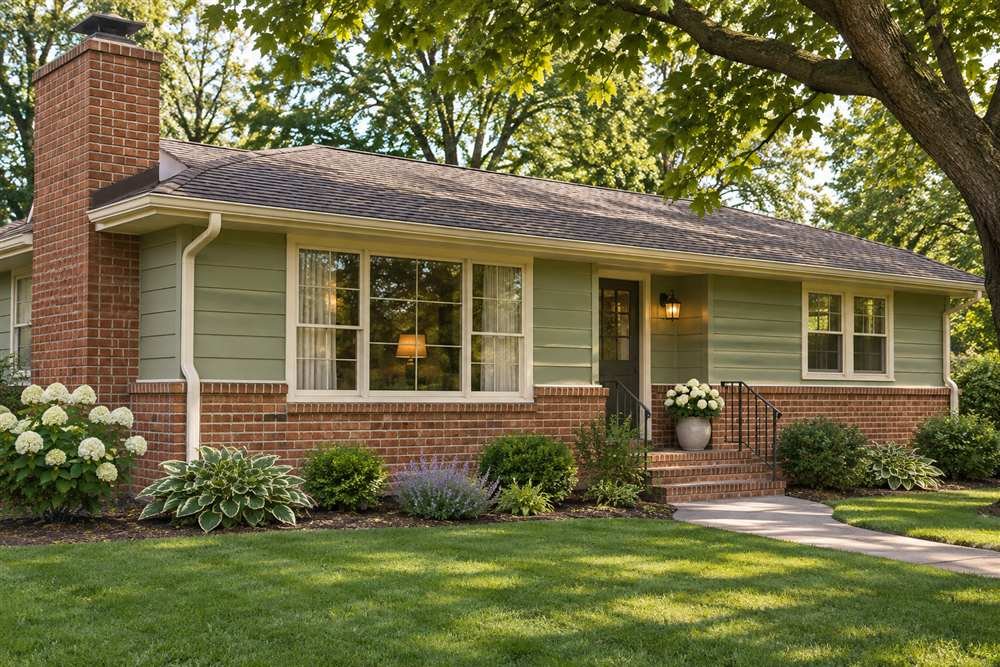
Include one concept that keeps the brick natural. Change the trim, door, gutters, planting, or walkway in the visualization instead. This gives you a useful baseline: are you improving the architecture, or simply reacting to an old color combination? Choosing not to paint can be the strongest design decision.
Color palettes for painted brick homes
When planning painted brick homes, take clear photographs in sun and shade. List the roof, window frames, stone, paving, and doors that are staying. Pick the dominant fixed element first, then test a small set of compatible body colors. Compare the entire group outdoors rather than choosing brick paint in isolation.
For white options, our warm white exterior paint guide can help narrow the visual direction. Product availability, approved substrates, and the actual dried sample still matter more than a color name.
Make a representative sample on an agreed, inconspicuous area using the proposed preparation and coating system. Let it dry as directed. View it at several times of day and from the street. A digital mockup helps assess balance, but it cannot confirm adhesion, coverage, texture, or exact color.
Brick paint, limewash, stain, or natural brick?
| Finish | Visual direction | Before choosing |
|---|---|---|
| Masonry paint | More uniform, opaque coverage | Confirm compatibility, preparation and future maintenance. |
| Limewash | Mineral finish; wash-off effects depend on product | Check absorbency, existing coatings and current product instructions. |
| Brick stain | Color adjustment with product-dependent results | Review opacity, substrate requirements and a representative sample. |
| Retain natural brick | Original texture and color remain visible | Compare repair, cleaning, trim and entry updates first. |
Do not assume products in the same broad category are interchangeable. “Whitewash” can refer to different materials or effects, so ask what the actual coating contains. Check the current technical data sheet for compatibility and instructions.
Romabio’s product FAQs distinguish Classico Limewash from its masonry paints and describe suitable substrates. This is why an attractive limewash photograph is not enough to choose a finish for previously painted or sealed brick.
Before painting brick: check the wall
Walk around all elevations and photograph areas with staining, crumbling mortar, damaged brick, peeling existing paint, or persistent dampness. Look near gutters, downspouts, window openings, and the base of the wall. Ask a qualified professional to investigate recurring symptoms rather than hiding them beneath a new finish.
The National Park Service masonry brief stresses assessment and careful treatment selection for historic masonry. A cleaning or coating method should suit the actual material and condition.
Ask whether the wall is original historic masonry, brick veneer, or a previously coated assembly. If the house is in a historic district or an HOA, confirm approvals before ordering materials. Keep drainage openings and other functional details in the work scope, not just the color plan.
Painting exterior brick: preparation and application
1. Identify the existing finish
Tell the contractor whether the wall appears bare, sealed, stained, limewashed, or painted. If that is uncertain, ask how compatibility will be assessed. Do not treat an absorbency check as a complete diagnosis of an entire wall assembly.
2. Resolve repairs and clean appropriately
Agree on mortar and brick repairs before the painting stage. The cleaning method should be appropriate for the masonry and coating system. Avoid assuming that aggressive washing is the correct starting point, especially on older or fragile brick.
3. Follow the selected system
Read the current instructions for drying conditions, substrate preparation, primer, dilution, coat count, application, and recoat times. Those details vary by product and surface. A generic internet recipe should not override the manufacturer’s documentation or a site-specific professional assessment.
4. Protect adjacent surfaces and access
Include windows, doors, roof edges, landscaping, walkways, neighboring property, and cleanup in the plan. Confirm how upper walls will be reached safely. A quote that omits access equipment may not be directly comparable with one that includes it.
5. Approve a sample and inspect the finish
Agree on a sample area before full application. At completion, review coverage, transitions, edges, missed areas, and cleanup with the contractor. Record the exact product, tint, batch information where available, and any maintenance instructions.
For pre-1978 homes, disturbing old paint can create lead hazards, including on nearby trim. Follow EPA lead-safe renovation guidance; the EPA recommends trained, lead-safe certified contractors for relevant work.
Painted brick homes: cost and budget planning
Homewyse’s May 2026 national starting estimate is $2.62–$4.93 per square foot for brick painting. It is a planning reference, not a local quote or a guarantee for historic masonry, extensive repairs, specialized products, or difficult access. Check the current calculator and scope for your ZIP code.
| Illustrative brick wall area | At $2.62/sq. ft. | At $4.93/sq. ft. |
|---|---|---|
| 1,000 sq. ft. | $2,620 | $4,930 |
| 1,500 sq. ft. | $3,930 | $7,395 |
| 2,000 sq. ft. | $5,240 | $9,860 |
Calculated illustrations using Homewyse’s May 2026 starting range, not additional quotes. Actual costs and included work vary; specialized repairs and coating systems can change the total.
For painted brick homes, measure the brick surface being coated, not the home’s interior floor area. Confirm how the estimator treats openings and what the contractor actually measures. Compare at least two written scopes with the same preparation, products, coat count, protection, access, and cleanup assumptions.
Keep repair allowances separate. Also ask about testing, approvals, scaffolding, existing coating problems, and nearby trim work. The lowest price may simply include fewer tasks. Never remove essential repairs from the scope just to reach the price of an inspiration photograph.
Painted brick homes: contractor quote checklist
Use this checklist when comparing bids. Copy it into your project notes and ask each contractor to answer the same questions, so the comparison reflects the work rather than just the total price.
- Measured scope: Which brick elevations and square feet are included? Are trim, doors, chimneys, and detached buildings separate?
- Condition and repairs: What inspection is included, and which mortar, brick, dampness, or coating problems need separate estimates?
- Preparation: Specify the cleaning method, existing-paint preparation, drying requirements, and areas that must remain open or uncoated.
- Coating system: Record the manufacturer, exact product, primer if required, finish, tint, and proposed coats. Avoid a quote that only says exterior paint.
- Sample approval: Include a representative sample area and written color approval before full application.
- Labor and access: Confirm scaffolding or lift costs, difficult access, surface protection, and who is responsible for subcontracted work.
- Schedule: Ask how weather delays and product-specific drying or recoat requirements affect the start and completion dates.
- Exclusions and changes: List work not included and how additional repairs will be priced and approved before proceeding.
- Warranty and handover: Separate the applicator’s workmanship terms from the manufacturer’s product warranty; request care instructions and product records.
- Final price and cleanup: Confirm taxes, disposal, cleanup, payment stages, and the final inspection process in the written proposal.
Maintaining painted brick homes
Inspect painted brick homes for changes such as peeling, cracks, persistent staining, or unusually damp areas. Follow the coating manufacturer’s care instructions. If a patch repeatedly fails, investigate the cause rather than repeatedly covering it.
A warranty is not the same as a guaranteed repainting interval. Romabio Masonry Flat currently advertises a 20-year warranty when applied as directed; read the actual terms and exclusions before interpreting that as a promise about your wall.
Keep a record of the coating system for future repairs. Photograph completed elevations in ordinary daylight, note the application date, and retain the contractor’s instructions. Future owners and painters will have better information than “it was painted white a few years ago.”
Painted brick before-and-after photos: what to check
Reddit discussions about painted brick show why a simple yes-or-no answer is unsatisfying. Homeowners raise maintenance, moisture, product choice, and the contribution of new doors and landscaping. These are useful questions to investigate, not evidence that every opinion is technically correct.
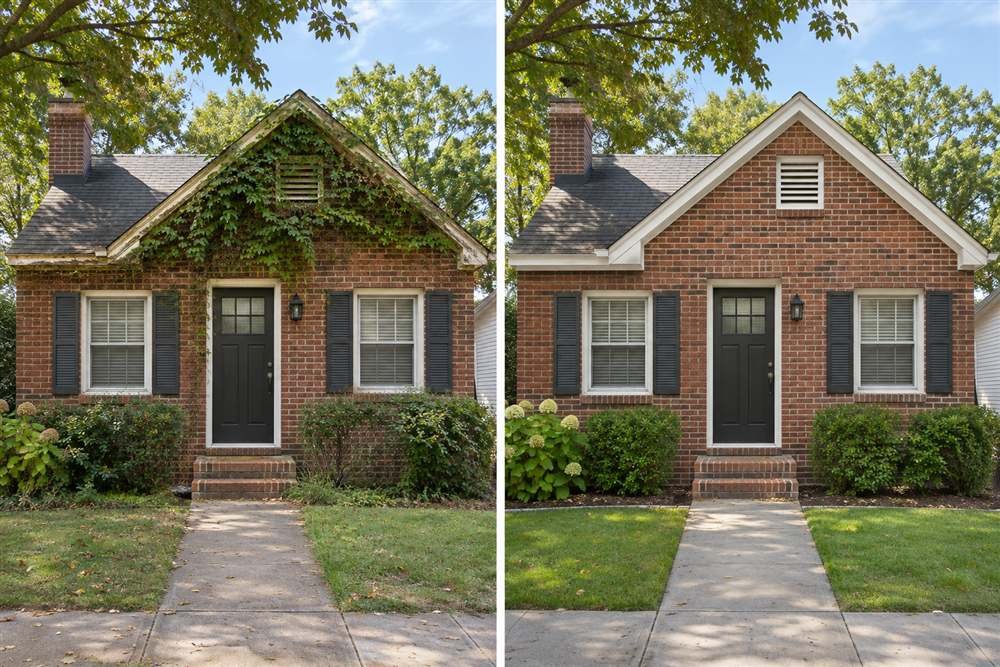
When comparing a home exterior before and after, separate the paint from the rest of the work. New windows, a changed porch, better photography, and mature planting can all influence the result. Ask what the brick finish alone contributes and whether the full project fits your budget.
Painted brick homes FAQs
Is painting exterior brick always a bad idea?
No single answer fits every wall. Condition, existing coatings, historic significance, moisture behavior, and product compatibility affect the decision. Start with assessment. An attractive result on someone else’s house does not establish suitability for yours.
Can I return painted brick to its natural appearance?
Do not count on an easy reversal. Removing paint can be difficult and can harm masonry. If retaining the option matters, compare a no-paint design first and consult a masonry specialist before making the change.
Do painted brick homes need maintenance?
Yes. Plan for inspection, cleaning appropriate to the product, repairs, and eventual coating work. The timing depends on the actual system and exposure. Avoid treating a manufacturer’s warranty or a neighbor’s experience as a universal repainting schedule.
Should I use ordinary exterior paint on brick?
Do not choose a coating solely because the container says exterior. Confirm approval for your specific masonry and any existing finish. Primer needs, preparation, and application requirements vary; ask for the proposed system in writing.
Is limewash the same as solid masonry paint?
No. They can produce different coverage, appearance, and weathering effects, and their substrate requirements may differ. Select the system around the wall and desired finish rather than choosing only from before-and-after photos.
Do white painted brick homes sell for more?
A fresh appearance may appeal to some buyers, but this guide does not establish a universal resale premium. Local preferences, workmanship, property condition, and the total renovation all matter. Do not justify the project with an unsupported return-on-investment percentage.
Can I paint the brick but leave the chimney natural?
That can be a design option, provided the materials and treatment plan suit the building. Test the relationship between the painted wall, natural chimney, roof, and mortar. Keep the retained feature intentional rather than an isolated color mismatch.
What should I ask a brick-painting contractor?
Ask about wall assessment, repairs, coating compatibility, preparation, samples, access, warranty terms, cleanup, and maintenance. Request a written scope and photographs of comparable completed work. Ask which images are actual projects and which are visualizations.
Conclusion: choose the wall first, then the color
The best painted brick homes combine a coherent palette with a finish suited to the masonry. Start by deciding whether painting is appropriate. Then compare a retain-the-brick option, test colors against fixed materials, and price a clearly defined scope.
Choose the improvement that makes your home more useful and welcoming over time. Sometimes that is painted brick; sometimes it is better trim, an inviting entrance, and well-preserved original masonry. A sound decision should still make sense after the inspiration photograph has been closed.