
Persian interior design is best explored through the particular architecture, textiles, and contemporary design of Iran rather than a generic room filled with ornate objects. Regional climate, history, and household life have shaped different spaces. A useful adaptation identifies its references and keeps their context visible.
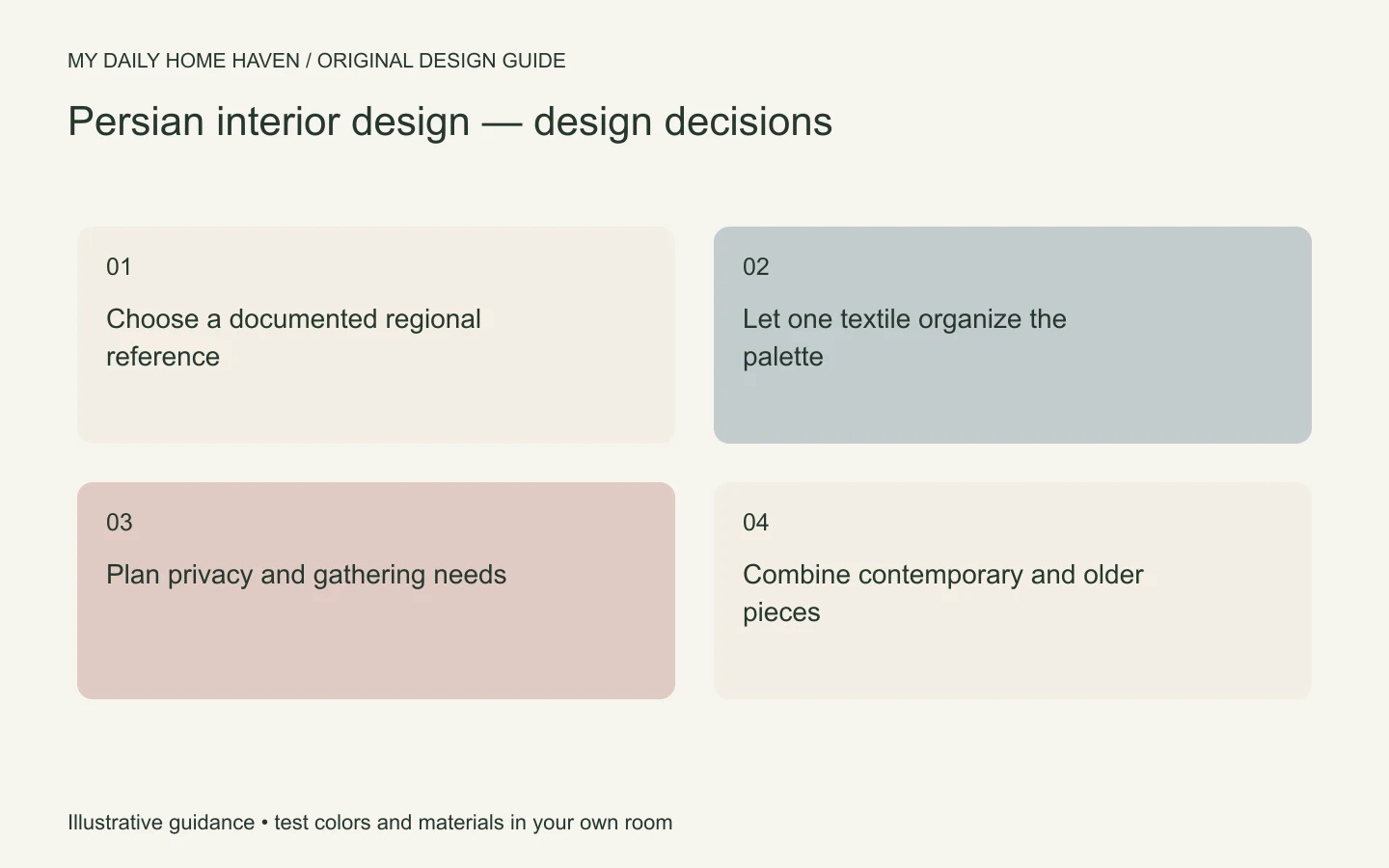
For a modern home, you might begin with a documented rug, an approach to privacy and gathering, or the relationship between a patterned textile and quieter surfaces. Our interior design aesthetics guide helps compare that direction with other styles without treating cultural labels as interchangeable.
Persian Interior Design: Use References with Respect
Persian interior design spans many periods, regions, and living traditions. Name the specific reference you are drawing from, research the history of a textile or motif, and seek work by makers with clear provenance. Then use its color, pattern, or craft in a way that suits the room; avoid treating a complex culture as a decorative shortcut.
Start with a specific architectural reference
Iran contains different climates and building traditions, so no single historic house plan represents every home. Look for a named building or regional study and identify the features that respond to its setting. A courtyard, shaded area, or sequence of private rooms has a practical history beyond its visual appeal.
The Persian House in Central Plateau of Iran submission describes courtyard-centered houses and relationships between entrances, guest spaces, and private areas. It is a Tentative List submission published by UNESCO, not confirmation that the proposal is an inscribed World Heritage property.
Use that source for context, not as a construction template. Your home’s climate, building rules, and structural conditions may be very different. A modern adaptation can borrow the idea of a more private entry or a comfortable gathering area without imitating the entire building.
Let textiles lead without reducing the style to rugs
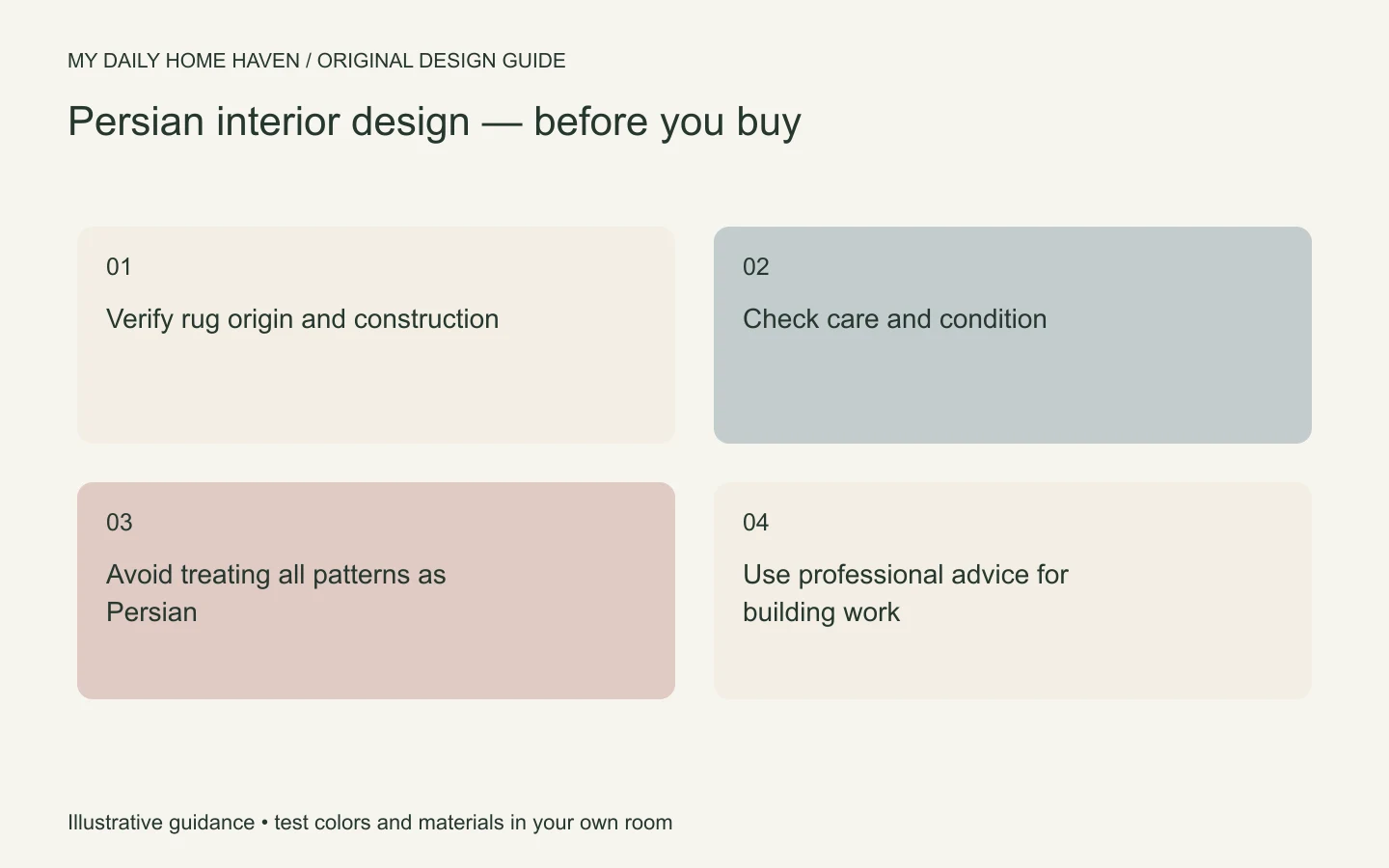
A Persian rug can provide a strong visual starting point, but Persian design is not simply any room with a patterned carpet. Identify the piece’s actual origin, material, construction, and condition. Similar-looking motifs appear in different places and in contemporary reproductions.
The Met’s Polonaise carpet record is one documented Iranian example with a specific historical context. It demonstrates why a precise museum description is more useful than assuming every floral carpet has the same date, purpose, or place of production.
For your room, select a textile you can use and maintain appropriately. A delicate or valuable piece may need specialist advice. Follow the seller’s supported care information and avoid assigning age or origin from the pattern alone.
Build the palette from the actual piece
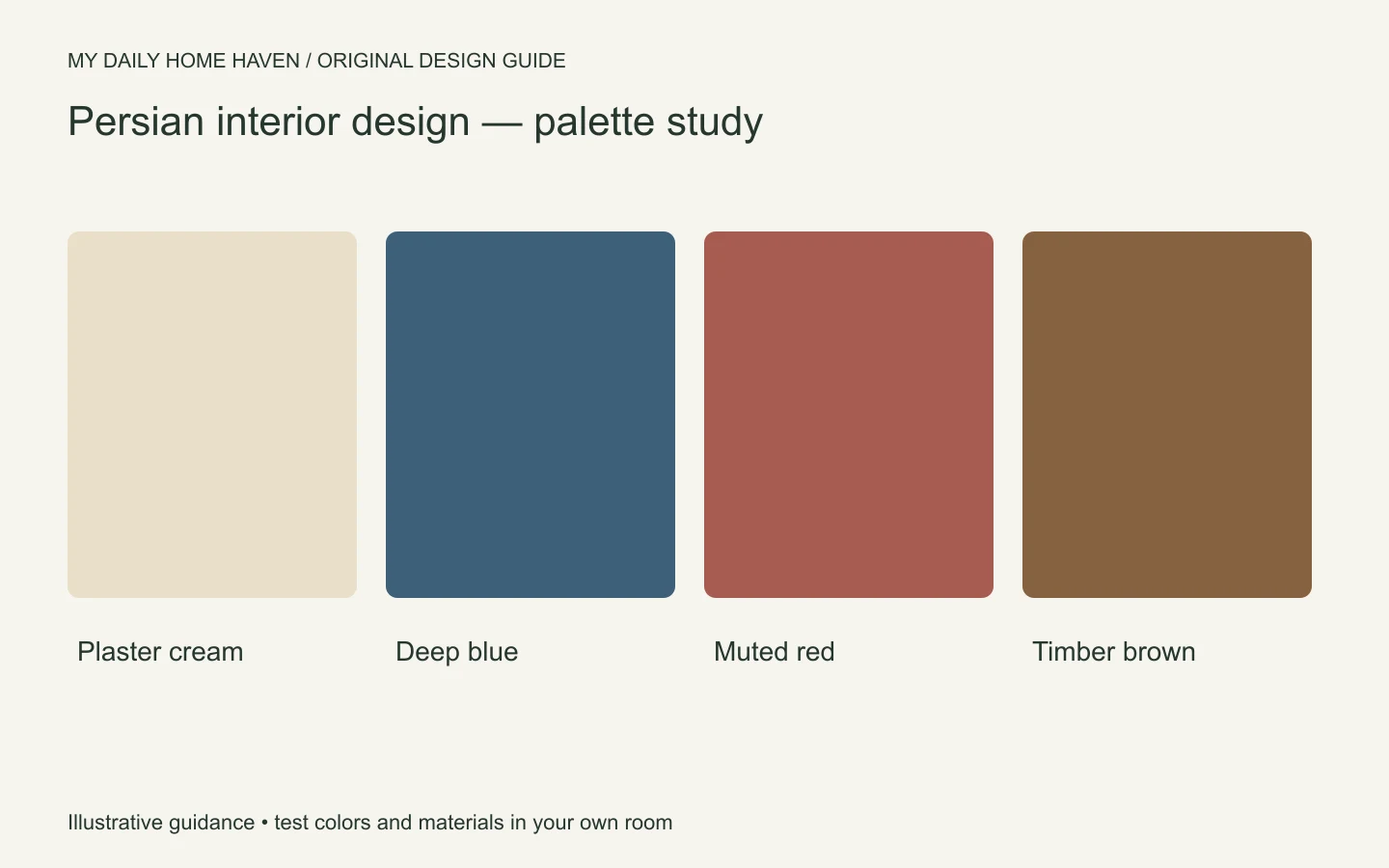
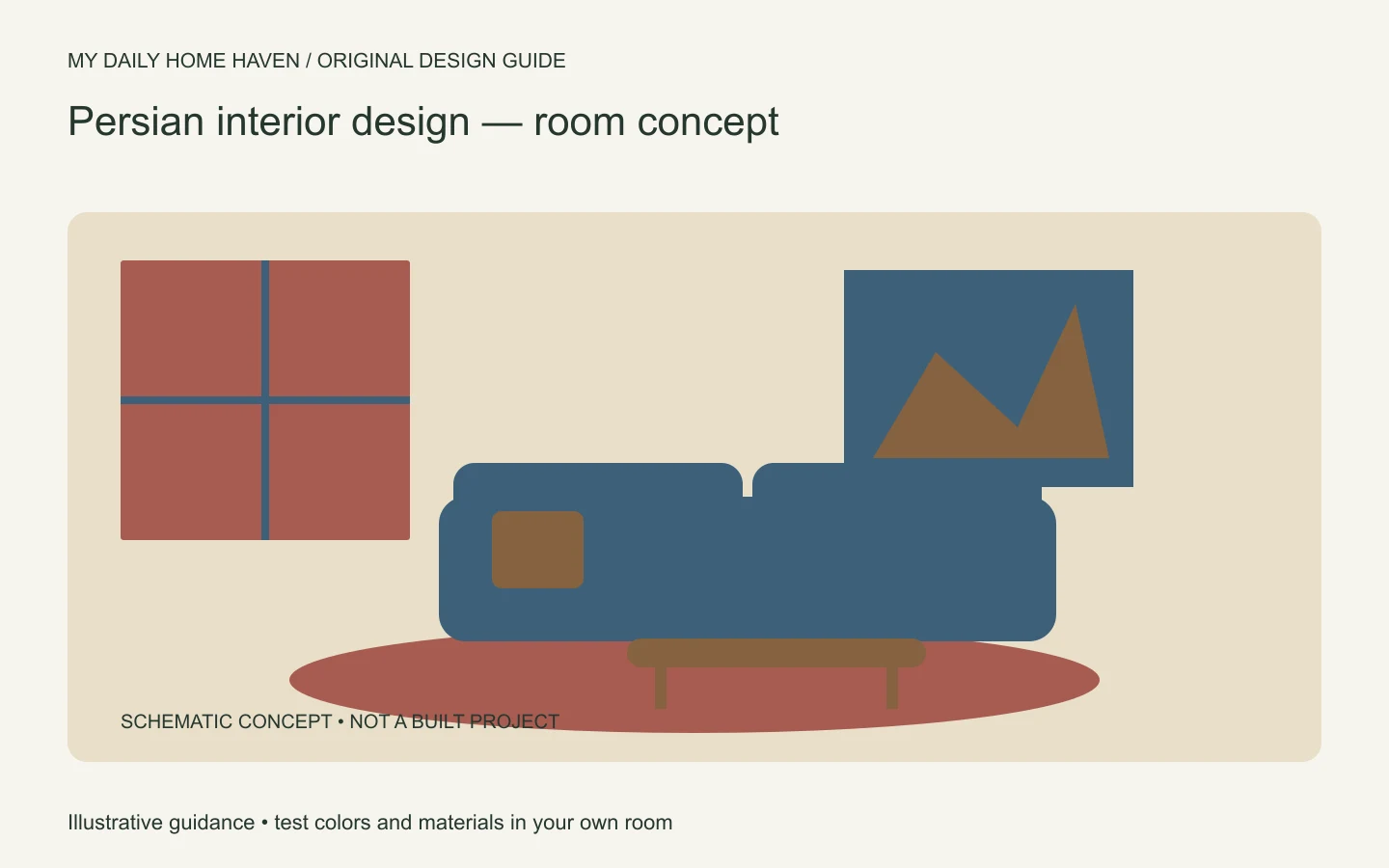
Choose one or two colors from the rug or artwork and use them in quieter forms elsewhere. A small blue motif might become a plain cushion; a warm border could relate to timber furniture. You do not need to repeat every color across the room.
Leave some large surfaces relatively calm. A patterned rug can be easier to appreciate beside simple upholstery and a quieter wall. If you want several patterns, vary their scale and compare them together before committing.
The palette does not have to be red and blue. Follow the particular piece and the fixed finishes in your home. Contemporary Iranian design and historical work contain varied colors, materials, and approaches.
Plan for gathering and privacy
Think about how guests enter, where people sit, and which areas you want to keep more private. A screen, furniture arrangement, or clearer entry zone may help in a modern open plan, provided it does not obstruct safe movement or essential light.
Create seating that supports conversation. Low seating may appear in some references, but it is not suitable for every person. Include supportive, accessible options according to the people who will use the room.
Our space planning guide helps translate these priorities into a workable arrangement. The practical idea is to organize space around household needs, not to recreate a room from a photograph regardless of its function.
Combine old and new thoughtfully
A contemporary sofa, simple lighting, and a documented rug can coexist. Repetition of a color, shape, or material can connect them without forcing every object to be ornate. Choose a few strong pieces and let the room develop around them.
If using ceramics, metalwork, or other craft, credit the maker and origin when known. Ask what the seller can document and avoid describing an object as antique, sacred, or handmade without support. Accurate description respects both the work and the reader.
Keep practical surfaces available. A coffee table covered in decorative objects may leave little room for shared food or drinks. Closed storage can help maintain a focused display while accommodating everyday belongings.
A manageable starting plan
Begin with the best existing seating and one lead textile or artwork. Compare wall and curtain samples beside it, then choose a quieter supporting palette. Add useful light where people read or talk rather than relying on a single decorative ceiling fixture.
Check the room through normal use before making another purchase. If the pattern dominates more than you intended, simplify a nearby textile. If the scheme feels disconnected, repeat one existing color selectively instead of adding an unrelated accessory.
For architectural changes, consult qualified professionals. Decorative references do not establish structural feasibility, ventilation performance, or local compliance. Keep the inspiration and the technical assessment as separate parts of the project.
Record the textile details
For Persian interior design, keep the rug or textile description with the project record. Note the dimensions, stated origin, fiber, construction, condition, and any attribution the seller can support. If some details are uncertain, preserve that uncertainty rather than turning a guess into a fact. This information helps with future cleaning, valuation, or repair as well as accurate description. Before placing heavy furniture on the textile, ask about suitable protection and care for that particular piece. A good room plan considers how a valued object will be used and maintained, not just how it looks on the first day.
Frequently asked questions
Is every Persian-style rug made in Iran?
No. A style description can refer to pattern rather than manufacturing origin. Check the actual label, seller documentation, and construction details before making an attribution.
Can this approach work in an apartment?
Yes. A well-scaled textile, a clear entry arrangement, and thoughtful seating can provide a meaningful reference without a courtyard or major renovation.
Must the furniture be ornate?
No. Simpler contemporary pieces can support a detailed textile or artwork. Let the particular reference guide the balance rather than treating ornament as compulsory.
\n\n