

Elegant interior design comes from well-judged proportions, a clear furniture plan, and details that work together. It can be formal or relaxed, colorful or neutral. Expensive materials may contribute, but a high price does not correct a crowded layout, harsh lighting, or furniture that is uncomfortable to use.
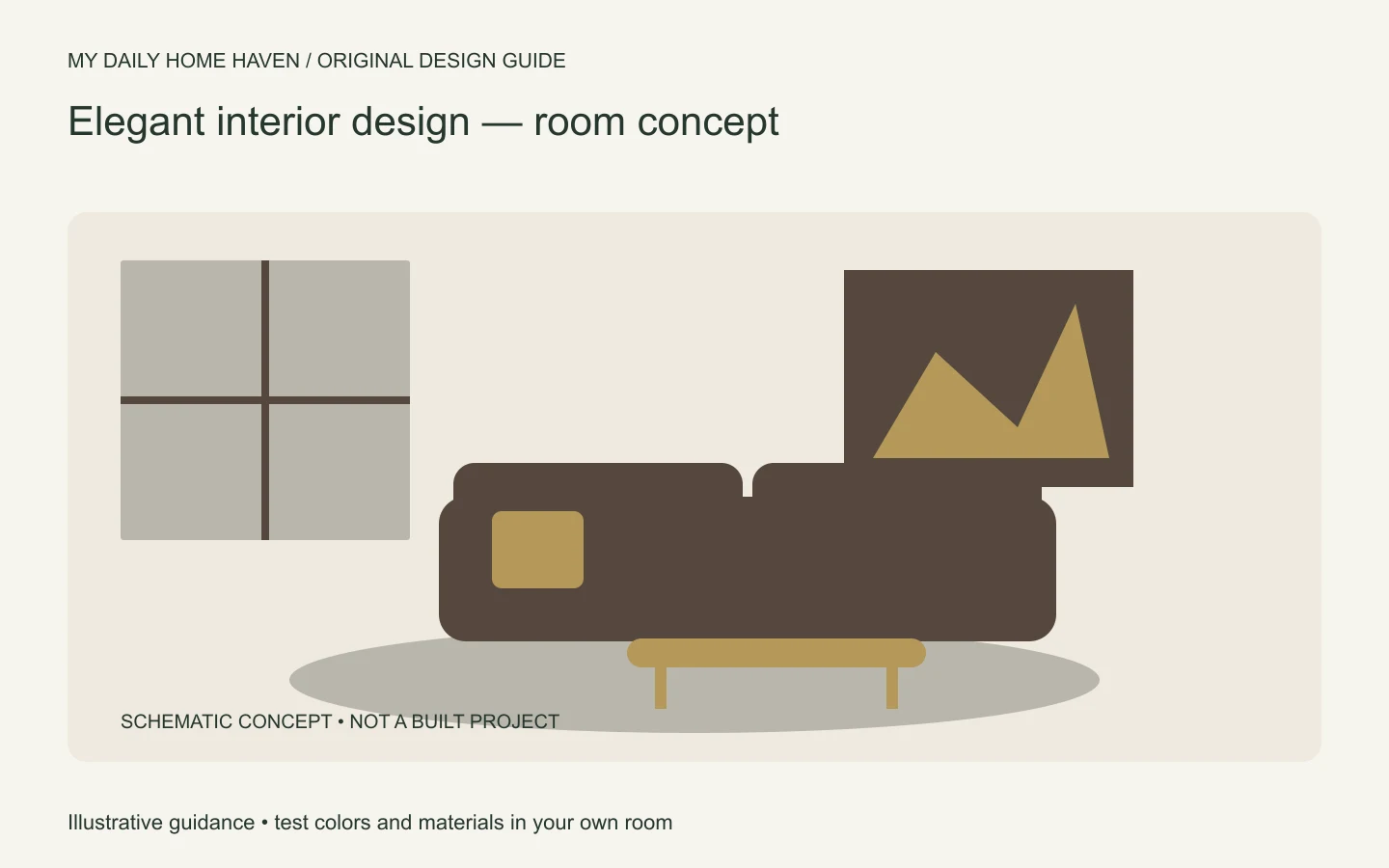
Start by deciding how the room should function, then refine the visual relationships. This approach helps you create a polished home at a realistic budget. Our interior design aesthetics guide compares the wider styles in which elegance can appear.
Elegant Interior Design: Make Comfort Part of the Look
Elegant interior design depends on proportion, good light, tactile materials, and careful editing rather than expensive decoration. Choose a comfortable focal piece first, then use lighting and a restrained palette to support it. Leave practical storage and clear walking space in the plan so refinement improves daily life instead of making the room feel untouchable.
Define the kind of elegance you want
Choose a few descriptive words before shopping. Quiet, warm, and tailored suggest a different room from dramatic, colorful, and formal. Both can be elegant when the decisions are consistent. Without that direction, individually attractive purchases may pull the room in unrelated directions.
Gather a small set of reference images and identify the common thread. Look beyond the decorative objects. Perhaps the curtains reach the floor, the seating has generous space around it, or the palette changes gently from one surface to another.
Turn those observations into practical criteria. Instead of saying you need a luxurious sofa, specify an appropriate width, comfortable seat depth, useful fabric, and a silhouette that suits the room. Clear criteria reduce costly impulse purchases.
Make proportion your first priority
A room feels composed when the furniture relates to its architecture and to other pieces. A tiny rug can leave a seating group looking disconnected. A very large pendant may dominate a compact dining area. Evaluate the complete arrangement rather than the object on its own.
Mark furniture footprints with removable tape and walk through the plan. Open doors and drawers. Check whether someone can sit down without moving a table. These simple tests reveal more than a product image against an empty studio background.
Use our space planning guide for layout decisions. Elegance should support an easy daily routine; it should not require carefully navigating around decorative obstacles.
Build a focused palette with contrast
A focused palette does not have to be all white or beige. A deep blue room with related textiles can feel as coherent as a pale one. What matters is controlling the relationships between the largest areas of color and the smaller accents.
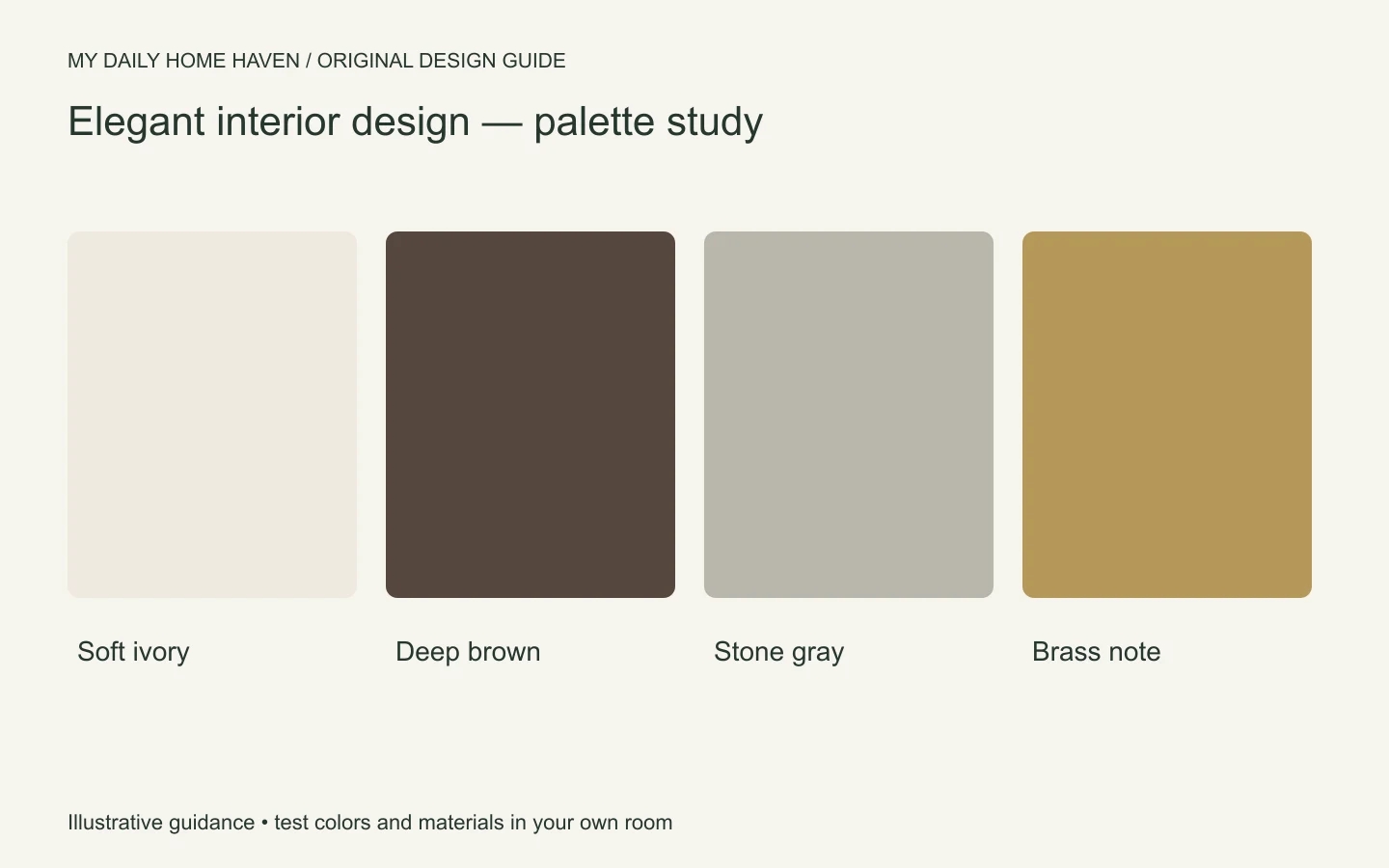
Start with fixed finishes and one anchor piece you intend to keep. Compare wall, curtain, rug, and upholstery samples together. Repeating a tone in different textures can produce a quieter result than introducing a different color on every surface.
Leave room for contrast. A darker table can ground pale upholstery; a matte surface can balance a glossy one. If every finish has the same brightness and sheen, the room may appear flat despite using costly materials.
Use lighting to make the room usable
Plan ambient light for general movement, task light where people read or work, and selective accent light when it adds value. One bright ceiling fixture rarely serves every activity equally well. A reading lamp beside the chair may improve the room more than another decorative object.
View material samples under the lighting you will actually use. Benjamin Moore’s color handbook describes how natural and artificial light change a color’s appearance. A palette selected only in a showroom may behave differently at home.
Avoid exposed glare at seated eye level. Check shades and fixture placement before buying, and use dimmers only with compatible equipment. Electrical changes belong with appropriately qualified professionals, especially when wiring or support is uncertain.
Refine the details you notice every day
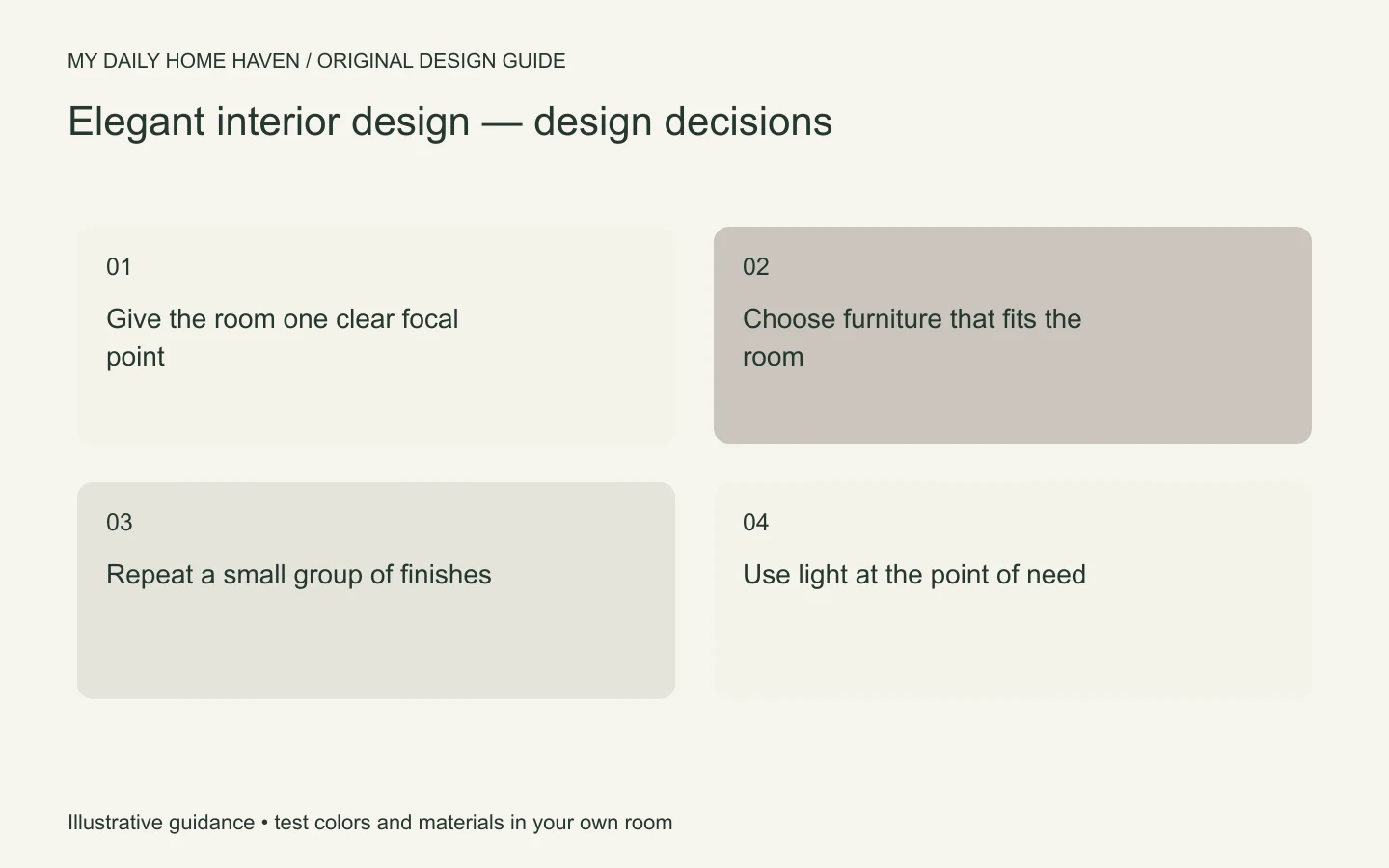
Curtain length, cushion fit, cabinet hardware, and visible cords can affect the overall impression. These details do not need to be identical, but they should look deliberate. Choose a small family of metal finishes and repeat them selectively rather than buying a new finish for every item.
Use storage to support the actual household. If paperwork lands on the dining table every day, give it a nearby home. A polished room is easier to maintain when everyday belongings have accessible places rather than being hidden only for photographs.
Edit accessories by scale and purpose. A larger artwork may create more clarity than a wall of tiny unrelated pieces. Equally, a meaningful collection can look composed when grouped together with space around it. The answer is thoughtful arrangement, not automatic minimalism.
Spend where the room needs improvement
Make a short list of functional problems: an uncomfortable chair, a rug that slips, a dark reading corner, or curtains that do not provide privacy. Solve those first. Then assess whether the room still needs decorative additions.
For a modest refresh, retain the main furniture, simplify the surface displays, improve a lamp, and replace a poorly fitting textile. For a larger project, coordinate samples and dimensions before placing orders. Allow for delivery, fitting, and upkeep rather than using the whole budget on the purchase price.
Do not buy fragile finishes merely because they signal luxury. A surface that you constantly worry about may be a poor fit for a busy kitchen or family room. Elegance is more convincing when the room feels comfortable to live in.
Judge quality at the point of use
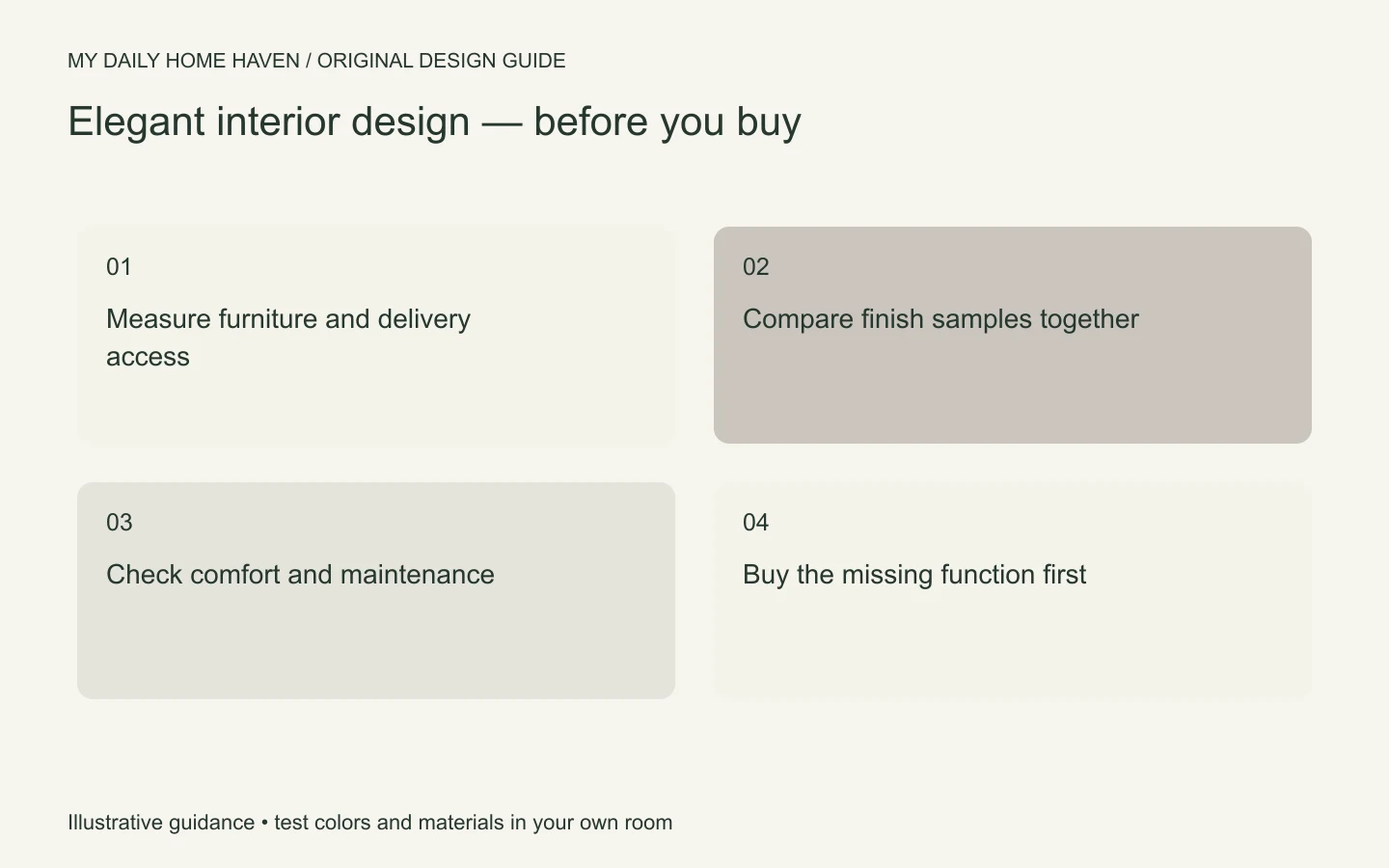
Elegant interior design benefits from details you handle every day. Test a drawer, sit in the chair, open the curtain, and check how easily a lamp switches on. A visually polished object that feels awkward in use may become a daily irritation. Ask about repair and replacement options before choosing a complicated mechanism or delicate finish. When comparing two items, consider the complete experience: fit, comfort, finish, delivery, and upkeep. The less expensive option may be the better choice if it serves the room more reliably and leaves budget for a more important improvement elsewhere.
Frequently asked questions
Can an elegant room include bright colors?
Yes. Give a strong color a clear role and connect it to the rest of the room. Repetition, proportion, and quiet supporting surfaces can keep a vivid scheme coherent.
Does everything need to be symmetrical?
No. Symmetry is one way to create order, but balanced visual weight can work just as well. An off-center arrangement may suit the architecture and daily use better.
What is the best first purchase on a small budget?
Choose the item that solves the clearest problem. That may be a useful lamp, correctly sized rug, or better curtain rather than a new statement piece. Measure and test before spending.