

Interior design packages organize professional help into a defined service, but package names do not tell you exactly what you will receive. A room plan, a shopping list, and coordinated installation can all appear under a phrase such as complete design. Read the deliverables before comparing prices.
The most useful interior design package matches the decisions you need help making and the tasks you can manage yourself. This guide explains how to compare offers, identify exclusions, and keep a fixed scope from becoming an open-ended project.
Begin with our guide to hiring an interior designer if you are still deciding which type of professional support suits your home.
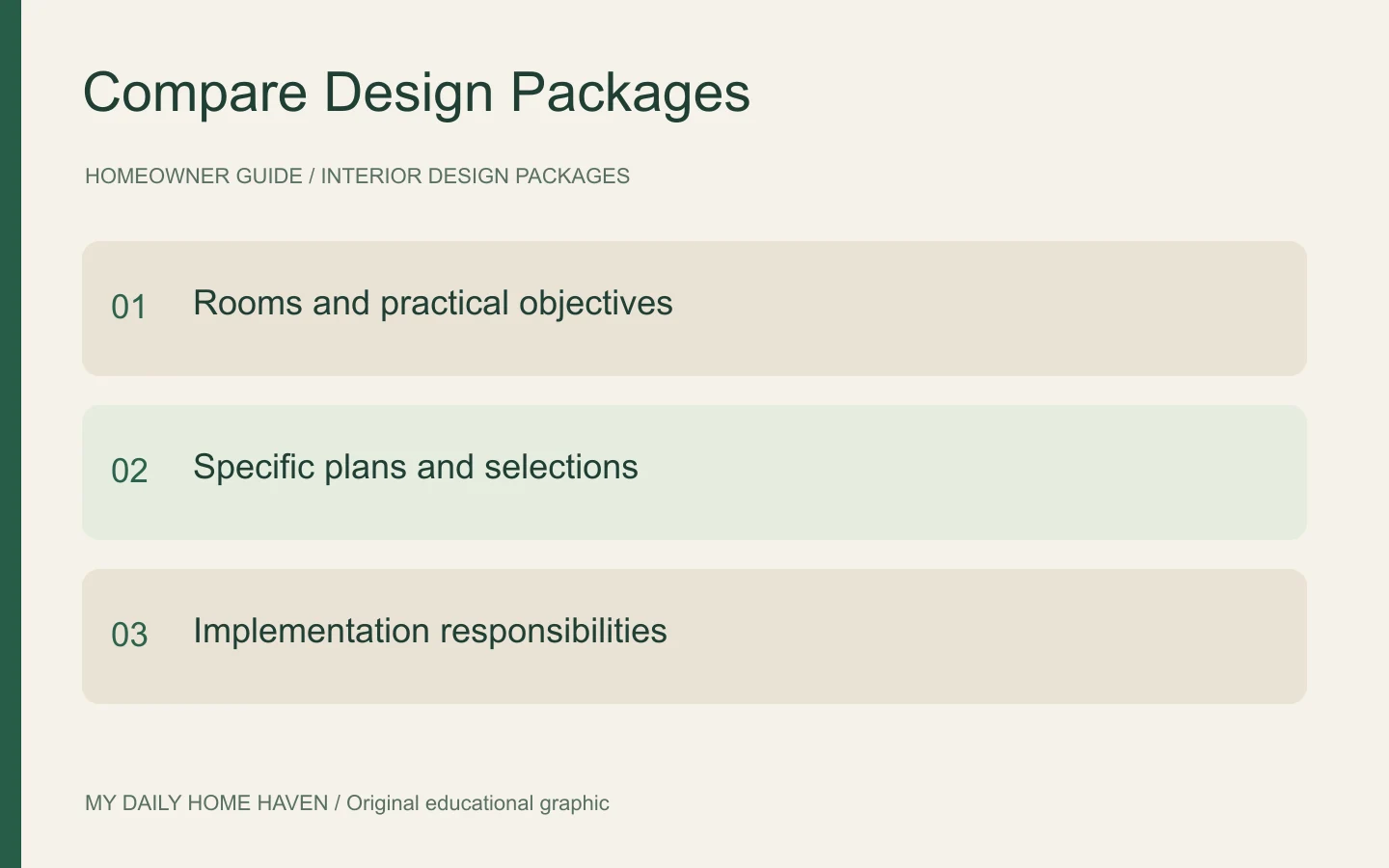
Choose interior design packages for a clear purpose
First, list the rooms included and the practical result you want. A bedroom refresh with existing furniture differs from designing connected living and dining areas. Even within one room, a furniture arrangement and custom cabinetry involve different work.
Identify items you plan to keep, your complete budget, and any construction requirements. Then ask providers to propose a package against that brief. Without a shared brief, you may be comparing different services rather than different prices for equivalent work.
Understand common package types
Consultation packages usually concentrate on advice during an agreed appointment or period. Design-only services may supply concepts, layouts, and selections for you to implement. More extensive services can add purchasing coordination and installation support.
However, these categories do not guarantee specific inclusions. Ask whether the proposal includes written recommendations, dimensioned plans, technical details, or access to the designer after the presentation. Each output should have a stated purpose and level of detail.
If your project involves building work, identify the required local professionals separately. A room-design package should not be assumed to include structural assessment, permit preparation, or contractor supervision unless the agreement clearly assigns appropriate responsibilities.
Compare interior design packages line by line
| Package item | Useful detail to confirm |
|---|---|
| Rooms | Exact areas and connected spaces covered |
| Measurements | Who collects and verifies dimensions |
| Concepts | Number of initial directions and review stages |
| Drawings | Type, detail, and intended use |
| Selections | Product identifiers, quantities, and alternatives |
| Revisions | Included rounds and limits |
| Purchasing | Ordering, delivery, returns, and claims |
| Handoff | Final files and implementation support period |
Use this table while reading the actual proposal. If an item is missing, ask for clarification instead of assuming it is part of a premium tier. Keep the final answers with the agreement.
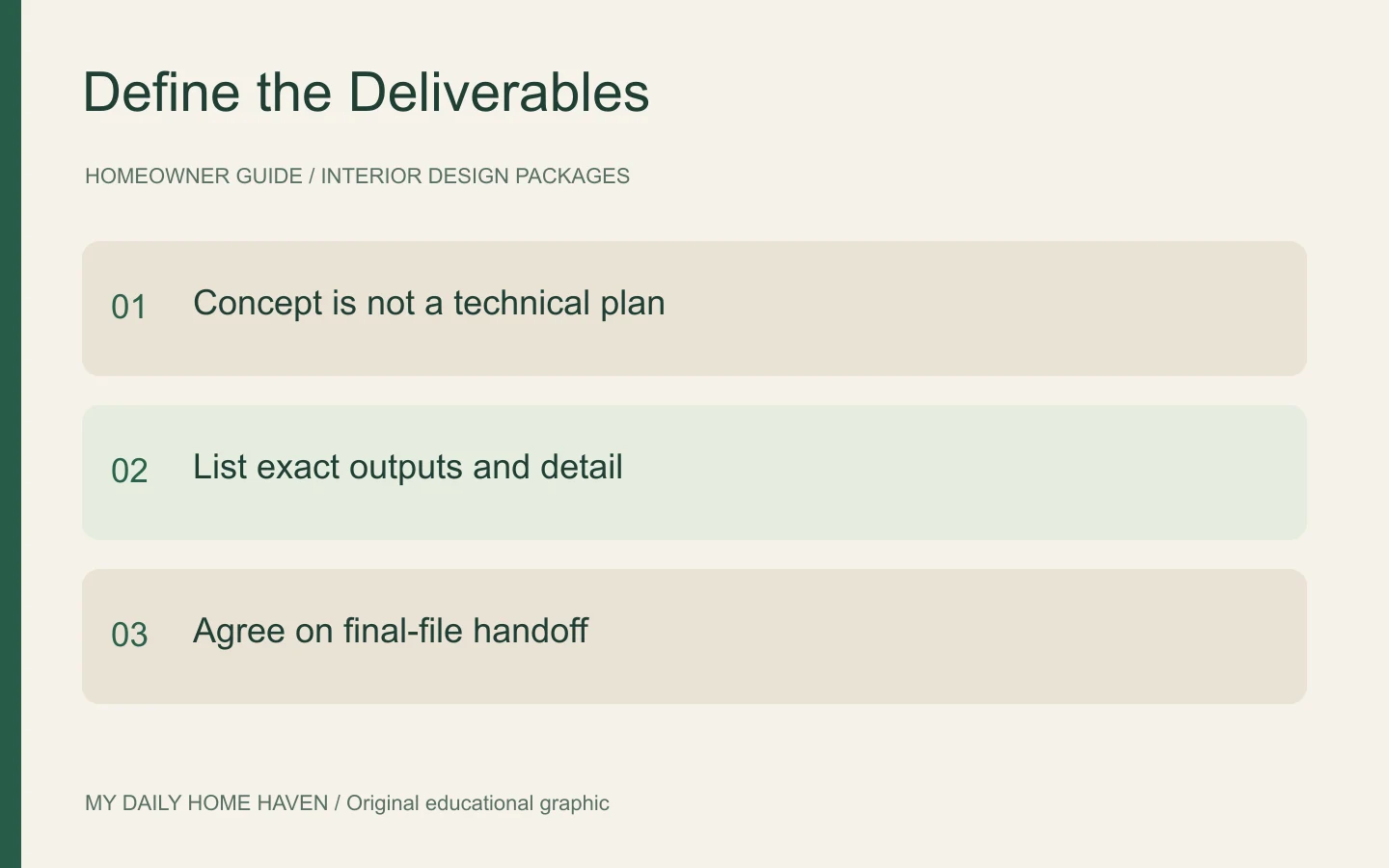
Distinguish design fees from purchasing budgets
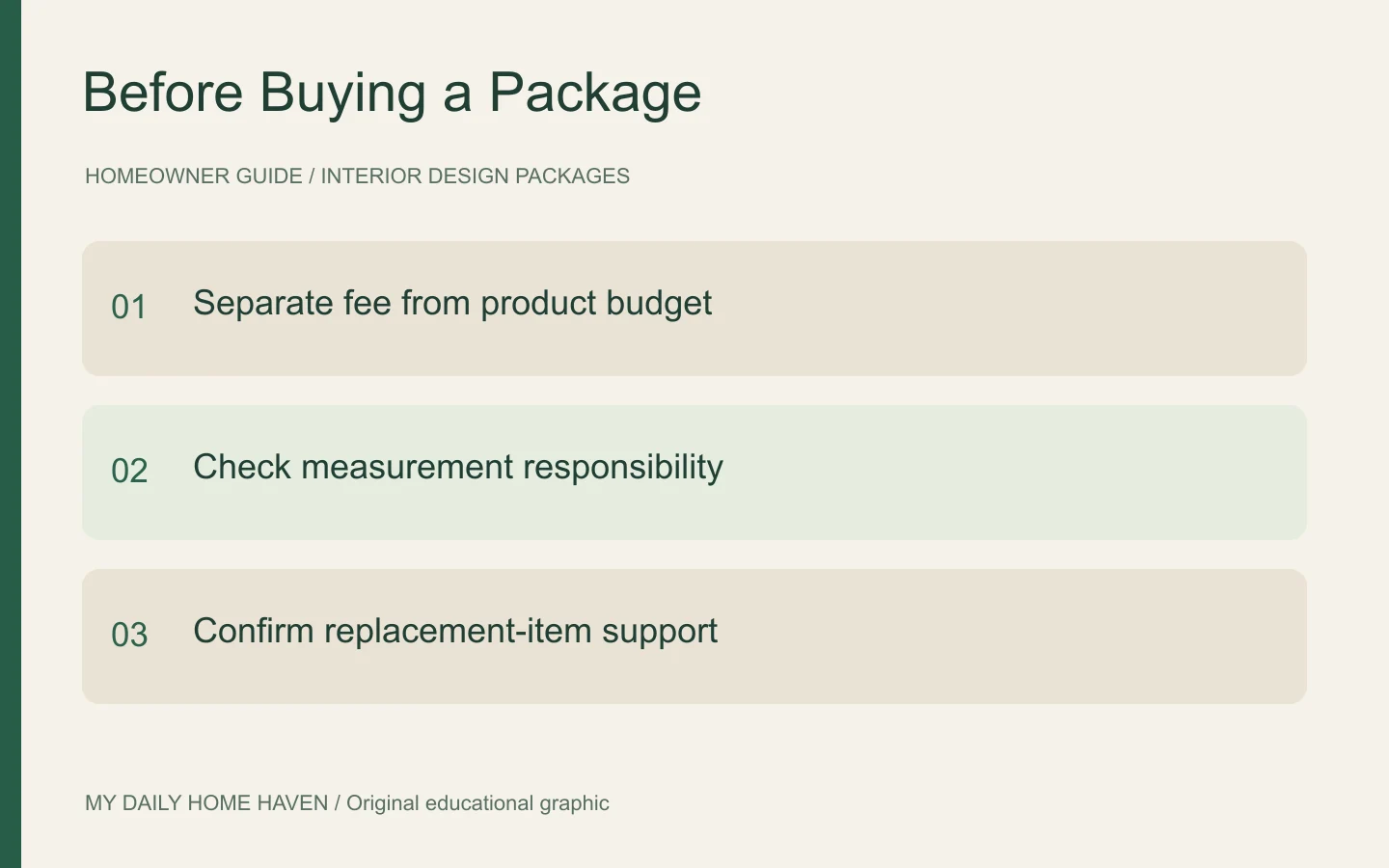
A package fee may pay for professional work while leaving furniture and installation entirely separate. Ask for a total-budget discussion that includes delivery, assembly, taxes, and any additional site work. Otherwise, the package may fit while the completed room does not.
ASID explains several fee structures, but your provider’s written terms control what you are buying. Confirm whether the package is a genuine fixed scope, a block of hours, or a starting fee with separately billed services.
For example, a hypothetical $1,200 plan with $8,000 of proposed products does not represent a $1,200 room. The products, shipping, and implementation costs still need to fit your available spending. These figures illustrate the distinction and are not market-rate estimates.
Make revision allowances understandable
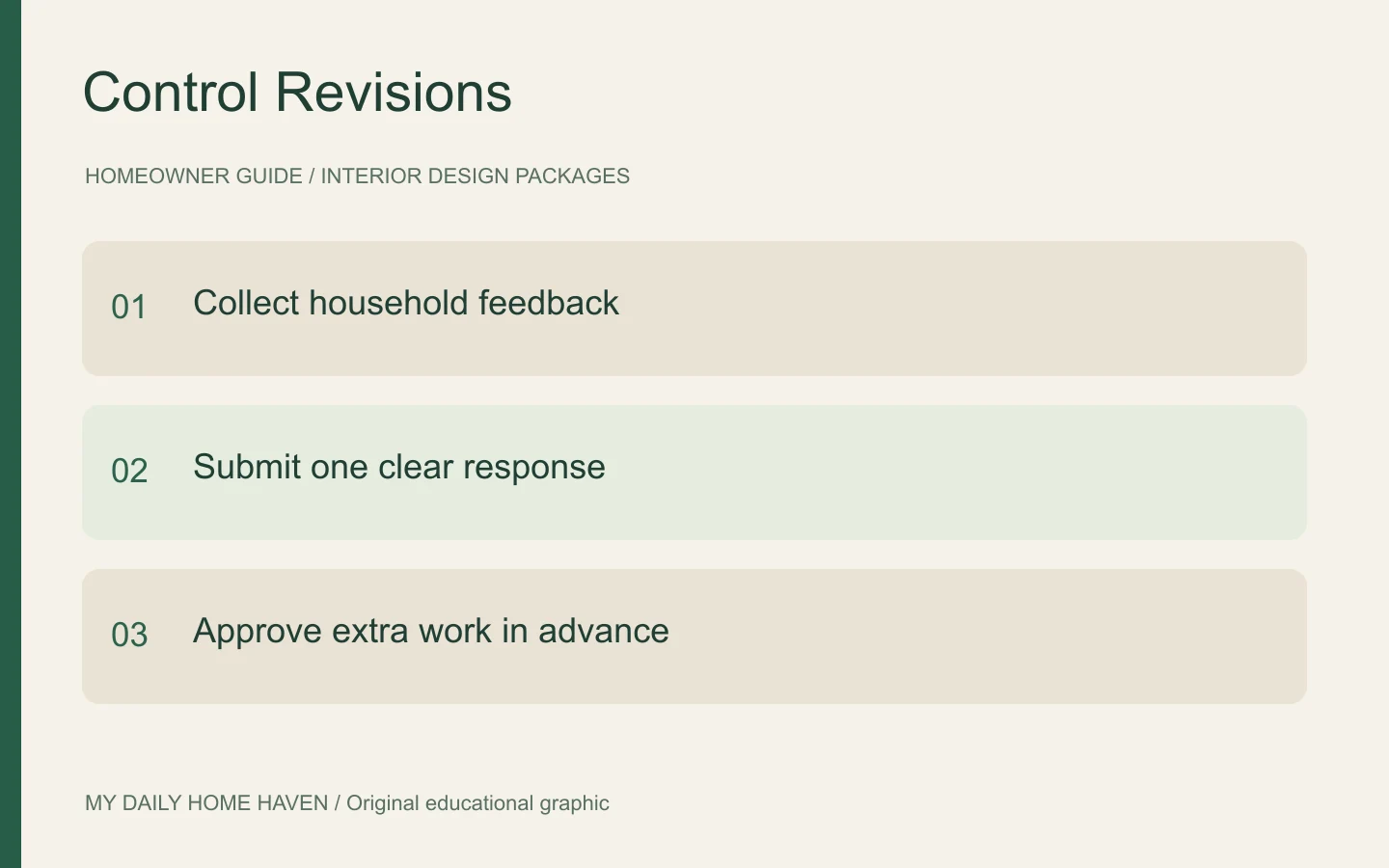
Ask what counts as a revision round. A consolidated set of comments may be treated differently from repeated requests over several weeks. Also clarify whether a new design direction falls within the original scope.
Provide feedback about the actual problem. For example, explain that a desk blocks access or that a material exceeds the maintenance you can manage. Clear comments help the designer revise the plan without guessing which parts should change.
Before approving a stage, collect feedback from everyone with decision-making authority. Conflicting instructions can consume the revision allowance without improving the room. Name one person to submit the household’s final response.
Check measurements and product availability
A remote package may depend on dimensions supplied by you. Ask for measurement instructions and identify the important checks before ordering. Product dimensions, delivery routes, window positions, and door clearances deserve attention.
Also confirm what happens when a selected item is unavailable. Does the package include substitutions, and for how long? A replacement product can change scale, color, or function, so the responsibility should be explicit.
Our space planning guide explains why a useful layout must respond to actual dimensions and movement through the room.
Agree on communication and completion
Find out how meetings occur and when feedback is expected. A package with a short response window may be difficult if you travel frequently or need several household members to approve decisions.
Request a clear completion milestone. That might mean delivery of the final plan, approval of selections, or installation of specified items. If support ends before you finish purchasing, identify the remaining tasks and the cost of any later assistance.
Store the final plans, product schedule, approvals, and relevant terms together. This makes the handoff easier when you implement the room gradually or involve an installer who did not attend the design meetings.
A two-package comparison example
Imagine Package A includes a concept board and shopping list, while Package B adds a dimensioned furniture layout and one implementation review. Package B may be more useful if fitting existing furniture is your main concern.
Alternatively, you may already have a reliable layout and only need help coordinating colors. In that situation, the extra services might not justify the additional fee. Choose the work that resolves your problem rather than automatically selecting the most extensive option.
Package questions
Can I request a custom package?
Some providers adapt scope, while others use fixed offerings. Ask whether excluding rooms or implementation work changes the price and responsibilities.
Does a package include furniture discounts?
Only if the stated terms provide them. Confirm eligibility, product restrictions, and the total delivered cost rather than treating a possible discount as guaranteed savings.
Can I upgrade later?
Ask before booking. An upgrade may require a new agreement, additional measurements, or a different process. Do not assume earlier fees automatically transfer.
Buy interior design packages with defined outcomes
Choose a package with understandable deliverables, clear revision limits, and a realistic implementation plan. When those details match your brief, you can compare value with much greater confidence.