

Interior plant design combines the needs of living plants with the way a room looks and functions. Begin with the actual light, available space, and care routine. Then choose plant forms and containers that suit those conditions. A visually appealing location is only useful if the plant can live there and people can maintain it.
Our principles of interior design guide explains balance, emphasis, and repetition. This article applies those visual ideas to planting while keeping plant health, mature size, and everyday room use central.
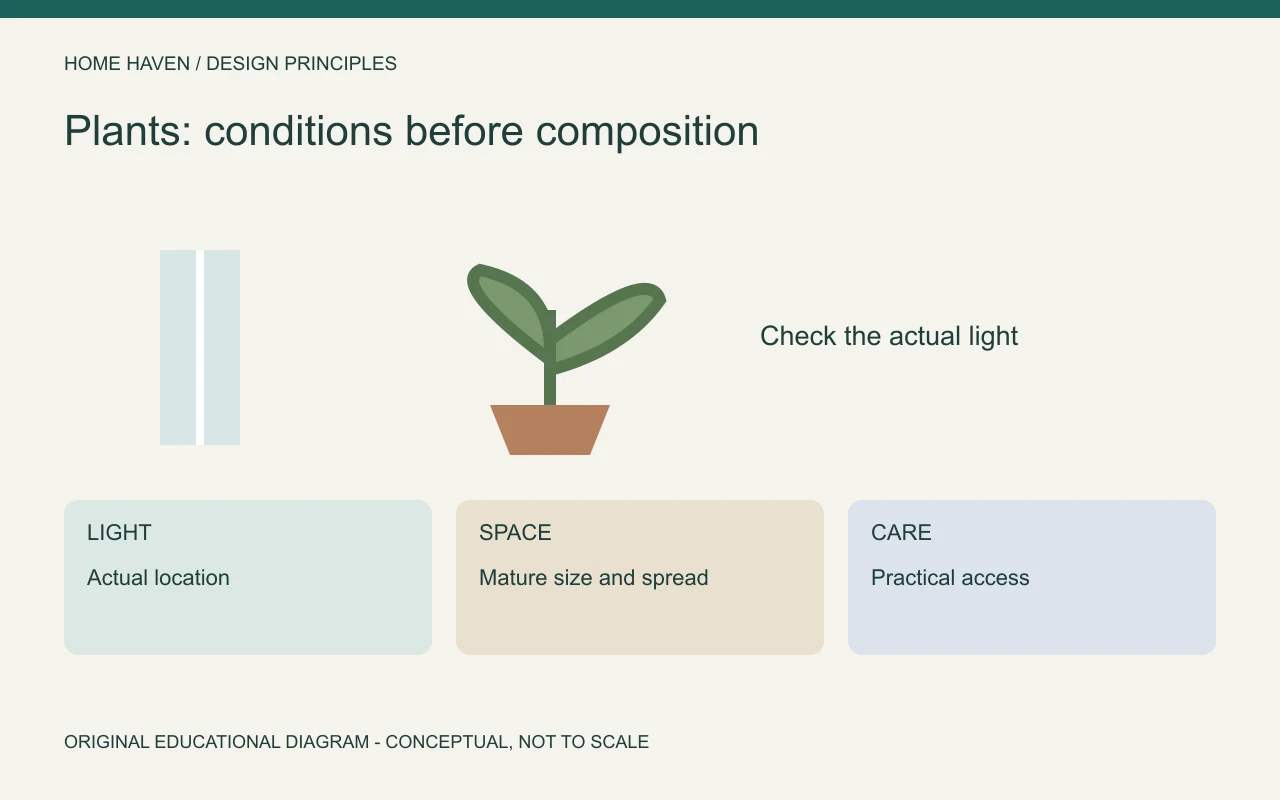
Map the light before choosing the plant
Observe the intended position at different times of day. Record the window direction, distance, obstructions, and any direct sun. A bright-looking room does not provide the same conditions at every shelf or corner.
University of Maryland Extension recommends selecting plants that suit existing indoor conditions. Use the exact plant’s requirements rather than assuming every species sold as a houseplant will tolerate the same location.
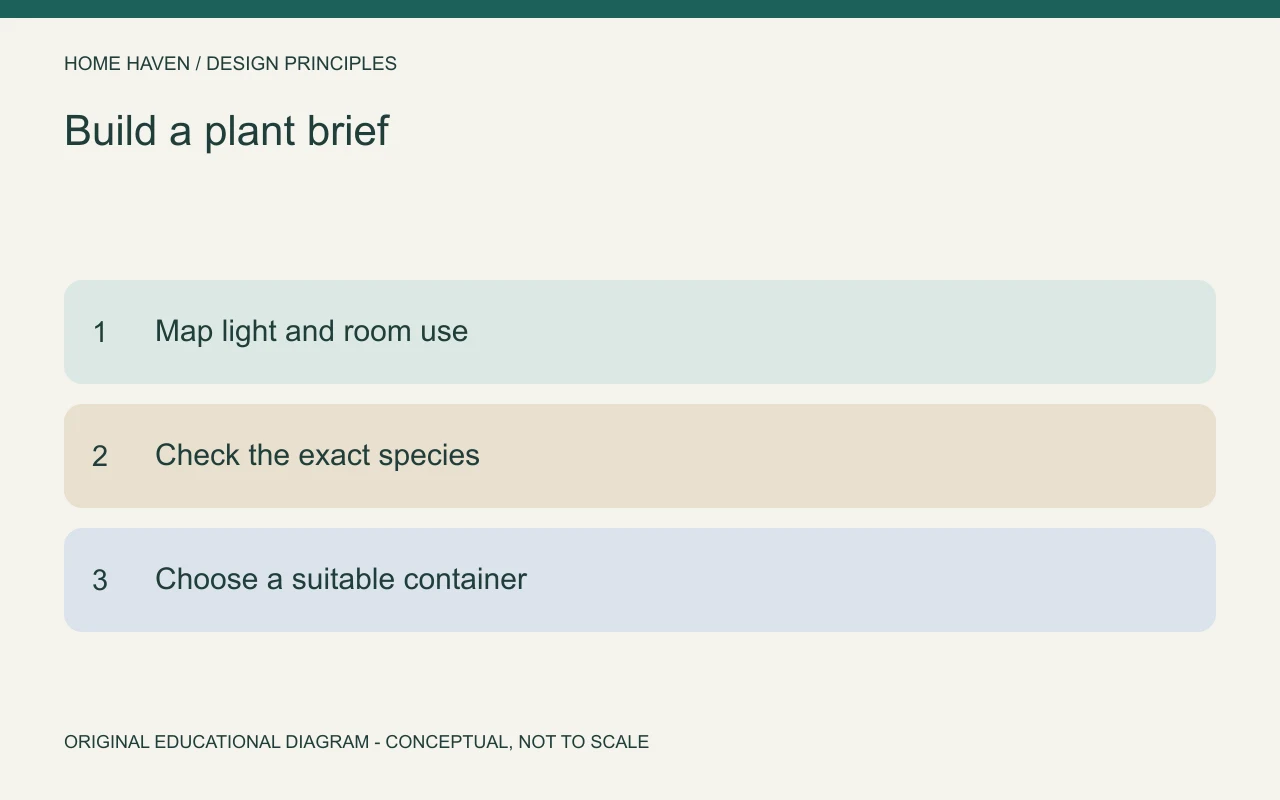
Interior plant design starts with a plant brief
Write down what the location can support and what the household can maintain. Include the available footprint, height, light, access for watering, and any relevant pet or child considerations. The brief can be a simple note rather than a full landscape plan.
If the location does not suit the plant you imagined, choose another plant or another location. Do not treat a healthy plant as a decorative object that should remain unchanged despite unsuitable conditions.
- Light: actual conditions at the proposed position.
- Space: current and expected mature size.
- Care: watering, cleaning, and access.
- Container: drainage and protection for surrounding surfaces.
- Use: movement, doors, furniture, and household needs.
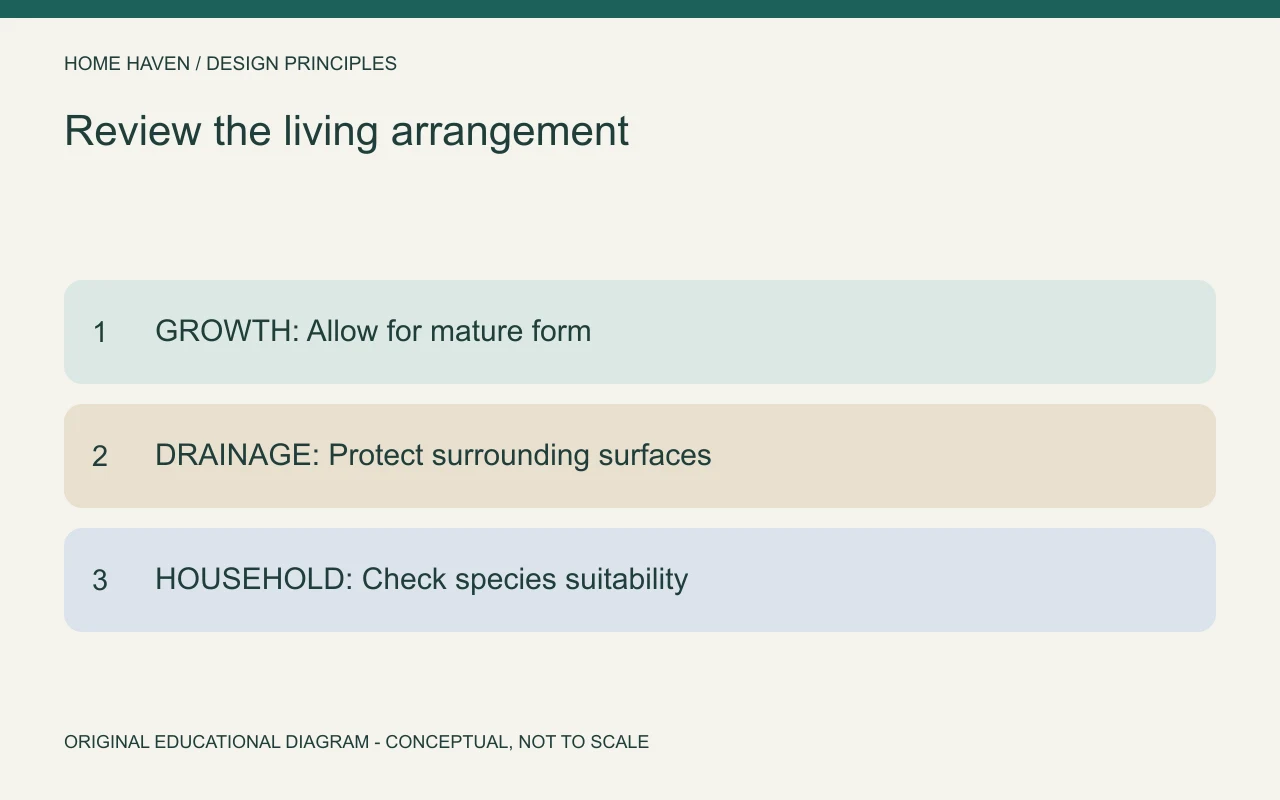
Design for mature size and shape
A small nursery plant can change the room relationship as it grows. Review the expected form and spread, not only the height at purchase. A broad leaf canopy may interfere with a route even when the container fits neatly.
Consider whether the plant grows upright, trails, or spreads outward. Use that form deliberately in the composition. Keep leaves away from places where people repeatedly brush past them, and allow practical access for inspection and care.
Choose a stable container and suitable drainage
Select a container arrangement appropriate to the plant and growing medium. A decorative outer pot can conceal a nursery container, but it should not encourage water to collect unnoticed around the roots. Check the actual care guidance for the plant.
University of Florida IFAS houseplant guidance provides a useful care reference. Protect floors and furniture with a suitable arrangement, and check for leaks or trapped moisture rather than relying on appearance alone.
Use plant form to support the room
A taller upright plant can give a corner more presence. A smaller group can connect a shelf display. A trailing form can introduce a different line, provided its placement and care remain practical.
Do not add a tall plant simply because one side looks empty. Review whether simplifying the heavier side would improve balance first. Plants are living elements with needs, not automatic fillers for every unused corner.
Repeat containers or foliage selectively
Related containers can connect plants with different forms. Alternatively, a repeated color or material can relate the planting to furniture. Keep the connection restrained so the room does not become a collection of identical pots.
If several plants share one decorative grouping, maintain their individual care needs. Similar appearance does not mean identical light or watering requirements. Separate containers can make it easier to manage plants that look compatible but need different treatment.
Review pets and children before purchasing
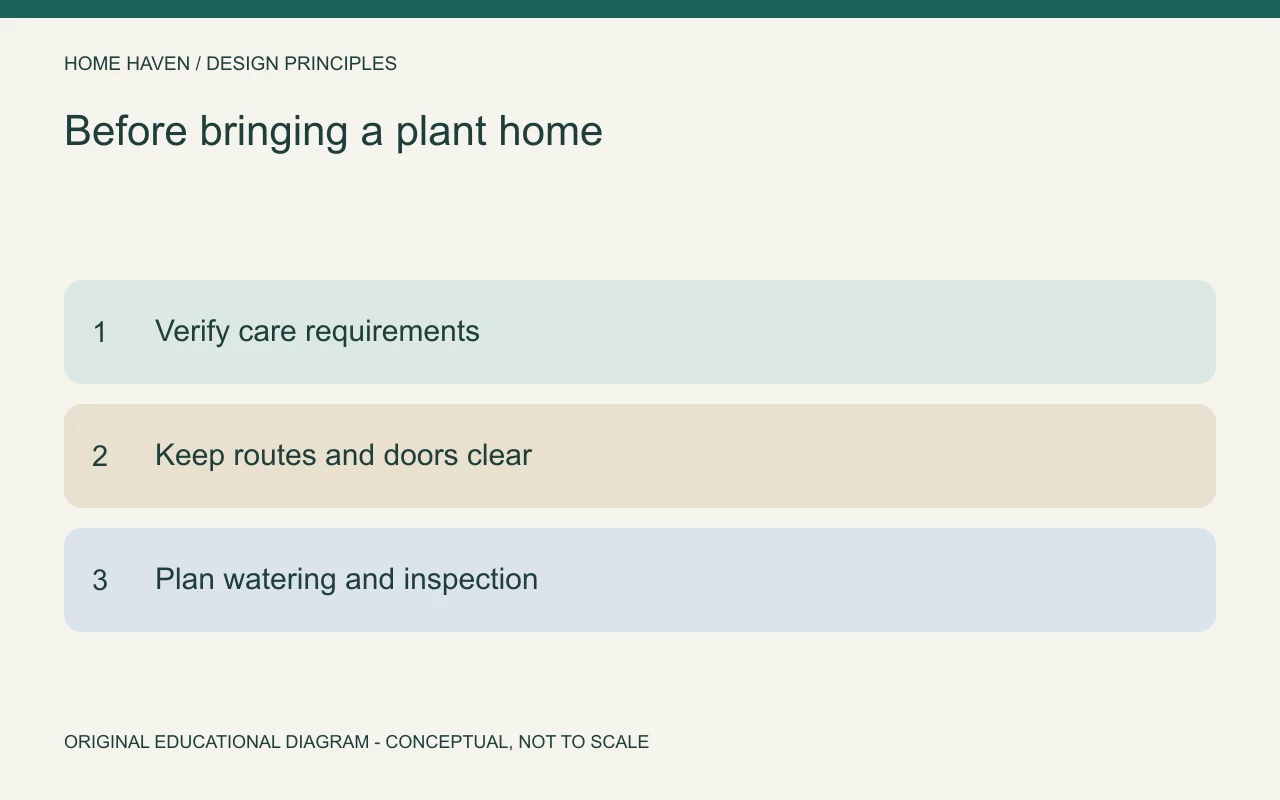
Identify the exact species and check its suitability for the household. Common names can refer to different plants, so retain the botanical name where possible. Do not rely on a seller’s vague label such as family-friendly.
The ASPCA plant database provides species-specific information for pets. Use appropriate professional guidance for concerns involving children or a particular animal, and do not assume placing a plant on a shelf makes it inaccessible.
Plan a realistic maintenance route
Think through watering, checking leaves, cleaning the surrounding area, and moving the container when necessary. A heavy pot behind a sofa may be difficult to reach even if it looks attractive in a photograph. Consider who will do the work.
Keep the care record tied to the actual plant and conditions. Avoid a universal weekly watering rule for every species and room. Observe the growing medium and follow suitable species-specific guidance rather than treating care as a decorative calendar.
A hypothetical apartment planting plan
Imagine a living room with one bright window, a darker interior shelf, and a narrow route to a balcony. The owner wants a large floor plant near the window and a few smaller plants elsewhere. The plan should begin with light and movement, not the number of pots.
Measure the floor location and allow for the expected leaf spread. Check the shelf conditions separately instead of assigning the same plant to both locations. If the narrow route conflicts with the mature plant, choose a different form or position.
Test the composition before adding more plants
Place the proposed containers or temporary size markers in the room. Review the grouping from the entrance and main seating position. Then check doors, drawers, furniture in use, and access for care.
Live plants will change, so leave room for adjustment. A plant that grows toward light may need a different relationship with nearby objects over time. Review the arrangement periodically rather than treating the first photograph as a permanent final composition.
Planting questions
Can a low-light plant live with no light?
Do not interpret low-light tolerance as no-light suitability. Check the plant’s requirements and the actual location. Appropriate supplemental lighting may need consideration where natural light is insufficient.
Should every plant use a matching pot?
No. Related tones or materials can connect different containers. Prioritize the plant’s needs, stability, drainage, and the room’s use before choosing a visual theme.
Choose conditions first, composition second
Match the plant to the location, allow for growth, and make care accessible. Then use form, grouping, and containers to connect it to the room. A successful planting arrangement remains useful and maintainable after the styling is finished.