

Victorian house interior design works best when the home’s character and modern routines receive equal attention. Start by identifying what makes the rooms distinctive before changing surfaces or openings. Then choose furniture, lighting, and storage that support current use. You can create a comfortable home without treating every original detail as an obstacle.
Understand the particular house
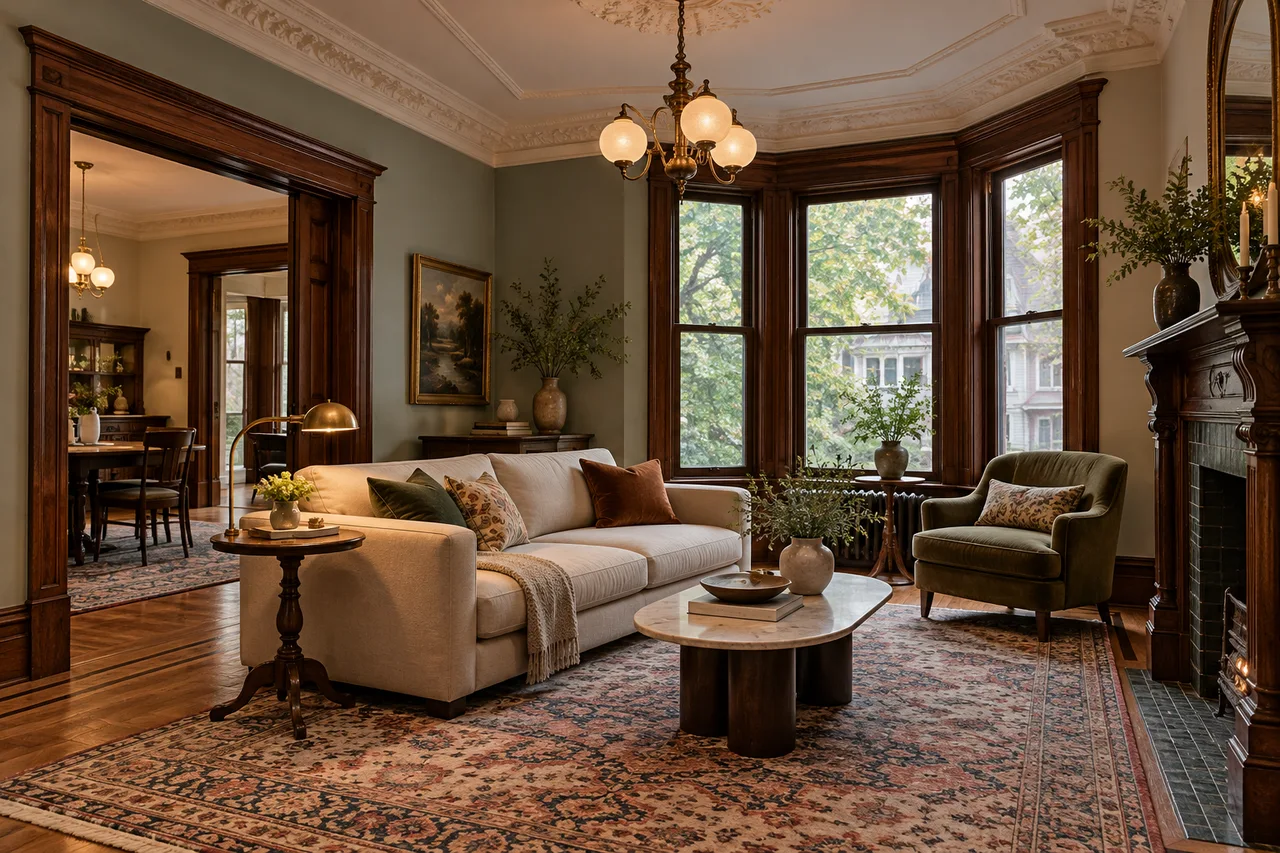
Victorian-era American homes vary in style, region, construction, and later alterations. Do not assume every room originally had the same colors, ornament, or arrangement. Look at the house itself and any reliable documentation before making restoration claims.
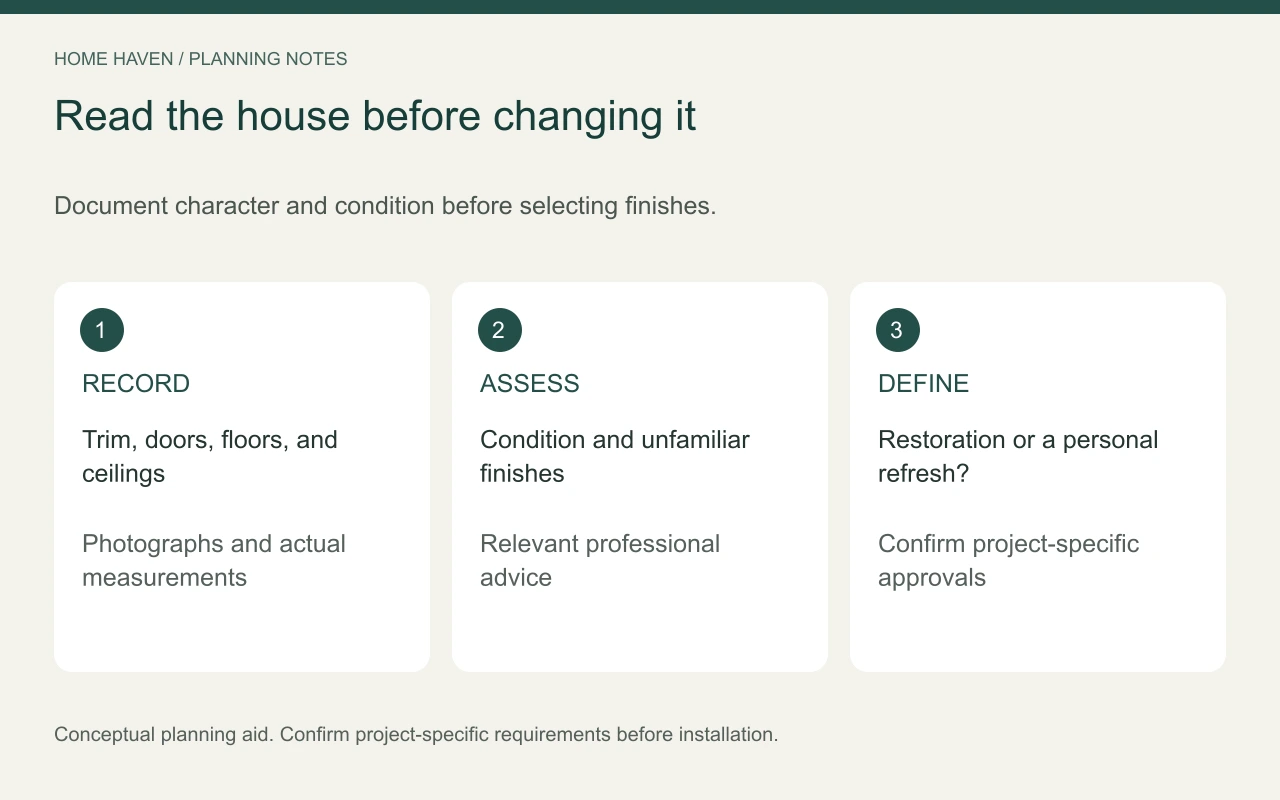
Photograph trim, doors, flooring, fireplaces, ceiling details, and built-in features. Record condition and note areas that need professional assessment. Distinguish a furnishing refresh from a preservation project or a major renovation.
The National Park Service guidance on historic interior spaces explains how spaces, features, and finishes contribute to historic character. Its preservation context helps frame questions; applicable approvals and treatment decisions depend on the property and project.
Plan Victorian house interior design around the rooms
Measure the actual openings, wall segments, bay windows, and projecting features. Include the full operation of pocket doors or hinged doors where present. Decorative trim can reduce the usable wall area available to a large modern cabinet.
Use our space planning interior design guide to compare arrangements before ordering furniture. Preserve useful routes between connected rooms and check how the home functions when several people use it.
Let room shape guide the seating
A bay window can accommodate a reading area, but measure the furniture and window access before treating it as a ready-made nook. A compact chair may work better than a deep chaise. Keep curtains, shades, and required openings operable.
Place sofas according to both room dimensions and conversation needs. Do not force all seating against the perimeter if that leaves the group disconnected. Equally, avoid floating furniture where it blocks a narrow passage between parlors.
Keep original features visible and usable
Allow important trim, fireplaces, or built-ins to remain legible within the arrangement. A tall cabinet may fit physically while hiding the feature that gives the room its identity. Try alternative storage locations before covering distinctive architecture.
If a feature needs repair, get advice suited to its material and condition. Do not assume replacement is the easiest or most appropriate treatment. Likewise, avoid aggressive stripping or disturbance of unfamiliar old finishes without a safety assessment.
Treat a fireplace as a building feature until its condition and intended use have been assessed by an appropriate professional. A decorative furnishing plan should not imply that an old fireplace is ready to operate. Respect applicable installation and clearance requirements for any active heating equipment.
Mix old and new through proportion
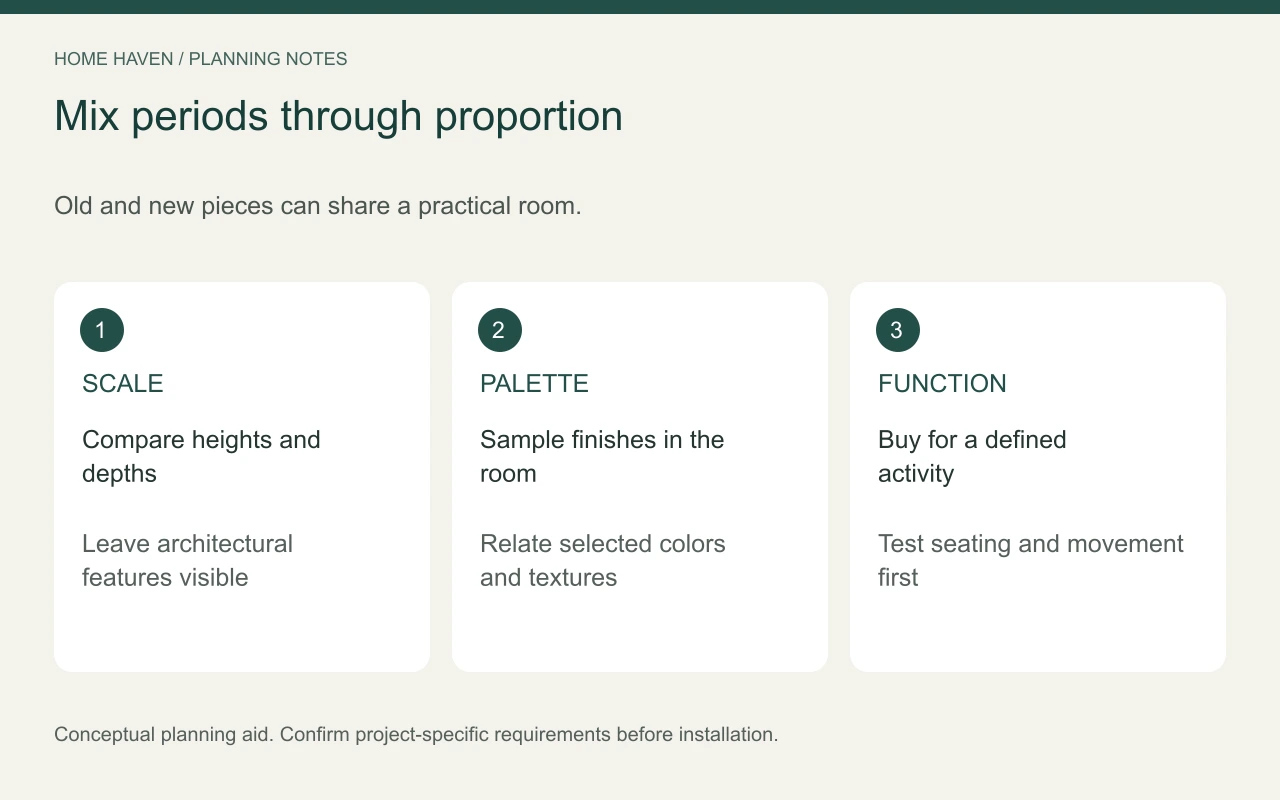
An antique table can sit comfortably beside a simpler modern sofa when their scale and use make sense. Compare heights, depths, and visual weight rather than matching every item to a single period. A few well-chosen older pieces can establish character without filling every surface.
Choose new furniture that leaves space for the room’s architecture. A restrained upholstered shape can allow detailed trim to stand out. However, contemporary does not automatically mean small; measure the actual item and delivery route.
Avoid buying a full set of reproduction furniture before living with the room. Start with essential seating and tables, then add pieces that solve a defined need. This approach leaves room for personal objects and genuine finds.
Build a palette from real evidence and samples
Decide whether the aim is historically researched restoration, a sympathetic refresh, or a personal modern scheme. Those are different briefs. Do not label a paint color historically accurate unless the claim has a reliable basis.
Compare samples against existing woodwork, floors, and daylight. Rich colors can work beautifully in some rooms, while lighter finishes may suit others. There is no universal requirement to paint a Victorian home dark or to cover all woodwork in white.
Use patterns selectively. A rug, upholstery fabric, and wallpaper can coexist when their scale and colors relate, but introduce them together in samples. Let the existing architectural detail carry part of the visual interest.
Add lighting without competing with the architecture
Historic rooms often need lighting for present-day reading, work, and cleaning. Combine appropriate general light with task lamps and selected accents. Review the room after dark before deciding that a larger decorative fixture will solve everything.
Check fixture positions against ceiling ornament, door operation, and furniture. A modern installation should not casually damage distinctive fabric. Coordinate electrical work and any preservation concerns with the relevant professionals.
Plan controls and cord routes with daily use in mind. Avoid extension cords crossing circulation or lamps placed where they constantly need moving. A room can retain character while gaining a much clearer evening routine.
Find storage without filling every recess
Start with the belongings that need a home. Papers, media equipment, games, or coats may require different solutions. A shallow freestanding cabinet can sometimes serve better than a large built-in that changes an important wall.
Use custom work only after documenting the dimensions and adjacent features. Consider whether the installation can respect existing trim and retain necessary access. Ask for drawings and samples before approving fabrication.
For Victorian house interior design, restraint can protect both comfort and character. Leaving some wall and floor area open helps individual details remain visible. Empty space is useful when it supports movement or gives a significant feature room to stand out.
Organize the work before decorating
Address condition problems and professional assessments before applying new finishes. Confirm any property-specific preservation approvals. Keep construction, repair, electrical work, and furnishing costs separate when comparing USD proposals.
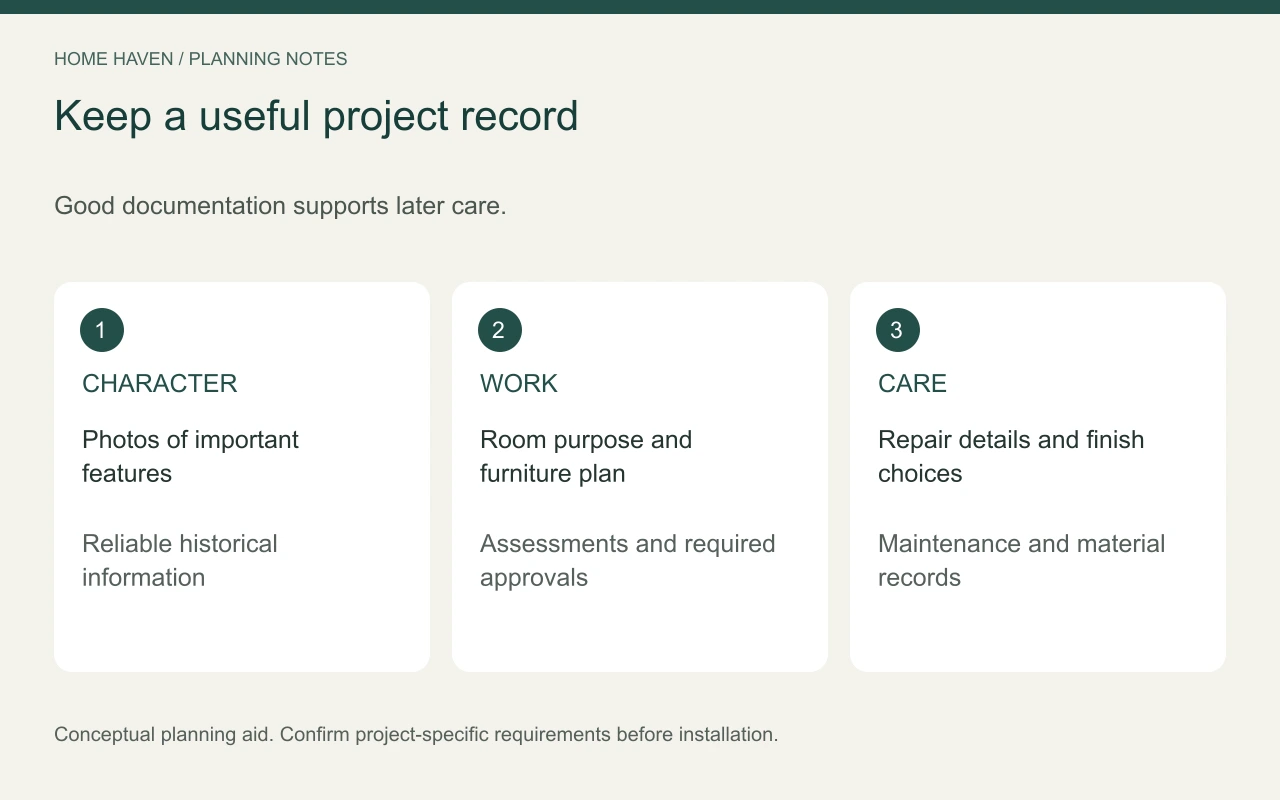
A simple project record can include:
- Photographs and dimensions of important features.
- The purpose of each room and proposed furniture.
- Material samples and finish decisions.
- Professional assessments and required approvals.
- Repair specifications and care information.
Frequently asked questions
Can modern furniture suit a Victorian house?
Yes. Related proportions, a considered palette, and appropriate placement can connect different periods. You do not need to reproduce an entire historical interior to respect its character.
Should original woodwork always stay unpainted?
The answer depends on the material, finish history, condition, and project goals. Seek appropriate advice before irreversible changes rather than following a universal rule from a design photograph.
Do you need to remove walls for modern living?
Not automatically. Separate rooms can provide privacy and flexible activities. Test furniture and room use first; structural alterations need professional review and any applicable approvals.
Let the architecture and routine work together
Choose one room, document its character, and solve its practical layout before buying decorative layers. Carry successful materials and methods into adjacent spaces. A thoughtful Victorian home can feel both recognizable and comfortable in everyday life.