

The best exterior door material depends on your weather exposure, maintenance tolerance, budget, and the condition of the opening. Wood offers natural character and repair options; steel can provide a sturdy, often cost-conscious system; fiberglass can reduce routine upkeep. The door slab is only part of the decision: frame, threshold, glass, weatherstripping, and installation affect how the complete entry performs.
For most homeowners, start by comparing complete door systems that fit the existing opening and your local climate. Then weigh appearance, upkeep, energy ratings, security hardware, and installed price. No material is automatically the best choice for every house.
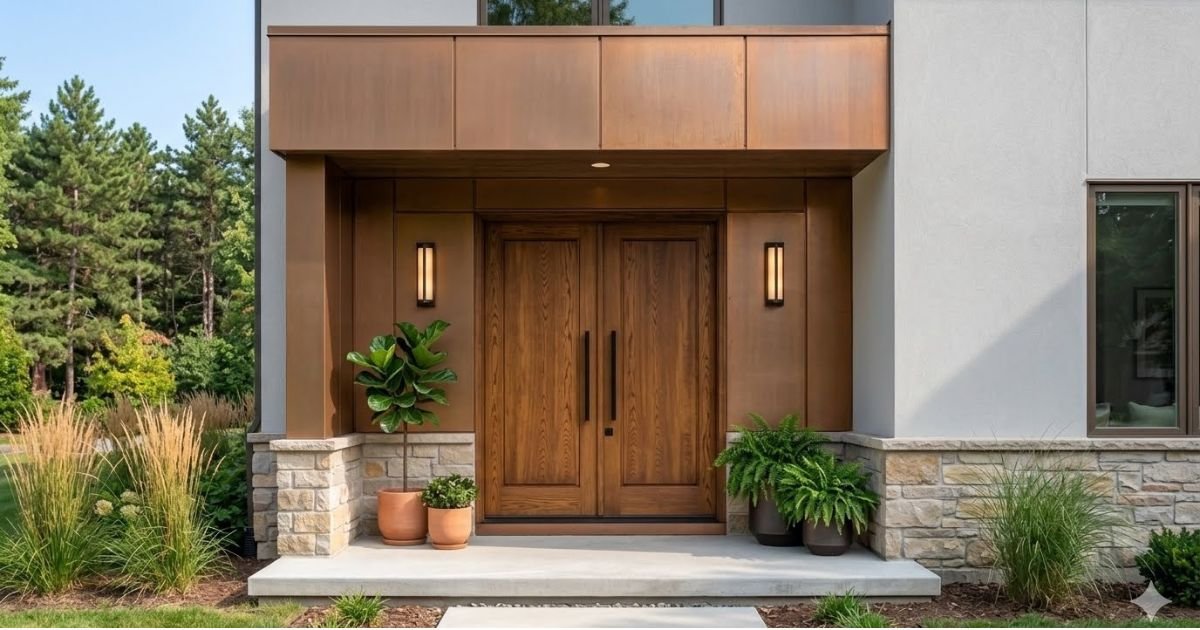
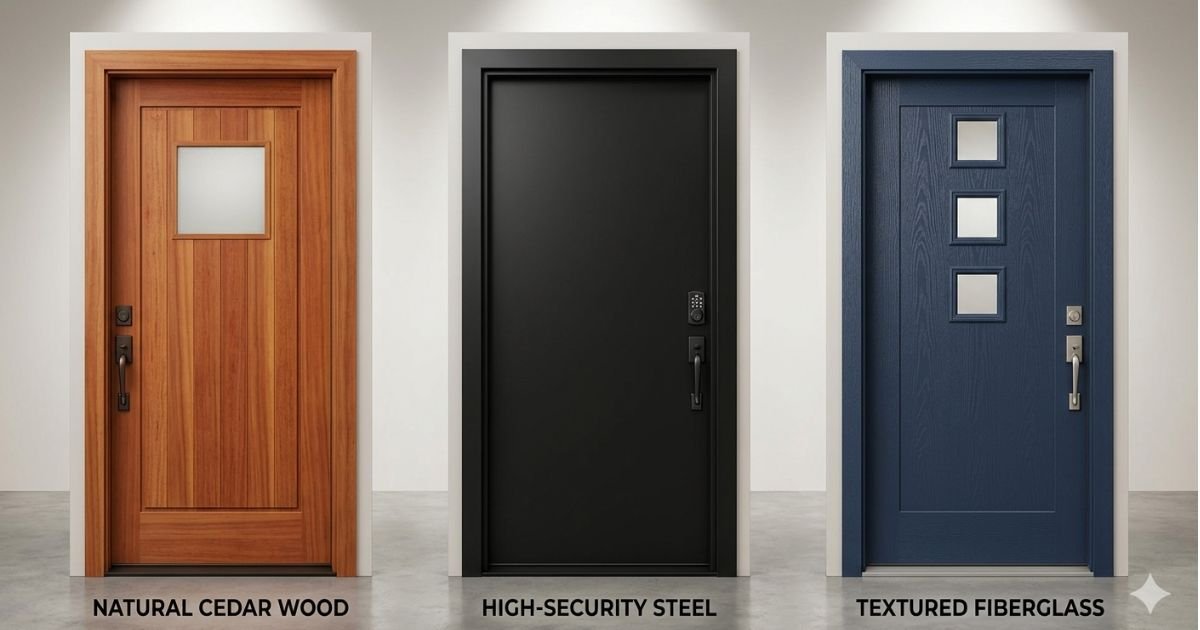
Exterior door materials compared: wood, steel, and fiberglass
- Wood: a good fit when natural grain, custom sizing, or repairable finishes matter and you can maintain the coating.
- Steel: worth comparing when you want a rigid, widely available entry system at a practical price; protect damaged coatings and check the product’s insulation details.
- Fiberglass: useful when lower routine maintenance and a wood-like appearance are priorities; compare finish, glass, warranty, and climate suitability by model.
These are starting points, not performance guarantees. Product construction varies by manufacturer, and the installed assembly matters as much as the facing material.
Wood exterior doors: natural appearance with regular care
Wood doors offer visible grain, a range of species and finishes, and flexibility for some custom openings. They can suit older homes or designs where the entrance is meant to feel warm and distinctive. A damaged finish may sometimes be sanded and refinished, but repairability depends on the door’s construction and the extent of the damage.
Wood responds to moisture and temperature changes. Exposure, overhangs, finish quality, and maintenance affect how it ages. Ask the manufacturer what finish is supplied, which sides and edges need protection, how often inspection is recommended, and whether the warranty has care requirements. A sheltered entry may be easier on a wood door than a wall exposed to driving rain and strong sun.
Choose wood when its appearance is important enough to justify ongoing inspection and finish care. Compare the complete door, not only a sample of the face veneer.
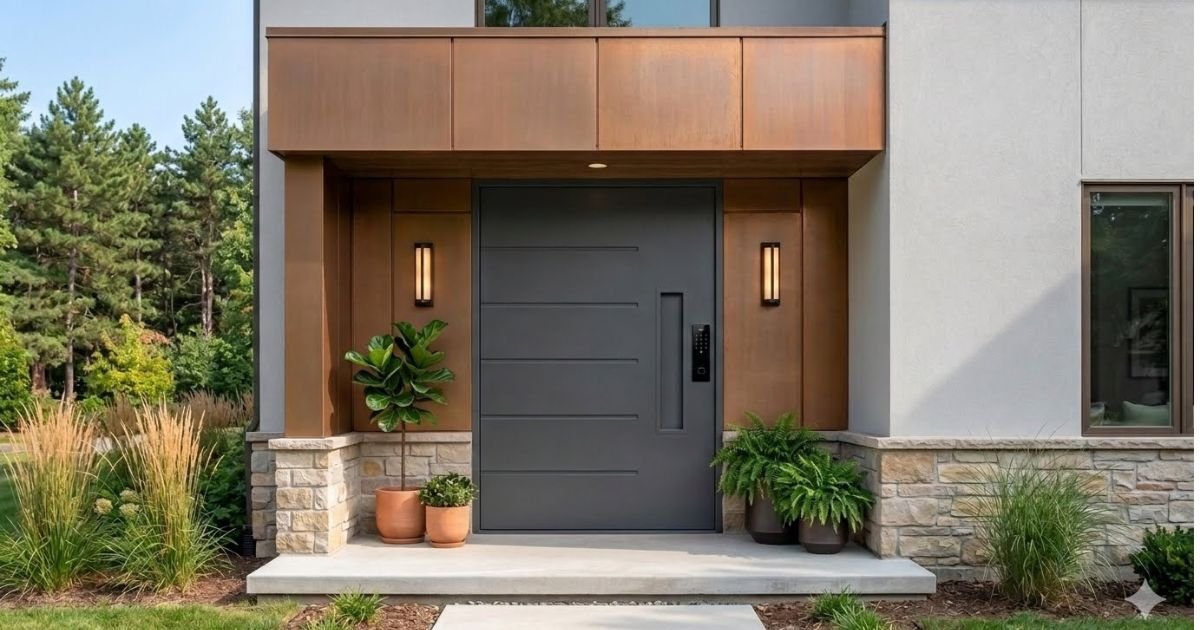
Steel exterior doors: compare construction and finish
Steel is commonly sold as part of an insulated door system. Ask for the manufacturer’s specifications for the door slab, frame, glazing, and weather seals; steel alone does not tell you how energy efficient the assembly is. Steel can be a practical choice for a simple, durable entry, but the surface can dent, and exposed scratches may need prompt attention to prevent corrosion.
Check whether the product is factory finished, paintable, or both, and follow its care instructions. If the entry receives direct sun, ask whether the selected dark finish is approved for that exposure. Also compare the frame material and threshold: a well-made slab cannot compensate for a poorly fitted or weather-sealed opening.
Steel may suit homeowners who value a straightforward, widely available system and are comfortable touching up finish damage. Compare warranty coverage for the finish, hardware, and insulated core separately.
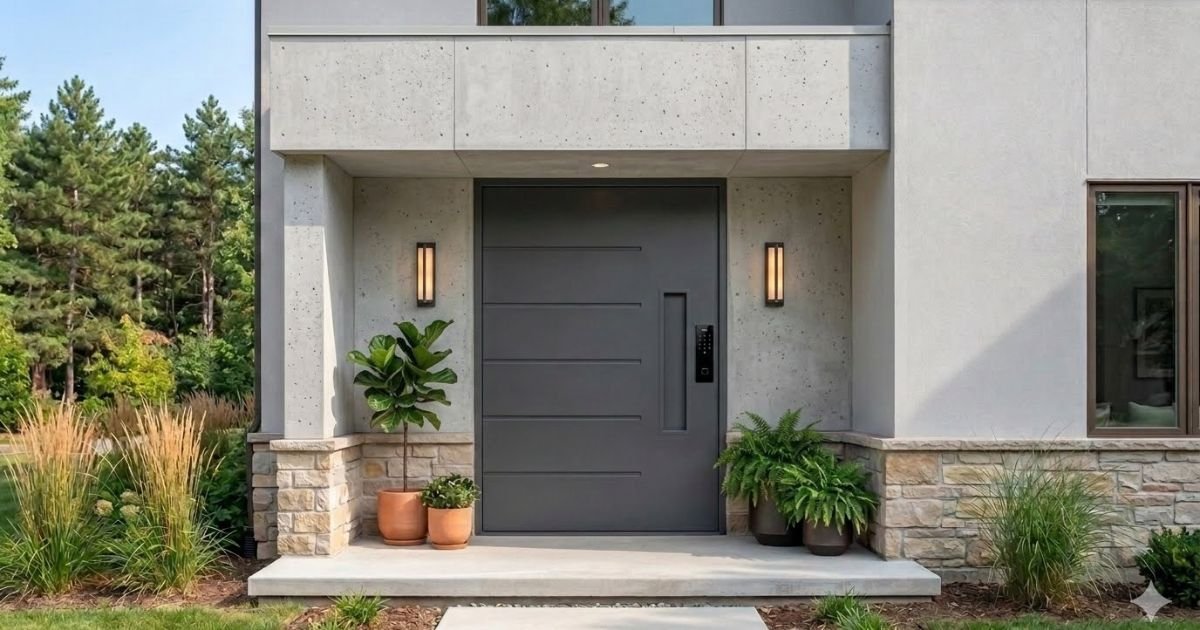
Fiberglass exterior doors: lower routine maintenance, model by model
Fiberglass doors can imitate wood grain and are available in smooth or textured finishes. Many models are designed to resist common moisture-related problems, but do not assume every fiberglass door is maintenance-free or suitable for every exposure. Check the specific manufacturer’s instructions for cleaning, repainting, staining, hardware, and warranty conditions.
Compare how convincing the finish looks at the distance from which visitors will see it, whether the model can be refinished, and what glazing choices are available. Ask about performance in your climate and how the frame, sill, and weatherstripping are built. A product’s label and installation instructions are more useful than broad claims about an entire material category.
Fiberglass is a strong candidate when you want a wood-like appearance with less frequent finish work, provided the model fits your opening, budget, and weather conditions.
How to compare exterior door materials for energy performance
Look at the rating for the exact door model and configuration, especially when it includes glass. ENERGY STAR explains that certified residential doors are independently tested and verified through the National Fenestration Rating Council (NFRC), and that product criteria depend on glazing and climate zone. Compare the NFRC label and the ENERGY STAR climate-zone qualification for the product you plan to buy rather than relying on a material name.
The U.S. Department of Energy notes that exterior doors can lose energy when they are old, uninsulated, poorly fitted, or inadequately air-sealed. That is why installation, weatherstripping, threshold adjustment, and the condition of the frame matter. A replacement door should close evenly and latch without forcing; ask the installer how gaps and water-management details will be handled.
See ENERGY STAR’s door criteria and its explanation of NFRC testing and labels. For general air-leakage guidance, consult the U.S. Department of Energy’s home-upgrade guidance.
Exterior door materials and entry security
The door material alone does not determine how secure an entrance is. The frame, hinges, strike area, lock, glazing, and installation all matter. Ask the installer how the frame will be attached to the structure and whether the selected hardware is compatible with the door. If the door contains glass, consider its location and the manufacturer’s glazing options; check local code requirements where applicable.
Avoid promises such as “bank-vault security” or assuming that a particular lock grade makes every door secure. Compare documented product specifications and have the complete assembly installed according to the manufacturer’s instructions.
Measure the opening before choosing a replacement
Before comparing prices, record the existing door width, height, handing, jamb depth, threshold condition, and whether the unit is a slab or a prehung assembly. If measurements or framing are uncertain, ask a qualified installer to inspect the opening. Water staining, soft framing, uneven floors, or recurring drafts may point to a repair that should be addressed as part of the project.
- Confirm whether the quote includes the slab, frame, sill, weatherstripping, hardware, glass, removal, disposal, and trim work.
- Ask how the installer will protect siding and interior finishes and manage flashing or sealant at the opening.
- Compare written warranties for the door, finish, glass, hardware, and installation.
- Request an itemized installed quote; prices vary with size, customization, glazing, site conditions, and labor.
For coordinating the new entry with the rest of the façade, see our exterior materials guide and home exterior makeover guide.
How to choose the best exterior door material for your home
Choose wood if its natural character and customization are worth the care it needs. Compare steel if you want a practical, rigid system and will protect its finish. Consider fiberglass if lower routine upkeep and a wood-like appearance matter, while checking the exact model’s care, climate, and warranty details.
In each case, compare the complete assembly and installation. Check the product label, weather exposure, frame, glazing, threshold, security hardware, warranty, and total installed price. The best exterior door material is the one that fits your home and performs as documented—not simply the one that sounds strongest in a general comparison.
Exterior door material FAQs
Which exterior door material needs the least upkeep?
Some fiberglass models require less frequent finish maintenance than wood, but care varies by product. Read the exact model’s instructions and warranty before deciding.
Is a steel or fiberglass door automatically more energy efficient than wood?
No. Compare certified ratings for the exact model and glass configuration. The frame, weather seals, threshold, and installation also affect performance.
Should I replace only the door slab or the full prehung unit?
It depends on the condition and dimensions of the existing frame and threshold. Have the opening assessed before ordering; replacing a damaged or poorly fitted assembly may require more than a new slab.