

Sustainable office interior design starts with deciding what the space really needs and what can stay. A room does not become more responsible simply because its finishes look natural or its furniture carries green wording. Review existing assets, improve the layout, and compare purchases using specific evidence. The aim is a useful office with a thoughtful plan for materials, maintenance, and future changes.

Begin with a keep, repair, and replace inventory
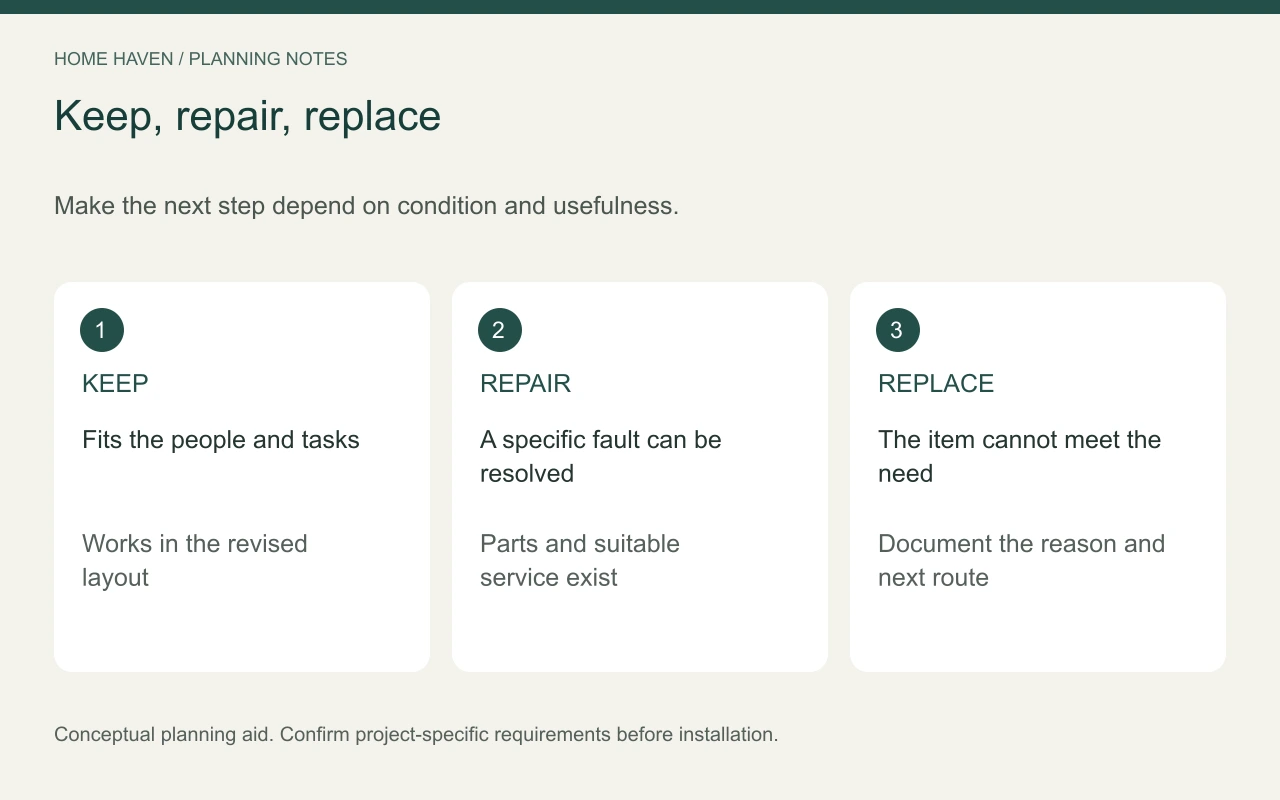
List desks, chairs, storage, lighting, and loose furnishings. Record condition, dimensions, adjustability, and known problems. Separate cosmetic wear from functional failure. A scratched cabinet might need refinishing, while an unsuitable chair may require replacement despite looking clean.
Ask users what prevents existing items from working. A desk may feel inadequate because storage occupies its surface, not because it is too small. A cabinet may sit unused because another piece blocks its doors. Resolve layout problems before assuming a new product is the answer.
Use our space planning interior design guide to test retained furniture in a new arrangement. This article focuses on reuse and purchasing decisions rather than repeating a general office-layout checklist.
Give each item a realistic next step
Keep what still serves the work
Retain furniture that fits the task, users, and room. Check stability, operation, and installation needs before returning it to service. Keeping unsuitable furniture indefinitely is not a useful sustainability strategy if it prevents comfortable or effective work.
Repair when the result is dependable
Request an assessment for damaged surfaces, hardware, upholstery, or mechanical parts. Confirm repair cost, expected serviceability, and available replacement components. Use qualified repair services when safety or electrical function is involved.
Rehome through a verified route
If an item no longer suits the office, investigate donation, resale, supplier take-back, or local reuse options. Confirm that the receiving organization accepts it and that its condition is appropriate. Do not describe an item as recycled simply because someone removes it from the building.
Choose furniture that can adapt
Look for adjustable components, replaceable parts, and dimensions that work in more than one arrangement. A modular storage system can accommodate change, but only if compatible components remain available and the office can use them.
Ask suppliers about replacement drawers, hinges, casters, upholstery, and warranty coverage. Request the information in writing before ordering. An appealing product photograph does not reveal whether a small failure will make the whole item difficult to repair.
The GSA guidance on furniture, fixtures, and equipment offers workplace specification considerations. Use such guidance as a starting point for questions, then assess products against the actual project’s needs.
Read environmental claims precisely
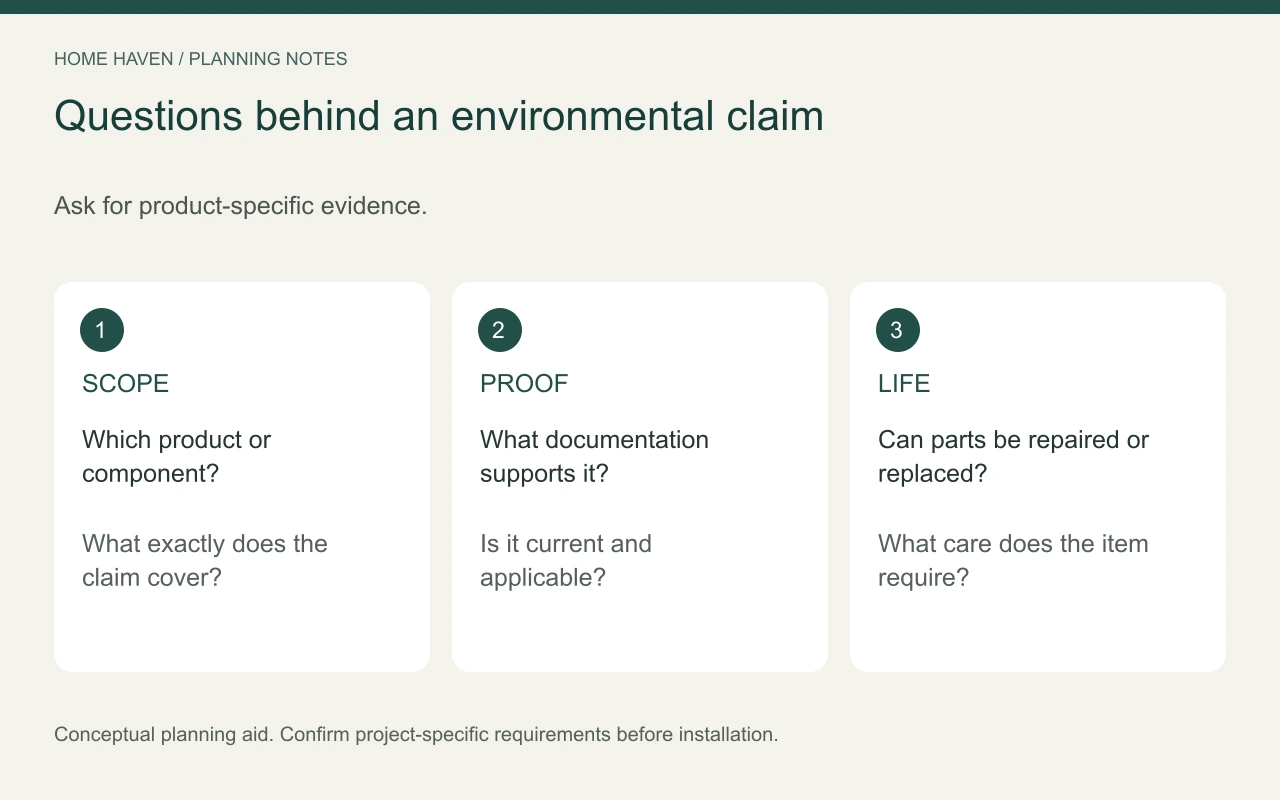
Ask what a claim covers: the whole product, one material, packaging, or a manufacturing process. Request documentation and check its scope and validity. Avoid treating a leaf symbol or the word eco-friendly as independent evidence.
If recycled content is important, ask which components contain it and how the supplier documents the claim. If emissions testing or certification is relevant, verify the exact product and standard. Do not transfer a certification from one product line to another without evidence.
Keep a simple comparison record. Include product name, dimensions, intended use, evidence supplied, repair options, and care requirements. This makes the decision easier to explain later and avoids relying on whichever marketing statement sounds strongest.
Use daylight without sacrificing comfort
Observe where glare and heat affect the work area. Reposition desks or add appropriate adjustable shades before replacing every light fixture. Useful daylight is a design resource, but it should support visibility and comfort rather than make screens hard to see.
Use task lighting where it solves a defined need. Review existing lighting and controls with an appropriate professional if changes are planned. Do not promise an energy-saving percentage without a project-specific assessment and a clear comparison basis.
Coordinate lamps, screens, and power access in the layout. Avoid arrangements that create extension-cord tangles or encourage people to work in awkward positions to avoid glare. Necessary electrical changes belong with a qualified electrician.
Specify finishes for maintenance and repair
Choose surfaces compatible with the office’s cleaning routine. A finish that needs frequent specialist treatment may be a poor match for a small organization. Ask how scratches, stains, and worn edges can be repaired.
Consider whether selected components can be replaced separately. A replaceable desktop or removable upholstery cover may make maintenance easier, but confirm how that system works and what parts cost. A theoretical repair option offers little value if components cannot be obtained.
Do not replace sound finishes solely to create a sustainable appearance. Sometimes a change in furniture placement, lighting, and accessories achieves the desired result with less work. Compare the scope of each option before selecting a full refurbishment.
Plan purchasing as a sequence
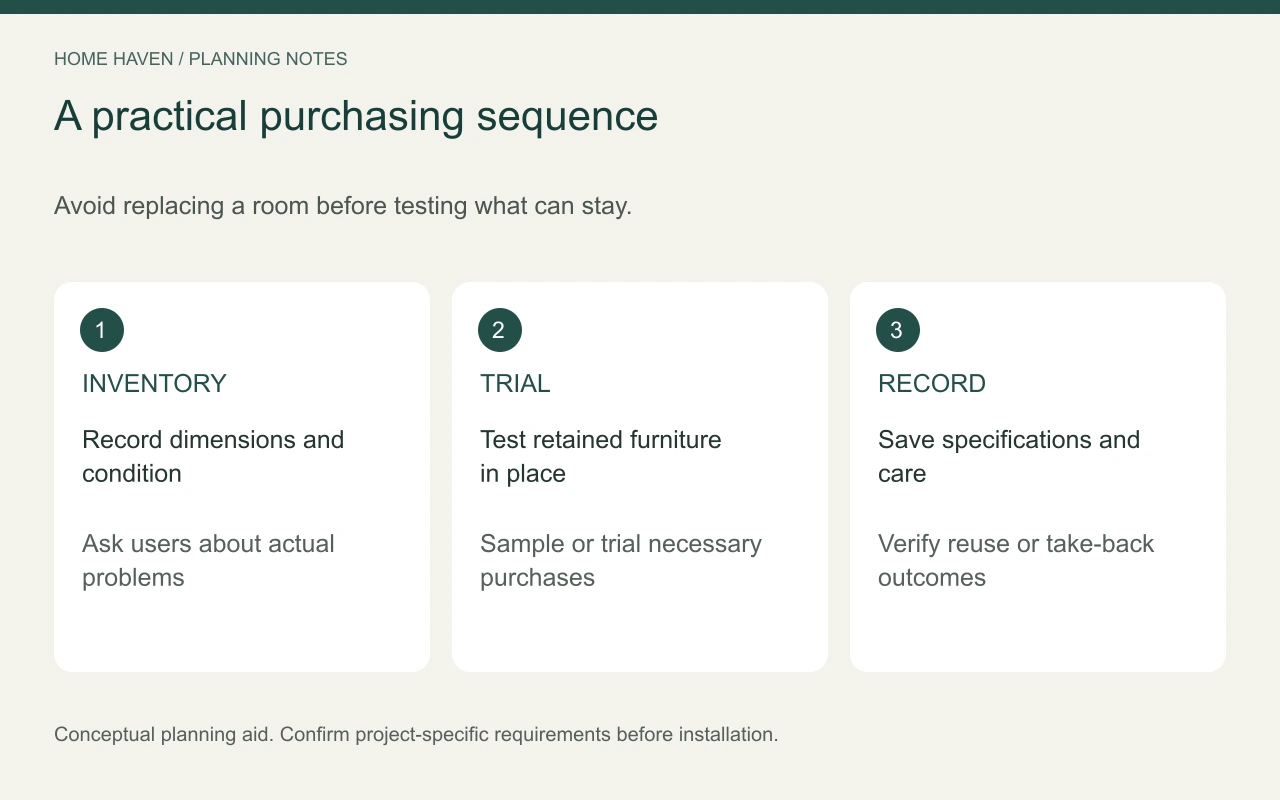
Start with essential replacements after the inventory and layout test. Order samples or trial one workstation before repeating it across the office. That can reveal comfort, finish, or assembly issues before the purchase expands.
Compare USD quotes using consistent specifications. Include delivery, assembly, repairs, removal, and ongoing care assumptions. A higher-priced repairable product may deserve consideration, but do not claim it is cheaper over time without evidence for the expected costs.
Confirm packaging and delivery arrangements with suppliers. Ask what can be returned or reused and which services actually exist in your location. Record completed actions rather than reporting intended take-back as an achieved outcome.
Test a hypothetical small-office refresh
Imagine a four-person office with functional desks, worn drawer hardware, and a poorly placed shared printer. First repair the drawers, move the printer to a usable support area, and clear under-desk storage. Then assess whether any chair or light still needs replacement.
This example illustrates a decision process, not measured environmental savings. Compare the revised layout with a full replacement proposal using the same work requirements. Retain the option that meets the needs with a justified scope and documented choices.
Frequently asked questions
Is secondhand furniture always the best choice?
No. Check condition, suitability, repair needs, delivery, and safe use. A secondhand item that does not fit the work can create another replacement purchase rather than solve the need.
Does natural wood prove a product is sustainable?
No. Appearance alone does not establish sourcing, manufacturing impacts, durability, or repairability. Ask for relevant documentation and evaluate the complete product.
What is the first step with a limited budget?
Inventory what you have and test a better arrangement. Use the findings to target repairs and necessary replacements rather than starting with decorative products.
Keep a record the next team can use
Save dimensions, supplier details, finish codes, repair information, and care instructions. Review the office after people have used it and adjust any awkward setup. Sustainable design becomes more practical when the next decision starts with reliable information instead of another furniture search.