

A red brick house with white trim can look traditional, crisp, or contemporary depending on the white’s undertone and how the roof, door, windows, and landscaping relate to the masonry. Start by studying the brick in outdoor light, then choose trim that sits comfortably beside its mortar and fixed materials. The goal is a coordinated facade, not a paint color that competes with the brick.
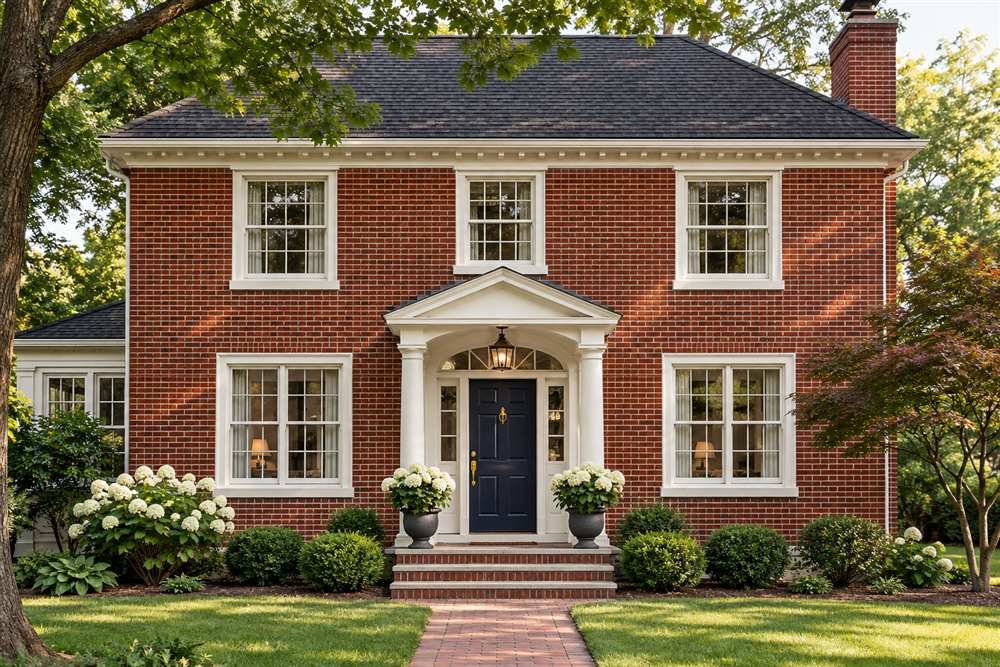
This guide focuses on exterior combinations and practical planning. Images are AI-generated design concepts, not real renovations or exact paint samples. For wider material decisions, see the exterior materials pillar; for brick coating decisions, see painted brick homes.
Start with the brick and the white undertone
Brick ranges from orange-red and russet to burgundy and weathered red-brown. Mortar may read gray, tan, cream, or nearly white. These fixed colors affect how trim looks. Hold large sample boards beside the brick outdoors, then compare them with the roof and any stone in both sun and shade. A small paint chip can hide a strong cool or yellow cast once it covers wide fascia.
A warm white or soft ivory often harmonizes with orange or earthy brick. A neutral white may suit cooler burgundy brick, especially alongside a gray roof. Avoid assuming that the brightest white is the freshest: high contrast can draw attention to uneven caulk, weathering, and repairs.
15 red brick house with white trim combinations
1. Warm white trim with a charcoal roof
A creamy white around windows and eaves with a charcoal roof gives the house a clear frame. Repeat charcoal in a few fixtures or the mailbox so the roof feels connected, but do not add dark accents to every detail.
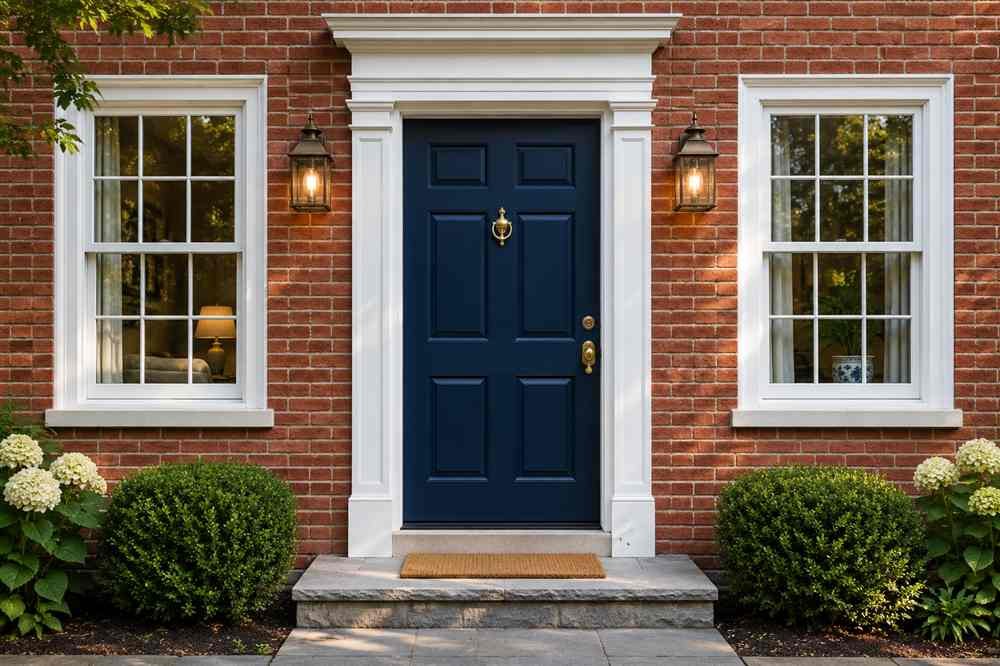
2. Soft white trim and a navy door
Navy adds a strong entry accent without competing with red brick. Keep shutters and fixtures controlled, and test the door color outdoors because shade can make navy appear almost black.
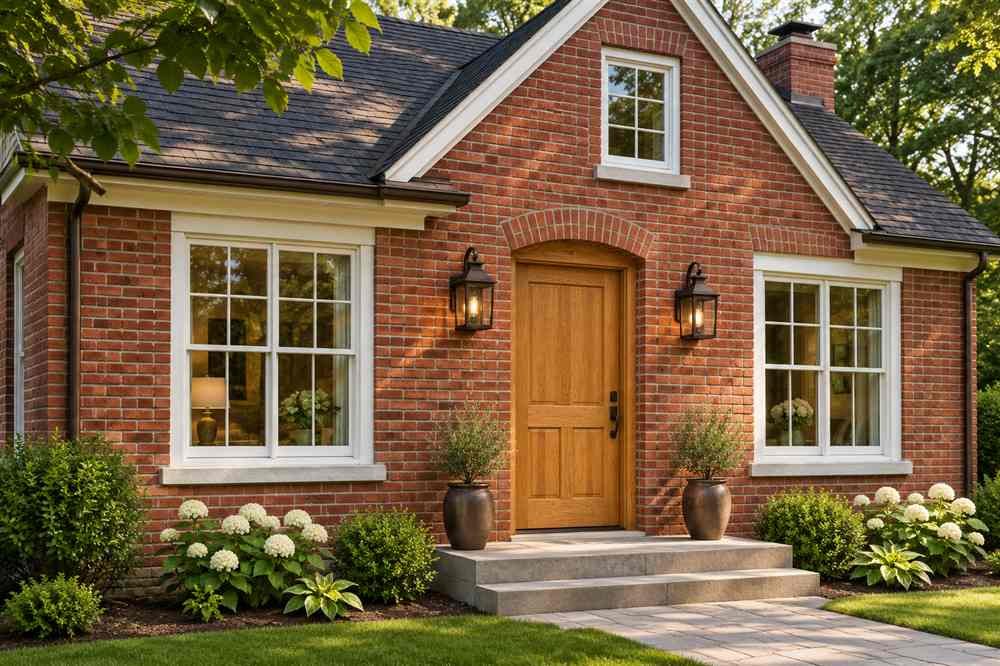
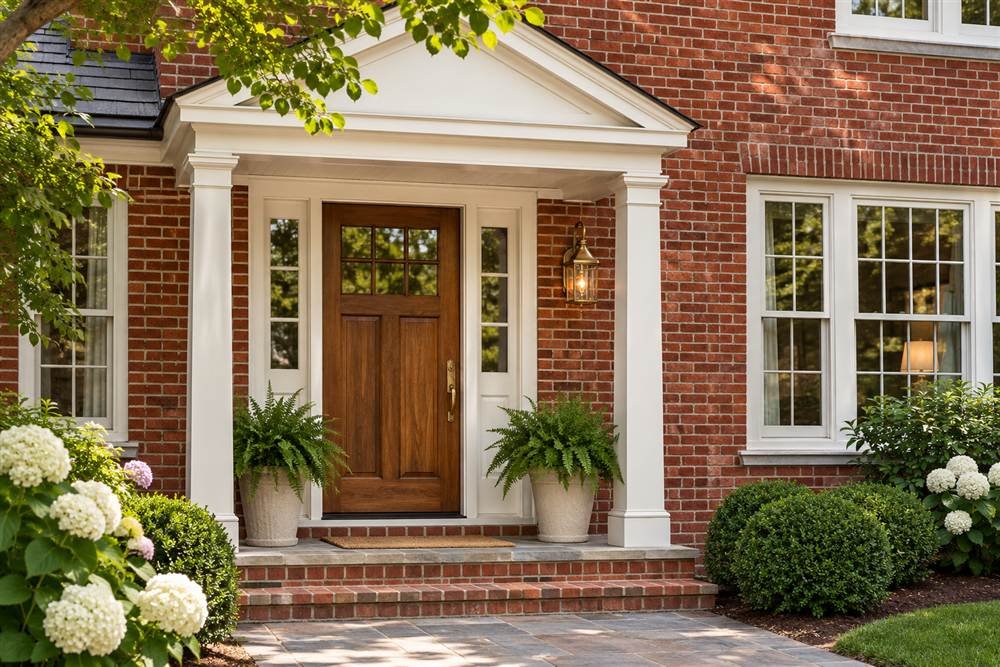
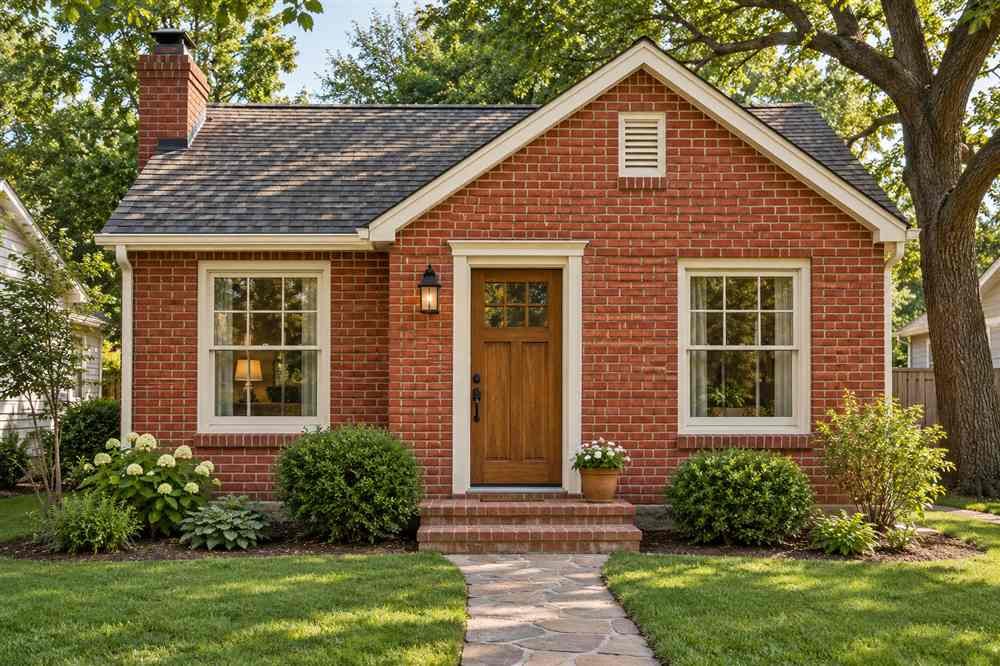
3. White trim with a natural wood door
Oak, walnut, or another medium wood brings warmth to the entry. Repeat the tone in a porch ceiling or bench only if the facade has room for a second wood detail. Follow the door maker’s exterior finish and maintenance guidance.
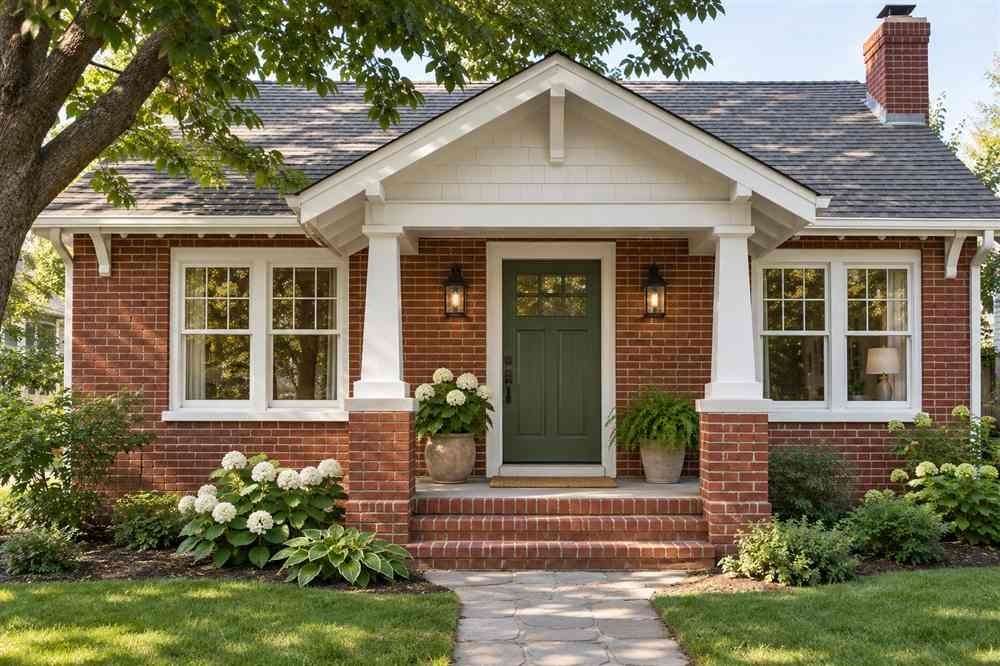
4. White trim with a muted green door
Deep green or olive can sit comfortably beside red masonry because it feels grounded. Use one green accent, and keep nearby planting from covering the door or trapping moisture against siding.
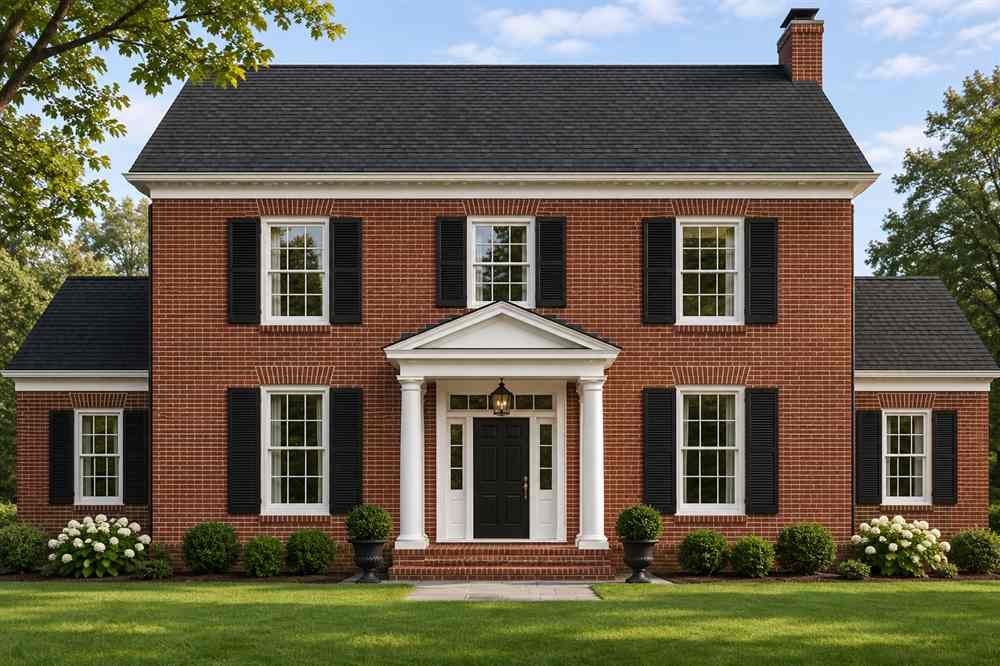
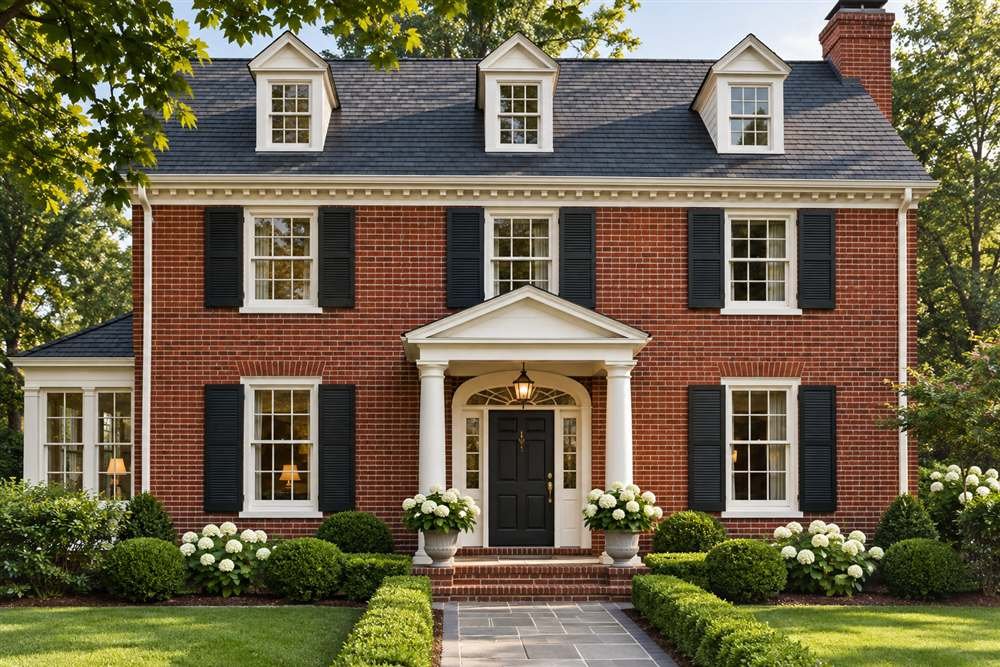
5. White trim with correctly sized black shutters
Dark shutters can sharpen a traditional facade, but their proportions should relate to the window openings. Undersized decorative shutters can look pasted on; sometimes removing them creates a cleaner result.
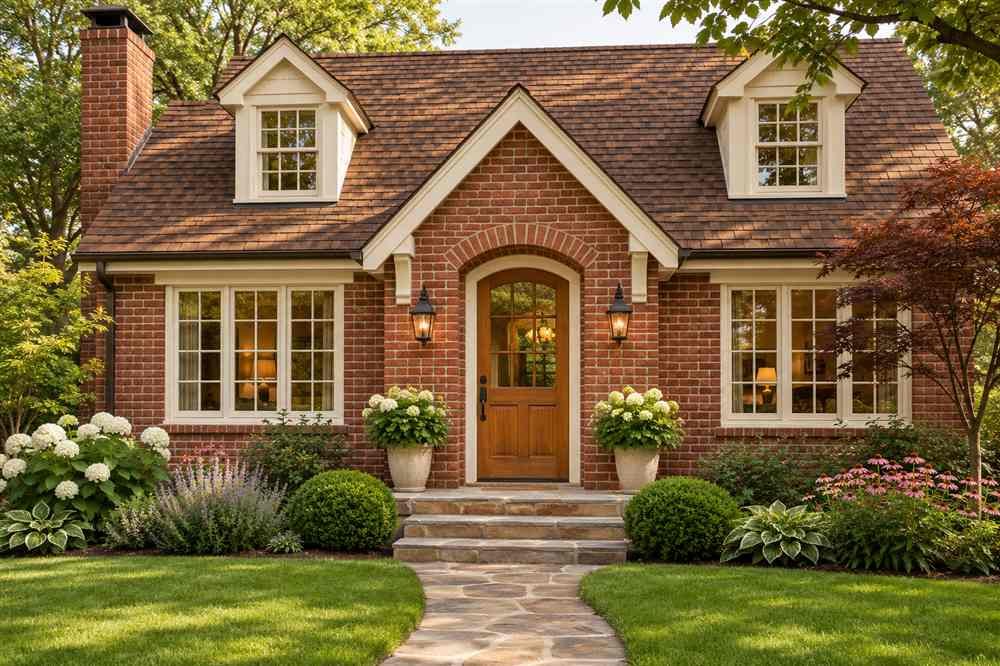
6. Off-white trim with a brown or bronze roof
A brown roof makes the palette feel warmer. Sample a soft cream trim against both roof and brick, then use bronze or dark brown hardware sparingly.
7. White porch details with exposed brick columns
If brick columns are sound, leaving them visible can retain texture while white posts or a ceiling brighten the porch. Repair damaged masonry before coating it.
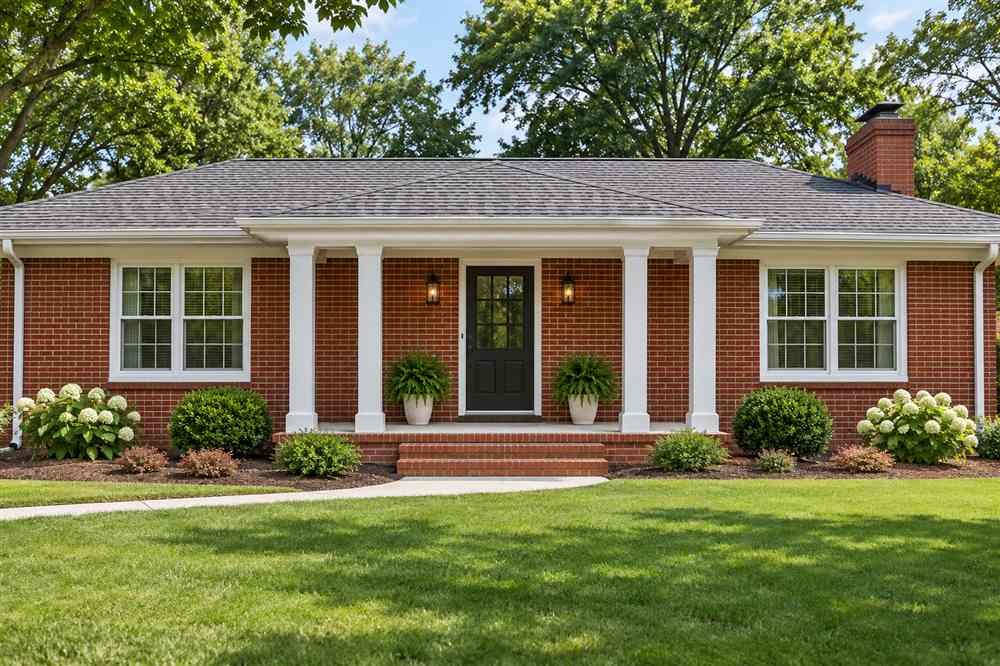
8. White trim with a slate-blue door
Muted slate blue offers a softer accent than navy. Test beside the brick and nearby stone to make sure it does not turn unexpectedly purple or cold.
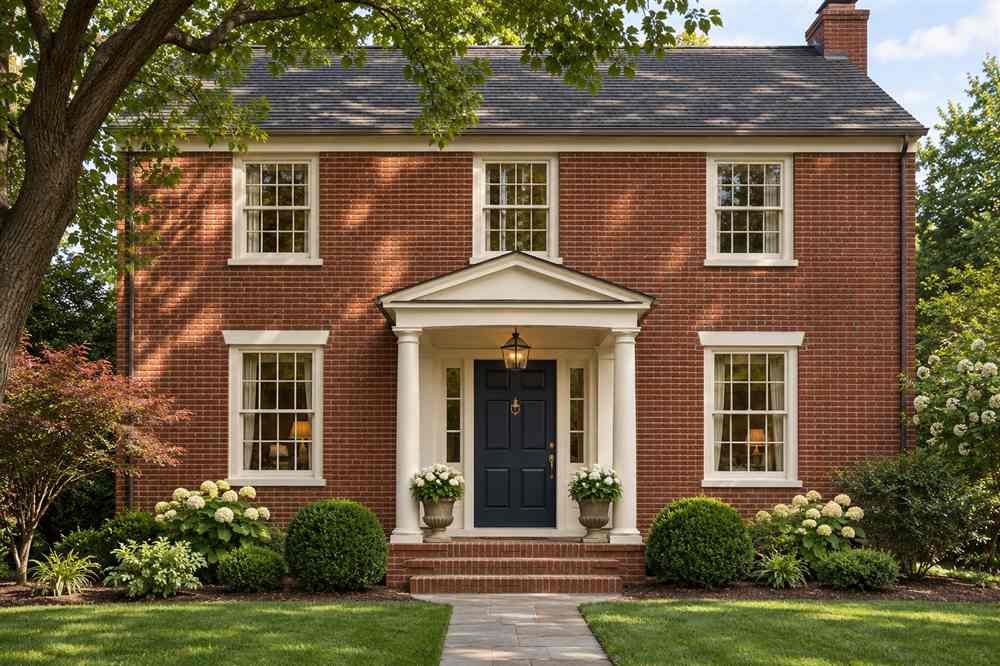
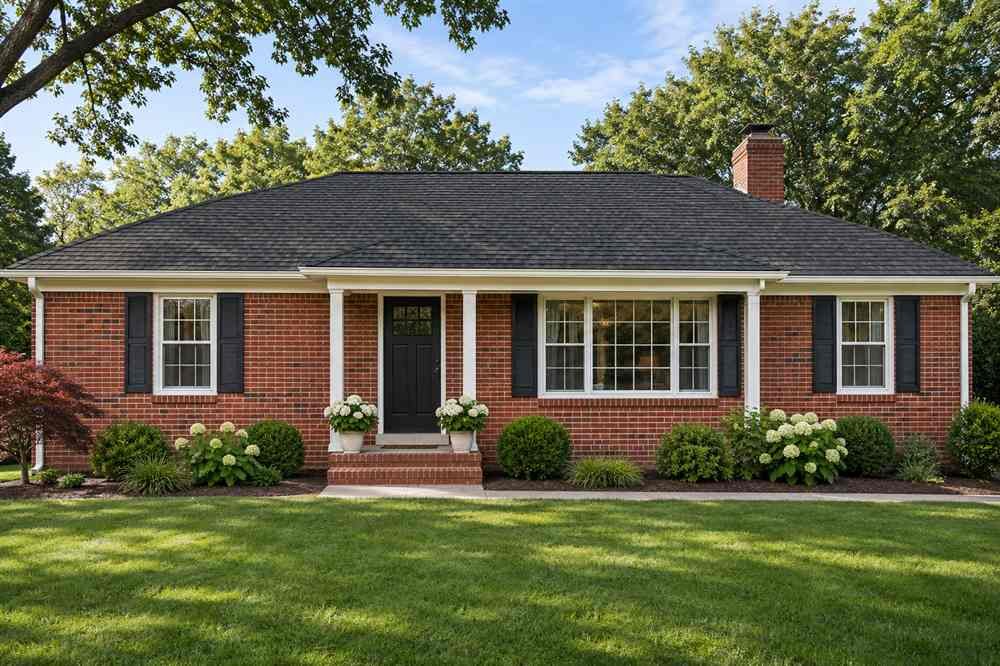
9. Consistent trim on a red-brick ranch
Long, low ranch homes benefit from one trim color across windows and eaves. Use the door, lighting, and planting to identify the entrance instead of adding shutters to every window. See modern ranch exterior ideas for related planning.
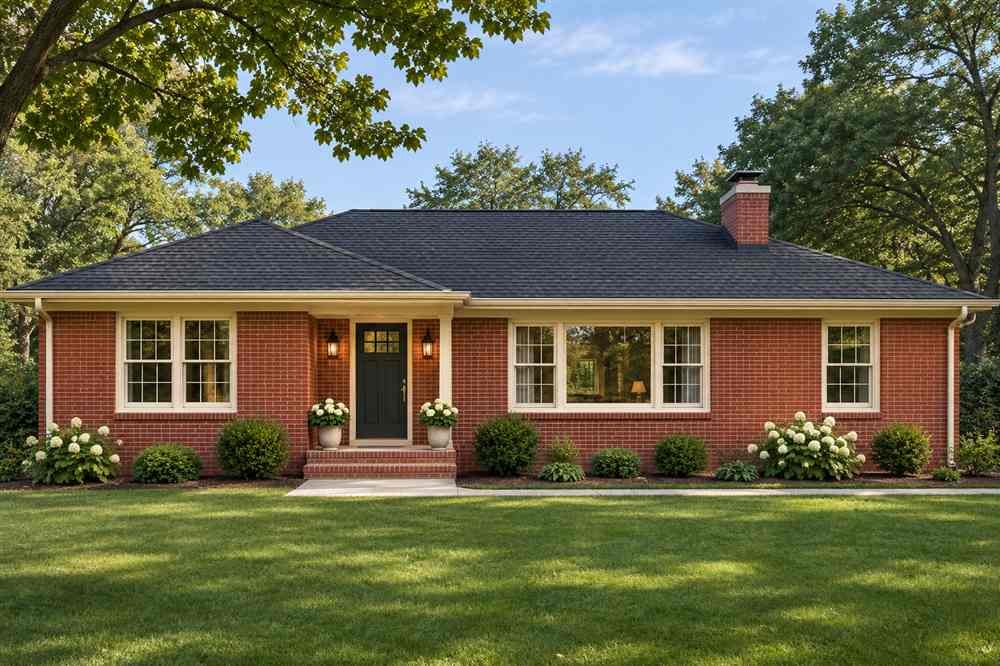
10. White trim with a stone foundation
Sample trim against both the brick and the stone. Look for an undertone that relates to both; an exact color match is not necessary. Keep new stone accents to a logical area such as the entry.
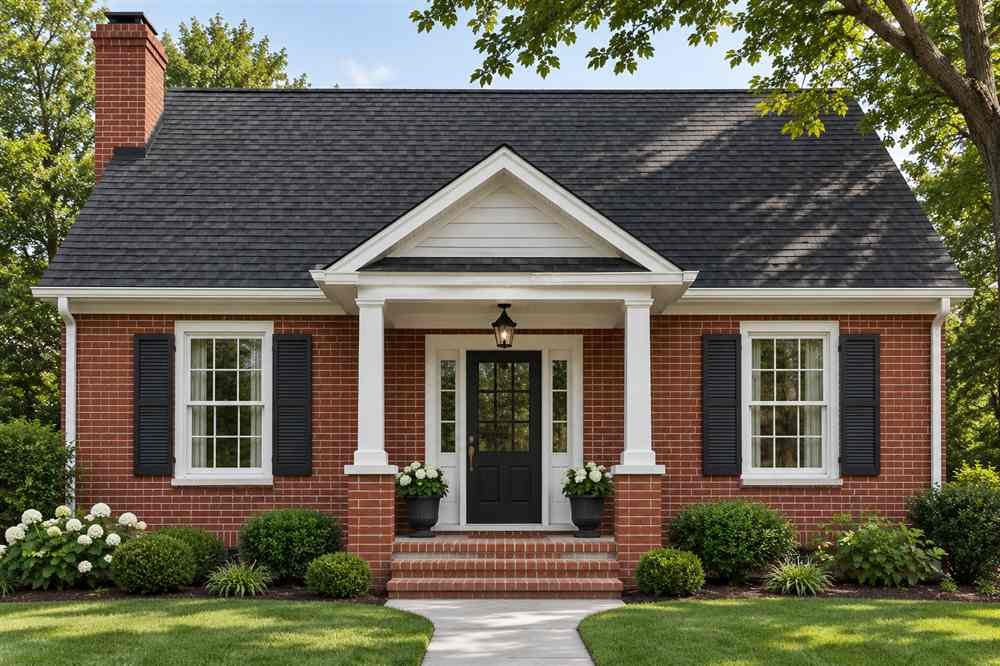
11. White trim with a burgundy door
A deep wine-red door can echo warm brick while remaining distinct. Compare it in daylight so the door reads as an intentional accent rather than blending into the wall.
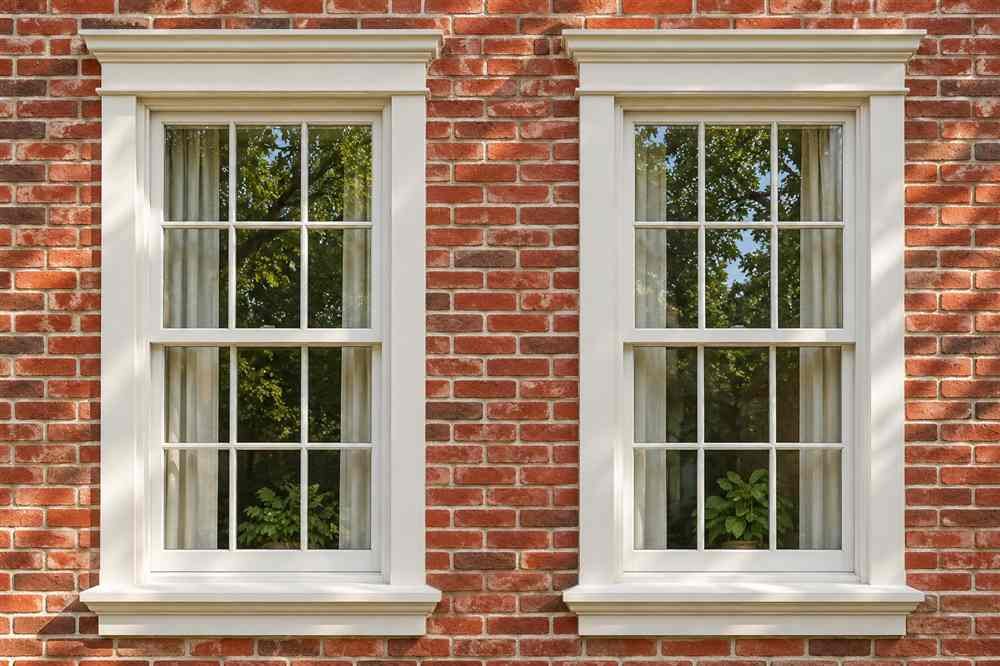
12. White trim and muted sage siding
Where an existing gable or addition is sided, a muted sage can connect brick to the landscape. Use the material transition where the architecture naturally changes plane rather than creating arbitrary color blocks.
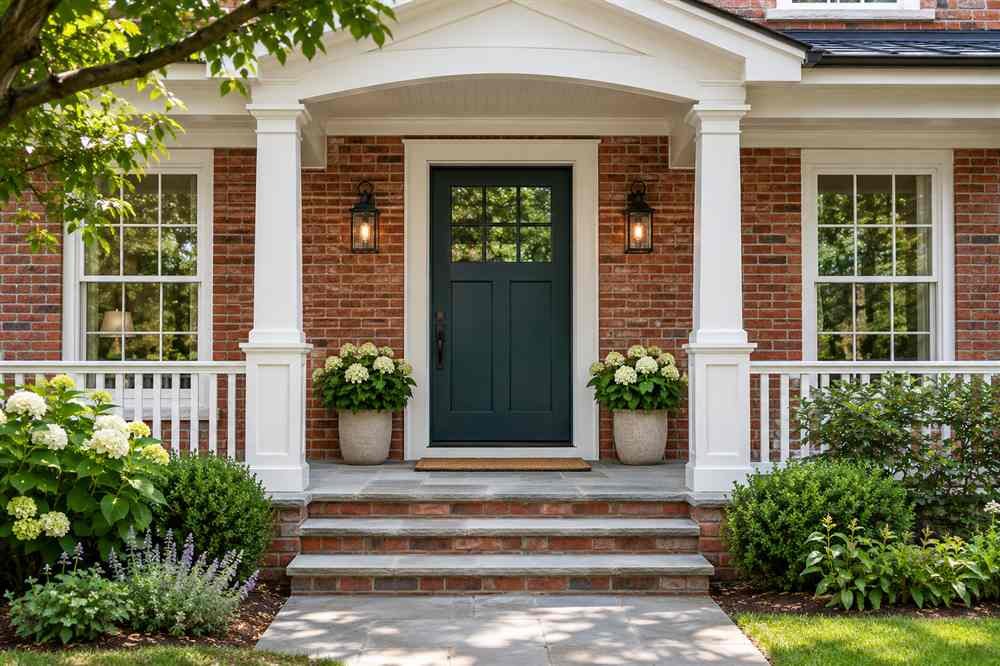
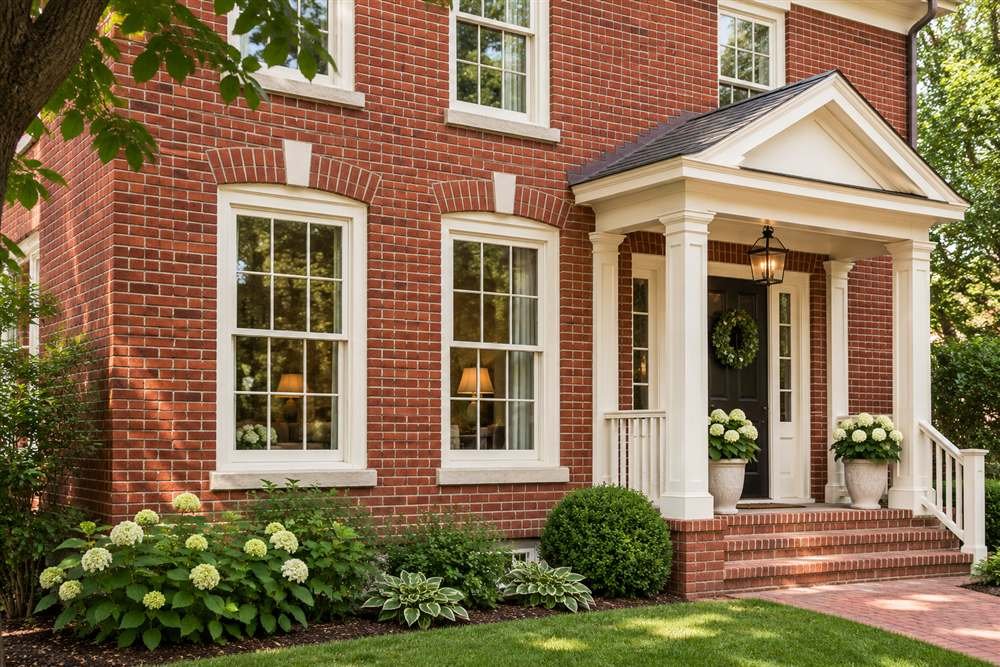
13. White trim with a dark garage door
A garage door occupies a large part of some fronts. A dark neutral can make it recede; a light door can blend with white trim. Choose the option that keeps the actual front entry easy to notice.
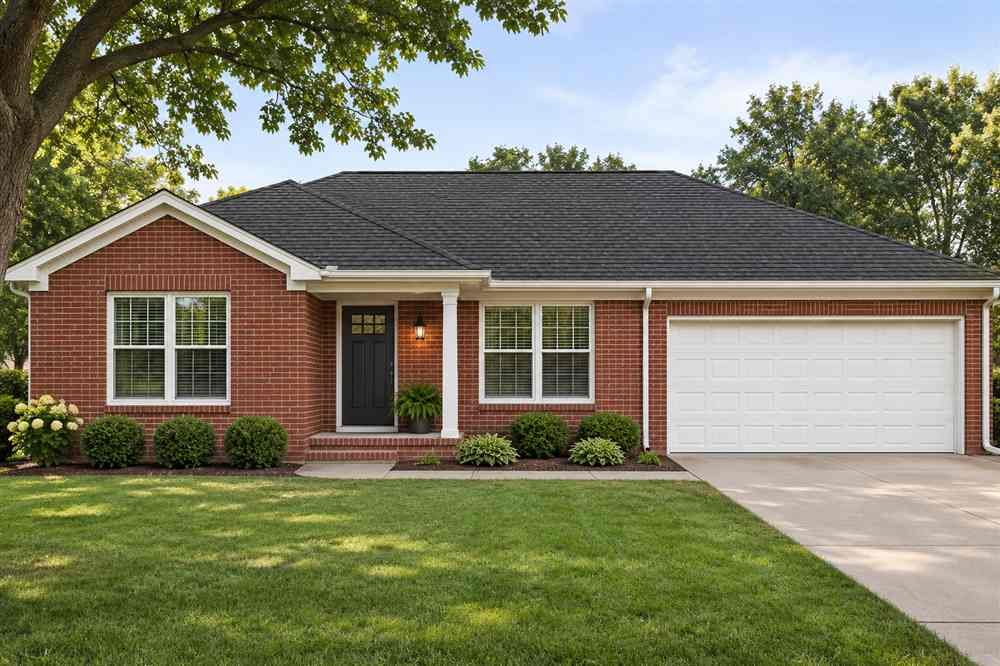
14. White trim with a simple brick walk
A brick walk can reinforce the masonry, but another very similar red surface may make the approach busy. A quiet paver or concrete path can let the house remain the focal point.
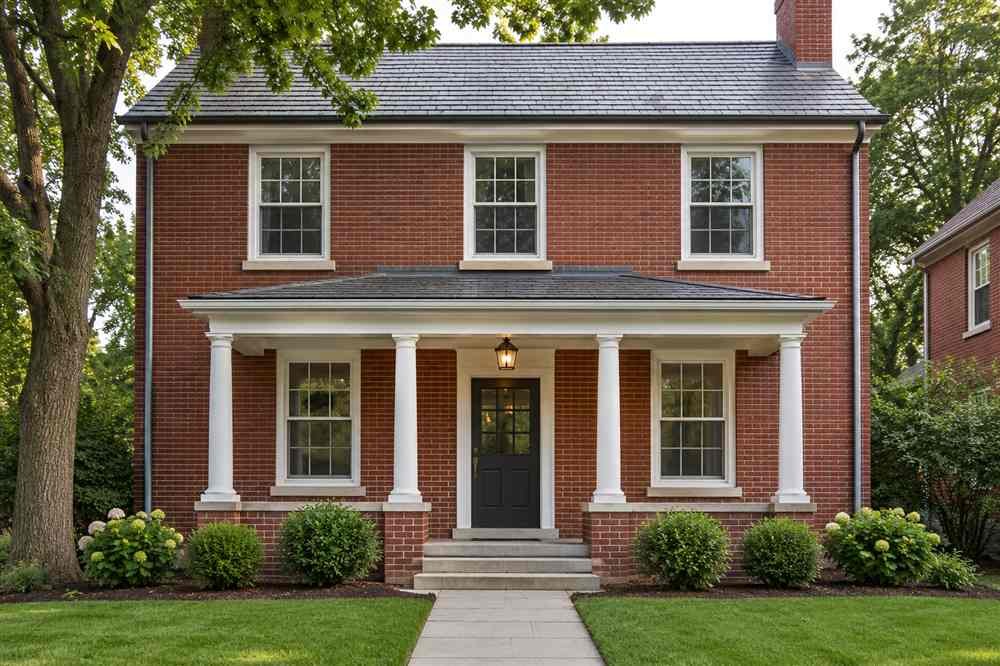
15. Preserve the brick and refresh the details
If the brick is sound, cleaning up planting, repairing trim, improving lighting, and repainting only the door may be enough. Before cleaning or coating older masonry, diagnose its condition and consult a qualified mason. The Brick Industry Association explains risks of inappropriate treatments in its technical note on changing brick masonry’s appearance.
A quick palette check
| Fixed feature | Trim to sample | Accent direction |
|---|---|---|
| Orange-red brick | Warm white or cream | Deep green, navy, natural wood |
| Burgundy brick | Neutral white or gentle gray-white | Charcoal, slate blue, bronze |
| Brown roof | Warm white | Bronze or dark wood |
| Gray stone | Neutral white tested beside stone | Charcoal or muted blue |
Test colors before painting
- Check the house in full sun and shade, and view it from the sidewalk.
- Paint large sample boards and move them beside brick, mortar, roof, and stone.
- Confirm the coating is suitable for the actual trim material and condition.
- Repair water entry, damaged mortar, and failing wood before painting.
- Check local historic-district or HOA requirements before changing prominent finishes.
Common mistakes to avoid
Frequent problems include choosing from a screen image, pairing warm brick with an untested blue-white, adding too many accents, and treating every masonry wall as paint-ready. Brick, mortar, wood, metal, and composite surfaces need different preparation and coating systems. Paint cannot correct moisture entry or failing mortar.
Frequently asked questions
What white trim looks best with red brick?
Warm white or soft cream is a useful starting point for orange-red brick; a neutral white may suit cooler burgundy brick. Test a large sample beside the actual masonry and roof.
What roof color goes with a red brick house and white trim?
Charcoal, slate gray, brown, and weathered neutrals can work. Let existing brick, stone, and architecture guide the decision, and compare physical samples outside.
Should I paint the brick to match the trim?
Not automatically. Keeping sound brick exposed preserves texture. If you are considering paint or limewash, review the permanence and maintenance differences in the painted brick guide and limewash guide.
A balanced red-brick exterior starts with restraint
White trim gives red brick definition, but the best result comes from coordinating rather than matching every detail. Read the brick and mortar, sample whites beside permanent materials, and choose one door or hardware accent. Repair first and preserve sound masonry where it suits the home.
For more context, continue to the exterior trim guide.
Sources and further reading
Brick Industry Association: Changing the Appearance of Brick Masonry · Sherwin-Williams: Complementary Color Basics