

Low budget beauty salon interior design starts with controlling the scope, not buying the cheapest version of everything. Identify the services, necessary building work, equipment, and storage first. Then use simple finishes and staged purchases to support a workable opening plan. A modest salon can look considered without sacrificing the functions staff and clients need.
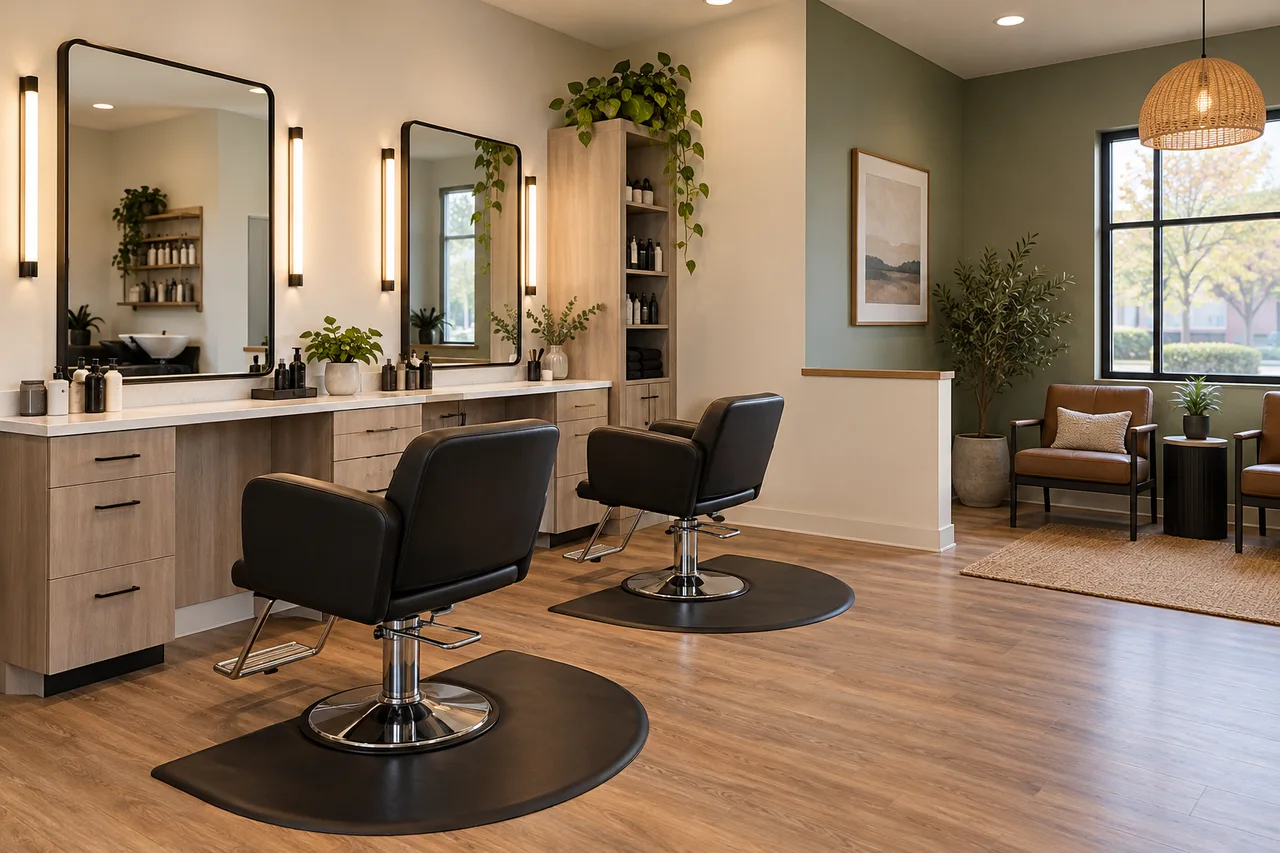
Define a small but workable first phase
List the services planned at opening and the people providing them. Record the equipment, preparation, cleaning, storage, and support space each service requires. Avoid paying for an extra station that the business cannot yet use effectively.
Separate essential work from improvements that can wait. Plumbing, ventilation, electrical needs, and applicable approvals may determine whether a premises is suitable. Resolve those questions before spending the decoration budget.
Our space planning interior design guide helps you measure and test the room. For the full service-flow discussion, see our salon interior design guide.
Build a low budget beauty salon interior design budget
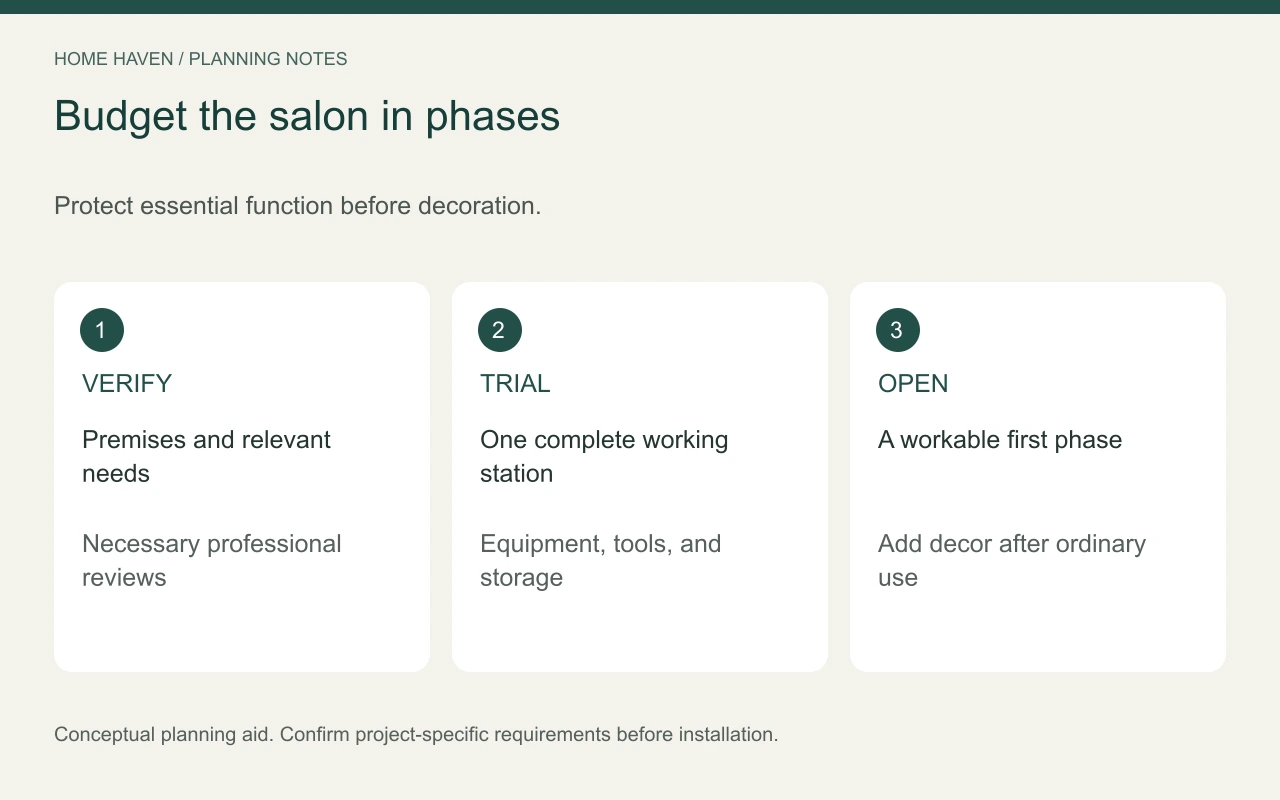
Use an itemized USD budget rather than a single decorating allowance. Include property-related work, design or specialist services, equipment, installation, delivery, and other known costs. Identify estimates and assumptions clearly.
Ask suppliers and contractors what their prices exclude. A low equipment price may omit assembly, connections, freight, or removal of existing items. Compare equivalent scopes before choosing between proposals.
Protect the operational essentials
Prioritize equipment suitable for the services, useful lighting, appropriate storage, and necessary building work. Choose decorative upgrades after those needs are accounted for. Reducing ornament is a different decision from reducing required functionality.
Test one station before buying several
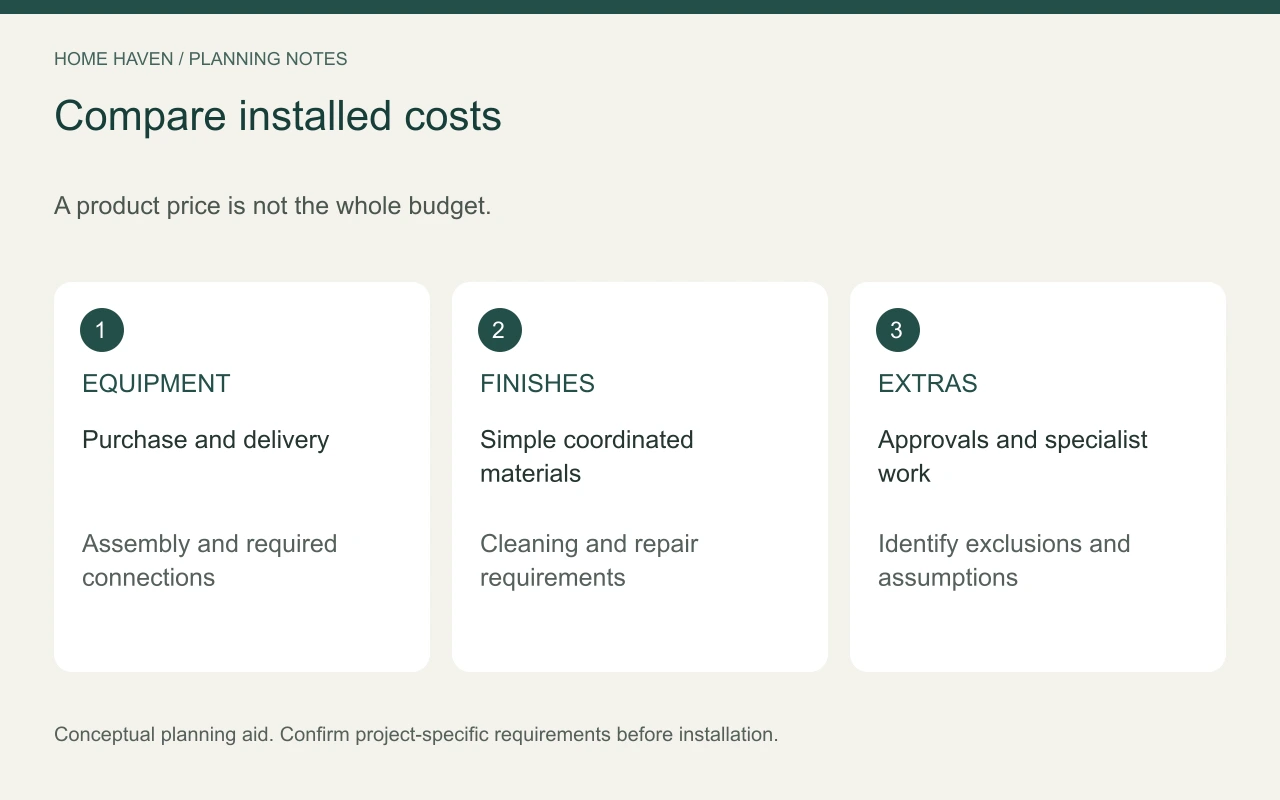
Make a full-size mock-up using the proposed chair, mirror, work surface, trolley, and tools. Ask the stylist to simulate ordinary movements. Include the client position and access to nearby supplies.
Check how the chair adjusts, where cords run, and whether cabinet doors open without blocking work. A compact product photograph cannot show the full working area. Reducing station count may be more useful than crowding unsuitable furniture together.
Use the trial to refine the shopping list. If a shelf has no clear purpose, postpone it. If a frequently used item has no home, solve that need before ordering decorative storage boxes.
Reuse selectively and inspect condition
Existing mirrors, cabinets, or reception furniture may remain useful when they fit the plan and requirements. Check stability, operation, cleanability, installation, and repair needs. A worn appearance and an unsuitable function are different problems.
Compare repair with replacement using realistic installed costs. Ask qualified professionals about electrical or equipment-related work. Do not assume secondhand items are safe or compatible simply because another salon once used them.
Keep records of models and replacement parts where available. A simple chair or cabinet with accessible service information may be easier to maintain than a more elaborate bargain with no support.
Simplify the finish palette
Choose a limited set of wall colors, cabinet finishes, and metals. Repeating those choices can make inexpensive pieces feel related. One clear focal area often creates more order than several small decorative features.
Test paint and finish samples under the actual lighting. Avoid buying a large quantity because a color looked attractive online. Consider how each surface cleans and whether local repair is practical.
For low budget beauty salon interior design, maintenance should influence the purchase. A delicate finish can become expensive if the team cannot care for it appropriately. Ask about compatibility with the salon’s actual cleaning products and procedures.
Include ventilation and service needs early
Discuss the products and services with the appropriate qualified professionals. The OSHA guidance for hair salons addresses product-related hazards that may require controls. Do not treat fragrance or a decorative purifier as evidence that conditions are suitable.
Keep equipment access and building systems in the measured plan. Avoid blocking vents, controls, or service points with furniture. Any permanent changes should have the necessary professional review and approvals.
Nail services, medical treatments, and other specialist offerings can change the project needs. Reassess the scope before adding them later. A low-cost hair-salon plan should not be presented as a universal design for every beauty business.
Make storage match the opening stock
Inventory what the first phase will actually hold. Separate daily supplies, reserve stock, clean items, used items, and cleaning products according to the operating requirements. Do not buy cabinets simply to fill a wall.
Plan the route for restocking and cleanup. A cabinet that opens into an occupied station may create repeated interruptions. Try the procedure in the mock-up before fixing storage permanently.
Keep the reception setup proportionate to the tasks. A small checkout point can work when it accommodates the equipment, privacy needs, and client route. A large decorative desk may consume funds and floor area without adding value.
Phase purchases with decision checkpoints
Order essential items first and confirm lead times before promising an opening date. Delay accessories until the room is in use. That leaves space for the practical needs the first working days reveal.
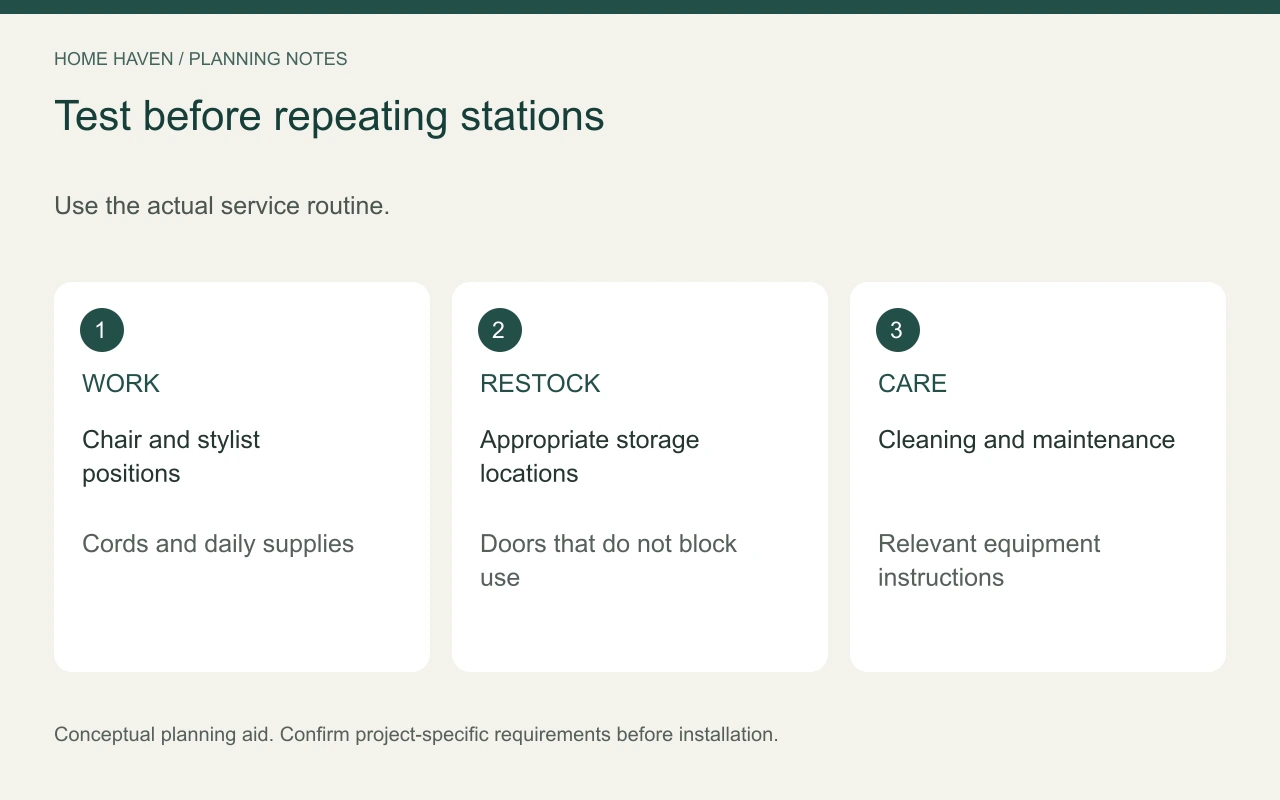
A phased purchasing plan can include:
- Verify premises and project requirements.
- Confirm the measured layout and essential equipment.
- Trial the first station and review storage.
- Approve simple, maintainable finishes.
- Add decorative details after the workflow works.
Frequently asked questions
Does a budget salon need custom cabinetry?
Not always. Suitable standard or modular pieces may work. Compare their usable storage, installation, and maintenance with any custom proposal.
Is a feature wall a good first purchase?
Only after essential needs are funded. A feature wall cannot solve poor lighting, inadequate storage, or an unsuitable service layout.
How many stations should open first?
Use the staffing, service brief, available space, and relevant requirements to decide. Extra chairs alone do not create a viable operating plan.
Spend on what makes an appointment work
Review arrival, service, payment, restocking, and cleanup before the final order. Keep the first phase clear and workable. A restrained salon design can grow with the business when the foundation serves real daily tasks.