
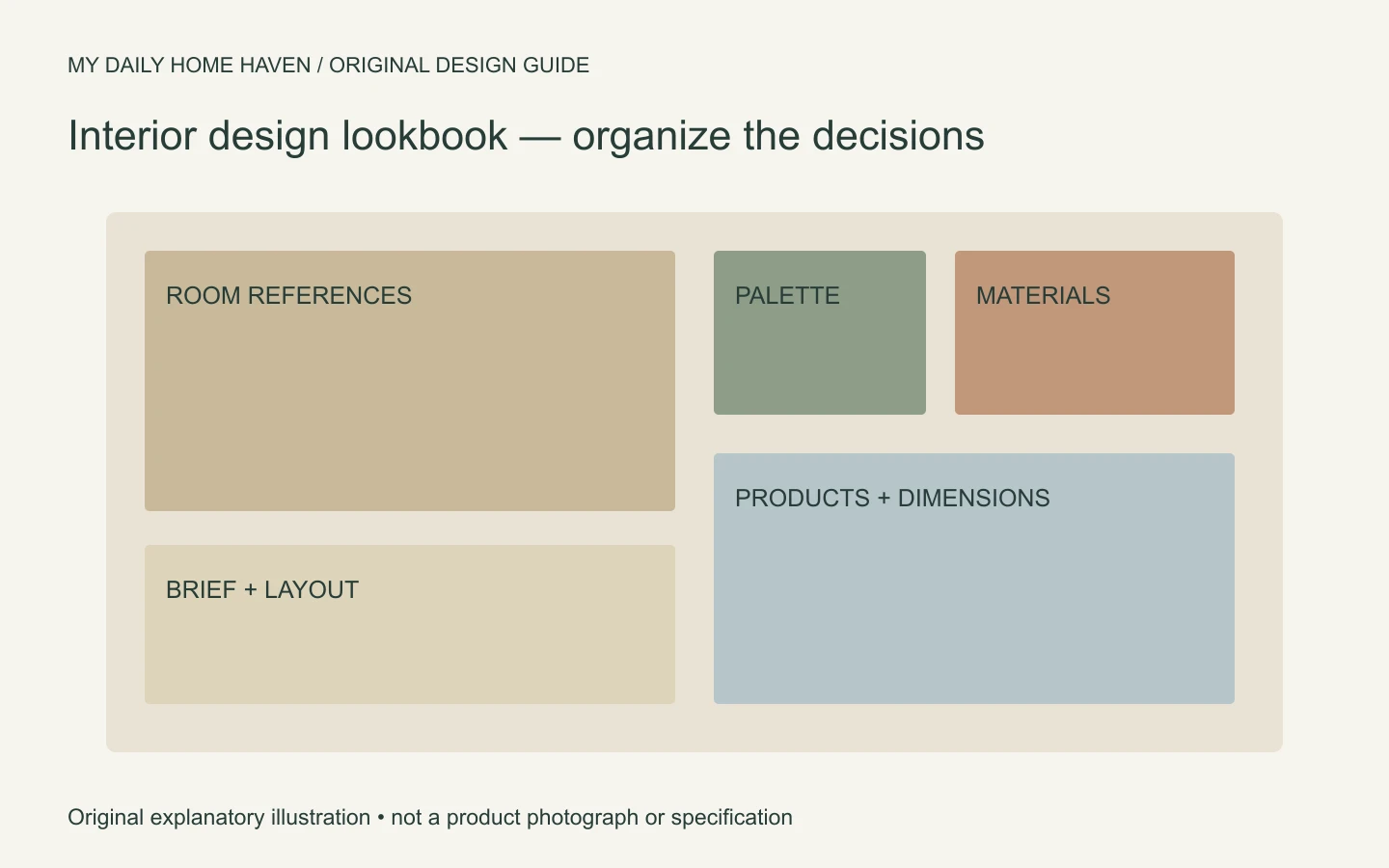
An interior design lookbook is an organized visual guide to the direction of a room or home. It combines selected references with notes about color, materials, furniture, and atmosphere. A useful lookbook helps you make decisions; it is more than a folder of attractive photographs.
You can create one in a document, slide deck, notebook, or simple board. The format matters less than the clarity of the information. Start with our interior design aesthetics guide if you are still identifying the styles you want to explore.
Interior Design Lookbook: Turn Inspiration into a Plan
An interior design lookbook is most useful when each image supports a real decision. Group references by room, note the colors and materials you notice, and label what is inspiration versus a product you can actually source. Add measurements and budget notes before shopping; a focused lookbook helps you compare ideas instead of collecting endless screenshots.
Know what the lookbook should do
A mood board often captures an initial feeling. A lookbook can develop that feeling into a more organized set of room references and choices. A technical plan goes further, with dimensions and installation information. These tools can overlap, but they should not be mistaken for each other.
Decide who will use the lookbook. A private planning document can include rough notes, while a document shared with a household or designer needs clearer labels. Explain what is approved, what is an option, and what still needs checking.
Do not label an inspiration image as your finished design. A photograph may contain furniture that is too large, unavailable, or unsuitable for your home. The lookbook should show what you intend to borrow from it and what you intend to change.
Page one: write the room brief
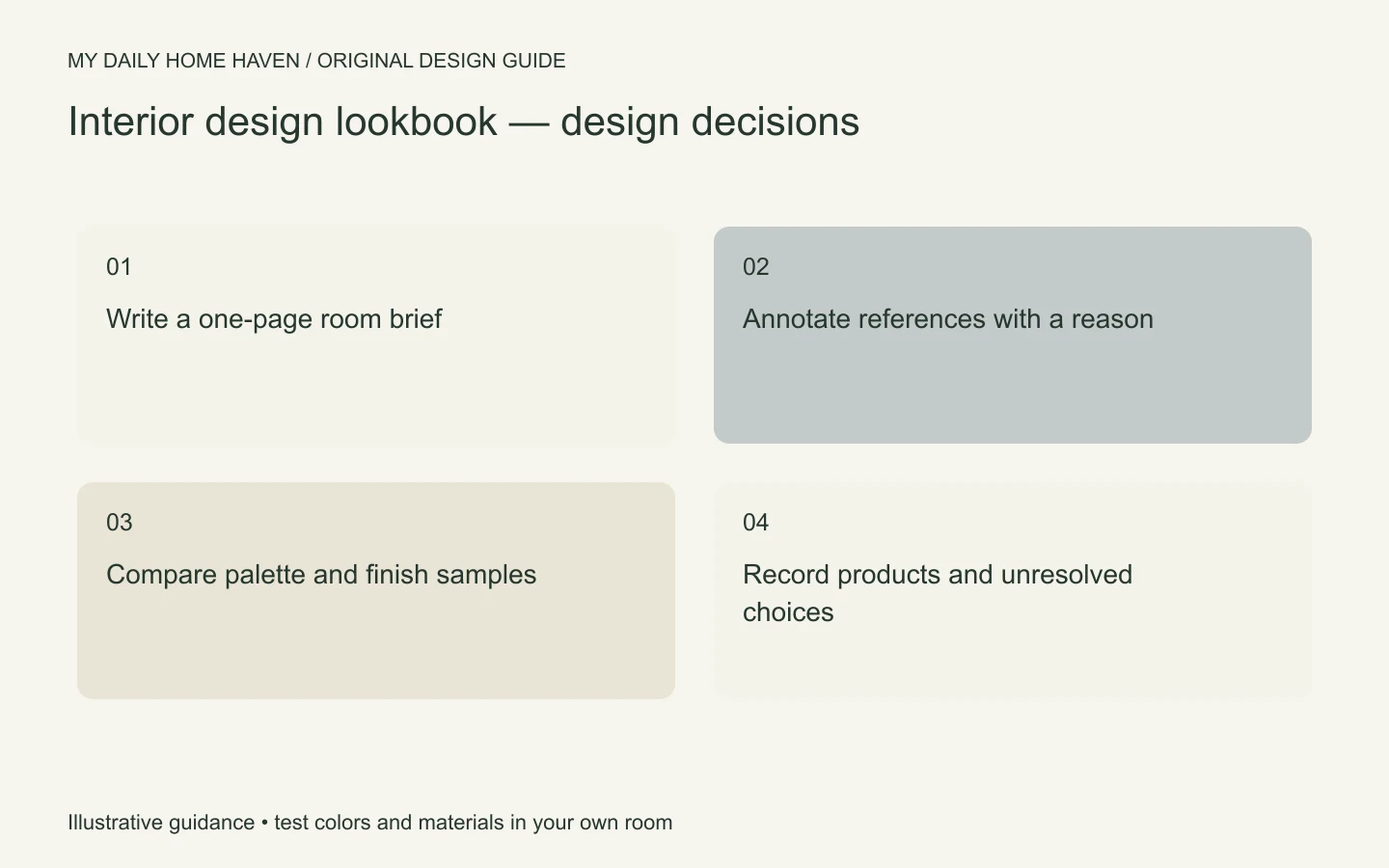
Name the room and list its main activities. Include the people using it, the pieces you will keep, the budget boundary, and any restrictions. A living room used for work and guests needs a different plan from a room used mainly for television.
Record the practical constraints: measurements, windows, doors, fixed finishes, rental rules, and delivery access. Add photographs of the current room. These details prevent the visual ideas from drifting away from what can actually fit.
Use a short direction statement such as warm, practical, and layered, with quiet large surfaces. It should help you accept or reject choices. If the statement is so broad that every object fits, make it more specific.
Pages two and three: select and annotate references
Choose a small group of images with a clear purpose. For each, write what you like: the furniture arrangement, the contrast between timber and fabric, or the way curtains frame a window. Specific observations are more useful than the word beautiful.
Also note what does not transfer. A reference room may have taller ceilings, a larger budget, or more daylight. Keep the useful principle without assuming the whole composition can be copied into your space.
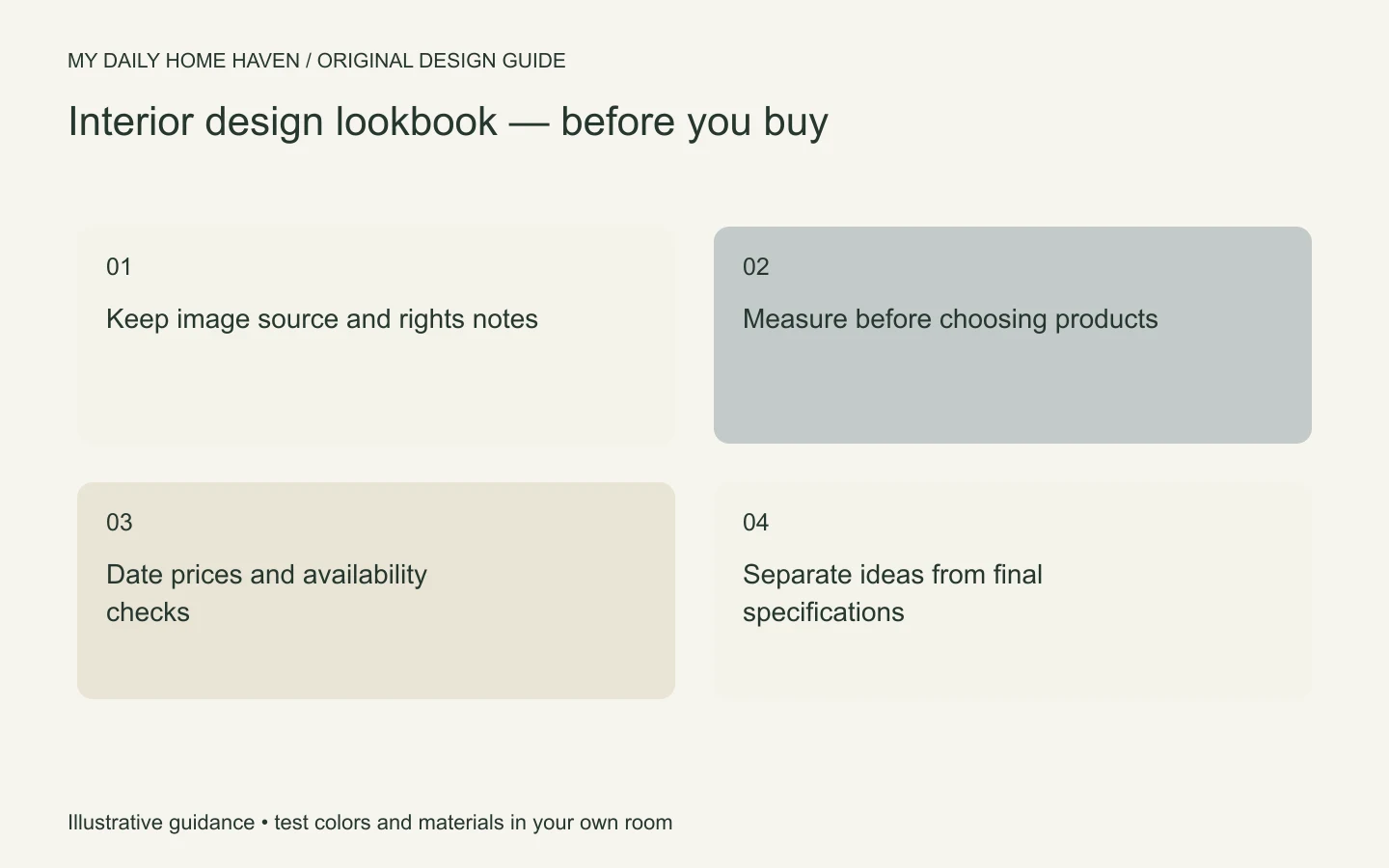
Use your own images, properly licensed material, or links where appropriate. Record the photographer, designer, publisher, and source when available. Do not republish someone else’s photographs or book spreads in a public lookbook without the necessary rights.
Page four: build the palette and material set
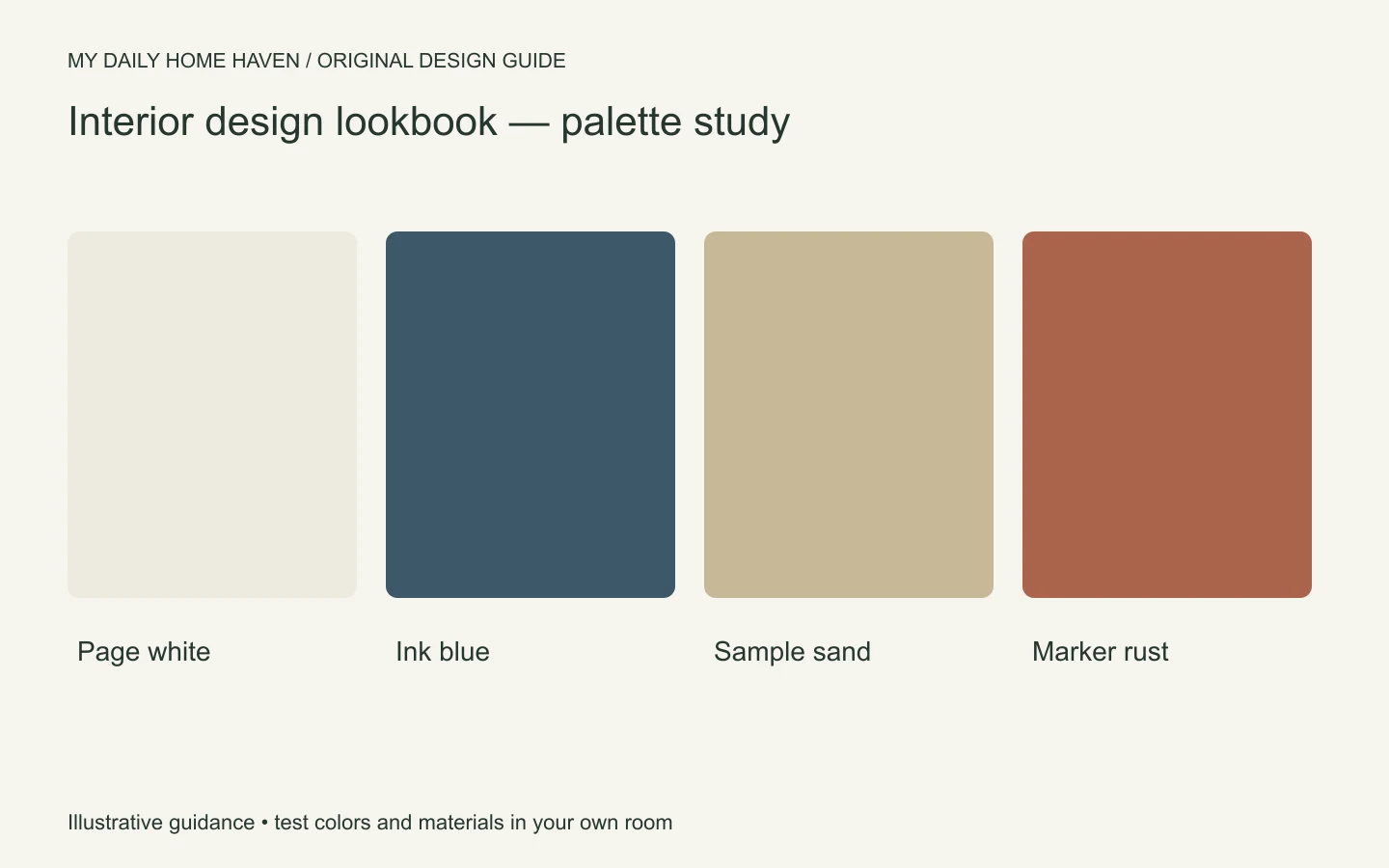
Place paint, fabric, flooring, timber, stone, and metal references together. Label each as an existing finish, a proposed option, or a confirmed selection. A screen palette is useful for organization, but it does not replace physical samples.
Benjamin Moore’s color handbook explains why lighting changes color appearance. Record where and when you tested a paint sample so a digital swatch is not mistaken for the final evidence.
Keep the palette focused enough to compare. If you have many alternatives, create a separate options page rather than crowding all of them into the main direction. Mark rejected choices clearly so they do not reappear in later orders.
Page five: connect the furniture to a layout
Add a measured sketch with the main furniture footprints, door swings, and practical routes. Include the dimensions of pieces you already own. Do not select a sofa from its appearance alone and hope the floor plan will accommodate it later.
Our space planning guide can help you check circulation and activity zones. A lookbook is most useful when the visual direction and the room’s usable space develop together.
If the project involves building work, electrical changes, or detailed installations, obtain the appropriate professional drawings and advice. A decorative board cannot replace technical design or a contractor’s site assessment.
Page six: record products and open questions
| Field | What to record |
|---|---|
| Item | Product name, maker, and link |
| Fit | Dimensions and relevant access checks |
| Finish | Exact color, material, and option |
| Cost | Current price, delivery, and date checked |
| Status | Idea, sample ordered, approved, or purchased |
| Question | What must be confirmed before ordering |
Use the same structure for each major item. Prices and availability change, so include a check date and review the listing again before purchase. Keep alternatives separate from approved items to avoid ordering the wrong version.
For custom or made-to-order items, record the return conditions and lead-time information supplied by the seller. Ask for clarification before approval if the dimensions, finish, or installation responsibility are unclear.
Keep the document current
Add a version date and a short change note when important decisions move. Archive old versions rather than deleting the only record of an earlier choice. This helps when several people are discussing the project.
At each review, ask whether the lookbook still supports the original room brief. Remove attractive ideas that do not solve a need or fit the plan. A clear document with fewer choices is often more useful than a large collection nobody can interpret.
Add an approval note
For an interior design lookbook shared with other people, add a short approval note beside each confirmed choice. Record who approved it, the date, and any condition still outstanding, such as a fabric sample or final measurement. Do not treat a casual reaction to an inspiration image as approval to order a product. This simple distinction helps households and project teams avoid confusion. Keep technical checks with the appropriate professional rather than implying the lookbook supplies them. When an item changes, update its status and archive the old option so the document continues to show the current plan clearly.
Frequently asked questions
How many pages should a lookbook have?
Use enough to explain the project clearly. A single room may need only a short document; a whole home needs separate room sections and a shared materials overview.
Can I make one before knowing my style?
Yes. Begin with references and annotations, then look for repeated preferences. Move from exploration to a clearer direction before approving expensive purchases.
Does a lookbook replace an interior designer?
No. It can help you plan or communicate your preferences, but it does not provide professional technical assessment, installation details, or expertise outside your own knowledge.
\n\n