

Introduction
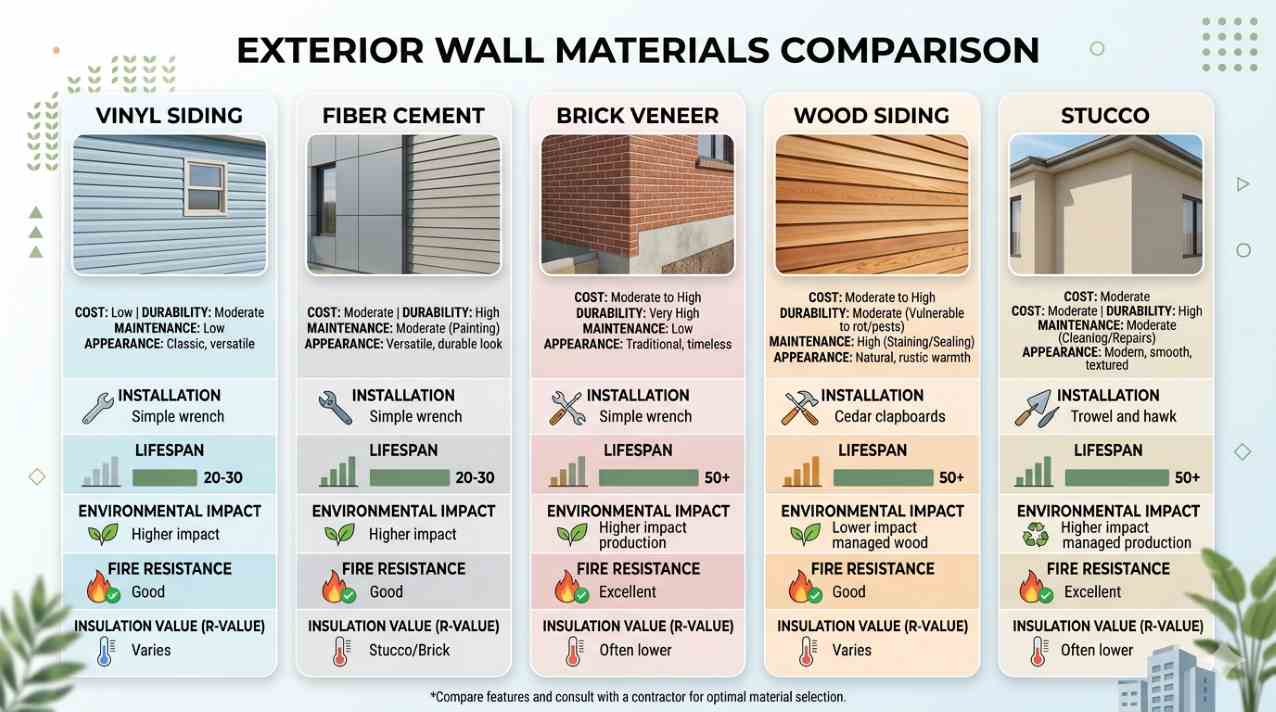
Walk around any neighborhood and you will notice that no two homes look quite the same on the outside. Some are clad in warm, natural wood. Others show off clean stucco or classic brick. That outer layer is not just about curb appeal—it is the first line of defense your home has against rain, wind, heat, and cold.
Choosing the wrong exterior wall material can mean thousands of dollars in repairs down the road. Choosing the right one can save you maintenance headaches for decades. The problem is that most homeowners do not know where to start. There are dozens of options, and every contractor seems to recommend something different.
This guide cuts through the noise. We cover five of the most popular exterior wall material types, what each one costs, how long it lasts, and which climates it handles best. By the end, you will know exactly what to ask for — and what to avoid.
For a broader look at siding, roofing, windows, and trim all in one place, check out our exterior home materials complete guide for homeowners.
What Are Exterior Wall Material Types?
Exterior wall material types are the outer cladding or skin attached to your home’s structural frame. Think of them as your home’s jacket. They block moisture from getting in, resist heat loss in winter, and protect the frame from rot, pests, and physical damage.
Not all materials do this equally well. Some last 100 years without a second thought. Others need repainting every few years, or they deteriorate quickly. Climate, budget, architectural style, and local building codes all play a role in which material makes the most sense for your specific situation.
5 Popular Exterior Wall Material Types Compared
1. Vinyl Siding
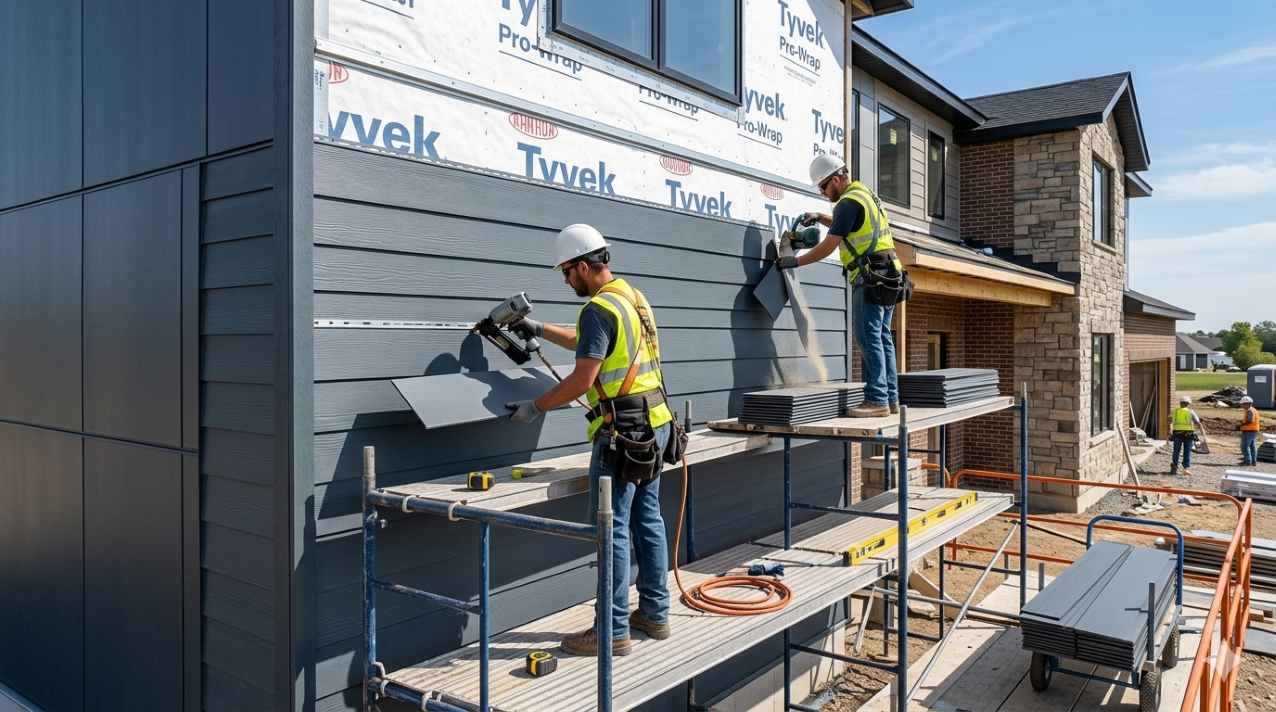
If you have driven through a suburban neighborhood built in the last 30 years, you have seen vinyl siding everywhere. It is, by a wide margin, the most common exterior wall material type in North America — and for good reason.
Vinyl is made from PVC resin, and it comes in a huge range of colors and profiles. It never needs painting, it resists moisture and rot, and because it is so lightweight, installation goes quickly and labor costs stay manageable. Most homeowners pay between $2 and $7 per square foot installed, making it the most budget-friendly option on this list.
The trade-offs are real, though. Vinyl can warp in prolonged heat above 165°F, which matters if your walls get direct afternoon sun in a hot climate. It also becomes brittle in very cold temperatures, and once a panel cracks or fades, you cannot simply repaint it. You replace it.
Best for: Budget-conscious homeowners in moderate climates. Not ideal for extreme heat, freezing cold, or high-wind areas.
2. Fiber Cement
Fiber cement has quietly become one of the most trusted exterior wall material types on the market. It is made from a blend of cement, sand, and cellulose fibers, and it looks remarkably like wood — without wood’s vulnerabilities.
This material resists fire, termites, rot, and hail. It holds paint for 12 to 15 years before needing a refresh. It handles humidity, salt air, and freeze-thaw cycles better than almost any other cladding option. James Hardie is the best-known brand, but several manufacturers make comparable products.
Expect to pay $5 to $12 per square foot installed. That is more than vinyl, but fiber cement lasts 40 to 50 years with minimal upkeep, so the long-term value is strong. One thing to know: it is heavy. Professional installation is not just recommended — it is essentially required. Cutting it also produces silica dust, so contractors need proper masks and equipment.
Best for: Homeowners who want the look of wood without the maintenance. Works in nearly every climate, including coastal and high-humidity regions.
3. Wood Siding
There is a reason wood has been used on homes for centuries. It has a warmth and depth that no synthetic material has fully replicated. Cedar, redwood, and pine are the most common choices. You can stain or paint wood any color, and it lends itself beautifully to everything from traditional farmhouses to modern board-and-batten designs.
The honest downside is upkeep. Wood needs to be stained or repainted every three to five years. Skip a cycle or two and moisture gets in, rot follows, and repair costs climb fast. Termites and carpenter bees are attracted to wood, and in wildfire-prone areas, some local codes restrict or ban wood siding altogether.
Costs vary widely depending on wood species and profile, but budget $6 to $12 per square foot installed for quality cedar siding.
Best for: Dry climates, historic home renovations, and homeowners willing to invest in regular maintenance in exchange for unmatched natural beauty.
4. Brick Veneer
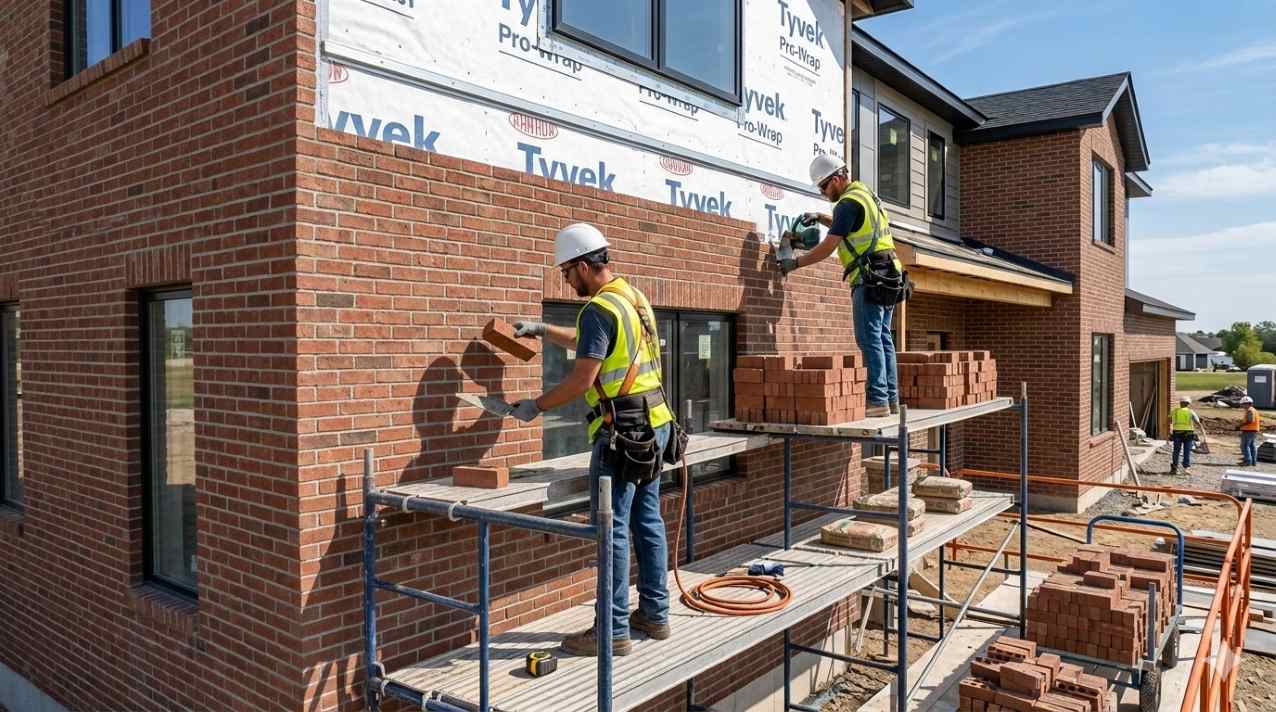
Brick veneer is not solid brick construction — it is a single layer of brick attached to a wood or steel frame. You get the classic, timeless look of brick at a fraction of the cost of full masonry. And that look, it turns out, comes with serious performance benefits.
Brick never needs painting or sealing. It is naturally fire-resistant, pest-resistant, and holds up against strong winds without flinching. Its thermal mass is a genuine advantage: brick absorbs heat during the day and releases it slowly at night, which helps moderate indoor temperatures in both summer and winter.
The main barrier is cost. Brick veneer typically runs $9 to $15 per square foot installed, and it requires a reinforced foundation because of the added weight. It is also difficult to change later, so if you decide you want a different look in 15 years, you are in for a major project.
Best for: Long-term homeowners who prioritize durability, low maintenance, and a classic aesthetic. Works well in most climates.
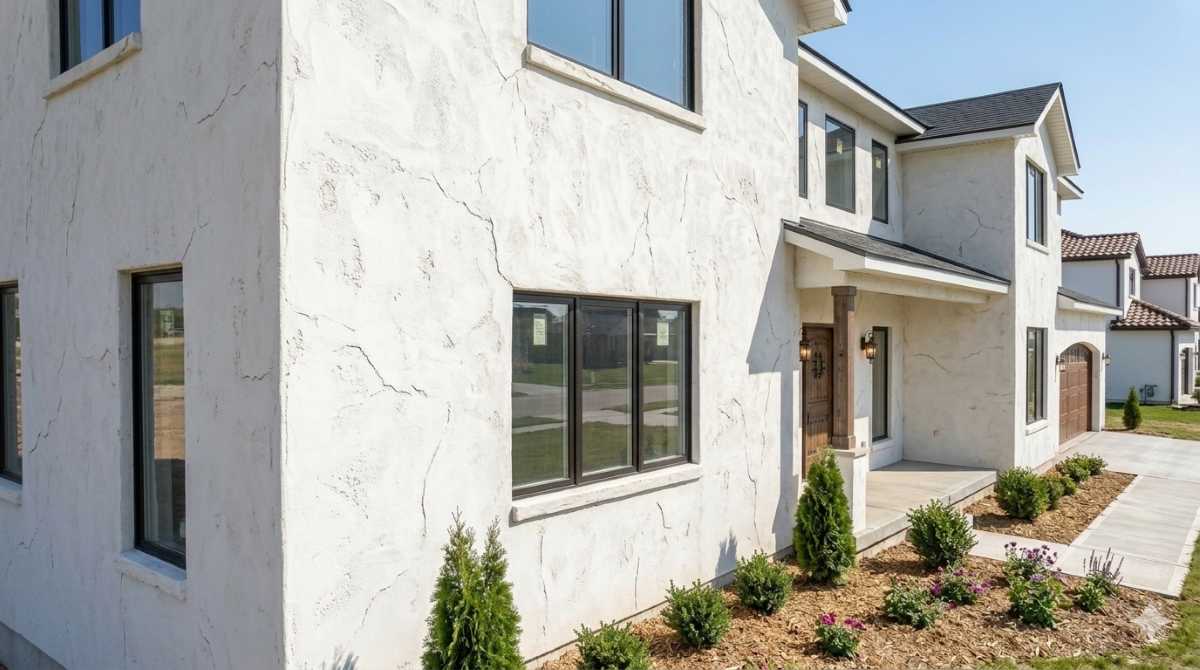
5. Stucco.
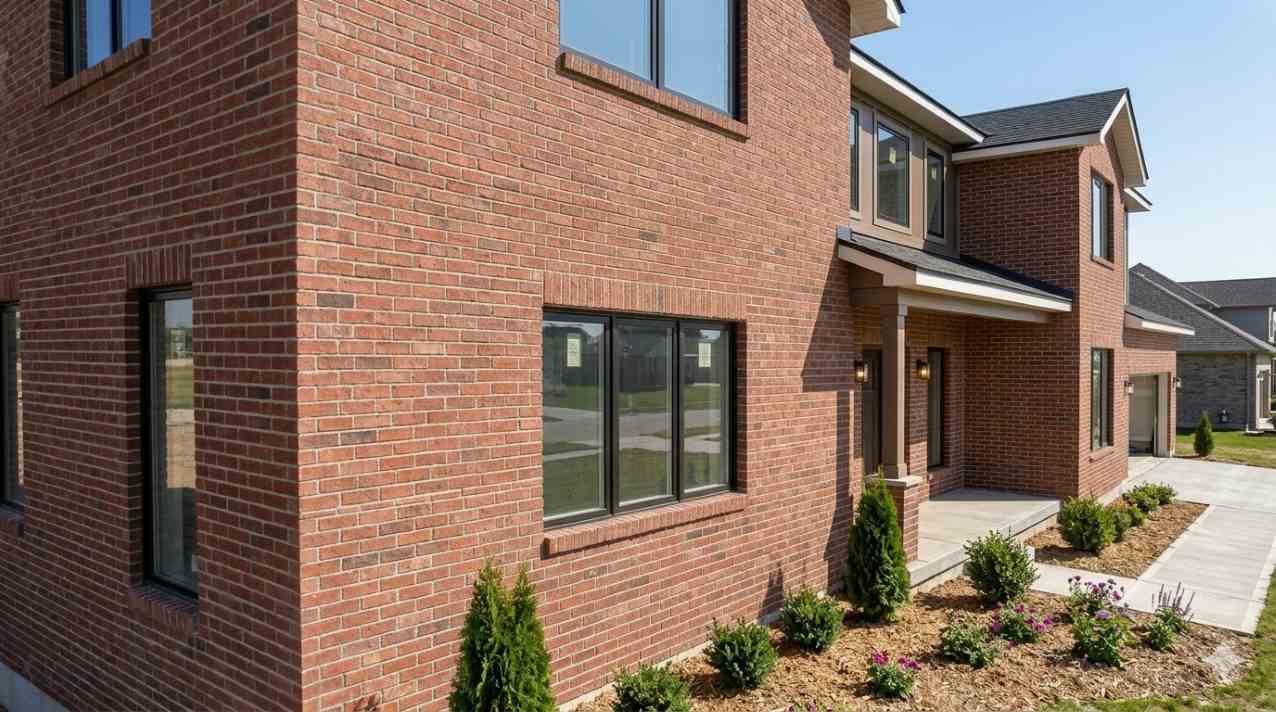
Walk through neighborhoods in Arizona, New Mexico, or Southern California, and stucco is everywhere. This cement-based exterior wall material type has been used in warm climates for generations, and in the right environment, it performs exceptionally well.
Traditional stucco is applied in three coats over a metal lath. It is breathable, fire-resistant, and provides good thermal mass. When installed correctly, it can last 50 to 80 years. It also offers design flexibility — stucco can be textured, colored, and shaped in ways that other materials cannot.
The limitations show up in cold climates. Stucco cracks in freeze-thaw cycles, and those cracks let water in. If that water gets trapped behind the wall, hidden mold and rot become serious problems. Synthetic stucco (EIFS) addresses some of these issues but has its own history of moisture problems when not installed perfectly.
Best for: Dry, warm climates. Not recommended in regions with harsh winters, heavy rain, or frequent freeze-thaw cycles.
How to Choose the Right Exterior Wall Material.
With five solid options on the table, here is a straightforward process for narrowing it down.
Start with climate. This single factor eliminates more options faster than anything else. Cold and wet? Fiber cement or insulated vinyl. Hot and dry? Stucco or brick. Humid and coastal? Fiber cement is your friend.
Set a total budget — not just a material budget. Labor, prep work, and long-term maintenance all add up. A cheaper material that needs repainting every four years may cost more over 20 years than a pricier option that needs nothing.
Match your home’s architecture. Modern homes suit smooth stucco or fiber cement panels. Craftsman bungalows look great with wood shingles. Colonial-style homes are natural fits for brick. Choosing a material that fights your home’s style rarely ends well.
Check local codes. Wildfire zones often restrict wood siding. Coastal areas may have wind-resistance requirements. Your local building department can tell you exactly what is allowed before you commit.
Order physical samples. View your top two or three choices on the actual walls of your home at different times of day. Colors and textures look dramatically different in morning sun versus overcast afternoon light.
Frequently Asked Questions
What is the most durable exterior wall material type?
Brick veneer leads to raw longevity—properly installed, it can last over 100 years with almost no maintenance. Fiber cement is a close second, lasting 40 to 50 years while resisting fire, rot, and insects. Both outperform vinyl and wood significantly over the long term.
What is the cheapest exterior wall material type?
Vinyl siding is consistently the most affordable, typically running $2 to $7 per square foot installed. Engineered wood siding is another budget-friendly option in the $4 to $9 range, though it requires more maintenance than vinyl.
Which exterior wall material type handles cold climates best?
Fiber cement and insulated vinyl are the strongest choices for climates with harsh winters and freeze-thaw cycles. Both handle temperature swings without cracking or warping. Stucco and standard wood siding perform poorly in these conditions without extra care.
Final Thoughts
There is no single best exterior wall material type — only the best one for your climate, your home, and your budget. Vinyl wins on affordability and ease of installation. Fiber cement offers the best balance of durability, versatility, and long-term value. Brick brings timeless beauty and near-zero maintenance. Wood delivers natural warmth that no synthetic material has matched. Stucco shines in dry, warm climates and nowhere else.
The homeowners who make the best decisions are the ones who take time to understand their local weather, get clear on a realistic budget, and talk to at least two or three local contractors before committing. Do not rush this decision. The material you choose will be on your home for decades.
For a complete look at all your exterior options — siding, roofing, windows, trim, and more — read our exterior home materials complete guide for homeowner.
For official climate zone data to help guide your decision, visit the U.S. Department of Energy’s residential climate zone guide at energy.gov.