

When comparing commercial interior design firms in Los Angeles, start with the property and operating brief. A polished portfolio does not establish who will coordinate the site, prepare required documents, or manage purchasing. Request comparable proposals and ask about the actual delivery team. The right shortlist should fit the business, project scope, and property location.

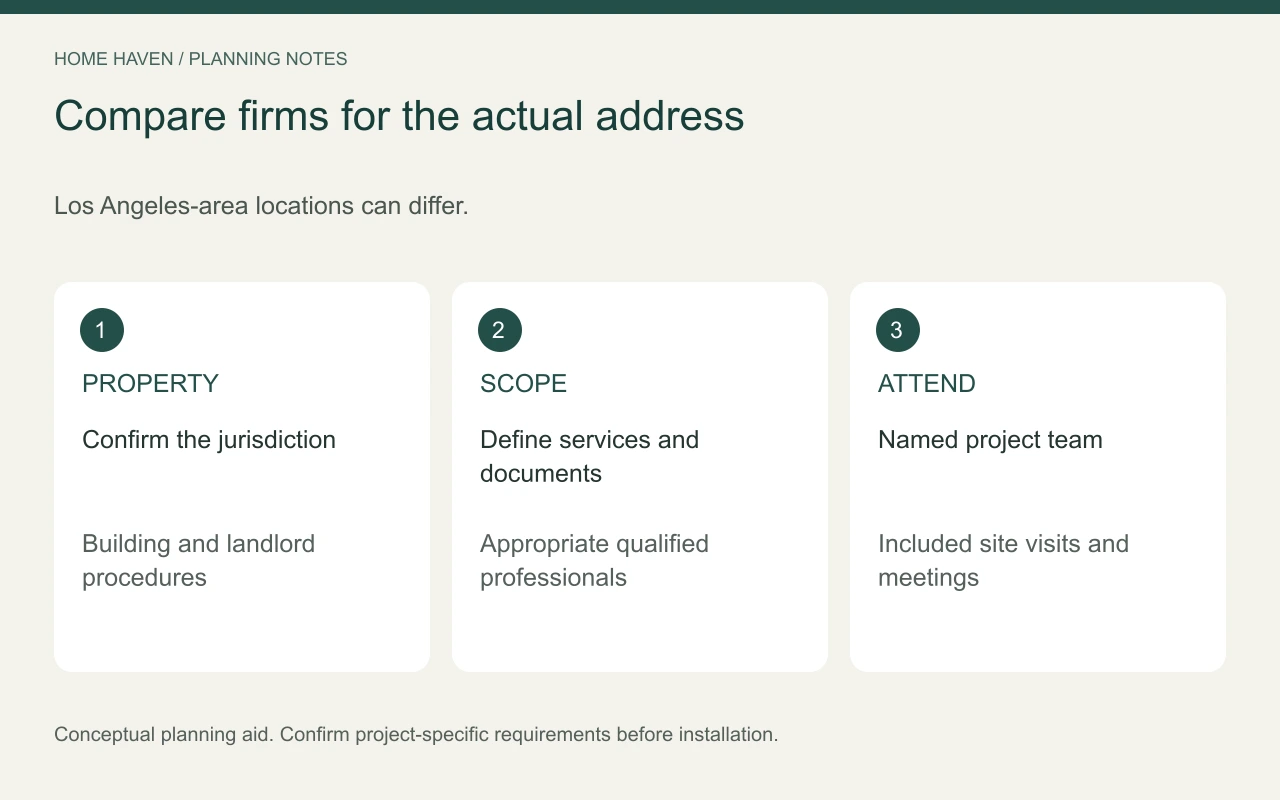
Identify the actual jurisdiction and premises
Record the property address and confirm the authority responsible for the proposed work. A Los Angeles mailing address, a location elsewhere in Los Angeles County, and a project within the City of Los Angeles are not interchangeable descriptions for approvals.
Ask the landlord or property manager about building procedures, existing documents, and responsibilities. Include site access, work hours, deliveries, and any restrictions relevant to the project. Resolve these facts before comparing optimistic construction schedules.
The Los Angeles City Planning approvals guidance explains aspects of the City’s review process. A qualified project team must determine what applies to the actual property and scope; this article does not establish required permits.
Review relevant Los Angeles commercial projects
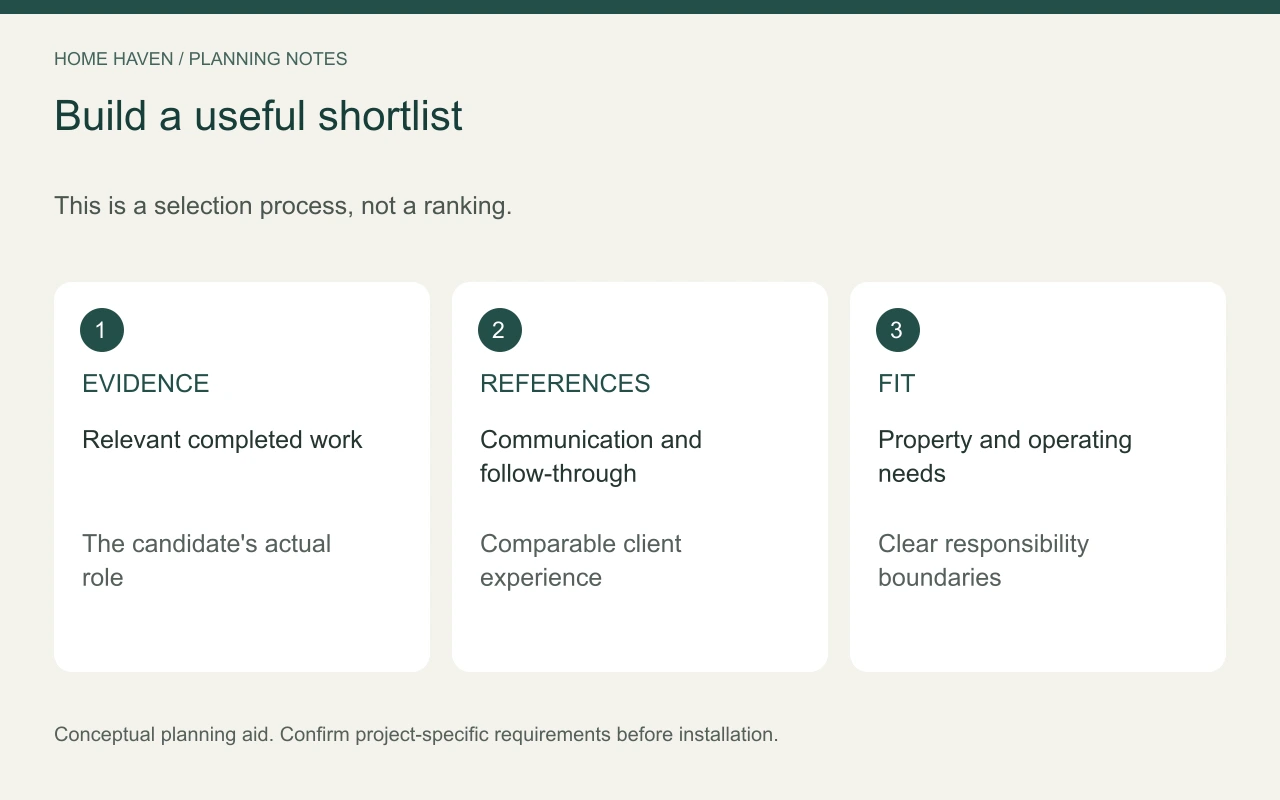
Look for comparable operating needs, not only a familiar visual style. An office refresh, occupied healthcare setting, and restaurant build-out involve different coordination. Ask each firm what it actually provided on the examples shown.
Request references and ask about communication, documentation, changes, and installation follow-through. A client with a similar scope may offer more useful context than a broad testimonial. Verify that the proposed team has relevant availability.
Use our space planning interior design guide to organize the activity and layout brief. For the wider proposal checklist, see our commercial interior design companies guide.
Define design and technical responsibilities
Ask who measures the site, prepares layouts, selects finishes, and coordinates equipment. Identify the appropriately qualified professionals responsible for regulated work and required submissions. Avoid leaving essential tasks under a vague coordination heading.
Confirm the firm’s relationship with architects, engineers, contractors, and other specialists. Determine whether they are included, separately contracted, or still to be appointed. The client should understand both the work and the agreements involved.
Know who attends the property
Discuss site visits, observations, meetings, and installation attendance. Ask which visits the proposal includes and what additional attendance costs. A local office does not automatically mean frequent involvement by the project’s senior designer.
Price the same scope
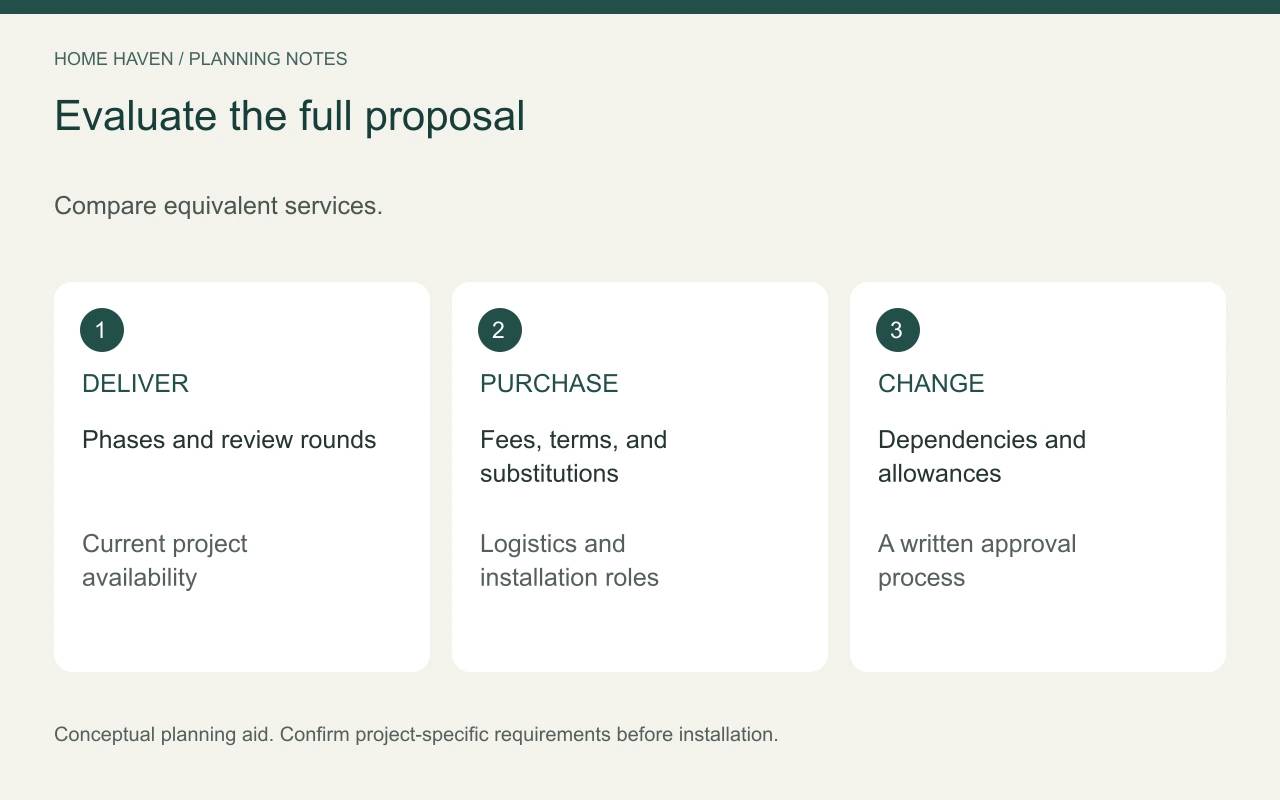
Request itemized USD proposals with a clear phase structure. Compare deliverables, review rounds, purchasing services, and installation responsibilities before comparing totals. Clarify what happens when the brief changes.
Identify allowances and unresolved assumptions. Existing conditions, equipment choices, or landlord responses can affect later work. A detailed proposal should acknowledge those dependencies rather than promise certainty without evidence.
Ask about travel, parking, delivery coordination, and other stated project expenses. They may be relevant to some properties, but do not assume universal charges. Get the terms for your project in writing.
Review procurement and logistics
Ask who orders products, tracks availability, approves substitutions, and handles damaged or missing items. Clarify markups, trade discounts, commissions, and purchasing terms where applicable. Understand the arrangement rather than assuming one model is standard.
Large or fragile deliveries may need separate receiving and storage arrangements. Discuss the building’s access and delivery procedures before placing orders. A furniture choice that fits the drawing may still create a difficult installation.
For commercial interior design near me searches, proximity is only an initial filter. Verify the firm’s service area and the practical delivery plan. A team located farther away may coordinate well, while a nearby firm may not offer the scope needed.
Ask for useful evidence of project fit
Invite candidates to explain one comparable challenge and how they addressed it. Good answers connect the user, building, operating brief, and decisions. Be cautious about treating broad claims of luxury or innovation as evidence of relevant process.
Ask to see a sample deliverable appropriate to the proposed service, with confidential information removed. A layout, specification sample, or procurement record can clarify what the client will receive. Do not request another client’s private documents.
Verify qualifications and insurance suitable for the actual role. Requirements vary by service and jurisdiction. Consult the relevant authorities or advisers when a claim is unfamiliar.
Plan decisions and changes
Identify the client’s decision-maker and the information they need to approve work. Set a practical review schedule and a shared record for selections, costs, and changes. Avoid distributing final approvals across informal conversations without a clear record.
Agree on how the firm reports delays, substitutions, and budget changes. A proposed replacement should be reviewed for fit and function as well as appearance. One change can affect adjacent furniture, lighting, or equipment.
Keep the brief current. If staffing, services, or premises change, reassess the scope. Asking a team to continue under an outdated brief can create disagreements that better documentation might prevent.
Build a shortlist you can compare
A concise comparison can cover:
- Relevant project and operating experience.
- Actual jurisdiction and property procedures.
- Named team and specialist responsibilities.
- Deliverables, fees, and review rounds.
- Procurement and installation coordination.
- References and a clear communication process.
Use the comparison to identify unanswered questions. Do not invent a ranking or label firms the best without a defensible method and evidence. This guide provides a selection process rather than a verified directory of providers.
Frequently asked questions
Must a firm have an office in the City of Los Angeles?
Not necessarily. Confirm its ability to deliver the required services and coordinate the actual property. Location alone does not determine qualifications or availability.
Should the first meeting include the landlord?
That depends on the project, but obtain relevant building information early. Ask the manager which procedures and responsibilities the team needs to understand.
Can a residential designer handle a commercial project?
Evaluate the actual experience, services, and qualifications rather than the label alone. The project may require additional appropriately qualified professionals.
Choose through the project rather than the search result
Prepare the brief, compare equivalent scopes, and confirm the responsibilities behind each proposal. Keep local coordination tied to the actual address. A clear selection process is more useful than an unsupported list of impressive names.