
New England interior design includes more than blue-and-white coastal rooms. The region contains city apartments, rural houses, historic homes, and contemporary buildings, each with different materials and ways of living. A useful interpretation starts with a particular setting rather than a collection of anchors, shells, and striped cushions.
For a modern home, focus on practical furniture, wood, layered textiles, and a clear response to the building. This guide takes a broader regional approach rather than repeating a single Cape Cod look. Our interior design aesthetics guide helps compare the options.
New England Interior Design: Look Beyond Coastal Blue
New England interior design varies across towns, seasons, architecture, and household needs. Use the existing building and landscape as references, then balance practical materials with color and furnishings that suit the climate. Coastal details can be one option, but they are not the definition of every regional home; keep the choices specific to your setting.
Choose the New England reference you mean
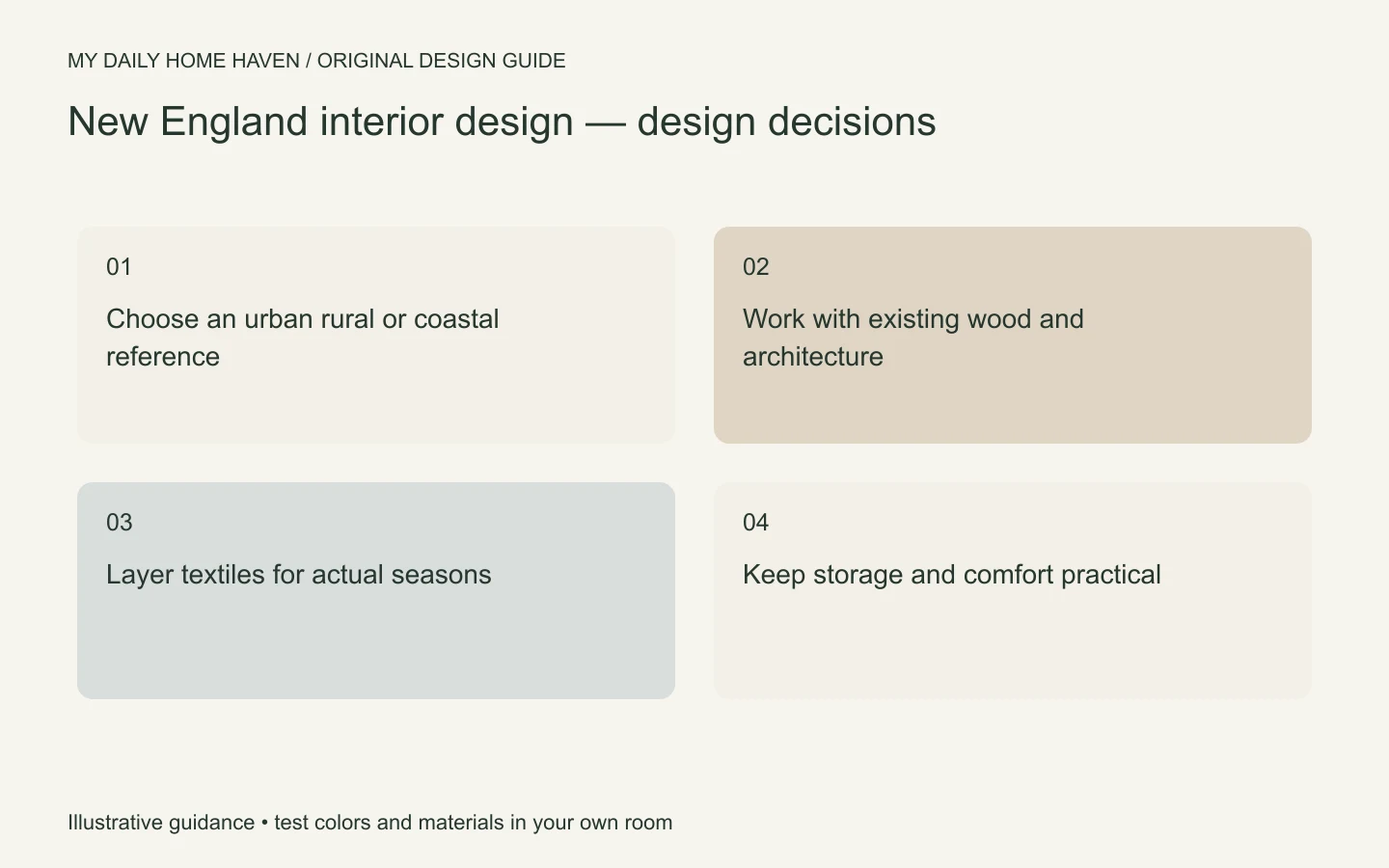
A compact urban room may benefit from tailored furniture and efficient storage. A rural reference might emphasize useful wood pieces and a more textured material mix. A coastal reference can include lighter colors and views without needing literal nautical decoration.
Historic New England’s collections document varied objects and domestic histories. Use such resources to understand a particular example rather than treating one museum room as a picture of the whole region.
Historical houses also reflect particular households and social conditions. Read the interpretation attached to a property. The most useful lesson may be the way furniture served daily tasks, not the decorative appearance of an affluent room.
Let the house guide the furniture
Look at the existing windows, trim, floor, and ceiling height. A simple painted room may suit a different furniture scale from a formal interior with tall windows. Work with those differences instead of adding period details that do not fit.
If there are older features, assess their condition before changing them. Repair can preserve character, while a decorative replacement may remove it. Significant work in a historic building may need specialist advice and applicable approvals.
For a newer house, use furniture and materials to create the connection. A useful timber table, a well-scaled lamp, and layered fabric can provide character without imitation paneling or false structural elements.
Use wood as an anchor, not a matching rule
Wood floors and furniture can bring warmth and visual structure. Compare their tones rather than trying to match everything exactly. A clearly darker table can work beside a lighter floor when the rest of the palette supports the contrast.
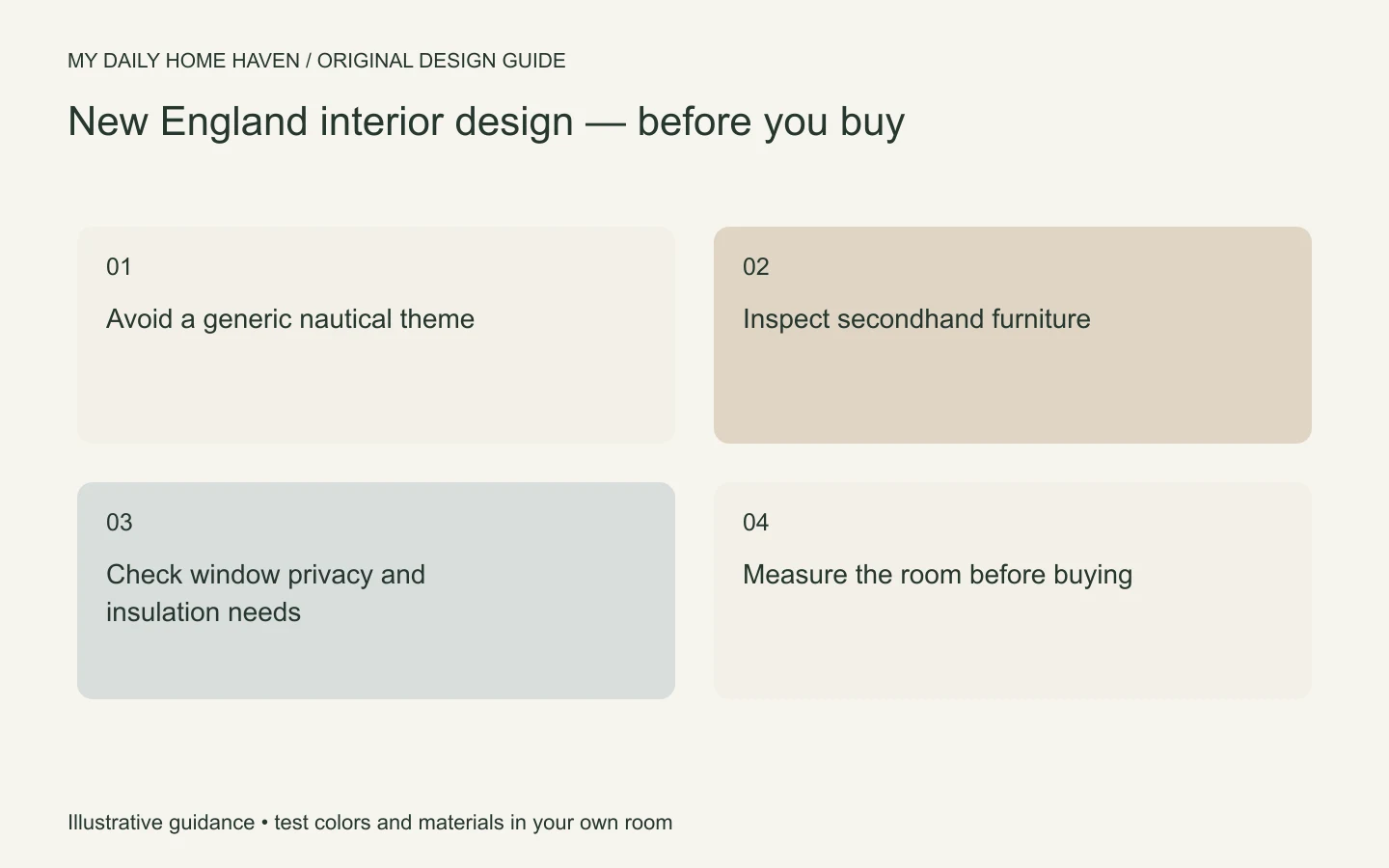
Inspect secondhand pieces for practical condition. Check joints, drawers, stability, and delivery access. A chest can provide useful closed storage, but a damaged piece may need repairs that affect the total cost and timing.
Mix older furniture with comfortable new upholstery if that suits the room. The scheme can feel collected without requiring every object to be antique or from the same place. Repetition of a tone or shape can connect the pieces.
Build a palette around the setting
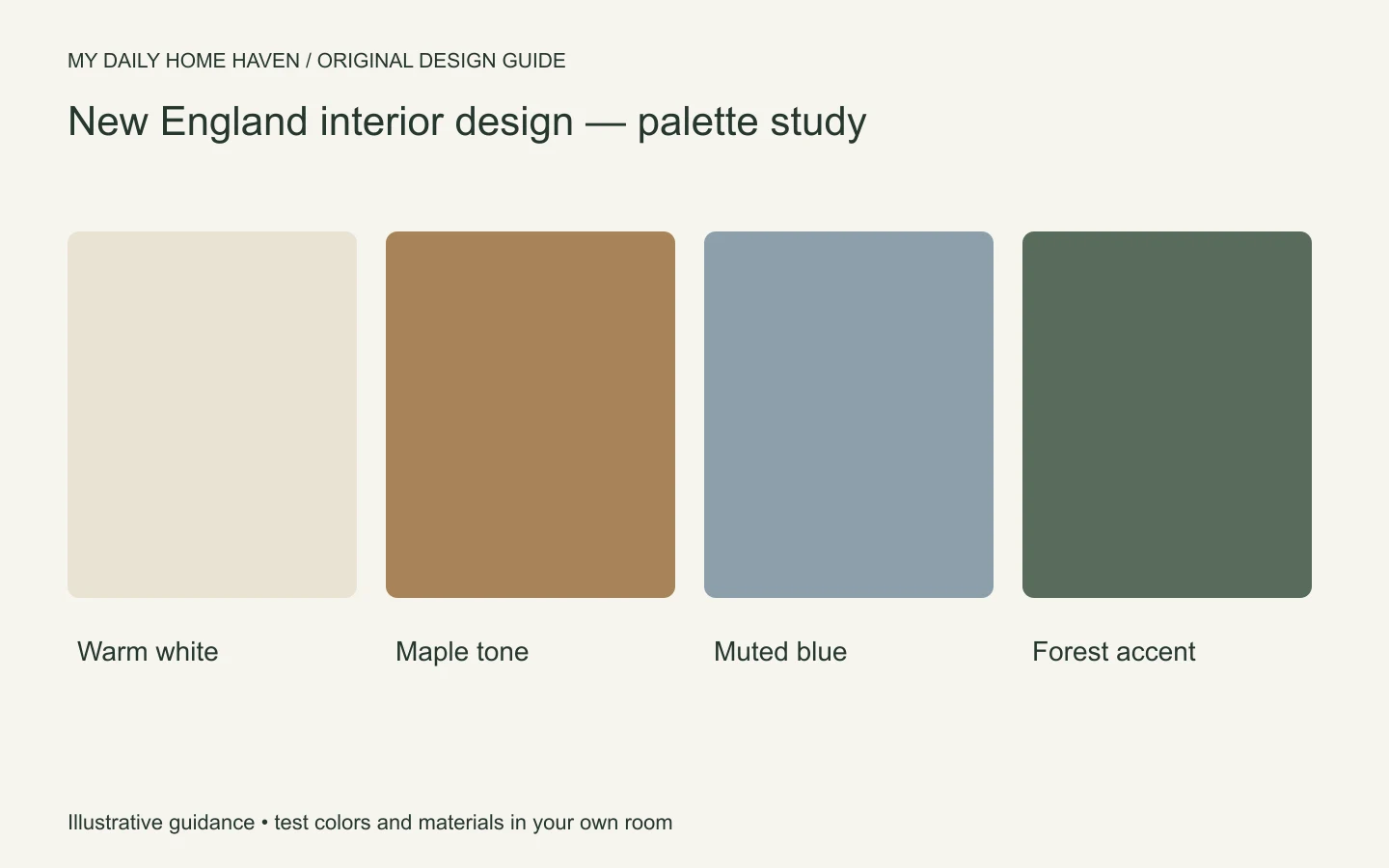
Warm white, muted blue, green, brown, and soft red can all contribute to different interpretations. Choose a small group that works with your fixed finishes. The region does not have one compulsory paint chart.
If the room has a view, consider letting it provide some of the color. If the view is limited, artwork or a textile can introduce the reference. Avoid using coastal motifs as a substitute for a coherent furniture plan.
Compare paint and fabric samples at home. A pale blue may look much cooler beside a gray floor than beside warm timber. Evening light also changes the relationship, so check the room at the times you actually use it.
Layer for the way you live
Textiles can support seasonal comfort, but choose them for your own climate rather than copying a cold-weather photograph. A lightweight curtain, washable throw, or textured rug may be more useful than a heavy layered scheme.
Window treatments should address privacy and glare as well as appearance. Check how fully they open and whether they interfere with radiators, vents, or furniture. Do not assume a decorative curtain solves a building’s insulation or moisture problems.
Use storage near the activities that create clutter. An entry bench with suitable storage, a closed cabinet for games, or a practical desk can make a room feel settled. Our space planning guide helps fit these needs into the layout.
A room plan without nautical props
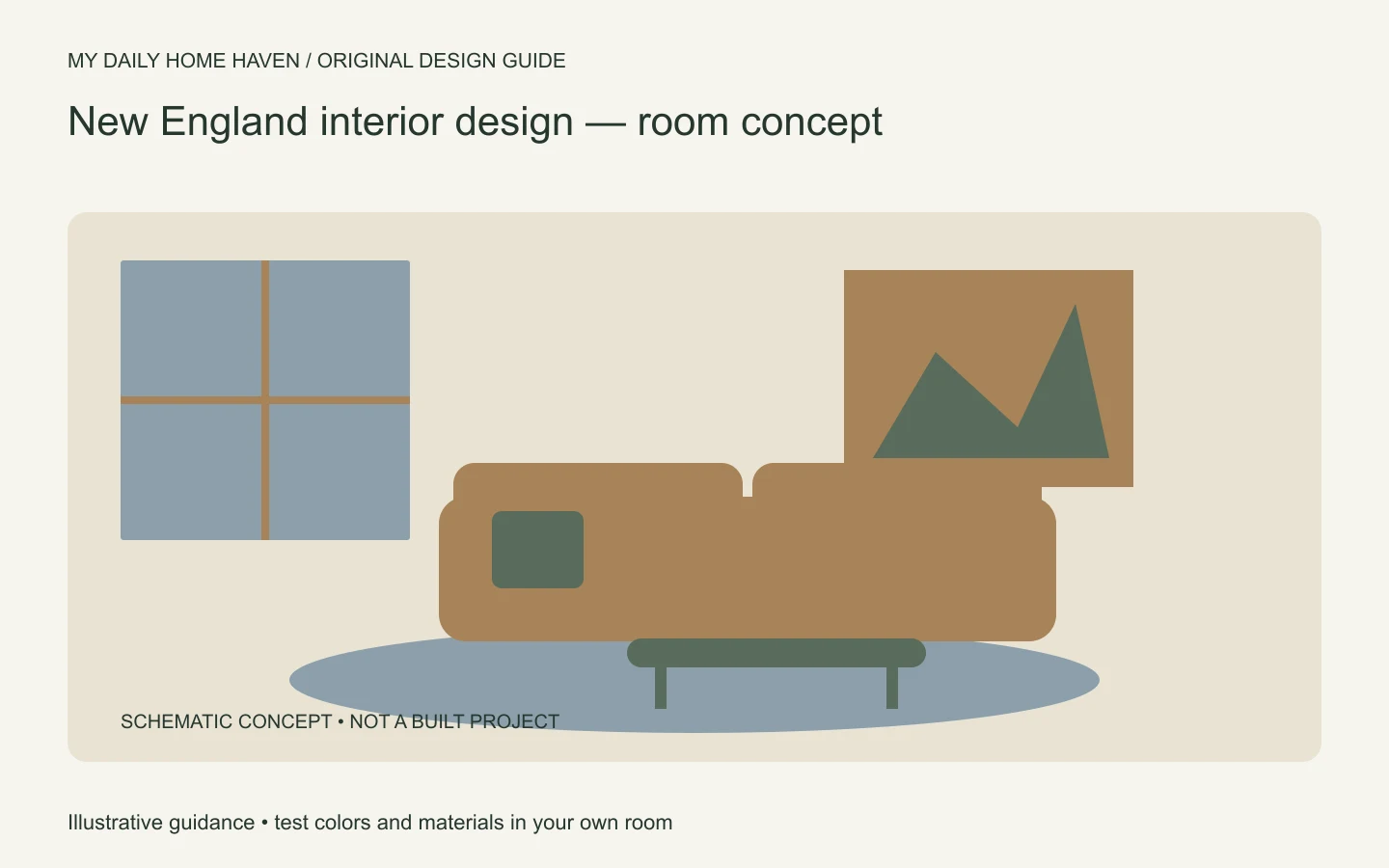
Start with a comfortable sofa, a timber table, and a rug that connects the seating. Add a muted green or blue textile, a useful reading lamp, and artwork that you enjoy. A simple chest can hold everyday items and provide a quieter display surface.
If you want a coastal reference, introduce it through color, light, or a landscape image rather than filling every shelf with beach objects. If you prefer a rural reference, use tactile fabric and useful wood furniture without making the room artificially rustic.
Live with the arrangement before adding more. The strongest regional reference is often a coherent relationship between materials, architecture, and daily life rather than a recognizable accessory on every surface.
Make the entry work for the season
A New England interior design reference can translate into a practical entry rather than another decorative motif. Plan where coats, damp shoes, bags, and everyday keys will go in your own household. Choose surfaces and storage that tolerate the actual conditions and can be cleaned appropriately. A small bench may help, but only if it leaves enough room to move and open nearby doors. Keep frequently used items reachable rather than hiding them in an awkward display arrangement. This functional approach can suit an inland house or city apartment just as well as a coastal home.
Frequently asked questions
Is New England style the same as Cape Cod style?
No. Cape Cod is one reference within a much broader region. Urban, rural, historical, and contemporary interiors can all contribute different ideas.
Can I use modern furniture?
Yes. Contemporary seating and lighting can work with older wood pieces and regional references. Coordinate scale and materials instead of demanding a single period.
Do I need blue and white?
No. Those colors are one option, especially for some coastal interpretations. Green, warm neutrals, brown, and other colors can suit the architecture and your preferences just as well.
\n\n