
Stone interior design can introduce natural variation, visual weight, and a strong material focus. The right choice depends on where the stone will go, how it is finished, and how much maintenance you accept. A countertop, shower wall, floor, and small side table do not have the same requirements.
Start with use and performance, then choose the appearance. This guide compares questions to ask rather than declaring one stone best for every home. For the wider visual context, see our interior design aesthetics guide.
Stone Interior Design: Match Material to Its Use
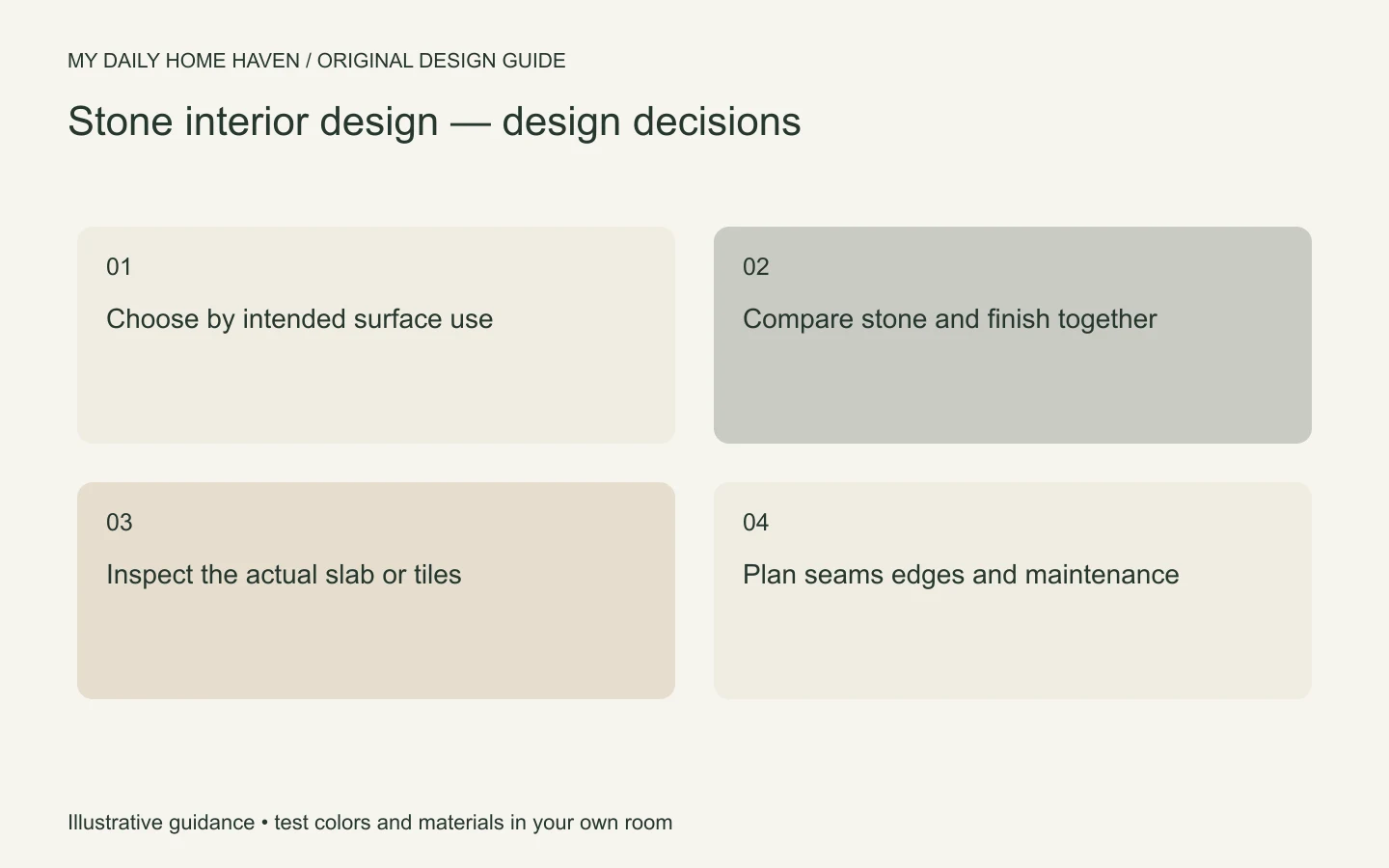
Stone interior design begins with the stone type, finish, installation, and care—not just its color. Ask how a surface handles moisture, staining, heat, and cleaning before using it on a counter, floor, or feature wall. Compare samples under the room’s light, and confirm maintenance instructions with the supplier for the specific material.
Identify the material accurately
Natural stone includes different geological materials, and commercial names do not always explain their behavior. Ask the supplier what the product actually is, which finish it has, and whether it is recommended for your intended use. Keep that information with the quotation.
Engineered surfaces, porcelain, and stone-look products are separate categories. They can be suitable choices, but they should not be described as natural stone. Compare the actual product’s care and installation requirements rather than transferring assumptions from a similar-looking material.
Visit the slab or review the specific tile batch where possible. Small samples may not show large veins, color changes, or variation across the full surface. Confirm what you are approving before fabrication begins.
Compare stone through practical questions
| Material family | Common design appeal | Important question |
|---|---|---|
| Marble | Veining and visual depth | How will acids and daily spills affect this stone? |
| Limestone | Quieter color and texture | Is this finish suitable for the proposed wear and moisture? |
| Granite | Grain and varied pattern | What care does this particular surface require? |
| Slate | Layered character | How even is the finished surface for this location? |
| Travertine | Visible pores and warm variation | Is it filled, and how will the surface be maintained? |
These are starting questions, not guarantees about every product in a category. The stone, treatment, finish, and installation system all matter. Ask for suitable technical information rather than relying on broad marketing words such as durable or maintenance-free.
Understand finish as well as color
Polished stone can emphasize reflection and contrast; honed surfaces tend to have a less glossy appearance. Textured finishes can offer a different tactile effect. Choose the finish in relation to use, lighting, cleaning, and the product’s tested suitability.
Do not assume a matte finish is automatically slip resistant or that a glossy surface is always unsuitable. For floors and wet areas, ask the supplier and installer for relevant performance information and local requirements. Appearance alone is not a safe specification method.
Inspect the finish under light similar to the room’s lighting. Strong side light can reveal texture and marks that are less obvious in a showroom. This is particularly useful for large horizontal surfaces and broad wall panels.
Plan the installation before approving the look
Stone has weight, and the supporting structure matters. Counters, large wall pieces, and floors need an appropriate substrate and installation method. Use qualified fabricators and installers; do not treat heavy stone as an ordinary decorative panel.
Discuss seams, vein direction, cutouts, edges, and access before fabrication. A beautiful slab may look quite different once divided around a sink or joined across a long counter. Ask to review the layout where the supplier offers that service.
For showers, the stone is only one part of the assembly. Waterproofing and the full installation system need appropriate design. Sealing the face of a stone is not a substitute for that system or a promise of waterproof construction.
Decide what maintenance you can accept
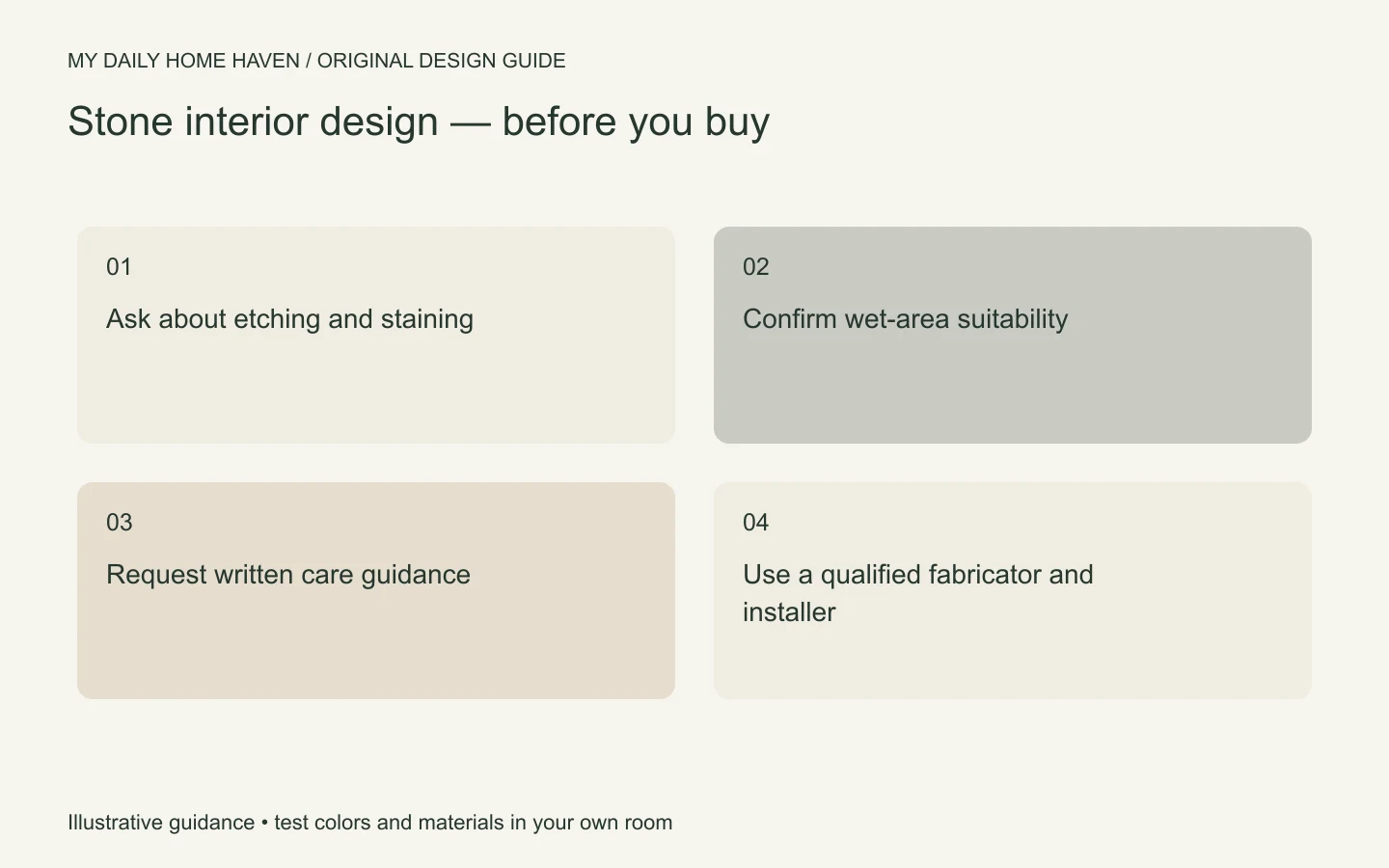
The Natural Stone Institute’s care guide explains cleaning and cautions about products that can harm stone. Some stones are sensitive to acids, and a sealer does not make every surface immune to damage. Ask about staining and etching separately.
Obtain written instructions for your exact material and finish. Confirm which cleaner is suitable, how spills should be handled, and whether periodic treatment is recommended. Do not use vinegar, abrasive products, or a universal household cleaner simply because it worked on another surface.
If you prefer a surface to remain visually pristine with little attention, say so before buying. Some homeowners enjoy developing marks and patina; others do not. Neither preference is wrong, but the material should match it.
Make stone part of the room rather than the whole room
One strong stone surface can provide enough character. Pair a highly veined counter with quieter cabinetry, or let a stone fireplace sit beside soft upholstery and simple walls. Repeating dramatic stone patterns everywhere may create visual competition.
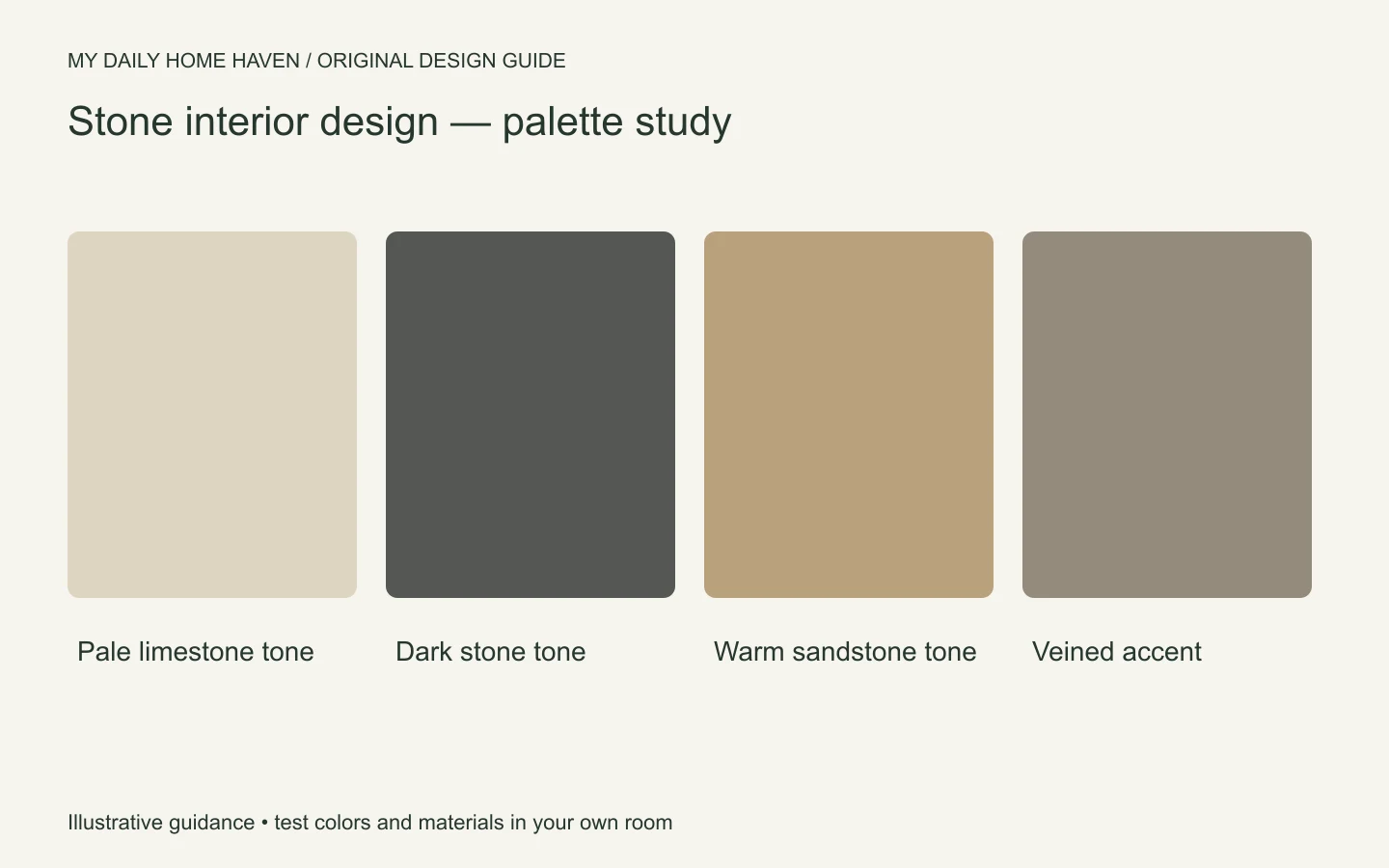
Compare stone with actual timber, paint, metal, and fabric samples. A slab that looks neutral alone may bring a green, pink, or gold cast beside the other finishes. Our principles of interior design guide can help assess emphasis and balance.
For a smaller commitment, consider a properly supported side table or a stone tray suited to its purpose. Check stability, edge safety, and the care needs of the supporting furniture. A small object can introduce the material without a major renovation.
Review the complete quotation
For stone interior design, compare quotations on the same basis. Ask whether templating, fabrication, edge details, delivery, installation, cutouts, and any necessary support are included. Record who checks the substrate and who is responsible for adjoining work. A lower material price may not represent a lower completed cost if important tasks are excluded. Confirm the approval process for the actual slab and layout before cutting begins. Keep the care instructions with the final specification so the people using the room know what was installed. Clear scope is as important as a beautiful sample when the work becomes permanent.
Frequently asked questions
Does sealing prevent every stain and mark?
No. Protection depends on the material and treatment, and sealing does not eliminate every form of damage. Ask the supplier about the exact product and follow its care instructions.
Can I choose from a tiny sample?
Use it for an initial comparison, then inspect the actual slab or representative batch before a major order. Natural variation can change the finished composition substantially.
Is a stone-look surface a lesser design choice?
No. Evaluate the product honestly by appearance, performance, care, cost, and installation. A suitable alternative can be a better fit for a particular household or location.
\n\n