

Whimsigoth interior design combines a moody backdrop with playful, romantic, and sometimes mystical-looking details. Rich colors, velvet, dark wood, botanical imagery, and celestial motifs can appear together. Think atmosphere and personal expression rather than a historically fixed furniture style.
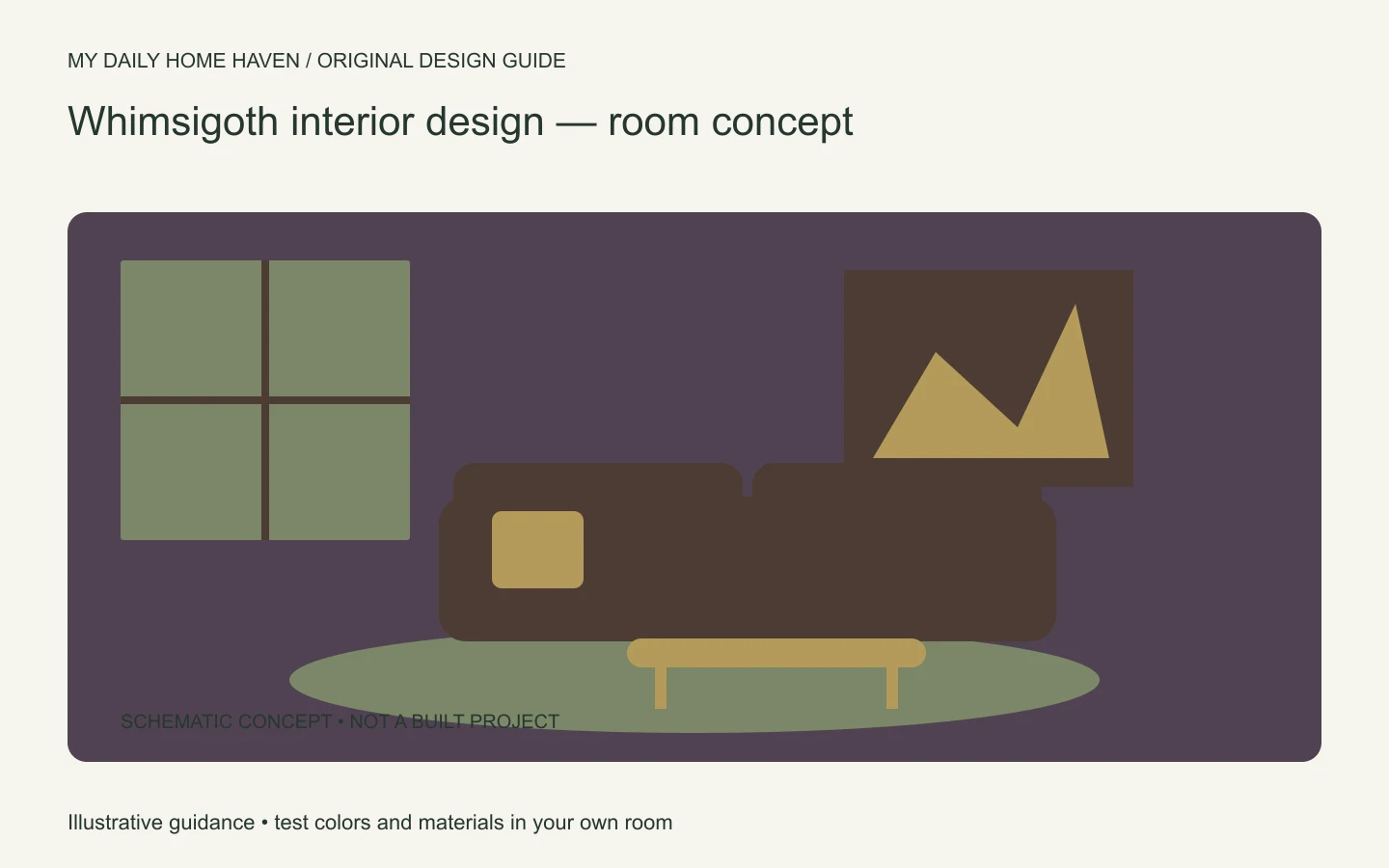
The label is used loosely, so you do not need to follow a rigid shopping list. Choose the elements you enjoy and give them a clear place in a functional room. Our interior design aesthetics guide helps compare this layered approach with quieter or more architectural styles.
Whimsigoth Interior Design: Keep the Room Livable
Whimsigoth interior design combines moody color and fanciful details, but daily comfort still matters. Test dark paint in the actual room, use several light sources, and choose motifs you enjoy beyond a passing trend. Leave surfaces for useful objects and keep circulation open, so the atmosphere feels expressive rather than crowded or difficult to maintain.
Establish the mood before collecting accessories
Choose a background first: deep plum, muted green, brown, charcoal, or another color you want to live with. Then identify a supporting material and one accent. Dark timber, soft fabric, and a restrained gold-toned detail can provide enough direction for the first stage.
Do not buy every object tagged with the style. A room filled with moons, stars, potion bottles, mushrooms, and ornate mirrors can lose its focus. Pick one or two motifs that mean something to you and leave quieter surfaces around them.
The look can overlap with eclectic and romantic decorating, but it is not the same as Gothic architecture or a historical period room. If you use an older reference, identify its actual origin rather than attaching a broad aesthetic label to it.
Test a deep palette in your own light
Dark paint can make a room feel enveloping, but its appearance depends on the surroundings and light. Compare a large sample beside your floor, sofa, and curtains. View it during the hours you normally use the room, especially in the evening.
Benjamin Moore’s color handbook explains how lighting influences paint appearance. A plum that looks balanced in a bright photograph may become much darker under your lamps. Sample before choosing all the textiles around it.
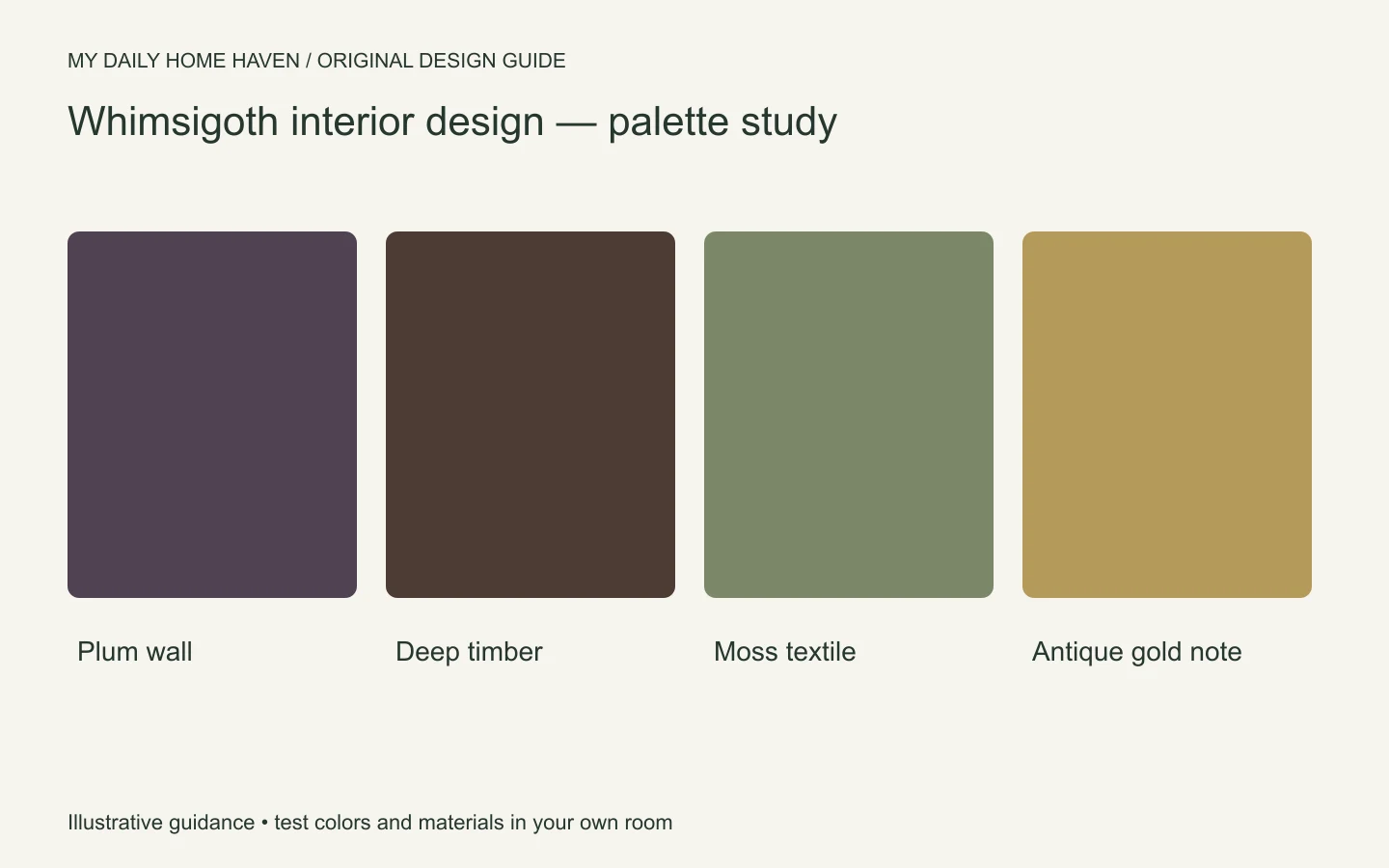
If painting is not possible, create the mood with curtains, bedding, a rug, or a large artwork. A pale rental room can still support the aesthetic through a concentrated area of rich color and a few distinctive shapes.
Mix ornate details with useful furniture
Let one ornate piece stand out: a carved mirror, a patterned cabinet, or a decorative lamp. Pair it with simpler storage and seating. This helps the interesting details remain visible and makes the room easier to adapt later.
Inspect vintage finds carefully. Check stability, drawer movement, odors, damage, and whether repairs are practical. Older electrical items need appropriate assessment before use; their appearance does not establish that they are safe to plug in.
Choose furniture at the right scale. A dramatic chair can still be uncomfortable, and a decorative chest may not hold the items you need to store. Measure the actual usable space rather than relying on the product’s overall impression.
Use fabric for depth, not obstruction
Velvet, woven patterns, fringe, and layered bedding can add richness. Use them where they make the room comfortable and manageable. An ornate throw across every chair may look appealing but leave guests unsure where to sit.
Check how a fabric handles sunlight, pet hair, and cleaning. A deep color can show lint or dust more clearly than expected. Ask for care information and try a sample before committing to a large upholstered piece.
Keep draped fabrics away from lamps, heaters, and routes through the room. Curtains and canopies should be properly supported and suitable for the setting. A decorative arrangement must still allow doors, windows, and storage to work.
Make the lighting support the atmosphere
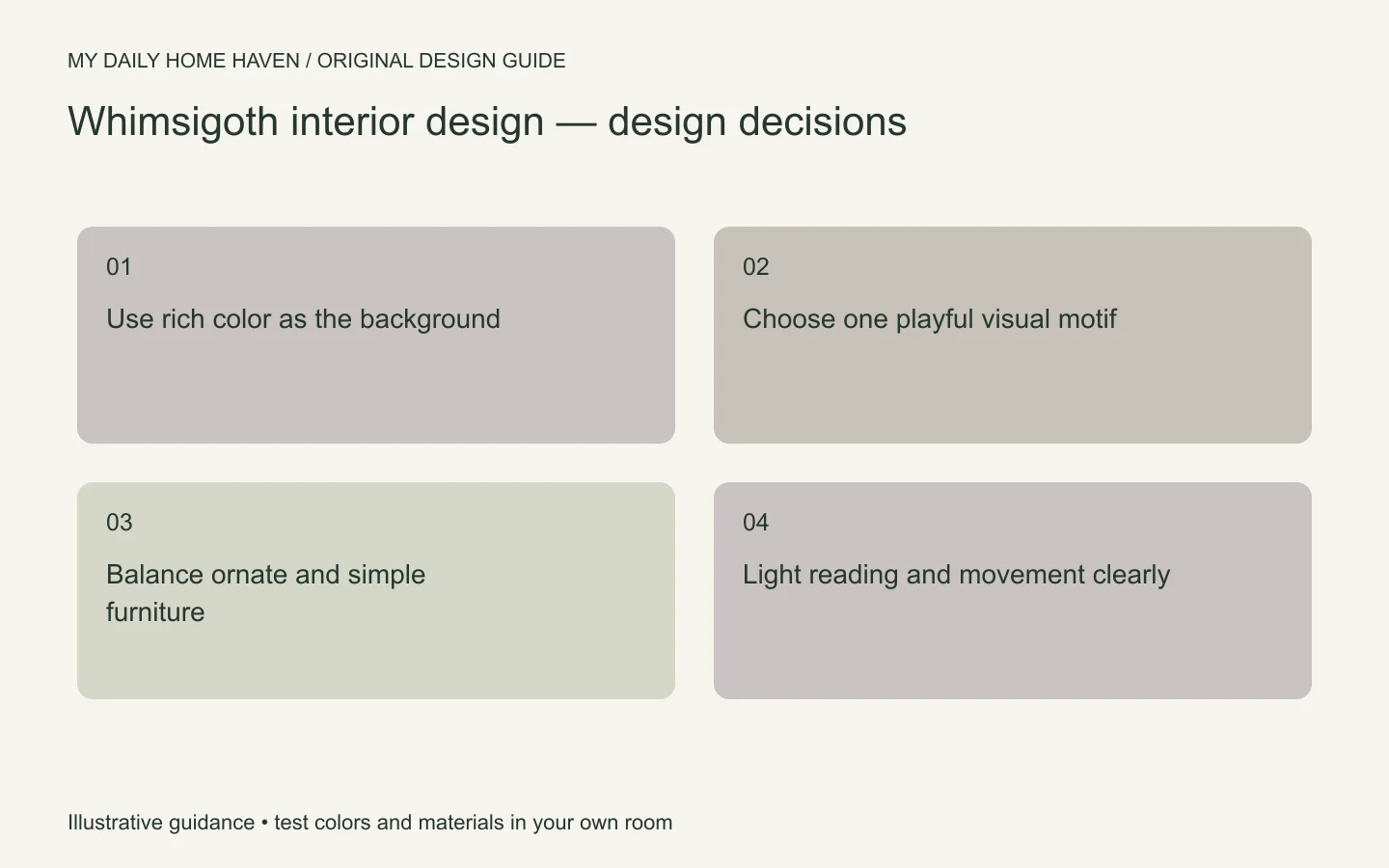
Use shaded lamps to create smaller pools of light, while keeping task areas bright enough to use. A reading corner needs a useful reading light even if the rest of the room is subdued. Add a convenient switch or compatible control rather than relying on difficult-to-reach plugs.
Colored bulbs and decorative string lights can change how fabrics and artwork appear. Test the effect rather than assuming it will match a photograph. Keep enough ordinary light available for cleaning, finding objects, and moving around comfortably.
Flameless candles can provide a decorative glow where open flames are unsuitable. If using real candles, follow their safety instructions and keep them away from layered textiles. They are optional accents, not a requirement of the look.
Keep the room personal and editable
A few books you read, art you enjoy, and objects with known stories will make the space feel more individual than a coordinated theme kit. Avoid buying sacred or culturally specific objects only for atmosphere if you do not understand their meaning or provenance.
Create a small display zone rather than spreading tiny objects across every surface. Leave useful space for drinks, work, and daily belongings. Closed storage can help the decorative areas stay intentional without demanding a perfectly tidy household.
Use the principles of interior design to check balance and emphasis. If the room feels crowded, remove one competing pattern or move a collection into a single grouped display before purchasing anything else.
Give the display a boundary
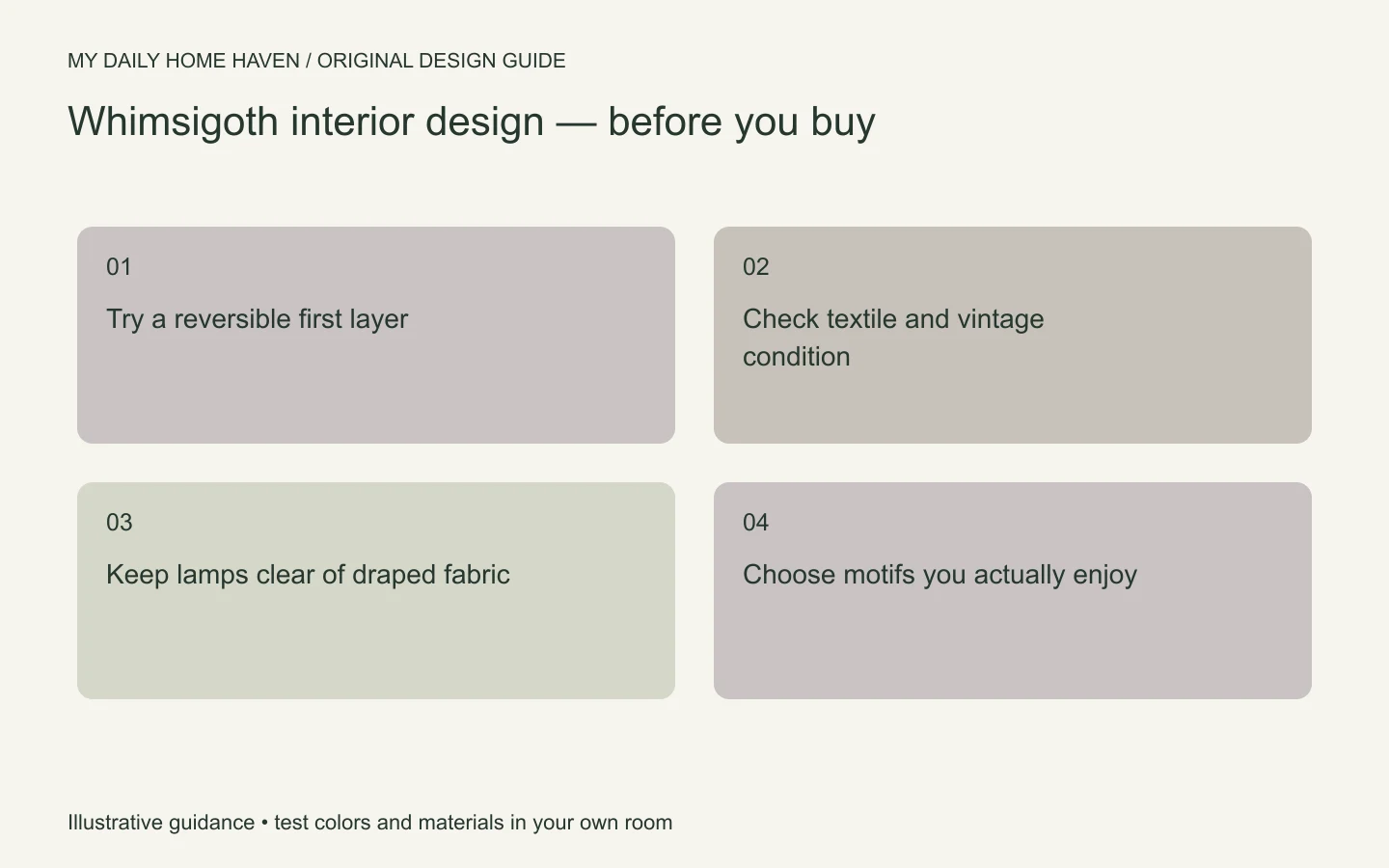
A whimsigoth interior design display can be more expressive when it has a defined edge. Use one cabinet top, a shelf group, or a framed arrangement rather than letting small objects spread through every working area. Place taller pieces where they do not obstruct a lamp or view, and keep delicate items away from frequently moved curtains. Leave part of the surface clear so the arrangement remains useful. When you find another interesting object, decide what it will replace or how it changes the group before buying it. A collection can grow in meaning without continually growing in size.
Frequently asked questions
Do I need black walls?
No. Plum, muted green, brown, or even a pale backdrop can work. The combination of materials, shape, lighting, and personal objects matters more than one mandatory wall color.
Can this style work in a small bedroom?
Yes. Concentrate the detail around the bed or one wall, keep storage useful, and avoid blocking circulation with large decorative pieces. A few strong choices can carry the mood.
Does whimsigoth imply a particular belief system?
No. A decorating label does not establish a person’s beliefs. Choose imagery thoughtfully and describe objects accurately rather than treating religious or ceremonial items as interchangeable props.