

Colonial Revival interior design draws on later interpretations of early American architecture and furnishings. It often uses balanced arrangements, traditional wood furniture, patterned textiles, and a sense of order. It is a revival approach, so it should not be described as an exact picture of how every colonial-era household lived.
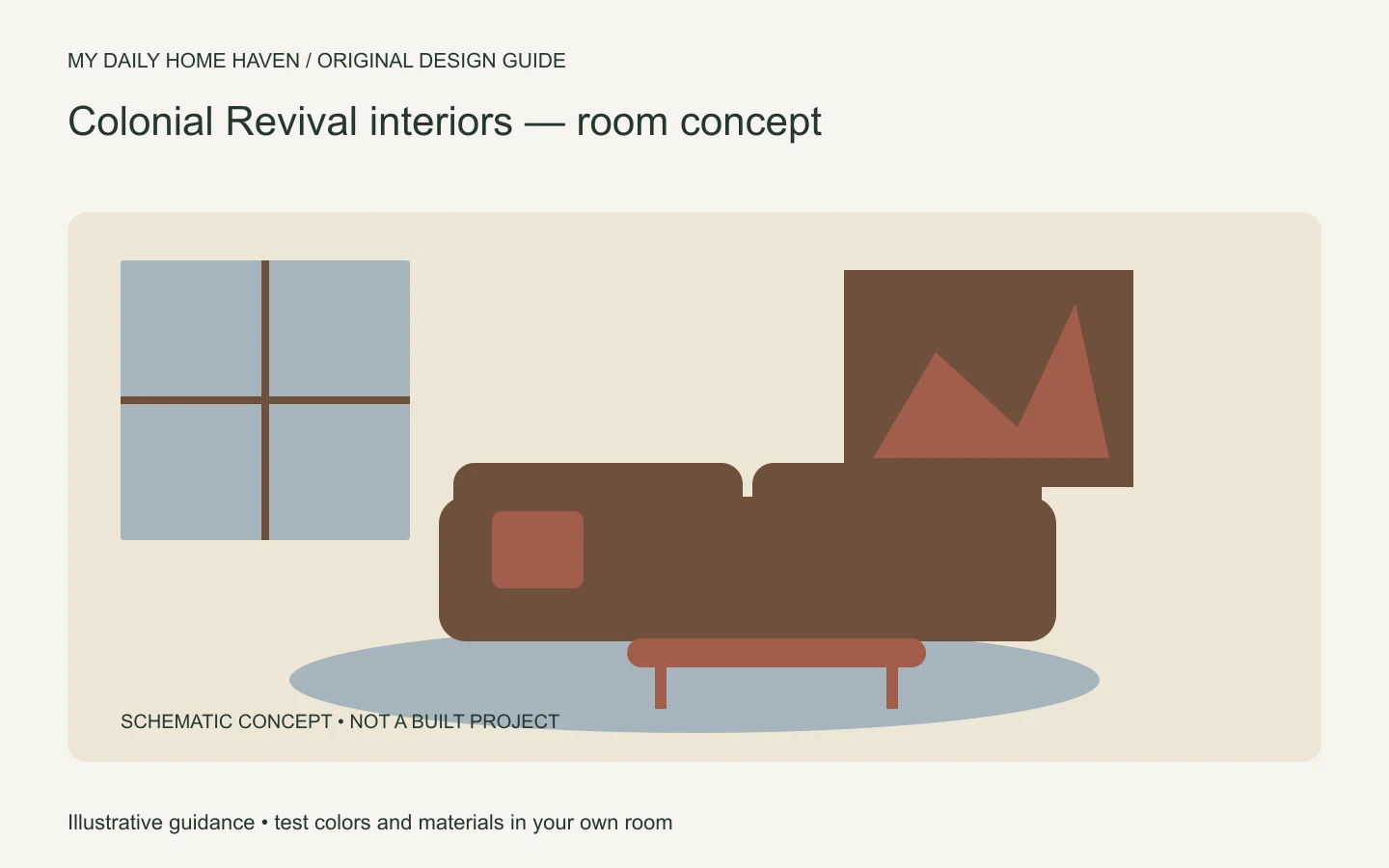
You can adapt its proportions and furniture relationships to a modern home without building a period set. This article focuses on those choices. Our interior design aesthetics guide provides a broader comparison with other traditional and contemporary styles.
Colonial Revival Interior Design: Keep the Reference Thoughtful
Colonial revival interior design can reference American revival-era architecture without reproducing a period room wholesale. Keep useful original trim or furniture, look for well-proportioned forms, and balance traditional details with contemporary comfort. Separate documented architectural history from later decorating conventions, and avoid treating the label as one fixed or universally appropriate look.
Understand the word revival
The National Park Service identifies Colonial Revival architecture as a later movement that drew from earlier building traditions. That distinction matters when choosing interiors: a revival room may combine references from different periods rather than reproduce one documented historic space.
The term also covers variation. A modest early twentieth-century house will not have the same interiors as a grand revival mansion. Start with your home’s actual proportions and surviving features before adding molding, furniture, or decorative details.
Historical interiors also reflect particular households and the labor, trade, and social conditions behind them. When using a museum room as a reference, read its interpretation rather than reducing its history to an attractive fireplace or chair.
Begin with the room’s structure
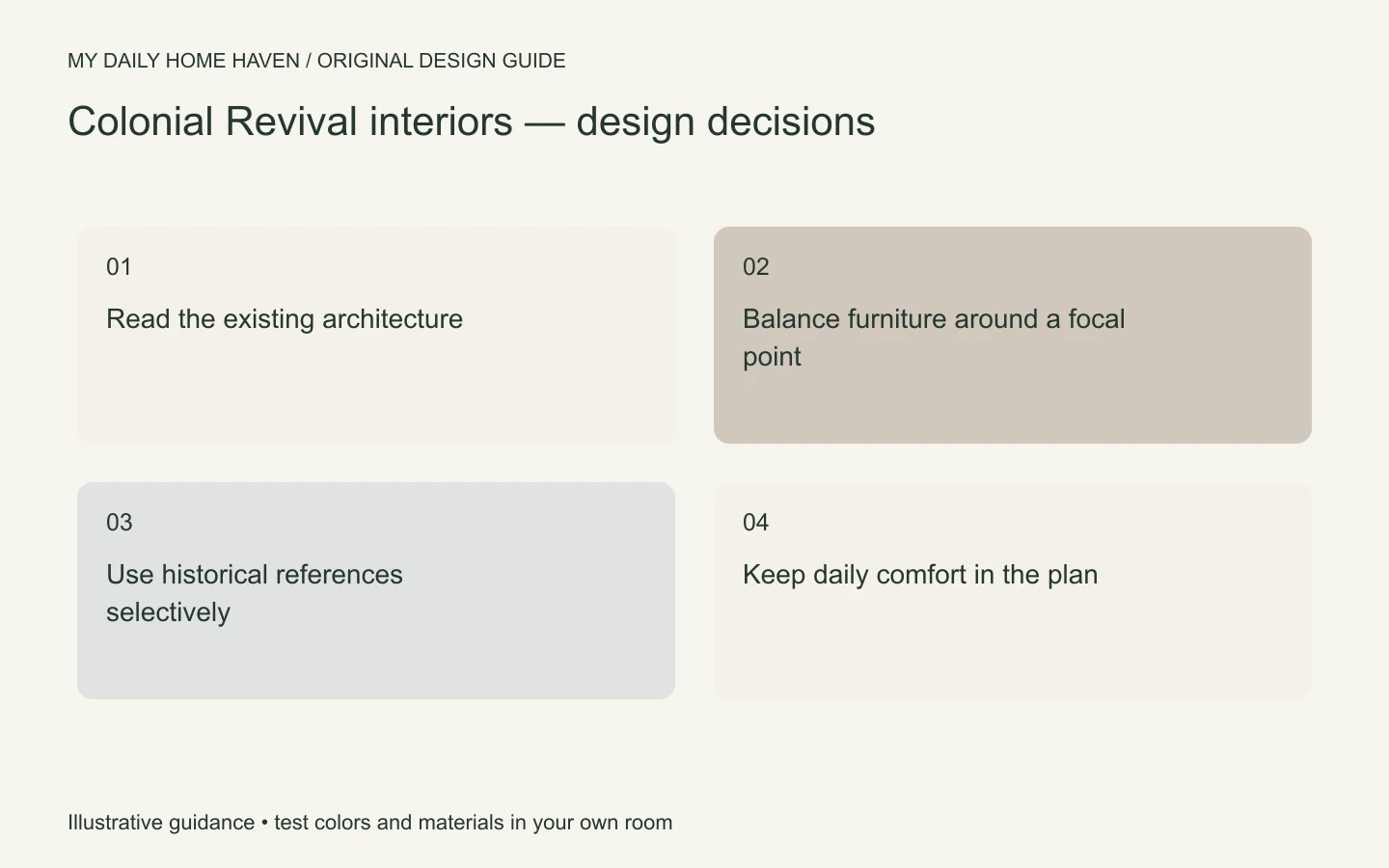
Identify the strongest existing feature: a fireplace, a pair of windows, a doorway, or built-in cabinetry. Arrange the main furniture group in response to it. Symmetry can create clarity, but the layout still needs to accommodate movement and everyday activities.
For example, two lamps on a sideboard can provide visual balance without requiring identical chairs everywhere. An offset doorway may make a perfectly mirrored arrangement impractical. In that case, use similar visual weight on each side rather than forcing matching objects.
If your home has older trim or paneling, document it before making changes. A local preservation office or qualified specialist can advise on significant work. Decorative inspiration is not a reason to remove surviving features that contribute to the building’s history.
Choose furniture by proportion and function
Traditional wood pieces can anchor the scheme: a dining table, a chest, or a sideboard with clear lines. Mix them with comfortable upholstery that suits present-day use. You do not need to furnish every room with reproductions from one collection.
Measure furniture in relation to the wall and the usable floor area. A tall chest may fit physically but overpower a low-ceilinged room. A compact writing table might work better than an oversized desk, especially when the room also needs a chair and storage.
Inspect secondhand furniture for stability and repairs. Look beyond the finish to drawer movement, joints, and whether the piece serves a real need. A convincing period silhouette is less useful than a well-made piece that works in your household.
Make color and pattern feel connected
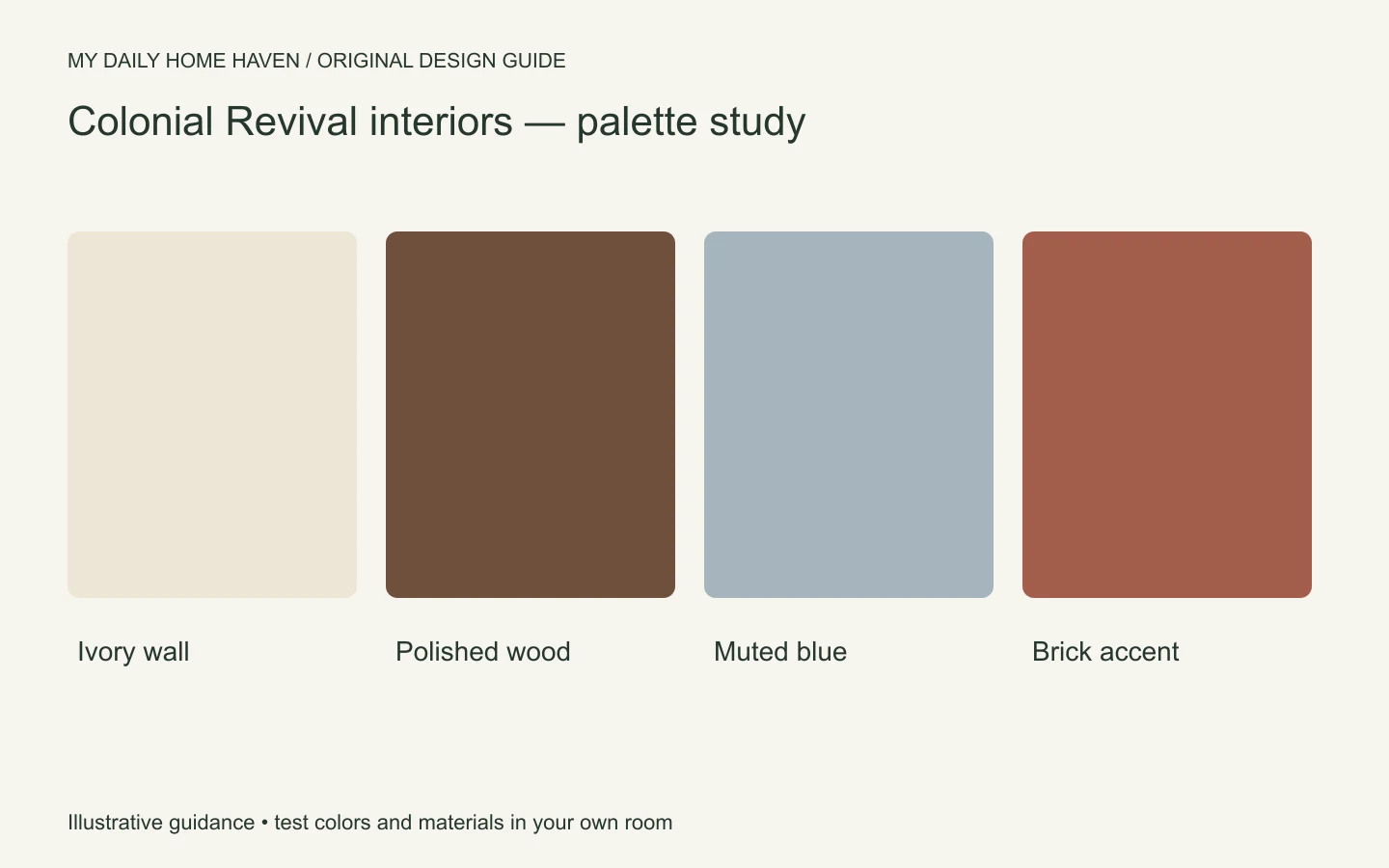
Muted blue, ivory, brick, and warm wood can form one suitable palette, but they are not mandatory. Choose colors that relate to the actual floor, daylight, and upholstery. A historical paint name does not guarantee that a shade will suit your room.
Combine patterns at different scales. A larger floral can work with a small check and a plain fabric if they share a color and leave enough quiet surfaces. If every textile has a dense pattern, the room may feel crowded even with little furniture.
Test curtain fabric hanging vertically, not just folded on a table. Observe whether light passes through it and how it looks beside the wall. Check cleaning and lining needs before deciding that a fabric is suitable for a sunny window or busy family room.
Update the room without losing its character
Modern lighting controls, practical storage, and comfortable seating can coexist with traditional forms. Keep cables and everyday items organized, but do not make the room so formal that nobody wants to use it.
Choose new lighting for both appearance and function. A decorative ceiling fixture may need support from reading lamps. If you are altering wiring or installing heavy fittings, use appropriately qualified help. A period appearance does not remove installation requirements.
The principles of interior design offer a useful check: balance, proportion, rhythm, and emphasis matter more than the number of historical references in the room.
A practical living room example
In a small room with a centered fireplace, use a simple sofa opposite it and a compact chair to one side. Balance that chair with a table and lamp on the other side rather than crowding in a second large chair. A wood chest can provide closed storage along a quieter wall.
Use one patterned textile on the curtains or chair and repeat one of its colors in a plain cushion. Keep the mantel display simple enough that the architecture remains visible. A contemporary artwork can fit if its scale and framing relate to the room.
Before buying more, live with the arrangement. Check whether drawers open, curtains move freely, and people can reach the seating without sidestepping furniture. These observations should guide the next purchase.
Keep a record of the house
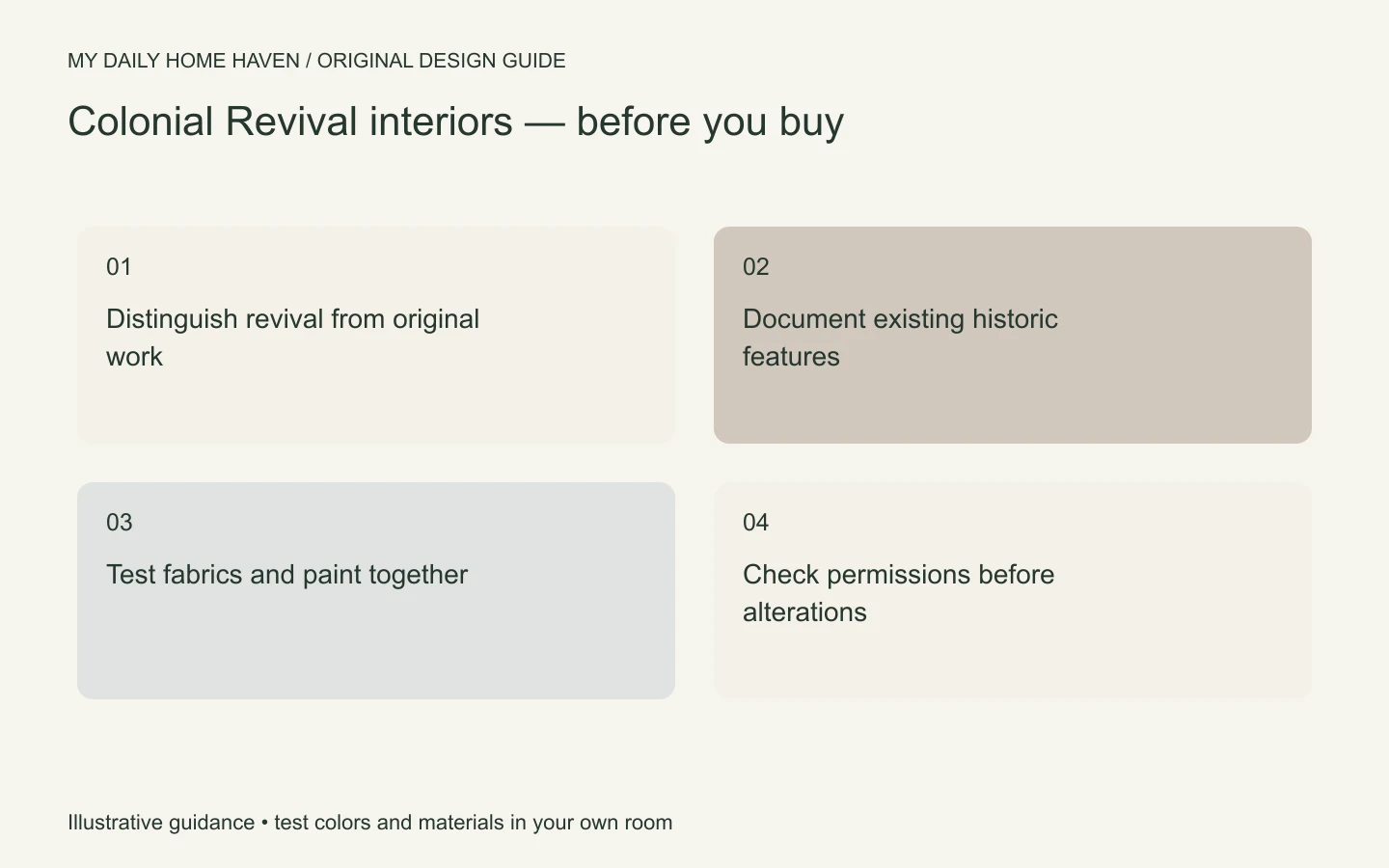
Before starting a Colonial Revival interior design update, photograph existing trim, hardware, doors, and built-ins. Note which elements are original to the house, which are later additions, and which remain uncertain. You may need professional help to establish those distinctions, but even a basic record prevents assumptions from becoming permanent decisions. Keep finish samples and any restoration advice with the project notes. If you later change a paint color or replace a removable textile, the record remains useful. It also helps a future owner understand what you preserved, repaired, or introduced during the project.
Frequently asked questions
Is Colonial Revival the same as colonial style?
No. Revival design is a later interpretation of earlier references. The terms are sometimes used loosely, so clarify the period and place when discussing a particular house or object.
Must all the furniture match?
No. Related proportions and repeated finishes can connect different pieces. A complete matching suite may be less adaptable than a few useful anchors mixed with comfortable upholstery.
Can a newer house use this approach?
Yes. Begin with balanced furniture, traditional materials, and restrained pattern. Avoid adding elaborate architectural details that do not fit the house’s scale or require unnecessary structural changes.