

If you search for interior design Dr Homey, identify the exact website and article before acting on its advice. Similar names appear across different websites, and the phrase alone does not verify one professional, service, or set of credentials. Treat the search as the beginning of research. Then compare useful ideas with your room, budget, and reliable project information.
Identify the source behind the result
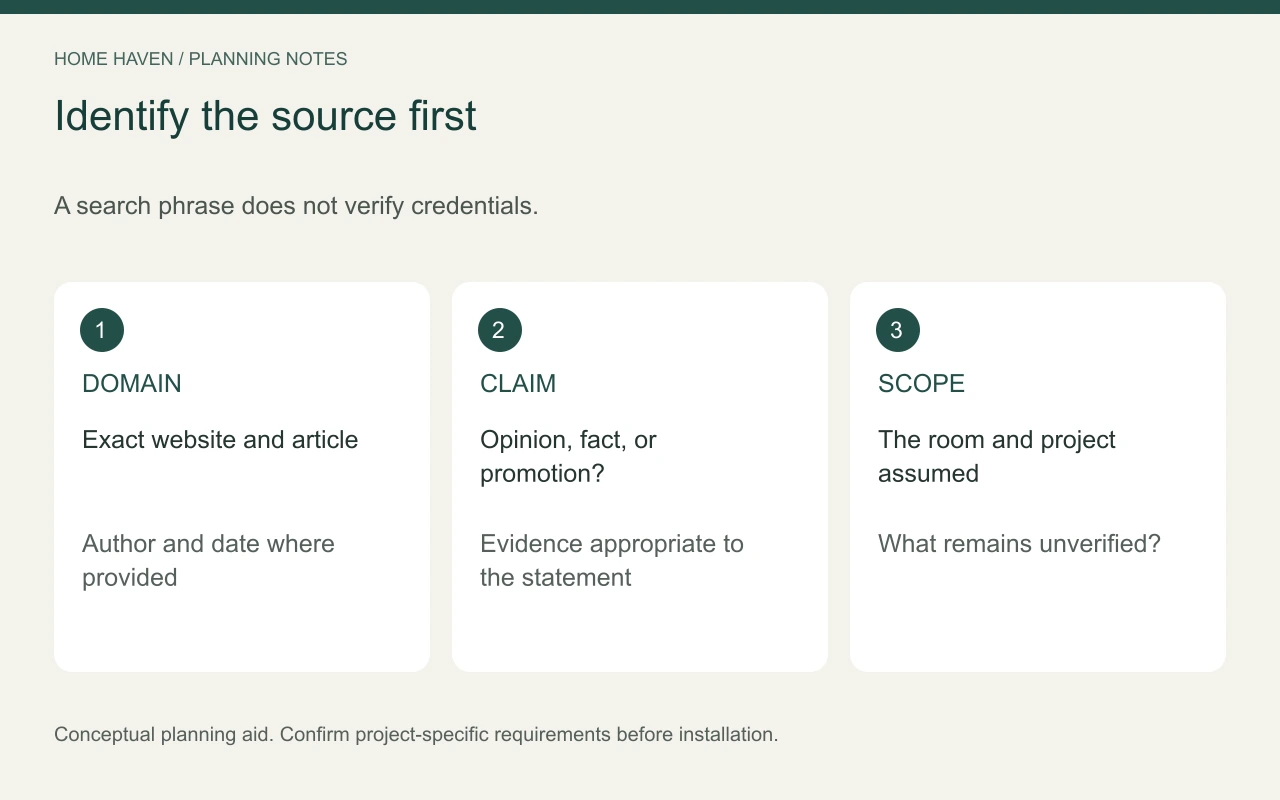
Record the domain, article title, author information where provided, and publication or update date. Check the site’s own About and contact information. A search-result phrase is not enough to establish who wrote the advice or what services the site provides.
For example, Interior Designs Dr Homey’s About page describes that particular website as publishing home-design information. That is a description of its own stated purpose, not independent verification of professional qualifications or another similarly named site.
This guide is an independent research checklist. It does not represent those websites or establish an official identity for every result using the name. Verify the particular source you intend to use.
Use interior design Dr Homey ideas as a starting brief
Separate the idea from the product or conclusion attached to it. A useful suggestion might concern furniture placement, color, lighting, or storage. Write down the problem it would solve in your home before buying anything.
Our space planning interior design guide provides a measured method for testing layouts. Use actual room dimensions and routines to decide whether an online idea fits. A photograph cannot replace that information.
Ask what the advice assumes
Look for the room size, users, existing features, climate, and project scope behind a recommendation. If those details are missing, treat the advice as general inspiration. Do not assume it was tested in a home like yours.
Distinguish evidence from an attractive claim
Check whether a statement is a preference, estimate, factual claim, or product promotion. Each needs a different kind of support. A suggested color combination may be a design opinion, while a claim about safety or savings needs appropriate evidence.
Look for sources that directly support important claims. An unrelated link to a well-known website does not verify the specific statement. Prefer relevant original information and current official guidance for matters that can change.
Do not infer first-hand experience from conversational language alone. A useful article should explain its basis clearly. Claims about completed projects, testing, or professional credentials deserve evidence appropriate to the claim.
Check product suggestions independently
Confirm the exact model, dimensions, intended use, and care instructions with the manufacturer or seller. An item linked in an older article may have changed or become unavailable. Compare the current product with what your room actually needs.
Review delivery, assembly, returns, warranty terms, and the total USD cost. A low advertised price may omit services important to your project. Keep relevant purchase records and written promises.
The FTC’s guidance on evaluating online reviews recommends considering sources rather than relying on ratings alone. Apply that critical approach when reviewing products or providers suggested by any design site.
Test the idea before committing
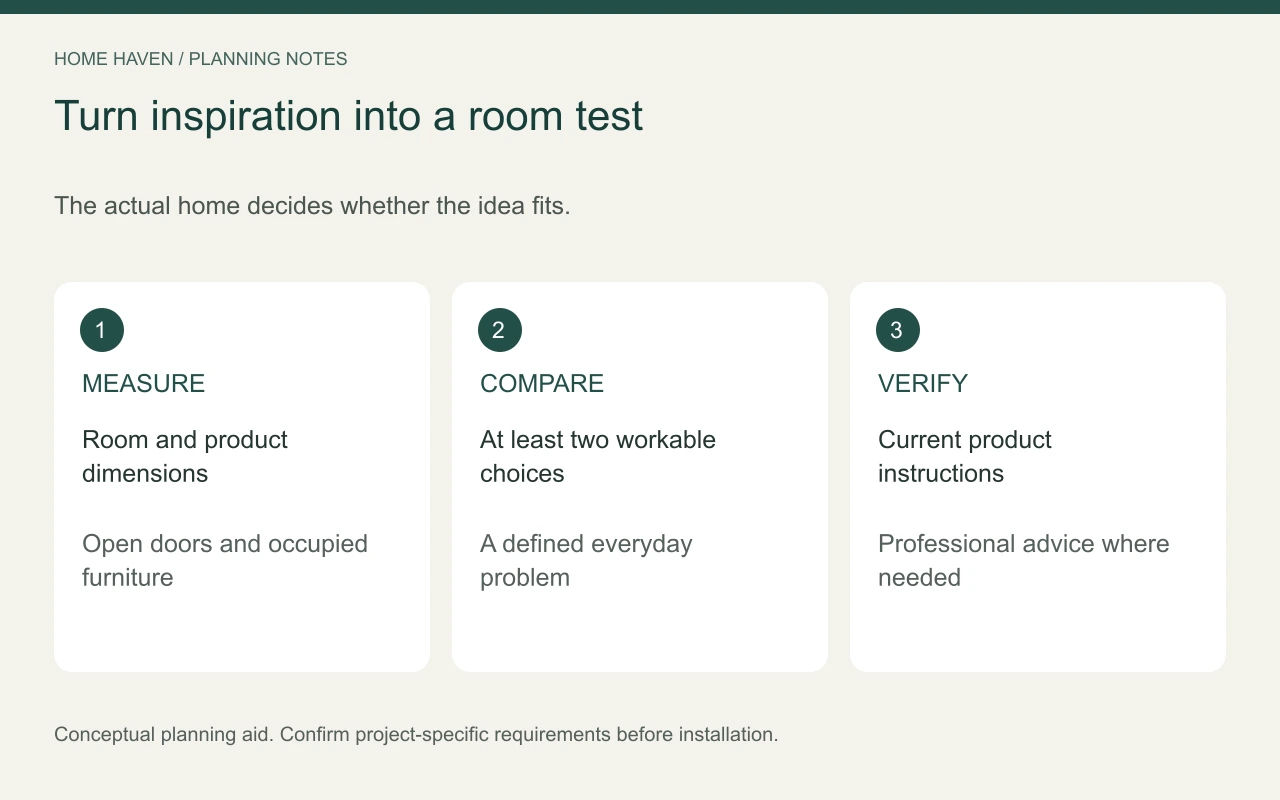
Use removable tape or existing furniture to test a proposed footprint where appropriate. Include doors, drawers, occupied chairs, and the route through the room. Evaluate ordinary use instead of recreating one camera angle.
Compare at least two plausible arrangements when a purchase is substantial. The better choice may be a smaller item or a different location rather than the featured product. Keep the room’s primary activity in view.
For interior design Dr Homey research, this test separates inspiration from a workable decision. The same method applies to advice from any website. A recommendation becomes more useful when it survives the conditions of your own room.
Know when the idea needs a professional
Changes involving structure, permanent electrical work, plumbing, building systems, accessibility, or regulated commercial activity need appropriate qualified advice. Identify the project and location before assuming a general article describes the applicable requirements.
Do not follow an installation instruction merely because the finished result looks simple. Product systems and existing conditions can differ. Use the relevant manufacturer documentation and responsible professionals.
Keep a furnishing refresh separate from a construction plan. Choosing a rug and moving an approved wall are different scopes. A clear boundary helps you ask the right questions before work begins.
Keep a small research record
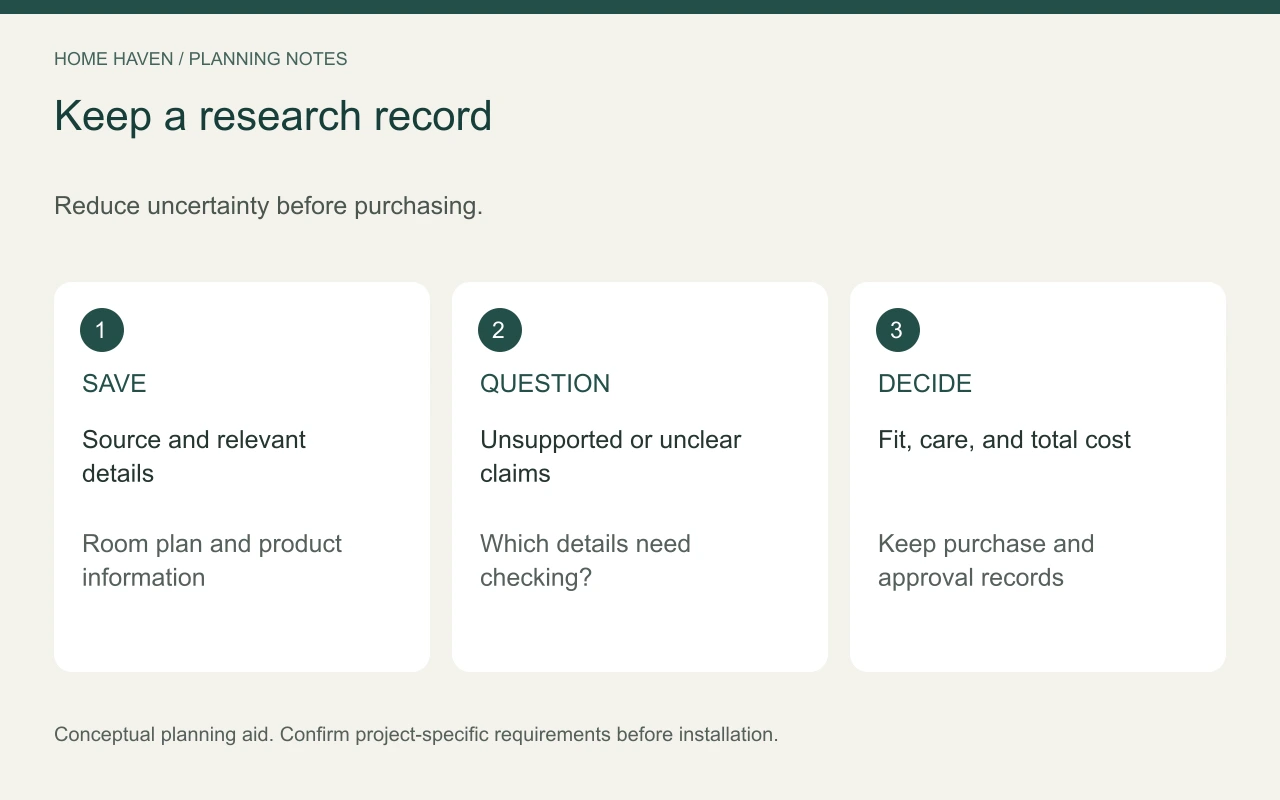
Save the idea, exact source, room measurements, product information, and unresolved questions in one place. Record which details were verified and which remain assumptions. This makes later comparisons easier.
Avoid collecting so many images that the original problem disappears. Choose a few references with clear roles. One can guide the palette, another the storage approach, and another the furniture proportions.
When sources disagree, compare their scope and evidence rather than averaging their claims. A manufacturer’s product instruction may answer a different question from a decorator’s preference. Use each source for the information it can actually support.
Turn the research into a decision
A practical review can ask:
- Which exact source and article am I using?
- What problem would this idea solve?
- Are important claims supported by relevant evidence?
- Does the product or layout fit the actual room?
- Which questions require qualified local advice?
- What is the complete cost and care commitment?
Keep the answers specific. If a recommendation remains too vague to evaluate, postpone the purchase and gather the missing information. Research should reduce uncertainty rather than create pressure to act.
Frequently asked questions
Does the name identify a verified interior designer?
The search phrase alone does not establish that. Check the exact website, person, qualifications, and relevant independent information.
Can general design blogs still be useful?
Yes. They can provide ideas and questions to explore. Evaluate the advice according to its evidence and the needs of your project.
Should you copy a complete room photograph?
Use it as a reference rather than a specification. Measure your room and test the functions before reproducing the arrangement.
Make the room the final test
Identify the source, verify important information, and translate the idea into a measured plan. Keep unresolved claims separate from decisions you can support. Useful inspiration earns its place by improving the home you actually use.