

Natural spa interior design uses a considered palette of textures, colors, and light to shape a welcoming nonmedical spa. Start with the services and care procedures, then decide which materials suit them. A natural-looking finish is not automatically durable, hygienic, or environmentally preferable. Choose the look and the working specification together.
Set a nonmedical service brief
List the services, equipment, staff tasks, and guest sequence. Include preparation, treatment, changing, and cleanup. This guide concerns nonmedical day-spa interiors; medical treatments and specialist wet facilities need their own assessment.
Record the experience you want in concrete terms. You might want less visible clutter, gentler reflections, or a clearer transition from reception to treatment. Those goals help the design move beyond a collection of beige surfaces and plants.
Use our space planning interior design guide to establish the layout. Our spa interior design guide covers the broader appointment and support workflow.
Build natural spa interior design from a small palette
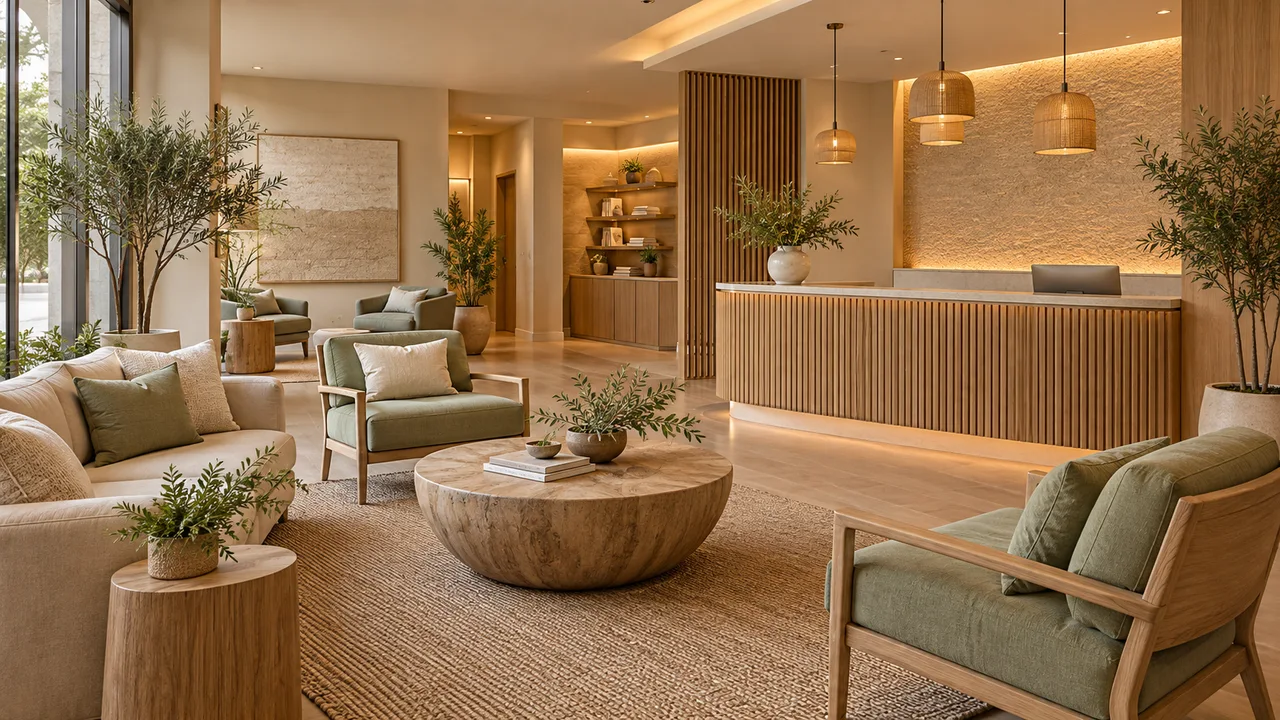
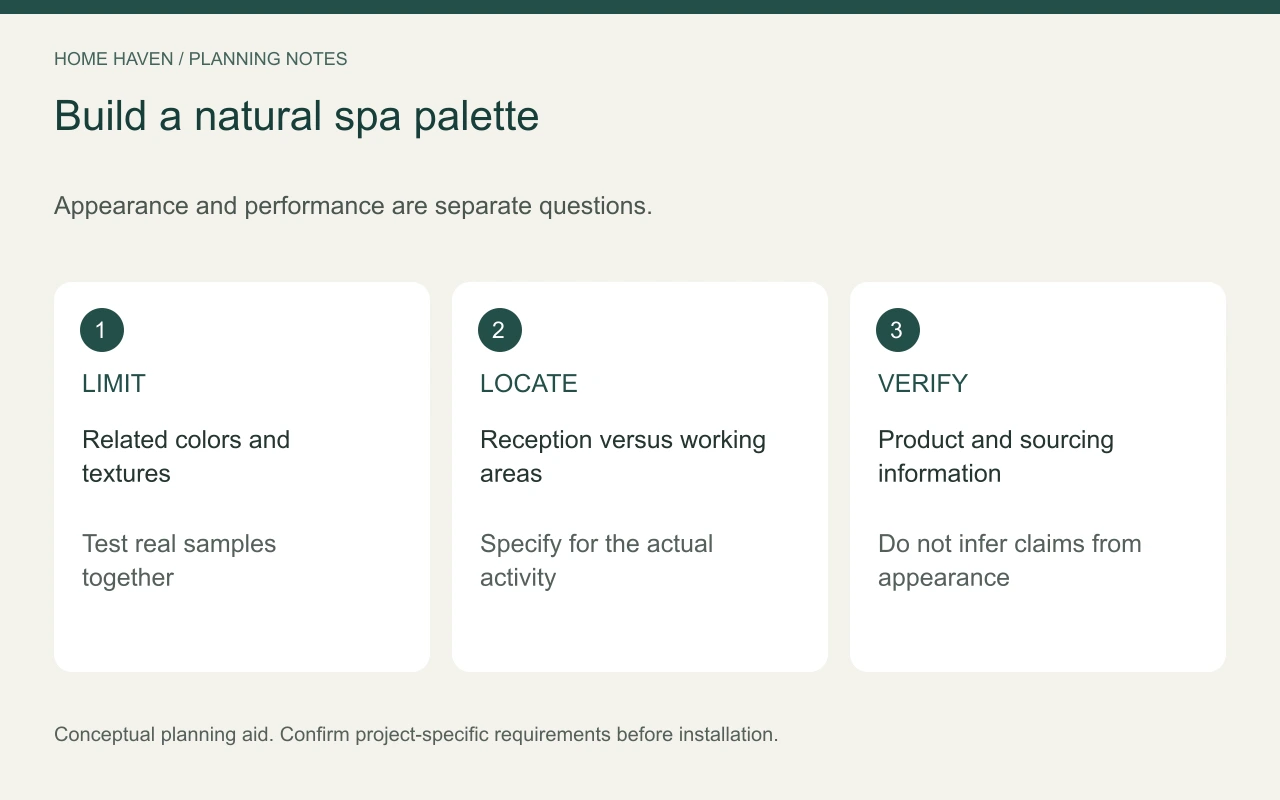
Choose a limited family of colors and textures that works with the room’s light. Wood tones, muted greens, warm neutrals, and woven-looking surfaces are options rather than mandatory ingredients. Repeat selected elements instead of introducing a new material at every turn.
Review real samples in daylight and evening conditions. A textured surface can cast stronger shadows than expected, while a pale finish may look different beside warm wood. Compare samples together before ordering a whole room.
Separate appearance from product evidence
Ask what each material actually is, where it may be used, and how it must be maintained. Natural, organic-looking, and eco-friendly are different descriptions. Do not infer performance or sourcing from appearance alone.
Put suitable surfaces in the right places
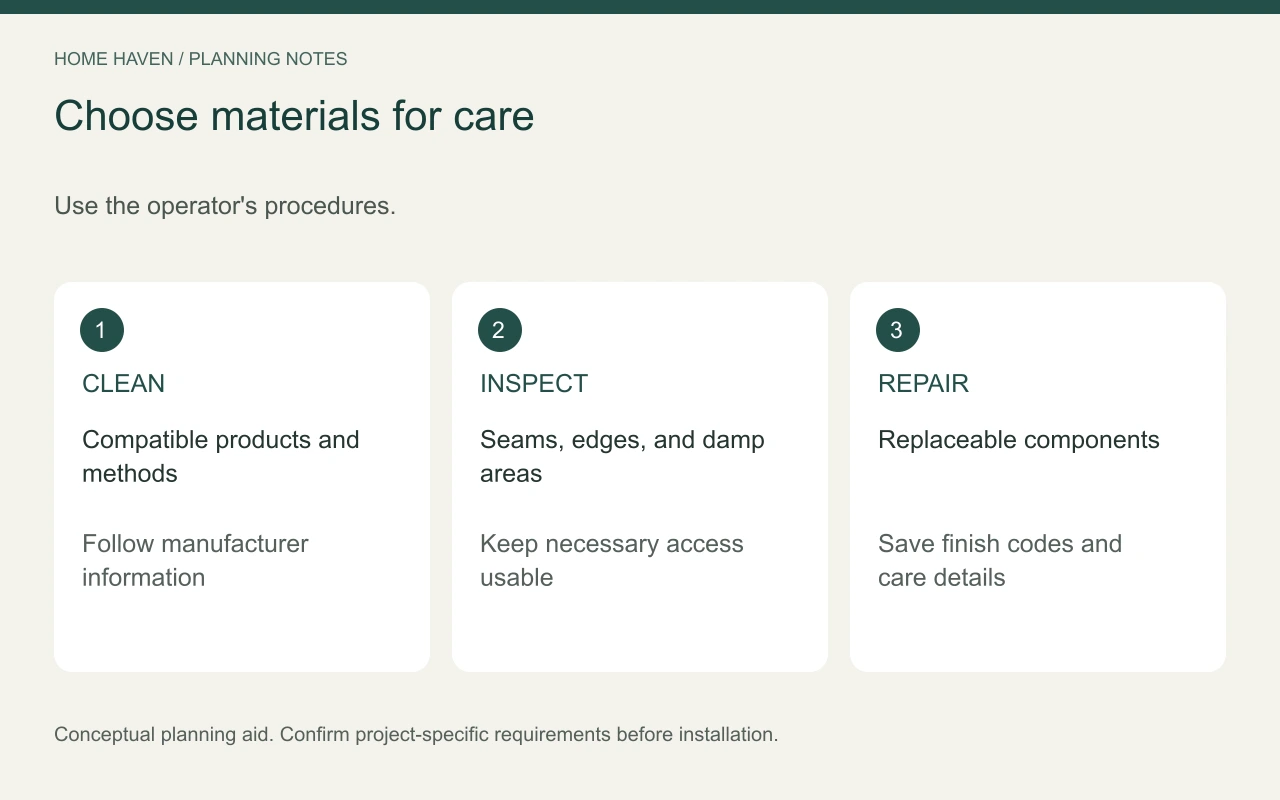
The reception lounge and a treatment work surface may need different finishes. Review the cleaning products and procedures with the operating team. Follow the material manufacturer’s instructions and applicable requirements.
Consider seams, edges, joints, and access beneath furniture. A strongly textured finish may suit a protected feature area but create unnecessary care elsewhere. Evaluate the whole assembly rather than a small attractive sample.
Ask how localized damage can be repaired. Replaceable components and documented finish codes can make later maintenance easier. A coordinated spa should not require replacing an entire room because one surface becomes worn.
Use wood and woven textures deliberately
Wood can contribute warmth, but the appropriate product and location depend on the setting. Check coatings, cleaning compatibility, installation, and exposure conditions. Do not assume a decorative timber panel is suitable beside every service or wet area.
Woven materials can add visual texture to a lounge. Ask whether the actual item tolerates the intended use and cleaning. A woven appearance may also come from another material, so specify according to verified properties.
For natural spa interior design, restraint helps materials remain legible. One wood finish and a few related textiles can establish character. Filling every wall with slats or every corner with baskets may complicate maintenance without improving the guest experience.
Plan light around both guests and staff
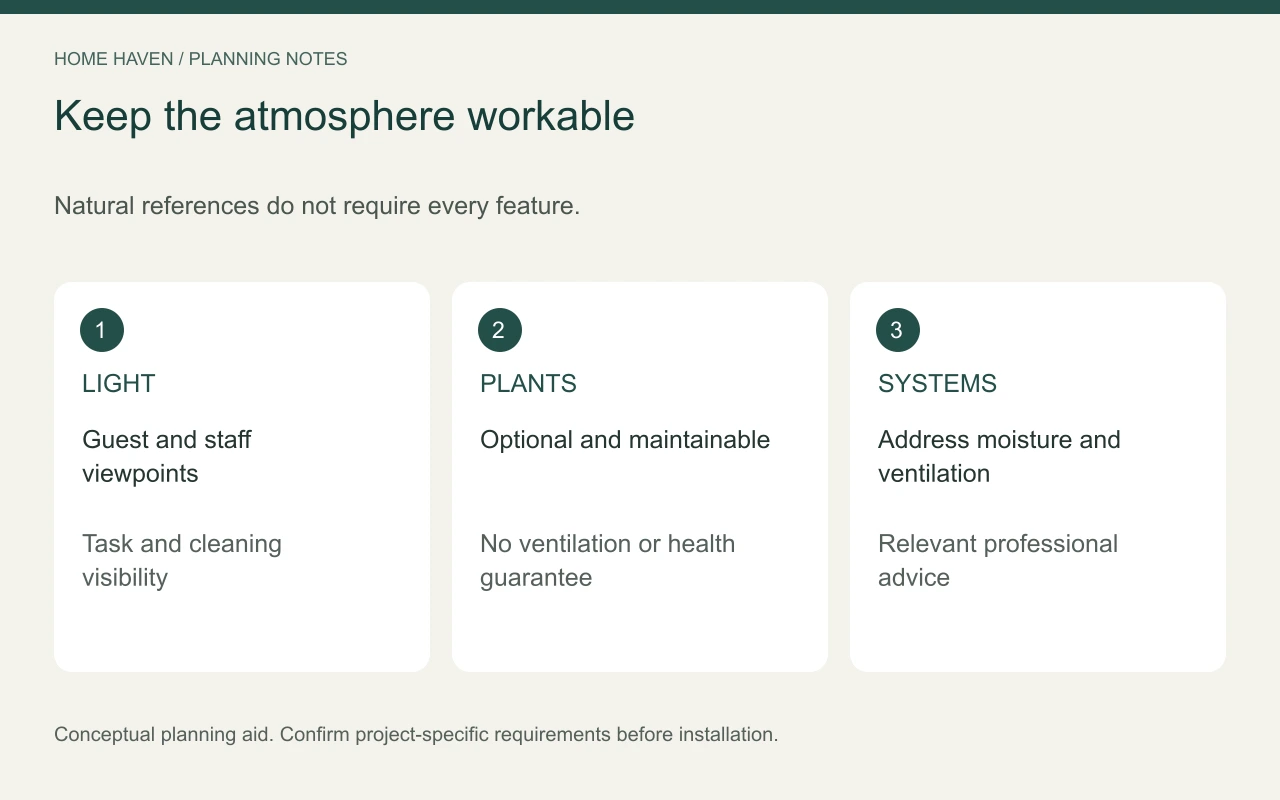
Use lighting for arrival, reading, preparation, service tasks, and cleaning. Warm atmosphere should not leave staff unable to see their work. Review the proposed fixtures from both standing and reclining positions where relevant.
Check reflections from mirrors, pale stone-like surfaces, and polished fittings. A material that looks quiet in daylight can reflect an exposed lamp at night. Test before repeating the detail across several rooms.
Have permanent lighting and electrical work reviewed by qualified professionals. Coordinate controls and maintenance access with the equipment and furniture. A simple system that staff understand can support the atmosphere more consistently than an elaborate one.
Make plants optional and manageable
Choose plants only where the team can maintain them appropriately. Consider placement, watering, cleaning, guest sensitivities, and the room’s conditions. Keep them outside essential routes and away from surfaces that need frequent care.
Do not present decorative plants as a ventilation or health-control system. Their role in this design brief is visual and experiential. Building air quality and ventilation need appropriate professional attention.
If plants do not suit the operation, natural references can come through artwork, color, or a view. A successful room does not depend on a living feature that staff cannot support. Choose the element that works in the actual setting.
Address moisture and building condition first
Investigate leaks, damp odors, or persistent condensation before covering surfaces. The EPA’s mold and moisture guide explains why resolving the water problem matters. Decorative finishes should not conceal an unresolved issue.
Discuss relevant indoor conditions and ventilation with the responsible professionals. A water feature or additional wet service can change maintenance and technical needs. Define that scope before adding it to a mood board.
Keep cleaning and used-item handling coordinated with the layout. A natural-looking cabinet still needs an appropriate purpose and care procedure. The design should support the team’s work, not ask them to improvise around decoration.
Compare the complete installed choice
Request itemized USD costs for materials, substrate or assembly needs, installation, care, and known replacement requirements. Compare alternatives for the same location and task. The lowest sample price may not represent the cost of a workable finish.
Before approval, ask:
- Does the material suit the activity and cleaning process?
- Is the appearance consistent with actual samples?
- Can staff inspect and maintain it?
- Are performance claims documented?
- Can a damaged component be repaired or replaced?
Frequently asked questions
Must a natural spa use real stone?
No. Choose surfaces by verified suitability, care, cost, and appearance. A natural material is not automatically the best product for every location.
Can a small spa use this approach?
Yes. A limited palette and fewer useful pieces can work well. Preserve the service layout and storage rather than adding oversized natural features.
Does natural styling make a spa sustainable?
Appearance alone cannot establish that. Evaluate sourcing, product information, maintenance, durability, and the actual scope of the project.
Let materials support the appointment
Start with the operating brief, test a restrained palette, and approve products through their real specifications. Keep the atmosphere connected to practical care. A natural spa interior feels more convincing when the team can maintain it consistently.