

Car interior design balances the appearance of a cabin with the way occupants use it. Seats, storage, controls, visibility, and materials all matter during ordinary journeys. Start with the exact vehicle and its manufacturer’s guidance before considering accessories or trim changes. A coordinated interior should preserve the functions the vehicle already needs.
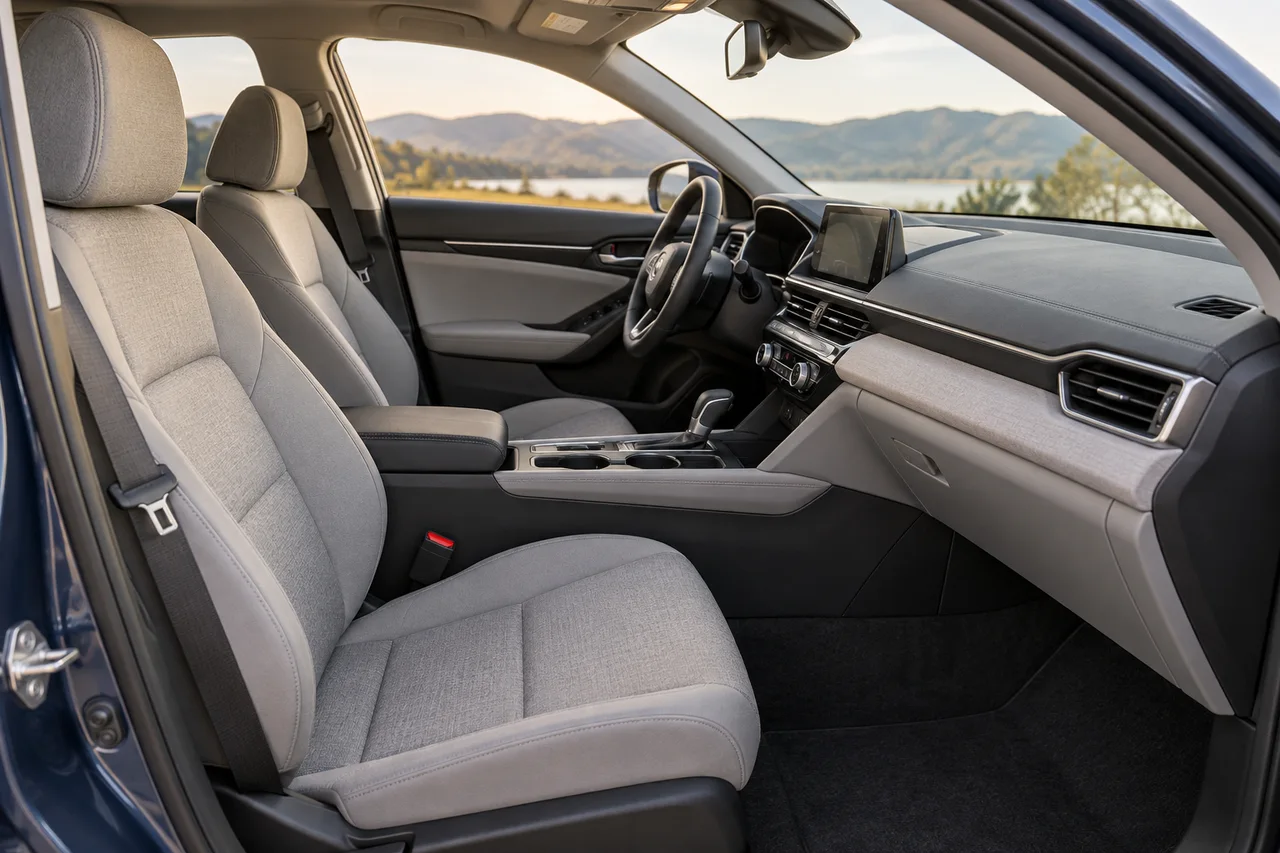
Define what you want to improve
List the problems you notice while the vehicle is parked: clutter without a home, a finish that is difficult to maintain, or a layout that does not suit the belongings you carry. Separate these from equipment faults or safety concerns that need professional attention.
Record the vehicle’s model year, trim, and relevant installed equipment when researching products. A product advertised for a model family may not suit every version. Check current compatibility information rather than relying on a similar-looking photograph.
If you are comparing general organization methods, our space planning interior design guide explains how to identify activities before adding objects. Its room-planning principles can inform your brief, while vehicle specifications and safety guidance must come from the appropriate automotive sources.
Review car interior design as a complete cabin
Look at how the driver and passengers enter, sit, reach ordinary storage, and leave. Include the belongings the household actually carries. A large organizer may solve one problem while obstructing another useful function.
Assess proposed changes with the vehicle parked. Do not experiment with controls or accessories while driving. If a concern involves driving position, restraint systems, visibility, or equipment operation, consult the manufacturer’s guidance and a qualified automotive professional.
Keep controls understandable
Avoid covering or obscuring controls, displays, vents, warnings, or identification labels for a cleaner appearance. A decorative film or mounting accessory should not interfere with the vehicle’s functions. Check the instructions and intended location before purchase.
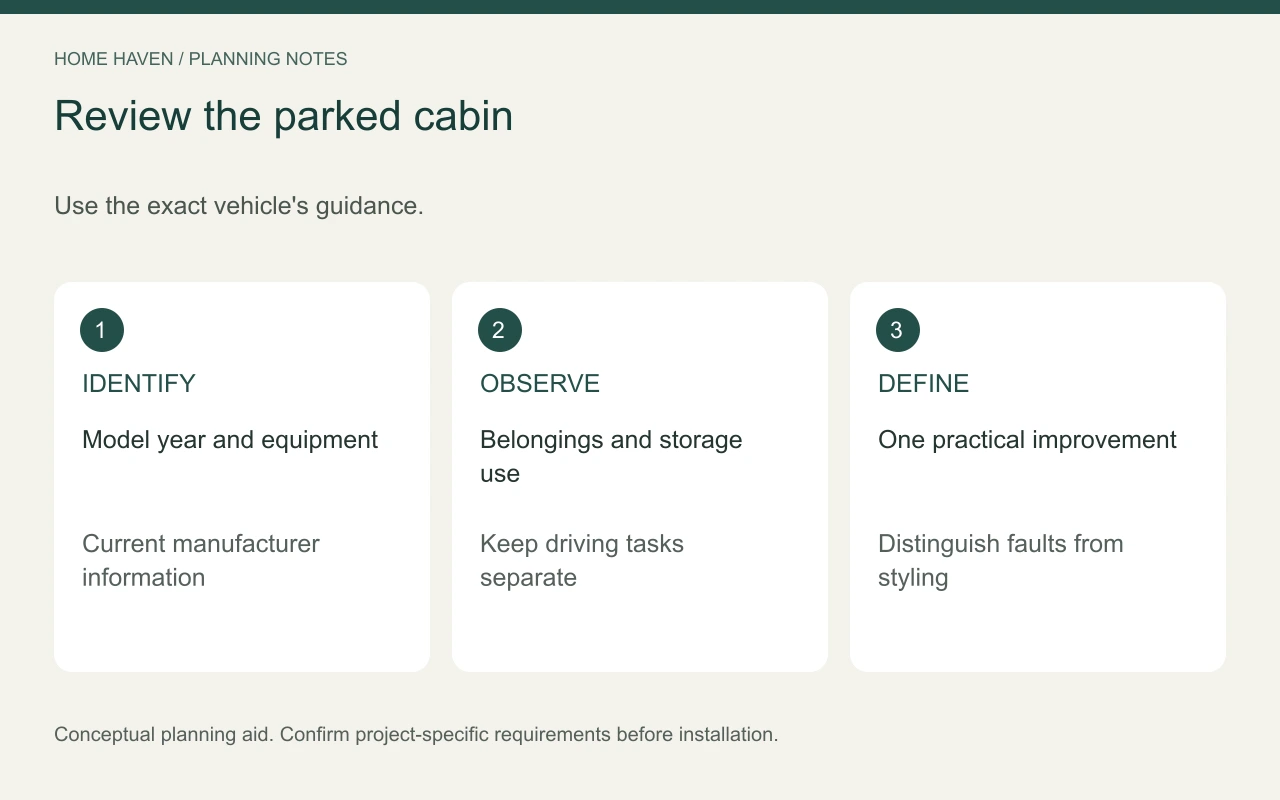
Treat seats and restraints as an integrated system
Seat appearance is only one part of its design. Airbags, sensors, seat belts, adjustments, and other equipment can interact with seating and surrounding trim. Do not assume that replacing a cover or adding padding is an ordinary upholstery decision.
NHTSA’s discussion of aftermarket seat covers explains that aftermarket products can affect safety systems. Obtain guidance appropriate to the exact vehicle and proposed product. A general accessory label does not establish suitability for every seat.
Do not modify, disable, or cover safety equipment as part of a styling project. Ask the manufacturer or an appropriately qualified automotive specialist about repairs and compatible replacements. Keep the distinction between a decorative preference and a system change clear.
Choose materials for real use
Compare texture, color, care instructions, and compatibility with the vehicle. Light and dark finishes can each suit different preferences, but appearance alone does not tell you how a material will wear or clean. Request relevant product information.
Inspect samples where practical before ordering substantial work. A color shown on a screen can look different beside the existing dashboard and door trim. Consider how the new material relates to what remains in the cabin.
Use cleaning products according to the vehicle and product instructions. Do not apply a household surface treatment simply because the material looks similar to furniture at home. Ask a qualified professional about unfamiliar finishes or damage.
Give belongings appropriate storage
Start with the storage the vehicle already provides. Sort what belongs in the cabin, what can move to another appropriate location, and what does not need to travel. Removing unnecessary objects can be more useful than adding organizers everywhere.
Evaluate any organizer for its intended use, secure placement, and compatibility with the vehicle. Keep it from interfering with seats, belts, controls, visibility, or other essential functions. Follow the relevant instructions rather than improvising attachments.
For car interior design, usable storage is more important than filling every available gap. A compartment should be easy to use without encouraging distraction. Review the routine while parked and keep driving tasks separate.
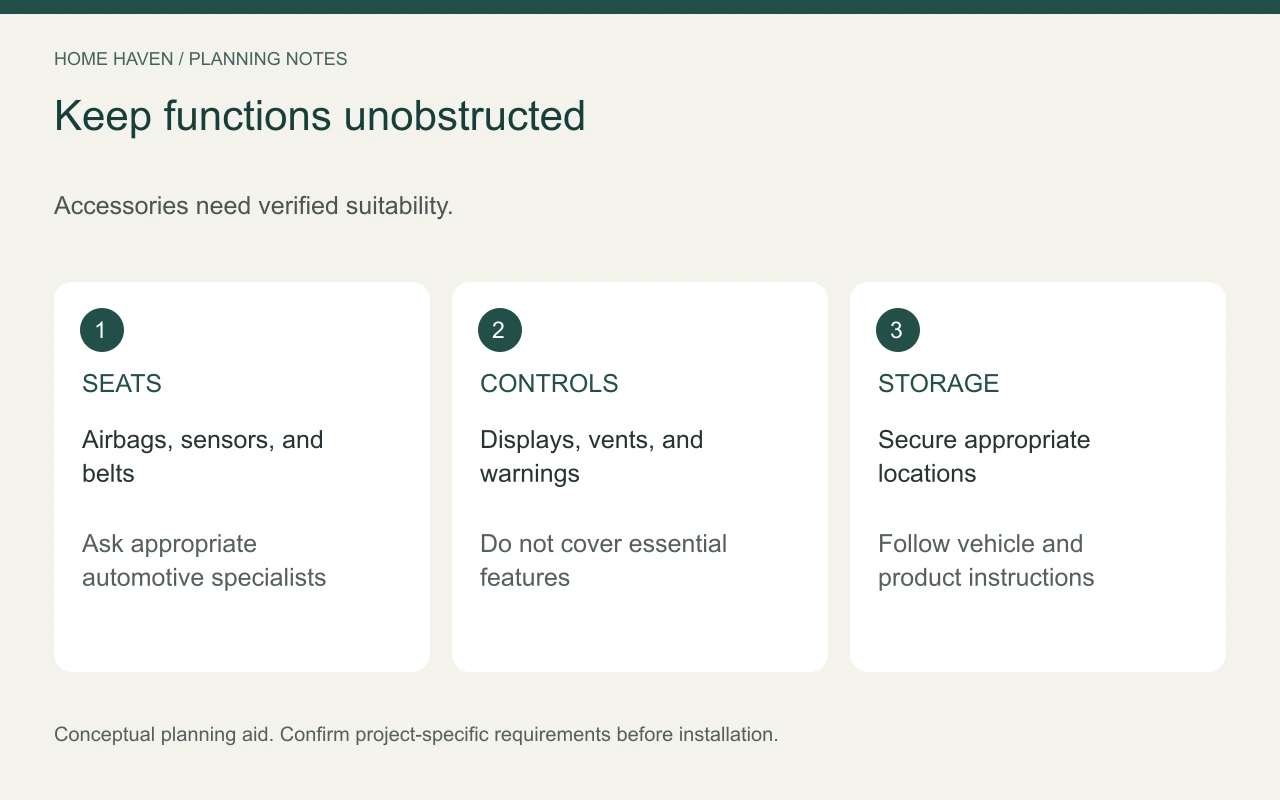
Keep the visual scheme restrained
Choose a small family of colors and textures that works with the existing cabin. Repeating one accent can feel more coherent than adding unrelated accessories to every surface. Preserve useful space around controls and storage.
Avoid judging an interior only from a promotional night photograph. Decorative lighting can create glare or distraction and may be subject to applicable rules. Consult appropriate guidance before adding electrical accessories or lighting changes.
A clean, maintained original interior can be a successful design outcome. Custom work is worthwhile when it serves a defined preference and has an appropriate installation plan. It does not need to become a complete transformation.
Compare professional proposals carefully
Describe the exact scope when seeking estimates. Ask what remains original, what changes, who performs the work, and how compatibility will be checked. Confirm any relevant warranty implications with the appropriate parties.
Compare itemized USD prices for materials, labor, preparation, installation, and follow-up. A low advertised price may not include the work the vehicle actually requires. Ask how the provider handles unexpected condition problems or unsuitable products.
Keep records of installed products, care instructions, and professional work. This information can help future maintenance and ownership. Do not accept a claim of universal approval without verifiable supporting information.
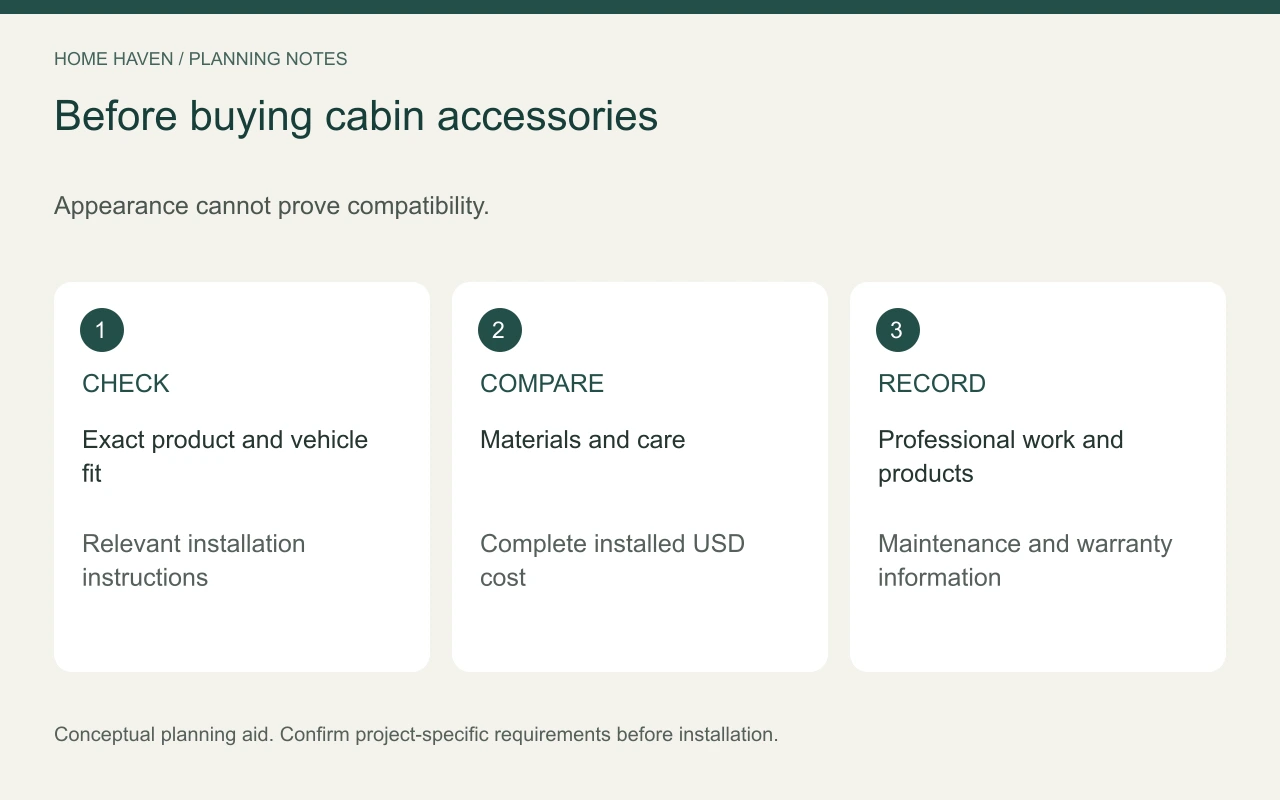
Review before purchasing
Use a parked-vehicle checklist:
- Confirm the exact vehicle and equipment configuration.
- Identify the function each proposed item serves.
- Review manufacturer compatibility and instructions.
- Keep controls, restraints, and visibility unobstructed.
- Ask appropriate professionals about system-related changes.
Frequently asked questions
Can a cabin improve without replacing upholstery?
Yes. Appropriate cleaning, reducing clutter, and using existing storage more deliberately may address the problem. Follow the vehicle’s care instructions.
Are universal seat covers suitable for every car?
Do not assume so. Verify suitability for the exact seats, airbags, sensors, and vehicle configuration through appropriate manufacturer information.
Should every accessory match?
A coordinated palette can help, but compatibility and useful function come first. Avoid buying extra items solely to complete a visual theme.
Improve the routine before adding detail
Start with one clear need and verify the proposed solution against the vehicle’s instructions. Retain essential functions and use qualified help where the work affects equipment. A considered cabin remains practical throughout the journey, beyond its appearance while parked.