

Commercial interior design companies help businesses turn operational needs into coordinated interiors. Choosing a firm means comparing its experience, responsibilities, communication, and deliverables rather than its photographs alone. Start with a clear project brief and request proposals for the same scope. Then evaluate who will actually do the work and how the team will manage decisions.

Define the project you want companies to price
Describe the property, business activity, approximate area in square feet, and expected users. Include the rooms involved, what already exists, and whether the business must operate during work. State what you know and identify information that still needs verification.
Separate furniture selection from construction, equipment planning, and building-system changes. A firm offering a furnishing consultation may not provide the services needed for a major commercial renovation. Ask candidates to explain their role and which other professionals the project requires.
Our space planning interior design guide explains the basic layout process. Use it to prepare useful questions, while leaving technical and regulated work to the appropriately qualified project team.
Compare commercial interior design companies by relevant work
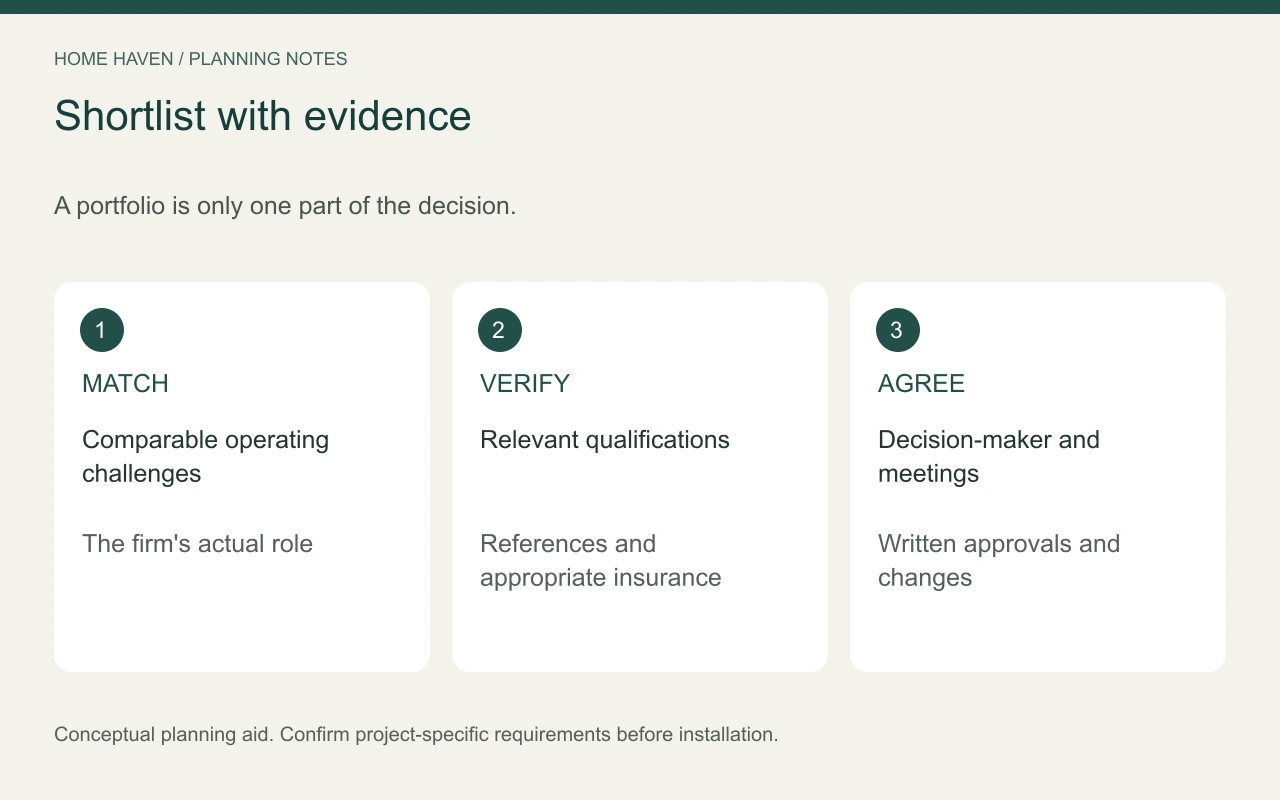
Look for projects that resemble the operating challenge, not only the visual style. An occupied clinic, a restaurant, and a small office involve different needs. Ask what the firm actually delivered on the examples it shows.
Request references you can contact directly. Discuss communication, changes, documentation, and follow-through. A finished photograph cannot tell you whether the client received a workable maintenance record or a clear purchasing schedule.
Identify the people doing the work
Ask who leads the project, who attends meetings, and who prepares drawings and specifications. Confirm how specialists join the team and who coordinates them. A strong presentation is more useful when the proposed delivery team is equally clear.
Make the scope and deliverables explicit
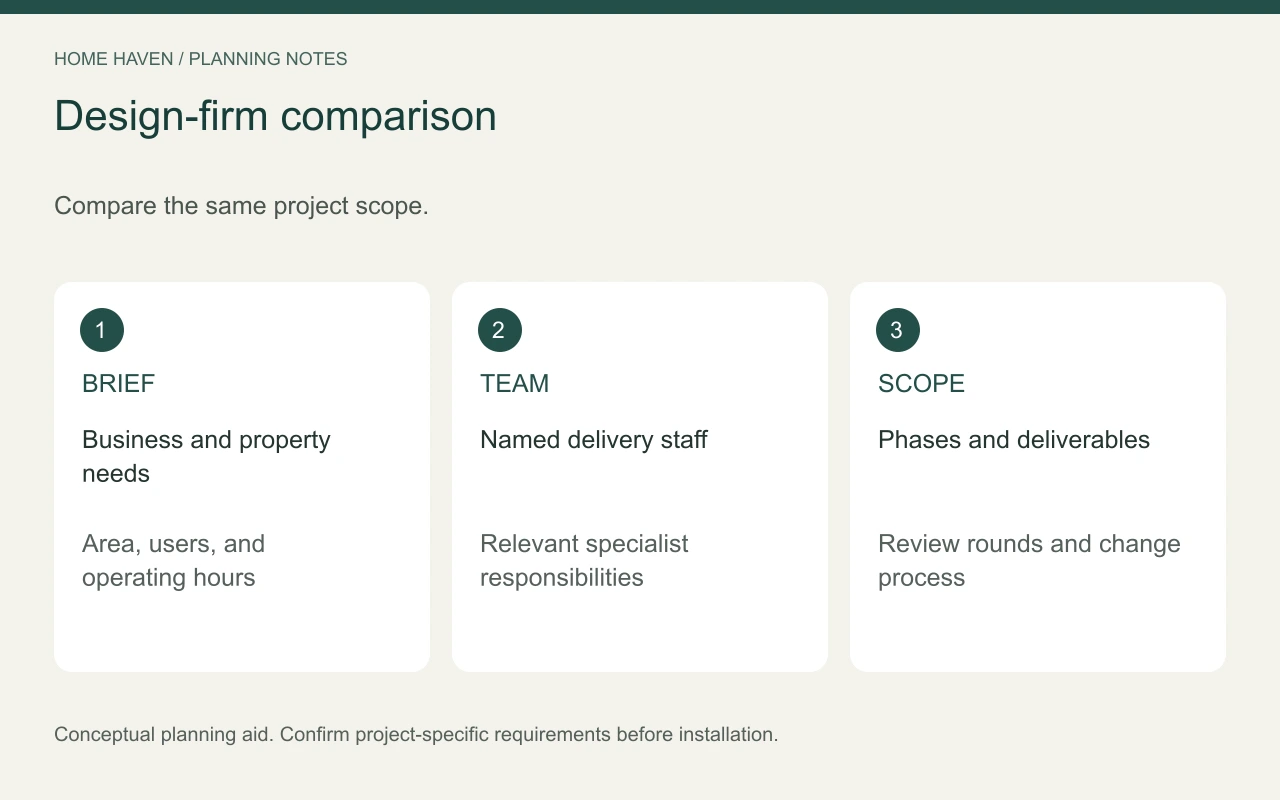
A proposal should describe the phases and what the client receives at each one. These might include a measured brief, layout options, material samples, specifications, purchasing assistance, or installation coordination. Do not assume those services are included because a package is called full service.
Ask how many options and review rounds the fee covers. Confirm what happens when the business changes its brief or a product becomes unavailable. Agree on the decision process before the work begins.
Distinguish design intent from construction documents and approvals. Ask which appropriately qualified professionals provide required documentation. The contract should not leave the client guessing who checks essential building, accessibility, or other project requirements.
Understand fees and purchasing
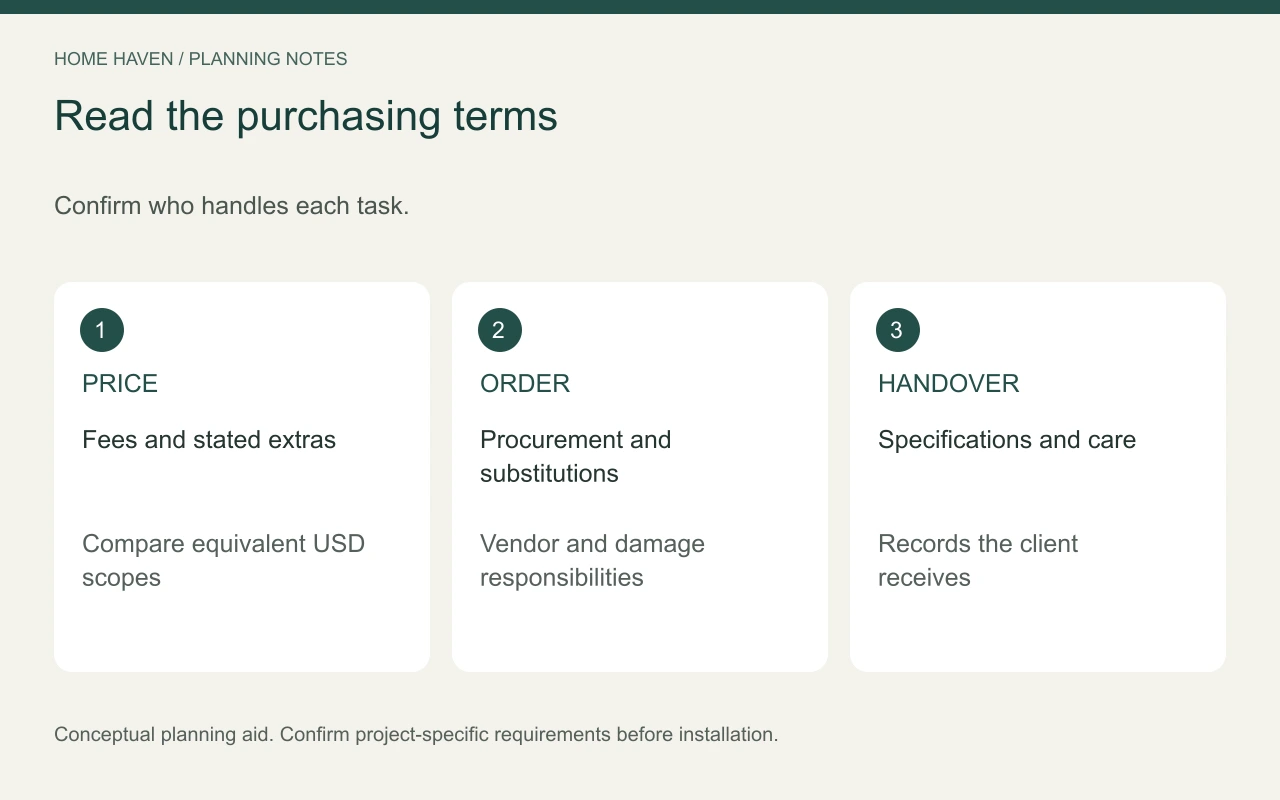
Compare USD proposals using the same scope. Identify design fees, specialist services, surveys, purchasing charges, delivery, installation, and other stated costs. Ask which expenses remain estimates and what could change them.
Review how the firm handles trade pricing, markups, commissions, and substitutions. There is no single arrangement that suits every project, but the terms should be understandable. Clarify who purchases each item and who owns the vendor relationship.
Ask how returns, damaged goods, delayed deliveries, and discontinued products are handled. A furniture order involves more than selecting an item online. Confirm who tracks it and who communicates when a problem affects the plan.
Check credentials for the actual services
Verify qualifications, registrations, licenses, and insurance appropriate to the work and location. Requirements vary, and a job title alone does not define what someone may provide. Ask the relevant authorities or advisers about unfamiliar claims.
The FTC’s business guidance on hiring contractors recommends checking relevant documentation and putting promises in writing. Apply that discipline when coordinating design and construction providers, without assuming their roles are interchangeable.
If you search for commercial interior design firms near me, check the firm’s actual service area and site-visit arrangements. Search proximity does not prove relevant experience or availability. Confirm who can attend the property and what travel costs apply.
Evaluate specialist experience
A restaurant interior design company should explain how it coordinates dining operations with food-service specialists and other required professionals. Ask about occupied tables, service routes, maintenance, and the scope of kitchen coordination.
A senior living interior design agency should describe how it involves residents, operators, and relevant specialists. Ask how it assesses furniture choices and supports the intended care or housing setting. Do not accept decorative familiarity as proof of clinical or regulatory expertise.
For any specialty, request an explanation of the problem solved in a comparable project. Useful answers connect choices to the users, building, and operating brief. Broad claims about being able to design anything provide less evidence.
Agree on communication and approvals
Set a meeting rhythm and identify the person authorized to approve changes. Decide where drawings, selections, costs, and decisions will be recorded. Keep the process manageable for the business rather than scattering approvals across informal messages.
Ask how the team reports risks to the schedule or budget. A delayed sample, landlord response, or equipment decision can affect other work. Confirm the response process rather than expecting every uncertainty to disappear after signing.
Use a shortlist comparison with consistent questions:
- Does the firm understand the business and building?
- Are responsibilities and deliverables clear?
- Can references confirm relevant work?
- Are fees and purchasing terms understandable?
- Is there a practical plan for changes and handover?
Frequently asked questions
Should you choose the lowest proposal?
Only after comparing equivalent scope, qualifications, and terms. A lower number may exclude services another firm includes. Resolve differences before treating the proposals as comparable.
Is a local firm always necessary?
Not always. Some services can be remote, while site-dependent work needs appropriate local coordination. Confirm the practical arrangements and responsibilities for the actual project.
Can one company handle everything?
Some firms coordinate broad services, but ask who performs each task and under what agreement. The client still needs a clear picture of responsibility.
Choose the team you can evaluate clearly
Select a firm whose proposal connects the brief, work, cost, and decision process. Keep the agreed scope accessible as the project develops. A considered selection starts with evidence and clear responsibilities, then builds into a productive working relationship.